The Surgeon or The Village Surgeon by Jan Sanders van Hemessen (c.1550-1555 oil on panel). The village sawbones is shown applying a medical cure for foolishness by removing the “stone of idiocy.” If anyone knows who Meister van Hessen used for a model, please let me know. In our time this is an operation that could possibly change the lives of many in the media and politics, as well as their credulous audience and constituency of course, for the better.
There has been much discussion recently about the potential impacts of President Trump’s hasty retaliatory tariffs on international trade in general and various economies around the world in particular.
Our little venture here at C&S Tools relies entirely on exports, so of course some Beloved Customers have expressed concern regarding the effects of tariffs on our prices moving forward. At this point in time all I can really do is twirl my elegant white mustache and sagely mutter “Iduno,” but to keep things interesting, in this article I will be so bold as to share some hard-won insight on the subject that doubtless will be worth every penny it costs Gentle Reader.
The Quiver of Diplomacy
Tariffs and import taxes are ancient tools for profit and coercion, veritable arrows in the quiver of diplomacy, so Gentle Reader would be wise to understand that, while Trump may be erratic and unpredictable, he’s not the first nor will he be the last leader of a nation to string his bow and loose these darts.
But it’s also important to realize that in every case where tariffs have been manipulated for fun and profit, there have always been those who ran around screaming “the sky is falling!!”
Case in point, Japan’s economy relies heavily on exports of its products overseas, especially cars (21% of total exports), machinery (18% of total exports), and electronic equipment (14% of total exports). At one time, each of these industries was heavily subsidized by the Japanese government resulting in targeted putative tariffs being pushed through by American politicians over many decades. This is nothing new.
It has long been the habit among the wealthy business owners of all nations to blame others for their lazy planning and poor execution, while twisting the tails of their trained monkeys holding public office to cover for their feckless incompetence and the resulting financial and reputational damage through imposition of taxes and tariffs. A concrete example of the results of this de-incentivization through taxation is the wounded US automobile industry and the sad state of Detroit, MI.
But your humble servant is old enough to recall how, instead of complaining, the Japanese government negotiated mutually-acceptable tariffs while Japanese manufacturers ignored the Chicken Little crowd and proactively worked to develop mutually-beneficial work-arounds. You see, unlike the feckless perverts that run the television, movie, and news industries, the Japanese understood that pissed-off customers on the scale of nations are not good for long-term profitability. As evidence of this, please compare the worldwide, or even just the US domestic market share of American versus Japanese automobiles and compare it with 30 years ago. Such waste!
My point is that taxes are never fair (and often backfire), today’s winners are tomorrow’s losers, and complaining solves nothing, but with good will and diligence most problems can be solved. Except for Ford and GM, that is, huge corporations that foolishly discarded both good will and diligence in favor of politics and economic war, flushing their market share down the tubes never to recover. Sadly, it’s far too late to cut the “stone of madness” from the brains of many overly-comfortable American corporate executives.
Compared to Japan, the Europeans and Chinese, being especially adept at manipulating corrupt and shiftless American politicians, have had it easy and are spoiled, but amazingly they have the “stones” to call Trump “unpredictable” and “unreasonable” because he refuses to be bought, an unforgivable failing in a politician, it seems.
Much of the rattling we hear lately are the sounds of chickens coming home to roost, while the whining emanates from media bought and paid for by foreign entities, lobbyists in government jobs and short-sighted, and hypocritical executives of companies that brag of their righteousness in “supporting their community” and their “environmental awareness” while moving production to countries with cheaper labor, quite frequently child labor, and sometimes even slave labor in fact, and no environmental regulations.
This talk of tariffs has put them all into a spastic panic fearing their carefully-laid plans for reaping humungous profits and big bonuses through betrayal of their customers will soon be knocked into an even bigger cocked hat. Oh dear….
The Power of Gubmint
If there is one thing I know for certain, people in government have two rock-solid powers: (1) to fill their pockets and those of their buddies, and (2) to impoverish everyone else through taxes and regulation. And that’s all they can do. Since the time of the ancient Greek democracies, these two truths have consistently been the driving factors in government policy in times of peace in those communities where more-or-less public elections decided policy. It’s just as true today. Remember President Reagan’s famous but bitter joke “I’m from the government and I’m here to help.”
Will these tariffs be fair? Those silly enough to pose this question should never leave their mommy’s house.
Will these tariffs impact prices here at our humble little shop of horrors? Of course.
Most consumers never directly experience tariffs and import taxes, so the subject doesn’t quite come into focus for them.
In a previous life I spent a lot of time dealing with import taxes and tariffs in various countries related to procuring and shipping building materials and equipment to construction projects I was planning, so I learned the dirty truths of import taxes and tariffs long ago. But instead of boring Gentle Reader into a drooling coma with my war stories, allow me to share a true and illustrative story many thousands of years old.
The Tale of Butfuk and Bacon
Long ago and far away in a place Gentle Reader will never visit, there was a smelly fellow your humble servant will call Butfuk (names have been changed to protect the incontinent) who had a stony farm located next to a heavily-traveled dirt road winding over hills, across fords and through wolf-infested primeval forests. At one location this track passed through a narrow restriction, or pass, tight against a stony mountain.
One day, tired of eating beetles and worms delicately seasoned with mud for every meal, Butfuk put on his thunkin hat and got a great idea. Together with his cousin Bacon, who lived nearby and was hell and Jesus with a bow, they cut down a medium-sized birch tree laying it smack dab across this narrow spot in the road. Not a large outlay of effort or capital, but without a doubt the most profitable effort they could have possibly made.
Their business model worked like this. Bacon would station himself to the side of the road next to a large concealing rock where he had a good view and a clear shot. When travelers approached the downed tree blocking the road, cousin Butfuk would be found standing in the middle of the road in front of the obstruction, and bold as Obama, he would demand travelers pay either cash or a portion of their goods as a “gate tax.”
Those who refused this friendly invitation were not invited to share a drop of tea and some tasty wood grubs with B&B, but immediately found themselves feathered with arrows, for Bacon was not just accurate with a bow, he was quick. Those who continued to argue had a mace-to-face meeting with Butfuk’s axe, whereupon the cousins dragged the corpses into their pig pen, confiscated all the traveler’s possessions in the name of “fairness,” and sold any surviving women and children in the party into bondage. Business is business, after all, and pigs have to eat too.
Cooperative travelers, on the other hand, passed the impromptu gate safely, and while they disliked this new form of banditry, the cousins didn’t steal everything nor kill everyone, after all, and the amount they demanded was not so much travelers couldn’t pay it without being ruined, and because arrows hurt like the dickens, and pigs are messy eaters, few bothered to resist too hard. Soon, the relationship between B&B and travelers became much like that between the European kingdoms and the Barbary pirates before the king of Tripoli pissed on President Jefferson’s shoes, so to speak.
Indeed knowing the amount they would need to pay in advance, travelers could even include these gate taxes in their budget. Yea verily, the golden goose principle was key to the sustainability of Butfuk’s cunning plan.
Over the years, B&B assembled a small army of guards from among the locals to support their “gate tax” business. A town with an inn, a stable, a small store, an alehouse, a knocking shop and a money-changer’s booth sprouted up beside the mudhole in the narrow place by the mountain. Guess who was the mayor.
Over many generations, the cousin’s little venture metastasized into a country of sorts. Guess who was the king.
Thus was the first tariff imposed, the first customs house created and staffed, the concept of cash flow without risk, labor, capital investment, or the bother of production was established, extortion, slavery, and murder were justified by, and codified in, law, and eventually a town, a nation, and royalty were born. Progress, right?
‘Tis a true story, one that has played out thousands of times over thousands of years in every corner of the frikin world. If you doubt it, please check into the famous “robber barons” on the rivers Rhine and Danube with their long chains, or the bandits of Hakone mountain in Japan, or the Barbary Corsairs. Lots of documentation.
For contemporary examples of the “old way,” look to the still-operating tax franchises of Spain and Thailand.
An action between an English ship and vessels of the Barbary Corsairs, Workshop of Willem van de Velde the Younger. The Brits like to take the credit, but it was the young US Navy and the budding US Marine Corps that actually fought most of these battles while the Europeans, who didn’t particularly care about their citizens being killed and enslaved, squealed for a “halt to hostilities.” Things haven’t changed that much.
Tariffs, Taxes and Profits
Ever since this humble, bloody beginning, customs and tariffs have been the most profitable source of revenue for all governments with very few exceptions (measured by cost vs. income). The only more profitable, more reliable, easier source of income for governments, short of pillaging one’s neighbors, is the old confidence game of minting/printing/circulating currency. Government fees, income taxes and property taxes don’t even come close.
In modern times with the explosion of international trade, tariffs are exponentially more profitable for governments and their buddies, but what has changed is the scale of their use as a tool to coerce markets, to retaliate against entities with competing tax/subsidy schemes, and to placate the disgruntled rich.
Conclusion
Will the pending tariff war yield improvements or devastation? I dunno, but I’m confident of one thing. Being based on banditry, slavery and murder justified by unjust laws, it would be shortsighted for little people like me and thee to expect these new tariffs to expand our peace and prosperity.
I think I need an operation for this bump on my head.
Never discourage anyone who continually makes progress, no matter how slow. – Plato
In this article your humble servant would like to introduce a Japanese version of a most mundane tool, one especially useful to the woodworker: the Little Turtle scrub brush.
Your slovenly servant is not a neat freak, nor do I have a cleaning fetish, much as my long-suffering mother tried to stop me eating leftover dog food off the floor as a toddler. But there is one area of human endeavor where maintaining cleanliness in an otherwise dirty world is important to me, namely sharpening woodworking tools.
This is the story of a lowly brush, not a tool we typically sell at C&S Tools, but one we often provide as a service to Beloved Customers who purchase sharpening products from us. I don’t believe it can be purchased outside Japan, but the purpose of this article is to help Beloved Customer better understand an indispensible accoutrement for sharpening your woodworking tools. So with your kind indulgence I’ll try to present this subject in a sanitary manner.
Why a Scrub Brush?
As described in our previously published series about sharpening, a basic, effective set of stones for sharpening chisels and plane blades should include a rough stone or diamond stone of 400~800 grit, a medium stone 1000~2000 grit, and a finish stone 6,000~8,000 grit. The list can be found at this link.
A nagura stone is also extremely useful IMO for cleaning and flattening sharpening stones and reducing the time required to get them operating effectively.
As mentioned above, these stones are almost always used in series, with the nagura dressing them all.
A couple of extremely common problems we face when sharpening is dust and other hard particles, many of which are airborne, contaminating our precious stones and reducing their effective grit. For instance, an 8,000 grit stone contaminated with a bit of silica-based dust will be unable to produce scratches finer than, let’s say, a 1,000 grit stone, resulting in poor results, wasted time, money and steel, and dashed expectations. I’ve written on this subject elsewhere. Link
There are few tools mankind uses that are routinely made as sharp or sharpened as often as high-quality woodworking tools, a process that, when done efficiently requires 2-4 sharpening stones to accomplish, usually used in series. And high-quality sharpening stones, be they synthetic or natural, are pricey, so the wise woodworker who needs excellent results will seek maximum performance at minimum cost and time expenditure.
How do we prevent nature from effectively turning our expensive stones to bricks? Four ways.
First, when not in use keep stones covered to reduce the dirt and dust that falls on them. Wrapping them in a clean rags or clean, ordinary newspaper works fine. I like newspaper best.
Second, before using a stone and/or nagura, scrub its faces, sides and ends with a clean bristle brush and rinse to remove contaminating grit.
Third, before using your fine-grit stones, especially if there is any doubt about their being free of embedded contaminants, work their faces with a nagura stone to dig out contaminants, then rinse off the mud produced along with any contaminants thus exorcised with clean water.
Fourth, before sharpening, use a brush and clean water to remove dust and grit from the tools that will spend time frolicking on the stones.
And finally, during sharpening use a dedicated source of absolutely clean, chlorine-free water to wash tools and stones and to re-wet them. What’s wrong with tap water? Depends. I use distilled water to eliminate chlorine with a bit of borax powder added to adjust the PH to reduce the potential for corrosion. In my workshop I store this water in a plastic laboratory wash bottle with a bent tube. In the field I carry a smaller volume in a plastic mustard or ketchup bottle. Whatever floats your boat, as the saying goes.
So exactly why do I say you need a scrub brush in your sharpening kit? Because if they do their job, the bristles of a quality brush are more effective at digging dirt and contaminating grit out of sharpening stones and the nooks and crannies of plane blades and chisels than any other tool including water faucets, hoses, chemical sprays, micro-fiber cloths or even kitten tongues (シ). Or did you imagine a simple wash in water or a wipe with a wet rag had stripped away all those nasty particles away just because you didn’t notice them anymore? Please restrict your optimism to reasonable limits.
The Scrub Brush
This is the smallest of the kamenoko brushes. A handy size for a field sharpening kit.
But isn’t one scrub brush much the same as any other? Nay, Beloved Customer, nay.
In the case of sharpening stones, we need to thoroughly clean our stones and tools without transferring contaminating dirt and grit from one stone to the next. I have found that the hard grit of sharpening stones becomes permanently embedded in the plastic and nylon bristles of every such brush I have examined, and even if I thought I had cleaned the brush thoroughly, hard grit particles remained and were transferred to the next stone by the brush.
How to avoid this? The solution is simply to avoid scrub brushes with nylon or plastic bristles. In my experience natural bristle brushes, and especially the Kamenoko (Little Turtle) brand brushes, simply last much longer than plastic and nylon bristle brushes, are more easily cleaned of sharpening stone grit, and tend to transfer less of it from one sharpening stone to another. These three points are the crux of this article.
Japanese tawashi brushes are made from the fibers of coconut husks. As Beloved Customer is no doubt aware, in his eternal wisdom the design team the Good Lord assigned to coconut palms provided them fibrous husks to protect and float their seeds long distances over wide, soggy oceans for years at a time. To accomplish this Homeric feat, the fibers of these husks are caused to grow tough but resilient and resistant to degradation from long-term exposure to water, microbes and even detergents.
It’s a traditional product that’s been around a long time in Japan with one company producing them for over 100 years. Here’s a video of tawashi brushes being made in Japan, and another video of production in Sri Lanka.
These brushes are also good for cleaning dirty, greasy hands, scrubbing pots and pans, cleaning car tires and wheels, and getting mud off boots with very little scratching.
If they have one downside, it’s that, being made of natural and recyclable fibers, and despite not becoming mushy when wetted for long periods of time and drying quicker than plastic brushes, they still take a bit of time time to dry and can develop mold if neglected. There’s a stainless steel wire binding the fibers together with a loop on one end that can used with a string to hang them for drying. Problem solved.
I’ve been using one Kamenoko Tawashi brush for cleaning tools and sharpening stones for over 20 years. I don’t say they’ll last that many years in the kitchen or garage, but they still last 5 times longer than plastic or nylon brushes and are therefore much more cost effective.
Most importantly, they help me keep my stones cleaner and ensure they sharpen to spec.
YMHOS
A museum-quality antique sumitsubo ink-pot depicting a snake hunting a frog around the ink pond. Mr. snake’s tail wraps around the wheel.
If you have questions or would like to learn more about our tools, please click the “Pricelist” link here or at the top of the page and use the “Contact Us” form located immediately below.
Please share your insights and comments with everyone in the form located further below labeled “Leave a Reply.” We aren’t evil Google, fascist Facebook, or thuggish Twitter and so won’t sell, share, or profitably “misplace” your information. If I lie may all my little turtles sunbathe on the freeway.
Perfection is a necessary goal, precisely because it is unattainable. If you don’t aim for perfection you cannot make anything great, and yet perfection is impossible.
Leonard (the cutter, not tailor) – The Outfit (2022)
We occasionally hear of people (not Beloved Customers, of course) complaining about Japanese chisels. Like much idle opinion expressed on the internet, this squirts and bubbles forth from a few vocal amateurs lacking real experience or skills, but it’s undeniable that, compared to the sharpened screwdrivers sold as chisels in Western countries nowadays, a little special knowledge, extra diligence and some actual hand skills are necessary to meet the challenges of professional-grade Japanese chisels.
In this article your humble servant will list some challenges one may face when first learning how to use and maintain Japanese chisels, and will suggest straightforward solutions for he who has ears to hear. But, because nothing except a movie studio executive’s reserves of morality exist in a vacuum, allow me to first provide some background about the way our hand-forged chisels are made, as well as the division of labor between the craftsmen involved, and explain how this influences modern attitudes among professional craftsmen.
Terminology & Relevant Links
The terminology used in this article may be unfamiliar to some, so to avoid confusion, allow me to immediately clarify four of them. In addition, the articles at the links below contain relevant information you may find useful.
“Ura” refers to the entire side of a Japanese chisel’s blade opposite the surface with the brand, not including the neck, of course.
“Uratsuki” is the hollow-ground depression at this same surface. This surface is tastefully black in our chisels. Others prefer this area to be polished.
“Lands” refers to the planar, polished surfaces at the ura surrounding the hollow-ground uratsuki on four sides.
“Itoura” is the most important of the four polished lands (itoura, side lands, and neck land) surrounding the uratsuki, being located immediately adjacent the cutting edge and forming one half of it. It’s important because, without it, the blade won’t cut.
The articles at the following links may prove informative, or at least amusing.
Beloved Customer has probably visited neither a modern tool factory nor a traditional chisel smithy, so a brief summary of the steps our blacksmiths employ in producing a hand-forged, high-quality, professional-grade chisels may provide useful insight.
Please note that the hardware store-grade Japanese chisels mass-produced for export that Westerners are accustomed to are not produced this way, and their performance suffers accordingly.
The Smithy
Our chisels are handmade by either single blacksmiths, or master & apprentice blacksmith shops, or father & son smithies using mostly old equipment, except for Mr. Usui of Sukemaru brand pictured below who works alone nowadays, has an engineering degree, and loves precision equipment.
Mr. Usui Forging an atsunomi chisel
Nakaya Takijiro (sawsmith) at his forge
Nakaya Takijiro’s forge, originally made for forging swords
Mr. Nakajima’s workshopMr. Nakajima, chisel blacksmith (ret.) in his workshop
Materials
The process begins with materials.
Nowadays, the blacksmith purchases processed iron and steel from wholesalers in ready-to-use strips. In the case of C&S Tools’ chisels, our blacksmiths use Hitachi Metal’s Shirogami No.1 steel exclusively along with a variety of low-carbon steel/iron called “gokunantetsu” 極軟鉄 meaning “extremely soft iron.” Neither of these products are currently being produced.
With materials in hand, the blacksmith will use his forge fired by gas and charcoal and fed forced air by an electric blower to help create the necessary atmosphere and high temperatures.
Just in case you are interested, the traditional Japanese hand-operated blacksmith’s bellows is a rectangular wooden box with a horizontal wooden rod penetrating one end attached to a flat wooden piston inside the box sealed with leather or cloth gaskets as shown in the photos below. Sometimes the box is lined with glass for smoother operation and a better air seal. The blacksmith, usually sitting on a cushion on the floor of his smithy, or on a stool in a pit near the forge, operates this contraption with his left hand or left foot (yes foot) while manipulating hot metal with hammers and tongs with his other hand(s). Several of our blacksmiths still have these old bellows gathering dust in their workshops, but none use them anymore.
Forging & Laminating
Quality Japanese woodworking chisels are hand-forged and of laminated construction.
On the other hand, low to medium-quality hardware store-grade chisels, which have replaced all but a very few of the quality chisels made in Japan nowadays, and comprise all the chisels produced for the export market, are not hand-forged by trained and experienced master blacksmith but are mass-produced by factory workers in cookie-cutter fashion with dies and presses using a lower-grade pre-laminated steel (aka “rikizai” or “fukugozai”) produced by steel mills, a commercial product originally developed for stamping out supermarket-grade kitchen knifes by the thousands. The steel used is Blue Label steel at best, but ordinarily a cheaper equivalent material such as common SK is used. This mass-production technique typically involves only a single “heat,” and is over in just two, at most three, stamps of large presses. BTW, you may want to consider this fact next time you pay hundreds of dollars for a mass-produced Japanese kitchen knife.
The resulting products look good in their colorfully printed plastic and cardboard containers, are inexpensive to make, and quite profitable, but the crystalline structure of their steel, an essential physical detail invisible to the naked eye, and one that determines a tool’s cutting and sharpening performance, is greatly inferior to the results the more traditional, labor-intensive techniques and highest-quality materials our blacksmiths employ routinely yield.
In the traditional method, the blacksmith heats, cuts, and shapes strips of iron and steel into the necessary components using the heat of his forge, an anvil, various tongs, chisels and shears.
He then forge-welds a slip of high-carbon steel to the low/ no carbon iron strip which will become the body of the chisel using his forge, an electric motor- powered spring hammer (or hydraulic hammer in one case), his anvil, tongs and hand hammers as shown in the photos below. No presses.
Heating the iron strip (gokunanatestu) which will form the body of a chiselPlacing the high-carbon piece of steel on the iron strip for forge-laminating
With the lamination work done, he then uses these same tools combined with a few open-faced hand-dies to shape the chisel.
This process of forge-welding and shaping involves at least three “heats” (heating and cooling cycles) combined with hundreds of hammer blows. The purpose of all this dramatic fire, violence and unholy racket is to not only (i) shape the chisel blade, but to also (ii) reduce the size of the carbide crystals in the steel and (iii) distribute them evenly, preparing the “fine-grained” crystalline structure of the steel so important to quality cutting tools and indeed modern civilization.
Modern mass-produced and low-quality chisels do not go through this process to the same degree and their crystalline structure suffers greatly in comparison, a difference visually indiscernible without destructive testing or the aid of a scanning electron microscope, but one that craftsmen and warriors have highly valued since steel replaced stone, copper and iron in their tools, a difference once considered supernatural.
Annealing/Normalizing the Blade
The blacksmith will then anneal the blade by heating the steel to a specific “recrystallization” temperature”(about 750˚C or 1380˚F for Shirogami No. 2), and allowing it to “soak” at that temperature for a specific amount of time. He will then place the blade overnight in a loosely-sealed container filled with rice-straw ashes, a high-carbon/low oxygen atmosphere which will “relax” the steel removing internal stresses and making it dead soft and more uniform, chemically speaking. While not sexy, this step is critical to making a high-quality blade, and while it has been used for by the best swordsmiths for thousands of years, it’s absolutely scientific.
The blacksmith will then refine the shape of the blade using hammers and electric grinders.
Quenching the Blade
Quenching is the magic at the heart of The Mystery of Steel. This process begins with the blacksmith applying his own special “medicine” to the blade, an unappetizing, gloppy brew made from various secret materials, usually including sharpening stone mud, clay, rice straw ashes, steel filings, dragon dandruff & etc., that serves to control differential cooling.
When this medicine is thoroughly dry and everything is just right, he will heat the blade in a gas/charcoal fire to 800˚C (1470˚F) for a very specific time period , after which he will plunge it into water “quenching” and quickly cooling it. He may repeat this step one or two more times.
This sudden cooling creates drastic changes in the organization of the iron and carbon molecules in the steel portion of the blade. On the other hand, the iron “jigane” body of the blade lacks the essential carbon ingredient and so its hardness does not change significantly.
Extremely hard particles called “carbides” are instantaneously created during this process. These become locked into a particular crystalline structure in the steel with a greater volume than before quenching. That’s right, the steel swells as it’s suddenly cooled.
As you would expect, this produces high differential stresses in the blade causing the steel to warp, movement the blacksmith must compensate for when shaping the blade before quenching, and while less sexy and more vexing, sometimes by corrective measures after quenching.
Naturally, the chemical nature of the steel selected combined with the blacksmith’s mastery of his craft, and of course the whims of the Gods of Handsaws, greatly influence the resulting warpage, demanding great skill and some luck if disastrous failures and expensive wastage are to be minimized.
A Japanese swordsmith quenching a long sword in the photo above. Before quenching the blade is straight, but it will warp during this step. This warpage often becomes an intentional design feature in many swords including the one shown in this photo. Please note that the “grain” pattern visible between the white hamon and “hi” groove is not a defect in the steel, but a highly-prized design feature in this art form.
Tempering the Blade
After quenching, the high-carbon steel portion of the blade is excessively hard and brittle, too brittle for practical use in fact, so the blacksmith will next “temper” the blade by reheating it to 300 °C (570˚F) ~ 400˚C (750˚F), a temperature lower than that used for forging, for a very specific time period. His precise control of time and temperature in this process will make the difference between a fine blade and a lump of costly scrap.
Tempering reduces the amount of hard carbides in the steel, producing a less-rigid crystalline matrix, reducing hardness, and most importantly, increasing toughness.
Every blacksmith has his own techniques, but his selection of steel and his skill in using it are critical. Some steels are easier to forge and heat treat than others producing fewer failures and rejects greatly impacting productivity.
At this point in the process either the blacksmith, his apprentice, or a subcontractor will grind and sand the blade to final shape and finish. He will also grind and finish the hollow “uratsuki” to form the “ura.”
Finishing the Blade
The next few steps are where things can go crazy if the blacksmith decides to refine the shape and finish of the tool by investing extra time, effort and tools such as fine-grit grinders and sanders, and hand files, for it takes a careful eye, an artistic sense of line and proportion, a steady hand, and many hours to achieve the perfect surfaces found in the best chisels as represented by the products of the Yamazaki brothers under the “Ichihiro” (or “Hidari no Ichihiro,” or “Tsuki Ichihiro”) brand.
The chisel in the photo at the top of this page shows the blade of a beautifully shaped and finished large fishtail shinogi ootsukinomi by Nora.
Indeed, this extra cosmetic work, which does not influence performance in any way, will increase the cost of producing a single chisel of the same performance 5~10 times. Would Beloved Customer be willing to expend that much additional money for improved cosmetic appearance in a working tool? Your humble servant has scratched that sculptural itch many times (too many times, says She Who Must Be Obeyed), but most craftsmen are not willing to lay out the additional hard cashy money.
Mr. Yamazaki
In fact, many Japanese craftsmen, even those who have a fetish for beautiful tools and are willing to pay the necessary funds to procure them, will usually leave such tools safely at home or in the workshop to save them from Darwinian adventures, and take a less valuable set of chisels to the jobsite instead, another layer of expense. Ah, the sacrifices we make for art! (ツ)
A 42mm Oiirenomi by Hidari no Ichihiro, the Yamazaki Brothers (RIP). Far from new, but beautifully shaped and finished, none better in all Japan.A kotenomi in the Chiyozuru Korehide style by Kiyotada. A serious cutter that has seen lots of use, it’s beautifully shaped, but the filework is not quite as nice as the Yamazaki brother’s work, IMHO.
The Sharpener
At this point, the blacksmith’s job is done and the blade is handed off to a sharpener. Please note that some blacksmiths, including Mr. Nakano, our master plane blade blacksmith, prefer to sharpen their blades themselves, and for good reason.
Sharpeners typically do piecework and so strive to do as many chisels as they can as quickly as they can. The problem we face lately is that the number of skilled sharpeners in Japan has drastically decreased leaving us few choices. Sometimes the quality of the sharpening job is less than perfect, something that is also reflected in the low cost and less-than-perfect precision of the ura lands. We think it’s a fair trade. Please note that these are all conscious decisions agreed to in face-to-face discussions with the craftsmen, not default specifications.
Mr. Takagi (adze smith & sharpener RIP) at his sharpening stones
The Handle Maker
Mr. Hasegawa, handlemaker, in his workshop
The sharpened chisel blade next goes to a handle maker. He has an important job because the handle is the interface between Beloved Customer and the tool, and through which tons and tons of impact forces are transferred to the cutting edge.
Mass-produced chisel handles often have poor tolerances that don’t accommodate the steel hoop and ferrule well, or that don’t transfer the hammer’s energy properly producing tiring harmonic vibrations in the tool. We don’t use inexpensive, mass-produced handles but have Mr. Hasegawa custom make them himself from select wood to match our blades and the selected metal furniture. Even then, it is wise for each end-user to perform a final setup themselves for a more perfect fit.
To conclude the discussion about production methods, it is important to understand that our tools are produced more in keeping with traditional methodologies and division of labor by specialist craftsmen, rather than automated mass-production methods using unskilled factory workers, cheap materials, and higgledy-piggledy techniques.
The Chisel Owner’s Role
Why is all the stuff discussed above relevant, you ask? Good question. It matters because until recently in Japan, and in even Europe, it was standard practice for a craftsman to commission a chisel blade directly from a blacksmith who would provide a shaped, ground and filed but unsharpened piece of metal with a squared-off end cut at more-or-less 90˚.
It was the end-user’s responsibility to grind and sharpen the blade’s blunt cutting edge himself. Ergo no sharpener.
He would purchase the iron furniture (hoop or katsura and kuchigane or ferrule) from another specialist blacksmith shop, and make his own handle with his own tools from his own wood. Ergo no handle maker.
It’s only been recently with the rise of large cities and cheap distribution networks made possible by rail and roads that finished products have become commonly available as retail products.
Please remember that, despite what the movies present, for many thousands of years prior to the Meiji period and the Westernization of Japan, it was a not a single, united country, but a collection of desperately poor medieval fiefs ruled by ruthless despots in which hundreds of thousands of common people, including woodworkers, died every year due to internal wars, illness and famine. Craftsmen too were poor and had little disposable funds.
My point is that self-respecting craftsmen worldwide disdained paying others to either sharpen their blades or make any components for their tools that they could make themself. The remnant of this historical fact seen nowadays is that the experienced craftsman in Japan does not expect a perfect tool, but expects to perfect his tools himself to his own taste.
Let us next get to the heart of the subject and consider the typical challenges one must deal with in the case of hand-forged chisels, beginning with the most common one.
Challenge No. 1: The Ura Is Not Planar
Ideally, the polished lands surrounding the four sides of the hollow-ground uratsuki are all perfectly planar, but as the erstwhile cutter quoted at the top of this article said, “Perfection is Impossible.” And your humble servant would add that it ain’t even necessary.
Despite this obvious truth, some inexperienced Gentle Readers expect the lands of the ura surrounding the hollow-ground “uratsuki,” the area corresponding to what is called the “flat” in the case of Western chisels, to be perfectly planar, even though Western chisels seldom have perfectly planar “flats,” but only what look like flat surfaces. Your humble servant agrees that perfection is nice, but it is not a reasonable expectation in the case of medium-priced professional-grade tools.
Gentle Readers who expect the appearance of CNC precision in their tools should either stick with the sharpened screwdrivers China produces in such abundance and which are sold in the West as “chisels,” or plan on spending 5~10 times the cost of mass-produced chisels, assuming you are able to find anyone that makes such quality nowadays.
In any case, an ura that is not perfectly planar is not a defect. The article at this link can help you understand how to deal with ura problems in an efficient and professional manner.
Challenge No. 2 – The Blade Chips
Our blades are intentionally made harder than most Japanese chisels produced nowadays because hardness is essential in a professional-grade chisel. As explained at great length in the article linked to above about “Professional-grade Chisels,” on condition the crystalline structure of the steel is what it should be, a hard blade will usually become sharper, will cut more wood, and will stay sharper longer than a relatively softer blade thereby reducing the frequency of sharpening, consequently increasing the professional’s productivity. This is an essential performance criteria in a professional-grade chisel.
But hardness is not all blue bunnies and fairy farts because a harder blade is less tough than a softer blade and can be damaged if abused. Warranty claims from amateurs and fools who use their chisels as if they are screwdrivers or scrapers instead of finely-made cutting instruments and then blame the blacksmith for the damage their ham-handed abuse wreaks are exactly why nearly all Japanese chisels produced nowadays are intentionally made softer and less efficient. Most are still harder than Western chisels, make no mistake, but they are too soft for professional use.
Our chisels, on the other hand, are forged and heat-treated to maximum practical hardness as required by top-tier professional Japanese woodworkers.
Beloved Customer should adopt the four solutions described below so as to not abuse your chisels thereby preventing chipping and keeping your eager blades cutting as long as possible.
Solution 1 – Maintain a Proper Bevel Angle: Please pay careful attention to maintaining a proper bevel angle, one that will adequately support the extreme cutting edge against chipping. 27.5~30˚ is standard. Why is this important? Improper bevel angles are the primary cause of cutting-edge chipping. The solution? Procure a bevel angle gauge, use it frequently and correctly, and pay attention because the construction of Japanese chisels is conducive to the bevel angle gradually decreasing over many sharpening sessions. Please read about Supernatural Bevel Angles for more details. Silver crosses and garlic necklaces are optional.
Solution 2 – Cease and Desist Tool Abuse: Your chisel is a highly-refined tool specialized for cutting wood and must not be to be used for anything else. Period. Don’t use the cutting edge of your chisel to open paint cans, turn screws, scrape gaskets, or even pry wood chips out of mortise holes because such abuse will place forces on the cutting edge in directions it is not designed to handle dulling the blade quickly, and maybe even causing it to chip. Seriously.
Solution 3: Shun The Chisel Wiggle: Don’t make your tools perform the lewd “chisel wiggle” when cutting mortises, for such unseemly gyrations will damage their cutting edge. Just don’t do it. For a more detailed explanation, please see the article at this link.
Solution 4: Cut Only Clean Wood: Don’t use your precious chisels, planes or saws to cut nails, screws, concrete, rocks, sand or dirt. What? None of the wood you use is infested with such evil substances? How do you know unless you check? Please see the article linked to here to better understand The Mystery of the Scratched Blade.
Challenge 3 – Blades are Difficult to Sharpen
As mentioned above, the blades of our chisels are especially hard by design to become sharper and stay sharper longer than standard chisels thereby improving the craftsman’s productivity. But given the same area of steel, measured in square inches or square millimeters, harder steel takes more time and/or abrasive effort to sharpen, as I’m sure you’ll agree. So how can one sharpen this harder steel efficiently?
Solution 1 – Use Diamonds: Use quality, flat diamond stones/plates instead of regular stones (although regular stones are almost as quick if used properly and a lot cheaper).
Solution 2 – Use Skill: Learn how to sharpen your chisels in a professional manner. We have a series of 30 articles beginning at this LINK about sharpening Japanese blades that may prove helpful.
Solution 3 – Reduce the Frequency of Sharpening: There seems to be two or three mindsets about sharpening in the world. One is what I call the Teutonic Solution, which is to make the chisel’s blade soft and easy to sharpen. This also makes the chisel tougher and less likely to chip, while at the same time obviating the need for quality steel, advanced blacksmithing techniques, or the exercise of rigorous quality control, protecting the manufacturer and retailer against warranty claims. On the other hand it means the blade will never cut very well, and it will dull quickly. For those who don’t need sharp blades and/or lack sharpening skills, this is a good solution, I suppose, but the poor-quality work such blades can accomplish, the excessive time and sharpening stone they waste, and their decreased useful lifespan is unacceptable to professional Japanese woodworkers.
The other mindset I call the British Solution, which means a medium-hard blade; A compromise yielding more efficient, but nonetheless compromised results.
The third mindset is the Japanese one, which is to make the blade as hard as practical. It was once the same mindset in Europe and America too, but no longer. Please see the article at this link for details.
This solution is to use your blades in accordance with the principles detailed in Challenge 2 above, and maintain them properly thereby reducing the frequency of sharpening.
Solution 4 – Reduce the Amount of Sharpening: The essence of this solution is to sharpen your blades efficiently, so that less metal must be abraded/polished and turned to mud during each sharpening session. For this solution to be effective Beloved Customer must develop an essential skill, namely a sense of when your tool has dulled to the point where it is best to stop work and resharpen the blade while it can still be quickly and efficiently resharpened thereby saving time, steel and stone, instead of banging away with the chisel until the edge deteriorates to the degree it will take major effort and excessive time on rough stones to resharpen. This is a vague skill that takes time to obtain and self-control to implement, but nonetheless it’s an important professional skill and one worth developing.
Challenge 4 – Handle Setup is a Pain in the Assets
Your humble servant has performed setup procedures on hundreds of chisels, and while it can be pleasantly meditative at times, indeed the perfect opportunity to bond with a new tool, I acknowledge it’s sometimes a burden. We recommend Beloved Customers perform a full “setup” on the chisels they purchase from us in accordance with the instructions in the article at this link. Why? Because it will help the chisel’s handle last longer and sometimes will make the chisel perform better. That said, while not doing all the setup steps described in the article will not make your chisel self-destruct, it may cause you to inadvertently damage its handle over years of hard use.
Compromise Solution – Setup Only The Hoop: If you can only do one step in the setup procedures for your chisels, chamfering and fitting the hoop is the most important. All else can wait if it must.
Setting up the katsura hoop is the single critical task in chisel setup. Failure to do so can lead to the damage seen in these photos over years of service, especially if a hammer with a domed face is employed.
Challenge 5 – The Mystery of the Disappearing Itoura
As mentioned above, the itoura is the land at the ura located immediately adjacent the cutting edge. In fact, it forms one-half of the cutting edge. Sharpening the blade’s cutting edge makes the blade gradually shorter and the itoura gradually narrower, eventually making it disappear entirely, unless proper technique is employed. Please note, however, that a narrow itoura is not a bad thing up to the instant it ceases to exist. So, how best to deal with the Mystery of the Disappearing Itoura?
Solution 1 – Balance the Abrasion of the Itoura and Other 3 Lands of the Ura: Besides making the blade sharper, abrading the ura uniformly during sharpening produces the following two consequences: (1) All four of the lands surrounding the uratsuki (hollow-ground depression at the ura), especially the itoura and side lands (ashi), gradually become wider, each to varying degrees; and (2) The uratsuki gradually becomes shallower. The solution your humble servant presents here is to pay attention to the itoura’s width, and to abrade the ura at a pace and in a focused manner that maintains a useful itoura even as the blade becomes shorter, but without excessively wearing out the uratsuki. A balancing act of sorts.
To do this, besides having an attentive eyeball, and while it may seem counterintuitive, you must not focus abrasion evenly over all four lands of the ura, but instead focus finger pressure and therefore abrasion primarily at the itoura instead, while at the same time keeping the 4 lands at the ura more-or-less planar. This is counterintuitive to people accustomed to the uninterrupted slab of apparently (but seldom actually) flat steel on Western chisels, but it requires the sharpener to apply focused, fingertip, point control instead of just chugging a beer, plopping the blade’s ura on the stones, leaning in and grinding away like a badger digging a juicy gopher out of its hole. This hand/eye skill is one the woodworking gurus selling books and classes either don’t know or overlook, shame on them, and the goobers on NoobTube never even consider.
Solution 2 – Restore the Itoura Through Uradashi and Uraoshi: The Mystery of the Disappearing Itoura is typically more of a problem for plane blades than chisels, but the same techniques used for plane blades can be used to restore the itoura of a chisel through a couple of processes called “Uradashi” and “Uraoshi” described in great detail at the article linked to here. However, please note that, while these techniques work well on plane blades and carving chisels, they do not work as well (or at all) on narrow chisels due to the extra-rigid construction of their blades. Consider yourself duly warned.
Solution 3 – Sharpen the Ura Using Ultra-fine Stones Only: Here in Japan the sight of chisel and plane blades owned by professional woodworkers, especially carpenters, with the ura worn away entirely is common. These craftsmen work in the field under great pressure, with limited access to tools, and often lacking adequate time to sharpen their tools gently. Consequently, to save time, instead of switching to a fine-grit stone, they will sharpen both the bevel and ura of their blades using only a single rough or medium grit stone. The problem is that, once the ura is in good shape, it seldom needs to be worked on anything but fine finishing stones, so working it on rough or medium stones during each sharpening session wears away the ura’s lands quickly and consequently prematurely wears away the ura. If you value your tools, and expect them to serve you a long time, I encourage you to use only fine-grit stones on the ura of your blades for routine sharpening, and save the rougher stones for occasionally remediating chips and other defects. Your tools will thank you.
The beautiful ura of a new Hidari no Ichihiro chisel. Please note that should the itoura on this chisel evaporate some day, uradashi cannot be used to restore it because the “U-shaped” steel lamination in the blade is just too narrow and too darn stiff.
Challenge 6 – The Uratsuki Dissapears
As mentioned in Challenge 5 above, sharpening the ura’s 4 lands abrades them making them wider, and at the same time, the hollow-ground uratsuki they surround, shallower. Appearance aside, a shallow uratsuki is no big deal except that the resulting wider lands take more time and stone to polish with each sharpening session, a problem because time is money and good stones ain’t free.
Solution 1 – Employ Balanced Sharpening: This solution is similar to Solution 1 in Challenge 5 above, but somewhat the inverse. As described in our series of articles about sharpening Japanese tools, unless there has been major damage done to the cutting edge, such as a chip or busted corner, it is seldom necessary to use anything but your finest grit sharpening stone to polish the ura. What typically causes the uratsuki to mysteriously disappear, however, is a craftsman using only a single grit of stone, usually a rougher one like 800 or 1000 grit, to frequently sharpen both bevel and ura in the interest of saving time. Don’t get me wrong: this is an absolutely valid sharpening strategy, one frequently employed by professionals under pressure, but it’s hard on chisels and wasteful long-term. Even if you are in a hurry, the time spent working the ura on a finer 6,000 grit stone instead of quicker-acting rough stones is a good investment in your chisel, IMHO. But on the other hand, time is money….
Solution 2 – Accept the Dictates of Fate: No one is getting younger except me and thee, but chisels have a useful lifespan, usually defined as the quantity of sharpening sessions it endures rather than simple time. When, after many sharpenings, the uratsuki of Beloved Customer’s chisel bottoms-out despite your best efforts to preserve it, I recommend you smile at it warmly when you are alone together, call it a good and faithful servant, and keep using it until nothing is left but the handle and the neck, for even then, it will be a better friend than any chisel-shaped Chinese screwdriver, even if the label says “Made in Germany.”
YMHOS
The diminished ura of a still-useful oiirenomi chisel. A good and faithful servant indeed.
A few relevant articles can be found at the following links:
If you have questions or would like to learn more about our tools, please click the “Pricelist” link here or at the top of the page to find our products and use the “Contact Us” form located immediately below.
Please share your insights and comments with everyone in the form located further below labeled “Leave a Reply.” We aren’t evil Google or fascist facebook and so won’t sell, share, or profitably “misplace” your information. May all my ura perpetually overflow with effluent if I lie.
This is how your humble servant often feels at the end of the day. I need my chisels, I need my planes!
To achieve great things, two things are needed: a plan and not quite enough time.
Leonard Bernstein
Does Gentle Reader ever feel tired, restless, or achy after a difficult experience? Do these symptoms ever progress to insomnia, headache, neck pain, backache, chest pain or even (heaven forfend, I need a fire extinguisher) untimely spontaneous human combustion? And do any of these symptoms persist even after the pressures that precipitated them are gone? If so, you may be a human, perhaps even one of those with a brain and a soul connected to your body.
In this article, your most humble and obedient servant will, as Tim the Toolman Taylor often did, dare to diverge just a step or two from the beaten path of tool talk to consider how tools and woodworking may help us mitigate the dangerous stress most modern humans experience daily. So hi ho neighbor, let’s have a conversation over the fence.
A Tale of Stupidity
I promise you nothing is as chaotic as it seems. Nothing is worth diminishing your health. Nothing is worth poisoning yourself into stress, anxiety, and fear.”
Steve Maraboli
Allow me to begin with a true story, one of stupidity and toxic stress, just another fun day at the office.
Many years ago when the world was bubbling with promise, my head was fuzzier, my beard was darker and my waist was slimmer I was employed by a mid-sized Midwest construction company doing a design/ build factory for a Japanese precision parts manufacturer. Besides the construction of the factory expansion, the work included installing foundations for carburizing ovens used to create a hard skin on the steel parts they manufactured. I was tasked with marking out a concrete slab for core-drilling a series of pier foundations to support these ovens.
Everything went well, my layout drawing was approved, the slab was cored and piers were cast on-time. But when the equipment supplier’s salesman came to inspect the foundations he informed my boss they were spaced incorrectly. A disaster!
BTW, I was never told why my layout was wrong, but once the ovens arrived it was as obvious as the bill on a duck’s face that the manufacturer’s drawings didn’t match. In any case, at the time I was certain the foundations would need to be reworked, delaying installation of the ovens, and consequently the Owner’s production start, so I was sick with embarrassment at probably having delayed the project, and felt obligated to repay my employer the cost of remediating my apparent mistake. So between personal shame, the fear of potential schedule delays, and the thought of paying thousands of dollars out of my own pocket to make things right I was seriously stressed for about a week. Headaches, stomach aches and chest pains ensued forthwith.
My boss was a steady guy named Jim who heard out my profound apology while squinting at me like Blondie frequently did at Tuco the Rat, then snorted and called me an “ijit.”
Jim explained that if everyone who worked on a construction project were to be held personally financially responsible for minor unintentional mistakes, no one would do anything. And even if they were held responsible for their screwups, the construction company would then be obligated to pay them for everything they did right as a percentage of the project’s profits. And that wasn’t the arrangement.
Although Jim was gruff, even insulting, the results of his impromptu jobsite trailer therapy session were undeniable, providing me with necessary perspective, quickly dissolving the emotional stress that was crushing me, even relieving the physical symptoms I was suffering. And all without a couch! We all need someone like Jim.
When the crew that came to install the carburizing ovens entirely ignored the footings we had installed, but bolted steel “I ” beams to the slab instead, and then mounted the ovens on them I was shocked, even a little angry! They explained that’s how they always installed their equipment. And yes, all my self-recrimination and stress had been silly.
No doubt many Gentle Readers have learned similar lessons, but there’s a quote I’m fond of by Winston Churchill, the Prime Minister of England during WWII, a former soldier and fearless leader who bravely persevered as bombs and missiles rained down around him, the nation’s cowardly bureaucrats and politicians hid like rats in rubbish piles, civilian women and children were being murdered, and his nation was about to be invaded by a brutal enemy, to be apropos to most (but not all) stressful situations:
When I look back on all these worries, I remember the story of the old man who said on his deathbed that he had had a lot trouble in his life, most of which had never happened.
Winston S. Churchill
An iconic photo by Yousuf Karsh of Winston Churchill taken at the Hotel Château Laurier in Ottawa, Canada. Known as The Roaring Lion, it was stolen from the hotel’s Reading Room sometime after 2019, but it still has wide circulation as the image on the Bank of England’s £5 note. The story goes that Churchill did not want to be photographed, but permitted Karsh a single shot. To make the photograph more interesting, Karsh suddenly plucked Churchill’s ever-present lit cigar from his lips just before triggering the shutter prompting the glowering visage.
Herding Cats
Since those halcyon days my philosophy towards life and work has changed.
I once vainly believed I could control the people around me, or at least those I was responsible for, but with experience came the realization that attempting to control people is like pushing cats towards a goal with a small broom while demanding they knit sweaters along the way. The truth is that I have never been in control, that I can never successfully make anyone do anything, and that whenever I try to, all semblance of goodwill and cooperation is lost as everyone scatters and stress levels skyrocket.
One can never successfully “herd” cats, but at best only “lead” them (and sometimes even people) to go where you want them to go, or to do what you want them to do, with fish in hand, an even tone of voice and frequent ear rubbing, if you know what I mean.
While I don’t push people nowadays, I frequently have Clients, mostly inexperienced, egotistical, mid-management types who don’t have a clue but are frantic to climb the corporate ladder, consequences be damned, who expect such counter-productive foolishness of me on their employer’s behalf. Without appearing to refuse or contradict, of course, I always try to find other solutions, but when this is not possible and the Client stubbornly insists on Marxist measures, I separate myself from such projects because I know they will not only fail, but will yield unpleasant consequences for everybody involved, including tons of shame and crushing stress for me.
Don’t get me wrong, construction projects involve coordinating the efforts of a lot people, and sometimes stern measures are necessary, but nowadays while I still plan, lead, encourage, monitor, track and report progress, remind, sound alarms, send warnings, chide, reward, and even contractually penalize when necessary, I don’t push.
So here’s your unworthy servant’s current philosophy about life and stress in a nutshell:
Thoroughly understand your goals, objectives and responsibilities, plan how to accomplish them, be diligent in achieving them, and never blame others for your mistakes;
Without exception, everyone makes mistakes, constantly, so be as kind and understanding as reasonably possible. If you’re lucky, they might just return the favor, but even if they don’t, it will help to decrease stress levels all around. They’re just cats after all;
Don’t accept responsibility for anything for which you are not truly responsible;
Although senior executives in both the private and public sectors frequently secure their high pay and lofty station by abusing the goodwill of others, no matter how cleverly or coercively they present it, don’t allow anyone to foist either their responsibilities, or their mistakes, off onto you (unless you agree to it in advance and they pay you oodles of money for the resulting stress);
As taught by those Great Philosophers Lord Buddha of India and Red Green of Possum Lodge, always remember that life is suffering, all the time, and accept that Murphy will carnally poke you with his pointy purple pecker often and painfully, so don’t expect an easy time, and prepare Vaseline and bandages accordingly.
One last philosophical concept that I have found useful. In the West there’s the saying that goes “water off a duck’s back,” meaning “nothing bothers you.” In Japan they have a more colorful saying, one that many small boys have enacted, that goes “piss in a frog’s face.” To the duck it’s just another wet day in a wet place. To the frog, it’s just a warm shower. Since killing stress originates in the mind, the expectations of the duck and the frog are worth emulating. Seriously.
I believe that internalizing the 5 points listed above, perhaps urinating on frogs 𓆏 occasionally, and employing small remedies frequently rather than making big corrections too late, can minimize the need for Dr. Alonzo’s Pretty Purple Pills, those dreadfully unfashionable and scratchy canvas jackets with straps and buckles that chafe the crotch something fierce, and/or heart surgery.
Setting amphibian abuse, chest incisions and uncomfortable fashion aside for now, let us next consider one such small remedy.
Stress Reduction Measures
The criminal pharmaceutical companies and their well-paid “scientists” (aka “shills”) in the medical profession will happily sell you heaping pallets of pills to cure what ails you, but honest doctors frequently recommend less profitable, but no doubt more effective measures, including exercise, more sleep, vacations, music, reading, spending time with friends and family (even though they are frequently a cause of high stress), and hobbies. Some of these may work for you. I’ll touch on hobbies more below.
Many people like to imbibe a drop of grog at times to relieve accumulated stress. This is certainly the case here in Japan where people generally love demon rum but become inebriated easily due to a common genetic enzyme deficiency. But as someone who is frequently forced to spend time in the company of drinkers in business situations, I’ve concluded adult beverages don’t actually relieve stress but only make the drinker forget his problems for a few minutes as they worsen, turn him into a useless fool for a few hours, and destroy his liver forever. And don’t forget the injuries, traffic deaths, fights, jail time, divorce, poverty, suicides and murders cork-pulling always produces. Such an uplifting beverage.
One of the disadvantages of wine is that it makes a man mistake words for thoughts.
Samuel Johnson
A less addictive and more reliable method I have found effective for relieving the stress that originates inside my head and heart is to do selfless service for others, service that I will not be rewarded for, and ideally, service I will not receive recognition for. Are there lonely, stranded, hungry, poor, sick, handicapped or damaged people in the neighborhood? Can I help by picking up stuff for them up at the grocery store or pharmacy? Can I give them a ride to a doctor’s appointment? Are their doors, windows, locks, cabinets, furniture, water heater, car brakes or roof giving them grief? Do they need help paying a bill? Do they just need someone to talk with? To share a burden is to halve it. To carry a friend or neighbor’s burden is to lighten my own narcissistic burdens (everyone has them), at least partially. Serving others without expectation of reward or recognition is powerful medicine in so many ways.
Another method I know that works is meditation, as in spending time alone in a quiet setting, without distractions, pondering simple questions internally without seeking actual answers. No, you don’t need to be a navel-gazing monk or smelly swami to do it, but you do need privacy and quiet, conditions often difficult to secure at home, especially since, regardless of her age, the female of the human species congenitally cannot tolerate the sight of a man being content while doing nothing, and upon seeing such a pitiful fellow, cannot stop herself from insisting he get busy following her orders. Thus it has always been.
But there’s another form of meditation your humble servant has found to reliably relieve stress, performed not in a hidden Shaolin temple or in a secluded grove, but still in a private, if perhaps dusty, environment.
The Holy Workshop
A beautiful 54mm Otsukinomi Paring Chisel by Nora.
Although I once worked wood professionally, it’s only my hobby now. But I find that, when done correctly, even meditatively, it can be highly effective at relieving stress. To do it correctly, however, a simple workshop is necessary, one without email, telephones or other distractions.
Big or small, light or dark, warm or cold, the design doesn’t matter so long as it has a door, even if it’s an imaginary one like that of the renowned radio News Director and anchorman Les Nessman (5 time winner of the coveted Buckey News Hawk Award, donchano). Once I close this door, no one but me is allowed to enter its sacred precincts or fiddle with the sanity retention implements (tools) housed therein. And that includes bench dogs and cats. But for it to be a serene, meditative, healing space, She Who Must be Obeyed and “The Spawn” must be ruthlessly conditioned to quiver at the very thought of removing my tools, and dread the consequences of chucking junk into or storing stuff in the holy workshop.
When I am in my workshop, I accept no demands to do this or do that. I don’t respond to email or the telephone, unannounced visitors ringing the doorbell, calls to dinner, much less demands to take out the garbage. It’s not that the holy workshop makes me rude and/or unresponsive, it’s simply that these distractions are lower priority than my health for a short time, and the restorative balm must be allowed to soak in, you see.
In this private space I work on my projects, usually simple woodworking or tool maintenance, using the woods I love in the company of the undemanding, sharp friends that reside, play dice and drink beer in the evenings in my toolchest. No schedules. No one to criticize or complain, no one to seek approval or payment from, and no one to please but myself. And while the fruits of my time here mostly go to others, in this bubble environment I only make what I want to make, when I want to make it, using the materials I want to use and tools that willingly link my mind and soul to the wood I am shaping.
But lo, one more thing is essential to the effectiveness of the holy workshop: When people ask me what I make in there, I always answer “wood shavings and sawdust,” for you see almost any other answer invites prying questions and ultimately stirs up invasions by curious people with too much time on their hands who will invariably request woodworking-related “favors,” responding to which will induce more stress into my ragged life. Oh, and when children ask me what I plan to give them for birthdays or Christmas, I pretend to sort through my tattered memory and then respond in a serious tone: “Do you prefer wood shavings or sawdust?”
In past years, this temple to woodworking has been a piece of old carpet laid for a few hours on a concrete slab in front of a dingy apartment for my shorty sawhorses and atedai to cavort upon. At other times, it has been a reed mat spread under quaking aspen or pine trees in a mountain glade. Most often it has been half or all of a garage with a workbench. Lately it has been a spare bedroom on the second floor of a small single-family house in Tokyo. Whatever shape it takes or amenities it may have, my workshop is for just me, my wood, and my tools.
Conclusion
Although it’s hardly worth the effort, perhaps Gentle Reader now understands the method to my madness when I call my beautiful, faithful, hand-forged tools “sanity retention implements.” I am convinced the time we spend together has, like water from a duck’s back, shed much deadly stress from my life, making my little workshop and simple handtools cheaper than therapy, tastier than Dr. Alonzo’s Pretty Purple Pills, and certainly more pleasant than heart surgery. I no longer use my tools to feed my family, but I’m convinced they “cure what ails me.” Cheap at twice the price, say I!
Let’s conclude this merry tale of mental illness with a final quote about Winston that Gentle Reader may find inspirational.
He was one of the finest orators of all time. And some of the phrases he used still resonate with us today, such as “Finest hour,” “Never surrender,’ and of course, “We shall fight them bitches.”
Philomena Cunk para-quoting Winston Churchill
YMHOS
Master carpenter Rokuza in Olde Edo with his plane and gennou hammer in hand, thinking about his lady instead of work. Some things never change.
To learn more about and to peruse our tools, please click the “Pricelist” link here or at the top of the page. To ask questions, please the “Contact Us” form located immediately below. You won’t be ignored.
Please share your insights and comments with everyone in the form located further below labeled “Leave a Reply.” We aren’t evil Google, fascist facebook or treacherous TikTok and so won’t sell, share, or profitably “misplace” your information. If I lie may frogs pee in my face.
I made myself a snowball As perfect as could be. I thought I’d keep it as a pet And let it sleep with me. I made it some pajamas And a pillow for its head. Then last night it ran away, But first it wet the bed.
Shel Silverstein
In this article your humble servant will introduce a Japanese plane called the Kiwaganna, meaning “skewed rabbet plane.”
This is an important handplane in common use in Japan, and one we sell, although it’s not well known in the West. So for the benefit our Beloved Customers, I will explain of some of the solutions learned over the years from senior Japanese craftsmen, and acquired during many decades of brutal study at the University of Stoopid, School of Hard Knocks (Lower Outhouse Campus), which may prove useful.
What is the Kiwaganna Handplane?
The Japanese Kiwaganna is written 際鉋 in Chinese characters, and pronounced kee/wha/gah/nah. “Kiwa” means “edge” or “verge,” and “ganna” means handplane.
While the design of the Japanese version of this handplane is unique, as far as your humble servant is aware many other versions exist around the globe. The Japanese version has a wooden body, a laminated blade, and is significantly lighter in weight and smaller in volume than its counterparts. It is a superior tool, IMHO, but it can be quirky.
This plane can handle a number of tasks, but it specializes in planing a straight-sided groove or rabbet right up to an edge or line with a clean 90˚ inside corner. A few common applications include planing the tongue around the perimeter of a board to make the bottom of a drawer, and raising a panel in frame and panel construction. In construction work it is frequently used to pare and clean tenons in timbers, especially those cut with circular saws which tend to leave a step, and to fit finish woodwork, among many other tasks.
This plane is of course used by joiners, cabinetmakers, sashimonoshi, and furniture makers but you would be surprised at how popular it is with carpenters and timber framers for cleaning the 90˚ inside corners of joints such as tenons.
Craftsmen who use kiwaganna typically own a two-piece set comprised of a right-hand and left-hand version to deal with tight access and changing grain direction. But the right-hand version is the most popular by far.
Advantages of the Kiwaganna Plane
In general, a skewed blade in a rabbet plane provides two benefits. The first is that the reaction forces pushing back on the blade include a vector that tends to push the plane towards the line, edge, inside corner or verge being planed to, making the plane more stable in the cut, an important factor where precision is necessary.
The second and perhaps most important benefit of the skewed blade, however, is the smoother cut and reduced tearout it makes possible, especially important when planing cross-grain.
Another benefit the skewed blade provides in the case of the Japanese kiwaganna is the point of the skewed blade penetrating the body of the plane and ending flush with the side of the body, making possible a zero-clearance cut to a line without the extra weight and cost of complicated mechanisms and reinforcing plates. It’s a deceptively simple but clever design.
Points to Keep In Mind
While a simple tool, the kiwaganna often proves frustrating to first-timers. Indeed, your humble servant struggled with kiwaganna for far too long before he figured them out. To avoid similar damage to brain and ego, Beloved Customers that wish to become proficient in using this elegant tool will find it useful to understand the following nine points. The articles linked to below, while not written specifically about the kiwaganna, are nonetheless relevant and may prove helpful
1. First, a brief inspection of the body and the cuts made to receive the blade will make it clear that kiwaganna dai (body) are more fragile than that of regular hiraganna planes, so when adjusting the blade, please use a wooden, plastic or rawhide mallet, not a steel hammer.
2. When removing the blade, strike the dai at the same angle as the blade is inlet into the dai to reduce unnecessary stresses. This means you will hit the top corner of the dai on the side opposite where the blade’s point exits. Clip off and round over this corner of the dai with a knife or chisel to prevent your mallet from chipping the dai. Striking the opposite corner can have bad results.
3. The first step in truing/adjusting the blade of a kiwaganna plane is to sharpen and polish the blade and uragane (chipbreaker) well, make sure they fit each other tightly without a gap near the cutting edge, and check that there is adequate and uniform clearance at the mouth so that shavings flow smoothly without clogging. The skewed nature of the blade and chipbreaker make this difficult to judge, so exercise caution. In many cases, the plane will work just fine, and maybe even better, without its uragane. The uragane has a bevel ground into its pointy corner. Make sure this is not touching the dai when inserted properly. Keep in mind that you will need to periodically grind this bevel down after sharpening the blade every few times or it will touch the dai creating a restriction where shavings will become jammed. When you sharpen the blade, you will also need to resharpen the uragane too to ensure they match each other tightly. Not every time, but once in a while. A lot of people fail to maintain the uragane and then suffer emotional anguish when their plane mysteriously stops working. Mystery solved.
4. The right and left side edges of the blade must fit the retention grooves tightly where they exit the top surface of the dai. If the fit is too loose, the blade will be difficult to keep in alignment, but if the fit is too tight the blade may crack the dai during seasonal shrinkage. Older dai are usually safe, but a plane shipped from a wet Tokyo summer to a hellishly dry Arizona may experience problems. This articleprovides more details about fitting the body to the blade.
If it becomes necessary to shave the grooves, work very slowly and carefully. Color the blade’s side edges with pencil lead, marking pen ink or Dykem. Insert it into the grooves and note the high colored areas. Shave these down just a tiny tiny bit with a very sharp chisel, or a metal file, then insert the blade and check. Repeat as necessary. Don’t create a big gap between the walls of the groove and the sides of the blade (versus face and underside of the blade which must be tightly pinched in the grooves), just make sure the width of the blade is not wedged tightly between the grooves.
5. Check that the “ear” of the blade (the chamfered corner at the cutting edge opposite the pointy corner) is ground back enough so it does not terminate inside the groove, because if it does, shavings will become jammed. Don’t forget that, with each sharpening, the sharp portion of the blade will become a little wider and this chamfer a little smaller. If it becomes too small, shavings will become jammed between the blade and retention groove, I promise you, so please grind this chamfer back after every few sharpenings.
6. Here is wisdom: Contact between the back of the blade and the block should not be too high-pressure, otherwise the area on the sole behind the mouth may be pushed out making the plane misbehave, an extremely common problem with this plane. You want uniform pressure where possible to ensure the blade is stable, but remember that it is the grooves pinching the blade that keep it in place, not pressure on its back. This is important: If you find your plane stops cutting, it may be because the portion of the dai at the sole behind the mouth is being pushed out as the blade becomes shorter/thicker. The surest way to check this is to use a notched straightedge like the 400mm Matsui Precision product we carry. If the sole behind the mouth is pushed out such that it contacts the straightedge, use a scraper or whatever to pare/shave/scrape excess material away. Indeed, a gap at this area is better than contact. As the blade becomes gradually shorter after much use, its wedging action on the dai may increase pushing the sole behind the mouth out, lifting the cutting edge away from the surface of the wood you need to plane thereby preventing it from cutting consistently, if at all, so check for proper clearance occasionally.
7. With the blade fitted to the grooves and most of the pressure relieved from its back, insert the blade. Check that it projects evenly from the mouth its full width. This is very important. If it projects further on one side than the other, resharpen/reshape the cutting edge so it projects perfectly uniformly. Uneven projection is almost always the result of the user unintentionally and gradually changing the angle of the skew over multiple sharpening sessions, and it always causes problems. Besides projecting uniformly from the mouth (when the sole directly in front of the mouth is perfectly flat), the point of the blade must penetrate the dai (body) and be flush with the outside surface of the sidewall. Heed these words: Failure to get these two subtle details right is the most common cause of failure to perform in the Kiwaganna plane.
8. The mouth opening, in other words the gap between the blade and the sole of the dai where it exits the dai, must be narrow, and even in width, but not closed or skewed, otherwise shavings will jamb in the mouth, another common problem with kiwaganna. If the mouth is not even, use an adjustable steel protractor to match the angle of the blade measured from the side of the dai where the point of the blade exits. Remove the blade and mark the mouth with a sharp marking knife so the mouth is exactly the same angle as the blade. When doing this layout, be extremely careful to make the mouth opening of uniform width to match the cutting edge, but keep the mouth as narrow as possible. Use a sharp chisel to cut to this line making the mouth perfectly uniform. Insert a thin knife blade (or sharpened utility knife blade) into the mouth to shave and clean it after chiseling.
9. There is nothing wrong with leaving the sole perfectly flat instead of having the hollowed-out areas typically added to standard hiraganna planes. Just make sure it is truly perfectly flat. I have no problem with using sandpaper on float glass to true the sole of a kiwaganna, but a card scraper is a better tool for the job.
Juggling Blades
Although we addressed them above, let’s review the two critical factors you must juggle to keep a kiwaganna working well. I’m repeating these points not because I doubt Beloved Customer’s intelligence, but only because repetition improves understanding.
First, maintain the angle of the blade’s cutting edge so that it projects a uniform distance from the mouth (with the mouth/sole flat and true). To do this you must pay more attention when sharpening the blade than is normally necessary. If you get this wrong, nothing will go right.
Second, as mentioned above, to cut into the corner of the rabbet cleanly, the point of the sharpened blade must penetrate the sidewall of the dai and be perfectly flush with the sidewall but without projecting out past the sidewall when the blade is projecting the right amount from the mouth and uniformly across its width. If the skew of the blade is wrong, or the dai is warped or worn, this point will end up being either recessed inside the sidewall or projecting outside it. It needs to be flush with the sidewall. If it’s recessed, the plane can’t possibly cut a clean step in a rabbet because the step in the rabbet will push the plane away from the inside corner with each cut.
On the other hand, if the blade’s point projects out through the side wall of the plane and is not flush with it, the rabbet will be raggedy and a 90˚ inside corner will be difficult to produce. Either of these problems will eventually occur if Gentle Reader uses kiwaganna, sure as Murphy loves optimists.
If the point of the blade is not flush with the outside wall of the dai, you may need to either shave material from the side of the plane (not recommended) or grind down the side of the blade near the point, a drastic measure. This is seldom necessary, and when it is, the reason is almost always a badly warped dai.
As you can see, this is a juggling act, but so long as you focus on these two points, and maintain the proper skew angle, all the blades will remain gleefully spinning in the air as you grin from ear to ear (knock on wood).
YMHOS
If you have questions or would like to learn more about our tools, please click the “Pricelist” link here or at the top of the page and use the “Contact Us” form located immediately below.
Please share your insights and comments with everyone in the form located further below labeled “Leave a Reply.” We aren’t evil Google, fascist facebook, thuggish Twitter or a US government IT consultant and so won’t sell, share, or profitably “misplace” your information. If I lie may my kiwaganna planes all warp to resemble mushy bananas.
In this article your humble servant will introduce a standard woodworking tool which I believe to be unique to Japan, although I have no doubt individual craftsmen around the world have produced versions of it for their own use for thousands of years.
I will explain the jobs this tool is used for, how it is used, how to fettle it, and how to sharpen it. I will also share some first-hand business insight regarding why Japanese women make this tool essential to the joiner in both performing traditional joinery in Japan, as well as the sometimes challenging task of getting paid for his work.
Mr. Spock will also make a brief contribution to the discussion.
Definition & Pronunciation
The Sokozarai Nomi (pronounced Soh/koh/zah/rahi noh/me and written 底浚い鑿 ) translates to “bottom-cleaning chisel.”
It is a simple tool consisting of a differentially-hardened steel shaft, with a small, short, sharp foot formed at the end, attached via a tang to a wooden handle, and secured by a conical ferrule.
The Sokozarai chisel is one of three specialized chisels used specifically for joinery work. Cabinetmakers and furniture makers use it too. Two other specialty joiner chisels are the “Mori Nomi,” which translates to “harpoon chisel,” and “Kama nomi,” which translates to “sickle chisel.” Perhaps we will discuss these in a future article.
A larger version of the sokozarai chisel is used for cleaning the bottom of the larger mortises commonly cut in timber frames.
The Role of the Sokozarai Chisel
The sokozarai chisel is used for two purposes. The first is loosening and removing chips from inside mortises. One simply hooks the offending waste with the chisel’s toe and flips it out.
The second role of the sokozarai chisel is to flatten and even plane mortise bottoms. When set up correctly, it will cut shavings from the bottom of mortises cut in softwood planing them flat and clean.
Indeed, in advanced joinery work, a skillful joiner will plan and execute his joints such that the material left remaining at the bottom of a mortise cut into a stile intended to receive the tenon from a rail is less than 1mm thick, thin enough to allow light to pass through. The ability to routinely cut joints like this, without cutting all the way through, is a mandatory skill of the professional joiner.
I suspect that about now Gentle Reader is forming his elegant eyebrow into an artistic and skeptical arc as he ponders why one would go to the trouble of making clean and pretty the bottom of a hole upon which no one will ever gaze, leaving a paper-thin wall of uniform thickness at the bottom admitting light into a space no one will ever see. Can there possibly be method to this madness? Welcome to traditional Japanese joinery.
Consider that a rough, bumpy floor in a mortise prevents the tenon from seating the last few millimeters, but by planing it flat with a sokozarai chisel, those last few millimeters can be converted to useful space to house maximum-length tenons ensuring maximum resistance to withdrawal and bending forces resulting in strong, slender but durable joinery without adding extra weight. This is a big deal in the case of the slim, flexible frame members found in operable traditional Japanese joinery such as shoji, itado and tsuitate screens, joinery that must satisfy the severe eye and meet the high standards of fit and finish expected by many Japanese women, the most unforgiving consumers in the world.
I don’t know when this detail entered common use, but as Gentle Reader is no doubt aware, the older and more common type of mortise and tenon joint found in joinery worldwide is the through single or double tenon with the tenon’s end exposed at the rail where it is often wedged, a technique that is undoubtedly stronger.
On the other hand, the fully-housed tenon made easier to fabricate using the sokozarai chisel has two advantages over its older, less-refined brother the through-wedged tenon. First, it simply looks better and more elegant when new, and is therefore better able to survive the strict final inspection by the lady of the house thereby more reliably earning the reward of final payment. Hallelujah, pass the bottle brother!
Second, it simply looks better to the eye and feels better in the hand as time goes by because, as the stile shrinks during drier months, the once flush end of the through-tenon won’t project past the surface of the stile creating an unslightly, uncomfortable bump, and during the wetter months it won’t recede back into the mortise leaving an indentation in the stile and an uneven appearance.
These details are not based on esoteric imaginings about quality, but are make or break business decisions essential to avoiding complaints from the same unforgiving Japanese women. And of course, in a country where advertising and representations are routinely and intentionally false (sad but true), word of mouth among sharp-eyed quick-tongued women is critical to a craftsman’s success. Please note that I say this as someone who has has been married to a Japanese woman for 45 years, has lived and worked in Japan for over 32 years, and during those years has had plenty of direct commercial experience working with Japanese women as both customers and team members.
Next time we are sharing a cup of hot cocoa around the evening fire, remind me to tell you the story about two stressful days spent inspecting Thassos marble slabs for a new building’s lobby walls in the company of three Japanese women: an Architect, a Quantity Surveyor, and a Project Manager. All the story lacks is a Rabbi and a Priest to make a gut-splitting joke (ツ)。
A 4.5mm differentially-hardened sokozarai chisel with red oak handle
Using the Sokozarai Chisel
To use the Sokozarai chisel, and assuming you are right-handed, hold the handle in a fist in your right hand with the blade projecting from the bottom of the fist. Lay the back of the fingers of your left hand on top of and crosswise to the long direction of the mortise. Insert the blade of the chisel into the previously cut mortise hole and press the back of the blade’s neck (opposite the cutting edge of the foot) against the outside edge of your forefinger. Then pinch the blade’s neck between your thumb and forefinger. This is the grip.
To remove loose waste, insert the sokozarai chisel into the mortise hole and move it around gathering chips on the chisel’s toe. Then pull the chisel up and out of the mortise quickly to pop chips out.
To cut loose chips still attached in the mortise hole, press the chisel’s foot to the bottom, move it forward until it snags on irregularities, then rotate the handle towards your body using the forefinger of your left hand as a fulcrum to lever waste out.
To shave the bottom, simply move both hands forward with the bottom of the foot parallel with the intended bottom of the mortise. Developing a sense of the chisel’s action will take practice. Shining a flashlight into the mortise frequently at first will help develop these senses.
To check the depth of the mortise, a specialist kamakebiki, essentially a small router plane, is ideal. But you can make a simple depth gauge by sharpening the edges of the head of a nail or drywall screw, driving or screwing it into a small block of wood, then cutting off and filing the point to avoid ouchies. Using this, you will be able to detect bumps and irregularities remaining on the bottom. Indeed, it too can be used to shave the bottom, but it won’t clean all the way into corners unless you grind the head square or rectangular.
For advanced work, make a slightly undersized test stub tenon with shoulders from hardwood the depth of the finished mortise, and anoint the end with cheap dark lipstick or Vaseline with black oil pigment mixed in. High spots remaining at the bottom of the mortise will be highlighted. With practice, you won’t need this test tenon, but you will still definitely need a sokozarai that is sharp enough to plane the bottom.
Next, let’s consider how to prepare a new sokozarai chisel.
Fettling the Sokozarai Chisel
Unlike most other Japanese chisels, the Sokozari chisel is not laminated construction, but is formed of one piece of differentially-hardened high-carbon steel. Differentially-hardened in this case means that the foot and lower 1/4 of the leg’s length are hardest, becoming progressively softer going up the leg until it is dead soft at the tang. This means the cutting blade, (what your humble servant calls the “foot”) of this chisel will become sharp and stay sharp, but the neck is left softer so it will not snap off, and can even be bent a little to adjust the angle of the foot if necessary.
Low-quality sokozarai have both soft shafts and feet.
Flatten and Polish the Foot’s Bottom
The bottom of the foot needs to be flat and polished, but because of this surface’s narrow width and short length, it can be challenging to accomplish without rounding it over or skewing it.
It often helps to grind a hollow into the foot’s bottom the thickness of a nat’s eyebrow to help speed up the flattening and polishing process. If you use a grinder, be very careful to avoid overheating. It should take no more than one or two brief touches to the wheel.
When flattening and polishing the foot’s bottom surface on diamond plates and stones, it also helps to make a guide block. Cut a slot in the side of a small block of hardwood to house the bent shaft with the bottom of the foot located flush with the block’s bottom surface. Lock the shaft into the guide block with a wedge or a clamp to stabilize it.
The jig in the photos above was made by a Most Beloved Customer who does exceptional high-quality joinery work.
An alternate sharpening jig can made by cutting a crosswise groove, similar to the one shown in the photo below, into the top surface of a stick of scrap wood, perhaps 50mm wide, 200mm long and 20mm thick. The bottom surface of the foot should be almost, but not quite flush with the stick’s edge, projecting the thickness of a piece of paper. Secure this jig to your workbench with a clamp or in a vise, press down on the blade with one hand, and move a sharpening stone along the side of the jig over the foot.
This guide block rides directly on the stone as you flatten and polish the foot’s bottom. Don’t let the foot’s bottom get skewed or rounded over. Work slowly and check constantly. This is a one-time operation.
Once the bottom is flat and polished, you should only need to polish the bottom of the foot on your finishing stone.
Adjust and Polish the Cutting Edge’s Bevel
The bottom of the foot is now flat and pretty, but the angle of the cutting edge is usually still far too steep, and the bevel’s surface is rough. This must be corrected.
Modify the cutting edge’s angle by grinding the bevel on a diamond plate. The final angle you chose for the cutting edge will depend on your preferences and the wood you will be cutting. Steeper angles are more durable. Shallower angles cut better, but dull quicker. 20~24 degrees is usually OK. When I was a young man, I knew professionals who took the bevel angle down to 15 degrees.
You may want to make another narrower guide-block clamping 90 degrees across the the shaft to help hold/stabilize the blade during this operation. When you have adjusted the angle to where you want it to be, then polish it on your sharpening stones. Be careful to avoid skewing it or rounding it over. You want sharp, clean corners.
To routinely sharpen/polish the bevel, hold the chisel in one hand with the bevel face-down on the long side of your sharpening stone. While stabilizing the blade and applying pressure on the bottom of the foot with a fingertip, move the sokozarai chisel back and forth in small strokes being careful to avoid rocking it and rounding it over.
Adjust the Foot’s Length
This step is unnecessary for most applications, but I will touch on it just to be thorough.
The length of the foot is fine as-is for most furniture mortises, but for very tiny mortises as in screens, light fixtures, and small casework, the foot may need to be made shorter. It is not unusual for a tategushi or sashimonoshi to own multiple sokozarai nomi with feet and shafts of different widths and lengths and bevel angles to clean the mortises he makes the most.
Please note that the mortise holes for kumiko members installed in shoji screen and most other types of latticework are shallow and do not require the strength of long tenons, so the mortises are usually cut using mori nomi (harpoon chisels) with a hook on the end to pull out waste quickly, and the bottoms are left rougher.
Conclusion
Beloved Customers that have purchased our chisels, and diligent Gentle Readers that have read this blog, are aware that your humble servant insists our chisels not be used to scrape or lever waste out of joints. The reasons for this are my desire for Beloved Customer’s most excellent chisels to remain as sharp as possible as long as possible, and to avoid chipping the cutting edge. They are, after all, refined cutting tools with sensitive feelings, neither thuggish prybars nor pot-metal screwdrivers.
The Sokozarai chisel was invented specifically as a partner to chisels used for cutting the clean mortises essential to Japanese joinery, and to protect the super-sharp cutting edges of those chisels from damage resulting from barbaric treatment. I encourage you to level-up your joinery skills by procuring and using one. You will be glad you did.
And so I wave farewell until the evening we share a cup of hot cocoa around the irori fire. In the meantime, I am humbly grateful for the honor to remain,
YMHOS
Adieu for now, Gentle Reader!
If you have questions or would like to learn more about our tools, please click the “Pricelist” link here or at the top of the page and use the “Contact Us” form located immediately below.
Please share your insights and comments with everyone by using the form located further below labeled “Leave a Reply.” We aren’t evil Google, fascist facebook, or thuggish Twitter and so won’t sell, share, or profitably “misplace” your information. If I lie may my sokozarai chisels get athletes feet!
By concentrating on precision, one arrives at technique, but by concentrating on technique one does not arrive at precision.
Bruno Walter
As mentioned in the previous post in this series, in Japan the mortise chisel is called the “Joiner’s Chisel,” because it is specifically designed for precisely and quickly cutting the many small mortises craftsmen in the joiners trade use in making doors, windows, shoji, screens, furniture and cabinetry.
Why must it cut mortises quickly? Simply because a few seconds of time wasted on each of many mortises cut during the workday by an uncooperative chisel will quickly add up to hours of lost productivity.
Why must it cut mortises precisely? Simply because defects hidden inside mortises with poor internal tolerances tend to accumulate and too often turn what would otherwise be a well-made piece of furniture or joinery into a rickety old Chinese lawnchair.
In this post we will discuss what to look for in a mortise chisel, and how to correct some typical problems. Most of the concepts discussed in this post are applicable to oiirenomi and atsunomi used for cutting mortises as well, although such chisels lack the same shape advantages.
Klipstein’s Law of Thermodynamics
Just in case Gentle Reader didn’t notice, your humble servant has strong opinions about mortise chisels, partly because I was trained by no-nonsense professionals to routinely cut hundreds of mortises in a single sitting, and partly because bitter experience has taught me the truth that sloppy mortises result in both sloppy products and crushing headaches. Nothing like a bunch of tiny errors when making a series of latticework doors to painfully confirm the validity of Klipstein’s Law of Thermodynamics: “Tolerances inevitably accumulate unidirectionally toward maximum difficulty to assemble.”
Because of this hard-earned experience we have given our blacksmiths specific dimensional tolerance criteria for the mortise chisels they make for us. My hearing isn’t what it once was, so I’m not sure what they are muttering in response to my pointed insistence, but it sounds something like “frikin prissy pink princess expects too much of a damned chisel.”
Your most humble and obedient servant, however, is much too dignified and polite to respond in so many words, but at such times I think they are stubborn old farts that have never used a mortise chisel. In any case, those who use our mortise chisels benefit from the princess impulse in your humble servant.
What to Look For
Mortise chisels are used routinely by only the most skilled craftsmen. Despite their simple appearance, mortise chisels are required to cut to tighter tolerances than other type of chisel, but because our’s are handmade in the traditional manner without the use of CNC machinery, and because perfection is unattainable in mortal endeavors, they are seldom perfect when new, so Beloved Customer should plan on tuning your mortise chisels before doing serious high-volume work.
Indeed, it has long been standard practice among Japanese joiners to modify their chisels and planes to their preferences, and correcting the dimensional imperfections of mortise chisels is at the top of the list, not because they tend to have more imperfections than other chisels, but because more precise work is expected of them.
If you recall some of the mortises you have cut before now you may have noticed that despite your best efforts and forehead-splitting concentration, the sides ended up out-of-square with the workpiece’s top surface, or the side walls were raggedly gouged, or even undercut. While of course unacceptable, these defects are not unusual, and may be due to perfidious pixies, your technique, or perhaps a combination of both, but my money’s on the chisel being the culprit.
If you’re experiencing such problems, please examine your mortise chisel. If it does not meet the ideal standards in the list below (and it won’t), you should make corrections. You’ll be glad you did. There is a link to a document below that illustrates the ideal mortise chisel as well as some typical problems that may prove useful.
The plane formed by the flat lands surrounding the hollow-ground ura depression should be truly flat and without twist over its entire length from cutting edge to shoulder.
The blade’s width should be consistent over its entire length. Alternately, it is acceptable if the blade’s width becomes just slightly and gradually narrower moving from cutting edge to neck. But not too much. On the other hand, a blade that widens towards the neck is an abomination to be avoided like the spotty-bottom footpads at the California Franchise Tax Board.
The blade’s sides should be flat, planar, free of twist, square to the ura, and square to the blade’s top face. Accordingly, a cross-section taken anywhere across the width of the blade should be rectangular anywhere along its length, with all corners 90°. Picky details, but they can make a big difference in the quality of the finished mortise.
The top face (surface where the brand is stamped) need not be planar along its length, but it must be square to the sides (and therefore parallel with the ura) at all points along the blade’s length.
Make no mistake, this is a tall order in a hand-forged tool that has never seen a milling machine, planer, or CNC grinder. Few handmade mortise chisels can meet these standards when new, but these details can make all the difference.
Let’s begin the examination part of this job. You will need a 6~12″ straightedge, a small precision square like the Matsui Precision products we carry, and a precision caliper, whether vernier, dial or digital it matters not.
Record Your Observations
Too often the number of dimensional irregularities that require attention are complicated enough to create confusion. This can result in even experienced people making one irregularity worse, or even generating new problems, while attempting to resolve the initial irregularity, like inadvertently creating more knots while trying to untangle a snarled mess of string.
To avoid confusion, I recommend you make a simple orthogonal hand sketch of your chisel to record irregularities. This sketch should show at least four views of the blade including left and right sides, its face (opposite the hollow-ground ura), and an end view looking towards the cutting edge’s bevel. You may also need to make a few cross-section sketches
Record the results of your examination as annotations and red lines on these sketches to help you plan and execute the work of correcting any problems you may find. There are always a few, and you will need to keep track of each one, and its relationship with the others.
Examine and True the Ura
The first step is to check the ura, the polished lands (flat surfaces) surrounding the hollow-ground depression on the chisel’s back. These must be flat and in the same plane (coplanar). This detail is very important.
A straightedge is good enough for a quick examination, but a more reliable method is to use a granite surface plate. A less expensive and handier option is a simple piece of ⅜” or thicker float glass.
To use a glass surface plate, apply marking pen ink or Dykem to the ura’s lands. Smear a tiny amount of finishing stone mud around on the glass plate. With the entire blade resting on the plate, and finger pressure straight down in the middle of the blade’s face, move it in a oval pattern through the sharpening stone mud. The ink or Dykem at the high spots will be rubbed off, but will remain at the low spots. This will show you where and how much material must be removed to flatten the ura’s lands
Then, true the ura using a diamond plate, diamond stone, sharpening stones, and/or the glass surface plate. This step is not so important in the case of other types of chisels, but a mortise chisel must have a reasonably flat ura. Without a planar ura, the rest of your examination may be inaccurate. The article at this LINK contains a more detailed discussion with pretty pictures.
Do this work carefully, for if you heavy-handedly remove too much steel, the useful life of the chisel will be significantly reduced. Note that this is a one-time operation in the life of most chisels.
Examine the Blade’s Width and Taper
Next, check the width of your mortise chisel measured across the ura using a caliper, micrometer or other reliable gauge. Relative width is what you need to check, not absolute inches or millimeters, unless you expect your chisel to cut precisely-dimensioned mortises, something that is seldom necessary in the real world.
Measure the blade’s width at five or six locations along the cutting edge, in the middle, and near the neck before it narrows. Make a sketch of the blade and annotate these dimensions on it
Use the glass surface plate at this time to check the sides for flatness. The black oxide surface skin will be worn away by the sharpening stone mud marking the high points, but don’t let the change in cosmetic appearance bother you.
Ideally, the blade will be the same width its full length. However, it is usually acceptable for the blade to be slightly wider at the cutting edge than near the shoulder. But if it is wider at the shoulder than the cutting end, it will bind in the cut, tend to split the mortise, and the finished mortise will be skiwampus. This must be remedied by grinding the blade on diamond plates and polishing on sharpening stones.
But don’t do anything yet since there are more details you need to examine first. Just make a note on your little sketch.
Examine the Blade’s Sides
Straight Sides
Use a good straight-edge to check both of the blade’s sides. They must be straight. If they curve in or out it will be difficult to convince it to cut a clean straight mortise. If the blade is banana-shaped, it can’t cut a straight mortise anymore than a politician can tell the truth while his heart beats (it’s rumored that some have hearts).
If the blade’s sides are not straight, they must be corrected by carefully grinding and polishing them. But hold your horses there Hoss, don’t do anything drastic yet, just make a note on your little drawing: there’s still more to check first.
Flat Sides
Next check the sides of the blade across their width. They must be either flat (best) or hollow ground (acceptable). But if they bulge outwards the blade will bind and can never cut a clean precise mortise, so corrections are absolutely necessary.
Mark any irregularities on your sketch.
Right Angled Sides
Sides angled with respect to the ura Slightly less than 90˚ may be acceptable (but less than ideal) on condition that both sides are the same angle. If, however, one side is 90˚, for instance, and the opposite side measures 80˚, well that is not good and may require correction.
The sides of the blade should be at right angles (90°) to the ura lands. If not, the chisel will skew left or right during each cut, a common problem with most chisels. Beloved Customer has no doubt experienced this.
For now, just mark any irregularities on your sketch.
Examine the Blade’s Face
Next, examine the chisel’s face (the surface with the brand stamped into it).
This oft-ignored surface need not be straight along its length. It doesn’t even need to be flat across its width. Indeed, it can even be be hollow or bulging to a minor degree without causing trouble. But you do need to pay attention to two key details.
First, if it is hollow or bulging, the curvature of the bulge or hollow across the blade’s width must be uniform. If not, you should grind it to be more uniform.
The second thing to check for is that a line between and touching the corners where the surface of the face meets the blade’s sides must be parallel with the ura. In other words, if you draw a line 90˚ across the width of the face, that line should be parallel with the ura. If it isn’t corrections are necessary.
Why does the relationship of these two surfaces with each other matter? Two reasons. First, if they are not properly aligned, and assuming the ura is flat, it means the blade is thicker in cross-section at either the right side or left side. There is a strong tendency for the bevel to become skewed during sharpening, with the result that the cutting edge is not square to the center line of the blade’s long axis.
Of course a skewed cutting edge will push the blade to the right or left in the cut, and cannot cut a flat bottom, a serious defect in advanced mortise and tenon work. This deformity can be compensated for with careful attention during sharpening, but you should not have to work so hard. Better to correct the problem now and get it over with once and for all, I promise.
The second and most important problem created by a skewed bevel is that it will cause the blade to dive to the right or left when cutting a mortise ruining precision and gouging the mortise’s walls. This is different from the problem noted in the previous paragraph, although it may seem to be the same. It’s a serious defect in a mortise chisel, one that causes the most self-doubt among craftsmen.
Even the very best blacksmiths frequently fail to give this surface proper attention. You are hereby warned: Do not underestimate the importance your chisel’s face.
Examine the Blade’s Corners
Finally, examine the two lines formed by the 90° intersection of the sides and the ura. Are they clean and sharp, or are they ragged, radiused or chamfered? These corner edges serve an important function in dimensioning and shaving the mortise’s side walls. They must be clean and almost acute enough to cut your fingers, but please don’t.
If they are not up to snuff you can make corrections now or a little bit at a time during subsequent sharpening sessions. The important thing is to be aware of any defects so you can make corrections, so make a note on your little sketch.
The Plan
You should now have a sketch describing those areas that need to be corrected. Use it to make a plan. A rough sketch showing how a mortise should should be and common problems is linked to below.
Beloved Customer should keep two important factors in mind in mind when planning and executing corrections to mortise chisels.
First, you should strive to achieve the corrections with the minimum expenditure of time, effort and stone/diamond plate, and while wasting the minimum amount of steel. I am not saying work hard or work fast, but rather to work efficiently.
Second, you should work carefully to avoid creating new problems while attempting to fix existing ones. This is why you need a plan, one that will vary a little with each chisel, to guide you in working efficiently and carefully. Remember, double work takes more than twice the effort and time, and often wastes a lot more expensive steel.
Correction Guidelines
The procedures your humble servant recommends for correcting a mortise chisel (or any chisel used for cutting mortises), based of course on the sketch you prepared, are as follows:
As mentioned above, the first step is to true the ura so it is planar. It need not be perfect at first; Close is good.
After the ura is more-or less planar, grind the right and left side of the blade, whichever is in better shape, straight along its length, flat (or sightly hollow) across its width, and perpendicular to the planar ura. If the angle between the ura and the sides is less than 90°, that’s OK too, so long as the angle of both right and left sides to the ura is the same. An angle here greater than 90° will cause problems and must be corrected. Diamond plates or diamond stones work well for these corrections. Electrical grinders and sanders can be used, but there is a real risk of ruining the temper if you allow the steel to get hotter than is comfortable to touch with your bare finger (seriously), so great caution is necessary. This means working slow and using lots of water.
When one side of the blade is true (perfection is not necessary), grind the opposite side straight along its length, flat (or sightly hollow) across its width, and perpendicular to the planar ura using diamond plates (if necessary). It will be at the same angle with the respect to the ura as the opposite side, of course, because the plane of the ura is the surface against which all others should be measured. Here is where more caution is necessary: pay close attention when grinding this side to make it parallel with the opposite side. If the blade width measured across the ura is slightly wider at the cutting edge than the neck, that’s fine too.. On the other hand, a blade narrower at the cutting edge than near the shoulders is useless for cutting mortises and must be corrected.
Finally, grind the face of the blade (the upper surface with the brand) so that any point along its length is parallel with the ura. It need not be straight or even perfectly flat over its entire length, just parallel with the ura to guide the chisel straight in the cut.
Beloved Customer has no doubt observed that it is entirely possible to succeed in executing one of the corrections in this list while making another worse. Please pay attention. This is why you made the drawing and a plan.
At the conclusion of the steps described in this article, your mortise chisel should now have an ura with all the lands surrounding the hollow-ground swamp forming a single flat plane.
Blade Color
The process of truing the blade’s face will remove some of the black oxide skin. If this changed appearance bothers you, use a chemical bluing/blacking solution such as Birchwood Casey products or those sold by Brownells should work well if used properly. The color may not perfectly match the black oxide finish fresh from the forge, and it won’t be as durable, but it should be less glaring than bright metal.
Blade Hardness
New chisels are often a bit more brittle than the specified hardness at the extreme edge, and may exhibit small fractures and/or chipping. This is a result of the cutting edge cooling quicker than the rest of the blade during heat treat and tempering.
This is not necessarily a bad thing, but to the contrary is often a sign of a well-made blade. A new chisel that is too hard at the extreme cutting edge when new may well improve after a few sharpenings, but one that is too soft and rolls an edge, or develops a burr, or, heaven forfend, dents in use will almost always be junk forever, unless it was burnt (lost its temper) during grinding, in which case it too may improve with a few sharpenings. I shared the story of Woody and the difficulties he experienced in the “Mystery of the Brittle Blade.” (soon to be out on NetFlix and starring Benedict Cumberbatch (ツ)】
Often the blacksmith or wholesaler will subcontract sharpening job out to a specialist. This practice allows the blacksmith to focus his attention on what he does best, which is a fine thing. But if the sharpener is careless or gets in a frikin hurry and burns the edges while grinding them, without exception the blacksmith gets blamed, resulting not only in an immediate financial loss and wasted time dealing with defective product claims, but a degradation of his valuable reputation. Having experienced this entirely avoidable damage, some blacksmiths, including our honorable plane blacksmith Mr. Nakano, insist on doing their own sharpening, or require the sharpener to work under their eye in their smithy, as does Konobu, to avoid this problem.
Bevel Angle
Bevel angle is critical to cutting edge durability. I recommend maintaining a bevel angle of at least 27.5°. 35° is even better when cutting harder woods.
You should use a bevel angle gauge of some sort to check the angle during each sharpening session.
You may be surprised how the angle will become gradually smaller with each sharpening if you don’t do this check. Even professionals frequently allow the angle to wander by mistake or through supernatural influences. There are several useful gauges commercially available for this purpose, or you can easily make one from scrap brass or aluminum.
In future articles we will consider the feeding of the Wild Mortise Chisel. They are fastidious diners, after all.
Until then, I have the honor to remain,
YMHOS
A formal procession of frogs mocking the feudal lords of medieval Japan. I bet you haven’t seen many frogs walking around with swords. Such work was a rare opportunity for artists and the common people to mock the rich and powerful nobles that ruled the many little feudal nations of the Japanese islands at the time with a despotic fist.
If you have questions or would like to learn more about our tools, please click the see the “Pricelist” link here or at the top of the page and use the “Contact Us” form located immediately below.
Please share your insights and comments with everyone in the form located further below labeled “Leave a Reply.” We aren’t evil Google, fascist facebook, or thuggish Twitter and so won’t sell, share, or profitably “misplace” your information. If I lie may my mortise chisels all turn to glass.
The purpose of literature is to turn blood into ink.
T.S. Eliot
This is the second article in our series about the Japanese Sumitsubo.
We’ve discussed this tool before, but this time we will examine historical examples as well as an example of an actual sumitsubo ink pot (墨壺 pronounced sue/mee/tsu/boh) currently in your humble servant’s possession. Certainly not a comprehensive explanation by any means, but hopefully it will be informative and mayhap even interesting.
Although the Western chalkbox is now available in Japan, and the Japanese version of this tool is a big improvement over the ones my father taught me how to use when I was a slender “ute,” in Japan the inkline has only been augmented, not replaced, by the chalkbox.
Let’s begin by considering if the sumitsubo is a tool of value to the professional woodworker.
Why Use a Sumitsubo?
Carpenters, woodworkers, steel fabricators, masons and those in many other trades need to mark straight lines for layout and cutting purposes, but what is the longest line one can accurately make using a steel or aluminum straightedge? 1 meter? 4ft? Do you own a truly accurate 1 meter long straightedge or a 4ft long drywall square? How much did it cost? How fragile is it? Will it fit in your nailbag or tool box?
The laser is becoming more and more practical for layout work, but such electronic tools are still not small, light or inexpensive and certainly won’t leave a permanent line. And they have those pesky and expensive batteries that must be constantly recharged and periodically replaced. Very profitable for the manufacturers, of course, but they inevitably end up as poisonous landfill stuffing. When a permanent line is needed for layout or when making long rip cuts with handsaw or circular saw, the snapline is the only viable portable option.
Indeed, the snapline has been the tool for making long, straight layout lines by humans since before recorded history. Sometimes the line has been coated with chalk or limestone dust, sometimes with red soil dust, sometimes with charcoal dust, and in Asia, with a wet ink made from the soot of burned pine tree sap. But humans have such short memories, so most craftsmen younger than 30 years old have forgotten this tool.
The problem with the chalkbox and dry colorants such chalk, charcoal dust or soil is the wide, fuzzy, unclear line they produce.
By comparison, the inkline snaps a relatively narrow, clearly delineated and easy to follow mark on wood, stone and masonry. Not as perfect as a line drawn with a technical pen, of course, but no wider than a laser line and much better than a chalk line.
The second advantage of the inkline is that the line it produces will never get blown away by wind, or be easily smudged. And if you use waterproof ink, one that can be washed away while still wet but becomes indelible once dry, even rain isn’t a problem. And sumitsubo ink has long been available in many colors, including psychedelic hues. Groovy, man!
Does the inkline have downsides? A few, of course. To begin with, you need to be careful to keep the ink bottle tightly closed so it doesn’t leak. Yea, I’ve done that (シ)。
Next, you need to add enough ink to the inkwell to wet the line but not so much it sloshes out making a mess. To paraphrase the ancient Greek poet Hesiod: “Moderation is good.”
And finally, while it can be minimized or even avoided with caution and practice, using an inkline involves getting a bit of ink on at least one fingertip. Fortunately, the Japanese variety doesn’t stain skin like fountain pen or ballpoint pen ink, but washes off quickly and cleanly.
It used to be that a craftsman had to make his own ink by rubbing a stick of sumi ink on a stone with water, a tedious task. Some miyadaiku carpenters still make the ink they use for the first layout lines on important projects in this time-consuming traditional way as a sort of meditative, purifying ceremony, but nowadays, handy ink that won’t separate or mildew is sold cheaply in sturdy plastic bottles. There are of course other ways for a carpenter to obtain Satori.
In any case, your humble servant believes the sumitsubo to be a tool with concrete advantages diligent craftsmen should consider for the toolkit they carry along the sawdust and shaving-strewn path to woodworking enlightenment.
Let’s next next turn our attention to the main subject of this post, the classic, hand-carved wooden sumitsubo.
A Couple of Antique Styles
Not long ago the sumitsubo was a tool each craftsman made for himself by his own hand, giving him incentive to use unusual, even fanciful shapes as an expression of his personal woodcarving skills and artistic sensibilities. Can you judge the skill of the craftsman by his tools? Perhaps not, but it is human nature to do so nonetheless.
Besides the shapes shown in this article, wooden sumitsubo have often been made in the image of animals such as squirrels, rabbits and frogs, insects such as snails and grasshoppers, and even vegetables and plants, not to mention religious images and mythical shapes such as dragons or baku. Many were made to resemble musical instruments such as the three-stringed shamisen, or even boats. Human imagination combined with willing wood and sharp cutting tools can produce fun things.
A variety of hand-carved antique sumitsubo
In the next section we will examine three historical styles that more-or-less illustrate the development of the tool over the centuries.
The Split-tail Sumitsubo
The first style your humble servant would like present is called the “Split Tail” sumitsubo shown in the image below. We discussed this well-preserved example in this post.
I have never owned or used this style of sumitsubo, but friends who have tell me that the excellent air circulation it provides to the reel and resulting mildew reduction is its biggest advantage.
Despite its unique appearance, this style is obsolete for good reasons. Its first design problem is the small inkwell not suited to easy use with a sumisashi pen. And then there’s the total lack of a waist making it easy to fumble. And don’t forget the relatively weak legs and fanciful details easily damaged if the tool is dropped.
The so-called “Split-tail” sumitsubo. This example is estimated to be nearly 700 years old. Notice the metal ring located in front of the reel intended to facilitate using the tool as a plumbline of sorts.
The “Ichimonji” Style Sumitsubo
The second style of sumitsubo we will examine is a simpler, more compact one called “ichimonji” 一文字, which translates directly to “The character one” and refers to the shape of the tool being a simple line as in the number one, or “一” as it is written using the Chinese character.
A modern ichimonji-style sumitsubo in daily use in the workshop. A simple, elegant design easily fabricated. I know a miyadaiku who uses a similar tool daily in the temple construction work he performs in his workshop.An antique ichimonji-style sumitsubo. The inkwell was replaced with a wooden insert sometime in the past, probably to deal with ink leaking from the crack visible on its side.Another antique ichimonji-style sumitsubo with tasteful gold-leaf decorations. A compact, simple, and attractive version of this ancient tool.
This antique style is compact, easy to make, visually uncluttered, classy and appealing to many craftsmen that make their own sumitsubo, even nowadays. But it too has fallen out of general use for good reasons.
Like the split-tail, the ichimoji sumitsubo has a slab-sided body and no waist making it clumsy to grip in one hand, fine inside the workshop but less than ideal on a construction jobsite.
Another problem is the tiny inkwell which runs out of ink quickly and is clumsy to use with a sumisashi pen.
The reel is obviously on the small size too holding less line than is sometimes needed.
And notice that more than half the reel’s surfaces are enclosed within the body, and that the body has no piercings to encourage air circulation, making mildew growth a problem. At least that was the case before the advent of commercial mildew-resistant ink.
Despite these shortcomings, it is a style appropriate to a workshop environment where the lines snapped are shorter, fumbling is not a concern and the smaller size is useful.
The Genji-style Sumitsubo
A side view of my hand-carved Zelkova wood Genji sumitsubo. Seen from this angle, the crane carved into the prow does not pop out, but his right wing wrapped around the hollow inkwell is clearly visible. The crane is looking towards the heavens, while the angry-looking turtle with his long kilt of seaweed is focused more on keeping the inkline under control, evil pixies at bay, and Murphy feeling hung-over. He’s a serious little fella not prone to small-talk. In Japanese mythology, storks and turtles are considered extremely lucky creatures with the crane said to live 1,000 years and the turtle 10,000 years.A view of the sumitsubo’s prow. Please notice the unused blue inkline entering the inkwell from the reel to the right and exiting the inkwell at the prow on the left. Please also notice the ceramic thimble inlet in the end of the tool through which the inkline passes and keeps the line from wearing a large hole in the wood. There is a similar thimble where the line enters the opposite end of the inkwell. Sometimes these are made of brass, and other times glass, but fired ceramic is considered the best material for the job. A sumitsubo without thimbles simply won’t last.
The sumitsubo in the photos above and below was hand-carved from zelkova wood (keyaki 欅), a wood popular in Japan for architectural work, carving and furniture. Most exposed woodwork seen in Buddhist temples in Japan is zelkova. It has a pronounced grain, nice color, carves nicely, and is fairly rot-resistant, although not nearly as much as Hinoki, the wood preferred for Shinto shrines. The brandname of this example is “Tsubo Gen” 壺源 .
Back in storage in the US I have a medium-grade wooden Genji sumitsubo I bought in Japan and used for many years, but I purchased the tool pictured here in Tokyo 9 or 10 years ago and have not used it at all, as you can tell from its pristine condition.
It was finished with lacquer when I purchased it so I refinished it with Cashew brand natural urethane last year just for vanity’s sake.
I normally mount this tool inside the lid of my toolchest to please the eye, attract good luck, and fend off malevolent iron pixies. It has accomplished these tasks well probably due to the noble efforts of the scowling little turtle; The crane doesn’t seem to impress them, I fear. We will discuss the lucky aspects of this tool below.
This is a Tokyo version of the Genji sumitsubo as witnessed by the brass crank used for spooling in line. In Western Japan, cranks are not as common, so craftsmen pass the palm of their hand over the top of the reel to spool in line. I’m not sure which style is most efficient.
It is a clever design evolution that resolves the shortcomings of the older designs. I see the following six advantages in this design.
The first advantage to the Genji design is the narrower waist between the reel and inkwell that makes it much easier to securely grip the tool in one hand while at the same time tensioning the line or even braking the reel with the same hand. This is a huge improvement over all older styles.
The second advantage is the wider, larger-capacity inkwell which stays wetter longer and makes it easy to use with a sumisashi for applying layout and designation marks on timbers. It also provides a stable place to rest the sumishashi when not in use without setting it down in the dirt or stuffing it in a nailbag pocket (and making everything else in the pocket wet with black ink).
The third advantage is the larger-diameter inkline reel which contains more line while at the same time being quicker to reel in.
The fourth advantage to this design is the improved air circulation to the line stored on the reel thereby reducing mildew growth. Not only does the wooden reel project further out of the top of the body, but it is also pierced with carved spokes exposing the sides and even the underside of the line on the reel. In addition, the body is pierced at the sides and even the underside to further improve air circulation and reduce weight.
The fifth advantage is that, despite the larger-capacity inkwell and reel, much unnecessary material has been carved away making the tool relatively lighter in weight.
And finally, the sixth advantage of this design is the lucky symbols frequently carved into the body. We all need a little luck.
Typical of many things Japanese, a lot of thought went into these subtle design improvements.
Propitious Symbology
The Japanese Tancho Tsuru crane
One of the most common lucky symbols in Japanese mythology is the crane, said to live 1,000 years and bring good luck, prosperity and happiness. The Japanese love these tall cranes with their little red caps and graceful mating dances. Here’s a link to an interesting video about them.
The turtle, especially the sea turtle, is also considered extremely lucky but for a longer 10,000 years. The turtle carved into sumitsubo usually has a trailing skirt of seaweed flowing from its shell, as does mine, evidence of its great age and accumulated wisdom.
Dragons, Chinese Lions, Baku and other mythological creatures of good fortune are also used.
I’m not a superstitious guy, but I’ll keep my crane and scowling turtle close by just in case, thank you very much.
The components of the typical Genji-style sumitsubo. The body, shown from above, is in the lower half of the photo. The inkwell is coated with a shiny elastomeric polymer to prevent ink from soaking into the wood. The blue polyester line can be seen passing through inkwell, exiting at the prow where it connects to an ebony “karuko” with a steel needle at the far left. When in-use, the pristine natural-color silk wadding above the body is stuffed into the inkwell where it surrounds the inkline. When soaked with ink, this wadding shrinks in volume to half, and wets the line as it passes through the inkwell. The inkline and wadding in this photo have never been used and so are not blackened with ink. The reel, carved with pierced spokes in imitation of the classic Japanese wagon wheel motif, is above and to the right. Notice how the inkline is exposed on both sides and towards the center of the reel improving air circulation and reducing the growth of mildew, not a real problem with modern commercial sumitsubo inks. The brass insert in the reel’s side receives the threaded end of the crank, connecting reel to crank and retaining the reel in the body. The spring on the shaft of the crank is one I had laying around the shop that I added to take up slop, but it’s actually unnecessary. Easier to disassemble than a Glock 19.
The First Modern Variant: The Plastic Sumitsubo
An economic and durable plastic version of the Genji sumitsubo.
The first sumitsubo I owned I bought in the city of Matsuyama on Shikoku Island in 1978. Having few funds, I was unable to afford the hand-carved wooden one I admired, so I bought a plastic version of the Genji-style wooden sumitsubo identical to the photo right.
Being made of plastic using molds from a hand-carved wooden model, it looks exactly like the traditional wooden sumitsubo except for the color, texture and weight. Offsetting the marvelously unsatisfying feel in the hand, this tool has several serious advantages.
The first advantage is its low cost. It can be purchased new for around ¥2,100.
The second advantage is the toughness of plastic. A wooden sumitsubo will at least be dinged and dented if dropped and may even break, but this one will take a likin and keep on tikin. I have seen one survive being run over by a truck.
The third advantage is the certain fact that the inkwell will never develop cracks or leak, unless you notch it with a circular saw or melt a hole in it with welding sparks (yes, I’ve seen that done too (シ)).
And it still has the elegant lucky crane to bring happiness and productivity and his snappy little turtle buddy to keep Murphy away. What more could you want? Egg in your beer?
The classic wooden sumitsubo may not be the most practical tool in the field, but it is the one selected by master carpenters when doing layout, not only because of the tactile experience it provides, but because the tool reflects on the craftsman that uses it. Face it, like a light-blue polyester leisure suit worn with white belt and white shoes, the plastic sumitsubo may be practical but it is simply undignified.
We will discuss some other Modern Variants in a future post.
How to Use the Sumitsubo
The image below is not only historical, but instructive in ways to use the sumitsubo. It depicts an ongoing construction project at the Kasuka Shrine during Japan’s Kamakura period (1192~1333) where carpenters are preparing lumber and timbers to be incorporated into the shrine.
An excerpt from the “Kasuka Gonge Genki E” scroll.
Please notice the “Split-tail” sumitsubo resting on the ground near the feet of the carpenter on the bottom-left, and in the hands of both carpenters to the right.
The team of two carpenters in the lower half of the image are using an adze to keep the log from rolling away and their squares to layout plumb lines on both ends of the log. The carpenter on the bottom right is orienting his square in the vertical direction by squinting at a plumb line made using his inkline and sumitsubo, while the carpenter at the bottom left is matching his square to that of his partner by sighting along the horizontal short tongue of his square. Winding sticks? We don’t need no stinkin winding sticks!
In his right hand you can see the bamboo sumisashi ink pen he is using to mark the plumb line, not doubt with ink from his sumitsubo’s inkwell.
The carpenter and his helper in the upper half of the image are using a sumitsubo to mark the edges of a split plank. The scruffy helper at the left holds the line in place to a mark, while the carpenter in the fancy hat lifts the line with his fingertips and releases it to snap a line of ink onto the plank.
Maybe it’s his hat, but he appears to be laughing like a maniac at some joke I wish the artist had recorded in this image since there is so little humor left in our dry-as-dust politically-correct world ruled by willfully brain-dead, corrupt zombie scolds. No doubt Gentle Reader has met a few of these zombie scolds who tried to suck every ounce of joy from him. Never fear, because I am convinced friend crane and friend turtle can discourage them from climbing the tree to get at us.
The steps to using the wooden sumitsubo are described in the photos below.
One adds ink to the inkwell from a plastic bottle of commercial ink as shown in this photo. The sumishashi ink pen is resting securely across the crank with the wider business end in the inkwell. In this position, one can carry the sumitsubo and sumishashi securely in the left hand with little risk of fumbling or dropping either tool. An excellent design!The bamboo sumisashi pen is indispensible not only for operating the sumitsubo but for also marking layout and designations on boards and timbers. In recent years, pencils, ballpoint pens and capless marking pens have become popular for these marking tasks. An important role of the sumitsubo is to retain the sumisashi pen in a handy orientation when the sumitsubo is not in use, as shown above. This sumitsubo was carefully designed specifically to retain the pen in-place as shown, and my scowling little lucky turtle considers it his job to keep the pen from running off and getting lost. He hates pixies with a deadly wrath, BTW, and has snapped off the legs, wings, arms and even the heads of many of the pernicious creatures who were bold enough to get within reach of his jaws. I think you’ll agree he does a great job, and never complains. And because of his natural lucky powers, Murphy can’t interfere.The first step is to wrap the inkline around the needle in the end of karuko. Please note that the line in this photo is dry. When making an actual snapline, the inkline must be wet with ink.Next, push the sharp needle into the wood to be snapped with the line carefully aligned with a mark. No mark is shown in this image, but if snapping an actual line, one makes the mark first.This sumitsubo in this photo does not contain ink and so the raw silk wadding is still white and fluffy and the line is blue, but ink is of course necessary to actually snap a line. To persuade the line to soak up ink, one must press down on the wadding and the inkline simultaneously with a sumisashi pen as the inkline passes through the inkwell and out the hole in the prow. The sumisashi and sumitsubo are a team. One controls the tension on the line by pressing the heel of the left hand against the side of the reel, or the pinky finger against the underside of the reel, an operation the design of the Genji-style sumitsubo makes easy, unlike earlier styles. I have my right hand on the crank in this photo, but that was just to take up extra line. To spool out wet line, simply pull the sumitsubo away from the karuko and its needle as the crank spins free, while controlling the tension on the line with the heel of the thumb, and simultaneously pressing down on the line/wadding with the sumisashi. There are two ways to manipulate the sumisashi at this point. Some people hold the sumitsubo in the left hand and pull it to spool out line while using the right hand to press the sumisashi down on the line/wadding. Many people prefer smaller sumitsubo, but the kindly gentlemen that taught me how to use them insisted that the sumitsubo’s inkwell must be large enough and shaped so that the sumisashi can be laid across the line, pressed onto the line /wadding, and securely retained in this position by the left thumb alone as the line is spooled out, as shown in this photo, leaving the right hand entirely free to control the inkline and/or the board being snapped. It’s also much safer when working at any height. Give it a try and you’ll see what I mean. The Genji style sumitsubo is the only one that makes this more efficient and safer technique possible, entirely by design.
Here are links to a few GooberTube videos of guys using sumitsubo. My old master would have been disappointed with their techniques, especially with how they let the sumishashi get in the way, with one guy even sticking it in his mouth to free his hands (egads!). But there’s no denying they are getting the job done. Video 1,Video 2.
Both of these gentlemen are using sumitsubo without cranks, strongly suggesting they are located in Western Japan and not the Tokyo area.
I’m sure Gentle Reader will agree that the hand-carved wooden sumitsubo adds class and dignity to a craftsman’s work, and maybe even a little good luck.
In the next post in this series about the Japanese sumitsubo we will take a look at the most recent evolution of the tool. They look like something designed by Cylons, but they are serious, effective tools nonetheless.
Until we meet again, I have the honor to remain,
YMHOS
If you have questions or would like to learn more about our tools, please click the “Pricelist” link here or at the top of the page and use the “Contact Us” form located immediately below.
Please share your insights and comments with all Gentle Readers using the form located further below labeled “Leave a Reply.” We aren’t evil Google, fascist facebook, thuggish Twitter, nor an Assistant Director of the FBI and so won’t sell, share, or profitably “misplace” your information. May my scowling lucky turtle nip notches in my fingers if I lie.
And now at last it comes. You will give me the Ring freely! In place of the Dark Lord you will set up a Queen. And I shall not be dark, but beautiful and terrible as the Morning and the Night! Fair as the Sea and the Sun and the Snow upon the Mountain! Dreadful as the Storm and the Lightning! Stronger than the foundations of the earth. All shall love me and despair!
J. R. R. Tolkien
This article is a continuation of, and probably the conclusion to, our “Sharpening Japanese Tools” series. The last article was one year ago and gave an example of how to employ the lessons taught in the previous 29 posts. At that time, your humble servant promised to discuss the subjects of this article at a later date. It’s later.
Why the delay? Simply because I am an excessively compassionate sumbitch who wanted Beloved Customers who hadn’t already figured out plane blade sharpening on their own to become proficient at regular sharpening operations before worrying about something as bizarre as wacking hard steel blades with hard steel hammers. After all, in the words of Miss Benatar, it’s sometimes a heartbreaker.
But now with the blog teetering on the loose and crumbly edge of the rabbit hole that is the Japanese handplane, we have the choice of either gliding gracefully into its depths or clumsily tumbling down ass over tea kettle (oh my!). Alas, we can tarry balanced in this precarious position no longer.
With his article we will begin our graceful swan-like journey by studying a matched set of operations Beloved Customers need to master to become proficient at maintaining Japanese woodworking blades: one called “Uradashi,” and a related operation called “Uraoshi. If you already have these skills, accept my highest praise. The target audience for this post, however, is those that don’t have experience with uradashi and uraoshi as well as those that want to review and improve the skills they already have.
So spread your wings and fly, my brave cygnets!
Definitions
Beloved Customers should already be aware of the hollow-ground “uratsuki,” typical to Japanese chisel and plane blades. If not, please review the article at this link.
Another important term is “Itoura” pronounced ee/toh/oo/rah, which translates directly as “thread land.” This is the polished land on the ura side of the blade across the width of the blade and immediately adjacent to the cutting edge. In fact, it forms one-half of the cutting edge, and the maintenance of this tiny bit of metal is the purpose of the operations described herein.
Uradashi is pronounced oo/rah/dah/she and written 浦出し in the Chinese characters as they are used in Japan. These characters translate directly to “push-out the ura.”
Uraoshi is pronounced oo/rah/oh/she and written 浦押しwhich translates directly to “press the ura.”
These two maintenance operations are performed to restore the blade’s cutting edge to useful condition when the thin itoura land at the cutting edge is almost worn out. We will discuss the why and how below.
Long-term Strategy
Before we start pecking on steel, let’s consider our sharpening strategy.
Professional-grade blades are not only expensive, they are difficult to make, hard to find, and require an investment of time and effort from the user if they are to deliver high-performance results over many years. To minimize the required expenditure of time and effort, and to maximize the benefits achieved we need more than just technique, we need a maintenance strategy.
In previous posts in this series we have discussed multiple strategies, some physical, some psychological, and even a few supernatural ones. The following is one I strongly urge Beloved Customers to adopt:
Get the ura in good fettle, and then;
Avoid working the ura on anything but one’s finest-grit sharpening stone thereafter, (with the exception of uraoshi following uradashi, of course).
Simple, no?
The ura is formed by grinding the lamination of extra-hard high-carbon steel to form a depressed area. Because hard steel is time-consuming to abrade, a wise craftsman will work to keep the ura as deep as possible, and consequently the four flat lands surrounding the hollow-ground uratsuki as narrow as possible, for as long as possible, thereby minimizing the area of hard steel that must be abraded with each sharpening.
But no matter how careful we are to preserve the ura, sharpening the bevel makes the blade incrementally shorter, so the day will come, at least in the case of plane blades, when the itoura land becomes as thin as a thread. Once it disappears, the blade will no longer function. This is the only drawback to the Japanese ura feature, and can only be solved by drastic methods.
Bending Hard Steel
The goal of uradashi is to cause the lamination of hard steel at the cutting edge to bend towards the ura so that when we subsequently abrade the bent portion the itoura land will be restored.
Now if you think about this for a second you will realize that trying to bend a thin plate of steel hardened to Rc65~66 without snapping it is a fool’s errand. In the case of Japanese blades it is possible to accomplish but only because of the thicker, supporting layer of soft low-carbon/no-carbon iron, called the “jigane,” to which the hard steel layer is laminated. The other point to understand is that only the portion of the high-carbon steel layer actually directly laminated to the softer jigane can be bent, not the fully-exposed high-carbon steel layer at the extreme cutting edge.
Your humble servant struggled at first with uradashi, in part because every explanation I read about the process in both English and Japanese was written by people who either didn’t really know what they were talking about, or were too lazy to explain it well. Some years, several broken blades, and much heartbreak later I finally figured it out. Better information is available nowadays, but there is still plenty of BS out there to shovel.
Despite the title of this section, the first key point to understand and always remember is that uradashi is not about using a hammer to bend the hard steel layer; Never ever ever never touch this steel with your hammer! I forbid it on pain of 20 lashes with a wet noodle.
Instead, the goal is to peck on the soft iron jigane layer of the laminated blade at the bevel, as described below, deforming it and causing it to expand.
The jigane would normally just deform away from the hammer’s impact point, but the hard steel hagane lamination on the ura side of the blade restrains it causing the entire blade at the cutting bevel to curve in the direction of the ura without snapping or cracking. This is another aspect of the blacksmith’s magic unique to the Japanese plane blade.
The second key point you need to grasp around the neck with both hands and dig your Jimmy Choos deep into is that it is indeed a fool’s errand to try to bend the soft iron lamination by the power of your mighty arm, Oh Lord of Thunder. No, we must be as clever as Loki.
So, how do we cleverly do this job, and what tools should we use?
This 60mm blade belongs to one of my arashiko planes and was forged by Mr. Uchihashi Keisuke from Swedish K-120 steel. The brand name is “Keisaburo.” An excellent blade and still functional, but the itoura is getting a little skinny.
Tools
You will need the following tools to properly perform uradashi and uraoshi on a blade:
A small hammer. Great force is neither necessary nor useful; Indeed you must be able to control this hammer very precisely, so the lighter it is the better. One with a pointy end like a funate or a Yamamichi, or a corner of the thin end of a Warrington hammer or tack hammer is ideal because the tiny impact face focuses maximum pressure on a small area, deforming the jigane efficiently. A small, pointy hammer also makes it easier to guide and control the hammer to ensure precise impacts. And control matters a lot because if you miss and strike the hard steel at the cutting edge it will be damaged and bitter tears will flow. Consider yourself duly warned, Oh Might Thor;
An anvil of sorts. This can be any piece of steel with some mass and with a rounded-over corner. A piece of railroad track is great. I use the face of a small sledge-hammer clamped in my vise. A sharp corner is not good, so round a corner by grinding or filing and then smoothing it. A piece of thin postcard material glued to this rounded corner help keeps the blade from slipping;
A small square or straightedge;
A marking pen or scribe to mark the “target area” on the bevel;
A rough diamond plate/stone or a mild-steel kanaban plate + carborundum powder;
Parking pen or Dykem for coloring the ura’s lands;
Regular sharpening tools (stones, water, etc.).
A small sledge hammer used as an anvil by clamping it in a vise with another clamp as a stabilizer.
Target Area Layout
Let’s begin by laying out the target area on the soft iron jigane at the blade’s bevel with a marking pen. Or you can scratch lines into the jigane with a metal scribe. This target area will indicate the area you will peck with your little hammer producing many small dents. You must not strike outside this target area even if tempted with donuts. Not even if they have those tasty sparkly sprinkles on top.
The striking area marked with marking pen.
The dents you will make with your little hammer need to be limited to a band on the jigane parallel to the cutting edge and beginning 2~3mm from where the jigane lamination begins extending to the end of the jigane lamination at the blade’s back, in the case of plane blades, or the face where the brandname is engraved in the case of chisel blades.
Make a line with your scribe or marking pen the full width of the bevel at this distance from and parallel to the cutting edge. Everything above this line in the direction of the blade’s back, in the case of plane blades, or the face where the brandname is engraved in the case of chisels and knives, is the primary target area. Make sure you get this right.
The dents need to extend across the full width of the jigane layer, except where the corners (ears) have been ground to a bevel at the right and left end of the blade, so the right and left limits of the target area are delineated by the ears.
Although we need to tap the full width of the blade to avoid stress concentrations, there is nothing to be gained by trying to bend the far right and left corners of the blade, so we want to focus approximately 2/3rds of our hammer impacts and the resulting dents near the center 1/3 of the blade’s width. Mark the right and left limits of this central area on your blade with a marking pen or scribe.
The Grip
If you are right handed, hold the blade in your left hand with your index finger extended and pressed against the ura parallel with the cutting edge, and about 5~10mm away from it. Press down with your thumb on the blade’s back clamping the blade between your thumb and the side of your index finger. Your other fingers should support the blade from the ura side.
This photo shows how to hold the blade against the anvil.
Your index finger will be the fence that keeps the blade in proper alignment during the tapping-out process.
Next, we need to figure out how to align and move the blade on the anvil, as well as where to place hammer blows in relation to the blade and anvil.
This photo shows the grip without the blade in the way. Notice how the index finger is touching the anvil. The blade is shifted right and left using the index finger as a fence to keep blade and hammer in precise alignment and under tight control.
Manipulating the Blade on the Anvil
Place the blade’s ura on the rounded corner of your anvil. You may want to tape or glue a piece of thin cardboard, postcard, or manila file folder to the anvil’s corner, not so much as a cushion, but to help prevent the blade from slipping, but this is not mandatory.
Adjust the distance between your extended index finger and the cutting edge as necessary so your finger is touching the anvil stabilizing its position, and so you can slide the blade to the left and right indexing off your finger to keep the target area in proper alignment.
Next, while still in position facing your anvil and with hammer in hand, move the blade aside and tap the rounded corner of your anvil with your hammer lightly. Memorize this location and your position because every tap from now on must be aimed at this same exact spot on the anvil.
The Tap Dance
The time has come to begin the dance.
Reposition the blade on the anvil and use your little hammer to tap the soft jigane layer at the bevel (only the jigane!) in the target area you marked earlier making a row of small dents in it.
These small dents don’t need to be pretty or uniform. Be patient because you may need to make hundreds of pecks, each one quite precisely.
Here is the key point to understand: You want each little dent to cause the jigane to deform and expand in length and width a tiny bit, gradually, until a significant degree of deformation accumulates. The hard steel layer, however, will constrain the jigane layer from expanding, causing the blade to bend, and causing the hard steel layer to deflect and curve towards the ura, bending it without breaking it. It doesn’t seem possible at first, but I promise it will happen, so please be patient.
The trick then is to use the grip described above with your forefinger indexing the blade against the anvil while moving your hand, along with the blade, a tiny bit right or left with each strike, with the each point of impact firmly supported on the anvil, in-line with the hammer blow, thereby squishing the jigane between hammer and anvil. In this way, since the hammer is always aimed at the same exact point on the anvil, you don’t need to worry about realigning it with each blow, removing several difficult-to-control variables from the tap dance at once.
Remember, keep the hammer and anvil precisely aligned, and move the blade left and right, not the hammer. It helps to touch the inside of the elbow of the arm using the hammer against your side in a fixed location to help maintain a consistent hammer swing and distance. Until you have mastered consistency, speed is risky.
Another key point to understand is that, if the point of impact of your little hammer is not directly in-line with the point where the ura on the opposite side of the blade is touching the anvil, the force of the hammer’s impact will tend to cause the blade to jump and wiggle around instead of deforming the jigane. This wastes time and energy and makes it difficult to make precise taps.
Here’s a video of Eleanor Powell tapping away with great control, and with the aid of her faithful Fido. I don’t recommend including a benchdog in your tapping-out routine other than as a deterrent to any pernicious pixies lurking in your workshop eager to cause you to miss with your hammer and chip your blade. Evil pixies!
Here’s a video of Sarah Reich tap dancing with every strike landing precisely in the target area. I need to get a pair of shiny red lycra pants like her to go with my most excellent aluminum foil hat with the curly copper wires and red fringe. Do you think they would make my butt look huge?
Remember, force is neither necessary nor useful. The goals is to make many precisely aligned tiny taps producing many small deformations in the target area, with no impacts on the hard steel layer.
Dent Removal
We talked about “dents” above. If you are using a round-faced hammer, those dents will be little crescents. If you use a hammer with a tiny striking face on one end like a Yamakichi or Funate, that tiny face will dig into the metal making ugly little peck marks instead of pretty little crescents. I have used all varieties of hammers but prefer the ones with pointy ends because their impact face is small and, it seems to me, easier to control. Six of one half-dozen of the other.
But remember that we will abrade away all those dents/pecks/craters after a few sharpening sessions, so appearance is of zero importance.
The Goldilocks Itoura
The goal, of course, is to bend the blade at the ura land just behind the cutting edge enough to create a useful, flat ura. But how wide should the itoura be when the process is complete? Among plane connoisseurs a narrow itoura is, like a willowy super model, considered a thing of beauty. By narrow I mean some where around 0.50~1.0mm.
A narrow itoura does indeed look sexy, so much so that fashion-conscious plane blade blacksmiths make a skinny ura a point of pride. And, in fact, a bulimic itoura makes it easier and quicker to sharpen the blade because the square millimeters of hard steel one must abrade/polish is minimal compared to a wider itoura.
The downside to the super-skinny itoura is that it wears out sooner, making it high maintenance. Now, I’m not suggesting that if your plane blade has a slender itoura it will demand weekly spa visits, twice monthly trips on a G700 jet to the Vienna Opera, annual ski holidays in Verbier, and bi-annual boob jobs, but there is no doubt you will need to do the uradashi tap-dance more often. Shiny lycra pants are optional, but ooh sooo sexy! (シ)
On the other hand, a wider itoura of 3~4mm has some advantages too. It’s easier to fit the chipbreaker (uragane), and you don’t need to do uradashi/uraoshi as often. Much wider than this, however, and I find it can be difficult to get a screaming-sharp edge at times. Moderation in all things, I guess.
I don’t know how to describe when to stop tapping-out the ura to obtain a good width for your itorura because every blade is a little different, but after doing it a few times you will develop a sense of when enough is enough. However, to develop that sense you should make frequent checks on your tapping-out progress by placing your handy dandy straightedge or square right on the itoura parallel to the cutting edge and sighting between the blade and the straightedge/square with a strong light shining at the gap. You will be able to see the itoura gradually bulge upwards at the center. Even a little bit of a bulge will give you a useful itoura, so don’t get carried away.
Uraoshi
Once the tap dance is done, we need to grind down the ura to form a new itoura, a process called “ uraoshi” (ooh/rah/oh/she)
The traditional method is to use the mild steel kanaban lapping plate mentioned above, although any true lapping plate will work. One sprinkles a small amount of carborundum powder on the plate along with a little water, and then works the ura side to side grinding down the bulged area to make a flat.
The problem with using lapping plates and carborundum powder is that not only is it a messy process, but unless you are careful to keep the right amount of wet grit on the plate, the results tend to be a tad irregular. I recommend using diamond plates or ceramic diamond stones (like those made by Naniwa) because they produce more consistent results quicker.
Whether you use a kanaban lapping plate or a diamond plate/stone, it’s important to focus pressure on the thin area where you need the itoura to develop. Pressure anywhere else is not helpful, but only wears out the itoura prematurely.
Here is wisdom: When they first attempt uraoshi most people try to stabilize the blade by applying uniform pressure across the back of the blade. This seems to makes perfect sense, but it always results in grinding a nasty little trench in the two side lands at the ura where it touches the extreme edge of the kanaban or diamond plate. Remember, the uraoshi process tapped out a bit of metal right at the cutting edge, and mostly at its center. This is what you need to abrade, NOT the right and left lands of the ura, and certainly no more than 3~4mm from the cutting edge. So please keep tight rein on your inner badger and carefully focus the pressure you apply during uraoshi only on the thin area where you need to restore the uraoshi.
Some people like to apply a thin strip of paste wax, perhaps 3~4mm wide, on the edge of their kanaban or diamond plate to prevent it from digging ugly trenches in their beautiful and delicate side lands. Others like to apply a thin strip of mylar tape at the same place for the same reason. These techniques all work, but professional sharpeners don’t use them because they know how to apply pressure correctly.
A quick touch of the blade on the diamond plate shows where the black marking pen ink has been removed along with the highest spots on the bent itoura.
After the itoura has been restored (perfection is not necessary), polish the blade using your normal sharpening routine.
The restored itoura. Please notice the lack of trenches. The bevel after working it on the diamond plate and stones. The remaining peck marks will disappear entirely after a few sharpening sessions. Notice how your unworthy servant has focused his abrasion efforts nearest the cutting edge. Good boy.
Chisel Blades Versus Plane Blades
Uraoshi and uradashi are operations typically, but not exclusively, performed on plane blades. About the only time chisels need to have uradashi performed is to restore the itoura after the blade receives major damage, like a big chip, a sad event all users of Japanese tools experience from time to time
There is a structural difference between plane blades and chisel blades Beloved Customer must understand when considering performing uradashi on a chisel blade.
Plane blades have a steel lamination that is more-or-less uniform in thickness because that’s all that’s necessary. Chisel blades, on the other hand, are subject to much higher bending stresses than plane blades, so to prevent yielding and failure, traditional chisels are forge-laminated with the steel lamination wrapped up the right and left sides of the blade, forming something akin to a structural steel U-channel, producing a higher moment of inertia, and therefore greater strength and rigidity,
Because of this additional strength, chisel blades are more difficult to bend at the right and left sides using uradashi techniques compared to plane blades. Indeed, they may break if you try.
Since you can hope to safely bend the steel lamination only in areas away from the more rigid sides, uradashi operations on narrow chisel blades will go as smoothly as throwing a cat through a screen door. I wouldn’t even try it on any chisel narrower than 18mm. Beloved Customers have been warned.
If you feel compelled to attempt uradashi on a chisel blade, my only advice is don’t peck within 3mm of the right and left sides.
With this article, our Sharpening Japanese Tools Series is complete (probably). Your humble servant hopes it has been informative. If Beloved Customer had the patience to read it all, and the clairvoyant ability needed to understand most of it, then you know a heck of a lot more on the subject of sharpening than I did when I started the journey. At least you have received some great ideas for sexy new additions to your simply mahvelous woodworking wardrobe!
YMHOS
If you have questions or would like to learn more about our tools, please click the “Pricelist” link here or at the top of the page and use the “Contact Us” form located immediately below.
Please share your insights and comments with everyone in the form located further below labeled “Leave a Reply.” We aren’t evil Google, fascist facebook, or thuggish Twitter and so won’t sell, share, or profitably “misplace” your information. If I lie may Iron Pixies pass gas in my cornflakes every morning.
I warn you, if you bore me, I shall take my revenge.
J.R.R. Tolkein
Your most humble and obedient servant has received many requests over the years for explanations about how to setup, adjust, maintain and use Japanese planes. To those of our Beloved Customers with aspirations of professional-level skills with this most ancient and essential tool it’s an important subject, one that would require a veritable mountain of electrons to properly document, an overwhelming challenge for this broken and bedraggled blog. Nevertheless in this series of articles about the Japanese handplane I will try to summarize the subject in enough generality that new guys can follow, but with enough detail that professionals may glean something useful.
In this series we will discuss how to adjust a Japanese plane so it works well, how to tune it to increase performance, how to treat the body to reduce warpage and keep it looking good, how to deal with normal wear and tear, how to periodically tap out and dress the ura during sharpening, and of course how to use a Japanese plane.
This last subject is extremely simple but one many amateur users of Japanese planes and most users overseas get wrong. It happens so frequently that I am confident the improvement in Beloved Customer’s personal performance with Japanese planes will improve dramatically from this last subject alone.
The problem with Japanese planes is that, while they are exceedingly simple tools, their appearance belies their sophistication. Dealing with these subtle details without properly understanding how they interact with each other leaves many as confused as a ball of yarn among a dozen big-eyed kittens, so to avoid having too many strands running all over the place, let’s start with the basics, namely how to adjust them. Planes that is, not kittens or balls of yarn. For purposes of this discussion, we will assume our plane is in good fettle to begin with.
Preparing the Body
Although not an issue in the case of the planes C&S Tools purveys, Beloved Customer will want to inspect their plane, and perhaps make a few modifications to the body before strenuous use.
Striking Chamfer
When removing the blade or reducing the cutting edge’s projection through the mouth, we need to strike the white oak body on the 90˚ intersection between the flat end of the plane’s body and its top surface. Accordingly we need to cut a chamfer at this edge to prevent damage to the body. How wide? 3~5mm is a good range. What angle? Cut the striking chamfer approximately square (90˚) to the long axis of the blade.
While you are at it, cut off the corners formed at the right and left corners of this chamfer.
This is a one-time operation.
Sole Chamfers
If your plane doesn’t already have them, you will need to cut chamfers on the two edges at the right and left sides (long direction) of your plane’s sole. These chamfers have two purposes. First, to prevent the edges of the sole from chipping. Second, to make a small gap for your fingers to grip when lifting up the plane.
As the sole wears, Beloved Customers will need to be refresh these chamfers at the sole from time to time, so further explanation is necessary.
Some people like big, wide, honkin 45˚ chamfers at these locations. Your humble servant has even seen country bumpkins cut these wide chamfers and then carve unsightly grooves resembling a shark’s grin leading from the sides of the mouth to these chamfers for shavings to escape into. Codswallop!
Why is this a problem, you ask? Because the thinnest, weakest portion of any wooden plane’s body is the sidewalls right at the mouth. This is also where most warpage originates, so please don’t weaken it more than is absolutely necessary by cutting unnecessarily-wide chamfers or smiley faces.
In addition, wood removed from the sole by cutting overly-large chamfers reduces the bearing area of wood on the surface being planed accelerating wear on the sole. Keep these chamfers narrow at 2~4mm and a max angle measured from the sole of 25~29˚ More than this is unnecessary and possibly harmful.
A chamfer is not necessary at the trailing end of the sole so long as you have the self control to not strike the sole with your mallet.
Do not cut a chamfer at the leading edge of the sole as it will guide sawdust and shavings between the sole and the surface you are planing. Pas bien.
Top Chamfers
Apply a small chamfer on the front and side edges of the top surface, just enough to prevent chipping. 45˚ chamfers are fine, but a roundover (bozumen 坊主面 which translates to “Priest’s edge,” probably in reference to the bald head of Buddhist priests in Japan) is a friendlier, more elegant edge treatment, IMHO. Your choice.
Hammer or Mallet
In order to use a plane of any kind, one must remove the blade to sharpen it, and then re-install the blade and adjust its projection from the body’s mouth to produce a wood shaving of the desired thickness.
Like most wooden-bodied planes, one adjusts a Japanese plane by striking it with either a hammer or mallet. To drive the blade further into the wooden body (called a “dai” 台 in Japanese) when installing the blade or when increasing the depth of cut, one taps the head of the blade down into the wooden body. Pretty straightforward. But like most things in life, there are both clever and stupid ways to get even simple jobs done. Shall we try a clever technique first?
You can use either a metallic hammer or a mallet made of wood, plastic or even rawhide to tap the blade or body (dai 台) during these operations. They all work just fine, but there are long-term consequences to this selection to consider.
In Japan a steel hammer is traditionally used by carpenters to adjust planes. Without a doubt it’s convenient and effective, but there are some serious downsides to using a steel hammer you may not realize. Those include:
A steel hammer always mushrooms the blade’s head, without exception;
A steel hammer always dings the blade’s pretty face when adjusting the chipbreaker, and most critically;
After many strikes, the focused, high impact forces steel hammers impart will often crack and even split the wooden body. Ouch!
Although your humble servant believes such abuse reflects poorly on the perpetrator, a deformed and ugly blade is not a great tragedy. But there can be no doubt a split and splintered body is an expensive and time-wasting catastrophe, especially to the professional that needs his planes to keep cutting.
This photo shows the unavoidable damage caused by using a steel hammer, including deformed head and shoulders, and enough hammer dents produced when adjusting the chipbreaker to nearly obliterate the lower portion of the signature and brandmark. What did this once happy blade do to deserve such barbaric abuse?
All the worst depredations of a fool are condensed in this one photo. Notice the wastefully mushroomed head and shoulders of the blade which the owner has probably already ground down several times. We can’t see the blade’s face, but notice how the chipbreaker’s face is all dinged up. I guarantee you the blade is even more damaged. And of course, the split dai. Only a steel hammer in the hands of a drunken fool could have caused all this damage. What did this sad little plane do to deserve such barbaric treatment?! And how much money was wasted? But the damage began when the fool cut the humungous 45˚ chamfers we see into the sole’s sides, all the way to the mouth, for Pete’s sake! And besides the fatal crack at the center, cracks have also begun at both corners of the mouth, cracks that might have been prevented if a normal chamfer had been cut instead of the bloody abortion-by-chainsaw we see.
There are Beloved Customers who will say: “But I’ve seen Japanese craftsmen using steel hammers to adjust their planes, so it can’t be wrong.” The first part of this observation may be true, but the last bit isn’t. The undeniable truth is that steel hammers have dinged, deformed, mushroomed and made hideous many innocent blades, and cracked and splintered many sinless dai entirely unnecessarily.
Young carpenters often learn standard methods to fix the split bodies of hand-me-down planes using bolts, glue and even epoxy that after much time and effort yield results resembling some of Dr. Frankenstein’s experiments. But I assure you, not all Japanese craftsmen are so willfully wasteful and inured to the suffering of their tools.
C&S Tool’s planes don’t deserve such violent abuse, so we recommend Beloved Customers use a wooden mallet to adjust them. Without exception. A nylon, plastic or rawhide mallet with a wooden handle will work just as well.
Removing the Blade and Chipbreaker
Both the blade and chipbreaker are removed by tapping the chamfered corner of the block behind the blade with a mallet. We discussed this chamfer above.
It is of course possible to loosen the blade by tapping flat on the flat tail end of the block, but there is a risk of striking the bottom edge and deforming or even chipping the sole. Best avoided altogether.
The physics work best when the mallet impacts are applied in a vector more or less parallel with the blade’s long axis.
The chipbreaker (uragane) must be removed before the blade, but pay heed to prevent two unfortunate accidents that frequently occur during this process. The first accident is the chipbreaker jumping out of the block in an uncontrolled manner providing Murphy many yucks!
The second accident is the blade backing out of the body further/faster than the chipbreaker causing the chipbreaker to ride over the blade’s cutting edge dulling it and causing Murphy to squirt into his pants. This point is one newbies often overlook until they wonder why the pretty cutting edge they just sharpened is dinged even before they begin cutting.
How best to keep blade and chipbreaker under control? Your humble servant recommends pressing a forefinger onto the chipbreaker as shown the photo below and applying pressure upwards when removing it to encourage the chipbreaker to shift upwards ahead of the blade and in a controlled manner. Do the same on the face of the blade when its turn comes.
When removing the chipbreaker, apply pressure towards the blade and upwards with your index finger to monitor its movement and keep it under control. It is critical that the chipbreaker precede the blade up and out of the dai to prevent the chipbreaker from contacting the blade’s cutting edge dulling/damaging it.While applying upward pressure with the index finger on the chipbreaker, tap the chamfer behind the blade to cause the chipbreaker to move up and out of the body’s mouth. BTW, please make it a habit to not strike the center of the chamfer, but instead alternate strikes between the right and left sides of the chamfer to ensure the body will provide long service. You’ll feel the difference if you pay attention.
Once the chipbreaker is loose, remove it and go back to tapping the body to loosen the blade further. Continue to apply light pressure to the blade’s face to better monitor the blade’s movement, and to prevent it from jumping out of the body.
The plane shown in this example is an extra-wide 80mm finish plane with a shirogami No. 1 blade forged by Yokosaka Masato. This wider blade can finish-plane wider boards a little more efficiently than a 70mm (sunpachi) blade. The oasaebo steel rod which retains the chipbreaker in-use can be seen installed across the mouth. This is typically never removed over the life of the plane but you may need to file yours to ensure a good fit with, and even pressure on, the uragane. In the center are the blade and the chipbreaker (uragane). To the right is the mallet your humble servant uses for plane adjustments. This plane has seen extensive use but Beloved Customers and Gentle Readers will carefully notice the head and shoulders of the blade are not mushroomed, its pretty face as well as that of the chipbreaker are entirely free of unsightly dents and dings, and the body too is free of the dents, cracks and splits that always result from using steel hammers. Also, despite your humble servant’s skin consistently causing Japanese white oak to turn a dirty grey color, the applied London Finish has prevented such “patinazation.”
Adjusting the Chipbreaker (Uragane)
The chipbreaker is a recent addition to the Japanese plane. In earlier centuries, they had only a single-blade. Unlike the Western Bailey-pattern planes that incorporate the chipbreaker into the linkage necessary to adjust the blade, hiraganna planes work just fine without the chipbreaker, thankee kindly. Indeed the chipbreaker’s only role is to reduce tearout, so when tearout is not a concern, removing the chipbreaker will reduce the force necessary to motivate the plane and may even produce a smoother cut.
The chipbreaker of a new plane often needs to be fitted to the blade and body using files and stones, but that is a subject for a future article, so to keep things simple, we will assume the chipbreaker is in good shape and is happily wedded and bedded to its blade.
Gentle Reader is no doubt wondering how to adjust the chipbreaker with the large head of a mallet. The answer is to use the butt of the handle as shown in the photo below. Just hold the mallet’s handle in a fist with the head upward and bring the handle’s butt down on the chipbreaker. Easy as falling off a dog, as me dear departed father would say. The connection between the mallet’s head and handle must be quite solid, of course. These mallets are easily made.
Using this technique, your plane blades will remain beautiful for their entire lifetime, and your dai will give you many years of reliable service. And although they only have tiny mouths with just a single, shiny tooth, if you look carefully you may see their sharp little smiles.
Using the end of the mallet’s handle to adjust the chipbreaker. Notice that, once again, the index finger is used to monitor the chipbreaker’s movement and to keep it under careful control. To ensure the chipbreaker will do its job, its edge should ultimately be adjusted to be in very close proximity to the cutting edge (>0.002″ (0.05mm). This distance will vary with your plane and the wood being cut, and will require experimentation and fiddling to get right, but with practice, this process will become automatic and intuitive. Be careful to prevent the chipbreaker passing over the cutting edge as this may dull the blade causing Beloved Customer to say undignified things and Murphy to soil his undergarments.
To remove or back-out the chipbreaker, one strikes the dai as if loosening the blade, but with a finger on the chipbreaker to keep it from dragging over and perhaps dulling the blade’s cutting edge.
When adjusting the chipbreaker, sometimes the blade will shift position too, so a back and forth adjustment of blade-chipbreaker-blade is sometimes necessary.
The tighter the fit of the blade and chipbreaker in the body, the more fiddling is required, so craftsmen such as joiners, sashimonoshi and cabinetmakers that routinely make fine, precise cuts and sharpen frequently tend to prefer thinner blades that fit into the body with less force and are easier to adjust than do carpenters who perform less refined work or work in rougher conditions.
We will delve into this aspect of handplane setup in our journey spinning ass over teakettle down the rabbit hole in a future post.
Adjusting the Blade
In order to take a clean, full-width cut, the blade must project from the mouth the appropriate amount, and evenly across its width. In other words, it must project neither too far, nor too little, and one corner of the blade must not project more than the opposite corner.
It’s important to note that if the blade does not project through the mouth evenly, the shavings it cuts will be thicker on one side than the other. Why does this matter? If your aim is to hog vast quantities of wood it doesn’t matter much, but if the same poorly-adjusted plane is used to take multiple shavings on the same board, the accumulation of shavings thicker on one side will naturally make the board thinner on one edge than the other. Many have spent hours trying to flatten a board only to find their poorly-adjusted plane blade is making things worse, thereby wasting valuable wood and slowing progress. And because they don’t realize the cause of this devilish behavior, their self-confidence is ultimately damaged.
With experience, one can simply see and feel the shavings their plane makes to determine if it is making cuts of uniform thickness. But a caliper, either vernier, dial or digital, used to measure and compare the thickness of shavings at their right and left sides, can provide useful insight.
To evaluate the blade’s projection through the plane’s mouth, hold the plane upside down to a light-colored uniform background and peer along the plane’s sole. The correct projection will be a thin dark line of uniform height across the width of the sole. Assuming the plane’s sole is true, if one side of the blade is projecting more than the opposite side, the blade is either skewed in the body, or the cutting edge is shaped skewed.
If the line of the blade’s cutting edge projecting through the body’s mouth is skewed, tap the shoulder of blade to the right or left with the mallet. If, however, a few taps fail to make the projection uniform, please check the blade for a skewed cutting edge, a problem frequently resulting from lack of attention when sharpening. Don’t worry, everyone does it occasionally, but careful attention is best. If the cutting edge has become skewed through improper sharpening, it must be reshaped, not a difficult task but a wasteful pain in the tuckus.
A word of caution: Continued and heavy lateral pounding on the blade’s shoulders will not improve the situation and may damage the wooden body.
Most planes allow a little bit of wiggle room for the blade, but sometimes, especially if the body shrinks in width due to reduced ambient humidity, the bottoms of the retention grooves in the side walls of the mouth may need to be pared slightly deeper, or the blade ground narrower, to provide this right/left wiggle space. Be very careful, however, to avoid paring these grooves more than a thin shaving or two wider because, as mentioned above, removing wood at the grooves directly and irrevocably weakens the most tender point in the wooden body. We will discuss this subject in Part 4: Fitting Blade & Body.
Remember, the ideal is for the right and left sides of the blade where they exit the grooves at the top surface of the body to be in intimate contact with the bottom of the retention grooves. At the same time, some space between the grooves and the sides of the blade is necessary moving towards the sole. This is natural because a quality plane blade will intentionally be shaped narrower in width near the cutting edge than the head. Because of this clever shape, the blade will pivot in a controlled manner in the retention grooves when you tap its shoulders. If the fit in the grooves is sloppy, however, the blade will wiggle too much during this dance and seem uncooperative, because it is.
When looking down the sole to ascertain the blade’s projection, a black line will be visible above the sole as in this photo. A light-colored, uniform background is helpful for this evaluation. In this case, two adjustments are necessary. The first problem with this picture is that the blade is projecting waaaay too far. This is easily resolved by tapping the chamfer on the body behind the blade, something that, with practice, can be done while the plane is held upside-down in this position. The second problem that must be resolved is the skew evidenced by the blade’s projection being much greater on the left side of the photograph.Adjusting a skewed blade by tapping the blade’s head laterally. If a few taps will not correct a skewed blade, it probably needs to be reshaped to correct a skew that developed during sharpening.A much smaller, useful projection with just a tiny bit of residual skew to correct. When taking extremely fine finish cuts, the ability to determine the blade’s projection sometimes seems more clairvoyant than simply optical.
To test the projection of the blade, and ensure skew has been removed, hold a short, narrow piece of softwood such as pine or cedar in your hand and run it over the cutting edge, first on one side of the blade, then the opposite side, and finally the center, and observe the shavings (if any) produced. They will tell you the truth. Be careful not to shave your fingers unless they have become too fuzzy (ツ).
Even experienced craftsmen betimes become gutted, gobsmacked, and guragura upon discovering their otherwise perfect plane blade has become skewed and is projecting too far on one side to be adjusted for a good cut without resharpening it. Of course, the culprit is almost always pernicious pixies, but a wise Beloved Customer (inconceivable that there could be any other kind) will be careful to follow Petruchio’s example and tame the skew. And don’t forget to use a hardened stainless steel straightedge to check the blade for square when sharpening.
Striking the Body of the Plane
Your humble servant does not want to seem repetitious, but just so there is no confusion, I feel compelled to review a point or two before we end this discussion.
When backing out or removing the blade, make it a habit to strike the chamfered edge of the dai (body) behind the blade alternating between the right and left sides instead of dead-center.
Also, angle your strikes so they are more or less parallel to the long axis of the blade. With a little practice this will become second nature. The reason for this action is simply that it is both more effective and at the same time helps to keep the dai in one piece.
Please, avoid striking the flat tail-end of the plane’s body flat-on, but instead strike the chamfered top edge behind the blade. Too many people who strike the flat butt get carried away and end up damaging the sole.
If you examine your plane you will notice that there is actually very little wood holding the plane’s body together in the mouth area. Indeed the only continuous wood is at the sides, and it is only as thick as the distance between the bottom of the blade grooves and the exterior sides of the body. Not a lotta meat.
If we strike the center of the butt, the body, being relatively unsupported in this area, must flex creating stresses, sometimes enough to crack it, sometimes even enough to split it as evidenced in the photo above. This sort of damage is commonly seen, but is almost entirely avoidable because, if we strike the right and left extremes of chamfered edge behind the blade, forces will be directed through the stronger sides of the mouth opening reducing the chances of cracking and/or splitting the tail. You can feel and even hear the difference if you pay attention.
If you have money dribbling out of your ears, don’t care how nasty your plane looks, don’t mind sending the message to everyone who sees it that you are ham-handed wood butcher, and prefer replacing or fixing your planes instead of using them, by all means scrupulously disregard this suggestion, in which case you might want to get some extra bubble wrap to keep yourself entertained while the bolt and epoxy repair to your poor plane’s broken body cures.
BTW, damage to the body or blades of C&S Tool’s planes caused by the incorrect use of metal hammers will void the tool’s warranty.
Plane Storage
When you purchase a plane, the blade is already installed in the body, although the cutting edge is usually recessed inside the mouth to protect it. The first step, therefore, is to remove the blade and examine it.
If you live in a low humidity area such as Nevada, Arizona or Southern Calipornia in the USA and purchase a plane from a part of the world with high-humidity at times, such as Japan, it is wise to remove the blade and set the plane aside in the area where it will spend most of its time for a few days to let the body become acclimatized, especially if you plan to use the plane in a space with central heating and cooling which may cause the wooden body to shrink in width.
If you plan to store your plane for several years in a dry climate, or in a space with central heating and cooling, we recommend you remove the blade and chipbreaker, oil them, wrap them in aluminum foil, and store the body and blades together but without being installed in the body to prevent the blades from restraining the body’s shrinkage causing it to crack. Just to be safe.
In the next post in this adventure we will discuss how to modify a Japanese plane’s body to make it easier to use.
The end view of an amazing nagadai plane body by Inomoto-san made from a piece of Japanese White Oak combining “Oimasa” grain orientation and the highly-desireable ripple grain. In oimasa orientation a high ratio of the dense, tough, light-colored medullary rays are intersecting the sole, making the sole wear slower. Using plain-sawn wood will direct even more of these rays to intersect the sole further reducing wear, but at the same time will increase the tendency of the sole to warp. On the other hand, orienting the annual rings vertically in a “quartersawn” configuration would maximize the body’s stability, but at the same time would cause the sole to wear much quicker while making the body less resistant to cracking and splitting. The oimasa orientation shown in this photo is a compromise intended to reduce warping without reducing strength while improving the sole’s wear resistance. Ripple-grain white oak is not only more beautiful, it exposes more of the harder winter wood at the sole making it both more wear-resistant and more stable than ordinary white oak. A thing of beauty.
If you have questions or would like to learn more about our tools, please click the “Pricelist” link here or at the top of the page and use the “Contact Us” form located immediately below.
Please share your insights and comments with everyone in the form located further below labeled “Leave a Reply.” We aren’t evil Google, fascist facebook, or thuggish Twitter and so won’t sell, share, or profitably “misplace” your information. May my plane blade be forever skewed if I lie.


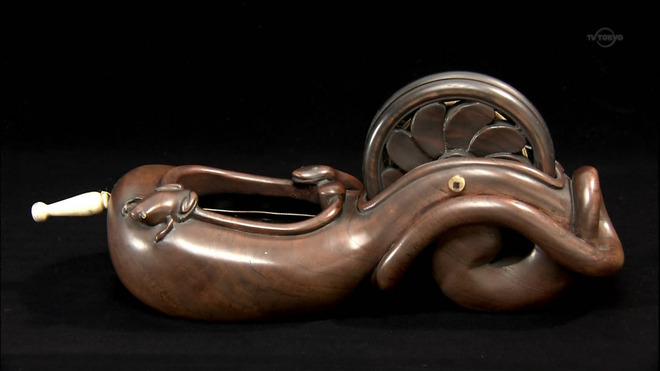


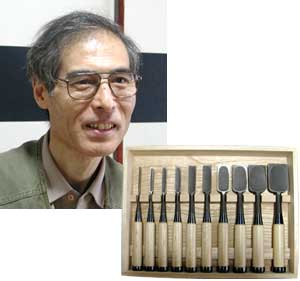


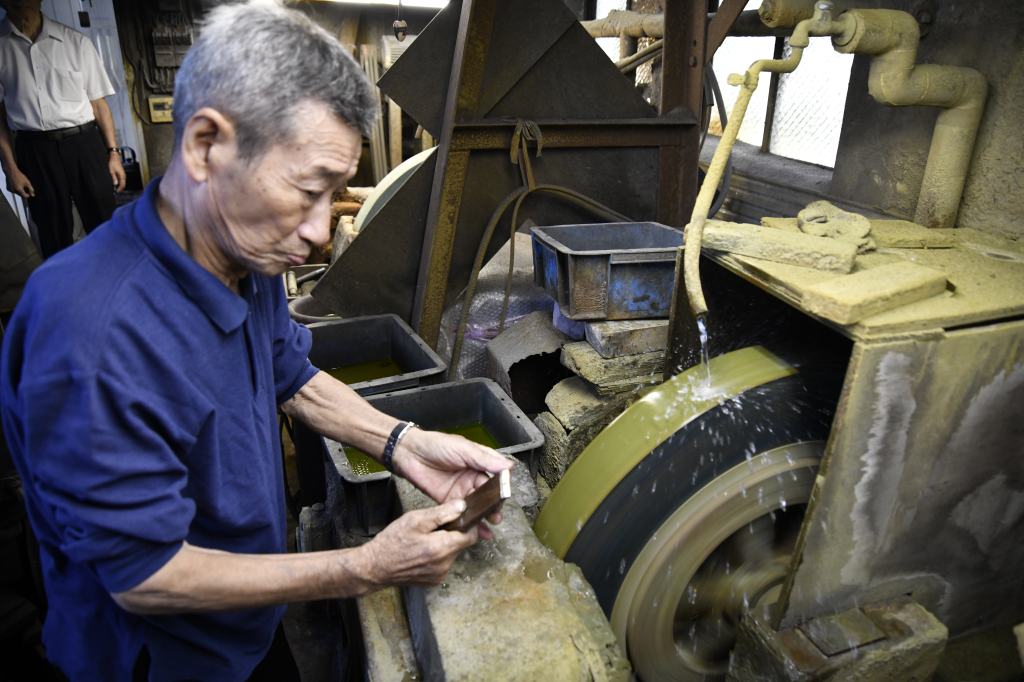


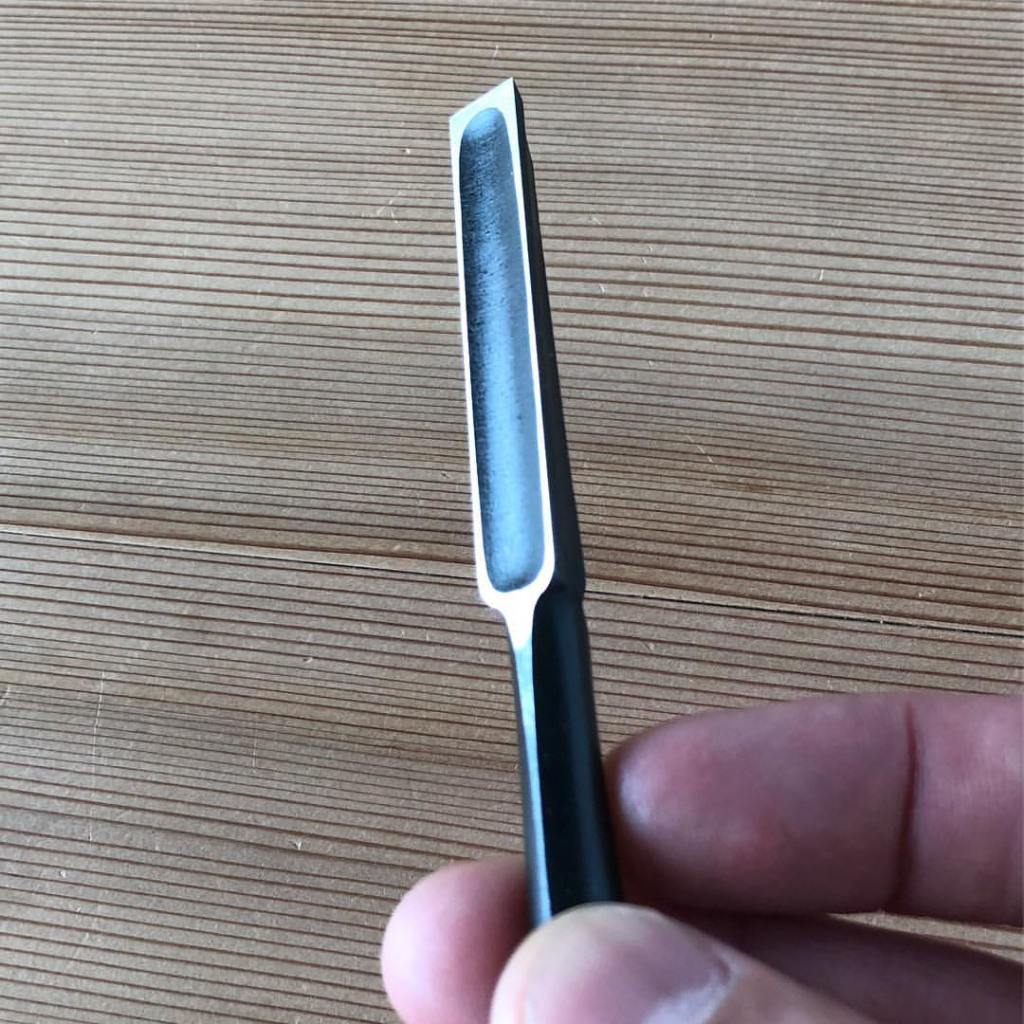


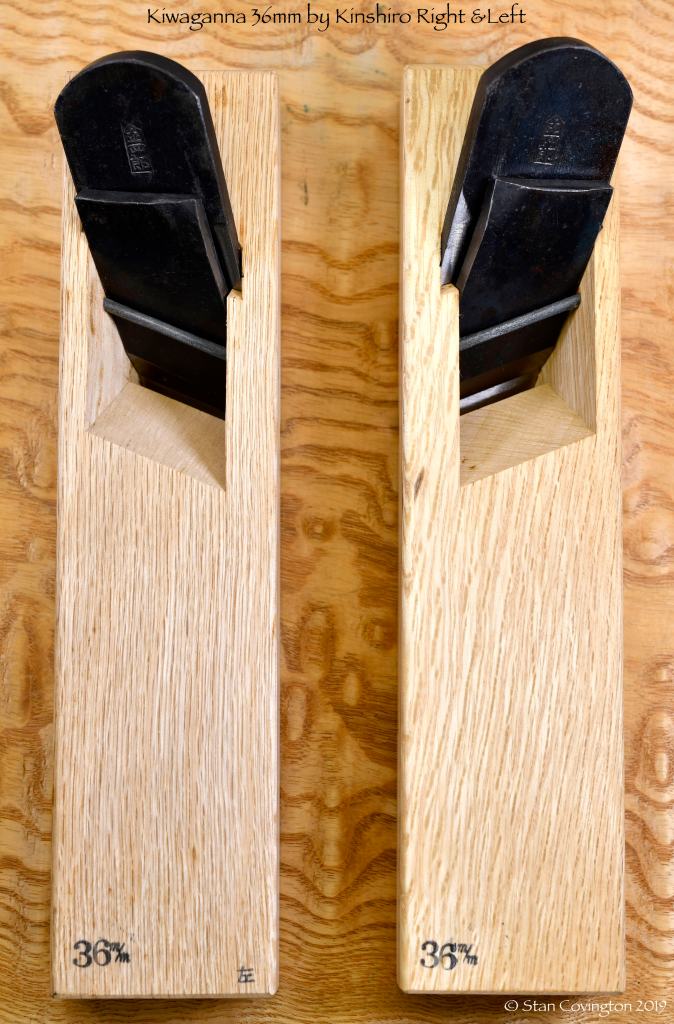


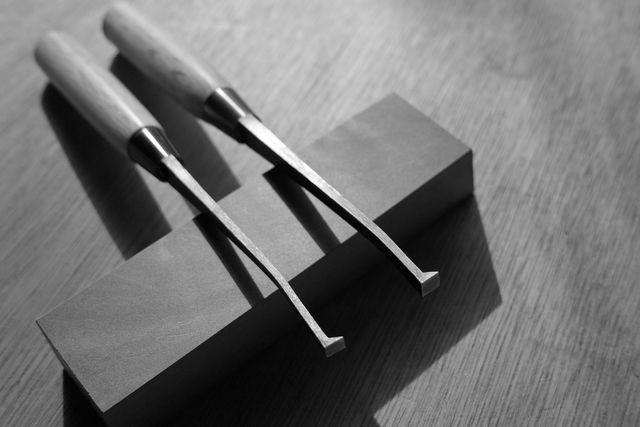




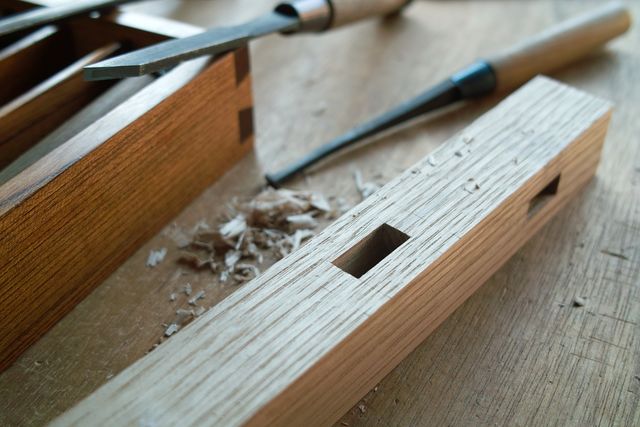
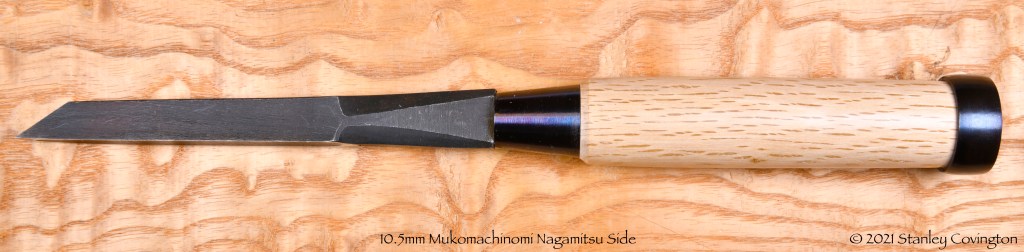
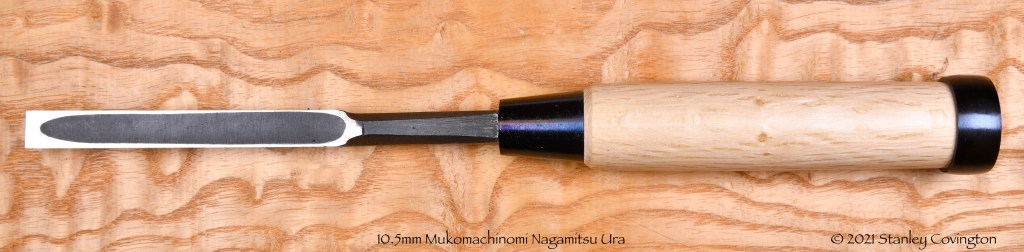


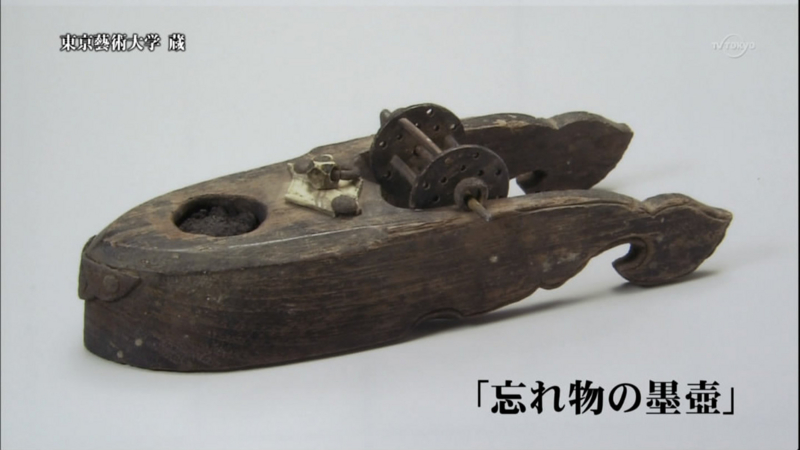


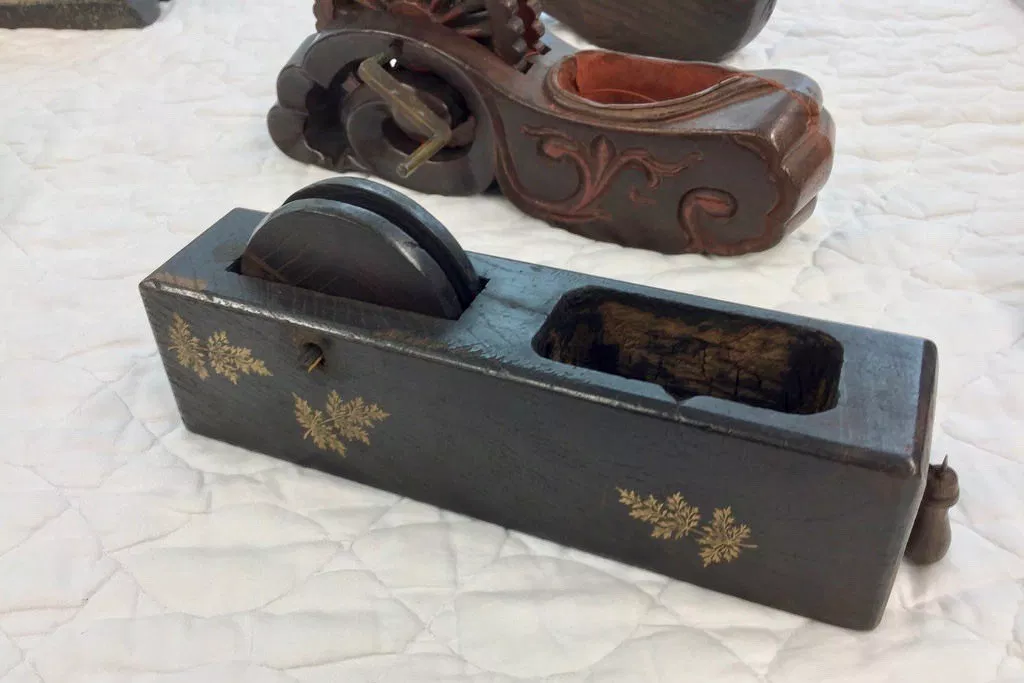


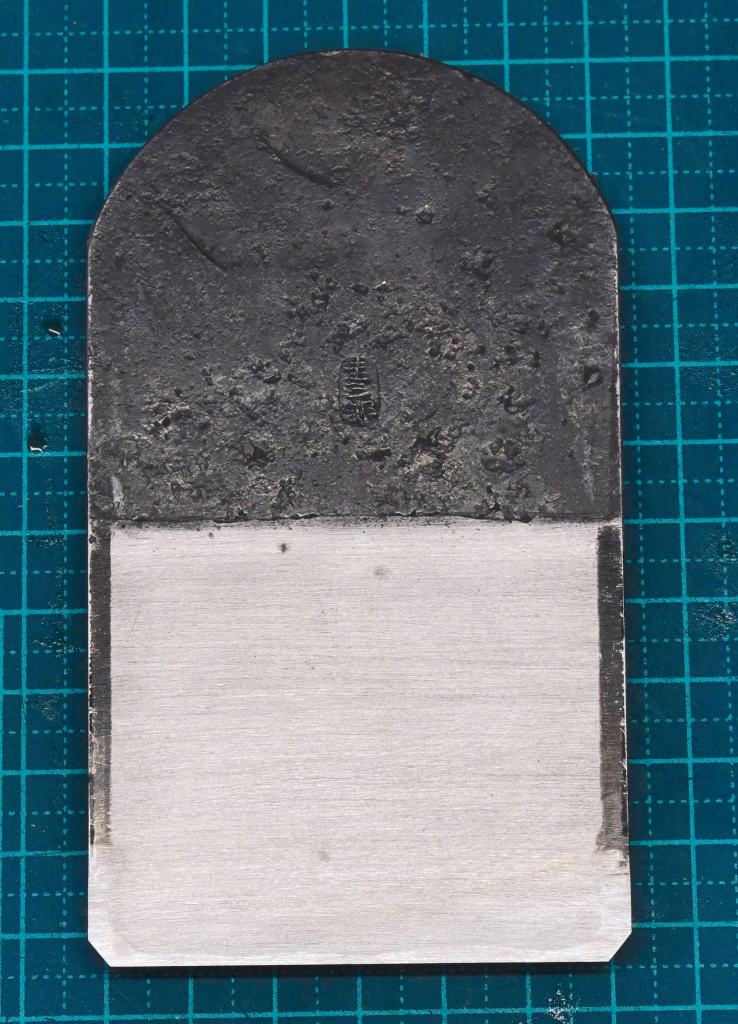


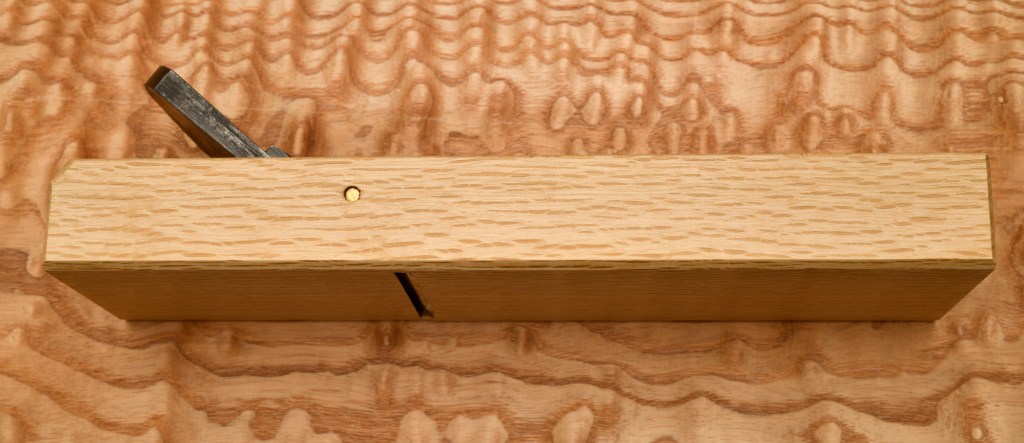


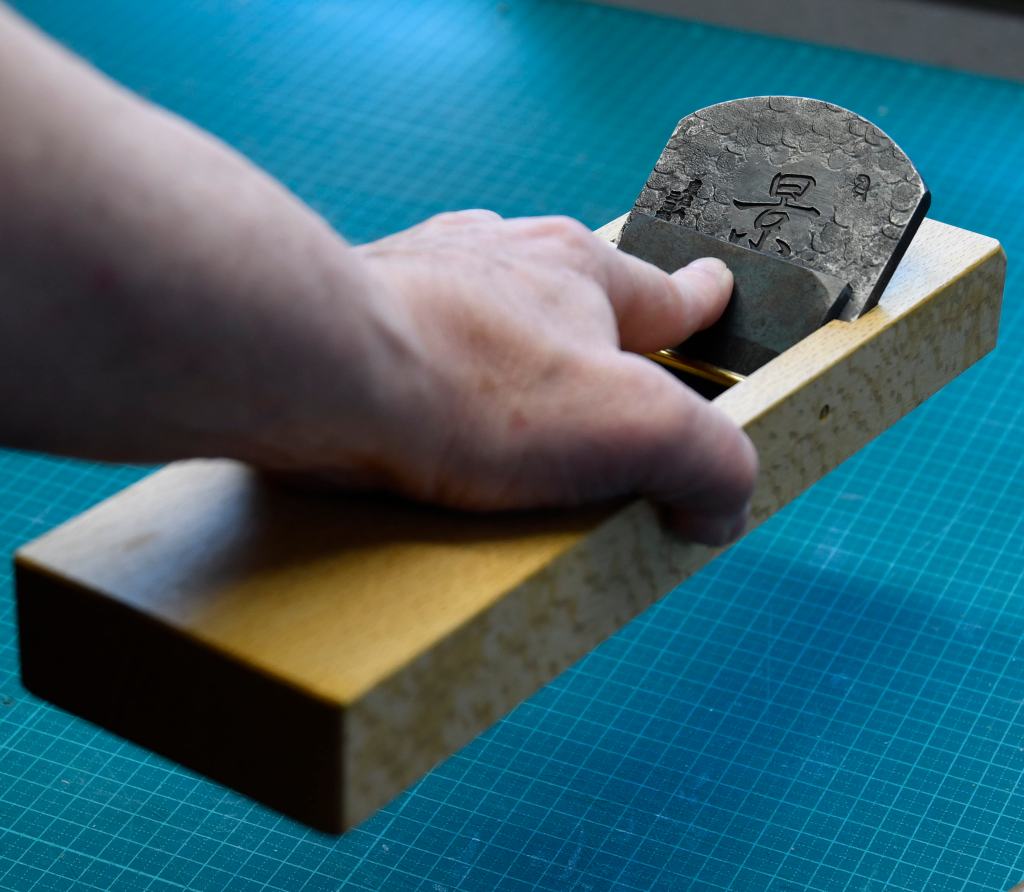





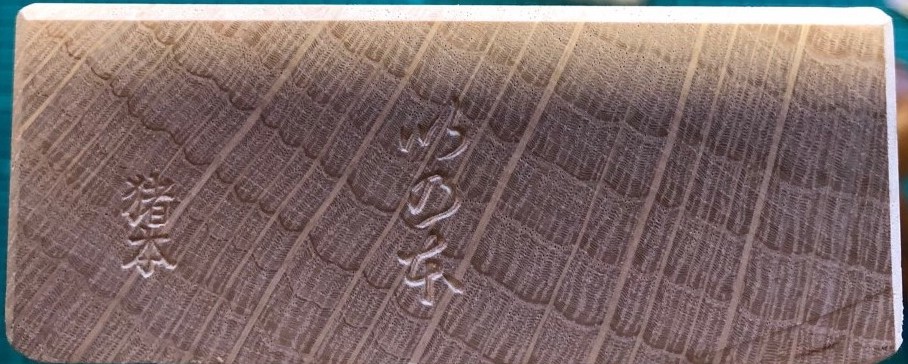
 Covington & Sons Tools
Leave a comment