A 60mm plane blade with its chipbreaker resting on the ura as when installed into the wooden body. Please note that there are no screws connecting these two parts making it a simple and reliable system.
There are three things extremely hard: steel, a diamond, and to know one’s self.
Benjamin Franklin
n this fifth post in our series about the Japanese handplane, we will discuss a single one of its component parts, the chipbreaker.
Professional woodworkers that use handplanes daily usually have this simple widget thoroughly figured out, but your humble servant has been asked to clarify why the chipbreaker is necessary and how to make it work so many times recently that I can no longer gracefully avoid publishing a more complete, BS-free explanation for the benefit of our Beloved Customers, may the hair on their toes ever grow long.
As always, this post is intended to provide a bit of insight, or at least a different viewpoint, to our Beloved Customers, many of whom are professional woodworkers and Luthiers.
This is a longish article. If your humble servant was a lazy man I would simply state stand-alone conclusions as have so many with half-baked knowledge of handplanes, and leave it up to Beloved Customer to figure out the why of things on your own, but that would be boorish behavior.
Even if you already know everything there is know about the chipbreaker, you may still find a new crunchy, scrumptious tidbit or two in this scribbling if you look.
Factors Critical to Controlling Tearout
The sole purpose of the chipbreaker is to control and, whenever possible, completely prevent the unsightly and wasteful tearout that often occurs when using a handplane to surface wood. We will examine the causes of and some solutions to tearout below, but let’s begin this discussion by examining factors critical to controlling/eliminating tearout that are more important than the chipbreaker. Your efforts to control tearout should always begin with these factors. But first allow me to share a story.
This was an educational effort, one that I magnificently failed twice before finally getting it right, but it taught me the three most important factors in reducing tearout in handplanes, whether with wooden or steel body, with chipbreaker or without. Unlike my curmudgeonly old masters, I won’t insist Beloved Customer stop reading until they have mastered all three of these factors, but master them you must if you are to achieve excellence with the handplane.
Factor 1: The blade must be sharp. This factor depends on the quality of the blade and the skill of the person who sharpens it. We have a series of 30 posts about sharpening Japanese woodworking blades Beloved Customers may find beneficial. The series starts with this LINK.
Factor 2: The mouth opening (gap between the sole and the cutting edge) must be as tight as practically possible and still pass shavings. Please make an effort to truly understand what this means, because it is not always easily accomplished. Of course, the mouth opening of a super finishing plane intended to take transparent shavings will of necessity be narrower than that of a plane intended to dimension boards by taking thicker shavings; Horses for courses;
Factor 3: The area on the sole directly in front of the mouth opening, a strip across the entire width of the sole of the plane and perhaps 3~10mm wide, must be true and flat and apply even pressure on the board being planed right up to the last few microns of the mouth opening. This is not an exaggeration. Much else can be out of wack but if this is right the plane will usually cut well.
There are of course other variables worthy of consideration, but why are these three factors critical to mastering the handplane?
To begin with, a dull blade won’t sever fibers cleanly but will tend to tear contrary fibers up and out of the board’s surface, the very definition of “tear out.” Can’t have that, ergo, Factor 1.
Since the soles of handplanes wear and consequently the width of mouth openings change with that wear, Factors 2 & 3 are dependent on the team of craftsmen that originally made the handplane as well as the craftsman/owner that uses and maintains the handplane over its lifetime. That’s you, Beloved Customer, so please pay attention, learn the lessons and develop the necessary skills.
Indeed, Factors 2 & 3 act in unison to control the movement of contrary fibers immediately before and after they contact the blade directing them into the cutting edge to be cleanly severed by the sharp blade (Factor 1), while at the same time serving to bend, buckle and weaken those fibers that would otherwise tend to develop a lever arm and tear out below the surface of the board. If this doesn’t make sense to you, please give it careful thought because you must figure it out if you intend to become proficient with handplanes.
These three factors are bedrock essential to controlling tearout regardless of the type of handplane in question and whether it has a chipbreaker or not. Few new planes, whether made of wood or steel, satisfy these conditions. And after regular use, resharpening and adjustments become necessary, so Beloved Customers are strongly encouraged to understand how to evaluate these three factors in your handplanes and learn how fettle them. We will address the necessary techniques in future posts, but it will take more than just reading, so consider it an assignment. Indeed, expect to screw it up royally at first and learn from your mistakes, just as your humble servant once did.
The Chipbreaker & Historical Lumber Processing Techniques
To better understand the chipbreaker, Beloved Customer may find it useful to understand a few historical factors about the wood they are shaving and some background about the tool making those shavings.
Before the proliferation of the large rip saw, and especially the water-powered sawmill, the only practical method of producing boards and beams from logs was to “rive” (split) them out using wedges and axes. This was the same worldwide.
Riven wood has two convenient advantages. The first one is that, because the grain of the lumber is relatively straight and continuous, grain runout is reduced, making it somewhat stronger structurally. And second, the occurrence of tearout when surfacing riven lumber is often less than what typically occurs in sawn lumber.
The thing about logs is that not all of them have grain straight enough to produce useful lumber when riven. Large, long, straight, old-growth trees are most efficiently processed, but as nearby old-growth primeval forests with large, straight trees were cut down and premium-quality logs became harder to come by, much construction and shipbuilding came to rely on more economical beams, posts and boards sawed from logs with wonky grain.
A beam sawn from a log to make an exposed structural member in a traditional Japanese house. Instead of trying to square it off, the carpenters have taken advantage of the natural curvature of the tree trunk to add strength as well as an interesting appearance. Please note, however, that being sawn, much contrary grain has been exposed that would have made riving such a log to this shape impossible, with the result that tearout is unavoidable. Also, and while this has nothing to do with tearout, the knots exposed at the bottom beam are in the worst possible location seriously weakening the integrity of this member in bending.
Unlike a team using axes and wedges, large rip saws in the hands of sawyers made practical through the proliferation of inexpensive, reliable steel, and especially the water-driven sawmill, could more easily and quickly cut long, straight boards and beams out of most any log regardless of grain direction. Consequently, logs that would have been rejected before the days of the sawmill can now be readily processed reducing the man-hours/cost of producing lumber significantly, at least that was the case until environmentalist grifters gained sway.
On the other hand, the grain direction of lumber produced using large saws and sawmills tends to wander everywhere increasing runout and making the job of cleanly surfacing the boards more difficult for subsequent craftsmen. This is the situation we face now.
We don’t know when or where the chipbreaker was invented, or how the concept spread around the world, but it’s a safe bet to assume its ability to calm the wild grain of sawn lumber during surfacing was one reason for its popularity. At least, that’s how it went in Japan. And wood is wood no matter where you are.
Two carpenters selecting a curved log to use a roof beam
Naturally-shaped logs used as roof beams in the restoration of a historically-significant building in Japan
Why Does Tearout Occur?
Let’s next examine some basic causes of tearout.
Please recall that wood is comprised of various types of cells, each with a job to do, but most of those that eventually become lumber specialize in exposing green leaves to the sunlight, transporting water from the ground up to the leaves, and nutrients formed in the leaves to the rest of the tree.
Transporting literally tons of water daily from the roots far up into the sky is the job of groups of cells that form what are effectively continuous waterpipes connecting the roots to the stomata in the leaves. In a living tree these pipes have semi-flexible cell walls, and while they mostly grow parallel with roots, limbs and trunk, their shape is influenced by wind, rain, snowload, shifting soil, microbes, bugs and ever-changing exposure to the sun over the life of the tree, so they are seldom perfectly straight. Indeed, once dried, it’s partly the changes in direction of these tubular cells, often called fibers, that gives harvested lumber its beautiful grain patterns and shimmering chatoyance.
The blade on the left is cutting with the grain and is unlikely to produce tearout, while the blade on right is cutting against the grain and is more likely to produce tearout.
When planing with the grain (the blade on the left in the illustration above), the blade severs fibers which are oriented either parallel with or sloping up to the board’s surface and angled in the plane’s direction of travel producing pretty shavings comprised of relatively short, flexible segments of fiber.
But when planing against the grain (blade on the right), the blade must sever fibers that are diving down into the board. Instead of consenting to being cleanly severed, often these longer, more rigid fibers tend to ride up the face of the blade, bridging and avoiding the cutting edge.
When this happens, instead of severing them cleanly, the blade tends to lever these longer fibers up out of the board’s surface until they suddenly break off below the surface of the board leaving a rough uneven surface. This damage is called “tear-out” in English and Sakame (sah/kah/meh 逆目) in Japanese, which translates directly to “reverse grain.”
How Does the Chipbreaker Work?
Whether the handplane in question be Western or Japanese in design, the chipbreaker, aka “uragane” 裏金 (oo/rah/gah/neh) as it is called in Japan, seems at first glance to provide little benefit in exchange for the added weight and complication. Indeed, if all the cuts you make when planing wood are in the direction of the grain (id est fibers either oriented parallel with, or rising up to, the surface of the board and angled away from the direction of the cut), the chipbreaker will be about as useful as a frilly lace brassier on a boar. But wood grain is seldom so cooperative, donchano.
With the addition of the chipbreaker, and in combination with the three factors listed above, those contrary fibers that try to bridge and ride up the face of the blade without being severed immediately run smack dab into the abrupt face of the chipbreaker thereby bending and buckling them and preventing them from bridging and developing the lever arm necessary to break them off below the surface of the board.
At the same time the collision with the chipbreaker redirects many of these mischievous fibers into the cutting edge to be severed, thereby preventing, or at least reducing, nasty tearout.
Bless us and splash us, preciousss! What a wonderful counterintuitive thing!
To better understand how the chipbreaker works, I highly recommend Beloved Customers devour, like starving little piggies, the video titled “Influence of the Cap-iron on Hand Plane,” Created by Professor Yasunori Kawai and Honorary Professor Chutaro Kato, Faculty of Education, Art and Science, Yamagata University (with subtitles). Much will come into focus after watching this.
Downsides to the Chipbreaker
While your humble servant has written glowing things about the chipbreaker, I am not so foolish as to suggest all is blue bunnies and fairy farts because the chipbreaker has some downsides:
The chipbreaker adds weight, complication and cost;
The impact of wood fibers on the chipbreaker produces friction heat and consumes energy whether cutting with or against the grain. This energy loss is not insignificant;
When cutting with the grain, the chipbreaker adds little benefit while tending to reduce the luster of the planed surface;
To be effective, the chipbreaker must be setup, tuned, installed and maintained properly, requiring the user to have adequate knowledge and to put forth effort periodically.
Despite these downsides, your humble servant believes, as have millions of craftsmen over untold centuries, that the chipbreaker is a component worth mastering.
Alternatives to the Chipbreak
In light of the gains and losses associated with the chipbreaker, it would be short-sighted, indeed amateurish, to assume it is always necessary, and just as short-sighted and amateurish to assume it is never necessary. So let’s examine some alternatives next.
Alternative 1: No Chipbreaker
The first alternative to the chipbreaker we must consider is, of course, no chipbreaker at all. Indeed, if you always plane with the grain of the wood, and your plane has a sharp blade and tight mouth, as mentioned above the chipbreaker adds no value while only wasting energy. Indeed it may even reduce the quality of the finished surface’s appearance.
In the case of the Bailey pattern plane or other styles with cap irons and the chipbreaker and blade attached to each other by screws, using the plane without the chipbreaker is inconvenient. But in the case of Japanese plane, the chipbreaker can be easily and speedily removed without influencing the cutter. The resulting finish created by the plane may or may not be improved, but the force required to motivate the tool will absolutely decrease. Sadly, such cooperative wood can be elusive.
This is an excellent solution, one I highly recommend to Beloved Customers.
Alternative 2: High Bedding Angle Without a Chipbreaker
Another option with a long history worldwide is to install the cutting blade in the plane’s body at a higher bedding angle, perhaps 50~55˚+. Combined with a sharp blade, tight mouth and solid uniform contact/pressure between the board being planed and the area of the sole directly in front of the mouth opening, the more abrupt change in direction forced on shavings by this high-angle blade will then tend to buckle the long contrary fibers on its own without a chipbreaker. But no guarantees.
While a high bedding angle does indeed tend to reduce tearout, adding a chipbreaker is a more reliable way to further reduce tearout in woods with contrary grain even more.
The one undeniable downside to a high bedding angle is the extra energy one must always expend to motivate the plane.
Alternative 3: Bevel-up Handplanes Without a Chipbreaker
Another alternative is the “bevel-up” planes that have become popular in recent years. This style of plane is not a new solution. I own some and have used them, but other than the block plane versions, I regret falling prey to specious marketing claims spouted by shills. Losing all credibility sucks.
Amateurs like BU planes because parts are fewer, maintenance is easier, and the necessary skills one must acquire are fewer.
One gentleman boldly informed me that he believes bevel-up planes to be superior to all others because he would rather spend the time it takes to master the chipbreaker on making wooden objects instead. My mind boggled like a weasel binging on crystal meth….
Bevel-up planes work in exactly the same way high bedding-angle planes described in Alternative 2 above do by presenting a steeper angle for contrary fibers to climb causing them to either be severed or to buckle instead of tearing-out. This assumes, of course, that the blade is sharp, the mouth is tight and contact between the board being planed and the area of the sole directly in front of the mouth opening is uniform.
Sadly, the efficacy of this action is no more consistent than the high-angle blade without a chipbreaker discussed above.
The downside to the bevel-up plane is that the additional, more-consistent results afforded by a well-tuned chipbreaker are, like heaven’s pearly gates to a Shat Francisco politician, forever unattainable.
Alternative 4: Back-bevels
Another alternative is the quick and dirty back bevel applied to the ura or face side of the cutting edge, as discussed in a previous post. This works for the same reason the high-angle blade does, but it is not an effective long-term solution, and certainly qualifies as tool abuse in the case of Japanese handplanes IMHO. Consider yourself well and truly warned.
I highly recommend Beloved Customers use planes with chipbreakers and learn how to sharpen, properly setup, maintain, and adjust them for maximum results. It’s the way advanced professional woodworkers with real skills get the job done.
Keys to Making Chipbreakers Work Effectively
A naturally curved log shaped as a “Nijibari” rainbow beam at the main entrance to a Buddhist temple.
The following is a condensed list of tasks Beloved Customer needs to accomplish to get consistently good results from their chipbreakers. We will discuss all these items in greater detail in future articles in this series. I strongly encourage you to invest in yourself by developing the requisite skills:
Fit the chipbreaker to the blade as lovey dovey as two newlyweds and so there is no gap between the cutting blade and extreme edge of the chipbreaker. This is not difficult to achieve, but the fit must be nearly perfect to prevent naughty shavings from wiggling between the blade and chipbreaker, because if they do get jammed in there, back-pressure will increase and the finished surface will look like poached crap on toast. We will discuss this more in the next post in this series;
Fit the chipbreaker to both the plane’s body and retention rod so the chipbreaker will remain in-place;
Grind a 70˚~80˚ striking bevel at the cutting edge of the chipbreaker to effectively buckle shavings. It doesn’t need to be a perfect bevel, and if it is rounded, that’s OK too. Yes, I know this seems ridiculously steep; If you don’t like it by all means experiment until your little pink heart sings, but after you’ve wasted a few months on hit-and-miss research, please remember that YMHOS toldjahso;
Polish the chipbreaker’s striking bevel to reduce friction and prevent wood sap from building up on it too quickly. Re-polish it as necessary. If you pay attention to the condition of this abrupt bevel you will notice that it may actually become pitted from the heat and friction of the wood shavings, especially when planing wood containing hardish minerals. Total neglect will harm efficiency;
Clean accumulated wood sap from the striking face regularly and oil it occasionally with your oilpot to reduce friction;
If shavings tend to become stuck in the mouth, check to see that the chipbreaker is not so thick as to obstruct their smooth passage. If necessary, grind the chipbreaker thinner near the mouth and polish it to improve the flow of shavings;
When you deem the chipbreaker to be necessary, install it as close as practical to the cutting edge. The ideal distance will depend on your plane, the wood you are cutting, and the depth of cut, but 0.5~0.8mm is usually a good place to start. I highly recommend you actively experiment to find the best distance. With practice it will become second nature. While it is not applicable to Japanese handplanes, Rhett Fulkerson of Nice Planes in Frankfort, Ky., has an intelligent technique for systematically setting chipbreakers and cap irons I find useful. LAP has an article about it here.
Conclusions
The chip breaker has been around a long time only because it consistently works.
In Japan, where the single-blade plane was the standard for hundreds of years, with the shift from riven lumber to more economical sawn lumber, the chipbreaker was added to the handplane, perhaps 150+ years ago, and remains in-use even today, solely because it consistently works.
The chip breaker won’t solve all your tearout problems, but it will definitely help on condition that you set it up and maintain it properly. It isn’t difficult and the results of doing so set the professional apart from the amateur.
In the next post in this swashbuckling tale of bare-chested Scottish warriors riding feather-footed war horses over the highlands to rescue buxom lassies clad in flowing gowns from evil leering Lords, we will describe in detail how to setup and maintain the awesome chip breaker. Don’t forget your kilt and claymore!
YMHOS
If you have questions or would like to learn more about our tools, please click the “Pricelist” link here or at the top of the page and use the “Contact Us” form located immediately below.
Please share your insights and comments with everyone in the form located further below labeled “Leave a Reply.” We aren’t evil Google, fascist facebook, thuggish Twitter or a manager of the Democrat Congressional IT team and so won’t sell, share, or profitably “misplace” your information. If I lie, may all my chipbreakers chip and fail.
And now at last it comes. You will give me the Ring freely! In place of the Dark Lord you will set up a Queen. And I shall not be dark, but beautiful and terrible as the Morning and the Night! Fair as the Sea and the Sun and the Snow upon the Mountain! Dreadful as the Storm and the Lightning! Stronger than the foundations of the earth. All shall love me and despair!
J. R. R. Tolkien
This article is a continuation of, and probably the conclusion to, our “Sharpening Japanese Tools” series. The last article was one year ago and gave an example of how to employ the lessons taught in the previous 29 posts. At that time, your humble servant promised to discuss the subjects of this article at a later date. It’s later.
Why the delay? Simply because I am an excessively compassionate sumbitch who wanted Beloved Customers who hadn’t already figured out plane blade sharpening on their own to become proficient at regular sharpening operations before worrying about something as bizarre as wacking hard steel blades with hard steel hammers. After all, in the words of Miss Benatar, it’s sometimes a heartbreaker.
But now with the blog teetering on the loose and crumbly edge of the rabbit hole that is the Japanese handplane, we have the choice of either gliding gracefully into its depths or clumsily tumbling down ass over tea kettle (oh my!). Alas, we can tarry balanced in this precarious position no longer.
With his article we will begin our graceful swan-like journey by studying a matched set of operations Beloved Customers need to master to become proficient at maintaining Japanese woodworking blades: one called “Uradashi,” and a related operation called “Uraoshi. If you already have these skills, accept my highest praise. The target audience for this post, however, is those that don’t have experience with uradashi and uraoshi as well as those that want to review and improve the skills they already have.
So spread your wings and fly, my brave cygnets!
Definitions
Beloved Customers should already be aware of the hollow-ground “uratsuki,” typical to Japanese chisel and plane blades. If not, please review the article at this link.
Another important term is “Itoura” pronounced ee/toh/oo/rah, which translates directly as “thread land.” This is the polished land on the ura side of the blade across the width of the blade and immediately adjacent to the cutting edge. In fact, it forms one-half of the cutting edge, and the maintenance of this tiny bit of metal is the purpose of the operations described herein.
Uradashi is pronounced oo/rah/dah/she and written 浦出し in the Chinese characters as they are used in Japan. These characters translate directly to “push-out the ura.”
Uraoshi is pronounced oo/rah/oh/she and written 浦押しwhich translates directly to “press the ura.”
These two maintenance operations are performed to restore the blade’s cutting edge to useful condition when the thin itoura land at the cutting edge is almost worn out. We will discuss the why and how below.
Long-term Strategy
Before we start pecking on steel, let’s consider our sharpening strategy.
Professional-grade blades are not only expensive, they are difficult to make, hard to find, and require an investment of time and effort from the user if they are to deliver high-performance results over many years. To minimize the required expenditure of time and effort, and to maximize the benefits achieved we need more than just technique, we need a maintenance strategy.
In previous posts in this series we have discussed multiple strategies, some physical, some psychological, and even a few supernatural ones. The following is one I strongly urge Beloved Customers to adopt:
Get the ura in good fettle, and then;
Avoid working the ura on anything but one’s finest-grit sharpening stone thereafter, (with the exception of uraoshi following uradashi, of course).
Simple, no?
The ura is formed by grinding the lamination of extra-hard high-carbon steel to form a depressed area. Because hard steel is time-consuming to abrade, a wise craftsman will work to keep the ura as deep as possible, and consequently the four flat lands surrounding the hollow-ground uratsuki as narrow as possible, for as long as possible, thereby minimizing the area of hard steel that must be abraded with each sharpening.
But no matter how careful we are to preserve the ura, sharpening the bevel makes the blade incrementally shorter, so the day will come, at least in the case of plane blades, when the itoura land becomes as thin as a thread. Once it disappears, the blade will no longer function. This is the only drawback to the Japanese ura feature, and can only be solved by drastic methods.
Bending Hard Steel
The goal of uradashi is to cause the lamination of hard steel at the cutting edge to bend towards the ura so that when we subsequently abrade the bent portion the itoura land will be restored.
Now if you think about this for a second you will realize that trying to bend a thin plate of steel hardened to Rc65~66 without snapping it is a fool’s errand. In the case of Japanese blades it is possible to accomplish but only because of the thicker, supporting layer of soft low-carbon/no-carbon iron, called the “jigane,” to which the hard steel layer is laminated. The other point to understand is that only the portion of the high-carbon steel layer actually directly laminated to the softer jigane can be bent, not the fully-exposed high-carbon steel layer at the extreme cutting edge.
Your humble servant struggled at first with uradashi, in part because every explanation I read about the process in both English and Japanese was written by people who either didn’t really know what they were talking about, or were too lazy to explain it well. Some years, several broken blades, and much heartbreak later I finally figured it out. Better information is available nowadays, but there is still plenty of BS out there to shovel.
Despite the title of this section, the first key point to understand and always remember is that uradashi is not about using a hammer to bend the hard steel layer; Never ever ever never touch this steel with your hammer! I forbid it on pain of 20 lashes with a wet noodle.
Instead, the goal is to peck on the soft iron jigane layer of the laminated blade at the bevel, as described below, deforming it and causing it to expand.
The jigane would normally just deform away from the hammer’s impact point, but the hard steel hagane lamination on the ura side of the blade restrains it causing the entire blade at the cutting bevel to curve in the direction of the ura without snapping or cracking. This is another aspect of the blacksmith’s magic unique to the Japanese plane blade.
The second key point you need to grasp around the neck with both hands and dig your Jimmy Choos deep into is that it is indeed a fool’s errand to try to bend the soft iron lamination by the power of your mighty arm, Oh Lord of Thunder. No, we must be as clever as Loki.
So, how do we cleverly do this job, and what tools should we use?
This 60mm blade belongs to one of my arashiko planes and was forged by Mr. Uchihashi Keisuke from Swedish K-120 steel. The brand name is “Keisaburo.” An excellent blade and still functional, but the itoura is getting a little skinny.
Tools
You will need the following tools to properly perform uradashi and uraoshi on a blade:
A small hammer. Great force is neither necessary nor useful; Indeed you must be able to control this hammer very precisely, so the lighter it is the better. One with a pointy end like a funate or a Yamamichi, or a corner of the thin end of a Warrington hammer or tack hammer is ideal because the tiny impact face focuses maximum pressure on a small area, deforming the jigane efficiently. A small, pointy hammer also makes it easier to guide and control the hammer to ensure precise impacts. And control matters a lot because if you miss and strike the hard steel at the cutting edge it will be damaged and bitter tears will flow. Consider yourself duly warned, Oh Might Thor;
An anvil of sorts. This can be any piece of steel with some mass and with a rounded-over corner. A piece of railroad track is great. I use the face of a small sledge-hammer clamped in my vise. A sharp corner is not good, so round a corner by grinding or filing and then smoothing it. A piece of thin postcard material glued to this rounded corner help keeps the blade from slipping;
A small square or straightedge;
A marking pen or scribe to mark the “target area” on the bevel;
A rough diamond plate/stone or a mild-steel kanaban plate + carborundum powder;
Parking pen or Dykem for coloring the ura’s lands;
Regular sharpening tools (stones, water, etc.).
A small sledge hammer used as an anvil by clamping it in a vise with another clamp as a stabilizer.
Target Area Layout
Let’s begin by laying out the target area on the soft iron jigane at the blade’s bevel with a marking pen. Or you can scratch lines into the jigane with a metal scribe. This target area will indicate the area you will peck with your little hammer producing many small dents. You must not strike outside this target area even if tempted with donuts. Not even if they have those tasty sparkly sprinkles on top.
The striking area marked with marking pen.
The dents you will make with your little hammer need to be limited to a band on the jigane parallel to the cutting edge and beginning 2~3mm from where the jigane lamination begins extending to the end of the jigane lamination at the blade’s back, in the case of plane blades, or the face where the brandname is engraved in the case of chisel blades.
Make a line with your scribe or marking pen the full width of the bevel at this distance from and parallel to the cutting edge. Everything above this line in the direction of the blade’s back, in the case of plane blades, or the face where the brandname is engraved in the case of chisels and knives, is the primary target area. Make sure you get this right.
The dents need to extend across the full width of the jigane layer, except where the corners (ears) have been ground to a bevel at the right and left end of the blade, so the right and left limits of the target area are delineated by the ears.
Although we need to tap the full width of the blade to avoid stress concentrations, there is nothing to be gained by trying to bend the far right and left corners of the blade, so we want to focus approximately 2/3rds of our hammer impacts and the resulting dents near the center 1/3 of the blade’s width. Mark the right and left limits of this central area on your blade with a marking pen or scribe.
The Grip
If you are right handed, hold the blade in your left hand with your index finger extended and pressed against the ura parallel with the cutting edge, and about 5~10mm away from it. Press down with your thumb on the blade’s back clamping the blade between your thumb and the side of your index finger. Your other fingers should support the blade from the ura side.
This photo shows how to hold the blade against the anvil.
Your index finger will be the fence that keeps the blade in proper alignment during the tapping-out process.
Next, we need to figure out how to align and move the blade on the anvil, as well as where to place hammer blows in relation to the blade and anvil.
This photo shows the grip without the blade in the way. Notice how the index finger is touching the anvil. The blade is shifted right and left using the index finger as a fence to keep blade and hammer in precise alignment and under tight control.
Manipulating the Blade on the Anvil
Place the blade’s ura on the rounded corner of your anvil. You may want to tape or glue a piece of thin cardboard, postcard, or manila file folder to the anvil’s corner, not so much as a cushion, but to help prevent the blade from slipping, but this is not mandatory.
Adjust the distance between your extended index finger and the cutting edge as necessary so your finger is touching the anvil stabilizing its position, and so you can slide the blade to the left and right indexing off your finger to keep the target area in proper alignment.
Next, while still in position facing your anvil and with hammer in hand, move the blade aside and tap the rounded corner of your anvil with your hammer lightly. Memorize this location and your position because every tap from now on must be aimed at this same exact spot on the anvil.
The Tap Dance
The time has come to begin the dance.
Reposition the blade on the anvil and use your little hammer to tap the soft jigane layer at the bevel (only the jigane!) in the target area you marked earlier making a row of small dents in it.
These small dents don’t need to be pretty or uniform. Be patient because you may need to make hundreds of pecks, each one quite precisely.
Here is the key point to understand: You want each little dent to cause the jigane to deform and expand in length and width a tiny bit, gradually, until a significant degree of deformation accumulates. The hard steel layer, however, will constrain the jigane layer from expanding, causing the blade to bend, and causing the hard steel layer to deflect and curve towards the ura, bending it without breaking it. It doesn’t seem possible at first, but I promise it will happen, so please be patient.
The trick then is to use the grip described above with your forefinger indexing the blade against the anvil while moving your hand, along with the blade, a tiny bit right or left with each strike, with the each point of impact firmly supported on the anvil, in-line with the hammer blow, thereby squishing the jigane between hammer and anvil. In this way, since the hammer is always aimed at the same exact point on the anvil, you don’t need to worry about realigning it with each blow, removing several difficult-to-control variables from the tap dance at once.
Remember, keep the hammer and anvil precisely aligned, and move the blade left and right, not the hammer. It helps to touch the inside of the elbow of the arm using the hammer against your side in a fixed location to help maintain a consistent hammer swing and distance. Until you have mastered consistency, speed is risky.
Another key point to understand is that, if the point of impact of your little hammer is not directly in-line with the point where the ura on the opposite side of the blade is touching the anvil, the force of the hammer’s impact will tend to cause the blade to jump and wiggle around instead of deforming the jigane. This wastes time and energy and makes it difficult to make precise taps.
Here’s a video of Eleanor Powell tapping away with great control, and with the aid of her faithful Fido. I don’t recommend including a benchdog in your tapping-out routine other than as a deterrent to any pernicious pixies lurking in your workshop eager to cause you to miss with your hammer and chip your blade. Evil pixies!
Here’s a video of Sarah Reich tap dancing with every strike landing precisely in the target area. I need to get a pair of shiny red lycra pants like her to go with my most excellent aluminum foil hat with the curly copper wires and red fringe. Do you think they would make my butt look huge?
Remember, force is neither necessary nor useful. The goals is to make many precisely aligned tiny taps producing many small deformations in the target area, with no impacts on the hard steel layer.
Dent Removal
We talked about “dents” above. If you are using a round-faced hammer, those dents will be little crescents. If you use a hammer with a tiny striking face on one end like a Yamakichi or Funate, that tiny face will dig into the metal making ugly little peck marks instead of pretty little crescents. I have used all varieties of hammers but prefer the ones with pointy ends because their impact face is small and, it seems to me, easier to control. Six of one half-dozen of the other.
But remember that we will abrade away all those dents/pecks/craters after a few sharpening sessions, so appearance is of zero importance.
The Goldilocks Itoura
The goal, of course, is to bend the blade at the ura land just behind the cutting edge enough to create a useful, flat ura. But how wide should the itoura be when the process is complete? Among plane connoisseurs a narrow itoura is, like a willowy super model, considered a thing of beauty. By narrow I mean some where around 0.50~1.0mm.
A narrow itoura does indeed look sexy, so much so that fashion-conscious plane blade blacksmiths make a skinny ura a point of pride. And, in fact, a bulimic itoura makes it easier and quicker to sharpen the blade because the square millimeters of hard steel one must abrade/polish is minimal compared to a wider itoura.
The downside to the super-skinny itoura is that it wears out sooner, making it high maintenance. Now, I’m not suggesting that if your plane blade has a slender itoura it will demand weekly spa visits, twice monthly trips on a G700 jet to the Vienna Opera, annual ski holidays in Verbier, and bi-annual boob jobs, but there is no doubt you will need to do the uradashi tap-dance more often. Shiny lycra pants are optional, but ooh sooo sexy! (シ)
On the other hand, a wider itoura of 3~4mm has some advantages too. It’s easier to fit the chipbreaker (uragane), and you don’t need to do uradashi/uraoshi as often. Much wider than this, however, and I find it can be difficult to get a screaming-sharp edge at times. Moderation in all things, I guess.
I don’t know how to describe when to stop tapping-out the ura to obtain a good width for your itorura because every blade is a little different, but after doing it a few times you will develop a sense of when enough is enough. However, to develop that sense you should make frequent checks on your tapping-out progress by placing your handy dandy straightedge or square right on the itoura parallel to the cutting edge and sighting between the blade and the straightedge/square with a strong light shining at the gap. You will be able to see the itoura gradually bulge upwards at the center. Even a little bit of a bulge will give you a useful itoura, so don’t get carried away.
Uraoshi
Once the tap dance is done, we need to grind down the ura to form a new itoura, a process called “ uraoshi” (ooh/rah/oh/she)
The traditional method is to use the mild steel kanaban lapping plate mentioned above, although any true lapping plate will work. One sprinkles a small amount of carborundum powder on the plate along with a little water, and then works the ura side to side grinding down the bulged area to make a flat.
The problem with using lapping plates and carborundum powder is that not only is it a messy process, but unless you are careful to keep the right amount of wet grit on the plate, the results tend to be a tad irregular. I recommend using diamond plates or ceramic diamond stones (like those made by Naniwa) because they produce more consistent results quicker.
Whether you use a kanaban lapping plate or a diamond plate/stone, it’s important to focus pressure on the thin area where you need the itoura to develop. Pressure anywhere else is not helpful, but only wears out the itoura prematurely.
Here is wisdom: When they first attempt uraoshi most people try to stabilize the blade by applying uniform pressure across the back of the blade. This seems to makes perfect sense, but it always results in grinding a nasty little trench in the two side lands at the ura where it touches the extreme edge of the kanaban or diamond plate. Remember, the uraoshi process tapped out a bit of metal right at the cutting edge, and mostly at its center. This is what you need to abrade, NOT the right and left lands of the ura, and certainly no more than 3~4mm from the cutting edge. So please keep tight rein on your inner badger and carefully focus the pressure you apply during uraoshi only on the thin area where you need to restore the uraoshi.
Some people like to apply a thin strip of paste wax, perhaps 3~4mm wide, on the edge of their kanaban or diamond plate to prevent it from digging ugly trenches in their beautiful and delicate side lands. Others like to apply a thin strip of mylar tape at the same place for the same reason. These techniques all work, but professional sharpeners don’t use them because they know how to apply pressure correctly.
A quick touch of the blade on the diamond plate shows where the black marking pen ink has been removed along with the highest spots on the bent itoura.
After the itoura has been restored (perfection is not necessary), polish the blade using your normal sharpening routine.
The restored itoura. Please notice the lack of trenches. The bevel after working it on the diamond plate and stones. The remaining peck marks will disappear entirely after a few sharpening sessions. Notice how your unworthy servant has focused his abrasion efforts nearest the cutting edge. Good boy.
Chisel Blades Versus Plane Blades
Uraoshi and uradashi are operations typically, but not exclusively, performed on plane blades. About the only time chisels need to have uradashi performed is to restore the itoura after the blade receives major damage, like a big chip, a sad event all users of Japanese tools experience from time to time
There is a structural difference between plane blades and chisel blades Beloved Customer must understand when considering performing uradashi on a chisel blade.
Plane blades have a steel lamination that is more-or-less uniform in thickness because that’s all that’s necessary. Chisel blades, on the other hand, are subject to much higher bending stresses than plane blades, so to prevent yielding and failure, traditional chisels are forge-laminated with the steel lamination wrapped up the right and left sides of the blade, forming something akin to a structural steel U-channel, producing a higher moment of inertia, and therefore greater strength and rigidity,
Because of this additional strength, chisel blades are more difficult to bend at the right and left sides using uradashi techniques compared to plane blades. Indeed, they may break if you try.
Since you can hope to safely bend the steel lamination only in areas away from the more rigid sides, uradashi operations on narrow chisel blades will go as smoothly as throwing a cat through a screen door. I wouldn’t even try it on any chisel narrower than 18mm. Beloved Customers have been warned.
If you feel compelled to attempt uradashi on a chisel blade, my only advice is don’t peck within 3mm of the right and left sides.
With this article, our Sharpening Japanese Tools Series is complete (probably). Your humble servant hopes it has been informative. If Beloved Customer had the patience to read it all, and the clairvoyant ability needed to understand most of it, then you know a heck of a lot more on the subject of sharpening than I did when I started the journey. At least you have received some great ideas for sexy new additions to your simply mahvelous woodworking wardrobe!
YMHOS
If you have questions or would like to learn more about our tools, please click the “Pricelist” link here or at the top of the page and use the “Contact Us” form located immediately below.
Please share your insights and comments with everyone in the form located further below labeled “Leave a Reply.” We aren’t evil Google, fascist facebook, or thuggish Twitter and so won’t sell, share, or profitably “misplace” your information. If I lie may Iron Pixies pass gas in my cornflakes every morning.
I warn you, if you bore me, I shall take my revenge.
J.R.R. Tolkein
Your most humble and obedient servant has received many requests over the years for explanations about how to setup, adjust, maintain and use Japanese planes. To those of our Beloved Customers with aspirations of professional-level skills with this most ancient and essential tool it’s an important subject, one that would require a veritable mountain of electrons to properly document, an overwhelming challenge for this broken and bedraggled blog. Nevertheless in this series of articles about the Japanese handplane I will try to summarize the subject in enough generality that new guys can follow, but with enough detail that professionals may glean something useful.
In this series we will discuss how to adjust a Japanese plane so it works well, how to tune it to increase performance, how to treat the body to reduce warpage and keep it looking good, how to deal with normal wear and tear, how to periodically tap out and dress the ura during sharpening, and of course how to use a Japanese plane.
This last subject is extremely simple but one many amateur users of Japanese planes and most users overseas get wrong. It happens so frequently that I am confident the improvement in Beloved Customer’s personal performance with Japanese planes will improve dramatically from this last subject alone.
The problem with Japanese planes is that, while they are exceedingly simple tools, their appearance belies their sophistication. Dealing with these subtle details without properly understanding how they interact with each other leaves many as confused as a ball of yarn among a dozen big-eyed kittens, so to avoid having too many strands running all over the place, let’s start with the basics, namely how to adjust them. Planes that is, not kittens or balls of yarn. For purposes of this discussion, we will assume our plane is in good fettle to begin with.
Preparing the Body
Although not an issue in the case of the planes C&S Tools purveys, Beloved Customer will want to inspect their plane, and perhaps make a few modifications to the body before strenuous use.
Striking Chamfer
When removing the blade or reducing the cutting edge’s projection through the mouth, we need to strike the white oak body on the 90˚ intersection between the flat end of the plane’s body and its top surface. Accordingly we need to cut a chamfer at this edge to prevent damage to the body. How wide? 3~5mm is a good range. What angle? Cut the striking chamfer approximately square (90˚) to the long axis of the blade.
While you are at it, cut off the corners formed at the right and left corners of this chamfer.
This is a one-time operation.
Sole Chamfers
If your plane doesn’t already have them, you will need to cut chamfers on the two edges at the right and left sides (long direction) of your plane’s sole. These chamfers have two purposes. First, to prevent the edges of the sole from chipping. Second, to make a small gap for your fingers to grip when lifting up the plane.
As the sole wears, Beloved Customers will need to be refresh these chamfers at the sole from time to time, so further explanation is necessary.
Some people like big, wide, honkin 45˚ chamfers at these locations. Your humble servant has even seen country bumpkins cut these wide chamfers and then carve unsightly grooves resembling a shark’s grin leading from the sides of the mouth to these chamfers for shavings to escape into. Codswallop!
Why is this a problem, you ask? Because the thinnest, weakest portion of any wooden plane’s body is the sidewalls right at the mouth. This is also where most warpage originates, so please don’t weaken it more than is absolutely necessary by cutting unnecessarily-wide chamfers or smiley faces.
In addition, wood removed from the sole by cutting overly-large chamfers reduces the bearing area of wood on the surface being planed accelerating wear on the sole. Keep these chamfers narrow at 2~4mm and a max angle measured from the sole of 25~29˚ More than this is unnecessary and possibly harmful.
A chamfer is not necessary at the trailing end of the sole so long as you have the self control to not strike the sole with your mallet.
Do not cut a chamfer at the leading edge of the sole as it will guide sawdust and shavings between the sole and the surface you are planing. Pas bien.
Top Chamfers
Apply a small chamfer on the front and side edges of the top surface, just enough to prevent chipping. 45˚ chamfers are fine, but a roundover (bozumen 坊主面 which translates to “Priest’s edge,” probably in reference to the bald head of Buddhist priests in Japan) is a friendlier, more elegant edge treatment, IMHO. Your choice.
Hammer or Mallet
In order to use a plane of any kind, one must remove the blade to sharpen it, and then re-install the blade and adjust its projection from the body’s mouth to produce a wood shaving of the desired thickness.
Like most wooden-bodied planes, one adjusts a Japanese plane by striking it with either a hammer or mallet. To drive the blade further into the wooden body (called a “dai” 台 in Japanese) when installing the blade or when increasing the depth of cut, one taps the head of the blade down into the wooden body. Pretty straightforward. But like most things in life, there are both clever and stupid ways to get even simple jobs done. Shall we try a clever technique first?
You can use either a metallic hammer or a mallet made of wood, plastic or even rawhide to tap the blade or body (dai 台) during these operations. They all work just fine, but there are long-term consequences to this selection to consider.
In Japan a steel hammer is traditionally used by carpenters to adjust planes. Without a doubt it’s convenient and effective, but there are some serious downsides to using a steel hammer you may not realize. Those include:
A steel hammer always mushrooms the blade’s head, without exception;
A steel hammer always dings the blade’s pretty face when adjusting the chipbreaker, and most critically;
After many strikes, the focused, high impact forces steel hammers impart will often crack and even split the wooden body. Ouch!
Although your humble servant believes such abuse reflects poorly on the perpetrator, a deformed and ugly blade is not a great tragedy. But there can be no doubt a split and splintered body is an expensive and time-wasting catastrophe, especially to the professional that needs his planes to keep cutting.
This photo shows the unavoidable damage caused by using a steel hammer, including deformed head and shoulders, and enough hammer dents produced when adjusting the chipbreaker to nearly obliterate the lower portion of the signature and brandmark. What did this once happy blade do to deserve such barbaric abuse?
All the worst depredations of a fool are condensed in this one photo. Notice the wastefully mushroomed head and shoulders of the blade which the owner has probably already ground down several times. We can’t see the blade’s face, but notice how the chipbreaker’s face is all dinged up. I guarantee you the blade is even more damaged. And of course, the split dai. Only a steel hammer in the hands of a drunken fool could have caused all this damage. What did this sad little plane do to deserve such barbaric treatment?! And how much money was wasted? But the damage began when the fool cut the humungous 45˚ chamfers we see into the sole’s sides, all the way to the mouth, for Pete’s sake! And besides the fatal crack at the center, cracks have also begun at both corners of the mouth, cracks that might have been prevented if a normal chamfer had been cut instead of the bloody abortion-by-chainsaw we see.
There are Beloved Customers who will say: “But I’ve seen Japanese craftsmen using steel hammers to adjust their planes, so it can’t be wrong.” The first part of this observation may be true, but the last bit isn’t. The undeniable truth is that steel hammers have dinged, deformed, mushroomed and made hideous many innocent blades, and cracked and splintered many sinless dai entirely unnecessarily.
Young carpenters often learn standard methods to fix the split bodies of hand-me-down planes using bolts, glue and even epoxy that after much time and effort yield results resembling some of Dr. Frankenstein’s experiments. But I assure you, not all Japanese craftsmen are so willfully wasteful and inured to the suffering of their tools.
C&S Tool’s planes don’t deserve such violent abuse, so we recommend Beloved Customers use a wooden mallet to adjust them. Without exception. A nylon, plastic or rawhide mallet with a wooden handle will work just as well.
Removing the Blade and Chipbreaker
Both the blade and chipbreaker are removed by tapping the chamfered corner of the block behind the blade with a mallet. We discussed this chamfer above.
It is of course possible to loosen the blade by tapping flat on the flat tail end of the block, but there is a risk of striking the bottom edge and deforming or even chipping the sole. Best avoided altogether.
The physics work best when the mallet impacts are applied in a vector more or less parallel with the blade’s long axis.
The chipbreaker (uragane) must be removed before the blade, but pay heed to prevent two unfortunate accidents that frequently occur during this process. The first accident is the chipbreaker jumping out of the block in an uncontrolled manner providing Murphy many yucks!
The second accident is the blade backing out of the body further/faster than the chipbreaker causing the chipbreaker to ride over the blade’s cutting edge dulling it and causing Murphy to squirt into his pants. This point is one newbies often overlook until they wonder why the pretty cutting edge they just sharpened is dinged even before they begin cutting.
How best to keep blade and chipbreaker under control? Your humble servant recommends pressing a forefinger onto the chipbreaker as shown the photo below and applying pressure upwards when removing it to encourage the chipbreaker to shift upwards ahead of the blade and in a controlled manner. Do the same on the face of the blade when its turn comes.
When removing the chipbreaker, apply pressure towards the blade and upwards with your index finger to monitor its movement and keep it under control. It is critical that the chipbreaker precede the blade up and out of the dai to prevent the chipbreaker from contacting the blade’s cutting edge dulling/damaging it.While applying upward pressure with the index finger on the chipbreaker, tap the chamfer behind the blade to cause the chipbreaker to move up and out of the body’s mouth. BTW, please make it a habit to not strike the center of the chamfer, but instead alternate strikes between the right and left sides of the chamfer to ensure the body will provide long service. You’ll feel the difference if you pay attention.
Once the chipbreaker is loose, remove it and go back to tapping the body to loosen the blade further. Continue to apply light pressure to the blade’s face to better monitor the blade’s movement, and to prevent it from jumping out of the body.
The plane shown in this example is an extra-wide 80mm finish plane with a shirogami No. 1 blade forged by Yokosaka Masato. This wider blade can finish-plane wider boards a little more efficiently than a 70mm (sunpachi) blade. The oasaebo steel rod which retains the chipbreaker in-use can be seen installed across the mouth. This is typically never removed over the life of the plane but you may need to file yours to ensure a good fit with, and even pressure on, the uragane. In the center are the blade and the chipbreaker (uragane). To the right is the mallet your humble servant uses for plane adjustments. This plane has seen extensive use but Beloved Customers and Gentle Readers will carefully notice the head and shoulders of the blade are not mushroomed, its pretty face as well as that of the chipbreaker are entirely free of unsightly dents and dings, and the body too is free of the dents, cracks and splits that always result from using steel hammers. Also, despite your humble servant’s skin consistently causing Japanese white oak to turn a dirty grey color, the applied London Finish has prevented such “patinazation.”
Adjusting the Chipbreaker (Uragane)
The chipbreaker is a recent addition to the Japanese plane. In earlier centuries, they had only a single-blade. Unlike the Western Bailey-pattern planes that incorporate the chipbreaker into the linkage necessary to adjust the blade, hiraganna planes work just fine without the chipbreaker, thankee kindly. Indeed the chipbreaker’s only role is to reduce tearout, so when tearout is not a concern, removing the chipbreaker will reduce the force necessary to motivate the plane and may even produce a smoother cut.
The chipbreaker of a new plane often needs to be fitted to the blade and body using files and stones, but that is a subject for a future article, so to keep things simple, we will assume the chipbreaker is in good shape and is happily wedded and bedded to its blade.
Gentle Reader is no doubt wondering how to adjust the chipbreaker with the large head of a mallet. The answer is to use the butt of the handle as shown in the photo below. Just hold the mallet’s handle in a fist with the head upward and bring the handle’s butt down on the chipbreaker. Easy as falling off a dog, as me dear departed father would say. The connection between the mallet’s head and handle must be quite solid, of course. These mallets are easily made.
Using this technique, your plane blades will remain beautiful for their entire lifetime, and your dai will give you many years of reliable service. And although they only have tiny mouths with just a single, shiny tooth, if you look carefully you may see their sharp little smiles.
Using the end of the mallet’s handle to adjust the chipbreaker. Notice that, once again, the index finger is used to monitor the chipbreaker’s movement and to keep it under careful control. To ensure the chipbreaker will do its job, its edge should ultimately be adjusted to be in very close proximity to the cutting edge (>0.002″ (0.05mm). This distance will vary with your plane and the wood being cut, and will require experimentation and fiddling to get right, but with practice, this process will become automatic and intuitive. Be careful to prevent the chipbreaker passing over the cutting edge as this may dull the blade causing Beloved Customer to say undignified things and Murphy to soil his undergarments.
To remove or back-out the chipbreaker, one strikes the dai as if loosening the blade, but with a finger on the chipbreaker to keep it from dragging over and perhaps dulling the blade’s cutting edge.
When adjusting the chipbreaker, sometimes the blade will shift position too, so a back and forth adjustment of blade-chipbreaker-blade is sometimes necessary.
The tighter the fit of the blade and chipbreaker in the body, the more fiddling is required, so craftsmen such as joiners, sashimonoshi and cabinetmakers that routinely make fine, precise cuts and sharpen frequently tend to prefer thinner blades that fit into the body with less force and are easier to adjust than do carpenters who perform less refined work or work in rougher conditions.
We will delve into this aspect of handplane setup in our journey spinning ass over teakettle down the rabbit hole in a future post.
Adjusting the Blade
In order to take a clean, full-width cut, the blade must project from the mouth the appropriate amount, and evenly across its width. In other words, it must project neither too far, nor too little, and one corner of the blade must not project more than the opposite corner.
It’s important to note that if the blade does not project through the mouth evenly, the shavings it cuts will be thicker on one side than the other. Why does this matter? If your aim is to hog vast quantities of wood it doesn’t matter much, but if the same poorly-adjusted plane is used to take multiple shavings on the same board, the accumulation of shavings thicker on one side will naturally make the board thinner on one edge than the other. Many have spent hours trying to flatten a board only to find their poorly-adjusted plane blade is making things worse, thereby wasting valuable wood and slowing progress. And because they don’t realize the cause of this devilish behavior, their self-confidence is ultimately damaged.
With experience, one can simply see and feel the shavings their plane makes to determine if it is making cuts of uniform thickness. But a caliper, either vernier, dial or digital, used to measure and compare the thickness of shavings at their right and left sides, can provide useful insight.
To evaluate the blade’s projection through the plane’s mouth, hold the plane upside down to a light-colored uniform background and peer along the plane’s sole. The correct projection will be a thin dark line of uniform height across the width of the sole. Assuming the plane’s sole is true, if one side of the blade is projecting more than the opposite side, the blade is either skewed in the body, or the cutting edge is shaped skewed.
If the line of the blade’s cutting edge projecting through the body’s mouth is skewed, tap the shoulder of blade to the right or left with the mallet. If, however, a few taps fail to make the projection uniform, please check the blade for a skewed cutting edge, a problem frequently resulting from lack of attention when sharpening. Don’t worry, everyone does it occasionally, but careful attention is best. If the cutting edge has become skewed through improper sharpening, it must be reshaped, not a difficult task but a wasteful pain in the tuckus.
A word of caution: Continued and heavy lateral pounding on the blade’s shoulders will not improve the situation and may damage the wooden body.
Most planes allow a little bit of wiggle room for the blade, but sometimes, especially if the body shrinks in width due to reduced ambient humidity, the bottoms of the retention grooves in the side walls of the mouth may need to be pared slightly deeper, or the blade ground narrower, to provide this right/left wiggle space. Be very careful, however, to avoid paring these grooves more than a thin shaving or two wider because, as mentioned above, removing wood at the grooves directly and irrevocably weakens the most tender point in the wooden body. We will discuss this subject in Part 4: Fitting Blade & Body.
Remember, the ideal is for the right and left sides of the blade where they exit the grooves at the top surface of the body to be in intimate contact with the bottom of the retention grooves. At the same time, some space between the grooves and the sides of the blade is necessary moving towards the sole. This is natural because a quality plane blade will intentionally be shaped narrower in width near the cutting edge than the head. Because of this clever shape, the blade will pivot in a controlled manner in the retention grooves when you tap its shoulders. If the fit in the grooves is sloppy, however, the blade will wiggle too much during this dance and seem uncooperative, because it is.
When looking down the sole to ascertain the blade’s projection, a black line will be visible above the sole as in this photo. A light-colored, uniform background is helpful for this evaluation. In this case, two adjustments are necessary. The first problem with this picture is that the blade is projecting waaaay too far. This is easily resolved by tapping the chamfer on the body behind the blade, something that, with practice, can be done while the plane is held upside-down in this position. The second problem that must be resolved is the skew evidenced by the blade’s projection being much greater on the left side of the photograph.Adjusting a skewed blade by tapping the blade’s head laterally. If a few taps will not correct a skewed blade, it probably needs to be reshaped to correct a skew that developed during sharpening.A much smaller, useful projection with just a tiny bit of residual skew to correct. When taking extremely fine finish cuts, the ability to determine the blade’s projection sometimes seems more clairvoyant than simply optical.
To test the projection of the blade, and ensure skew has been removed, hold a short, narrow piece of softwood such as pine or cedar in your hand and run it over the cutting edge, first on one side of the blade, then the opposite side, and finally the center, and observe the shavings (if any) produced. They will tell you the truth. Be careful not to shave your fingers unless they have become too fuzzy (ツ).
Even experienced craftsmen betimes become gutted, gobsmacked, and guragura upon discovering their otherwise perfect plane blade has become skewed and is projecting too far on one side to be adjusted for a good cut without resharpening it. Of course, the culprit is almost always pernicious pixies, but a wise Beloved Customer (inconceivable that there could be any other kind) will be careful to follow Petruchio’s example and tame the skew. And don’t forget to use a hardened stainless steel straightedge to check the blade for square when sharpening.
Striking the Body of the Plane
Your humble servant does not want to seem repetitious, but just so there is no confusion, I feel compelled to review a point or two before we end this discussion.
When backing out or removing the blade, make it a habit to strike the chamfered edge of the dai (body) behind the blade alternating between the right and left sides instead of dead-center.
Also, angle your strikes so they are more or less parallel to the long axis of the blade. With a little practice this will become second nature. The reason for this action is simply that it is both more effective and at the same time helps to keep the dai in one piece.
Please, avoid striking the flat tail-end of the plane’s body flat-on, but instead strike the chamfered top edge behind the blade. Too many people who strike the flat butt get carried away and end up damaging the sole.
If you examine your plane you will notice that there is actually very little wood holding the plane’s body together in the mouth area. Indeed the only continuous wood is at the sides, and it is only as thick as the distance between the bottom of the blade grooves and the exterior sides of the body. Not a lotta meat.
If we strike the center of the butt, the body, being relatively unsupported in this area, must flex creating stresses, sometimes enough to crack it, sometimes even enough to split it as evidenced in the photo above. This sort of damage is commonly seen, but is almost entirely avoidable because, if we strike the right and left extremes of chamfered edge behind the blade, forces will be directed through the stronger sides of the mouth opening reducing the chances of cracking and/or splitting the tail. You can feel and even hear the difference if you pay attention.
If you have money dribbling out of your ears, don’t care how nasty your plane looks, don’t mind sending the message to everyone who sees it that you are ham-handed wood butcher, and prefer replacing or fixing your planes instead of using them, by all means scrupulously disregard this suggestion, in which case you might want to get some extra bubble wrap to keep yourself entertained while the bolt and epoxy repair to your poor plane’s broken body cures.
BTW, damage to the body or blades of C&S Tool’s planes caused by the incorrect use of metal hammers will void the tool’s warranty.
Plane Storage
When you purchase a plane, the blade is already installed in the body, although the cutting edge is usually recessed inside the mouth to protect it. The first step, therefore, is to remove the blade and examine it.
If you live in a low humidity area such as Nevada, Arizona or Southern Calipornia in the USA and purchase a plane from a part of the world with high-humidity at times, such as Japan, it is wise to remove the blade and set the plane aside in the area where it will spend most of its time for a few days to let the body become acclimatized, especially if you plan to use the plane in a space with central heating and cooling which may cause the wooden body to shrink in width.
If you plan to store your plane for several years in a dry climate, or in a space with central heating and cooling, we recommend you remove the blade and chipbreaker, oil them, wrap them in aluminum foil, and store the body and blades together but without being installed in the body to prevent the blades from restraining the body’s shrinkage causing it to crack. Just to be safe.
In the next post in this adventure we will discuss how to modify a Japanese plane’s body to make it easier to use.
The end view of an amazing nagadai plane body by Inomoto-san made from a piece of Japanese White Oak combining “Oimasa” grain orientation and the highly-desireable ripple grain. In oimasa orientation a high ratio of the dense, tough, light-colored medullary rays are intersecting the sole, making the sole wear slower. Using plain-sawn wood will direct even more of these rays to intersect the sole further reducing wear, but at the same time will increase the tendency of the sole to warp. On the other hand, orienting the annual rings vertically in a “quartersawn” configuration would maximize the body’s stability, but at the same time would cause the sole to wear much quicker while making the body less resistant to cracking and splitting. The oimasa orientation shown in this photo is a compromise intended to reduce warping without reducing strength while improving the sole’s wear resistance. Ripple-grain white oak is not only more beautiful, it exposes more of the harder winter wood at the sole making it both more wear-resistant and more stable than ordinary white oak. A thing of beauty.
If you have questions or would like to learn more about our tools, please click the “Pricelist” link here or at the top of the page and use the “Contact Us” form located immediately below.
Please share your insights and comments with everyone in the form located further below labeled “Leave a Reply.” We aren’t evil Google, fascist facebook, or thuggish Twitter and so won’t sell, share, or profitably “misplace” your information. May my plane blade be forever skewed if I lie.
The carpenter dresses his plank, the tongue of his foreplane whistles its wild ascending lisp
Walt Whitman, “Song of Myself,” Leaves of Grass
The efficient woodworker must continue accurately cutting or shaving wood just as long as possible without stopping to sharpen his blades too frequently because time spent sharpening is time the primary job isn’t getting done. He must therefore develop unconscious habits to help him constantly monitor the condition of his blades and the quality of the work being performed.
The Four Habits
As the saying goes, “timing is everything.”
If Beloved Customer pays attention, you will discover there is a point where a woodworking tool’s blade still cuts, but its cutting performance begins to drop off. Sensing this transition point is critical because if you continue cutting wood much past it, three things are likely to result.
The energy needed to motivate the blade will increase dramatically;
The quality of the cut will quickly deteriorate;
The time and stone expenditure necessary to resharpen the blade will increase.
That’s three variables that could be expressed in a pretty graph if one was so inclined, a graph that would have at least one inflection point. Which variable is most important to you?
Most woodworkers fail to consider these efficiency variables; They simply keep cutting away until the tool either becomes too difficult to motivate, or the results resemble canine cuisine, then stop work, curse the poor innocent tool (often hurting its feelings) and resharpen the blade. But the wise woodworker will focus on minimizing the total time and total cost required to maintain his tools even if it means he must pause work to resharpen his blade well before its performance deteriorates badly.
This sharpening inflection point will vary from blade to blade and job to job because every blade, every piece of wood and and every user are unique. Simply counting strokes is not enough. It takes attention and practice to sense when a blade has reached this point.
The following are some things you should pay attention to, and habits you should develop, to help you identify the sharpening inflection point.
Habit No.1: Sense Resistance Forces: As you use a tool such as a plane, chisel, or saw, tune your senses to detect the point at which the blade becomes more difficult to motivate. As the blade dulls, the force that you must apply to the tool to keep it cutting will gradually increase. This is especially noticeable when planing and sawing. Develop the habit of paying attention to this force so you can determine when it is time to resharpen.
Your humble servant recommends you regularly use an oilpot to ensure any increased resistance is actually due to a dulled blade and not just increased friction between the tool and the wood (or pixie predations (ツ)).
Habit No.2: Listen to the Music: Pay attention to the tool’s song. That’s right, turn off the radio and CD player, shush that jabbering little 3 year old rolling around in plane shavings under your bench, and listen to the music your blades make instead. If you do, you will notice that each tool sings its own song, one that varies with the wood, the cut, and the condition of the blade. Is the blade singing, lisping, or croaking as it chews wood? Is it a saw with a basso profundo voice, or a mortise chisel with vibrant tenor tones, or perhaps a soprano finishing plane singing a woody aria? A sharp blade makes a clearer, happier sound when cutting or shaving wood than a dull one does. Learn the bright song it sings when it’s sharp and the sad noise it makes when it’s dull, and all the tones in between. If you have ears to hear, it will tell you what kind of job it is doing and when the time has come to resharpen it.
Habit No.3: Eyeball Your Cuts: Watch the tool and the wood it has cut. Is your chisel cutting cleanly, or is it crushing the wood cells? A sharp chisel blade cuts cleaner than a dull one. You can feel and hear the difference. And you can see the difference in both the shavings or chips and the surfaces the tool leaves behind. Don’t be a wood butcher: develop the habit of frequently checking the quality of your cuts. It doesn’t take extra time, and your tools will wiggle with happiness at the attention you give their efforts.
Habit No. 4: Feel the Surface of the Wood:Is your plane shaving the wood cleanly, or are the surfaces it leaves behind rough with tearout? Develop the habit of running your fingertips along the path your plane just cut to sense surface quality. If you detect roughness or tearout, the plane may be out of adjustment, or more likely, the blade is becoming dull. Or maybe you need to skew the blade, change the direction of the cut, or moisten the wood’s surface with a rag dampened with planing fluid (I use industrial-grade busthead whiskey, or unicorn wee wee when I can get it).
Next, run your fingertips across the path of the cut your plane just made to detect ridges that may have been created by irregularities or chips in your blade’s cutting edge. Every one of those ridges indicates a small waste of your time and energy and a flaw created in the wood. Don’t forget that the tops of those ridges contain compressed wood cells (kigoroshi) that may swell back to their original volume becoming even more pronounced with time.
These tasks are easily accomplished in passing with a few swipes of the fingertips along and across the wood between cuts without spending any extra time.
These techniques are not rocket surgery. They don’t take extra time. They can be applied to any cutting tool all the time. The key is to pay attention; To listen to one’s tools; To watch their work; To feel their work.
Let’s next shift our attention to three of the Mysteries of Woodworking, their potential impacts on mental health, and how to avoid unfortunate wardrobe decisions.
The Mystery of the Tilting Board
To discuss this Mystery, we will call on the services of my old buddy Richard W. (Woody) Woodward. You may remember him from a mystery story in a previous article. Yes, it was a near thing, but he has fully recovered from alcohol poisoning after chugging a 5th of tequila in an emotionally-charged bout of drama over a brittle blade.
Anyway, this mystery goes something like this. Woody is planing a board about the same width as his plane’s blade down to a specific thickness, but for some unfathomable reason, the board ends up thinner on one side of its width than the other. He checks the blade’s projection from the plane’s mouth, but it is absolutely uniform. In fact, to plane the board to the correct thickness he ends up having to tilt the blade to take less of a cut on one side of the board than the other.
Most everyone has experienced this curious and wasteful phenomenon, but because it is not consistent, many never solve the mystery of the tilting board, blaming it on Murphy’s ministrations or pixie perfidiousness. But never fear, because the solution is elementary, Dear Watson.
In Habit No.4 listed above, your humble servant mentioned residual “ridges.” Please be aware that these ridges are not only unsightly and may damage applied finishes later, but they can actually keep your plane from cutting shavings of uniform thickness. Think about it.
Let’s assume you are planing a board the same width as your plane blade, but the blade has a tiny chip near the right end of the blade that leaves behind a .0005″ high ridge on the board’s surface. With each subsequent cut using this same blade with the same defect the right side of the plane’s body and likewise its blade will be elevated above the board’s surface by .0005″, while the left hand side, which doesn’t have any ridges for the plane’s sole to ride on, is shaved the normal amount. The difference in the amount of wood shaved from the right and left sides with each individual cut is minute, of course, but it accumulates with each pass sure as eggses is eggses
Assuming you checked that the blade is projecting from the plane’s mouth the same distance across its entire width, with each pass the surface of the board becomes tilted, a little high on the right side and a little low on the left, so that instead of a flat surface square to the board’s sides, you have produced a flat surface that is thinner on the left side and thicker on the right. Muy malo, amigo.
If, while performing the checks listed above, you detect ridges on a freshly-planed surface, immediately check the blade’s cutting edge by running a fingernail along it’s width. Don’t worry, it won’t dull the blade unless you are also a bricklayer. Your nail will feel the catch and grab of defects too small for your eye to see. A few small ones may make no difference, but on the other hand, they might make a big difference.
Often these ridges will show up as lines of thicker wood in your plane shavings. You do occasionally examine your shavings, right?
With this, the Mystery of the Tilting Board, one that has driven many a woodworker to distraction, too often leading to regrettable fashion decisions involving stiff, canvas jackets with long sleeves connected to straps and buckles that fasten behind the barking woodworker’s back and even pass under the crotch (decidedly uncomfortable, I assure you), has been solved. Rest assured, only the Beloved Customers and Gentle Readers of the C&S Tools Blog can be certain of avoiding this undignified state of dress.
The Mystery of the Missing Plan
Here is another mystery of woodworking, one that especially vexes those tender souls new to the calorie-burning fun of dimensioning boards by hand.
Let’s say Woody needs to turn a bunch of twisty, banana-shaped boards into flat, square, precisely dimensioned and cleanly-surfaced drawer fronts to make 24 piston-fit drawers. Let’s also assume the wood he uses for each drawer-front is unique in both appearance and warpage. It’s a heck of a lot of wood to cut with no time to waste, so our erstwhile wood butcher gets out his trusty handplane, sharpens it up, adjusts the blade and chipbreaker, gives it a kiss for luck, and proceeds to send wood shavings flying through the air with gleeful abandon!
But wait just one frikin minute! No matter how much Woody planes, he just can’t seem to make some of the surfaces flat, free of wind and the sides square to the faces. It’s like some kinda moving target! Indeed, eventually he is dismayed to discover some of the board’s edges are getting too thin. What to do, what to do!?
Drama queens like dear Woody typically begin interesting antics at this point, but not so our Beloved Customers who, unlike Woody, are stoic, laconic, intelligent and of course, sharply-dressed, and therefore pause their physical efforts to focus their mental powers on solving this mystery.
At this point the resident benchdog may perk up his ears, tucks in his tail and beetle away in fear of the smoke and humming sound emanating from BC’s ears; Master Benchcat arches his backs, hisses like a goose, and flees the workshop as if his tail is on fire; And the resident pixies frantically hide in the lumberpile to avoid being disrupted by the power they sense radiating from BC’s mighty brain!
Of course, the culprit is simply operator error.
Don’t forget to clean up the cat pee because it’s toxic to tools. Seriously.
Too few people really pay attention when using their tools, focusing like a badger digging out a tasty squirrel on making as many chips or shavings as quickly as possible, all without a plan.
For example, a failure common to many woodworkers is to start planing without first identifying and marking the high spots that must be cut down first, and then areas to be cut down next. In other words, they fail to plan the sequence of the work. The result is that time, steel and sweat is wasted cutting wood that didn’t need to be cut while ignoring wood that should have been cut first. And all for lack of a plan measured with a straightedge or dryline and marked on the board with a few strokes or circles of a lumber crayon or carpenter pencil. Too sad to bear stoically or to describe laconically even if one’s wardrobe is perfection.
This mystery too has been known to increase profits of the mental health industry and even (heaven forfend!) fashion decisions involving poorly-tailored canvas jackets with itchy crotch straps. Simply not to be borne!
Remember, when the goal is to make a board flat efficiently, always begin the job by identifying high spots and low spots and marking them. Then, always begin planing by shaving down the high spots while avoiding the low spots. One mystery solved!
The Mystery of the Sounding Board
Lastly, we come to perhaps the most frustrating and least-understood of the Mysteries of Woodworking. Not to say there are no other mysteries, because there is always that most ancient of riddles that baffled even the enigmatic Sphinx, one which has tortured men since before Pharaoh wore papyrus nappies, namely that of how best to answer one’s wife when she asks if her new pair of jeans makes her bottom look “simply humongous.”
Sadly, this is one mystery upon which your humble servant is unable to shed light because even I “never could find no sign on a woman’s heart.”
But I digress. This Mystery is one that torments those badly befuddled souls like friend Woody who, lacking a plan to follow, eyes that see, hands that feel and ears that hear, unwisely assume the board they are planing is stable simply because it doesn’t walk away to get a beer from the shop’s mini fridge.
Perhaps it is the malevolent influence of pernicious pixies that causes him to ignore that the downward deflection the pressure of the plane unavoidably induces in a warped, unevenly supported board, or in a board being planed on a flimsy or crooked workbench.
This unintentional, indeed unnoticed deflection too often causes the board to escape the cutting blade resulting in hills being raised and valleys remaining low where flat surfaces were required. Of course, such evasive behavior leaves the handplane bitterly dissatisfied.
But this waste of wood, steel, sweat and goodwill can be avoided because, even if the board isn’t rocking like Zepplin and dear Woody can’t feel the board deflecting away from his plane’s cutting edge, he could detect the change in his plane’s song when it is cutting an unsupported area of a board if he only listened because the piece of wood he is shaping is also a “sounding board.”
Think of all the money saved that Woody would otherwise spend on lithium, Prozac, and small hotel rooms with padded walls to ease his mental anguish if only he had the foresight to make a plan, train his hands and eyes to confirm his tool’s performance, and his ears to listen to what his plane tries to tell him.
Here is wisdom: The experienced professional will investigate each board, make a plan for his work, mark the plan on the wood, shim the still un-planed off face of the board so it is evenly supported on a flat workbench surface to prevent it from rocking and deflecting downward too much, and sharpen his blade if necessary before making a single cut. Then instead of moving his plane randomly like a simian Picasso with a paintbrush, will make each cut intentionally, purposefully, in accordance with his plan to make the work go as efficiently as possible.
He will also pay attention to the reaction of the wood and feedback from his tools during each cut. He will use the four habits discussed above, and maybe even a drop or two of unicorn wee wee to limit tearout if his budget allows.
If Beloved Customer doesn’t have a master to give you a dirty look or to box your ears when you impatiently err, you must train yourself. Slow down. Make a plan. Execute the plan. Pay attention, use your senses, and spend the time needed to evaluate progress against the plan. Consider carefully why the work is going well or why it is not.
This process will slow the work down at first, but over time it will sharpen your instincts, tune your senses, and help you develop good habits that eventually accelerate your work while improving the quality of the end product.
It will guide you along the path to becoming a master craftsman.
May the gods of handsaws smile upon you always.
Until we meet again, I have the honor to remain,
YMHOS
If you have questions or would like to learn more about our tools, please click the see the “Pricelist” link here or at the top of the page and use the “Contact Us” form located immediately below.
Please share your insights and comments with everyone in the form located further below labeled “Leave a Reply.” We aren’t evil Google, fascist facebook, or thuggish Twitter and so won’t sell, share, or profitably “misplace” your information. If I lie may inch-long purple maggots infest the gouges in my crotch made by my straight-jacket straps.
There are few blessings without a curse hidden inside, nor curses without a whiff of blessing. Like most things, it’s a matter of how you look at it.
Joe Abercrombie, Isern, “A Little Hatred”
In this article your humble servant will attempt to shed more light on the ancient “Mystery of Steel.”
This story does not begin on a dark Scottish moor, nor on a foggy London night in a drawing room with the door inexplicably locked from the inside concealing bloody mayhem splattered across intricately carved linenfold oak paneling; Rather, it begins in an ordinary woodworking shop. And it goes something like this.
The Brittle Edge
The curtain rises on a humble detached workshop where, unbeknownst to our victim, an erstwhile woodworker we shall call “Woody,” dastardly events are about to unfold (cue the deep, ominous music). It’s really just an old dilapidated garage, but it’s Woody’s kingdom and he is master here, or so his bench cat allows him to imagine. He’s expecting us, so we’ll just go on in.
Make sure the door is firmly closed behind you now; It tends to stick and Woody’s bench dog loves to jet out and root around in the neighbor’s garbage. No mystery about why they call the fuzzy leg-humper “Stinky.” (ツ)
Pine and cedar plane shavings litter the floor of Woody’s shop and their fragrant aroma fills the air erasing the mutt funk. Autumn sunlight filters gently through the single dusty window as sawdust motes dance above a limp bench cat sleeping at the far end of the workbench dreaming of buffalo wings and big-eyed kittens. All appears well in Woody World.
Woody’s sitting at his workbench on his white Smith & Wesson padded stool where he has just unpacked his new chisel, admired it, checked the fit, finish and edge, and appears quite satisfied. He lays out a test mortise hole on a piece of scrap oak, picks up his gennou hammer (the one with the classic Kosaburo head and the sexy Osage Orange handle that turned out so well), and begins to chop a test mortise. But, wait!… Something’s not right!
With trembling hands, Woody examines the chisel’s cutting edge to discover the last thousandth of an inch or so has changed from smooth and sharp to ragged and dull. “Nooooo!” Woody wails as he lifts his arms to the ceiling, arches his back, and slumps to the floor on his knees in a pose reminiscent of Sergent Elias in that poignant moment on a battlefield in Vietnam; “I have been betrayed!” he cries with wavering voice. Yes, Woody’s a talented and enthusiastic drama queen in the Smeagle mold; Maybe even good enough to run for the US Congress.
Another of Woody’s qualifications for high public office is that he dearly loves to pull a cork, so while he walks to the corner Piggly Wiggly to get a 5th of tequila to anesthetize his emotional shock and refill his thespian fuel tanks, let’s take a load off and sit on his workshop sofa over there while I explain the cause of his emotional fragility. Yep, you’re right; It’s a recycled bench seat from an old Dodge Power Wagon he salvaged from a junkyard and converted to a sofa for watching ballgames and taking naps in the shop away from the jaundiced eye of “She Who Must Be Obeyed.” Don’t worry about your pretty pink dress, princess, it’s just honest sawdust.
With tools, tequila, and the mystery of steel involved, this could be a long story, so let’s consider how to solve this particular mystery before Woody gets back and starts up his caterwauling again.
But just so you don’t become discouraged, let me state right now that while all seems dark and hopeless to Woody now, there’s a tunnel at the end of the light, and he may actually have reason to rejoice greatly! But that’s for later in the story.
The Questions
A Japanese blacksmith fluxing and placing a piece of high-carbon steel onto a hot piece of jigane in preparation for forge-welding the lamination of a blade.
Your humble servant always asks the following questions when someone complains of a chipped cutting edge on a chisel or plane blade. When Woody gets back, and if he manages to remain coherent and vertical long enough, we’ll ask him these same questions. If your blades are causing you grief, you should consider asking yourself these questions too. Jose Cuervo and acting skills are not required.
What sort of quality is your problem chisel/plane? Low? Medium? High? How do you know? This is relevant because a poor-quality chisel/plane will fail just by looking at it too hard;
What type of chisel is it? A striking chisel or a paring chisel? Each type of chisel is used for different tasks and in different ways;
What and how were you cutting when the edge failed? This is important because some woods are best cut in a different manner than others, and some cuts require a special approach if we are to avoid damaging the tool;
What is the bevel angle? If the angle is much less than the ideal for the type of chisel/plane, cut and wood, we may have found the culprit. Finding the perfect angle for your chisel and situation may take some experimentation;
How did the edge fail? Did it crumble? Chip? Roll? Dent? A combo failure (with cheese)? This will tell us a lot about the tool.
Was the wood you were cutting dirty? Did it contain embedded grit? This is an important question because many people carelessly use their valuable chisels, planes and powertool blades to cut hard minerals instead of scrumptious wood. The lesson? Don’t be a slob: Scrub your wood with a steel brush before cutting it. And saw the last 3~4 millimeters off both ends of every board, or at least chamfer the ends with a block plane, drawknife or knife to remove the grit always embedded in end grain, before you put it through your jointer, thickness planner or tablesaw, or cut it with handsaws, planes or chisel. If you have not made a habit of doing this, don your scratchy sackcloth tidy whiteies, smear ashes on your face, then repent and be baptized because you have been abusing your innocent tools, Bubba. Clean your wood and you will notice the difference. Strange that no one I have ever asked this question has admitted to using dirty, stony wood at first. The reason is usually simply that they didn’t realize it was filthy until I pointed it out to them, just as it was pointed out to me many years ago. What’s that you say? You don’t have a stiff steel wire brush in your toolbox?! Shame on you;
Did you abuse the chisel by trying to lever wood out of the cut, a mortise for instance? This is a common cause of failure. People accustomed to using amateur-grade tools with soft cutting edges frequently discover the edge of their new chisel has chipped after using it like a cheap Chinese screwdriver to lever waste, never imagining the harder and more brittle steel of a quality chisel might be damaged. Such boorish behavior voids the warranty on our chisels, BTW, because a chisel is a cutting tool, not a prybar, can opener, or paint stirrer, much less a screwdriver.
Did your answers to these questions suggest any remedial action to you? The best answer to Question 1 is often to procure a better-performing tool.
But if your tool is professional-grade instead of hardware-store grade, then you may need to learn how to use it and maintain it properly. But that is a story for another day.
Let us shift our attention briefly to another, related mystery, one that has more to do with human nature.
Why Are the Blades of So Many Modern Tools Mediocre Performers?
It wasn’t always that way, but there are sound business reasons why chisel and plane blades are such poor performers nowadays, even in Japan, and like many things, it boils down to money as taught by the Harvard School of Business Department of Quality Adulteration. The numbers of craftsmen that routinely use handtools has decreased, and therefore the demand for professional-grade tools is way down. In Western countries the degradation of tool standards started even earlier.
In this situation, and where customer expectations are as high as an earthworm’s vest pocket, mediocre tools are simply more profitable for manufacturers and retailers. After all, low-quality materials are cheaper and it only takes ordinary machines and minimum-wage factory workers, not expensive trained blacksmiths, to make tool-shaped objects from mediocre-quality materials. Professional woodworkers won’t touch such crap, but amateurs, the inexperienced and those bewildered souls who judge performance based solely on lowest costbuy them by the ton.
More now than ever, “sustainability” is given pious, pompous lip-service, while the reality of modern society is that high-volume sales of colorful but poor-quality tools designed to meet planned obsolescence goals, manufactured in lots of thousands by Chinese farmers, and destined to become early landfill stuffing has become the only viable business model left standing. Gofigga.
More importantly, even if they would do better if given half a chance, inexperienced amateurs seldom have anyone to teach them how to use and maintain their tools, so they never learn proper maintenance principles and cutting techniques. When they damage their woodworking tool blades carelessly, they blame the tool supplier for their own failure. As Mr. T would say: “I pity the fool.”
Faced with this sort of consumer, it is simply easier and more profitable for tool companies to manufacture, and for retailers to sell, chisels and planes with softer, tougher, cheaper blades suited to amateurs. I think you can see the vicious cycle.
A kakuuchi oiirenomi chisel by Hidari no IchihiroAn Atsunomi chisel by Hidari no Ichihiro
A Non-technical Technical Explanation
Your humble servant’s earlier comment that Woody may have cause to rejoice about what appears to be metallurgical malfeasance may cause some Gentle Readers to wonder if I am mad as a sack of owls; Perhaps my most excellent aluminum-foil skull cap (the one with purty curly copper wires) malfunctioned permitting those icky inter-dimensional aliens’ mind-control waves to leak through?
Like our absent drama queen, I too was devastated when first faced with a manifestation of the Mystery of the Brittle Blade many years ago, but I can now explain why it may be sign of a blessing instead of a curse. But allow your unworthy and slothful servant to provide some background and explain some time proven solutions before presenting the good news. Steak before ice-cream, you see.
I beg the indulgence of knowledgeable Gentle Readers who feel insulted by the lack of temperature curve drawings and jargon such as “pearlite,” “martensite” and “ austentite,” and ask them to understand that, while this blog is focused primarily on informing our professional Beloved Customers, many Gentle Readers require a less technical explanation. Simple hospitality demands that your humble servant make an effort to provide useful insight to a wide range of Gentle Readers. As a dude wearing a leather skirt and sandals in a movie once said: “ Are you not entertained?”
A shinogi oiirenomi chisel blade by Hidari no Ichihiro
Quenching the Blade
When a blacksmith quenches a high-carbon steel blade in water in the ancient manner (called “Yakiire” 焼き入れ in Japanese which translates to “burn in” in English), the steel suffers a thermal shock, sometimes severe enough to crack it. This violent cooling also causes a peculiar crystalline structure to form in the metal, one that causes it to become harder and increase in volume, and even to warp to some degree. The casual observer may imagine the water cools the entire blade uniformly, but ‘tain’t so.
Those areas of the blade that cool the quickest form the highest volume of carbide crystals, the bulkiest latticework, and become hardest. In the case of chisels, planes, and kiridashi knives, the end of the blade has the most exposure to water, cools quickest, and therefore becomes hardest, at least during the first quench.
The blacksmith may carefully repeat the heating and quenching process multiple times, sometimes varying the heat time and temperature to achieve the desired crystalline structure and uniform distribution of small, hard carbides that define “fine-grained steel,” but the quenching process by itself always leaves the blade too hard and too brittle to be useful as-is.
Tempering the Blade
Now that the blade is hardened, indeed too hard, the blacksmith must mellow the steel, reducing its hardness while at the same time increasing its toughness by carefully reheating and cooling the steel to modify the crystallized steel in a process called “tempering,” in English and “yakimodoshi “ 焼戻し ( literally “ burn return” ) in Japanese. In this way, a steel blade hardened to Rc85 degrees during the first quench, indeed brittle enough to break into pieces if dropped onto a concrete floor, can be softened to a useful hardness while becoming at the same time much tougher.
In materials science and metallurgy, toughness is defined as the ability of a material to absorb energy and elastically deform without fracturing. To “elastically deform” means an object changes shape or deforms when pressure is applied, but returns to its original shape when the pressure is removed. For example, if you clamp one end of a piece of mild-steel wire in a vise and apply a little force with your hand at the other end it will bend at first and then spring back to its original shape when you remove pressure. This is an example of “elastic deformation.” But if you apply enough pressure the wire will not spring back (“rebound”) but will remain bent. This permanent bend is called “plastic deformation.” Mild steel wire is truly “tough as nails.”
Glass is the opposite case. While it exhibits more elastic deformation than most people realize it can, it will tolerate no plastic deformation, because when the stresses in glass reach the “yield point,” instead of bending plastically, it breaks.
A brittle blade is hard but not tough, and while it will elastically deform a little bit (often so little it’s unnoticeable), it too easily breaks. Proper tempering therefore, is critical to obtain useful toughness.
But this reduction in hardness and increase in toughness brought about through tempering is not always 100% uniform, and as mentioned above, the extreme cutting edge of the blade of a chisel or plane tends to be hardest and therefore most brittle in the case of hand-forged tools, even after tempering. The cheap, mass-production solution is to simply make the entire blade softer, say HRc45 for example, so brittleness will never be a problem. But such a tool is more a sharpened screwdriver than a cutting tool suited to the needs of professional woodworkers, IMHO.
I’m being too harsh, you say? Not even a little bit. A soft blade dulls quickly, wastes the professional woodworker’s time and money, and is irritating instead of useful. Perfect for turning screws, spreading spackle or stirring paint but not much good for quickly and precisely cutting lots of wood for pay, thank you very much.
Solutions 1 & 2
The Mystery we are investigating on Woody’s behalf is as ancient as steel itself. And of course there are reliable ancient solutions our blacksmiths employ. Let’s consider two of them.
First, create a crystalline structure in the blade through hand-forging that is more resistant to fracturing than ordinary steel regardless of its hardness. The difference hand-forging produces occurs in the crystalline structures in the steel and is not visible to the naked eye. It doesn’t happen by accident.
Second, employ painstaking heat-treatment techniques combined with uncompromising quality control to achieve the right balance of hardness vs. toughness.
To help control the heat-treat process, our blacksmiths apply a special mud-like compound to specific areas of the blade to slow down the thermal shock during the quench and improve the steel’s crystalline structure. Every blacksmith has their own “secret sauce,” so I can’t tell you what it contains, but I’m confident there’s no mayonnaise or Tabasco Sauce involved. This technique is not unique to Japan, BTW, but we know it has been successfully used by Japanese swordsmiths for at least 900+ years. I’m confident there were some old boys in ancient Syria and India that had the knack too.
It ain’t rocket surgery, but factory workers in Guangzhou or Mumbai can’t do it even with unlimited supplies of Tabasco Sauce.
So, we have discussed the reasons, and some solutions, but what to do about a blade that’s already chippy?
Solution 3
Assuming the blade has been forged by an expert blacksmith in accordance with the principles outlined above, as our tools are, the fix to chippiness (oops, did I coin a word?) is to be patient and sharpen the blade three or four times thereby removing the extra-brittle steel exposed at the cutting edge, the area that became harder and less tough than the rest of the blade during the heat-treating process. With few exceptions, the blade will then “calm down” and stop misbehaving.
This is the solution we ask our Beloved Customers to employ when this problem infrequently arises. It requires faith, and patience, but it almost always works.
Solution 4
The last solution, and one I certainly do not recommend to anyone except as a last resort, is to heat the cutting edge under a candle flame. Not an acetylene torch; Not a gas stove; Not a propane torch; Not even a butane cigarette lighter; A candle flame only. You want the extreme cutting edge to become just a smidge hotter than you can comfortably touch with your bare finger. Don’t heat the entire blade, just the cutting edge.
BIG FRIKIN DISCLAIMER 1: This method won’t fix a poor-quality blade or one that was initially ruined during forging or heat-treat.
BIG FRIKIN DISCLAIMER 2: If you do this wrong you can easily ruin the blade!
Rejoice Greatly!
But what parasitic-worm-induced brain fever made your silly deranged servant suggest that Woody should rejoice when the cutting edge of his new chisel crumbles? I assure you, my reasoning is sound, I have Woody’s best interests at heart, and I will explain all to him when he sobers up. Probably tomorrow afternoon, at this rate. (ツ)
But I’ll explain it now to you, Beloved Customer, if you will be good enough to get me a root beer to wet my whistle from Woody’s cooler over there. No, that’s not a Class M-3 Model B-9 General Utility Non-Theorizing Environmental Control Robot, it’s a mini-fridge with a glass candy bowl epoxied to its top supported by a shop vac perched on two skateboards and wrapped in miniature blinking Christmas lights. Woody puts it out on his front porch for Halloween to thrill the kids. And its no coincidence it’s a good place to stash some cold adult beverages, and root beer too of course, close at hand. He’s very practical that way. Oh, BTW, please don’t tell SWMBO about the adult beverages, or you’ll ruin a great Halloween tradition and preclude many erudite discussions in the future: Vino Veritas
Ahh, that’s better. Nothing like an ice-cold root beer.
Now where was I? Oh yes, the reason for my optimism: A high-quality blade that crumbles like Woody’s did when brand new, and mellows after a few sharpenings, is highly likely to be an exceptionally fine tool!
On the other hand, a blade that is too soft when new will never crumble or chip, but it will always quickly dull and never improve. A veritable gasket scraper. (个_个)
There are exceptions, of course: some hand-forged blades are defective and crumbly from beginning to end, usually a result of overheating the steel during the forging process (called “burning” the steel), a rookie mistake. You should return such a defective blade to the retailer you purchased it from. If, however, to save a few bucks, you rolled the dice and bought a tool without a warranty, or purchased it from an online auction, to obtain satisfaction you will need to enlist the services of Murphy’s two bubbly buddies at the law firm of Doodly & Squat. Good luck with that!
Somehow I doubt Woody will thank me for solving this piece of the Mystery of Steel for him, but I am confident he will love the flavor of that chisel for the rest of his life.
YMHOS
PS: If you found this interesting, you may find other posts regarding the Mystery of Steel found in our “Sharpening Series” interesting too. The one at this link in particular is relevant to this discussion.
A kakuuchi oiirenomi chisel by Hidari no Ichihiro. The blade has been polished removing the black oxide formed in the forge. Beautiful work like this is no longer available.
If you have questions or would like to learn more about our tools, please click the “Pricelist” link here or at the top of the page and use the “Contact Us” form located immediately below.
Please share your insights and comments with everyone in the form located further below labeled “Leave a Reply.” We aren’t evil Google, fascist facebook, or thuggish Twitter and so won’t sell, share, or profitably “misplace” your information. May I gag on a hairball if I lie.
Sukezane brand 9mm mortise chisel (mukomachinomi) side view
It is well with me only when I have a chisel in my hand
Michelangelo 1475-1564
This is the first in a series of articles about the Mortise Chisel, especially the Japanese version called the “mukomachi nomi.”
Also called the “Joiner’s Chisel” in Japan, this is a specialized chisel used by specialist craftsmen to cut precise, smallish mortise & tenon joints when making furniture, cabinetry and joinery. Carpenters don’t use it, and few in that august trade have even seen one.
In this article your humble servant will introduce a tiny bit of the terribly long history of the mortise and tenon joint, and give a description of this tool.
In future articles in this series of international intrigue we will consider how to evaluate, adjust and even how to use the Mortise Chisel in general and the Japanese Mortise Chisel in particular. We will also touch on bevel angles and blade hardness problems, what to look for in a good mortise chisel, and how to examine it with an eye to increasing its performance. This is something most users of chisels never consider, but it can make a big difference in the case of mortise chisels. Indeed, I daresay most Gentle Readers and even a few Beloved Customers will mutter the equivalent of “Bless us and splash us” when they read it.
Of course we must not neglect to discuss how to effectively correct irregularities in our mortise chisel that negatively impact performance, irregularities most people never notice.
After our Mortise Chisel is properly fettled (they almost always have some problems) we will take our racing chisel out for a few laps, but prior to that we will consider how to effectively use it. Too few receive proper training nowadays in chisel work, but here are C&S Tools we feel it our duty to help our Beloved Customers maximize their skills.
We will conclude this series by taking the “Old Master’s Test,” just to make sure both our Mortise Chisel and our skills are improving.
While focused on the Japanese Mortise Chisel, the principles and improvements discussed in this series of articles are applicable to any chisel used to cut mortises.
While all Gentle Readers with eyes to see, ears to hear, and hands that love wood are welcome to share this hard-earned knowledge, it is intended primarily for our Beloved Customers, especially those who use chisels professionally to keep body and soul in close proximity.
Some Background
Your humble servant drafted this series of posts years ago, and has shared bits of it with friends and Beloved Customers from time to time when requested, but the information has not always been well-received for a number of reasons.
There is an old Japanese saying, one which probably originated in China, written 「馬の耳に念仏」and pronounced “Uma no mimi ni nenbutsu,” which translates to “Prayers in a horse’s ear.” Why are Buddhist prayers relevant you ask? Good question. You see, some of the principles your humble servant will present in this series directly contradict doctrine profitably expounded by some of the Popes & Professors of Woodworking in the West, and may offend their disciples. But like vespers to a beast of burden, wisdom is wasted on the willfully, woefully ignorant (wow, that sounds almost like iambic pentameter!).
But our Beloved Customers are neither angels nor asses but shockingly intelligent mortal humans with whom your humble servant is convinced the time has come to share the gospel of the Mortise Chisel as it was taught to me by Masters who have since abandoned this impure world to sort boards in the big lumberyard in the sky.
This series of posts is equivalent to a graduate school course in chisels, something like “Mortise Chisels 701.” And just like a course in advanced differential equations, most Gentle Readers will never need it. But never let it be said that your humble servant didn’t do his best to improve both the skills and the tools of our Beloved Customers.
Some History of the Mortise & Tenon Joint
Mortise chisels are used for cutting rectangular holes in wood usually intended to receive matching tenons to form a structural connection called the “mortise and tenon joint” between pieces of wood.
No one knows how long humans have been using the mortise and tenon joint, but it’s a technique older than nails, although modern humans with their lithium battery-powered, made in China, landfill-bound, multicolored plastic and rubber screwdrivers may find it difficult to imagine.
So let’s begin the journey by briefly examining just two well-documented extant physical examples that may provide motivation for using this enduring joint.
The oldest known wooden structure is a neolithic well liner discovered near Leipzig Germany, constructed from oak timbers shaped by stone adze and joined at the corners with half-lap joints and pinned tusk-tenons at through-mortises. Tests indicate the trees these timbers were split from were felled between the years 5206 and 5098 BC, making the assembly at least 7200 years old.
Next, let’s look at a less soggy but more recent, more complicated and elegant example.
The oldest existing wooden building in the world is a Buddhist Temple named Horyuji located in Nara Japan. Originally constructed around 600 A.D. and rebuilt around 700 A.D. after a fire, this huge 1300 year-old temple and pagoda complex was reconstructed using hundreds of thousands of hand-cut mortise and tenon joints, testifying to the longevity of wooden structural systems and the value of this universal connection technique.
Horyuji is far more than just a temple to Buddhism, it is a temple to woodworking. If you haven’t yet visited it, you’re truly missing something.
I mention these two examples to illustrate the universality, strength, and durability of the mortise and tenon joint. Anyone serious about woodworking must master this most ancient and essential connection.
The mortise chisel is the best handtool for the job of cutting mortises less than 15mm in width. For wider mortises, well-fettled oiirenomi or atsunomi are more efficient.
Japanese Mortise Chisels
12mm mortise chisel (mukomachinomi) Face (top) View12mm mortise chisel (mukomachinomi) Side ViewView of ura (flat) of the same 12mm mortise chisel 12mm mortise chisel (mukomachinomi). Please notice the rectangular cross-section precise right angles, and straight, clean sides. This is the most precise of the Japanese chisels. The apparent tan-colored stains on the shoulder are not rust but easily-removed sharpening stone residue left by the professional sharpener who prepared the blade.
In the Japanese language mortise chisels are called “mukomachi nomi” (向待鑿), with “nomi” meaning “chisel.” Don’t ask me the origin of the rest of the word because I don’t have a clue, and have heard few plausible explanations. There is another post linked to here that contains more information about this chisel.
I will use the term mortise chisel in this article to refer to the mukomachi nomi.
For our Gentle Readers interested in the Japanese language, there are several combinations of Chinese characters used to write mukomachi, none of which make much sense or seem related in any way to either tools or woodworking. The most common characters used are “向待” with the first character meaning “there” or “direction,” and the second character meaning “wait.” Combined, they seem to mean “Waiting over there,” or something like that.
I assume the name was originally phonetic and somebody decided to use these kanji because their pronunciation matched the phonetic name. This sort of linguistic contortion is seen frequently in Japan, and has been a source of confusion for all and sundry for many centuries. I blame it on elitist Buddhist priests going back and forth between Japan and China over the centuries, but it is typical of the Japanese people in general and priests in particular to take a perverse pleasure in intentionally making and using terms others can’t figure out.
This confusing practice is not unique to bald priests. When I was an engineering student, I recall the professors insisting we never attempt to simplify or too clearly explain the technical jargon of the trade to non-professionals because it was essential to job security for them to never quite understand it.
If you are familiar with Japanese architecture, you have seen the wooden lattice work that defines it in doors, windows, dividers, shoji, fusuma, koshido, glass doors, ceilings, and even fences, all items made by “tategushi” or “joiners” in Japan. Each piece of any lattice needs two tenons and two matching mortises to stay in-place, so a single piece of traditional Japanese joinery may contain literally hundreds of small, highly precise mortises, indeed thousands in the more complicated pieces. The Japanese mortise chisel was developed specifically at the request of joiners for this type of work. Therefore, it is also known as the “Tategu Nomi” which translates to “joinery chisel.” Few carpenters use this chisel.
Nora Brand 6mm Mortise Chisel (Mukomachinomi) Side View. Although it appears to be a simple, unsophisticated tool, nothing could be further from the truth. Based on the Kiyotada pattern, this is an especially beautiful example to those with eyes to see.Nora Brand 6mm Mortise Chisel (Mukomachinomi) Ura ViewNora Brand 6mm Mortise Chisel (Mukomachinomi) Shoulder View. Exceptional shaping and filework .
Japanese mortise chisels are similar to other Japanese chisels in having a laminated steel structure with a hollow-ground ura (flat), an integral tang, wooden handle, and steel ferrule and hoop. Unlike most other chisels it has a rectangular cross-section with sides usually oriented 90˚square to the hollow-ground ura, and either flat or just slightly hollow-ground to better keep the blade aligned in the cut and to dimension and smooth the mortise’s walls.
Western mortise chisels do not typically share this detail, although unusually intelligent and observant Western woodworkers of course modify their chisels to gain similar benefits.
If speed and precision are important to you, then the sides of the chisel being oriented at 90° to the ura absolutely provide a serious advantage when cutting most mortises because the sides, and especially the two sharpish corners where these three planes meet, will effectively shave and precisely dimension the mortise’s side walls as the mortise is being cut without the need to pare them later.
Unlike most mortise joints cut with oiirenomi or atsunomi, so long as the mortise is the same width as the mortise chisel, and the user has the ability to maintain the chisel at the right angle while striking it with a hammer, the width of mortises cut with this chisel are usually quite precise and seldom if ever need be cleaned with a paring chisel. This functionality means that you can cut mortises, and especially small ones, both precisely and quickly with great confidence. It’s not called the “joiner’s chisel” for nothing.
The mukomachi chisel does not work as well in wider widths because of the increased friction between the chisel’s sides and the mortise’s walls. For joints wider than 15mm, please use a trued oiirenomi or atsunomi. And don’t forget to use your oilpot.
Conclusion
In the next class in our graduate course on the care and feeding of the wild mortise chisel, we will examine the various details to look for in an effective mukomachi nomi, most of which are applicable to other chisels such as oiirenomi and atsunomi too, indeed any chisel intended to be used to cut mortises including Western mortise chisels.
But wait a minute! Before ya’ll run out of the classroom like a caravan of crazy stoats chasing a pixie, please pick up your homework assignments from the table by the exit doors. And please, don’t leave your empties behind on the floor. Paper coffee cups are one thing, but discarded aluminum beer cans attract out-of-work divorce lawyers and other slavering vermin.
See you next time.
YMHOS
Your most humble and obedient servant’s set of well-used mortise chisels. The 8 older pieces on the right are by Kiyotada (1.5mm~15mm). The two 2 newer chisels on the far left are by Nora. Over the years I have used these tools both professionally and as a hobbyist more than any other of my chisels, as you can perhaps tell from the differing blade and handle lengths which have become shorter with use. A stoic tool, they gossip among themselves less than most other chisels. They are good friends and reliable workmates that worked hard for many years to pay rent, tuition and to buy food for the wife and babies.
If you have questions or would like to learn more about our tools, please click the see the “Pricelist” link here or at the top of the page and use the “Contact Us” form located immediately below.
Please share your insights and comments with everyone in the form located further below labeled “Leave a Reply.” We aren’t evil Google, fascist facebook, or thuggish Twitter and so won’t sell, share, or profitably “misplace” your information. If I lie may Mama Shishi bite my head off.
An illustration of the Eidai tatara furnace (a cross-section illustration is shown at the end of this article) with human-powered blowers to right and left. Looks like hot work.
The things that will destroy America are prosperity-at-any-price, peace-at-any-price, safety-first instead of duty-first, the love of soft living, and the get-rich-quick theory of life.
Theodore Roosevelt
The terms White Steel and Blue Steel frequently pop up in discussions about Japanese woodworking tools and kitchen knives. The usual misunderstandings abound in those discussions and BS takes majestic wing.
In this article your humble unworthy servant will try to share some accurate information sourced directly from the steel manufacturer, ancient blacksmiths that actually work these steels, and Japanese professional craftsmen paid to make sawdust and shavings using these steels instead of the usual soft-handed shopkeepers and self-proclaimed experts pontificating from their Mom’s basement.
We will begin by studying some etymology of two of Japan’s most famous modern tool steels. We will then transition through space and time to discuss ancient domestic Japanese steel, and then shift our attention to why these modern steels came into being. After that, we will go to metallurgy class, sans most of the technical jargon, to understand what chemicals these steels contain and why. We will also outline several performance characteristics particular to these two steels in the case of woodworking tools.
For those who enjoy more technical details combined with pretty pictures, we have concluded with the results of a brief but very informative materials engineering study.
There’s much work to be done, so please stretch your back and shoulders and ready your BS shovel.
Product Designations: Yellow, Blue and White Label Steels
These terms refer to tool steels manufactured by Hitachi Metals, Ltd. (HML) in their plant located in Yasugi City in Shimane Prefecture, Japan. If you are into woodworking tools or Japanese cutlery you have probably heard of them.
Hitachi, Ltd., founded in 1910, is one of Japan’s largest and most prestigious manufacturers. Its subsidiary, Hitachi Metals, Ltd., was established in 1956 through acquisition.
“White Steel” is an abbreviated translation of HML’s nomenclature of “Shirogamiko” 白紙鋼, which directly translates to “White Paper Steel.” Likewise, “Blue Steel” is an abbreviation of “Blue Paper Steel,” the translation of “Aogamiko” 青紙鋼.
Regarding the color terminology in these product designations, just as “Johnnie Walker Blue Label” is the product name of a Scottish whiskey with a blue paper label pasted onto the bottle, Aogami is the designation of a particular formulation of high-carbon tool steel with a blue paper label pasted onto it by the steel mill. It’s that simple.
While Johnny Walker may be kinda sorta yellow in hue, it’s no more tinted blue than JW Red Label is sangre. Likewise, the actual color of Hitachi Metal’s tool steels do not vary in color, only their labels do. BTW, if someone tells you they can tell the difference between these steels by simply looking at them, tell them to give you a nickle and pull your toe for some fragrant, musical entertainment.
Surprisingly, some folks insist they can tell the difference between steels by licking them. Our feline masters see this as further evidence human mothers lack not only retractable claws, but have butter fingers (ツ)。
Since your humble servant can read and write Japanese, I feel foolish calling these materials White Steel or Blue Steel as many in English-speaking countries do, so I prefer to use the more correct names of Kigami, Aogami, or Shirogami steel, or the English translations of Yellow Label Steel, White Label Steel or Blue Label Steel. Please excuse this accurate affectation.
Now that adult beverage nomenclature, greenhouse gases and feline viewpoints are out of the way, let’s go back in time a few hundred years. My tardis is that green box just over there. Yes, the one with the doohickey on top.
A change into period-correct wardrobe will not be necessary, but please put away your smartphone and kindly don’t embarrass me in front of the locals by holding it over your head and wailing “There’s no signal!!”
Traditional Domestic Japanese Steel: Tamahagane
Tamahagane, written 玉鋼 in Chinese characters, which translates to “Jewel Steel” and is pronounced tah/mah/hah/gah/neh, is famous as the domestic steel traditionally used to forge Japanese swords prior to the importation of bulk steel from overseas beginning with products of the Andrews Steel mill in England. Indeed, at one time tamahagane was at the center of all steel production in Japan.
But tamahagane does not grow on trees. Indeed, before Admiral Perry’s black ships re-opened the many kingdoms and fiefdoms scattered across the islands that now comprise modern Japan, the only significant local source of iron was a material called satetsu, a loose surface particulate iron written 砂鉄 in Chinese characters, meaning ”sand iron,” and pronounced sah/teh/tsu. Satetsu looks exactly like black sand. It’s quite common throughout the world, as you may discover if you drag a magnet through a dark sandy riverbed or over a black beach.
Typically found in rivers and estuaries, for many centuries the area around Yasugi City in Shimane Prefecture was a prime source.
Satetsu iron, loose and with a magnet
Satetsu was historically harvested in Japan using dredges and sluices creating horrendous environmental damage. Fortunately, the days of wholesale estuary destruction are in Japan’s past.
Although Aluminum is the most abundant metal found on the third rock from the sun, people who must have huge scales say that iron makes up 34% of the earth’s mass. Japanese satetsu as harvested is a fairly pure form of iron lacking nearly all of the problematic impurities found in commercial iron ore nowadays.
Historically, satetsu was refined in rather crude furnaces called ” tatara” yielding clumps of brittle steel containing excessive amounts of carbon and other impurities, but few of the inconvenient impurities common to iron ore extracted by mining. This “bloomery” technique is not unique to Japan, although many Japanese people who should know better mistakenly believe it is.
A tatara furnace in operation. Satetsu is combined with charcoal and heated over several days. The resulting bloom steel, called “Tamahagane,” settles to the bottom in clumps and puddles and is removed by breaking the furnace apart.Freshly-smelted Tamahagane. Being raw iron, it oxidizes quickly.
Steel produced this way in the West is called “bloom steel.”
Blacksmiths hammer, fold, and re-hammer these crumbly lumps to remove impurities and reduce/distribute carbon forming the more homogeneous Tamahagane steel. This webpage has some interesting photos of tamahagane.
A clump of Tamahagane early in the forging process. Most of this material will be lost as waste before a useful piece of steel is born.After the Blacksmith hammers the raw clumps of Tamahagane hundreds of times, he then forms it into numerous small flat steel patties, which he breaks into the pieces shown in this photo in preparation for forge-welding them into a single larger piece of steel that he can then forge into a blade.
Tatara furnaces are still operated on a limited basis today producing Tamahagane in limited quantities for use by licensed swordsmiths. Tool blacksmiths use Tamahagane occasionally too out of interest in traditional materials and methods. It’s expensive and difficult to work, with lots of waste.
A sawsmith on the island of Shikoku in Japan who was active both before and after the availability of British steel is recorded as saying that imported Western steel increased saw production efficiency in his area tenfold. Clearly, Tamahagane was a very labor intensive material.
Mr. Kosuke Iwasaki, a famous modern Japanese metallurgist and blacksmith, described forging Tamahagane as being like “hammering butter” because it flattened and spread too quickly and unpredictably, at least compared to modern steels.
Besides its peculiar forging characteristics, compared to modern tool steels Tamahagane is a difficult material infamous for being overly sensitive to temperature and easily ruined during all phases of forging and heat treatment. These traits have created a historical sensitivity among Japanese blacksmiths regarding precise temperature control, a beneficial habit when working the tool steels discussed herein.
In use, tools made from Tamahagane behave differently from modern commercial steel, or so I am told. I own and use a straight razor custom forged from Tamahagane for me many years ago by Mr. Iwasaki. I also own antique Scheffield and German razors, but my hand-forged Iwasaki razor puts them all to shame in terms of sharpness, edge retention, and ease of sharpening. I also own a couple of antique Tamahagane saws, but I have not used them much, nor have I used Tamahagane chisels, planes or knives, so my experience is limited to this one wickedly sharp little blade.
My beloved Tamahagane cutthroat razor by Iwasaki
Why do I bother Gentle Reader with these tales of ancient smelting techniques and obscure products no longer viable? Simply because Tamahagane and the cutting tools and weapons it was once used to produce profoundly influenced both Japan’s history and the Japanese people’s attitude towards edged weapons and cutting tools, in your humble servant’s opinion.
Although imported Western steel served Japan well during its ramp-up to modernity, the memory of the performance of cutting tools made from Tamahagane has remained alive in the national memory. Indeed, I am convinced the Japanese people’s love and fear of sharp things is not only psychological but genetic, although I have not seen any studies on the “sharpness gene.” But that’s a story we should save for the next time we are enjoying a mug of hot coco together around the iori fire on a moonlit Autumn night. May that evening come soon.
Modern Japanese Tool Steels
Enough ancient history. Let’s jump back into the tardis and travel to the late 1950’s to consider a few modern steels before returning home.
Yes, you can turn your mobile phone back on once inside, but reception may be poor for a few centuries. No you can’t bring back souvenirs. I don’t care what Doctor Whatsit did with his tardis, we are responsible time travelers and will avoid creating causal conundrums. Besides, the import taxes are pure murder. And please, do be careful no little children slip inside with you.
When Japan began to mass-produce commercial steel from imported pig iron using modern techniques, the first standard tool steel produced was identical to Western steels, including the impurities. These are still produced today as the “SK” series of steels as defined by Japan Industrial Standards (JIS).
Eventually, to satisfy the irrepressible sharpness gene of their domestic customers, Japanese blacksmiths and cutlery manufacturers pressured Japanese steel companies to develop products with fewer impurities and with performance characteristics approaching traditional Tamahagane.
Rising to the challenge, Hitachi Metals endeavored to replicate the performance of Tamagane using modern smelting techniques and imported pig iron and scrap metal instead of expensive and environmentally unsustainable satetsu.
Ingots of Swedish pig iron
To this end Hitachi purchased and modernized an old steel plant in Yasugi City, Shimane Prefecture for this purpose. They formulated the best steel they could make using the best pig iron they could find, sourced mostly from Sweden, an area famous for hundreds of years for producing especially pure iron ore. The results were Shirogami Steel (pronounced she/roh/gah/mee/koh 白紙鋼), Aogami Steel (pronounced aoh/gah/mee/koh 青紙鋼), and Kigami Steel (pronounced kee/gah/me/koh and written黄紙鋼) meaning “Yellow Label Steel.” Later, they developed Aogami Super steel (青紙スパー ) (a mediocre high-speed steel) and Silver Label Steel (stainless steel). Each of these products are available in various subgroups, each having a unique chemical formulation.
For a time, Hitachi marketed some of these steels with the “Tamahagane” designation. Problematic, that. Indeed, many saws and knives were deceptively stamped “Tamahagane” when these steels were first introduced.
With the explosive popularity of Japanese knives overseas, several Japanese manufacturers have once again made the decision to body surf smelly waves of BS deceptively labeling their products as being made from “Tamahagane” despite being made of common SK steels and even stainless steels. Because these spurious representations were and continue to be made for the purpose of increasing profits for companies that clearly know better, in your humble servant’s opinion even the stinky label of BS is too good for them.
Caveat emptor, booby.
Chemistry
We tend to think of steel as a hard metallic thing, but lo and behold, ’tis a chemical compound!
Few chemicals humans dabble with are absolutely pure, and while White Label, Blue Label, and Yellow Label steels contain exceptionally low amounts of undesirable contaminants, they do exist. Dealing with the negative impacts of these impurities has been the bane of blacksmiths since before Vulcan was chopping charcoal in hairy goatskin nappies.
The most common undesirable impurities found in commercial iron include Phosphorus (reduces ductility, increases brittleness, and messes with heat treating), Silicon (a useful chemical that increases strength, but too much decreases impact resistance), and Sulfur (a demonic chemical that reduces strength, increases brittleness and gleefully promotes warping). Obviously, something must be done about these bad boys.
Some people imagine that, through the alchemy of “Science” (a word that’s lost nearly all of its positive value nowadays through adulteration and profiteering by corrupt, credentialed scam artists both public and private and narcissistic publicity hounds pretending to be “scientists”), impurities are simply “disappeared” from steel during smelting. While some impurities can in fact be eliminated through heat and chemical reactions, it is not possible to significantly reduce the content of those listed above through smelting and forging alone.
Undesirable chemicals can be tolerated in steel to some degree because, like arsenic in drinking water and carbon monoxide in air, below certain levels they cause no significant harm. The best solution we have discovered is to reduce the concentration of impurities to acceptable levels by using ore and scrap material that contain low levels of impurities to begin with, and constantly testing, and either rejecting or diluting the ”pot” as necessary to keep impurities below acceptable levels. This practice is known as “Solution by Dilution.”
White Label steel is plain high-carbon steel without other additives, while Blue Label, Silver Label, and Aogami Super steels have various chemical additives to achieve specific performance criteria. Please see the flowchart below.
Production Flowchart of Yellow Label, White Label, Blue Label, and Super Aogami Steels
A flowchart outlining the manufacturing process
Another technique used to mitigate the negative effects of impurities found in iron ore is to add chemicals such as chrome, molybdenum, vanadium, tungsten, etc. to the pot producing so-called “high-alloy” steels that can be more predictably forged and heat-treated, are less likely to crack and warp, and will reliably develop useful crystalline structures despite containing high levels of detrimental impurities. Such high-alloy steels can reliably produce useful tools in mass-production situations by unskilled labor and with minimal manpower spent on quality control while greatly improving productivity and decreasing costs. But regardless of the hype, such chemicals do not improve sharpness or make sharpening easier, important considerations in the case of woodworking tools. Indeed, the exact opposite is true.
The pages in Hitachi’s Japanese-language catalog regarding their relevant cutlery steels can be found immediately below.
The table below is a summary of a few relevant tool steels listed in Hitachi Metal’s catalogue.
Gentle Reader will notice that White Label and Blue Label steels both have the same minute allowable amounts of impurities such as Silicon, Phosphorus, and Sulfur.
Chemical Table of White Label, Blue Label and Aogami Super Steels
Chemical Table of White Label and Blue Label steels as well as Aogami Super (this table can be scrolled left~right)
Carbon of course is the element that changes soft iron into hardenable steel, so all five steels listed in the table above contain carbon, but you will notice that White Label No.1 has more carbon than White Label No.2. Likewise, Blue Label No.1 has more carbon than Blue Label No.2.
The greater the carbon content, the harder the steel can be made, but with increased hardness comes increased brittleness, so White Label No.1 is likely to produce a chisel with a harder, more brittle blade than one made of White Label No.2.
With impurities and carbon content the same, the chemical difference between White Label No.1 and Blue Label No. 1 then is the addition of chrome and tungsten, elements which make the steel much easier to heat treat, and reduce warping and cracking, thereby yielding fewer defects with less work. Chrome, and especially tungsten, are expensive chemicals that make Blue Label steel costlier than White Label steel, but with easier quality control and fewer rejects, overall production costs are reduced.
White Label No.2 steel makes a wonderful saw, but the plates and teeth of saws forged from White Label No.1 tend to be fragile unless the blacksmith removes excess carbon during forging to improve toughness. This is entirely within the skillset of an experienced blacksmith, and can even occur by accident.
My point is that an experienced and conscientious blacksmith will use the steel most likely to achieve his customer’s expectations for performance, not just the most profitable or more easily-worked material.
In the case of chisels, plane blades, and kitchen knives intended for professional use, White Label No.1 is the first choice of Japanese professionals followed by Blue Label No.1 steel.
Where high performance at less cost is required, Blue Label No.1 is often preferred.
All things considered, and this is a critical point to understand, compared to White Label steel, Blue Label steel is easier to forge and heat-treat, with fewer rejects, making it a more cost-effective material despite being a more expensive material. Indeed, many blacksmiths and all mass-producers prefer Blue Label steel over White Label steel, when given a choice, because it is easier to use and more profitable, not because it makes a superior blade.
Many wholesalers and retailers insist that Blue Label steel is superior to White Label steel simply because, as a material, it’s costlier and contains elements that make it more resistant to wear and so-called “abrasion,” intimating that it will stay sharper longer. Those poor derelict souls who are easily deceived, have less than professional sharpening skills, or do not follow this blog may accept this convenient marketing ploy, but when wise Gentle Readers hear this sort of nonsense they will know to quickly put on their flippers and floaties in time to keep their heads above the stinky, brown flood of BS about to engulf them.
Wise Beloved Customers who choose blades forged from Blue Label steel will do so because they know that Blue Label steel makes a fine blade at less cost than White Label steel, not because Blue Label steel blades are superior in performance. Moreover, regardless of the steel used, they will always purchase blades forged by blacksmiths that possess the requisite dedication and have mastered the skills and QC procedures necessary to routinely produce high-quality blades from the more temperamental White Label steel. The reasons are made clear in the Technical Example below.
Quenching & Tempering
Let us next consider the process of hardening steel, called “heat treatment,” (in Japanese “netsu shori” 熱処理) the key to making useful tools.
High-alloy steels vary in this regard, but in the case of plain high-carbon steels, the two primary stages (with various intermediate steps we won’t touch on) of heat treatment are called “quenching” and “tempering.”
Quenching
Despite what many, including Supreme Court Justice Jackson, imagine, both men and women are fundamentally different and at the same time essential to making hoomans. Iron and carbon too are fundamentally different elements, and both are essential to making steel. And like men and women, these two elements sometimes make nice, but sometimes don’t get along well at all.
Indeed, prior to heat treating, the carbon molecules in steel tend to isolate themselves from the larger mass of iron forming isolated clumps, an organization that makes steel weak and/or brittle. When the steel is heated above a specific temperature, however, the carbon clumps tend to dissolve, become mobile, and meld with the iron molecules in a very friendly manner, if Gentle Reader will forgive me for anthropomorphizing chemistry. If the steel is then allowed time to cool naturally the carbon molecules will once again separate themselves into useless clumps creating a soft or brittle material.
But if the yellow-hot steel is instead suddenly quenched in oil or water it will cool rapidly such that carbon molecules lack the time needed to reform the weak clumps it naturally prefers leaving it stranded and mixed with the iron, forming extremely hard “carbide” particles, locked into a rigid crystalline matrix. This transformation is the first part of what your humble servant and others call The Mystery of Steel.
After quenching, the steel is brittle enough to shatter if dropped onto a concrete floor, for instance, and not suitable for tools, so further measures are necessary.
Tempering
The next step in the heat-treatment process is called “tempering,” a process that adjusts the rigid crystalline structures created during the quench, losing some carbides and loosening the rigid crystalline structure somewhat, but making the steel less brittle and much tougher.
This is achieved by reheating the steel to a set temperature for a set period of time and then cooling it in a specific way. This heating and cooling process can happen in air (e.g. oven), oil, or even molten lead. All that really matters is the temperature/time curve applied. Every blacksmith has their own preferences and procedures.
With that ridiculously overly-simplified explanation out of the way, let’s next take a gander at the “Quench Temp” row in the table above which indicates the acceptable range of temperatures within which each steel can be quenched to successfully achieve proper hardness. These ranges are important because if quenching is attempted outside these ranges, hardening will fail and the blade may be ruined.
In the case of White Label steel, Gentle Reader will observe that the quenching temperature range is listed as 760~800°C, or 40°C. Please note that this is a very narrow range to both judge and maintain in the case of yellow-hot steel, demanding a sharp, well-trained eye, a good thermometer, proper preparation, and speedy, decisive action, not to mention a thorough purging of iron pixies and malevolent spirits from the workplace.
Just to make things worse, even within this allowable range, a shift of temperature too far one way or the other will significantly impact the quality of the resulting crystalline structure, so the actual temperature variation within the recommended quench temp range an excellent blacksmith will aim for is more like ± 10˚C.
In the modern world with easily-controlled gas fires, consistent electric blowers, and reliable infrared thermometers, this target can be hit through training and diligent attention, but not that long ago it was seen as a supernatural achievement performed in the dark of night by powerful wizards. I kid thee not.
Compare this range of quenching temps to those for Blue Label steel with an acceptable quenching temperature range of 760~830°C, or 70°C of range, a 75% increase over White Label steel. That’s huge.
Let’s next consider the recommended tempering temperatures.
For White Label steel, Hitachi’s recommended tempering temperatures are 180~220°C, or 40°C of range. Blue Label steel’s temperatures are 160~230°C, or 70°C of range, once again, a 75% greater safety margin.
The practical temperature range for quenching and tempering Blue Label steel is still quite narrow, but this increase in the allowable margin of error makes the job a lot easier, such that Blue Label Steel is much less risky to heat-treat successfully than White Label steel.
Judging and maintaining proper temperatures during forging, quenching and tempering operations is where all blacksmiths, without exception, fail when they first begin working plain high-carbon steel. The guidance of a patient master, time and perseverance are necessary to develop the knack. Experience matters.
I hope the discussion this far at least partially brings into focus the challenges these two steels present to the blacksmith.
If you seek greater light and knowledge, please look online to find similar data for many of the popular high-alloy tool steels. Comparing those numbers to White Label steel and Blue Label steel will help you understand why mass-producers of tools, with their lowest-possible-cost mindset, minimal quality control efforts, and virtually untrained workforce of peasant farmers, former lawn-care professionals, and aspiring fast-food restaurant workers prefer them for making the sharpened screwdrivers foisted off by the boatload on uninformed consumers as chisels nowadays.
Warping & Cracking
A huge advantage of chrome and tungsten additives is that they reduce warping and cracking significantly. This matters because a blacksmith using a plain high-carbon steel like White Label steel must anticipate the amount of warpage that will occur during quenching, and then shape the chisel, knife, or plane blade in the opposite direction so that the blade straightens out when quenched. This exercise requires a lot of experience to get right consistently, making White Label steel totally unsuitable for mass-production.
Steel is a magical material. When yellow hot, the carbon dissolves and disperses relatively freely within the iron matrix. Anneal the steel by heating it and then slowly cooling it and the carbon molecules will migrate and gather into relatively isolated clumps with little crystalline structure leaving the steel soft.
But if the steel is heated to the right temperature and suddenly cooled by quenching, the carbon is denied the time and freedom available to it during the slower annealing process, instead becoming locked into the iron matrix forming a hard, rigid crystalline structure. This rigid iron/carbon crystalline structure has a significantly greater volume than pure iron, which is why the blade wants to warp when quenched.
Adding chrome and tungsten and other chemicals reduces this tendency to warp.
Sword blades are an interesting example. A Japanese sword blade is typically shaped either straight or curved towards the cutting edge before quenching, but during quenching the blade warps and curves without encouragement from, and despite the efforts of, the blacksmith. The skill and experience required to accurately anticipate the degree of warpage generated and the resulting curvature of the blade, and then compensate while shaping the blade before quenching to achieve the desired curvature post-quench is not something one learns in just a few months or even years.
A Japanese swordsmith with a blade made from high-carbon Tamahagane steel poised for quenching. Notice how straight the blade is. He has invested weeks of work into this blade to this point and a misjudgment or even bad luck in the next second can waste it all. Not a job for the inexperienced or timid.After quenching, the resulting warpage is dramatic, but according to plan. The swordsmith must anticipate this distortion and shape the blade to compensate prior to the quench if he is to avoid unfortunate results. Notice the mud applied to the blade before quenching to control the formation of crystalline structures, achieve differential hardness, and control warping. Tool blacksmiths are faced with the same challenges on a smaller scale but more frequently.
High-alloy Steels
Unlike Tamahagane, however, modern high-alloy commercial steels contain large amounts of chemicals such as chrome, tungsten, molybdenum, vanadium, etc., with the result that tools made from these steels warp less, and exhibit far fewer shrinkage cracks.
Aogami Super is another HML product listed in the table and flowchart above. It’s an interesting steel, containing more carbon than both White Label steel and Blue Label steel and a lot more tungsten than regular Blue Label steel. Consequently, it is even more expensive. Aogami Super was originally developed as a high-speed tool steel especially resistant to wear. There are much better steels available for this role now, but Aogami Super is still hanging in there.
But all is not blue bunnies and fairy farts because high-alloy steels have some disadvantages too.
Those who hype high-alloy steels always praise to the heavens the “wear-resistant” properties chrome and tungsten additives afford. When the subject is woodworking handtool blades, however, please understand the meaning of “wear resistant” to include “not very sharp,” and “a bitch to sharpen by hand.”
Tungsten makes the steel warp less and expands the heat-treat and tempering temperature ranges significantly leading to fewer defects during production. But the addition of tungsten also produces larger, tougher crystals that simply can’t be made as sharp as White Label No.1, and that makes the blade much more difficult, unpleasant, and time consuming to sharpen, all while wasting more expensive sharpening stone material in the process.
White Label steel has no additives other than carbon. It does not need additives to compensate for or to dilute impurities because its production begins with exceptionally pure pig iron, and carefully tested and sorted scrap metal. Both White Label and Blue Label steels, if properly hand-forged and heat treated by an experienced blacksmith with high quality standards, will have many more and much smaller carbide clumps distributed more evenly throughout the iron crystalline matrix producing a ” fine-grained” steel of the sort coveted since ancient times.
On the subject of scrap metal, this is not necessarily a negative thing. In fact, nearly all tool steels available nowadays contain high percentages of scrap metal content because, environmental and sustainability matters aside, it’s simply too cost-effective to ignore. Careful sourcing and testing are the keys to using scrap metal advantageously.
Performance Differences
I hope Gentle Reader found our little excursion back in time in the tardis, and the chemical information presented above, interesting, but it may not have clearly answered your questions about the performance differences between these steels, and when presented a choice, which one you should purchase. Your humble galley slave has been asked and answered these questions hundreds of times, and while only you can decide which steel is best for you, I will be so bold as to share with you the viewpoint of the Japanese blacksmith and woodworking professional.
Long story short, in the case of planes and chisels, the typical choices of steel are still White Label No.1, White Label No.2 or Blue Label No.1. BTW, I have been informed that Hitachi is no longer producing these steels and consequently they will not be available much longer.
If you are dealing with honest blacksmiths and honest/knowledgeable retailers with experience actually using, not just talking about and selling, tools, you will have observed that a specific plane blade, for instance one made from Blue Label steel, will cost less than the same blade made from White Label steel, despite Blue Label steel being a more costly material.
At C&S Tools a 70mm White Label No.1 steel plane blade cost 77% more than one made from Blue Label No.1. This means that the blacksmith’s average cost in terms of his labor (overhead, forging and shaping costs being equal) is also around 77% greater than Blue Label steel, a direct reflection of his potential additional time expenditure and material wastage due to defects such as cracking or excessive warping. This a constant risk for the blacksmith making professional-grade blades, so he must include the expense of mitigation in his production costs if he is to continue to keep a roof over his family’s heads.
So the dishonesty of charging more for products forged from Blue Label or Aogami Super steel is repugnant to your humble servant and should be to Beloved Customers too. But I digress.
White Label steel simply warps and cracks more, but when failure occurs it only becomes apparent after all the work of laminating, forging, shaping and quenching are complete. Ruined steel cannot be reliably re-forged or re-used, so all the material and labor costs up to the point of failure are simply wasted like an expectation of honest news from CNN. It is not a material for careless people or newbies.
So if White Label steel blades are riskier to make, with more wastage, and therefore more expensive, what are the performance characteristics that make White Label steel blades a favorite with professional Japanese craftsmen?
First, properly made White Label steel blades can be made sharper. This makes the craftsman’s work go quicker and more precisely. But don’t forget that this additional sharpness is entirely dependent on the user’s sharpening skills and his willingness to maintain his blades at that higher level.
Second, properly forged White Label steel blades are quicker and more pleasant to sharpen, making it easier to routinely obtain the extra sharpness mentioned in the previous paragraph. That sums it up.
To some people, especially those that use edged tools professionally all day long, these differences matter a great deal; To others, not so much.
Is White Label steel worth the extra cost? I think so, but the performance differential is not huge, and only someone with advanced sharpening skills will be able to take full advantage of the difference. For most people on a tight budget, or in the case of woodworking situations where sharpness is not critical, and sharpening speed and pleasure are not driving factors, then a less-expensive Blue Label steel blade is perhaps a better choice. It absolutely makes a fine tool that does a great job of cutting wood.
The Wise Man’s Q&A
Let’s shovel some more BS out of the way by performing the mandatory experiment of taking a hypothetical high-quality White Label steel blade and a hypothetical high-quality Blue Label steel blade, sharpening them identically using the best stones and advanced techniques, test them to cut some wood, and then consider the answers to the following two important questions:
Question 1: Will the additional sharpness obtainable from a White Label steel plane blade, properly sharpened and installed in a perfect body, create a smoother, shinier finish surface on wood than a Blue Label steel blade?
Answer 1: Definitely no; But since the blade started out a little sharper, it will cut wood a little better, a little longer. These results will depend on the skills of the user, of course.
Question 2: In the case where edge-retention, cutting speed, and cutting precision are more important than a shiny finish, which absolutely applies to chisels and knives, will the additional sharpness of a properly made and proficiently sharpened White Label steel blade improve a woodworking tool’s cutting speed, edge-retention, precision and control?
Answer 2: Absolutely yes; On condition that the user possesses and exercises the skills necessary to achieve and maintain that extra degree of sharpness. There is a reason sharpening has always been the first essential skill in woodworking.
These are the reasons why we don’t even offer chisels made from Blue Label steel, or even White Label No.2 with its lower-carbon content, and resulting reduced hardness.
But whether plane blade, chisel or knife, a key point to understand is that a properly forged and heat-treated blade made by an experienced professional blacksmith from simple White Label steel will always be quicker and more pleasant to sharpen than one made of Blue Label steel with its added sticky chrome and hard tungsten. To the professional that has the need for the additional sharpness, possesses the skills necessary to produce and maintain it, and counts the cost of his time and sharpening stones, that’s a difference many find fully justifies the extra cost.
I daresay many of our Beloved Customers agree.
A Technical Example
You may find the metallurgical technical terms below difficult to follow, but perhaps an example with pretty pictures will help bring things into focus. Please see this informative article by Niigata Prefecture’s Prefectural Central Technical Support Center. If you input the URL into Google and use the translate feature a decent English-language version may magically appear. Or not. Some of the key results are copied below.
The steel being tested in the study outlined below is White Label No.2 steel (row 2 on page 4 of the Hitachi catalogue pdf). They heat-treated seven samples, tested their hardness, and listed the results. In each case, the quench temp varied from 750˚~900˚C (1382˚~1652˚F) in water, but the tempering temp was kept constant at 180˚C (356˚F).
The best results can be seen in Figure 4 below at a tempering temperature of 775˚C (1427˚F) producing the finest, most uniform crystalline (Austentite) structure. Lower temps are not as good. Higher temps are worse. A 25˚ variation one way or the other made a big difference.
So let’s examine how the crystalline structure changes with different temperatures as seen in the photos below.
The white stuff visible in the photographs is Ferrite (iron), while the black stuff is spherical carbide (Cementite). When Ferrite and Cementite meld, a desirable hard crystalline structure called Martensite is formed, although there are several steps in between we will not touch on. This subtle molecular change is the essence of the ancient Mystery of Steel, and the keystone to modern civilization.
Fig.1 shows the steel before heat treatment begins. Notice how the soft iron Ferrite and spherical carbon Cementite are isolated from each other indicative of little crystalline structure and a soft metal. No significant Martensite is visible.
Fig.1: Pre-heat-treat condition of Shirogami No.2 steel.
The graph in Fig.2 below shows Vickers Hardness on the vertical axis and quench temperature (with a 20 minute soak) on the horizontal axis. Notice how hardness makes a big jump between 750˚C and 775˚C. This 25˚ range is the sweet spot.
Fig.2: Vickers Hardness vs. Quench Temp
Fig. 3 below shows the crystalline structure at a quench temp in water of 750˚C, after a 20 min. soak, followed by tempering at 180˚C for one hour, followed by air cooling. This is 10˚C below the manufacturer’s recommended quench temp. Notice how the iron Ferrite and spherical carbon Cementite are mixing, forming some gray-colored Martensite, but there are still big lakes of Ferrite visible. Better, but not yet good.
Fig. 3: Quench Temp = 750˚C, 10˚C less than the recommended quench temp
Fig. 4 below shows the crystalline structure at a quench temp in water of 775˚C, after a 20 min. soak, followed by tempering at 180˚C for one hour, followed by air cooling. Notice how the iron Ferrite and spherical carbon Cementite are well-mixed forming pretty grey Martensite, indicating that this is close to the ideal quench and tempering protocol; The sweet spot. The crystalline structure shows few lakes of iron Ferrite or islands of spherical carbon. This organization is typical of durable, hard, fine-grained steel. A mere 25˚C increase in quench temp has yielded a large improvement.
Fig.4: Quench Temp = 775˚C. Well within the recommended quench temp.
Fig. 5 below shows the crystalline structure at a quench temp in water of 800˚C, after a 20 min. soak, followed by tempering at 180˚C for one hour, followed by air cooling. This is still within the quench temp range recommended by Hitachi. Notice how the Ferrite and spherical carbon Cementite are still fairly well-mixed, but the dark spherical carbon is becoming a bit more isolated from the Ferrite forming more, darker groupings. While the Martensite formed is still quite adequate, the performance of this steel may not be as ideal as that in Fig. 4. Notice also that the hardness of the steel has dropped slightly.
Fig.5: Quench Temp = 800˚C. Max recommended quench temp.
Fig. 6 below shows the crystalline structure at a quench temp in water of 825˚C, after a 20 min. soak, followed by tempering at 180˚C for one hour, followed by air cooling. Notice how the crystalline structure has become less uniform than in Fig 5 after only a 25˚ increase in quenching temp.
Fig.6: Quench Temp = 825˚C. 25˚C greater than the manufacturer’s recommended quench temp. The crystalline structure is clearly inferior to Fig.5
Fig. 7 below shows the crystalline structure at a quench temp in water of 850˚C, after a 20 min. soak, followed by tempering at 180˚C for one hour, followed by air cooling. This time, a mere 25˚ increase in quenching temp has resulted in significant degradation in the uniformity of the crystalline structure as well as reduced hardness.
Fig.7: Quench Temp = 850˚C. The crystalline structure has degraded further.
Fig. 8 below shows the crystalline structure at a quench temp in water of 875˚C, after a 20 min. soak, followed by tempering at 180˚C for one hour, followed by air cooling. Once again, significant degradation in the uniformity of the crystalline structure and loss of Martensite is apparent.
Fig.8: Quench Temp = 875˚C. The crystalline structure has once again degraded further. This result is not acceptable in a quality blade, but the margin for error in terms of temperature differential is small.
Fig. 9 below shows the crystalline structure at a quench temp in water of 900˚C, after a 20 min. soak, followed by tempering at 180˚C for one hour, followed by air cooling. Gentle Reader will notice the many white “tissues” that have developed in addition to tempered martensite. The fibrous-appearing white stuff is considered retained Austenite, a formation that can later be converted into hard Martensite with some effort. Once again, just a 25˚ increase in quenching temp has resulted in significant degradation in the uniformity of the crystalline structure as well as reduced hardness.
Fig.9: Quench Temp = 900˚C. The crystalline structure has obviously become less uniform. Not acceptable.
Clearly, Shirogami No.2 steel is a very good tool steel, but it’s sensitivity to heat-treatment technique, and the necessity for knowledge, experience and care in working it are also clear.
Takeaway
What should Gentle Reader glean from this technical presentation?
The first thing to understand is that plain, high-purity, high-carbon steel that has been skillfully forged, quenched and tempered will exhibit the finest, most evenly-distributed hard carbides in a uniform crystalline steel structure mankind can economically produce. Such steel will become sharper than any other metal from which a practical chisel or plane blade can be forged.
This fact has not changed since ancient times, regardless of the hype and marketing of the mass-producers who can at best achieve comparatively mediocre results using modern high-alloy steels.
The second thing to understand is that, while it is not difficult to make high-carbon steel hard, nor to temper it to make a durable product, producing a uniform, durable crystalline structure that will become very sharp, will be especially resistant to dulling, and can be sharpened quickly requires serious skills of the sort that only result from many years of study under a master, and dogged commitment to quality control, especially temperature control and timing. In your humble servant’s opinion this makes chisels, plane blades and handsaws hand-forged from the high-quality high-carbon steels discussed in this article worthy of consideration by professional woodworkers who need sharp blades and have the skills necessary to maintain them properly.
If steel is the lock, then the crystalline structure the blacksmith creates in high-carbon steel through his skill, diligence and dedication is the key to the Mystery of Steel. It’s a lock and key mankind has been using since ancient times, a combination that is the foundation of our modern, extremely wealthy civilization. But it’s only been a handful of decades since we developed the technology that made it possible to really understand why the key opens the lock. Rejoice, Gentle Reader, for you live in technologically enlightened times!
I hope this discussion has been more helpful than confusing.
YMHOS
A cross-section of the Eidai tatara furnace (also pictured at the top of this article) with human-powered blowers to right and left forcing air into the fire at the furnace’s base. The red-hot furnace contains satetsu as the first layer resting on charcoal with the fire below. More layers of satetsu and charcoal are added as the process moves forward. The heat of the supercharged burning charcoal makes the iron more-or-less liquid, absorbing carbon (too much carbon, actually), and causing it to settle to the bottom of the furnace as Tamahagane, but it does not drop into what appears to be a void below. The complicated subgrade structures and combination of materials shown have several purposes, foremost of which is to provide a solid foundation for the furnace even when subjected to high heat. They also prevent groundwater from infiltrating below the furnace where it would otherwise rob heat complicating temperature control, as well as providing escape paths for any moisture below the furnace.
If you have questions or would like to learn more about our tools, please click the “Pricelist” link here or at the top of the page and use the “Contact Us” form located immediately below.
Please share your insights and comments with everyone in the form located further below labeled “Leave a Reply.” We aren’t evil Google, fascist facebook, or thuggish Twitter and so won’t sell, share, or profitably “misplace” your information. If I lie may my all my Martensite turn to mush.
A Rusted Plane Blade by Hatsukuni. What did it do to deserve such horrible neglect?
“How dull it is to pause, to make an end, To rust unburnish’d, not to shine in use! As tho’ to breathe were life!”
Alfred Lord Tennyson, Ulysses
Between damaged tools and guns, corrosion prevention has been a high priority for your humble servant over the years motivating me to purchase many corrosion-prevention products and test them in various climates. After scaling mountains of hype and fording floods of BS I think at last I have something of value, perhaps even the genuine article, to share with Gentle Readers.
While by no means comprehensive, in this article your humble servant will address three common causes of corrosion in steel woodworking tools, as well as some methods of prevention. The three causes are: Corrosion due to sharpening, corrosion due to handling, and corrosion due to storage.
But first, to help Gentle Reader understand the basis for the measures I will recommend below, allow me to explain my sharpening philosophy.
Tool Philosophy
The word “philosophy” is of Greek origin and means the “love of wisdom.” I won’t flatter myself that I developed any original wisdom about maintaining tools, because the truth is I stole most of what I know from better men and the rest came ipso facto from my own screw-ups. Shame is the best teacher.
Professional craftsmen have no choice but to constantly maintain and repair the tools of their trade, but necessary or no, clients and employers often resent the time the craftsmen they hire spend maintaining tools during the work day. After all, they are paying them to make a product, not to fiddle with tools, at least that’s how most Clients look at it.
Imagine you hired a contractor with an excavator to dig a septic field and hole for a septic tank for you, but until his work is completed, the plumbers, riggers, truck drivers, and laborers hired by the hour to install the tank and field have little to do but stand by twiddling their thumbs. Now imagine the man decides he must change the oil of his excavator and grease the fittings before he can actually start digging, and proceeds to do this necessary maintenance in front of you and the other workmen who are also getting paid by the hour.
Machinery maintenance is part of the job, no doubt, but the operator should have been done it beforehand at a time and place that would not delay the project and everyone else’s work. Is this analogy always relevant? Perhaps not, but in the eyes of the Client paying the money, relevance be damned, it’s daylight robbery!
The perceptive craftsman will strive to understand his Client’s perspective if he wants to be trusted with profitable repeat work.
Therefore, I don’t sharpen, fettle, or repair my tools at the jobsite anymore than is absolutely necessary, and never in front of the Client or employer. This is not some feel-good yuppy-zen BS, but a serious, concrete work philosophy with physical and financial consequences. It was taught to me by experienced craftsmen in America and Japan, all since retired to the big lumberyard in the sky, who knew what they were about. It has served me well.
So how do I keep working when blades dull, planes stop shaving, power tools stop spinning, and bits stop biting? The most reliable solution is to have multiple saws, planes and chisels in the types/sizes critical for that day’s work, and even extra bits and power tools on-hand whenever possible, so that if a particular chisel or plane becomes too dull to get the job done, or a bit breaks, or a circular saw, for instance, goes tits-up, I need only pause work long enough to retrieve a sharp, ready to rock-n-roll replacement from my toolbox or tool bag.
This means I must purchase, sharpen, fettle and carry around more tools than I am likely to use during that workday. But since I don’t carry my tools in my “pocketses”, and they are partners that earn their keep, I do not consider it wasted money. In fact, this philosophy has resulted in tool-maintenance habits that I believe ultimately save me time and money while improving my work efficiency all while reinforcing my Client’s or employer’s confidence in me, just as the old boys I try to emulate said they would.
Of course, after a few days of continuous work I will have accumulated multiple blades that need sharpening, so if I am to keep making sawdust I must sharpen them in batches of 5~10 at a time. And because I sharpen in batches, as do professional sharpeners, I have given great thought over the years to maximizing positive results such as speed, sharpness achieved, and economical use of stones while minimizing negative results such as rusted steel. I humbly encourage Gentle Reader to give these matters just a few seconds of consideration. What have you got to lose besides steel?
Corrosion Prevention: Wet Sharpening
The bevel of the Hatsukuni blade shown above. An iron pixie’s joy.
The corrosion risk to tools when sharpening is caused by residual water in the scratches, cracks and crevices of the blade, as well as accumulated chlorine from tap water, promoting rust, especially at the very thin cutting edge. Yes, that’s right, I’m more worried about corrosion dulling the cutting edge than of it creating unsightly red spots elsewhere on the blade.
When sharpening a batch of blades in my workshop, after a blade is done on the final finish stone, I dry it with a clean rag or paper towel, apply a few drops of Corrosion Block, smear it around on the blade to ensure a complete coating, and set it aside to draw water out of the pores and seal the steel. It works.
Corrosion-X is another good, but stinkier, product. Neither is good enough long-term, however.
After the blades have sat for a while, usually at the conclusion of the batch, I wipe off the CB and apply CRC 3-36. This is a paraffin-based corrosion preventative that floats out water. Paraffin won’t evaporate or wick-off and is the best product I have found to prevent rust developing on a clean, moisture-free surface.
CRC 3-36 sprays on easily and soaks into everything, and if allowed to dry, will give good long-term protection, as in years. It’s especially good for saw blades because it gets deep into the teeth. But you don’t want to apply it to anything even a little wet with water because paraffin may seal it in promoting rust. Ergo, Corrosion Block first.
Boeshield T-9 is another well-known paraffin wax-based corrosion preventative, but it’s more for electrical equipment and doesn’t stop pore rust as well, IMHO.
There are many rust-prevention products on the market, so I am not suggesting CRC3-36 is the best, only the one I prefer, partly because The Mistress of the Blue Horizons doesn’t scream bloody murder if it wafts into her holy chambers from the grubby workshop. If I use Corrosion-X, however, she bars the door with her trusty broom, bayonet fixed and leveled at my genital area, and makes me strip off my stinky clothes before she’ll let me back into the house. My love is a gentle flower… ! With sharp knives…! But I digress.
This system works fine for short-term purposes, and even for long-term storage if I wrap the tool in newspaper or plastic to protect the coating.
When sharpening in the field, or if I will be using the tool right away, I don’t bother with spray products, but just strop the blade on a clean cloth or the palm of my hand to generate friction heat, apply some oil from my oilpot, and call it good.
If you don’t own and use an oilpot already I won’t call you an idiot, but I still remember the time long ago when that word was directed at me by someone I respected for not making and using one. He was right.
A useful trick I learned from professional sword sharpeners in Japan is to use chlorine-free, slightly alkaline water for sharpening. I mix Borax powder with distilled water in a plastic lab bottle to use to keep stones wet and to wash blades when sharpening. Washing soda works too. A little lye added to sharpening water will also increase its pH. Using such water will not entirely prevent corrosion, but it certainly slows it way down. Test it for yourself.
Corrosion Prevention: Handling
We sometimes pull out a chisel, saw, or plane blade to gaze upon it. They are lovely creatures, after all, and deserve our adoration. There are two things to be aware of when doing this, however.
Recall that the adult human body is comprised of approximately 60% water, some of which is constantly leaking out of our skins mixed with oils and salts. When you touch bare steel with your hands, skin oils, sweat, and the salt contained in sweat stick to the steel and will cause rust. It’s only a matter of how quickly and deeply.
The solution is to avoid touching bare steel you will later store away with bare fingers, and if you do touch the blade, wipe it clean and apply some oil from your oilpot or spray can right away before returning it to storage.
Gentle Reader may be unaware, but there can be no doubt that harsh words not only hurt the tender feelings of quality tools, but can directly damage them. How do I know that rude language offends steel tools, you say? Well, I have ears don’t I? In addition, over the years I learned a thing or two from professional Japanese sword sharpeners and evaluators, who are even more obsessed with rust than your paranoid humble servant, no doubt because of the high financial and historical costs of corrosion in rare and expensive antique weapons.
With the gift to the entire world of the Wuhan Flu from Dr. Anthony Fauci (aka Mr. Fake Science) and his Chinese research team, we have all become more aware of the human tendency to constantly spew droplets of bodily fluids, often containing nasty bugs, into the air around us sometimes with unpleasant consequences. A handsaw can’t catch the Fauci Flu, but fine droplets may find their way to the steel surface when we talk to them or around them. Corrosion ensues.
In Japan it is considered rude to speak when holding a bare sword. Indeed, it is SOP to require viewers who will get close to a bare blade to grip a piece of clean paper between their teeth to confirm the mouth is indeed closed and not spewing droplets of spit onto the blade.
I am not exaggerating the cumulative long-term damage fingerprints and moisture droplets expelled from human mouths and noses cause to steel objects. Any museum curator can confirm.
How does this all apply to woodworking tools? If Gentle Reader takes a tool out of storage and either talks to it, or to humans around it, please wipe it clean, apply oil, and rewrap it unless you will be using it immediately. It’s the only polite thing to do.
Tools deserve respect. Perhaps I’m superstitious, but I’m convinced that if we avoid rudely smearing salty sweat or spraying globs of spittle that would cause our tools to turn red and go away, they in turn will be less inclined to cause us to leak red sticky stuff. Some tools are vindictive if offended, donchano, and many of them can bite.
Corrosion Prevention: Storage
The air on this earth contains dust and moisture. Dust often contains abrasive particles harder than steel as well as salts and other corrosive chemicals. We must keep these particles and chemicals away from our tools.
Air also contains moisture that, given access and a temperature differential, can condense on steel tool blades causing condensation rust.
Your humble servant discussed these matters in length in earlier articles about toolchests, but a critical criteria of proper storage is to prevent dust from landing on tools, and to prevent the tools from exposure to airborne moisture and temperature differentials. A closed, tightly sealed, clean container, cabinet, toolchest or toolbox is better for tool storage than pegboards or shelves.
If Gentle Reader does not already have such a tool container of some sort, I urge you to procure or make one.
Tool Rolls
The tool roll at the far left is leather. Notice the rust stains on the roll and the rusted chisel. The cotton canvas tool roll in the center is newer. Notice the rust stains. The 5 chisels in the far right photo were stored in this tool roll for years. Notice the rust. The owner of these tools thought his cloth tool roll was adequate since he just used the chisels for work. The damage is far worse than just cosmetic, however. Wasted time and money. And what does this say about the man?
Your humble servant owns and uses canvas tool rolls because they are handy for transporting tools such as chisels, files, rasps and saws to and from jobsites, but they have limitations of which Gentle Reader should be aware.
The first problem with tool rolls is that they appear to protect the cutting edges of chisels and saws, but that is only wishful thinking because the delicate and dangerous cutting edges are only hidden behind a thin layer of fabric. Guess what happens if you drop a cloth tool roll of sharp chisels onto a concrete slab.
If you bump a tool roll of chisels against another tool, then brush your hand against the now exposed but hidden cutting edges while digging in your toolbox, red sticky stuff may get everywhere. Oh, the humanity! Will this wanton bloodshed never end!?
Do tool rolls protect tools against corrosion? No, in fact they can make it much worse because fibers in contact with steel, especially organic fibers such as cotton, can wick moisture to the steel producing corrosion. Please see the photos above.
Leather tool rolls can be especially bad in some cases because of residual tanning chemicals.
I’m not saying don’t use tool rolls, only to be aware of their limitations and use them wisely.
As mentioned above, I do use fabric tool rolls in the field. The trick to preventing rusted blades is to insulate them from direct contact with the canvas, so I make little plastic liners from the hard but flexible plastic used for theft-proof retail product packaging that fit into the pockets. Just a strip of plastic cut wide enough to fit into the pocket tightly and folded in half. Besides preventing rusty blades (chisel crowns will still rust) these little liners make it much faster and easier to insert blades into the pockets without cutting the tool roll, and to keep the blades from cutting their way out of the tool roll once inserted. The price is right too.
Canvas tool wraps are convenient for transporting handsaws, but they too provide limited protection. I wrap my saw blades in thin polyethylene sheet foam to help protect the teeth, isolate the blade from direct contact with cotton fabric, and add some insulation.
If you need to use tool rolls for long-term storage, I recommend you clean the tools, coat them with a paraffin-based rust-prevention product like CRC3-36, and wrap them full-length in plastic wrap before inserting them into the tool roll’s plastic-lined pockets.
If tools are faithful and profitable servants, indeed extensions of our hands and minds, don’t they deserve more from us while they are in our care than a rusty, pitted, neglected fate like the plane blade pictured above?
YMHOS
Our erstwhile apprentice from the clothing-optional workshop has dropped a chisel into the water while sharpening it, and laments the inevitable corrosion. Being bald as a bowling ball, I’m desperately jealous of her long, curly tresses, but I suppose they must get in the way when sharpening. The sacrifices we make for art…
If you have questions or would like to learn more about our tools, please click the “Pricelist” link here or at the top of the page and use the “Contact Us” form located immediately below.
Please share your insights and comments with everyone in the form located further below labeled “Leave a Reply.” We aren’t evil Google, fascist facebook, or the IT department of the Democrat Congress of the USA and so won’t sell, share, or profitably “misplace” your information. If I lie may crickets be my only friends.
The wiser a man is, the more he stands ready to be educated.”
Joe Abercrombie, A Little Hatred
In this post your humble servant will offer some advice that, if followed, will save Gentle Readers time, money, and wear and tear on their valuable woodworking tools. These are not original techniques; I stole them long ago from professional woodworkers in Japan. Wise Gentle Readers will be as bold.
But first we must solve another mystery, so prepare to enlist the help of your inner Agatha Christy.
As with the other mysteries we have examined, this one involves no dark and foreboding alleys shrouded by ominous mist and concealing footpads with rubber knives, or bottles of vintage Tabasco Sauce spiked with arsenic. Indeed, nothing so mundane.
Investigating the Scene of the Crime
Last December your humble servant received an ordinary Christmas Card from an old friend, probably a “re-gift.” It was unusual in that it contained brick dust. The sender of the card was my old friend Woody, a charming fellow, diligent woodworker, amateur thespian, and possible alcoholic. Gentle Reader may recall this gentleman from a previous adventure I wrote about called The Mystery of the Brittle Blade. Wait a minute! Now that I think about it, you went with me to visit Woody at that time and actually helped solve his little mystery. Thanks for your help!
BTW, the screenplay for that story is currently being reviewed by top producers and directors in Hollywood, at least that’s what the movie promoter I met at Krispy Creme Donuts here in Tokyo promised (ツ). He seemed like a reliable guy so I paid for his donuts and coffee.
Obviously, Woody’s dusty Christmas Card was a subtle cry for help so I went to visit him in his rickety, leaning workshop during my international travels last January. When I got onto the airplane I was shocked to find myself only one of approximately sixty travelers on a commercial flight that normally carries 350+ passengers, so I reclined across the center aisle of seats in cattle-class and slept like Nero after a night on the town.
Gentle Reader may recall Woody’s shop from the visit we made there together. Yes, it’s, still cold and dark and filled with the pungent funk of his faithful mutt Stinky.
Upon entering his shop I found Woody collapsed on the floor, an empty tequila bottle in one hand and a shiny bronze No.4 smoothing plane by Lie-Nielson in the other blubbering like a fool and muttering something like “Death, a necessary end, will come when it will come.” Woody ain’t much of a scholar but he has a romantic soul that sees every difficulty in life as Shakespearean in nature.
Seeing that my friend would be of no help in solving this mystery, I left him on the floor to practice his lines while I began my investigation of what, judging from the source material he was reciting, could only have been caused by something akin to Brutus’s betrayal.
The obvious first clue was his No.4 smoother, so I pried it out of his paws, dried the tears he had dribbled all over it, and observed a series of deep, uneven scratches on its sole, more or less in line with its the long direction. Whereupon, I twirled my white mustaches like an older, more handsome Hercule Poroit, and asked myself the following questions:
Question 1: What could have possibly created these scratches? Had iron pixies been using Woody’s beautiful plane to shave bricks?
A quick investigation of the workshop revealed several suspect bricks, but no signs of iron pixies at play. I remembered seeing Woody use these same bricks to brace the legs of his combination router table and barbecue betimes (he makes wonderful barbecued pork ribs, marinated in a whiskey sauce, BTW). I concluded it unlikely that either Woody or pesky pixies would have used this valuable plane to shave bricks at the unthinkable risk of disturbing a delicate combination tool (router table/barbecue) of such importance.
As I considered the wood Woody had been working, another question popped out of my brain like an egg from a hen:
Question 2: Is there anything that grows naturally inside a tree that is harder than a handplane’s sole and large enough to have caused such deep scratches? And if they do exist, could these particles have been maliciously concealed inside the growing tree by compadres of the shambling horde of 6-armed, green-skinned, Fanta-guzzling aliens that follow me everywhere? BTW, If you have seen these aliens, please send photos!
I next removed the plane’s blade, which was made of a tough and difficult to sharpen metal called A2, developed for making dies and other industrial components, and checked its condition. As suspected, the edge was not just deadly dull, but exhibited dents perfectly in-line with the deepest scratches in the plane’s sole. Egads! The thlot pickens!
Of course, Gentle Reader is aware that many varieties of wood contain hard silica particles that can wear out tools and quickly dull cutters, but they are seldom large enough to create deep scratches of the kind I saw on Woody’s plane’s sole. Hmmm.
Question 3: If these hideously-hard particles did not grow inside the tree, and were not concealed inside the tree by aliens, exactly how did the infernal particles that made these scratches come into contact with Woody’s pretty plane?
To make a closer visual inspection possible, I recovered my magnifying glass and deerstalker hat from my truck parked in Woody’s beer can-cluttered driveway.
Could the damage have been caused by nails, screws or staples left in the wood? Perhaps, but the appearance of the damage to the blade would have been different.
Pixie toenail clippings? Happens more often than we realize.
A tiny fragment from a divorce lawyer’s heart? Certainly any piece of such an organ would be harder than stellite, but being a fragment of a microscopic organ, such particles are harder to find than an honest politician in Shat Francisco.
“No,” I confidently declared; The culprit was harder than all these substances, more insidious than even Murphy’s pointy purple pecker, a substance all around us, one we often ignore. Rejoice Woody, for the mystery is solved!
Dust & Grit
Logging Redwoods in Humbolt County California, 1905
Politics and journalism aside, we live in a dusty, dirty world, and although the steel in your tool blades is very hard, ordinary dust and dirt contain plenty of particles much harder. I guaran-frikin-tee you that collision with even a small particle of mineral grit embedded in the surface of a piece of wood can and will damage a blade’s cutting edge.
You may believe the damage is minimal and of little concern, but every time your blade becomes dull, you must resharpen it. Every sharpening session costs you time pushing the blade around on stones, time not spent cutting wood. And sharpening turns expensive blades and stones into mud. This is time and money lost forever.
And the abrasive action of dirt and grit embedded in wood is not hard on just chisel blades, plane blades and the soles of steel planes, but is even harder on sawteeth and wooden planes.
And the damage is not limited to just your handtools either. Take a closer look at the steel tables of your stationary equipment such as your jointer or tablesaw. Unless they are new, you will find scratches. Has that purple pervert Murphy been smokin dope and humpin sumpin on your jointer’s bed when you weren’t lookin?
Nay, Gentle Reader, supernatural causes aside, and unless you have been dismembering the bodies of divorce lawyers in your workshop, these scratches are clear evidence that the wood you’ve been working is neither as clean as it looks, nor as clean as it should be. You’ve gotta do something about that.
Ruba Dub Dub
So what can you do about damaging dust and grit? Strange as it may seem, the simplest and surest way to get rid of dirt and grit is to follow your mother’s instructions about cleaning the bathtub: Simply wash it with soap, water and a wire brush, followed by a rinse.
Bet you never thought of washing wood before have you?
The idea is to wet, scrub with a wire brush, and quickly rinse the dirt and grit off the wood, not to make the wood soaking wet, so none of that “rinse and repeat” nonsense, and don’t get carried away with the water hose. A bit of dishwashing soap or washing soda mixed in the water bucket will help lift out dirt and grit.
Don’t forget to pat each board down immediately afterwards with clean rags to remove surface water. Then separate each board, rest it on stickers on-edge out of direct sunlight, and allow time and circulating air to dry it.
Remember to wet both sides of each board to minimize warping. And don’t soak a lot of water into the ends.
Disclaimer: Rubba-dub-dub is not well suited for thin material or laminated wood products that might easily warp, or delaminate, or if you are in a hurry, or if you lack adequate space to properly air-dry the wood.
Whether you wash the wood with water or not, be sure to do at least the following two steps on every board before you process it with your valuable tools.
Scrub Scrub Scrub
If you can’t wash the boards, use a steel wire brush to dry-scrub all the board’s faces both with and across the grain. Yes, I know it makes the surface rougher. Tough pixie toenails. Scrubbing with a stiff steel brush is extremely effective at removing dust, dirt, embedded particles of grit, and even small stones from long grain. Give it a try and you will both see and smell the dirt and particles expelled. Pretty nasty stuff sometimes.
Saw Saw Saw
Second, and this is supremely important, before planing a board either by hand or using powertools, saw 2~3mm off both ends. This is why you have that circular saw with the carbide-tipped blade. If you can’t do that, at least use a steel block plane, drawknife, or other tool to chamfer all eight corners of the board’s ends to remove both surface dirt and the worst of the embedded grit thereby saving your planes, planer and/or jointer blades from scratches.
This step is critical because grit and even small stones frequently become so deeply embedded in endgrain that even a steel brush can’t dig them out. But sure as God made little green apples, Murphy will place them directly in the path of your plane blade.
If you do these things, I promise your tools will thank you over many years with abundant chips, shiny shavings and cheerful little songs.
Well, until either Woody sobers up or we meet again, I have the honor to remain,
YMHOS
Yosemite Valley California, 1865
If you have questions or would like to learn more about our tools, please click the “Pricelist” link here or at the top of the page and use the “Contact Us” form located immediately below.
Please share your insights and comments with all Gentle Readers using the form located further below labeled “Leave a Reply.” We aren’t evil Google, fascist facebook, thuggish Twitter, nor a US Senator’s Communist Chinese girlfriend and so won’t sell, share, or profitably “misplace” your information. May Murphy poke me with his pointy purple pecker if I lie (say that ten times fast!) (ツ).
Matsui Precision Bevel-edged Straightedge with notch
You cannot teach a crab to walk straight.
Aristophanes
This post is about a tool that looks quite ordinary but is in fact extraordinary in subtle ways.
Why Do Woodworkers Need a Good Straightedge?
When woodworking we need to be able to mark and measure straight lines and examine the precision of edges and surfaces. There are several ways and tools available to accomplish these tasks, but the steel straightedge is efficient and the quickest tool in the case of shorter distances, assuming one’s straightedge is up to the job.
For most woodworking tasks we don’t need a precision straightedge. But for those few activities where it is necessary, nothing can take its place. So what are some of those activities? I can suggest a few from my experience:
I use a precision straightedge as a “Standard” to check that my working straightedges and squares (the ones that are used and abused daily) are truly straight and square. This is necessary because, during use, Murphy governs all operations, while pernicious Iron Pixies dance among the piles of dandruff on his shoulders. Due to their malicious ministrations, measuring and marking tools are easily damaged, wear-out, and lose tolerance so I need a reliable “Standard” to check them against regularly. Of course, you can’t check for straight or square unless you have a truly straight line/surface to index from. It would be silly to imagine that the edge of one’s tablesaw top or jointer table are perfectly straight without first checking it against a reliable standard;
I use a precision straightedge to examine the soles of my handplanes to help me keep them straight, flat and free of wind because it’s very difficult to plane a flat surface with a screwy plane. No matter how much time I invest in truing my planes, I’ve found the results are never better than the straightedge I use.
Check that lapping plates and the float-glass plate I use for truing stones and plane soles remain within tolerances. Yes, they wear out too.
Check that the tables of stationary equipment such as tablesaws, bandsaws, jointers, and planers are true, and that infeed/outfeed soles of handheld electrical planers are properly aligned;
Check that surfaces of wooden components of special projects requiring extra precision are true.
Do you ever need to accomplish any of these tasks?
Tasks for Which the Matsui Precision Straightedge is Not Ideally Suited
The Matsui Precision Straightedge is not an expensive tool, but since it is one I rely on, it is most cost-effective to protect it from premature wear and damage, so the following are tasks for which I use a less-expensive and less-protected “working straightedge” instead of my Matsui precision straightedge:
I don’t use it for checking sharpening stones. The Matsui straightedge can do this job with style, but after a few years of being pressed against (and dragged over) abrasive stones, the tool’s precision would be degraded. Better to use a less-expensive straightedge for this job, and check it occasionally against the Matsui Precision Straightedge to confirm it’s still straight. If it isn’t, fix or replace it.
I don’t use it for daily general woodworking tasks. Once again, the Matsui straightedge can do general jobs with style, but after a few years of being pressed against (and dragged over) wooden surfaces, the tool’s precision would become degraded prematurely. Instead I use a “working straightedge” that has been checked against my “Standard” Matsui Precision straightedge;
How To Use a Precision Straightedge for Checking Tools and Surfaces
Neither the human hand nor eye can measure a straight line or a true plane with any precision unaided, but there is one technique older than the pyramids all woodworkers must be proficient at, namely to place a truly straight, simple straightedge on-edge on a surface to be checked, be it a board, a jointer outfeed table, or the sole of a plane, and shine a light source at the gap between the straightedge and the surface being examined. If gaps exist, light will pass between the edge of the thin straightedge and the surface being checked confirming the surface is not straight and/or flat. The human eye can detect even a small amount of light this way and both quickly and effectively judge how flat the surface being checked is with a surprising degree of accuracy.
Feeler Gauge
Another technique that yields more precise values without relying on Mark1 Eyeball is to place the straightedge’s beveled edge against the surface to be checked, and insert feeler gauges into gaps between the straightedge and the surface. If the feeler gauge selected won’t fit, then one replaces it with thinner gauges until one that just fits is found.
Once you know the value of the gap between your straightedge and the area of the board you need to true, for instance, you can divide the measured thickness of the shaving your planes takes in a single pass (easily checked with a caliper) to calculate how many passes it will take to true the high-spots on a board, thereby eliminating a lot of the guesswork that makes precise woodworking difficult at times.
To reliably perform these checks, we need a truly straight straightedge. Straight is a relative thing, but straightedges sold for woodworking are seldom straight because purveyors rely on purchasers to not bother, or even know how, to check the quality and precision of the straightedges they sell.
Another reason honest, precision straightedges are relatively rare among woodworking tool collections is that making a high-tolerance piece of hardened steel that is straight, and will stay that way, is hard work that most woodworkers are neither inclined to appreciate nor bother to check, much less pay for. Is ignorance bliss? I believe it is in the exalted natures of our Gentle Readers to always strive to improve the quality and efficiency of their work. A high-quality precision straightedge is an essential tool in undertaking that blissful quest.
Challenges & Solutions
The dilemma of the straightedge is that it must be thick and rigid enough to prevent warping and flopping around in-use, but reasonably lightweight and not too bulky, otherwise it will be clumsy. At the same time, it must not be so thick as to block out most of the light passing between its edge and work-piece making it useless.
Another challenge the straightedge faces is the constant threat of damage. If the delicate edge is too soft, it will become dinged and deformed instantly becoming inaccurate. And if the straightedge rusts (the bane of all steel), precision will suffer.
What are the viable solutions? They are obvious and proven, but seldom implemented well. Here is how Matsui Precision does it.
1. Stainless Steel Construction
First, they use high-quality stainless steel to prevent corrosion. If you work in humid conditions or if you will admit to perspiring salt-laden moisture at times, then this is important, but not rare.
2. Properly-sized, Precision-ground & Polished
This straightedge is not an insignificant piece of stainless steel. It is available in various lengths, but in the case of the Matsui’s 400mm straightedge (a handy, reasonably-priced length), the blade is 34mm wide and 3mm thick, enough to keep the blade rigid in use and prevent warping, but not so wide or thick as to feel heavy or clumsy. It weighs 320gm (11 ounces), a nice, and unusual, balance of rigidity and weight.
In many countries, thick and heavy are viewed as hallmarks of quality. The Japanese people of course, value quality highly, but where they differ is a strong dislike of needlessly heavy, clunky tools, seeing the extra weight and bulk as signs of inefficient design and careless manufacturing. Their love of slim, compact lightweight tools made efficiently from quality materials permeates Japanese sensibilities.
What is more rare is the fact that Matsui then precision-grinds and precision polishes the stainless steel (not the same thing) so the tool is as straight and flat as machinists require, because this is a tool designed to the higher standards of machinists, not just woodworkers, who are by default typically consigned second-rate tools falsely misrepresented as being “high-precision.”
Hardened & Trued
Matsui also hardens the stainless steel to ensure the tool is rigid and will resist wear and damage over its long useful lifespan.
During heat treating and grinding metal warps slightly. After stress-relieving, Matsui inspects each tool one-by-one and corrects irregularities or rejects those that cannot be sufficiently corrected. It’s called quality control, something that never happens in China, India, Vietnam, or Cambodia.
Beveled Edge
To make it easy to see light passing between the straightedge and surface being checked, one edge is beveled. The importance of this detail cannot be overstated.
The Notch
The Matsui Precision Straightedge being used to check the sole of a 70mm finish handplane with a blade by Sekikawa-san. The notch fits over the cutting edge so one can check the sole with the blade protruding as it will be in-use. In this photo the blade has been extended waaay too far out of the mouth to make it easy to see the cutting edge. Please notice the light showing between the straightedge and the sole indicating that something is not right. The wedging pressure of forcing the blade to project this ridiculous amount has warped the block so that the most important part of the sole, the area directly in front of the mouth, is not touching. The point is that the notch makes it possible to check the sole with the blade projecting the intended distance, a job simply not possible with an ordinary straightedge.
In the case of the tool we are introducing here, Matsui cuts a small semi-circular notch in the beveled edge of the blade to provide clearance for irregularities in the surface being checked, such as welds, or in the case of woodworking tools, the cutting edges of the blades of handplanes, electrical planers and electrical jointers. This is an important and unique feature.
Why is this notch so useful? The problem with using a metal straightedge to check/true the sole of a handplane has always been that, in order to correctly check for flatness/wind, the blade must be set to project from the plane’s mouth the same amount it will when the plane is being used, because in the case of Japanese planes the wedge-shaped blade applies slightly different pressures on the wooden block at different depths in the block, producing variable degrees of deflection.
But if the blade is projecting from the mouth the same amount it will when in use, then the straightedge will ride on top of the cutting edge preventing a proper examination, and at the same time, will possibly dull the blade and gouge the straightedge. The solution has always been to adjust the blade to not actually project, but to be just in-line with the sole, a fiddly process that has resulted in many dulled blades, scratched straightedges, and inaccurate examinations. Don’t ask me how I know this (シ)
With the elegant Matsui Precision straightedge, however, the notch fits directly over the projecting blade avoiding the irritating and time-wasting fiddling normally required to get the blade in the exact position, one that often yields an imperfect reading.
If you need to maintain handplanes, electrical woodworking tools, or do precision woodworking and need an accurate, reliable, lightweight, durable, reasonably-priced straightedge to help take the guesswork out of these jobs, this product is just what you need. I have been using one for years and couldn’t get by without it.
If you are interested, send us a message using the form below.
YMHOS
Links to Articles About Other Matsui Precision Tools:
If you have questions or would like to learn more about our tools, please click the “Pricelist” link here or at the top of the page and use the “Contact Us” form located immediately below.
Please share your insights and comments with everyone by using the form located further below labeled “Leave a Reply.” We aren’t evil Google, fascist facebook, or thuggish Twitter and so won’t sell, share, or profitably “misplace” your information. If I lie may I never be see a straight line again.
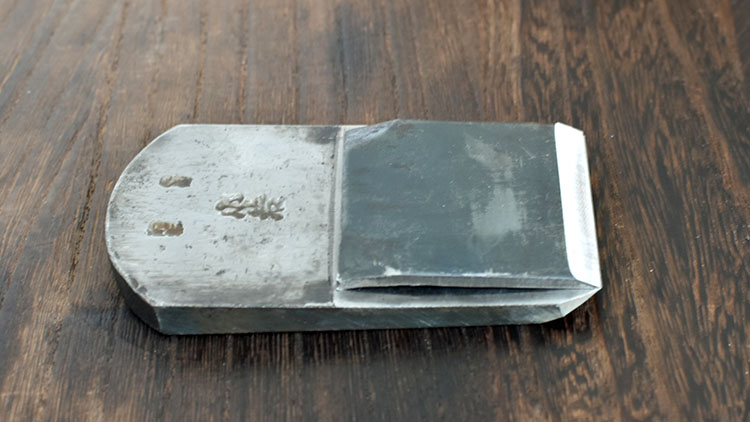

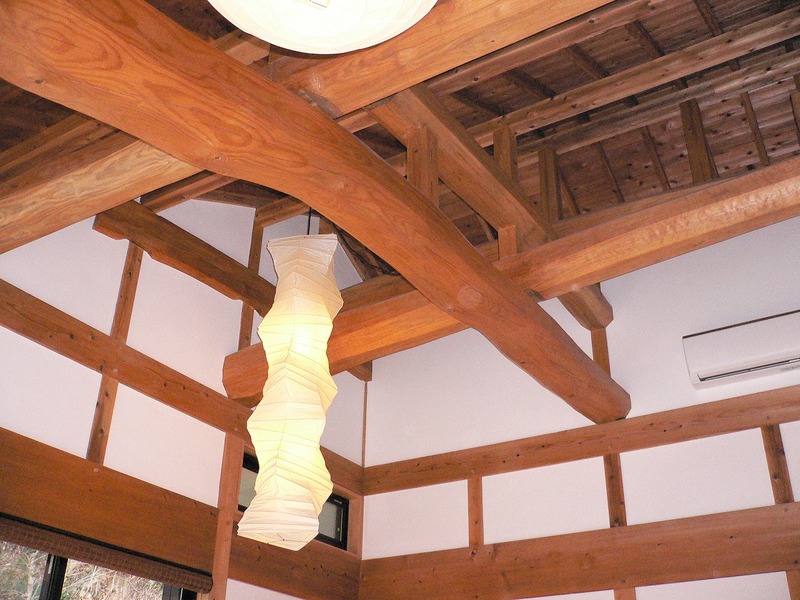





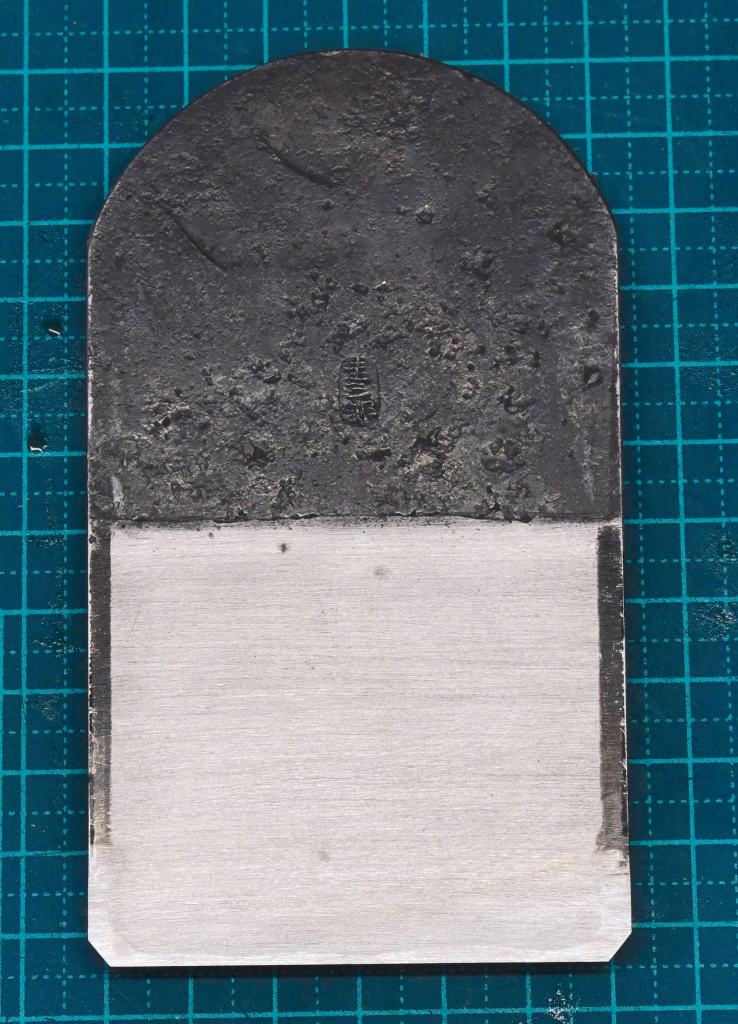


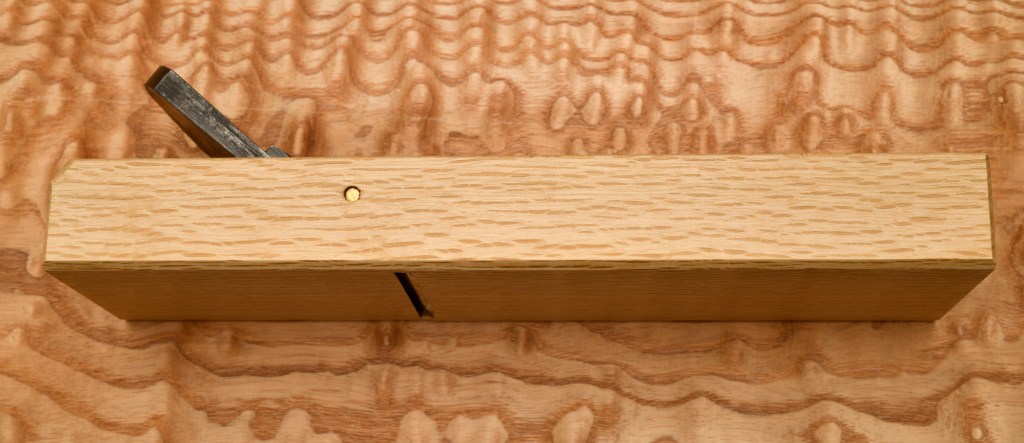


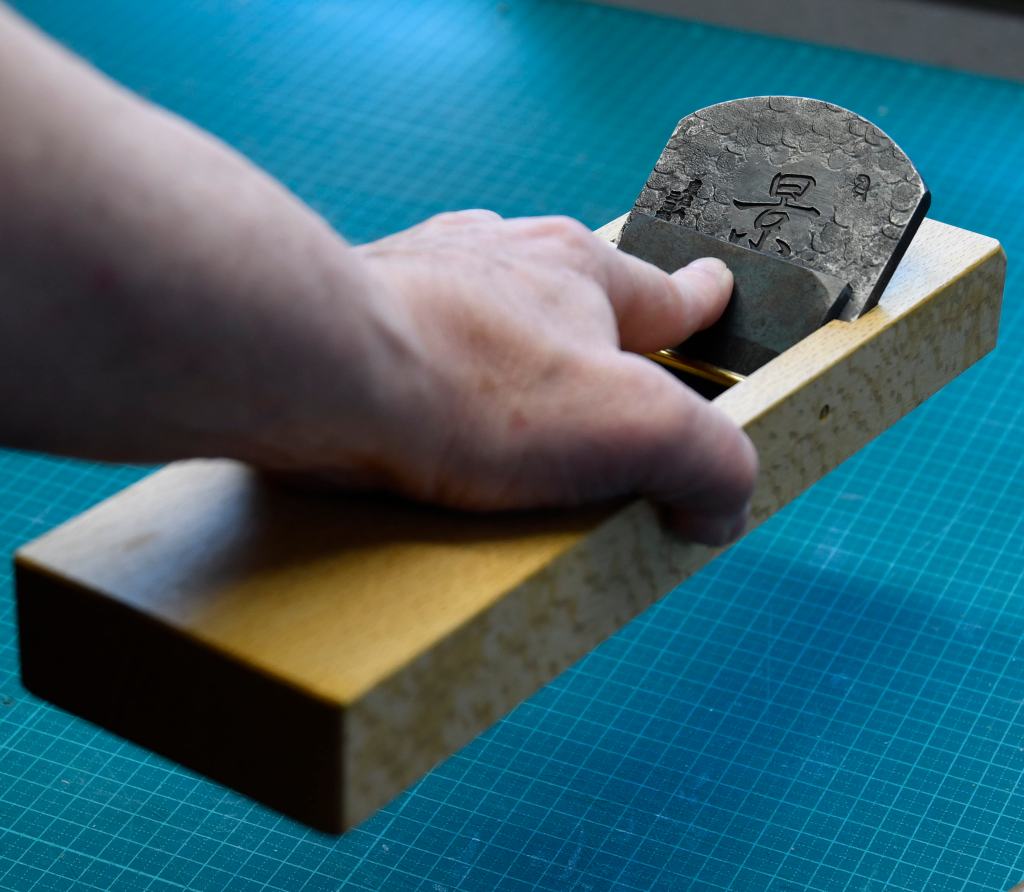





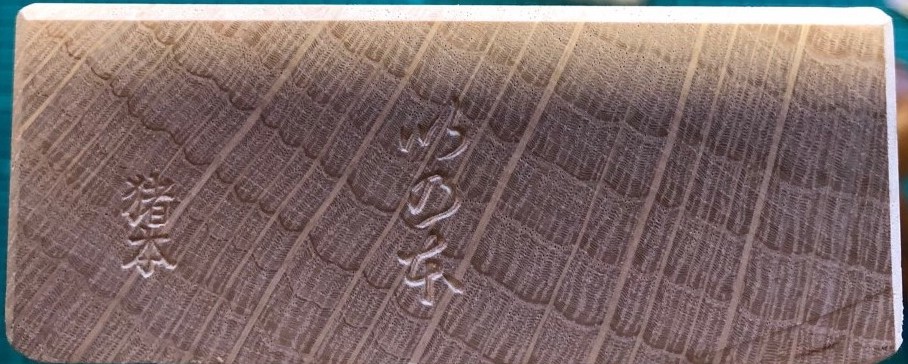


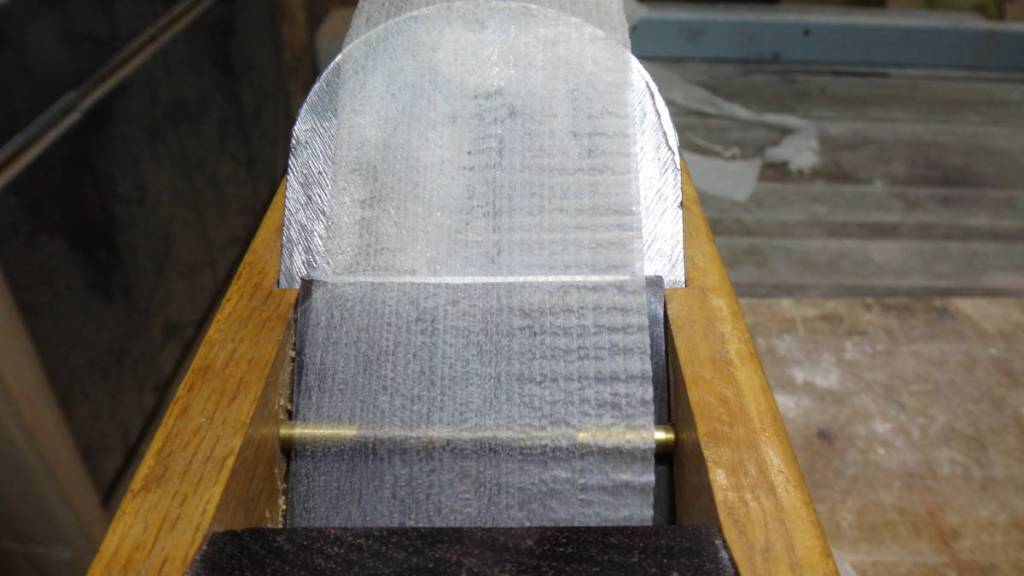



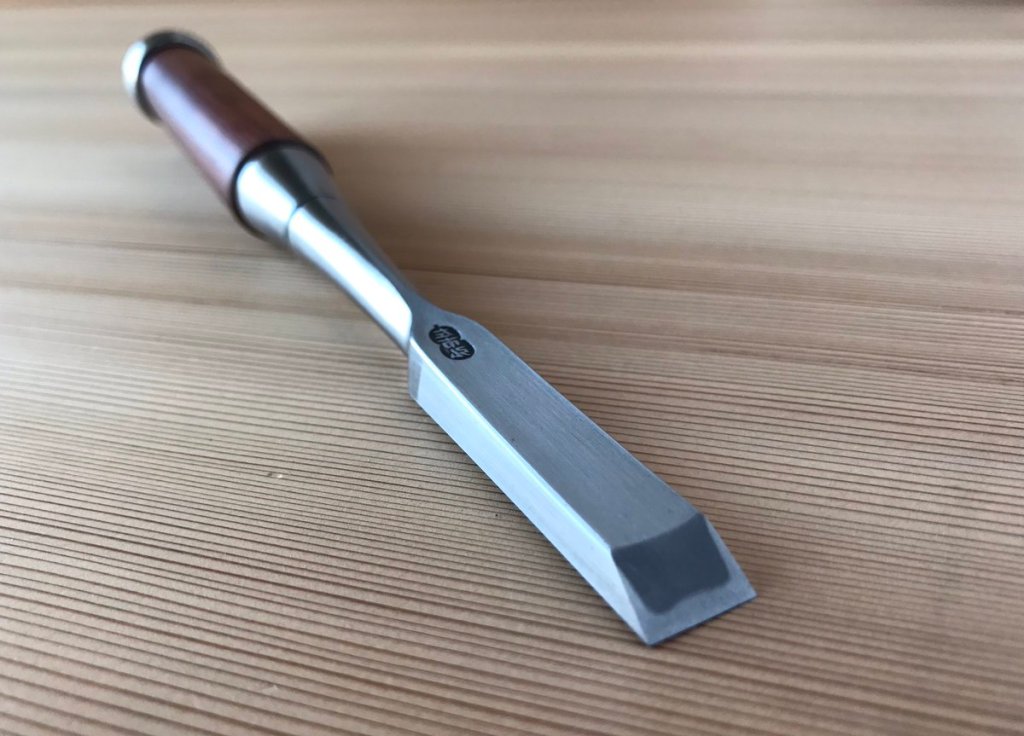






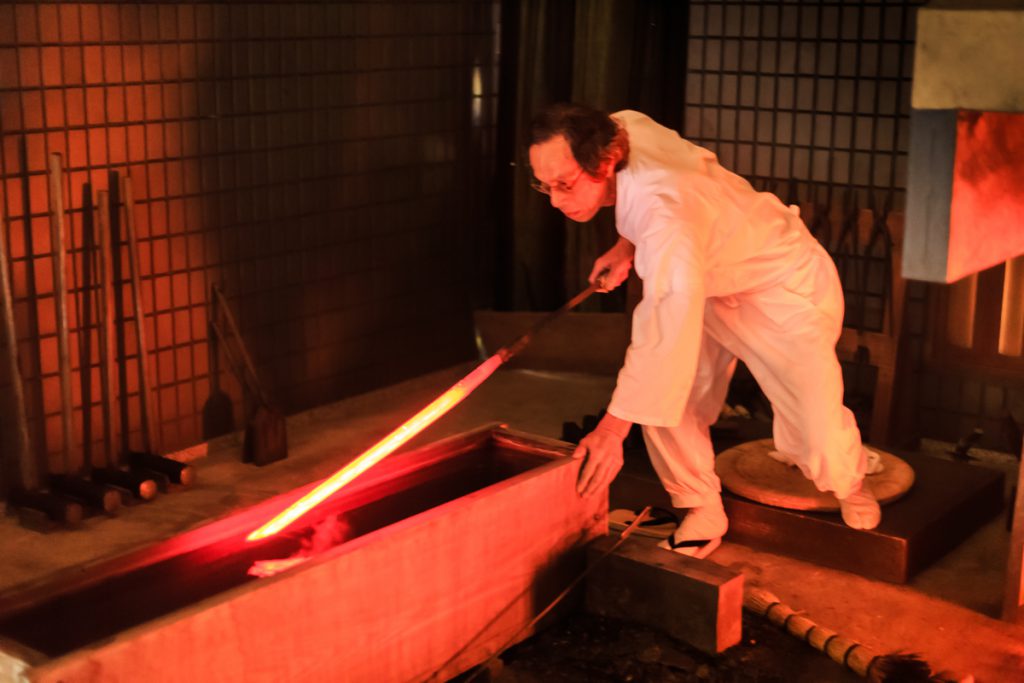




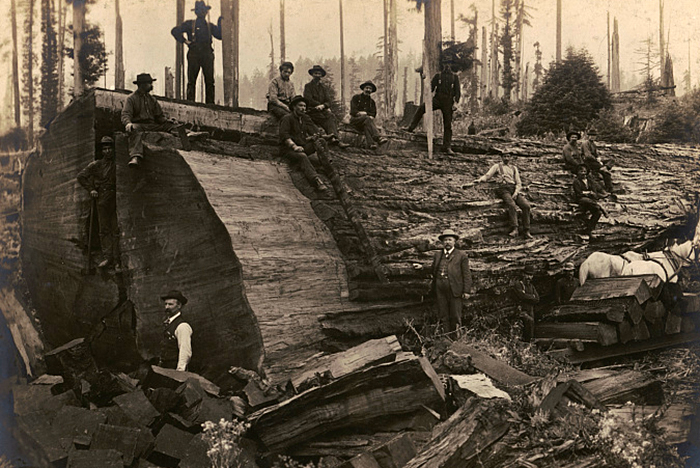





 Covington & Sons Tools
Leave a comment