Procuring Wood

We are men of action. Lies do not become us.

― William Goldman, The Princess Bride

No doubt Gentle Reader will agree that the sights, smells and other sensations of working wood are wonderful. And of course we all appreciate owning beautiful, enduring, useful objects made from wood with our own hands and tools, but how best to obtain this supremely sustainable environmentally-friendly material for our projects?

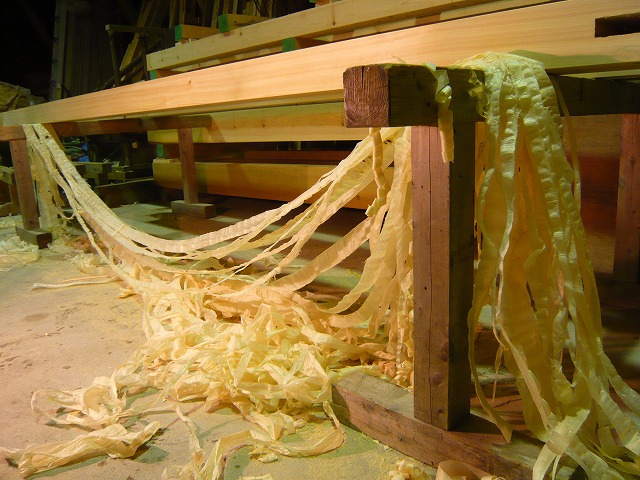
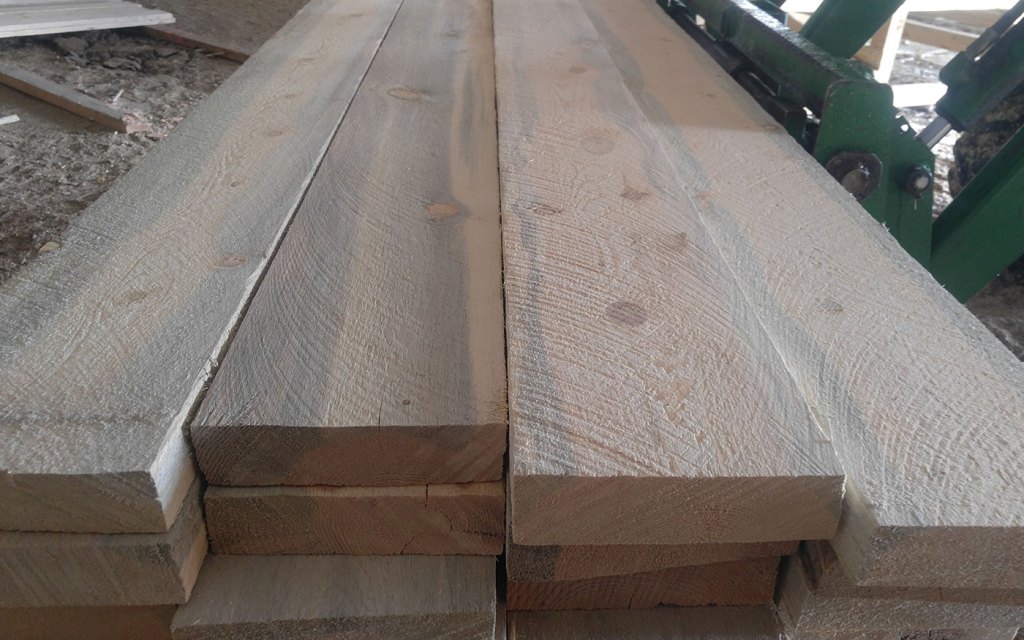
For purposes of this article I am assuming Gentle Reader does not use fully-milled S4S (surfaced four sides) boards exclusively, nor that you start each project from standing trees or even logs, but rather begins your projects with rough-sawn lumber of the sort pictured above and sold not at home centers but at lumber yards.

If this assumption is correct I encourage you to build a relationship with small sawmills, often located far from the beaten track, who are willing to sell directly to craftsmen at their yard. This may take some hunting and travel. And you will need to build mutually-beneficial, respectful relationships with the owners of these small businesses. To that end, I encourage keeping a few things in mind and acting accordingly. 

Remember that, while sawmills are small businesses, Sawyers aren’t shop keepers, waiting by a register at Home Despot with nothing to do but play Candy Crush Saga on their iPhone until you arrive. They are always busy, their profit margins are thin, and their time is money, so if you want to do business with them, you would be wise to not waste their time. This requires forethought, planning, preparation and action as outlined below.

Planning

Your humble servant is fond of making a good plan, and then working that plan, while remaining flexible and responsive to reality. In commercial situations, a good plan for woodworking must include complete drawings with dimensions and clear details, materials specifications, a cost estimate, a time schedule and a reasonable contract to be reviewed and approved by all parties involved before work begins. And shop drawings too must be produced and approved, of course.

But in the case of personal woodworking for pleasure, I like to leave the details of the plan a little looser, a little more flexible to allow me to better adapt to time, cost and material constraints and to permit interesting improvisation. My tools love improvisation. What about yours?

When it comes time to procure wood, we need at least an initial plan that lists approximately how much wood we need, its species, length, width and thickness. This plan must take into consideration the limitations of the tools (e.g. jointer, planer, bandsaw etc.) we have at our disposal to mill the wood after we purchase it. With this in hand, and assuming a realistic fudge factor of 13~20%, we’re ready to go hunting for wood.

Seeking a Source of Wood
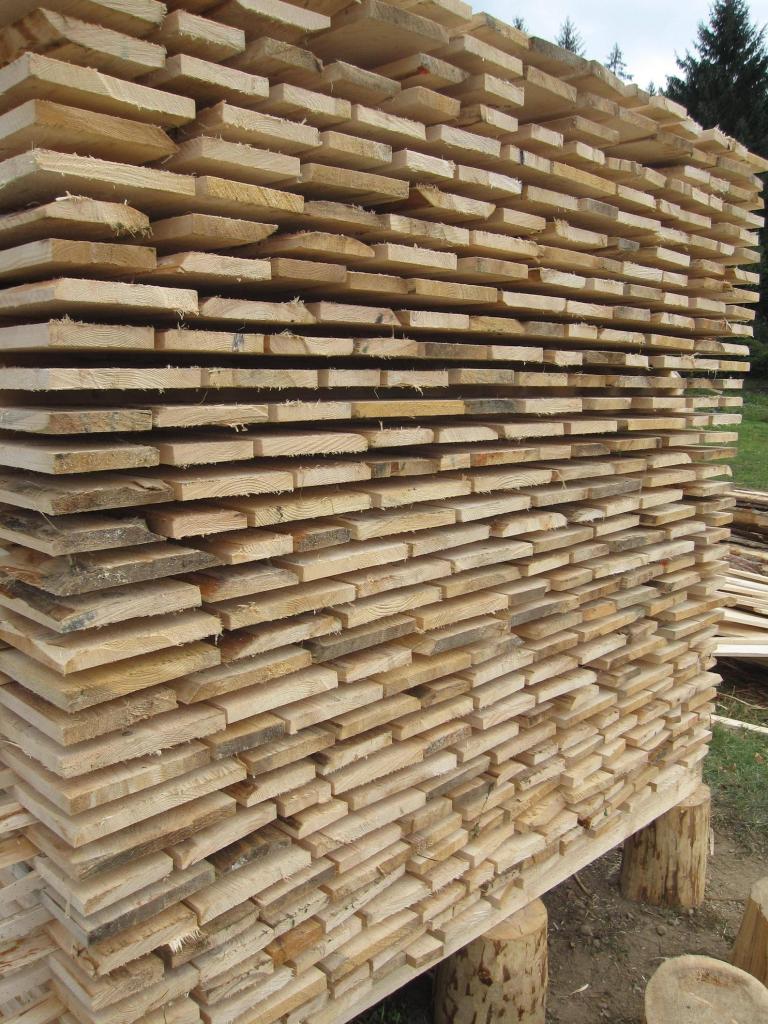
Home centers and lumber yards are convenient to purchase wood from, but the cost may be relatively high and selection may be poor and/or boring. Given the option, and the ability to transport the wood (or to have it delivered), I prefer to purchase directly from small sawmills instead.

When I was residing in the USA, locating sawmills was not easy. I ended up purchasing hardwood mostly from Amish sawmills in Central and Eastern Ohio, and both hardwoods and softwoods from mills in the mountains of Northern California and Southern Oregon. But nowadays the internet appears to make sourcing much easier. 

Father and son surfacing boards in an Amish sawmill

I enjoyed purchasing wood from Amish mills. No frills, no BS, just honest wood sold by honest men. They’re not as convenient as Home Despot. They don’t advertise, don’t have websites, may not have telephones, won’t do email, and they’re always closed on Sunday, but if you drive into Amish country and ask around at local stores and gas stations you can usually find them. They are deeply religious and absolutely family-oriented folk, so watch your language, be polite and respectful, and be sure any women accompanying you dress modestly.

I don’t trust evil Google anymore, but a quick search on DuckDuckGo just now listed dozens of sawmills selling lumber to end-users around the US. A local Chamber of Commerce might be able to direct you too.

Other sources of information about sawmills I’ve had good luck with are cabinet shops, stair shops, custom door shops, millwork contractors, and interior contractors, all businesses that buy a lot of roughsawn wood. Better to drop by and ask in person than to just telephone or email.
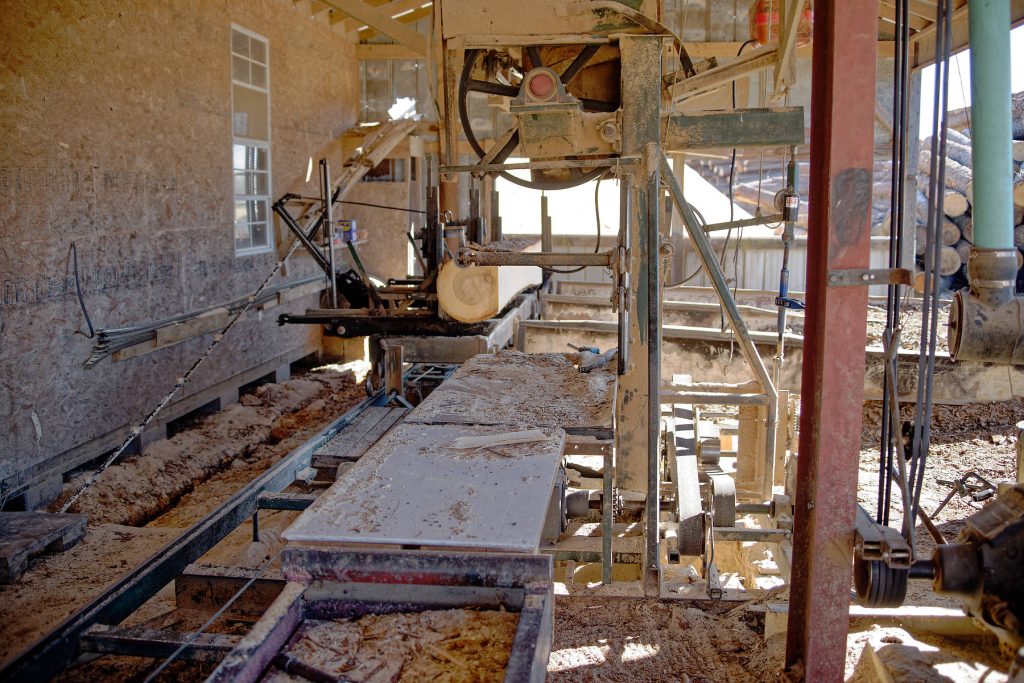
A diesel-powered Amish bandsaw mill

If there’s a woodworking club or guild in your area they’ll know the local suppliers for sure and for certain.

Storage
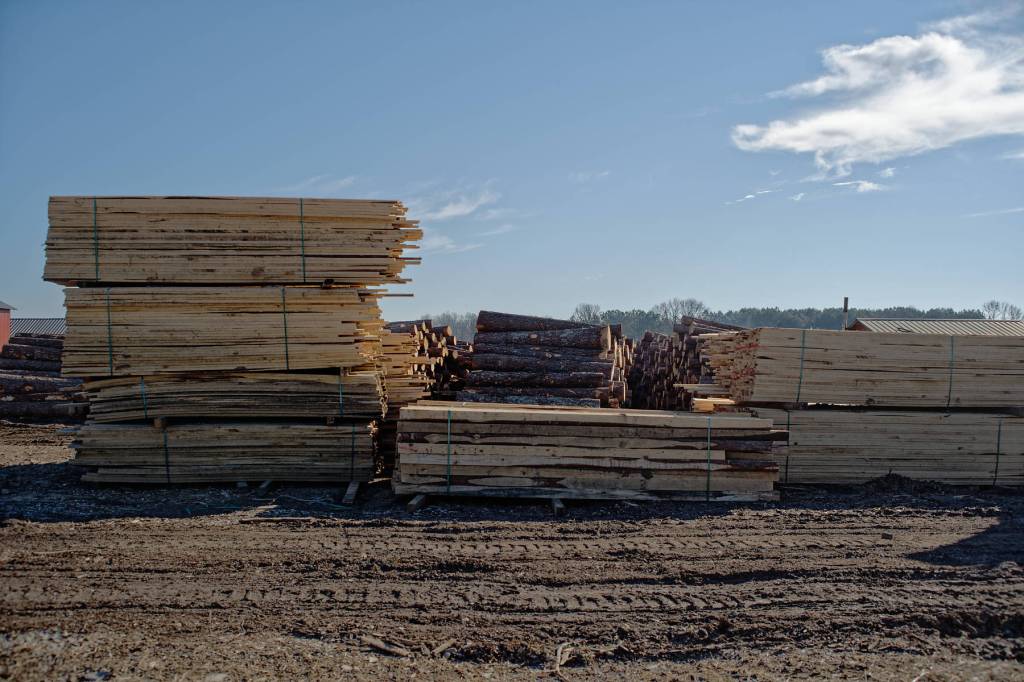
Before you select and purchase your wood you should make sure you have space to store it unless, that is, you plan to cut it all up in a day or two after purchase. Be sure you don’t buy more than you can conveniently and safely store.

Improperly storing lumber so it’s not supported correctly will cause it to warp. If it’s exposed to rain and snow the resulting differential moisture content will always cause warpage. And of course, your boards may become dirty, or bugs may infest it. I hate wasting good wood.

If your ceilings are high enough, you can stack boards vertically, leaning against the wall in a corner of your apartment, house or garage. Be sure to stack it carefully so it won’t warp. Most importantly, tie it off securely so it can’t fall over and crush your kiddies. Notice I wrote “can’t” not just “won’t.” This deliberate choice of language is evidence of my deep confidence in Murphy’s active inclination for malicious harm. Indeed, here in Japan, most lumber is stored vertically, and many injuries and even deaths have resulted from toppling lumber.

A Gentle Reader pointed out that storing lumber this way with the board’s end resting directly on soil may invite termite infestation. Of course this is absolutely true, assuming the ground touching the board is infested with termites and the moisture content of the soil and wood are inviting to such insects, conditions that are often easily met. Best to elevate the boards above the soil by resting on concrete, bricks or cinder blocks, or on the floor of your apartment, house or garage, as noted above.
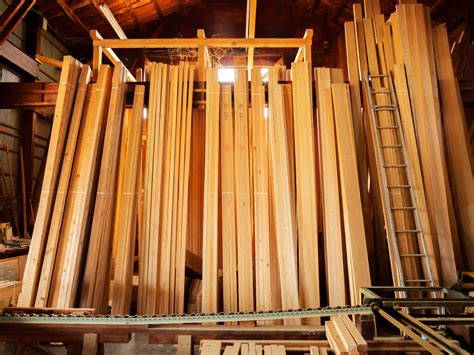
A Japanese lumber warehouse with vertically-stored product.

The best and safest way to store lumber, IMHO, is to place some stickers (three minimum) on a level floor, in a place protected from the weather, and to neatly stack your lumber on them. 2×4’s placed on edge are usually good, but you may want to skew them a bit for improved stability in the long direction of the lumber they will support. Be sure these stickers are all the same width and that once placed the top edges of all your stickers are situated level and planar (in the same plane). Don’t assume for a second that the floor or ground are level. If your check confirms it isn’t, shim the stickers so they are level and planar. 

Use a spirit level to confirm the top edges of your stickers are level, and a stringline (aka “dryline”) to confirm the top edges are all planar.

Place thin stickers of uniform thickness between each layer of your lumber, so it will continue to dry without warping.

It’s easy to store lumber outside under the eaves of a building, but since it will be more exposed to rain, snow, weather, dust and critters, a few extra precautions may be called for. Once again, place your stickers properly and lay plastic sheeting on top of them. Then stack your lumber on top of the plastic, and wrap the plastic over the top of the stack so rain and snow can’t wet the wood, but leave the ends loose and tented so air can circulate. It may be best to place a few sheets of plywood or roofing material over the stack, well-weighted down so it won’t blow away during a storm.

Once your lumber is stacked, place newspaper or other paper on top to protect your beautiful wood from airborne dust and grit. Plastic is OK if the stack might be exposed to rain, but be aware it may slow the wood’s drying and/or cause the growth of discoloring mildew, so you may want to plan for some air circulation.

Another storage option is to attach steel or wooden brackets high on the wall of a garage, barn or outbuilding that can safely bear the weight. The top edge of these brackets needs to be level and planar to prevent the wood from warping. Don’t place your lumber directly touching these steel brackets, however, but lay down plastic or wood under your lumber to prevent dark lines of iron corrosion from developing in the wood. 

Again, place newspaper on top of the stack to protect it from dust accumulation. Getting wood safely onto and down from these high brackets may be challenging, so be careful.

Preparation & Action

Once you’ve formulated a plan, located some potential sawmills or sources, and arranged safe storage, it’s time to take action. I recommend the following preparations and actions.

  1. Call ahead or visit and make introductions, describe your needs in some detail, and arrange a time to select wood. Make sure the proprietor understands that, after an initial perusal, and on condition he has the wood you need, you will conclude your purchase immediately with hard cashy money and without any tedious paperwork. The Amish, for instance, accept only cash.
  2. Know what variety, and approximately how much wood you need before calling the sawmill. For instance, you need to be ready to say something like “I need 200 board ft of 8-quarter (2” thick) maple, 10’ long 10” wide. ” He may not have that species wood, with that figure, in that size, in that quantity in-stock. Even if he doesn’t have exactly what you need, he may be able to suggest alternatives, or point you to other suppliers.
  3. Be sure to ask if the wood he can supply has been kiln-dried or air-dried and how close he thinks it might be to equilibrium moisture content. He may not know, and that’s alright too. On the other hand, if he says everything he has in-stock is freshly milled and sopping wet, you may want to look elsewhere unless you’re prepared to wait for a couple of years for the wood to dry in storage.
  4. Learn how to evaluate lumber grades and how to calculate board-feet. 
  5. Ask the following questions:
    1. “Do you have a minimum sales volume or dollar amount?” He’s not a Home Despot focused entirely on high-volume retail sales in small quantities, after all.
    2. “How late are you open?” Sawyers tend to start work early, so you need to be done with your selection and complete payment well before he locks the gate at the end of his workday.
    3. “Can I bring my truck into the yard to load, or must I park out front?” and “Where should I park my truck so it’s out of the way?” Customers parking willy-nilly and blocking traffic are a frequent problem for most lumberyards. If he won’t let you bring your truck into the yard, you’ll need to bring/borrow a cart or be willing to hand-carry your boards to your truck.
    4. “Are there any varieties of wood or stacks not for sale?” Sawyers often receive orders from regular commercial customers months in advance and keep partially-filled orders set off to the side, so while it may appear he has plenty of the wood you want, it may not be for sale, or he may be unwilling to break down a stack for the few pieces you intend to purchase. If he does have such reserved stacks, find out which ones they are, don’t touch them, and don’t pester him about them.
    5. “What are your safety rules in your yard?” As mentioned above, the Sawyer may require you to use full PPE (personal protection equipment) including safety shoes, hardhat, safety vest, safety glasses, ear protection, and cut-resistant gloves, or he may be OK with your usual business-casual attire of frayed jeans shorts and flip-flops. Fashion statements aside, it’s just professional to be prepared and learn the rules beforehand.
  6. When you visit the mill, bring all the safety equipment the yard rules require. Even if they are not required, please have the sense to wear certified safety shoes, an orange or yellow reflective safety vest (very important in a lumberyard where vehicle and foot traffic meet in tight quarters), and to have cut-resistant safety gloves tucked into your belt. It is also wise to bring safety glasses, ear protection, and a certified hardhat just in case. You may think you don’t need this PPE, and perhaps you won’t, but the Sawyer’s yard safety policy and/or insurance may require it. Best to be the prepared professional.
  7. Bring a tape measure and moisture meter when you to check the actual moisture content of the actual wood yourself before you purchase it because, if it’s too wet, you will need to sticker/store it while it dries. Be sure you understand the acceptable range of moisture content you buy. 12% is pretty good for lumber stored outside, and 18% may be just fine, but 30% MC will be too high. High moisture content may not be problem if you know how, and are prepared, to deal with it, but even then please don’t pay full-price for lumber you’ll need to dry for a year or so before it’s useful.
  8. Be prepared to attach at least one red or orange safety flag to any lumber you purchase if it projects out past the end of your truck’s bed much (6′),
  9. Bring enough rope and/or ratcheting safety tie-downs to keep the lumber you purchase from shifting in the bed of your truck while underway. Watching your newly-purchased pretty boards spread artistically all over the freeway in your rear-view mirror may be exciting for you, but I guarantee you folks in the vehicles following will not thank you.
  10. Be prepared to do all your own grunt work, including sorting, lifting, carrying and loading. Don’t expect the sawyer to do more than use his forklift to move stacks around for you, even if you’re accustomed to other retailers accommodating your bad back. Bring a helper if necessary. Bored sons and young boys are useful for this and can benefit from the experience, at least that was my father’s viewpoint, and in retrospect, I heartily agree. Be sure any young folk that accompany you are cautious, respectful and follow the sawmill’s rules, as will you. Provide cut-resistant gloves so their mothers want berate you for any cuts or slivers they manage to collect. Modern mothers are irrational about that sort of thing. And hi-viz safety vests can prevent crushed kiddies.

The Dude Abides

In the Lumberyard

Dealing with retail customers that purchase in small quantities is a pain for all businesses, so if you want to develop a reliable source for good wood without buying by the trailerload, make of yourself a good customer. The following tips will help.

Jimmy Choo’s Safety Shoes from his new “Prostate Exam” Collection
  1. Leave Fido, your pet goat, your mother-in-law, and all small children at home where they’ll be safely out of the way. I grew up in lumberyards, so I know how dangerous they can be with trucks and forklifts operated by tweaker teenagers zooming around, teetering stacks of wood aching for a chance to topple, and sharp slivers, nails and bloodthirsty staples sticking out everywhere. If you bring a teenager to help, be sure he too wears the required PPE.
  2. Most Sawyers are not setup for efficient retail sales, and few can process credit cards or online payments. Of course, checks from people they don’t know well are never welcome. In fact, he may not agree over the phone or by email to sell to you directly at all, but once you are face to face, cash in hand, and you flash your best Brad Pitt smile, everything should be fine. In any case, it’s important you help make the selection and payment processes go as quickly and smoothly as possible, so unless you have an account with the Sawyer, be prepared to pay the exact amount in cash, without requiring change for big bills. 
  3. If you need to park your truck in spaces between stacks, leave your keys in  the ignition when you step away for a bit so the Sawyer can move it to allow large trucks or loads of wood to pass. 
  4. When sorting through lumber stacks, set some stickers (at least three 2×4’s on-edge) on the ground nearby (out of the way of passing trucks and forklifts) to temporarily place the lumber you’ve removed from the stack and to keep it off the ground and clean.
  5. Never place a board directly on the ground or pavement until you’ve paid for it. And don’t ever be so rude as to toss boards you haven’t paid for.
  6. Never step on wood until you’ve actually paid for it. It isn’t yet yours to mark with your pretty pink boots from Manolo Blahnik’s Ironworker Collection.
  7. Never place the end of a board into dirt or gravel until you’ve paid for it.
  8. Keep a running count of the board feet and approximate grade of the boards you have selected to purchase. Tell the Sawyer your final count, and show him your calculations, but be prepared to defer to his count if it differs, at least until you become a large-volume customer.
  9. Lumber dealers, and especially those who are accustomed to selling in volume to commercial accounts, dislike customers who “cherry-pick” their stacks taking only the best boards and leaving mediocre boards behind. More despised are those rude, lazy souls destined to roast for eternity spitted and rotating over Satan’s tar-fired barbecue pit who leave stacks a disorganized jumble inducing the remaining lumber to warp. Please firmly control your inner penny-pinching Scrooge (excruciatingly difficult for many) and select a mix of boards, not just the best ones. They’ll all come in useful. If the only boards you can find are hopelessly useless, discuss the problem with the Sawyer using a non-belligerent, even apologetic, tone of voice. If it’s your first time visiting this sawmill, consider buying some sub-standard lumber just to get off on the right foot. Hopefully he’ll make it up to you next time.
  10. After sorting through a stack of lumber, if reasonably possible, be sure to expend the time and effort to fix or realign the stickers so their top edges are level and parallel (a spirit level and a stringline are handy for this task) and always neatly restack the boards you’ve moved but won’t be purchasing so the stack looks better, is more orderly, and more stable when you leave than before you touched it. This is supremely important. Besides looking tidy and saving the Sawyer work, this minimum human courtesy (vs. arrogant, pigish rudeness) will help preserve the value of the lumber you leave behind, it will show respect to the Sawyer, and will earn you respect in turn so you’ll be welcomed back again. Sawmills often give slightly better rates to return customers with such professional manners who make less work for them. The inverse is also true.
  11. Bring something to share with the guys at the lumberyard and office they can enjoy and that will cement your cherubic face in their memories. For example, personally hand each one a cold beverage, or a couple of your wife’s award-winning double-death-by-chocolate chip cookies. It helps to make friends.

I hope this little article has been a little useful.

YMHOS

Just where the heck is that stack of 8/4 zelkova wood he mentioned?

If you have questions or would like to learn more about our tools, please click the “Pricelist” link here or at the top of the page and use the “Contact Us” form located immediately below.

Please share your insights and comments with everyone in the form located below labeled “Leave a Reply.” We aren’t evil Google, fascist facebook, or thieving Instagram and so won’t sell, share, or profitably “misplace” your information. If I lie may slivers infest my bed.

Leave a comment

Go back

Your message has been sent

Warning
Warning
Warning
Warning.

Beginning Tools – Part 1 Measuring, Marking and Layout

An antique craftsman-made sumitsubo with shishi lion and peony perched on the lip of the “pond.”

A good tool improves the way you work. A great tool improves the way you think.

– Jeff Duntemann

Over the years your most humble and obedient servant has received many inquiries from Gentle Readers new to woodworking about what tools they should procure at the very beginning of their adventure. The internet is chock-a-block with both confounding confusion and beaucoup BS on this subject, some dribbling from amateurs and even more sprayed by marketing pukes and clickbait sages. Heretofore I haven’t really scribbled anything on the subject in this blog.

But now, at this fork in the crossroads, beginning with this article your penitent servant will share some thoughts about what tools a beginner needs to perform a lifetime of excellent woodworking, with minimum wasted time and funds, and the recommended priority for obtaining them.

Reluctant Advice

From this point forward I will be so bold as to make some suggestions about the the tools I recommend.

But first allow me to explain my viewpoint on the subject to help you gauge how much saltpeter and sulfur to mix with your charcoal, if you follow the allusion. You see, I enjoy giving Beloved Customers excellent choices in tools, but I’m allergic to giving casual advice. Why? Because even advice given honestly, with the best of intentions, and without profit motive often yields bad consequences. And sneezing.

In Proverbs 12:15 it’s recorded that Solomon the Wise (and disobedient) taught the following: “The way of a fool is right in his own eyes; But he who heeds counsel is wise.” Sounds good, I suppose, but does this mean that the man who’s convinced his honest decisions are correct, even after much study and experience, must still be a fool? Are only those who rely on counsel wise? What if the counselor he relies on is a blasted fool or a greedy, lazy influencer? Is all counsel equal in value?

King Solomon’s most famous descendant once said “Ye shall know them by their fruits.” Sounds like reasonable evidence-based judgment to me. So what were the fruits of Solomon’s advice? The record tells us that he thought his judgement so wise that he frequently ignored it on an epically immoral scale and with tragic, destructive results.

While less decisive than Proverbs but equally concise, I think Professor Tolkien’s insight on the subject may be even wiser, and so I have taken it to heart. In the Lord of the Rings he wrote “Advice is a dangerous gift, even from the wise to the wise, and all courses may run ill.”

Solomon’s fabulous famous folly aside, your humble servant has seen first-hand ostensibly wise advice purchased from reputedly wise “experts” at unjustifiably high cost run horribly ill too many times, so I dislike giving advice. And there’s the sneezing thing too, of course.

But since advice is what’s required, in this series of articles I will climb far out on a skinny tree limb to offer the following advice on two conditions. First, I insist Gentle Reader accept the value of this advice as worth no more than what you pay for it (nothing), and second, that any consequences that spring from your acting on this advice are entirely yours. Accordingly, I won’t be offended if, like Solomon the Wise, you decide to ignore it entirely and get yourself another hundred foreign girlfriends instead.

Anyway, back to the subject at hand.

Tool Categories

The following are the four basic categories, by function, of the tools I believe a beginner needs to possess to get started in a lifetime of woodworking, whether as a career or hobby. You’ll most likely need all the tools listed here eventually, but you won’t need them all at once to make excellent things from wood. The categories are as follows:

  1. Measuring, Marking and Layout Tools: 
  2. Sawing Tools
  3. Chiseling Tools
  4. Planing Tools

Of course, depending on your projects, you’ll need tools that don’t fit neatly into these four categories, such as those used for processing trees and making lumber, nailing, boring/drilling, screwing, gluing, clamping, laminating, sanding, edge treatment, assembly, and finishing. When it comes to these other categories of tools, I can only encourage Gentle Reader to rely on your prodigious innate common sense.

Each list is divided into two tiers. The first tier includes absolutely necessary tools. The second tier lists essential tools you will eventually need, but can get by without until later.

So let’s begin by examining the minimum measuring, marking and layout tools every beginner needs. I will deal with the other categories in future posts. If I’ve forgotten anything critical, please let me know in the comments form below.

Essential Measuring Tools (Tier 1)

While chopping, sawing, carving, joining and planing get all the attention, final results in woodworking (and all physical trades for that matter) can never be better than one’s skills at measuring, marking and layout, so woodworkers and builders need to own the related tools and master them.

By no means sexy jobs, both ancient and modern history provides endless examples of poorly performed measuring, marking and layout work buggering cost, schedule and quality goals with a barge pole wrapped in barbed wire. No wonder these jobs have historically been assigned to the most experienced and intelligent craftsmen. The simple tools included in this category will serve you well in any handwork activity, not just woodworking.

One caveat. I have listed a few tools below that are modern precision tools beginners should own and learn to use skillfully, but I know a few purists who find such tools violently repulsive. The truth is that the more experience one obtains, the less one tends to rely on absolute measurements in millimeters, inches, or cubits, and more on relative precision. But possessing the tools to perform precise measurement is nonetheless necessary if you plan to do quality work.

Necessary Measuring Tools (Tier 1)

You’ll need the following essential measuring tools from day one.

1. Quality Tape Measure with an accurate sliding hook (check to make sure it’s not sloppy). Size will depend on the projects you plan to undertake, but 2-4 meters is a minimum useful length for cabinetry, furniture making and joinery. Get a reputable name brand, with a warranty. Avoid like an Asian giant hornet with flaming hemorrhoids any cheapo crap made in China, India or Vietnam. Tape measures are a bit delicate and don’t last forever, so treat yours gently and check it frequently against your precision straightedge for accuracy and damage. Do not rely on it for great precision. Since ancient times the folding scale has been thought superior, a sentiment with which I agree in the case of some jobs. But in general nothing beats a quality steel tape measure for most quick and dirty measuring tasks.

2. Precision Straightedge (12”/300mm long) with accurately, deeply etched graduations. This is a precision measuring and layout tool. Good quality graduations are useful for precisely indexing and guiding layout tools such as pencils, pens, divider points, and a marking knife. Hardened stainless steel is ideal for durability. Best if it’s made to high quality standards (JIS, etc.). You’ll use it not only for measuring and checking the accuracy of your other tools, but more frequently for checking that surfaces are flat and free of wind (twist). If treated with respect, it will serve you well for a lifetime. 

3. Try-square (see item 2 below). The handy dandy try square has many uses as a measuring tool, but rather than making numerical measurements, its most important job is checking that right angles of components, tools and assemblies are indeed 90˚ , a check one must make constantly and quickly when planing/machining the components of furniture, joinery and cabinetry and casework not to mention setting up portable and stationary power tools. Most try-squares sold nowadays are poor quality Chinese or Indian junk that are out-of-tolerance when new. I too like pretty tools and realize that a plain stainless steel square doesn’t look as cool as more traditional squares with rosewood stocks and brass fittings, but the blade and the stock should both be made of stainless steel and should be solidly welded to each other, not glued or pinned. Best if the blade is hardened. Graduations are not necessary. Get this essential tool wrong and all is lost.

Necessary Measuring Tools (Tier 2)

4. 1-meter stainless steel precision straightedge. This tool needs to be certified by a reputable standards organization, such as Japan Industrial Standards Committee (JIS), NIST: National Institute of Standards and Technology (USA); UKAS United Kingdom Accreditation Service (UK); DIN (Deutsches Institut für Normung), etc.. Why does certification matter, and why is it worth the extra cost? Fraud and deceptive marketing are more common now than ever, with many well-known manufacturers taking a page from Chinese Best Industrial Practices of bait, lie, mislable & switch. In the case of a tool certified by an organization such as NIST, JIS, DIN etc. with a valuable reputation to lose, you are much less likely to be fleeced by quality crooks. Indeed, this tool, along with the 12″/300mm straightedge and try square listed above must be accurate enough to serve as one of your own in-house “standards.” It must not only be extremely straight when new and stress-relieved, to avoid future warping, but it must have deeply, uniformly, precisely-etched graduations. It’s OK if it spends most of its life hanging from a nail on the workshop wall, because there will be times when it will be critical for quickly for checking surfaces for flatness and wind, layout, assembly, dimensioning boards and fettling handplanes.

5. Caliper Gauge: This gauge can be of the vernier, dial or digital variety, whichever type you like and can afford. Once again, buy a certified product. This tool is useful for precisely and quickly measuring, comparing and laying out distances and dimensions. Some are sold with carbide tips convenient for directly scratching layout arcs/lines/points in harder materials such as metal or stone. Will you use it constantly? No, but for those tasks where it’s needed, nothing works as well or as quickly. Quality vernier calipers cost much less than the dial or digital variants, and are not as delicate, but take more time and concentration to use well. Once again, nothing made in China, India, Vietnam, Cambodia, etc. When in doubt, I buy Mitsutoyo.

Necessary Layout & Marking Tools

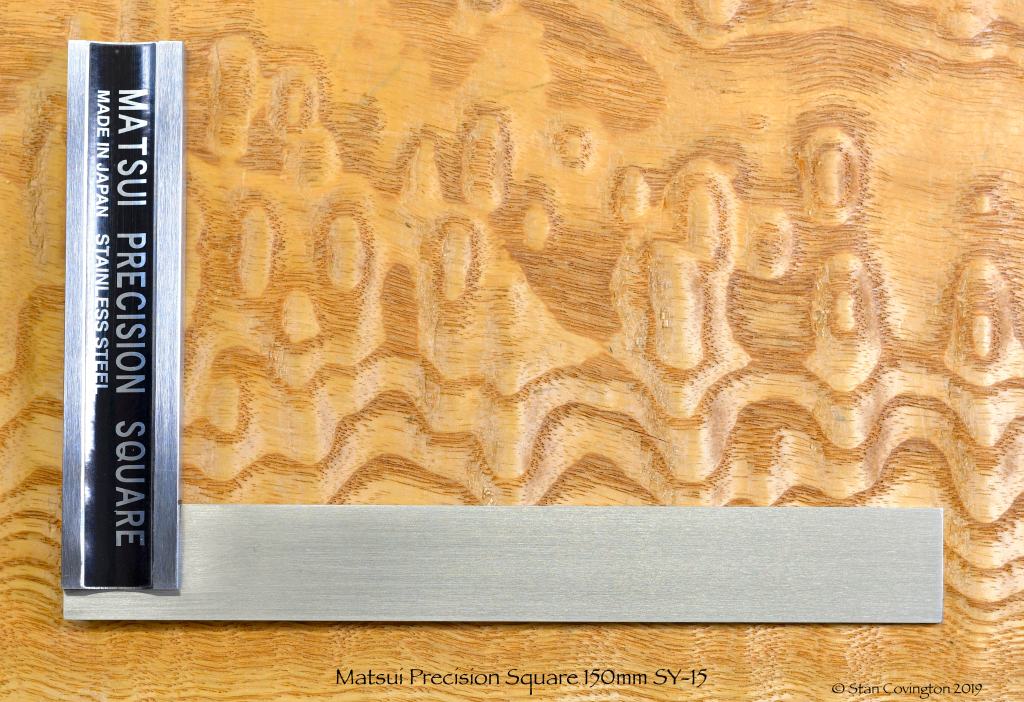
Try Square (same as see item 3 above). This tool is absolutely indispensable for layout and marking of joinery, cabinetry, and furniture work. 100-150mm is a handy size for furniture work. Even if your workshop has been thoroughly purged of pernicious pixies this tool will be dropped, and will wear out in-use, so a useful one will have a welded (not just pinned) connection between the thinner blade (aka beam or tongue) and the stock. And, this is important, the blade will be made of hardened stainless steel. Graduations are totally unnecessary. Used for marking 90˚ lines and checking for squareness. Matsui Precision makes the best one I am aware of after much searching and hands-on experience in the field.

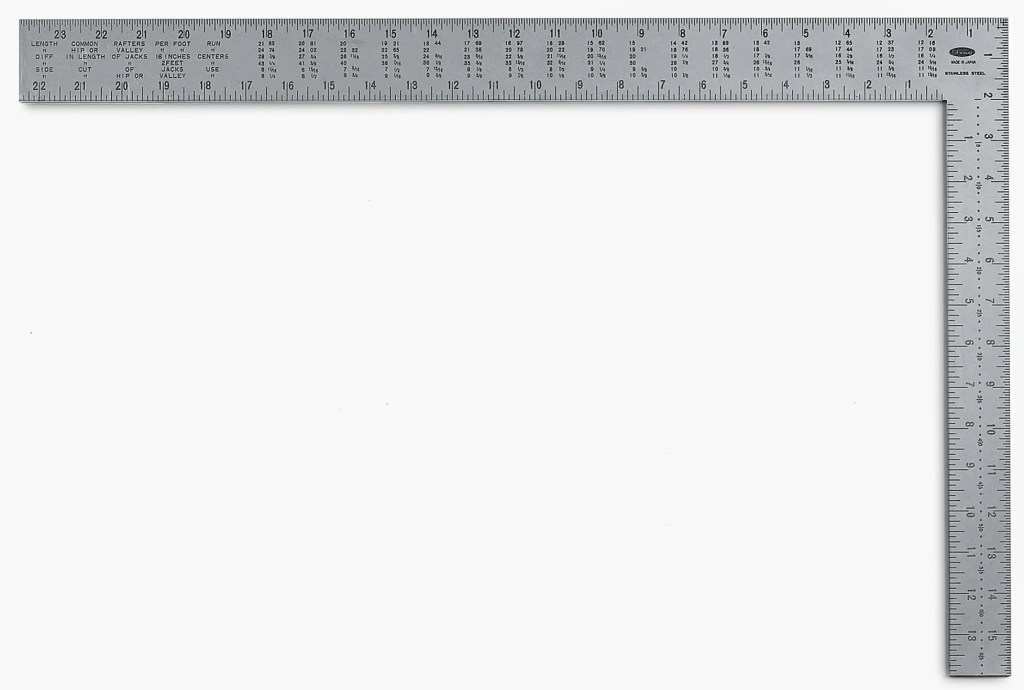
7. Framing/Carpenter’s/Builder’s Square.

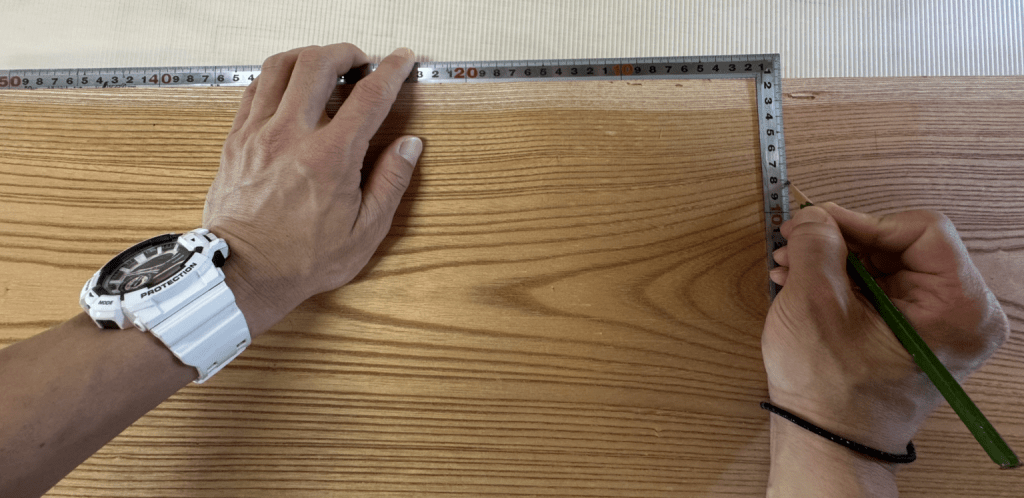
Essential for checking lumber, laying-out and marking of larger joints, casework, checking square of larger joints and assemblies, working with doors, panels, and plywood, and many other tasks. Regarding materials, carbon steel squares are heavy and always turn red and go away, so I don’t recommend them if you have a choice. Stainless steel is more durable, but still heavy and costlier. Aluminum will suffice. You may need to true it, but this is easily done with a hammer, punch and file. Just ask me how when you think it’s necessary. This is a tool with a long history you should be proud to own. In all nations more than a few centuries old, the carpenter’s square has been associated with stability, honesty, righteousness and order, all traits a craftsman should seek to foster in himself, his family and his crew. In Japan, this tool was traditionally extremely expensive and was considered the craftsman’s “spirit” in the same way the sword was revered as the warrior’s spirit by the warrior caste. Indeed, in past centuries, stepping over a carpenter’s square resting on the floor or even ground was seen as a mortal offense resulting in bloodshed at times. Such emotional sentiments did not extend to other carpentry tools. The Japanese version of this tool goes by several names written several ways including “kanejaku,” “magarijaku”(written 曲尺or 矩尺), “sashigane”指矩, and several other names. Don’t ask me why. Unlike the Western square of uniform thickness, the better Japanese kanejaku have a variable cross section for less weight/greater rigidity. Being thinner, smaller, more flexible, and much lighter in weight, the Japanese square is handier to transport and use in the field. Of course, it has a couple of disadvantages such as not handling longer/wider boards as well, and being more difficult to control because it’s more flexible. Horses for courses, of course, so I own and use both types.

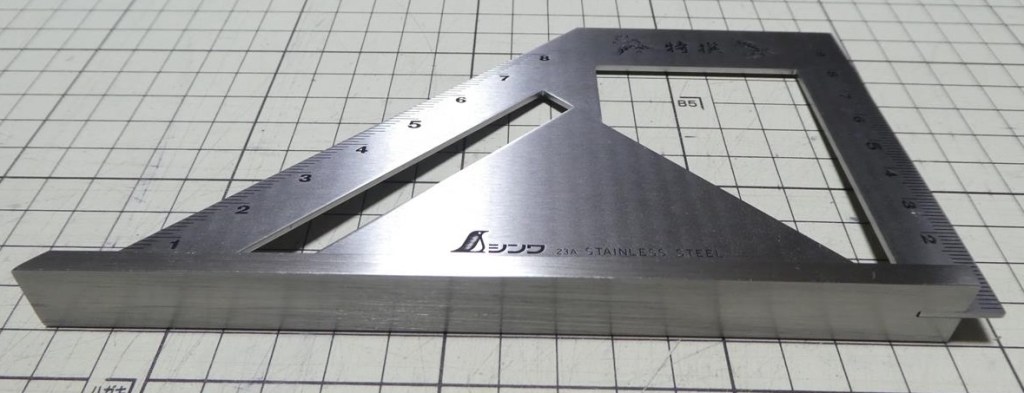
8. 45˚ Stainless Steel Layout Tool or quality speed square for laying-out miters. An accurate combination square will work too, but such tools are relatively expensive and quite fragile. The Shinwa tool shown below is cheaper, much tougher and absolutely reliable.

9. Marking Gauge: There are many types of marking gauges, most of which the craftsman can make himself without special tools or machinery. Perhaps this will be the subject of future articles. In any case, you will need at least 2 types of gauges.

The venerable old Stanley No.65 marking gauge.

The classic type has a single pin or blade to cut/scratch a single line with each stroke and has been around since Moses wore gator skin loafers. You can make versions from scrap wood, nails, or scrap steel easily yourself.

An excellent kamakebiki mortise gauge by Kinshiro

The second marking gauge you should have is called a “mortise gauge.” This tool has two pins or blades to make 2 parallel lines, at a set distance from each other, with a single stroke. It’s especially suited for quickly and precisely marking mortises and tenons and installing hardware. I prefer the Japanese version of the mortise gauge called the “kamakebiki” (sickle mortise gauge shown above) which has two L-shaped steel blades, easily adjusted and easily resharpened. A handy tool indeed.

Having multiple marking gauges on-hand will help to minimize the time you must spend resetting/adjusting the pins/cutters, a principle key to performing precise work consistently because every time a gauge is reset, error creeps in, sure as pigs are made from bacon. Marking gauges are simple tools easily mastered, but don’t underestimate the importance of owning a few and mastering them completely.

TheTite-Mark marking gauge

The Titemark gauge is an excellent tool, not only because it cuts consistent lines, but because it can be quickly and precisely set using a single hand and no tools. The only downside is the depth of cut is shallow and the cutter is easily damaged.

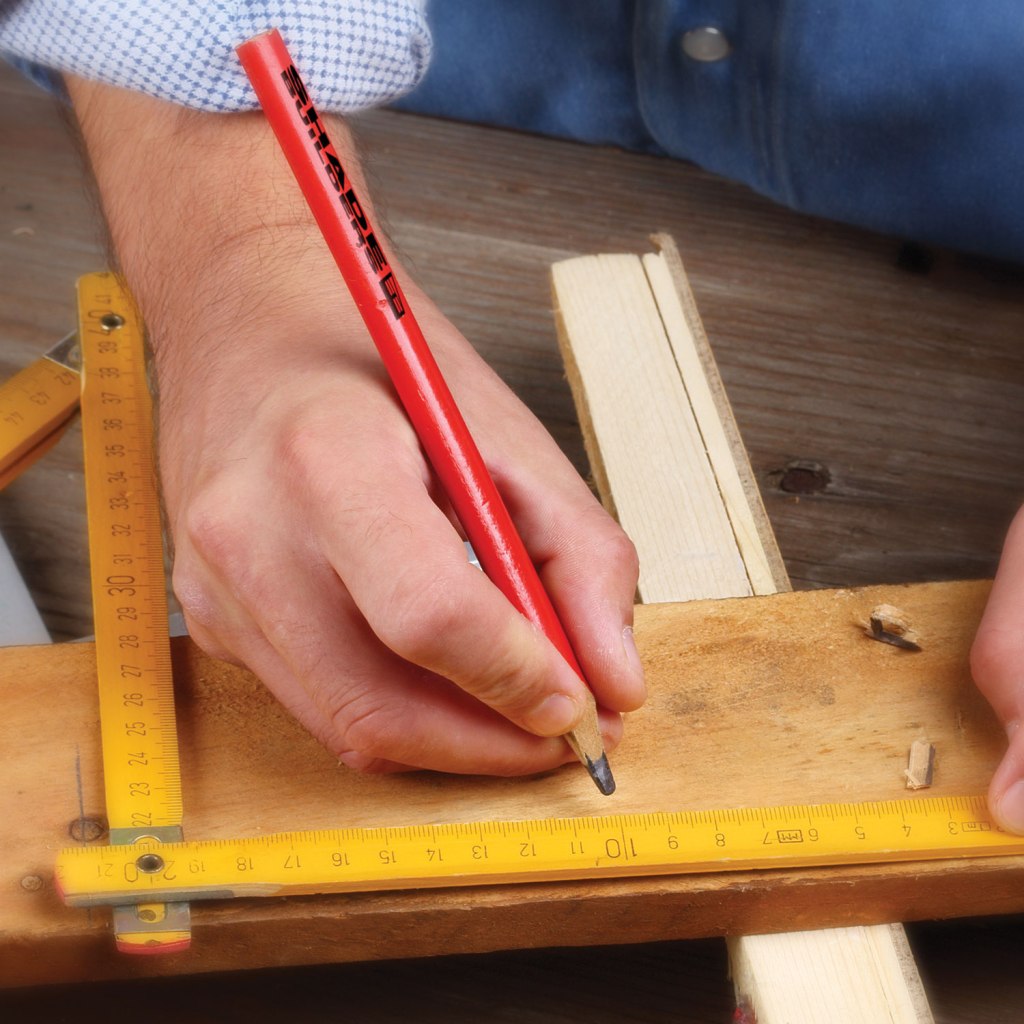
10. Carpenter’s Pencil. Useful for the same marking jobs as a plain pencil, but if one sharpens its wider lead to a chisel edge, it will be more durable (won’t break as easily) and last much longer than a standard pencil.

11. Divider/Compass. An essential tool for layout used to quickly and accurately transfer distances from straightedge or layout stick etc. to a workpiece. Of course, it can perform all the classical geometrical tasks that have made this tool essential to skilled craftsmen, architects and engineers worldwide for millennia. A spring divider is adequate, but finances permitting, Starrett 92-6 or 92-9 dividers shown below are worth every penny. I always have at least two on-hand to minimize the lost time and inaccuracy frequent resetting entails.

12. Ballpoint Pens: Not often thought of as a precision layout tool, inexpensive ballpoint pens are more durable than pencils and can make a permanent mark or line of consistent width without needing to be resharpened. Too wide for accurate layout, you say? Practice perfectly sawing in half the centerline of a line drawn with a pen and you’ll change your tune.

13. Marking Knife and/or Scriber. Instead of leaving a line of ink, chalk or graphite on the surface of a board, these tools cut or scratch a permanent line into the surface of material being worked into which divider points and the blades of cutting tools such as chisels, saws and even planes can be indexed quickly, reliably and without the need for expending much attention, greatly increasing speed and confidence in one’s layout. Essential tools. Here’s a Link to an article on the subject.

A Japanese-style marking knife, a simple but surprisingly sophisticated tool.

14. Inkpot and/or Chalkline: For making long straight lines on wood, concrete, steel, gypsum board, etc. The article at this LINK contains more details

15. Colored Marking Pens or Lumber Crayons: Marks made with colored marking pens or lumber crayons, while not precise, are helpful for speedily marking/identifying the orientation and/or relative position of parts, pieces and components in an assembly. For instance, a blue stripe, or two parallel black lines on the end of a part or tenon, might be drawn to indicate right-hand, or North, or front direction in an assembly. I sometimes draw an arrow to orient the front of the assembly or to indicated the direction/location of a reference surface or part, etc. Of course, drawing the cabinetmaker’s pyramid is essential for joinery and casework. The marking convention you choose is, of course, up to Gentle Reader, but having one and using it will help your work go faster and with less confusion, especially if you must set the part aside for a few days or even months. Lumber crayons are especially useful for marking lumber for dimensioning and planing.

Storage, Transportation & Protection

With the exception of the 1-meter long straightedge, and that only because it’s inconveniently long and I want to protect it from dents and dings, I always keep these measuring, layout and marking tools located in the handiest place in my toolchest when I’m in my workshop, or in my portable toolbox and/or toolbag when I’m working in the field.

If you carry these tools outside the workshop, and intend them to be lifetime tools, I recommend you make a simple case for each tool, of cardboard perhaps, to cushion them in your toolbox to help retain precision, to keep them from dinging each other, and help to them last longer. Only then can you reasonably expect a long, mutually profitable relationship with these good friends.

In the next installment in this swashbuckling adventure we will consider the next category of tools the beginner needs: Saws.

YMHOS

I salute you! Woof!

If you have questions or would like to learn more about our tools, please click the “Pricelist” link here or at the top of the page and use the “Contact Us” form located immediately below.

Please share your insights and comments with everyone in the form located below labeled “Leave a Reply.” We aren’t evil Google, fascist facebook, or thievin Tik-Tok and so won’t sell, share, or profitably “misplace” your information. If I lie may pug pirates make me walk the plank!

Leave a comment

Go back

Your message has been sent

Warning
Warning
Warning
Warning.

Recently Completed Bukkiri Gagari Handsaws

A Shakusan 330mm bukkiri gagari rip handsaw by Takijiro

Certainty of death. Small chance of success. What are we waiting for?

– Gimli son of Glóin, “The Lord of the Rings”

In previous posts your humble servant wrote about a traditional Japanese handsaw called the bukkiri gagari. This rip saw was a standard tool prior to the proliferation of electrical-powered circular saws, but is no longer produced commercially anywhere and is seldom seen nowadays. Detailed information about this tool can be found at the following links:

For those who enjoy using their own internal power pack, this saw is as useful now as it was back in its heyday.

My first hands-on experience with the bukkiri gagari was an antique example I purchased in 1987 at an outdoor flea market held monthly adjacent Iidabashi station in Tokyo. Judging from the markings and patina, and after consulting with a specialist in antique tools, I concluded it was most likely forged around 1910 of a British tool steel called “Togo Steel” produced by the Andrews Steel mill of Sheffield, England and sold in Japan by the Kawai Steel Company. This steel was named after a famous Japanese Admiral who kicked Russki patootie in the Russo-Japanese War (1904 to 1905).

My old bukkiri gagari handsaw made of Togo steel with a kiri wood shumoku handle. A hard worker and good friend.

Despite a cracked tooth, this old saw served me well and without complaint for many years. When I sent it to Master Nakaya Takijiro for a routine sharpening one day, he also repaired the crack, trued the plate, and reworked the teeth all without being asked. He’s subsequently resharpened it for me several times, and with each ministration of his tiny files, its performance has improved incrementally. He’s a magician.

About 14 years ago I found myself suffering an insatiable itch for a bigger, newer more refined bukkiri gagari saw, so I visited Takijiro’s forge to procure some medicine. After much back and forth he agreed to reproduce of one of his own master’s saws, a style once very popular with temple carpenters (Miyadaiku 宮大工). The final product is a thing of great beauty and serious purpose.

Over the years Takijiro has been kind enough to forge a few bukkiri gagari saws for Beloved Customers, but the wait time has always been long. This article is about the latest order he completed recently, similar in shape to his Master’s old pattern. Photos can be seen at the link below.

Photo links

Working alone and without any electrical equipment other than a motor to spin the flywheel of his spring hammer, a grinder, a fan to force-feed his forge, and a few bare lightbulbs overhead, it takes Takijiro a while to make these large saws, but he delivered on our latest order a few weeks ago. It included four sizes:

  • 9-sun (九寸 240mm/ 9.4”),
  • Shakurei (尺0 270mm/10.6”)
  • Shakuni (尺二 310mm/12.2”)
  • Shakusan (尺三 330mm/13”)

The 330mm shakusan saw is the largest practical size for standard purposes IMHO, and the largest blade Takijiro can heat in his forge (originally built by his master for forging swords). 

The smaller 240mm saw, called a kyusun (meaning “9 sun) in Japanese, is a handy size, especially for the workshop and workbench.

Takijiro makes these saws by hand from Hitachi Yasugi Shirogami No.2 (aka “white label” steel #2), a relatively pure high-carbon steel that makes an excellent saw blade, but which is difficult to work due to its marked tendency to warp and crack during heat treat. Unfortunately, Hitachi no longer produces this steel.

Of course, he used hammers and scrapers to apply a double-taper-grind to the blades, then hammer-tensioned and trued them. He also hand-cut, hand-sharpened, and set their teeth in a progressive pattern (increasing in size approaching the toe) specifically for ripping Western cabinet hardwoods. 

Each saw has an angled handle in the style called “shumoku,”  made of plain hinoki cypress wood.

This style of handle is seldom seen anymore, but it has several significant advantages. First, it makes the saw much shorter than one with the more common, straight stick handle, so it’s more convenient for carrying in the field and using in tight places such as construction projects. Second, the angled handle provides an improved grip for powerful two-handed cuts. And third, it makes the saw easier to use from various angles, such as on the workbench, and when making overhead cuts where a long, straight handle tends to get in the way, a common situation in construction work.

Each handle was shaped with handplanes and does not have an applied finish such as varnish or polyurethane.

Nakaya Takijiro Masayuki (“Takijiro”) is one of the last two or three master sawsmiths remaining in the waking world with the skills and willingness to make handsaws of this utility and quality, so this is a rare opportunity for discerning Beloved Customers to obtain one of his marvelous saws. They are a joy to use.

Contact us using the contact form below if you are interested in learning how to purchase one of these rare tools.

YMHOS

A carpenter carving decorative details into the “hana” or end of a hinoki wood beam.

If you have questions or would like to learn more about our tools, please click the “Pricelist” link here or at the top of the page and use the “Contact Us” form located immediately below.

Please share your insights and comments with all Gentle Readers using the form located further below labeled “Leave a Reply.” We aren’t evil Google, fascist facebook, or the Chinese Communist Party’s coordinator for blackmail, and so won’t sell, share, or profitably “misplace” your information. If I lie, may my all my saw teeth break.

Related Articles:

Go back

Your message has been sent

Warning
Warning
Warning
Warning.

Leave a comment

Safety – Part 2

A construction crew in Japan during the Edo Period (1603 – 1686) depicted in a woodblock print erecting temporary scaffolding (the round timbers secured with rope), and at the same time assembling a structural framework (yellow timbers). The guy at the far left is a fireman (“hikeshi” 火消し)hauling a “matoi” 纏 up the scaffold to install at the top of the frame. Another matoi is partially visible at the lower left. Performance art and superstition aside, this decorative matoi flag is a symbol of a specific team of firefighters, and marks this project as their responsibility.

Danger gathers upon our path. We cannot afford – we have not right – to look back. We must look forward.

– Winston Churchill

Your most humble and obedient servant published a well-received article on this website earlier about the safe use of sharp handtools. In this follow-up article we’ll extend that discussion to safety on construction jobsites. Never fear, unlike many bloggers desperate for content, any content at all dammit, I won’t be posting more, increasingly-stupid additions on this subject forever.

But why bother at all with such a tedious subject on a blog about tools and woodworking? Glad you asked! First, and foremost are my personal motivations. For you see despite attestations from the Mistress of the Blue Horizons to the contrary, I have a healthy conscience and want Beloved Customers who use our tools in the field to return home safely everyday without leaking any red sticky stuff.

A related motivation is regret for the past, because, like many older guys with scars (Beloved Customer is a miraculous exception, of course), I’m beginning to suspect I just may not be immortal. No, no, seriously. Sometimes I even get the niggling feeling that the light at the end of tunnel I sense is not the Road Runner with a headlamp, but is actually an approaching, but silent, freight train.

At such times I feel regret for not learning and applying these lessons sooner. But mostly I regret not doing a better job of sharing them with those around me back in the day.

Alas, if I could only use my tardis to redress past oversights, but who knows when the repair shop on Gallifrey will have it fixed. I need to call them using an official tardis telephone to check on progress. Do you have one I can borrow, please??

Scars and regrets aside, my primary objective in all this scribbling is to help as many Beloved Customers as possible live healthy, productive lives surrounded by fragrant sawdust and shimmering shavings.

Disclaimer

First, I must begin by clearly stating that the suggestions presented herein were not taken from a training manual, or scrounged from the infallible internet, or formulated by a half-wit, AI oven toaster, but are based entirely on my personal, often painful, and occasionally bloody, experiences. Moreover, I am not a professional safety consultant looking for the next gig, a “Slippin’ Jimmy” style labor attorney sneaking around hospitals, nor a representative of any legal entity or bloated government agency. Accordingly I accept no liability whatsoever, so when your ambulance-chaser cousin expresses concern, please tell him for me to suck the yellow off a lemon.

A Darwin Award winning safety check.

Second, these suggestions are neither comprehensive nor complete, much less all that one needs to know to work safely, but are just a few of the many safety procedures and rules you would be wise to learn and follow.

And third, I am thoroughly aware that safety professionals everywhere will heap teetering piles of odoriferous scorn on what I write here. They will say it is dangerously incomplete, or that some details are wildly inaccurate, or that they are completely inapplicable to the country and area they were trained in. One motivation for this scorn may be the fact that they didn’t make any money from writing it. Or it may be they think OSHA’s rules should govern the entire world. In any case, I don’t work for them, nor do they control my actions, much less my conscience, so I will give them all the careful inattention they deserve.

But as I mentioned in point No. 1 above, unlike the “experts,” “safety professionals,” and liability lawyers that may object, in publishing this I am intentionally neither seeking nor receiving compensation of any kind, not even clicks. Moreover, it is not among my objectives to provide complete, much less universally, legally correct, training. Indeed, please do not confuse this with training at all, for it it is only a list of a few cautionary examples, often taught and more often ignored, from my direct experience, that may benefit Beloved Customer.

Despite what some nazgul-ridden shysters will screech to the contrary, in the end it’s your body, and its safety is ultimately your responsibility. Accordingly, it behooves you to gain comprehensive knowledge and training in safety and to understand all your legal and statutory obligations related to safety compliance where you work. There are tons of free resources available nowadays if you don’t require formal certification.

So let’s dig into some details

Safety Specifics

I hate the nanny state and won’t bore Gentle Reader with a list of the myriad safety do’s and don’ts bureaucrats have imposed, but there are a few precautions which receive scant attention even in formal training classes of which you should be aware.

Trips & Falls

Cuts and sprains to the hands are the most common jobsite injuries, but are seldom fatal. Trips and falls are the real killers. They’re easily avoided, but usually occur through negligent housekeeping and/or stupidity. Please don’t be stupid. Keep your jobsite clean, orderly, and free of trip and fall hazards.

Ladders

A performance of firefighter teams attended by foreign military types. The guy on the ladder is thrilling everyone with his acrobatic feats, while many firemen hold the ladder in place using fire hooks. Pre-explosion Mt. Fuji is prominent in the background. What, no safety harness?

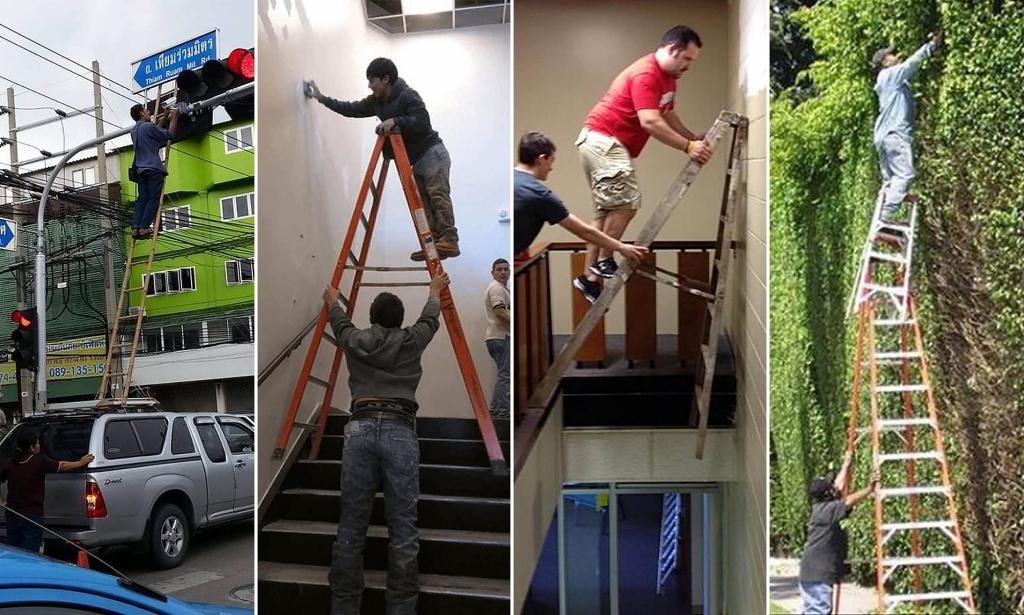
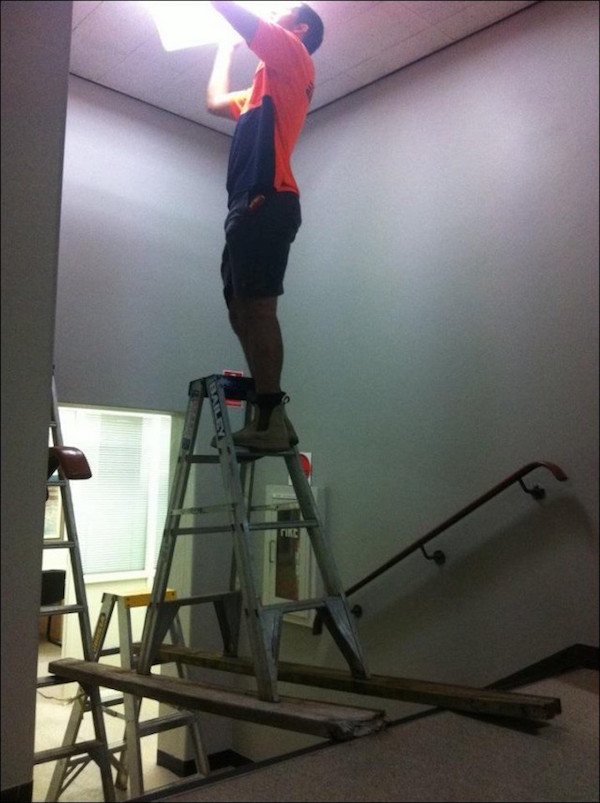
Without exception, the misuse of ladders is the most common source of fall-related injuries and deaths on construction jobsites. This is not conjecture.

Accordingly, you should view every ladder as a death trap. Seriously. Never say I didn’t warn you.

Here in Japan the better large general contractors (aka “Super Zencon”) forbid the use of ladders over 1 meter high on their jobsites. Extreme? Unwarranted? Death and injury statistics say no. Where possible please use well-constructed scaffolding or a certified manlift instead of a ladder.

When I was a boy of 14 working my first jobsite in the Nevada desert, my foreman had me working on the underside of the eaves of a 2 story house from a ladder perched on the elevated forks of the forklift he operated. Exciting times! I didn’t know any better at the time, but the foreman who assigned me that job later put several other workers in the hospital through similar negligent behavior. Back in those days, if a worker fell and broke his fool neck, it was his fault, you see, not his supervisor’s.

If you must use a ladder of any height, make sure it’s braced solidly at both its top and bottom ends. By “solidly” I mean it can’t be made to wiggle, and it’s impossible for even Murphy to knock over.

Never stand on the top rung of a ladder even if it’s solidly braced. Easy to say, but the irresistible Darwinian compulsion to climb to the top rung, fall off, and die in agony with unsightly bone splinters poking out everywhere and red sticky stuff making a mess all over the place overcomes thousands of guys every year. How unfashionable!

Ladders truly excel at skimming floaters from the gene pool, especially when combined with forklifts. Don’t you be one of them!

Fire Hazards

Jobsite fires are extremely common because of the garbage and flammable material that careless fools leave scattered around. All it takes is one idiot to toss a cigarette butt. Or one spark from a welder, torch, grinder or cutoff saw. Or one short in a damaged extension cord.

Garbage and clutter aside, construction sites are always at high risk for fire because for months they have only temporary power which is frequently not compliant with code, miles of extension cords strung everywhere, and careless workers with welders, cutting torches, electrical grinders and tobacco incinerators wandering everywhere. And depending on where that fire starts, the fuel available to it, the amount of time it’s allowed to grow, and the difficulty of emergency egress, too often people get toasted. I know this from direct experience.

So keep your jobsite clean and clutter-free.

Inspect your extension cords daily.

Strictly forbid smoking on your jobsites.

And for heaven’s sake, please be sure to establish and strictly enforce “hot work” rules, provide related essential equipment, and inspect that equipment daily to ensure it works or hasn’t tottered off on Darwinian adventures. Your life may depend on it.

So let’s next consider why hot work safety procedures are important.

Hot Work

“Hot work” such as welding, cutting metal with oxyacetelene torches, grinding, or using cutoff saws, etc. etc. is dangerous as I know from direct, personal experience of starting a fire in a pile of discarded cement sacks on a construction site in Las Vegas many years ago. Fortunately, while I was a stupid kid at the time directed by a drunk to do something stupid, I was also paying attention and put out the fire quickly. But that’s no excuse for not creating and not following hotwork rules.

More recently a subcontractor started a fire with his welder on my jobsite in Yokohama in a similar manner. Four fire trucks arrived. Because of the location and time of day human life was not at high risk, but it could easily have been a financial and PR disaster for my high-profile international client (one you know). Fortunately, while the GC violated housekeeping rules and the steel fabrication subcontractor blithely ignored mandatory hot work rules, it didn’t get too badly out of control because the GC had established a high-quality safety plan in-advance, fire extinguishers were staged in appropriate locations, and responsible people were more-or-less paying attention.

It wasn’t my fault, but I ended up having to apologize to both my client and the Mayor of the City of Yokohama for this embarrassing blunder in company with the GC. I tell you, it was a heavy blow to my towering humility.

But hot work violations are not always so harmless. Another ironworker started a fire in the basement of a data center owned by a big company (another one you know) under construction in Tokyo some years back. I did not manage the jobsite but only supplied heat-exchange equipment.

Molten metal sprayed by an ironworker’s oxyacetylene cutting torch landed on a stack of urethane concrete insulation blankets stored 3 stories underground and melted its way to the bottom where it smoldered unseen. After an hour or so went by fire and volcanic levels of toxic smoke suddenly exploded from the stack into the dark, cluttered underground spaces quickly killing 2 workers and 3 firemen.

Reports submitted by police and fire departments attributed the deaths to a series of criminally incompetent violations of obvious, well-known safety laws. But I would wager that none of the workers or supervisors involved even considered the possibility of dying in smoke and flame beforehand. And obviously they didn’t have a proper fire watch. Murphy was a whimsical killer that day.

I really need to get my Tardis working again.

A jobsite I managed in Japan a couple of years ago was owned by a British company that had lost 2 entire buildings outside of Japan stuffed to the rafters with very flammable retail product and robotic material handling equipment containing literally tons of lithium-ion batteries. Needless to say, that company was sensitive to fire hazards, so their safety rules permitted zero hotwork on their jobsite in Japan. Welding, cutting, grinding, soldering or any other activity that might throw a spark was absolutely prohibited inside the jobsite fence. No exceptions. With lots of steel to erect and equipment to install, these uncommunicated, unanticipated safety measures made it difficult to complete the project on-schedule and within budget. There were injuries on the jobsite caused by stupidity, but we experienced no incidents of fire.

That’s an extreme example, and your workplace or jobsite is probably not at such a high risk, but nonetheless I strongly encourage you to scrupulously plan and meticulously follow competent “Hot Work” rules even if it means having guys standing around simply watching welding, cutting and grinding operations with fire extinguishers resting on their toes (smartphone use should be banned entirely while on fire-watch).

By “plan” I mean produce a thorough, professional-grade, site-specific, activity-specific RAMS (Risk Assessment Method Statement) and getting written buyoff from everyone on the team. If you don’t know how, you must learn. Yes, it’s a pain in the butt, but educational and much less painful than 5th degree burns to the same.

It can get expensive, but don’t neglect to assign a dedicated human fire watch with no other job while hot work is underway. Allow me to reemphasize: forbid smartphone use during fire watches!

A woodblock print by Toyohara Kunichika of a fireman carrying a matoi. Such men were considered heros.

Always provide fire extinguishers, emergency lighting, and emergency alarm systems wherever hot work is undertaken and at several locations around the jobsite so that one can be grabbed and deployed in under 30 seconds from anywhere on your jobsite. Not two minutes, 30 seconds. Excessive? Not in the least.

Fire extinguishers make perfect sense, of course, but why lights? We tend to think that fire produces lots of light, but that’s not the case at all. In fact, smoke makes everything dark and confusing. And what if you are working in a basement or attic or other enclosed space without lights? Without exception, the smoke and confusion of a fire immediately disorients everyone to one degree or another, so that they can’t locate an extinguisher or the exit in time. If this confusion continues for more than two or three minutes people will die of smoke inhalation long before they are toasted.

And why alarms? Won’t screaming and running around like a chicken that’s misplaced its head suffice to warn everyone?

When a fire breaks out, things go bad at warp speed, so if you have any conscience, you will want to make everyone in the vicinity aware of the danger quickly so they can evacuate and/or deal with the danger immediately in an orderly manner. But running around screaming like a scalded chihuahua will needlessly burn both time and people. Besides, when you discover a fire, your time is best spent deploying a fire extinguisher to put it out quickly and completely and then evacuate instead of running around screaming. Right? Right.

It’s an ancient truth that to survive an emergency one must make physical preparations in advance, so please provide the appropriate number of fire extinguisher stands housing a range of useful and fully-charged extinguishers, emergency lights and a push button alarm placed in critical locations. Easy to make them yourself.

If you are not directly responsible for safety, loudly and incessantly insist the safety dude/ dudette prepare this equipment, create a distribution plan, and conducts frequent inspections to ensure the fire extinguishers are always fully functional and haven’t sprouted legs and walked away, as they are wont to do.

Fire stands are important because extinguishers left sitting on the floor are a trip hazard and are easily “misplaced.” A better solution is to place multiple fire extinguisher stands with alarms linked by radio so if one is tripped, all of the linked alarms go off warning everyone quickly. They can also have a red strobe to guide people to escape routes. In the case of a fire, not just flame and smoke, but confusion and time are killers too.

When you or your safety inspector conduct their daily safety rounds, demand they check and document that each fire extinguisher stand is in its assigned place and completely stocked with the appropriate and fully-charged fire extinguishers. It only takes a few minutes.

PPE (Personal Protective Equipment)

Fall Prevention Equipment

If you need to work at a height greater than 2 meters, and there is any possibility way you might fall, please wear a full safety harness, one that straps around legs, torso and shoulders with a lanyard connection at the center of the back. Be sure to tie it off so it will prevent even a single limb on the stoopid tree from hitting you on your way down to kiss the concrete floor.

Please, don’t try to get by with a cheaper safety belt instead of a full harness because a belt alone will break your back if you fall. I’ve seen it.

Full safety harnesses along with their dual lanyards, hooks, reels and shock absorbers are not cheap to buy or comfortable to wear, but they are worth every penny of cost and minute of inconvenience unless you actively want an image of the Darwin Award etched on your headstone.

Hardhats

I hate hardhats. They’re hot, get in the way, diminish the heroic elegance of my supermodel profile (ツ) and hide the saintly glow emanating from my noble noggin! But whenever I think of not wearing one on a construction site or in a factory, I glance at the scars on my left hand and forearm, try to fully flex my left middle finger, and painfully recall the gouges carved into my arm and back when an ironworker installing corrugated metal decking on a jobsite at the El Cortez Hotel and Casino in Las Vegas pushed sharp cuttoffs off the edge of the 14th floor slab striking your humble servant as I was erecting concrete forms in the basement. In deference to Beloved Customer’s refined sensibilities I will not repeat the inelegant sentiments I voiced at the time!

My injuries from this incident were serious, but could have been much worse as witnessed by the damage to my hardhat. The sharp sheet metal decking shredded it leaving it hanging around my ears and shoulders. And while it didn’t protect the rest of me from cuts, it did save my face, head, neck and most of my shoulders. That hardhat saved my life. And the Project Superintendent and my foreman both helped to save my life by insisting I wear that plastic chapeau.

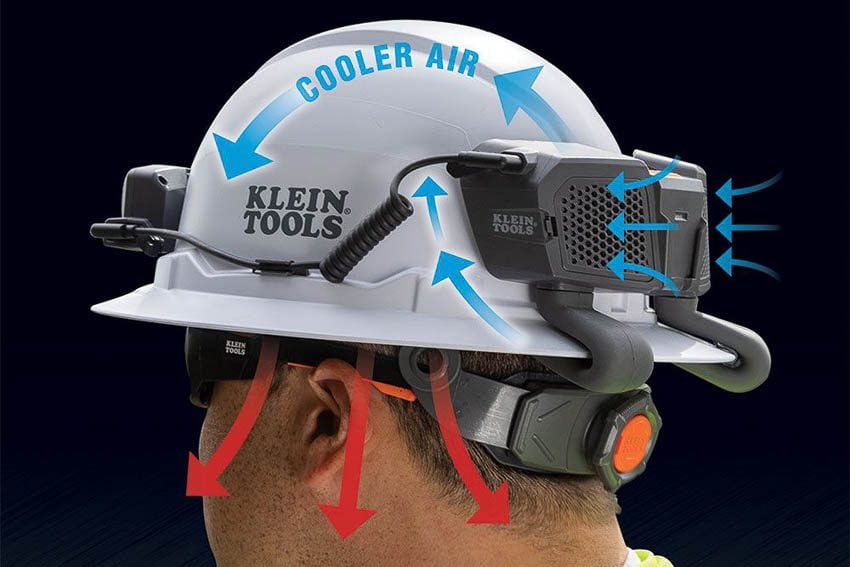
The lesson? Please wear a good hardhat every second you are on an active construction site even if there aren’t any drug-addled ironworkers with bombsights supplied by Murphy hovering overhead. Nowadays you can even buy hardhats with fans to cool off your hot head.

A Klein hardhat with cooling fans and headlamp.

Over the years hardhats have changed. My first was made of fiberglass, and my second of aluminum. The rest have all been plastic. I’ve thought about getting one made of carbon fiber, but the cost/performance benefits are unclear to me.

But the most important recent improvement in hardhats has been increased protection against side impacts, a damage mode for which older models don’t account but which is critical in the case of blows to the head occurring during trips and falls. European industrial safety regs takes this into account with a special certification, and hardhats complying with EU rules look more like climbing or military helmets. Just something to consider.

Headlamps which can be attached to one’s hardhat are available too. As I get older and my eyes weaker I find these lights extremely helpful during quality control inspections. In fact, my headlamp is almost always mounted on my hardhat not only because it’s safer, but because it helps me do better, more accurate work in the less-than-perfect light conditions frequently found on construction jobsites allow. A word to the wise.

My point is you would be foolish to not own a quality hardhat, and to not wear it whenever you are on a construction jobsite, even if it is uncomfortable and may reduce your chances of getting your pic in GQ magazine.

I have more true bloody stories about eye protection and safety gloves too but won’t bore you with details. Use them.

Conclusion

The key takeaways can be summarized as follows:

  1. Ladders are death traps;
  2. Wear a full safety harness, with lanyard(s), hook(s) and reel(s), when working over 6 feet high.
  3. A cluttered jobsite can injure and too often kill;
  4. Hot work kills;
  5. Fire extinguishers have legs, and must be able to scream;
  6. Always wear a quality hardhat when on the job.
  7. Create a plan, and be prepared. Don’t rely on safety dudes, lawyers or bureaucrats to keep you safe.

Take note; take heed: these words are a gift freely given without let, lien or loan.

A young man looking for his misplaced safety shoes?

If you have questions or would like to learn more about our tools, please click the “Pricelist” link here or at the top of the page and use the “Contact Us” form located immediately below.

Please share your insights and comments with everyone in the form located further below labeled “Leave a Reply.” We aren’t evil Google, fascist facebook, or the IT Manager of the DNC and so won’t sell, share, or profitably “misplace” your information. May I fall from a dozen stacked ladders if I lie.

Related Articles

Safety Rules for Edged Handtools

Go back

Your message has been sent

Warning
Warning
Warning
Warning.

Leave a comment

Tariffs & Taxes

The Surgeon or The Village Surgeon by Jan Sanders van Hemessen (c.1550-1555 oil on panel). The village sawbones is shown applying a medical cure for foolishness by removing the “stone of idiocy”

There has been much discussion recently about the potential impacts of President Trump’s retaliatory tariffs on international trade in general and various economies around the world in particular.

Our little venture here at C&S Tools relies entirely on exports, so of course some Beloved Customers have expressed concern regarding the effects of tariffs on our prices moving forward. At this point in time all I can really do is twirl my elegant white mustache and sagely mutter “Iduno,” but to keep things interesting, in this article I will be so bold as to share some hard-won insight on the subject that doubtless will be worth every penny it costs Gentle Reader.

The Quiver of Diplomacy

Tariffs and import taxes are ancient tools for profit and coercion, veritable arrows in the quiver of diplomacy, so Gentle Reader would be wise to understand that Trump is not the first nor will he be the last leader of a nation to string his bow and loose these darts.

But it’s also important to realize that in every case where tariffs have been manipulated for fun and profit, there have always been those who ran around screaming “the sky is falling!!”

Case in point, Japan’s economy relies heavily on exports of its products overseas, especially cars (21% of total exports), machinery (18% of total exports), and electronic equipment (14% of total exports). At one time, each of these industries was heavily subsidized by the Japanese government resulting in targeted putative tariffs by American politicians over many decades.

But your humble servant is old enough to recall how, instead of complaining, the Japanese government negotiated mutually-acceptable tariffs while Japanese manufacturers ignored the Chicken Little crowd and proactively worked to develop mutually-beneficial work-arounds. You see, unlike the feckless perverts that run the American television, movie, and news industries, the Japanese understood that pissed-off customers on the scale of nations are not good for long-term profitability.

My point is that taxes are never fair, today’s winners are tomorrow’s losers, and complaining solves nothing, but with good will and diligence most problems can be solved. Except for Ford and GM, that is, huge corporations that foolishly discarded both good will and diligence in favor of war and politics, flushing their market share down the tubes never to recover. Sadly, it’s far too late to cut the “stone of madness” from the brains of many American corporate executives.

Compared to Japan, the Europeans and Chinese, being especially adept at manipulating corrupt and shiftless American politicians, have had it easy and are spoiled, but amazingly they have the “stones” to call Trump “unpredictable” and “unreasonable” because he refuses to be bought, an unforgivable failing in a politician, it seems.

Much of the rattling we hear lately are the sounds of chickens coming home to roost, while the whining emanates from media bought and paid for by foreign entities, lobbyists in government jobs and short-sighted, and hypocritical executives of companies that brag of their righteousness in “supporting their community” and their “environmental awareness” while moving production to countries with cheaper labor, quite frequently child labor and sometimes even slave labor in fact, and no environmental regulations.

This talk of tariffs has put them all into a spastic panic fearing their carefully-laid plans for reaping humungous profits and big bonuses through betrayal of their customers will soon be knocked into an even bigger cocked hat. Oh dear….

The Power of Gubmint

If there is one thing I know for certain, people in government have two rock-solid powers: (1) to make things better for themselves and their buddies, and (2) to make things worse for everyone else. And that’s all they can do. Remember President Reagan’s famous but bitter joke “I’m from the government and I’m here to help.”

Will these tariffs be fair? Those silly enough to pose this question should never leave their mommy’s house.

Will these tariffs impact prices here at our humble little shop of horrors? Hmmm..

Most consumers never directly experience tariffs and import taxes, so the subject doesn’t quite come into focus for them.

In a previous life I spent a lot of time dealing with import taxes and tariffs in various countries related to procuring and shipping building materials and equipment to construction projects I was planning, so I learned the dirty truths of import taxes and tariffs long ago. But instead of boring Gentle Reader into a drooling coma with my war stories, allow me to share a true story many thousands of years old.

The Story of Butfuk and Bacon

Long ago and far away in a place Gentle Reader will never visit, there was a smelly fellow your humble servant will call Butfuk (names have been changed to protect the incontinent) who had a stony farm located next to a heavily-traveled dirt road winding over hills, across fords and through wolf-infested primeval forests. At one location this track passed through a narrow restriction, or pass, tight against a stony mountain.

One day, tired of eating beetles and worms delicately seasoned with mud for every meal, Butfuk put on his thunkin hat and got a great idea. Together with his cousin Bacon, who lived nearby and was hell and Jesus with a bow, they cut down a medium-sized birch tree laying it smack dab across this narrow spot in the road.

The way it worked was like this. Bacon would station himself to the side of the road next to a large rock where he had a good view and a clear shot. When travelers approached the downed tree blocking the road, cousin Butfuk would be found standing in the middle of the road in front of the obstruction, and bold as Obama, he would demand travelers pay either cash or a portion of their goods as a “gate tax.”

Those who refused this friendly invitation immediately found themselves feathered with arrows, for Bacon was not just accurate with a bow, he was quick as a duck on a june bug. Those who continued to argue had a mace-to-face meeting with Butfuk’s axe, whereupon the cousins dragged the corpses into their pig pen, confiscated all their possessions in the name of “fairness,” and sold any surviving women and children in the party as slaves. Business is business, after all, and pigs have to eat too.

Cooperative travelers, on the other hand, passed the impromptu gate safely, and while they disliked this new form of banditry, the cousins didn’t steal everything nor kill everyone, and the amount they demanded was not so much travelers couldn’t pay it without being ruined, so few bothered to resist too hard, kind of like the relationship between the European kingdoms and the Barbary pirates before the king of Tripoli pissed on President Jefferson’s shoes, so to speak.

Indeed knowing the amount they would need to pay in advance, travelers could even include these gate taxes in their budget. Yea verily, the golden goose principle was key to the sustainability of Butfuk’s cunning plan.

Over the years, B&B assembled a small army of guards from among the locals to support their “gate tax” business. A town with an inn, a stable, a small store, an alehouse, and a knocking shop sprouted up beside the mudhole in the narrow place by the mountain. Guess who was the mayor.

Over many generations, the cousin’s little venture metastasized into a country of sorts. Guess who was the king.

Thus was the first tariff imposed, the first customs house created and staffed, the concept of cash flow without risk, labor, or the bother of production was established, extortion, slavery, and murder were justified by, and codified in, law, and eventually a town, a nation, and royalty were born. Progress, right?

‘Tis a true story, one that has played out thousands of times over thousands of years in every corner of the world. If you doubt it, please check into the famous “robber barons” on the rivers Rhine and Danube with their long chains, or the bandits of Hakone mountain in Japan, or the Barbary Corsairs. Lots of documentation.

For a more recent example of the “old way,” look to the still-operating tax franchises of Spain and Thailand.

An action between an English ship and vessels of the Barbary Corsairs,
Workshop of Willem van de Velde the Younger.

Tariffs, Taxes and Profits

Ever since this humble, bloody beginning, customs and tariffs have been the most profitable (measured by cost vs. income) source of revenue for all governments with very few exceptions. The only more profitable, more reliable, easier source of income for governments, short of pillaging their neighbors, is the old confidence game of minting/printing/circulating currency. Government fees and income taxes don’t even come close.

In modern times with the explosion of international trade, tariffs are exponentially more profitable for governments and their buddies, but what has changed is the scale of their use as a tool to coerce markets, to retaliate against entities with competing tax/subsidy schemes, and to placate the disgruntled rich.

Conclusion

Will the pending tariff war yield improvements or devastation? I dunno, but I’m confident of one thing. Being based on banditry, slavery and murder justified by unjust laws, it would be shortsighted for little people like me and thee to expect these new tariffs to expand our peace and prosperity.

I think I need an operation for this bump on my head.

YMHOS

The Extraction of the Stone of Madness or The Cure of Folly, oil-on-panel painting c.1494 by Hieronymus Bosch (Museo del Prado in Madrid).

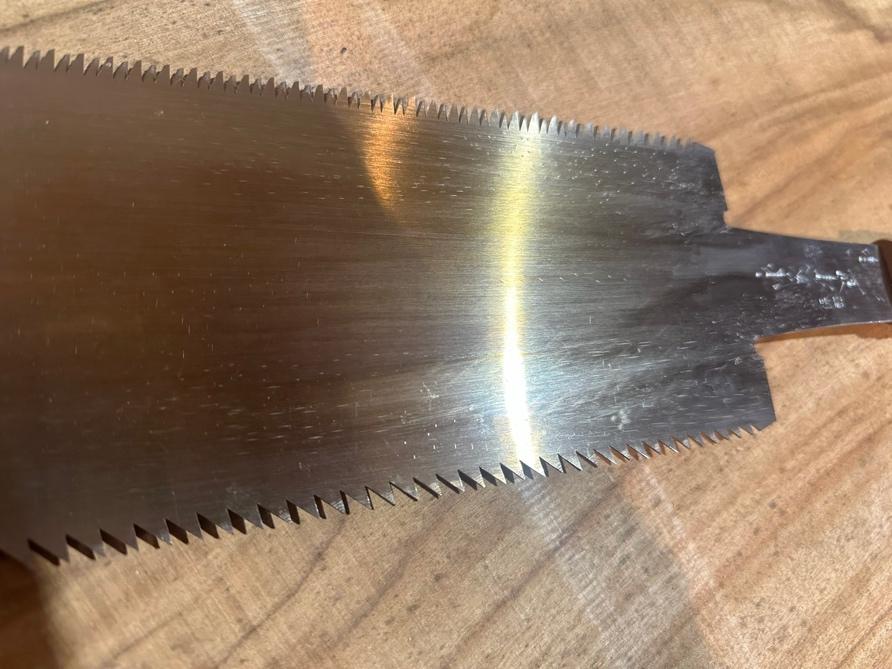
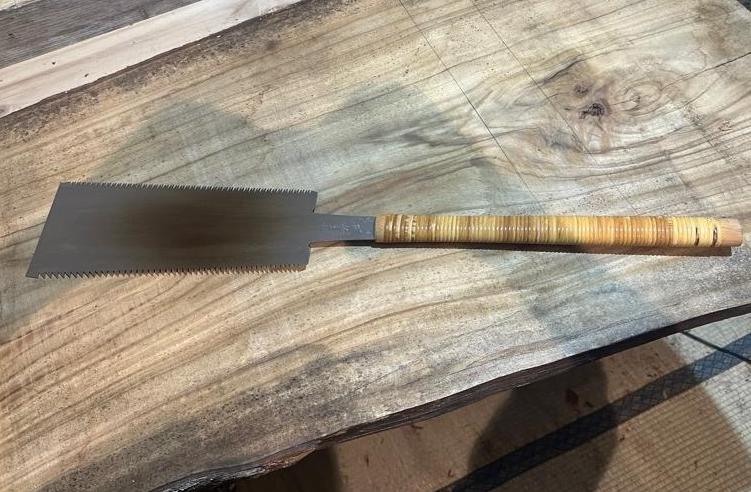
We Wish You a Ripper Christmas: A Guest Reviews 3 Handsaws

by Antone Martinho-Truswell

[This article was written by the energetic Doctor Antone Martinho-Truswell, a Most Beloved Customer and Dean at St Paul’s College, University of Sydney. While not as scholarly as his fascinating and romantic earlier guest post titled Permanence, in this article Antone has graciously shared an aspect of his woodworking experience that will resonate with many Gentle Readers. Please enjoy.]

“Arise and be merry

And sing out while you can

The world will never see the likes 

Of dear old Stan.”

From “Dear Old Stan”, by the Dreadnoughts, concerning a different Stan, equally worthy of your meticulous study.

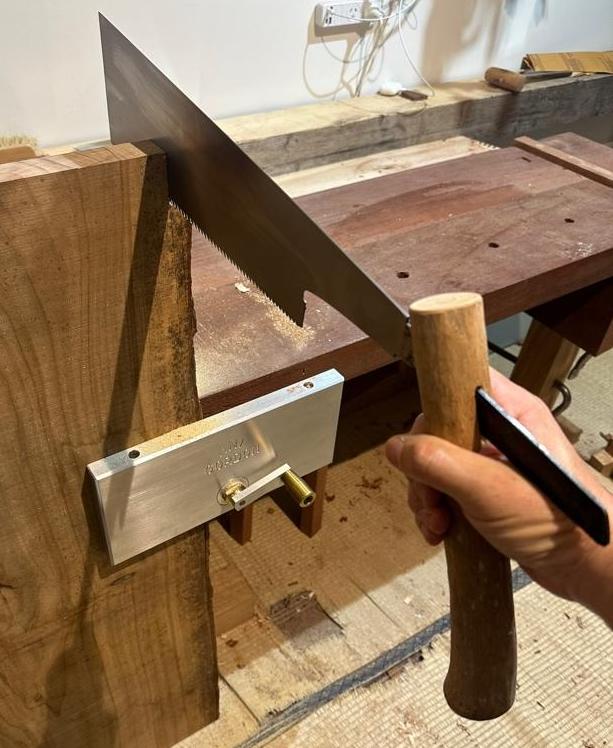
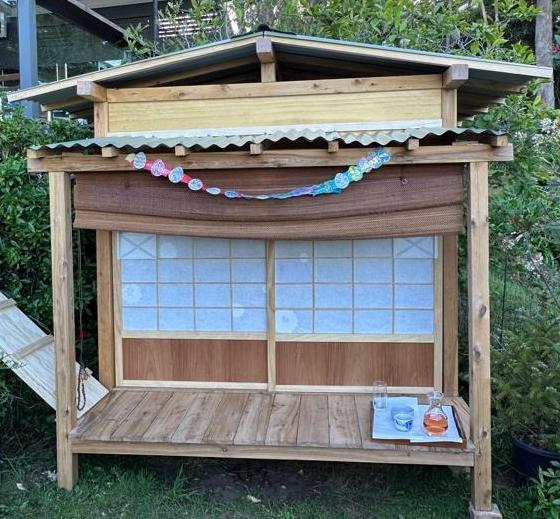
A few weeks ago, I was putting the final touches on my most recently finished, and largest, woodworking project to date. Over the past 18 months, interspersed with dozens of smaller and more pressing projects, I’ve constructed this tea-house styled cubby house for my daughters, complete with engawa, shoji screens (already torn and patched), Aussie-style “tin roof”, and tiny roofed reading nook overlooking Australia’s Blue Mountains National Park. My daughters made the paper garland to celebrate the opening of their new palace.

With this project I set myself the challenge of making the entire structure using only handtools (save a cordless drill for the roofing screws), and to use primarily reclaimed timbers. The timber frame, floors, and inside surfaces of the wooden walls were all hand-planed with a kanna, and all of the joints hand-cut. This involved cutting some 300 joints, and an almighty amount of handplaning.

But it was the ripping that did me in. Or rather, did in my tools. Between the wall panels, floorboards, shoji frames, and the joints themselves, this involved a tremendous length of rip cuts in very hard Australian woods. As I celebrated the completion of the project with a glass of vintage Château Thames Embankment while gazing across the verdant valley, I considered the small collection of exhausted Japanese rip saws the project had left in its wake.

 I had been using modern, disposable-blade, induction-hardened Japanese saws on this project, and two, in particular, gave the ultimate sacrifice in the process.

One saw was a rip single-edged kataba already fairly used up on other projects, the other a fresh but inexpensive ryouba that I dedicated to this project in particular. As Stan has noted before, these induction-hardened and mass-produced Japanese saws are excellent tools – sharp, effective, and long-lasting. Moreover, I had been putting them to more punishing work than usual – “in the field” rather than the workshop, cutting reclaimed timber replete with grit, dirt, and other dulling faeries that grinded away their cutting edges.

I am normally meticulous in following Stan’s advice to clean one’s timber and remove dirty, gritty surfaces with dedicated roughing tools before putting quality blades to work, but this project called for a different approach – there was too much timber to efficiently clean before working it, and the inexpensive saw was purchased and dedicated to the project in order to prevent needless back-and-forth while assembling the structure in the garden, so it served as both roughing and finishing tool.

Later, while enjoying a refreshing beaker of Château Fleet Street, I realized two things. First, that my much older furniture-making ryouba had also been dulled by local faeries; and second, that I needed to replace my other workhorse handsaws.

Naturally, this meant contacting Dear Old Stan, the only solution when tools that work are wanted. (Stan, I’m waiving my copywriting fees for that tagline.)

After some back-and-forth with our reliable proprietor, I settled on three saws to renew the capabilities of my saw-box. Our discussion covered a few considerations:

  1. I have no shortage of fine-tooth saws like dozukis and hozohikis, all of which are working fine and providing good service.
  2. I am up for the challenge of re-sharpening rip teeth, but am wary of the time investment versus benefit of trying to sharpen the complex shape of Japanese crosscut teeth.
  3. These new saws would be used for sawing stock to rough dimensions. I frequently make furniture from locally-sawn slabs, and so need to make long rips and crosscuts to efficiently break these down into smaller components.
  4. I wanted saws that are nicer, more real, and more meaningful than mass-produced tools, if possible.

Gentle Reader will not be surprised to learn that Stan delivered all I needed and then some. 

The first cab off the rank was an antique 300mm ryouba labeled as being made of Tougou steel – a now rare tool steel produced by Andrews Steel of Britain. This is a stiff bladed, large ryouba, and a very handsome saw. Stan offered, and I enthusiastically agreed, to have this saw tuned, sharpened, and teeth re-profiled for hardwood by his saw-smith, Takijiro.

Takijiro trued and tensioned the blade, leaving behind the telltale henpecks seen on the sides of the blades.

This new saw’s first challenge was crosscutting a slab of camphor laurel planned for a coffee-table top, about 650mm wide and 40mm thick (after giving the slab a good scrub with a wire brush first). It took me about 2 minutes to complete this cut, and it was exceptionally easy to keep straight. I followed this with a 1200mm long rip cut through the same in about 4 minutes and equally satisfying. The cut surfaces were exceptional – very smooth and very straight, even with my paltry skills.

I could not have been happier with this saw, which came from Stan’s “miscellaneous ryouba” selection, and the decision to have the blade tuned and the original teeth replaced with dedicated hardwood teeth is something entirely to be recommended to all potential purchasers.

But one is never enough. And after years of reading Stan’s enthusiastic praise of them, I also wanted my own bukiri gagari, a much rarer and more specialized saw. Here, Stan was able to provide this beautiful 330mm blade made by Takijiro, again, sharpened, trued, tensioned, with hardwood teeth, and with a beautiful natural wooden handle to boot. 

Nakaya Takijiro Masayuki, sawsmith extraordinaire

This saw is a joy to use. It’s much bigger than its 330mm size might suggest on first read. It feels like a much bigger, more substantial tool than the 300mm ryouba, despite the blades being notionally similar in size.

I soon became accustomed to using a pull saw with a “pistol grip” handle (aka “shumoku” handle), and sure enough it delivered a straight cut and quickly. I put this saw to the task of making the matching 1200mm rip cut on the other side of the slab, and the results were, as expected, fantastic.

I can’t overstate how much easier it was to make quality cuts with these quality tools. I’m not a professional carpenter, but neither am I a turnip, and can usually make a fist of accurate work even with subpar tools. And while I have some higher-end dozukis and other fine-toothed saws, I had kept my ryoubas and rough work kataba saws cheap and cheerful to this point. These saws were, if not quite like the light that shone round Saul on the road to Damascus, at least a bit like scales falling from my eyes.

The third saw I ordered from Stan was a mass-produced and induction-hardened crosscut ryouba, with an exchangeable 300mm blade – larger than is easily found here in Australia. The reason for this choice was explicitly related to one of my purchasing criteria above, namely that I suspect that I will not be attempting much crosscut saw sharpening any time soon.

The aforementioned ryouba and bukkiri gagari saws are both traditional, handmade saws with teeth that will require regular sharpening.

Stan kindly included in his package a tiny specialized saw file to accomplish this task. But I will be babying the crosscut teeth on the ryouba out of my own hesitancy to try to sharpen them. As such, I thought it wise to make use of the best of modern technology in this affordable, induction-hardened saw to be used whenever extensive rough cross-cutting, sometimes through less than immaculate timber, is required. It cuts very well indeed, and quickly, if without some of the romance and spirit of the handmade saws.

These saws are already the new front-benchers in my workshop, and doing excellent work. The only thing I recommend more strongly than Stan’s tools are his advice and counsel in selecting, using, and caring for them.

There are many people selling tools. But the world will never see the likes of dear old Stan.

As we say in Australia, here’s wishing you a Ripper Christmas! May the greatest of all carpenters be a light unto you and your loved ones.

Antone

Christ in the House of His Parents, oil on canvas by John Everett Millais (1849-1850), at the time a controversial painting much criticized by the likes of Charles Dickens because of its realistic depiction of a country carpentry workshop, especially the dirt, sawdust and shavings on the floor. But surely this is what a poor carpenter’s workshop in rural Nazareth would have looked like when Jesus was a small boy. Joseph is shown working on a simple battened door joined with nails, a standard carpenter’s job in all places at all times, but he’s stopped work to examine an injury on Jesus’s hand, perhaps caused by one of those nasty nails, foreshadowing future wounds, while Mary comforts her boy with a kiss. By no coincidence, a drop or two of blood has dripped onto the child’s foot further hinting of unpleasantness to come. In the background grandmother Anne takes over the job the injured child had been doing prior to the accident of clipping clinched nails, while young cousin John on the right (later known as John the Baptist) brings water to cleanse the wound, another ominous foreshadowing indeed. The apprentice shown on the left is said to represent Jesus’s future apostles while the sheep seen gawking through the open workshop door are said to represent the flock of Christianity. The ladder and the dove resting on it are also symbolic.

If you have questions or would like to learn more about our tools, please click the “Pricelist” link here or at the top of the page and use the “Contact Us” form located immediately below.

Please share your insights and comments with everyone in the form located further below labeled “Leave a Reply.” We aren’t evil Google, fascist facebook, or the Chinese Communist Party’s coordinator for blackmail, and so won’t sell, share, or profitably “misplace” your information. If I lie, may the tang of my bukkiri gagari saw break off.

Go back

Your message has been sent
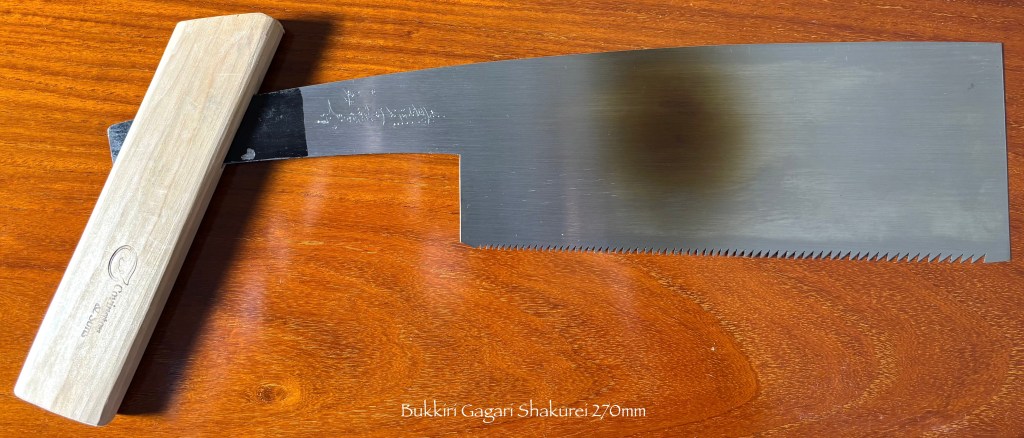
Warning
Warning
Warning
Warning.

Leave a comment

Relevant Articles

Japanese Handplanes Part 8: Operator’s Manual

There was no such thing as luck. Luck was a word idiots used to explain the consequences of their own rashness, and selfishness, and stupidity. More often than not bad luck meant bad plans.”

Joe Abercrombie, Before They Are Hanged

n this article we will consider how to use the Japanese “hiraganna” plane to prepare boards, sticks, beams and posts for woodworking projects. For those earnestly focused on becoming proficient with the hiraganna, and desirous of avoiding most of the confusion and difficulties those without a kind mentor whispering guidance in their shell-like, and wacking them upside the head with a memory mallet to correct their mistakes, this article will have special value.

Let’s begin this adventure through fields of daisies by breaking down the work of the hiraganna handplane into two primary activities, namely dimensioning and finishing.

What is Dimensioning?

I apologize if this first part seems tedious to those Beloved Customers already well-versed in using handplanes, but as I’ve written many times before, the Gentle Readers of this blog include newbies, professionals, and many in-between, so a few extra words to aid the comprehension of less-experienced persons will not go amiss. Your excellency’s indulgence is humbly requested.

“Dimensioning” in this case means to reduce the thickness, width and/or length of a wooden log, board, stick, beam or post to predetermined dimensions using axes, adzes, froes, drawknives, spokeshaves, saws, handplanes, files and even electrical equipment. It’s a part of a larger job called “material preparation.”

Depending on the starting sizes of the lumber you’re using, dimensioning material can consume a lot of time and energy, which is why electrical equipment such as bandsaws, tablesaws, circular saws, jointers and thickness planers are so popular. But such equipment, especially if it has the capacity to mill thick, wide lumber, can be expensive, take up a lot of space, generate ear-damaging racket and belch veritable clouds of lung-clogging sawdust. And all of them are eager to nibble on yummy fingers with or without hot sauce.

But in the smaller shop in the hands of an energetic, skilled craftsman keen on doing a higher grade of work in a calmer, more creative and healthier environment, the ancient handplane reigns tranquilly supreme.

Planes used for dimensioning must be designed and setup to accomplish the goal of removing material quickly and precisely yielding straight, flat, square surfaces free of wind on the faces, sides and edges and ends of the target board, stick beam or post.

On the other hand (the one with six fingers) planes used for “finishing” tasks are setup and tuned with different goals in mind. We will examine these two types of planes in more detail below.

It’s important to understand that, at the conclusion of the dimensioning stage in the process of material prep, the surface left by the plane need not be perfectly smooth much less shiny, just the right size, flat, free of twist and with square edges.

For this job the Arashiko and Nagadai planes are the tools of choice in Japan.

The Arashiko Plane

The Arashiko (荒仕子鉋) plane is more-or-less equivalent to the benchplane or jackplane in the Anglo-American tradition, typically a general-purpose plane suited to quick, hard work.

While the arashiko plane can, of course, take long, continuous shavings beginning and ending at the board’s perimeter edges, the job of efficiently flattening and truing boards requires more planning and technique than most woodworkers imagine.

Being shorter than, for instance the nagadai jointer plane, the arashiko plane is easier to control and therefore excels at work requiring shorter cuts including those started and/or stopped inside the perimeter of the surface being planed, to shave down high spots and ridges while avoiding valleys and ditches in accordance with a sequenced plan the craftsman formulates for his work, a technique not commonly taught to newbies, but one Beloved Customer would be wise to master.

Despite what many imagine, to use an arashiko efficiently the craftsman needs to have a plan in his head for working each board, as described above, along with trained eyes and physical skills sufficient to effectively and efficiently execute that plan instead of just thoughtlessly pulling his plane around like a goat dragging around a tin can snagged on the hair of its tail.

The Nagadai Plane

The nagadai (長台) plane is the other variety of plane typically used for dimensioning. It performs more-or-less the same role as the Bailey-pattern foreplane or jointer plane.

With a jig length longer than the arashiko, it’s especially suited to flattening bigger surfaces using longer strokes, and shooting straight, square edges, but it usually does its best work when employed after the arashiko has quickly and efficiently conquered more problematic areas on the board. It too can be used for “stopped cuts,” but not as deftly as the arashiko.

Horses for courses, as it were.

What is Finish Planing?

After a board is dimensioned, whether by hand or electricity, its surfaces, especially if they are wider than the craftsman’s plane, will often display steps left by the corners of the arashiko and nagadai plane’s blades, or shallow ditches and ridges left by start/stop cuts, or striations and ripple marks left by the circular cutters of electrical saws, planers and jointers.

The finish plane specializes in taking thin shavings to remove these residual defects producing a uniform, smooth, and even shiny surface ready for joining. And because it takes thin shavings, it does so without significantly changing the thickness or width of the board or stick. However, this is only true if one limits the number of passes with the finish plane, ergo the importance of having a plan for one’s arashiko and nagadai planes and working that plan.

The well-tuned, expertly-manipulated finish plane, therefore, is the perfect compliment to the electrical jointer and thickness planer, which explains it’s continued popularity in a world under the brutal dominion of noisy pig-tailed tools.

Although it can produce flat, planar surfaces, the sole of the finish plane is setup different from, and will typically not work as efficiently at dimensioning as, the arashiko and/or nagadai planes. More details can be found in Part 6 in this series.

In short, the finish plane, or “shiage ganna,” (仕上げ鉋) must be setup and fettled to closely follow the contours of the surface it is cutting, rather than bridging over small defects and undulations, with the goal of taking thin, uninterrupted shavings of uniform width and thickness.

Please note that the first few passes made with this plane following the ministrations of the arashiko/nagadai planes will not typically produce uniform shavings because of the thinness of the shavings it takes compared to the depth of defects left by planes and equipment during the dimensioning phase of material prep. However, two or three passes will usually remove these last few defects and get the job done, depending of course on the skill of the craftsman or goat motivating it and the nature of the wood.

We neither need nor want the finish plane to take thick shavings which would substantially change the dimensions of the board already achieved. Please be sure you understand this point and its ramifications

Next, prior to making shavings, let’s do some housekeeping.

Clean the Wood.

Before you touch any piece of wood with your valuable, noble planes, please evaluate the wood’s condition and clean it if necessary.

Please do not dismiss this admonition unless, that is, you despise your edged tools, revel in wasting money, love to see your sharpening stones pointlessly turned to mud, and feel joy at spending extra time resharpening unnecessarily dulled and damaged blades. How brutish!

The answers to “The Mystery of the Scratched Blade may provide some useful insight.

Let’s next consider how to make and execute a plan for planing.

Planing Plan

Most people, including me for a long time, allow their planes to wander wherever their goat pulls them without much control, happy so long as they’re cutting wood. Why? I think it’s because most people never think to make a real plan for planing. Of course, many simply get carried away with making shavings imagining that shavings equal progress. And without a real plan they end up planing areas out of proper sequence, so instead of efficiently flattening the board, they waste much energy, time and steel digging valleys and trenches deeper. While natural and satisfying, this is decidedly not professional technique.

Miyamoto Musashi depicted in one of his famous duels. He was unique among sword masters for not only winning 62 duels beginning at age 13, some against multiple opponents at the same time, but for using improvised wooden items such as carved boat oars as weapons during these challenges instead of his swords. The power of wood is not to be disdained.

Beloved Customer may recall the words of Japan’s most famous sword saint Miyamoto Musashi In his book titled “The Book of Five Rings,” (ca 1645) quoted at the top of Part 6 of this series: “First lay his plans with true measure and then perform his work according to plan.”

With these words Master Miyamoto instructed the craftsman to do 3 things:

  1. Formulate a work plan;
  2. Delineate that plan with accurate dimensions;
  3. Execute the work in accordance with that work plan.

I believe these to be wise words even if they were written by a brutal killer of men. But how do they apply to using a plane?

The first step in formulating a plan for planing is to evaluate the condition of the board, stick, beam or post to be planed and identify problems by sighting down the sides and edges of the board from a low angle so that any deviations from straight/flat are apparent. It often helps to have a low-angle light source shining on the surface you’re evaluating to make defects and problems easier to spot.

Don’t forget to identify and mark any problem areas that will prevent the board from resting flat and stable on your workbench, or that might cause it to deflect, twist or wiggle lewdly when subjected to the pressure of planing.

Next, check the board carefully with a straightedge, lengthwise, crosswise, and diagonally too.

But the job doesn’t end with eyeballs and flashlights. As you identify them, mark bows, hollows, humps, high spots, low spots and twist with a carpenters pencil or lumber crayon using any marking convention you find convenient so there will be no confusion about the location and nature of any areas that need to be shaved.

The next step is to formulate the sequencing of the job.

With problem areas marked and tasks identified, at least in your mind, you can formulate sequencing based on the condition of the board and your priorities for executing the tasks.

When using handplanes to dimension lumber, your first priority must be to cut down any high spots before removing a single shaving from low spots. The marks you make will guide your work to minimize wasted time and effort.

It may sound like a lot of work, but with practice most boards can be evaluated, marked, and the requisite sequencing established in a few seconds without incurring permanent brain damage.

This completes step two of Master Miyomoto’s directions.

Preparation for Planing

Statues commemorating the famous duel between Miyamoto Musashi and the handsome, well-dressed Sasaki Kojiro. Musashi, depicted on the right, showed up to the duel very late in a small boat from the sea. Without waiting for the small boat to be beached, Musashi jumped into the surf and attacked Sasaki with an oar he had modified on the boat with his short wakizashi sword. The battle was over in a few seconds. Guess who won.

When you are ready to begin planing, make sure the board is supported on a flat, stable, rigid surface free of wind. This is important.

A workbench, atedai, or planing beam is the conventional working surface, but it need not be pretty.

When planing the first side of a board or stick, if necessary (and it usually is), position slips of wood or cardboard to fill gaps between the board’s off-side and your workbench’s surface to prevent the board from deflecting downwards (away from your blade) excessively, twisting and/or wiggling, movement which will mess up your pretty plan. It makes a difference.

Depending on the condition of the board and its grain, planing it flat and true may require many changes in the plane’s direction of movement and many “stopped cuts,” so tighten the razor-wire choker around the neck of your inner badger and patiently and thoughtfully work the plan. Speed will come with practice. Remember the moto of emperors Augustus and Titus, and the Medicis: “Festina Lente.”

Plan to frequently use your straightedge to check the board’s length, width and its diagonals.

Its OK to plane one side (the off-side) of the board roughly flat and then switch to the other side so the shimming material previously placed can be removed soonest. Then switch back to the first side and finish it.

Let’s next examine how to best to hold and motivate the Japanese handplane in a professional manner.

Teamwork

Let’s consider some basic teamwork techniques for operating Japanese handplanes, none of which involve goats, thankee kindly.

Imagine if you will a halcyon day under blue skies when Beloved Customer used a short shovel, perhaps as a carefree, optimistic youth, to move heavy mud or push wet concrete around on a farming, construction or cleanup project. You will recall it was hard work, but that the job went faster and easier when both hands, joined together by the shovel handle, worked together as a team transmitting the motivating power of shoulders, back and legs into the tool. It’s the same with handplanes, except for the yucky mud and concrete.

But whether shovel or plane, such teamwork doesn’t develop automatically for most people. Indeed, more often than not a human team in the real world either doesn’t really form or it breaks down quickly. C’est la vie, mon chéri? But when a team comes together working with a single mind to a common purpose, well now, that’s a beautiful thing!

It’s a simple thing for hands and body to work in harmony, but there will be failures at first, so let’s consider a common breakdown mode to make detection and remediation easier.

For example, instead of both hands working in concert with the wooden body of the eager handplane, frequently one hand/arm does most of the work while the other hand/arm just tags along, pretending it’s working hard but actually just freeloading. Of course, seeing this, the shoulders, back, hips and legs become disgusted and end up sitting in the shade dozing and drinking beer instead of helping in the teamwork. Do you have a brother-in-law like that?

The point is, please make sure both hands and your entire body are working together and not shirking.

So with that bad example behind us, let’s assemble our effective team by assigning each hand a specific role.

But first, please carefully examine the craftsman’s hands in the photo below.

The Right Hand’s Job

Assuming (1) you are right-handed, and; (2) you will be pulling the plane towards you along your right side, the right hand’s job is to press straight down on the plane focusing pressure primarily on the contact strip in front of the mouth.

It’s a fundamental trait of right-handed people (not goats) to want to use their right hand to apply heavy pushing or pulling forces on a tool, and their left hand to control its direction, so the division of labor your humble servant is proposing may seem clumsy at first, but if you focus the teamwork will become second nature quickly, I assure you.

I know I’m being irritatingly repetitive, but for good reason, so please remember that your right hand’s job is NOT to pull the plane, not even a little, but rather to apply downward pressure on the plane’s body causing the contact strip in front of the mouth to firmly press on the board in turn while keeping the plane’s body level.

Next let’s look at how the right hand should grip the plane’s body.

With the blade’s face (the side with the brand) and chipbreaker facing you, place the tip of your right thumb on the left hand side of the plane’s body aligned with the mouth and about 3/4 down the side.

Place the tip of your right hand’s middle finger in the same position on the opposite side of the body. You may need to adjust your finger’s positions somewhat, but if placed correctly a well-made plane should balance nicely between just these two fingertips when you lift it. This is an intentional design feature, BTW, and one reason why standard finishing planes are seldom wider than 70-80mm.

With your fingertips positioned thusly, lower your palm so it rests on the upper surface of the body, touch the tip of your index finger against the blade’s face or the chipbreaker, and press your ring and pinkie finger on the right side of the body.

Using this grip the plane should be absolutely stable in one hand, even when held in the air or upside down, assuming your hands aren’t small or weak.

If you can’t control the plane with this grip, you may be doing it wrong, or the plane may be extra long, or extra short, or the plane’s body may be too wide for your hand. Please adjust your grip as necessary.

The Left Hand’s Job

A woodblock print of the duel between Miyamoto Musashi and Sasaki Kojiro. Musashi performed many of his duels against famous teachers of the sword, many the proud heads of kendo schools with many students and disciples that would attempt to ambush him before his battles against their teachers, and gang up on him in retribution at the conclusion. To deal with these sneak attacks and ambushes by multiple skilled opponents, Musashi became adept at using two swords at the same time, one in each hand, all while dudes in sandals were trying to fillet him. Teamwork, Gentle Reader, teamwork extraordinaire.

The job of your left hand is NOT to press down on the plane but only to PULL it towards you. This division of labor between left and right hand is important.

Place the pad of your left thumb on the blade’s face. It doesn’t need to be centered.

Place your index finger either on top of the blade’s head, or wrap it behind the blade. Depending on where you placed your index finger, your middle finger can either stretch behind the blade and rest on the wooden body with your remaining fingers press against the flat end of the body, or you can position your middle, ring and pinkie finger all pressing on the tail end of the body. Use whatever position feels most comfortable and pull the plane in a straight line.

Moving a plane using only the left hand is pretty much the opposite of how Western planes with their tote handle and knob are used. But once your body learns this division of labor your effectiveness and efficiency using Japanese handplanes will skyrocket, I promise.

Combining the Right Hand and Left Hand

Now that we’ve assigned different but complimentary jobs to each hand, we must next put them to work as an harmonious team like the draft horses and plowman in the photo above.

This will feel unnatural at first, and indeed, until muscle memory is developed, most people quickly forget these principles and revert to the careless techniques their pet goat taught them. You will too. But when your plane stops behaving, review the words in this series, wack yourself in the forehead with your wooden “memory mallet” as if you were a green apprentice back in olden times, and get back to work. The pain will feel so good!

Now that we have our grip, the division of labor and our team figured out, let’s bring the rest of our body into the dance.

The Handplane Shuffle

Using a Japanese hiraganna handplane can involve many stances, some standing. some walking, some sitting, and even laying down occasionally. Interesting footwork is sometimes necessary.

When sitting or standing while planing shorter boards or sticks, no special footwork is necessary unless you get an irrepressible urge to boogie down, baby. Indeed there simply isn’t enough space in this humble, unworthy blog to go into the subject in exhaustive detail, but there is one standing technique I would be remiss to neglect, one that has never seen the footlights of the Soul Train stage, one that your humble servant calls the “hiraganna shuffle.”

Unfortunately, C&S Tools’ IMAX video studio is closed for renovation and our photography crew, lighting and sound technicians, makeup artists, drapers and choreographers are currently all on a well-deserved vacation, probably enjoying prodigious quantities of neon-colored adult beverages containing colorful fruit and little umbrellas right about now, so we won’t be producing a video about the hiraganna shuffle starring hip hop hamsters and hipper combat robots anytime soon. Sorry about that. But I will try to explain the technique.

A good example of a carpenter using a finish plane on both solid wood and glulams with joints cut by CNC machinery can be seen in this video.

Obviously this scene of good old Shoyan the carpenter at work wasn’t staged, nor was a professional makeup artist involved in this serious example of the hiraganna shuffle. And unlike the photo at the top of this article, it’s not narrowly-focused kezuroukai stuff, but typical of 90% of high-quality classical architectural structural woodwork.

It’s worthwhile noting that the beams he’s working, even the glulam, are made of well-behaved, easily-planed softwood, probably hinoki cypress. I wish all woods were so pleasant to work.

If I may be allowed to digress for a moment, this carpenter (he has many practical videos on youtube, BTW) makes two comments Beloved Customer may find interesting.

One of his comments is that the shine produced by a handplane will vary with the direction of the cut, so it behooves one to pay attention and vary the planing direction accordingly. Obviously a pro of the first water.

His second comment is that the final planed surface will not only have a shine, but will repel both water and dirt making the beam last a long time even when exposed to the elements. This is an important and true observation supported by scholarly research at top Japanese Universities. Just one more reason the finish plane reigns supreme and why so many wooden Japanese temples and shrines have lasted centuries without stain, paint or varnish.

Anyway, so just what are the steps in the hiraganna shuffle, and can it be done in steel-toe safety shoes?

  1. Stand on the left side of the board facing the end where you intend to begin the shaving.
  2. Place the plane on the end of the board with its mouth just off the edge.
  3. While gripping the plane as you prefer, lean forward over the board while extending your arms, and take a half-step back. At the same time extend your right leg back and keep your left leg under you. Most of your weight should now be on your left foot and your right hand, with little weight on your right foot and no weight on your left hand. Don’t move the plane during this step.
  4. To initiate the cut move your hips along with your body’s center of gravity backwards while directing the forces of this movement of your legs and hips through your left hand into the plane while applying downward pressure with your right hand. Don’t try to use the devastating power of they mighty arms, Oh Lord of Thunder, but just the momentum produced by your legs, hips and back.
  5. Have faith and pull through the stroke with a positive attitude. The speed you generate will depend on the wood and your urgency, but it’s your mind that will get the job done, so long as your plane is sharp, so pull through the stroke without hesitating.
  6. Depending on how long the board and the stroke you intend to take are, as your hips and hands shift backwards you will reach a point where the weight is gone from your left foot and you will begin you lose the leverage needed to keep pulling the plane. Just before you reach that point, however, stop the plane’s movement briefly, shift/shuffle your left foot back and your center of gravity with it, and then move your right foot back and extend your leg, while once again moving your hips back while extending your arms.

With practice, the pause in the plane’s movement in step 6 can be eliminated, but it’s sometimes difficult to do smoothly when making heavy cuts. In any case, try to keep the pause brief so you don’t lose much momentum, and most importantly, don’t lift the plane or allow the blade to shift to or fro, side to side or up and down during this pause because any shift of the blade will result in a discontinuity in the cut and perhaps even a step. Yikes!

When making fine finishing cuts in well-behaved wood, the cut can be kept continuous by taking tiny backward steps as this guy is doing.

Execution

As in most things, a good start is the key when planing. Once the cut is started with confidence, just keep your hands working as a team, connected by the plane, and confidently pull through the cut like a draft horse pulling a plow, all while keeping the plane’s body level.

As an example of how its done, let’s feed my favorite 80mm (2-sun) finish plane a snack. It’s a happy tool with a wide body but slender mouth and only one big, very sharp tooth. It always beams a silvery smiles and sings a little song of steel and oak as it munches on yummy wood.

I’ll take a single, uninterrupted shaving from one end of this board to the other. Even though most cuts with a handplane are not this boring, it will illustrate some important techniques Beloved Customer will need to master.

I’ll start the cut with the plane’s mouth resting just off the far edge of the board, the tail end hanging entirely off the board, the contact strip in front of the mouth and the contact strip at the leading edge of the plane’s sole firmly resting on the board. In this position, so long as I don’t apply any downward force with my left hand, there won’t be any downward force trying to tilt the plane out of level.

While gripping the plane’s body and pressing down with my right hand, and pulling the plane towards me with my left hand, a shaving will begin to flow out of its mouth, assuming the board is fairly flat, the blade and sole are in good fettle, and the blade is adjusted for a nice cut.

The plane is moving along smoothly now, but just guess what will happen if I carelessly apply downward pressure with my left hand about now? If the plane is an arashiko or nagadai specialized in making flat, straight surfaces, nothing tragic will occur except perhaps the cut will wobble a bit. But since it’s my finish plane, the setup of the sole will cause the blade to be levered entirely out of the cut depositing rotten egg on my face. I hate it when that happens, so I’ll do my best to not press down with my left hand. Daijoubuka?

The plane continues it’s run and before you can say bobsurnunkel, the contact strip at the leading edge of the plane’s sole runs off the end of the board and the blade stops cutting, even though the plane’s motion continues. Because I am a highly intelligent craftsmen (or was it a wild and crazy guy?), I’ve been thinking ahead, and shifted the downward pressure of my right hand so it acts just on the contact strip in front of the mouth, relieving pressure on the sole everywhere else. As the plane’s mouth goes off the end of the board (did I just hear a little scream of fright from my gentle plane?) I hold onto the plane with both hands to keep its body level and prevent a Peter Pan performance, then follow-through for perhaps half a plane length, ending this pass.

Repeat as necessary.

Please note that this requires one to actually manipulate and intelligently control the plane using one’s hands rather than just thoughtlessly pulling it around like the aforementioned goat does his tin can.

Final Tips

Prevent Deflection

As mentioned above, in order to plane truly, the board or stick you are working must be firmly supported on a relatively rigid surface.

You also need to prevent the downward force your plane applies when in motion from deflecting the board or stick downward away from the cutting edge because the plane can’t cut a surface that deflects away from it, and therefore cannot make it flat. If such a support condition is left uncorrected, your plane’s best efforts will be as productive as a goat.

To resolve this extremely common problem, you may need to roughly plane the off-face of the board or stick oriented downwards, and/or shim the board to prevent excessive deflection/twisting. Remember, you located and marked areas on the board likely to deflect like this during your planning efforts.

Many will studiously ignore this advice. To those I am prepared to offer a wonderful deal on a huge parcel of shovel-ready resort hotel property located on the banks of a majestic chrome-plating settlement pond in North Korea. Great fishing!

Keep the Body of Your Plane Level

Please observe that these techniques don’t rely on fancy hand movements, psychic abilities or a masters degree in wood butchery, but rather on always focusing pressure on the contact strip in front to the mouth, and instead of simply pressing down on your plane like it’s an iron to make your pleated pink apron pretty (say that 10 times fast), you must use your hands as a team to keep the plane’s body flat on the board you’re planing, and level as it leaves the end of the board.

Imagine that, real hand skills!

Use Your Whole Body

Remember to not rely on just the strength of your arms, oh might Thor, but rather on the strength of your shoulders, back, hips, and legs. They will add a lot more momentum-retaining mass and provide better control too.

Cut Confidently

Start cuts with confidence and pull through the cut. Any hesitation and your plane will giggle at you through its narrow little mouth.

Perform Timely Dental Hygiene

Sometimes the mouth of your noble plane will become clogged with shavings, but frequently allowing the mouth to develop a tightly-compacted clog will damage it, so if you feel a clog starting, stop work immediately and give it a dental exam to figure out why. Depth of cut too deep? Blade setting wrong? Chipbreaker getting in the way or not functioning properly? Slivers of wood, pixie toenail clippings or fragments of divorce lawyer’s hearts jamming the mouth? The only way to know for sure and prevent more clogging is to check.

Clear the clog by either removing the blade and chipbreaker, or using a splinter of wood to pick the mouth.

Keep It Lubed

Oil the chipbreaker’s edge, the blade and the surface in your plane’s mouth opposite the chipbreaker’s bevel whenever you remove the blade to help shavings flow freely and to reduce clogging. You do have the essential oilpot on-hand right?

Clean the Wood

Before planing use a steel brush to scrub and clean the surface of wood that has been exposed to dust and/or grit. You must get any embedded dirt/soil/sand out of the wood first or your tools will be damaged and your time wasted like tax money in California.

Cut 1/8″ from each end of each board, stick, beam or post, or at least use a block plane or drawknife to chamfer the ends before planing to remove the most stubborn, deeply-embedded and well-hidden grit. This is really important because the grit will always be there even if you can’t see it, I promise.

Conclusion

In my experience, many of the Westerners who receive these instructions without benefit of a mentor or memory mallet close at-hand immediately and meticulously ignore the critical points, and then, when their results prove inconsistent, assume the instructions are crapola smothered in piquant marinara sauce. I strongly urge you, Beloved Customer, to do better, please, because if you internalize these instructions and develop the correct muscle memory, for the rest of your life you will find Japanese handplanes to be joyful and efficient tools for working wood. Thus it was with your unworthy servant.

This article is by no means exhaustive or comprehensive, but it should be enough for a good start. It’s far more than I had for many years.

YMHOS

If you have questions or would like to learn more about our tools, please click the “Pricelist” link here or at the top of the page and use the “Contact Us” form located immediately below.

Please share your insights and comments with everyone in the form located further below labeled “Leave a Reply.” We aren’t evil Google, fascist facebook, thuggish Twitter or the Chinese Communist Party’s coordinator of funding and blackmail for US elections, and so won’t sell, share, or profitably “misplace” your information. If I lie, may my goat eat all my socks.

Go back

Your message has been sent
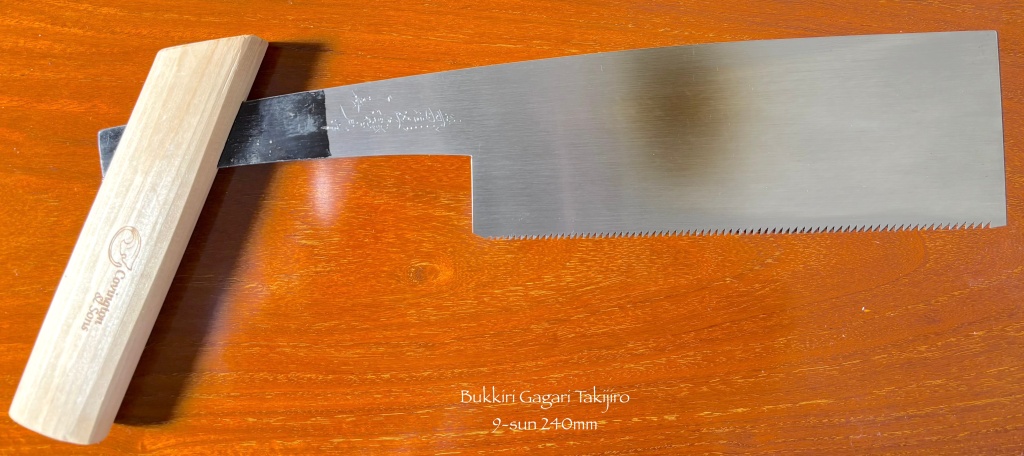
Warning
Warning
Warning
Warning.

Leave a comment

Japanese Handplanes Part 7: Bedding the Blade – Correcting Some Common Misunderstandings

Rokuza the carpenter adjusting his plane close by old Edo’s Nihonbashi while thinking wistfully of his lover, no doubt a great beauty and dab hand with a sharpening stone. Mount Fuji can be seen in the background.

Whether made into a wooden pillow or table, wood with excellent fine grain is a guarantee of splendid poems, and the composition of perfect documents.

~Liú Shèng (d. 113 BC), “Ode to Fine-Grained Wood,”

s Gentle Reader is no doubt aware, quality Japanese handplanes, like those we are deeply honored to share with our Beloved Customers, are simple tools with excellent blades but relatively few parts compared to its Western counterpart, the Bailey-style metal-bodied handplane, and therefore present fewer opportunities for dull blades and misadventures.

Sadly, there is much confusion on the subject of how to setup and maintain such tools. Indeed, the path to enlightenment in this regard is blocked by mist-bound mountain passes of ignorance and hedged about with bottomless pits of boiling BS that prevent many noble woodworkers around the globe from gaining a true understanding of their tools.

In this article, your humble servant will attempt to untangle some of that confusion, dispel some of those dark mists, and using pump and shovel, fill in a few of those roiling pits. So please don your headlamp, put on your rubber mud boots, shoulder your shovel and join me as we travel a little further along the path.

The Two (problematic) Methods

In Part 4 of this series we briefly discussed how to fit the plane’s wooden body to its blade. Such a happy wedding it was! I dance like a gleeful baby goat in new pajamas whenever I view the photo album.

While the explanation in Part 4 was not meant to be comprehensive or exhaustive, just today a Gentle Reader posed some perspicacious questions the answers to which may benefit others, and so with fear and trembling I make this addition to the series. Your noble indulgence is requested.

The Gentle Reader’s question was as follows:

“I have encountered two schools of thought about fitting blades. The first is that the blade should be bedded more or less uniformly to the dai (i.e.: with heavy contact, ideally across all points ). The second, which I have seen more experienced practitioners espouse and teach in classes, is to maintain contact across a U-shaped area of the bed, under the side grooves and along the mouth, and removing significant material from the rest.”

Your humble servant is aware of and has even tested these two hit-and-miss methods, and while general befuddlement is the rule in all human endeavors, I was simply shocked, shocked to learn there are lost souls who boldly brag in their befuddlement and actively promote either. Call the gestapo and round them all up!

Casablanca jokes aside, please humor your dimwitted unworthy servant as I attempt to perform a brief, summary, comparative analysis beginning with the conclusion thereof because I was trained to begin any analysis that way, and I find it most helpful.

As mentioned in Part 3 and Part 4, when setup and maintained properly, the forces that secure the blade in the wooden body (dai) are solely friction acting on the top and bottom faces of the right and left portion of the blade contained inside the two retention grooves cut into the sidewalls of the blade opening, NOT friction between the back of the blade in general and the bed of the dai. Ergo, neither of the two methods listed above are useful IMHO.

This is the essence of the matter, but since many still struggle to understand, a deeper analysis is called for.

How did this worm of confusion gnaw its way into the brains of woodworkers to take up squatter’s rights? Some dark malfeasance by Murphy? Perhaps, but dollars to donuts I’d wager it springs from a difference in traditions.

But this begs the question: what traditions or knowledge or experience regarding Western planes could engender such misapprehension about Japanese planes? Hmmmm.

Perhaps it’s the knowledge of and experience dealing with the potato-chip thin blades of Western planes that rely on screws, complicated linkage mechanisms and high pressure between the blade and its cast-iron or ductile iron bed in order to retain and adjust, and to prevent them from vibrating/chattering in-use?

Oh oh oh! Could it be that those accustomed to Bailey-style planes feel compelled to deploy similar chatter-prevention measures in their Japanese planes?

Or could it be brain worms, maybe?? Don’t sneeze on me, pleeze.

I’m clueless about the source of these repugnant brain worms and the reasons behind this widespread befuddlement, but what is not fuddled is that the Japanese plane has an entirely different blade and body that relies on entirely different retention and adjustment systems, and experiences entirely different forces acting in entirely different vectors, and so requires entirely different solutions.

Realization of these facts is necessary and wonderous, but even the blessed defuddled few will experience grief if they attempt to indiscriminately apply setup and maintenance solutions effective for Western planes on Japanese planes. In fact, I’ll go one step further: the misapplication and/or co-mingling of Japanese and Western setup and maintenance techniques causes many entirely avoidable problems.

These points are worthy of further consideration, but to ensure we are singing from the same sheet music, let’s take a quick side-trip in our comparative analysis to examine the Bailey-style plane.

The Bailey-style Handplane

The Bailey design includes an arched cap iron (aka “chipbreaker”) and a flat cutting iron (aka “blade”) attached to each other by a screw “springing” the blade slightly, and forming a single unit. This is good and necessary considering how thin and prone to vibrate the flimsy blade is. 

The lever cap, using a clever cam mechanism, applies forces to the cap iron acting through the lever cap screw flowing into the frog, thereby clamping the assembly comprised of blade, cap iron (aka chipbreaker) and lever cap to the frog. Lots of caps…

The frog, in turn, is attached to the body via two machine screws, in the case of standard Stanley planes as shown in the illustration above, or a more complicated arrangement of hold-down pins and locking screws in the case of the old Stanley Bedrock planes and the modern Lie-Nielson reproductions.

A lateral adjustment lever attached to the frog is used to shift the blade to left or right to correct the angle of the blade through the mouth.

A lot of parts providing many opportunities for Murphy to twerk his spotty bottom with glee and swill celebratory tequila shots with cocaine chasers.

Please note that it is the frog, not the plane’s metallic body, which supports the blade, and that tolerances between the blade and its froggy bed must be fairly tight and apply fairly uniform pressure to keep the potato chip cutting without twisting and vibrating.

Too make matters worse, despite shiny surfaces and pretty paint jobs, the manufacturing tolerances of complicated Bailey-style planes are often sloppy to the point that achieving precise work without a lot of tuning is difficult.

But despite these failings and their poor-quality blades nowadays, Bailey planes will often still take shavings, and so, to the amateur, they appear to be working well. Who was it who said “ignorance is bliss?”

By comparison the Japanese plane is the essence of simplicity, and much less likely to misbehave, but on the other hand, it is comparatively less tolerant of improper set-up and shoddy maintenance. If the blacksmith has done well, these are primarily woodworking tasks and therefore the job of the craftsman that owns the plane.

The Japanese Handplane

The blade of the Japanese plane is no sea salt and vinegar snack but a comparatively thick blade which includes a lamination of dead-soft iron that is highly effective at preventing chatter. Please, don’t take my word, just try and make it vibrate.

I suggest you study the metallurgy, shape, tapers and curves of the high-quality Japanese plane blade as described in Part 3 of this series to better understand the details of this deceptively simple but highly sophisticated part to confirm the truth of my babbling. After a careful review of the information provided in Part 3, if you imagine any of these details to be less than carefully planned and entirely functional, then I prescribe immediate, thorough and frequent applications of massive quantities of Idiot-be-Gone salve sufficient to gag Beldar and Prymaat. Sorry we’re entirely out-of-stock right now, but a squirt or two of Windex may be somewhat efficacious and improve symptoms of halitosis at the same time.

The blade, therefore, doesn’t need to be clamped, damped or supported by a cast-steel frog, nor does it need pressure on its back, much less near the cutting edge, to function perfectly, despite what some befuddled folk imagine.

In the case of the Japanese plane it’s useful to have more-or-less uniform contact between the blade’s back and bed to help keep the blade aligned in the dai and to aid adjustment, but unlike the Bailey plane, more than just a tiny bit of pressure serves no useful purpose at all, while high pressure is definitely detrimental.

Allow me to restate. The blade does not need pressure between its back and the dai to prevent chatter or to make it work. Period. Anyone who says otherwise has their engineering mind and scientific eyes stuck in Bailey land, a common ailment. Another bucketful of ointment may be called for.

Accordingly, there is no need for either pattern of pressure between bed and blade outlined in the two questions above.

In fact, if you pay attention to the shape of the bed of a quality Japanese plane, you will observe that the cross-sectional area of the wedge-shaped volume of wood that forms the bed decreases, indeed thins, moving from the top surface of the body towards the mouth, making it progressively weaker and less-resistant to deflection when pressure is applied by the wedge-shaped iron and steel blade to the bed.

The weakest point of the wooden ramp that forms the bed and supports the blade, therefore, is located near the mouth where it is thinnest, so pressure here can be especially problematic. This blows the “U” method of fitting the dai to the blade entirely out of the water.

The indisputable result of this geometry, combined with the engineering properties of wood, ensures that any high-pressure forces occurring anywhere between the blade’s back and the bed will distort the dai downwards away from the blade creating a protruding sole. But how much is too much?

  • No pressure = no problem.
  • A little pressure = little deflection = little or no problem.
  • A lot of pressure = large deflection = large problem.

Please grasp this concept with all your might with both horned heels, both clawed hands, both thorny arms and all your needle-like teeth because excessive pressure and the resulting excessive deflection of the sole will cause a plane to cut erratically and even stop cutting entirely, depending on the depth of the blade’s projection through the mouth and the body’s fettle.

If you ignore this warning and your planes fail to function consistently, which they will, please check this area carefully to save your tool and maybe even your sanity.

Concluding the analysis, what we need are nice pinching forces acting uniformly on ONLY the back and face surfaces of the blade (not the side edges) contained INSIDE the retention grooves, usually a strip about 4~5mm wide. And we need only the lightest contact and practically no pressure between the blade’s back and the bed. Anything more is pointless and often counterproductive.

Teachers, Tubers and Trolls

I don’t care how much you paid for the book, video or class, or how famous your teacher or PoopTuber may be, anyone who argues with these obvious facts is simply bragging of their ignorance of engineering principles and/or lack of practical experience with Japanese handplanes.

Personal opinion and preference is fine, and like fundaments, we all have at least one, but not all warrant a sniff.

I’m confident these last few paragraphs will offend some self-taught teachers and all self-designated geniuses. Any Gentle Readers among that gaggle of silly geese need not send an invitation to your birthday party. All others are welcome to attend mine.

As always, RSVP + PWP (please wear pants).

YMHOS

If you have questions or would like to learn more about the tools we sell, please click the “Pricelist” link here or at the top of the page and use the “Contact Us” form located immediately below.

Please share your insights and comments with everyone in the form located further below labeled “Leave a Reply.” We aren’t evil Google, fascist facebook, or the CCP’s IT manager for Hillary’s bathroom server farm and so won’t sell, share, or profitably “misplace” your information. If I lie, may I fall face-first into a bottomless pit of boiling BS.

Go back

Your message has been sent
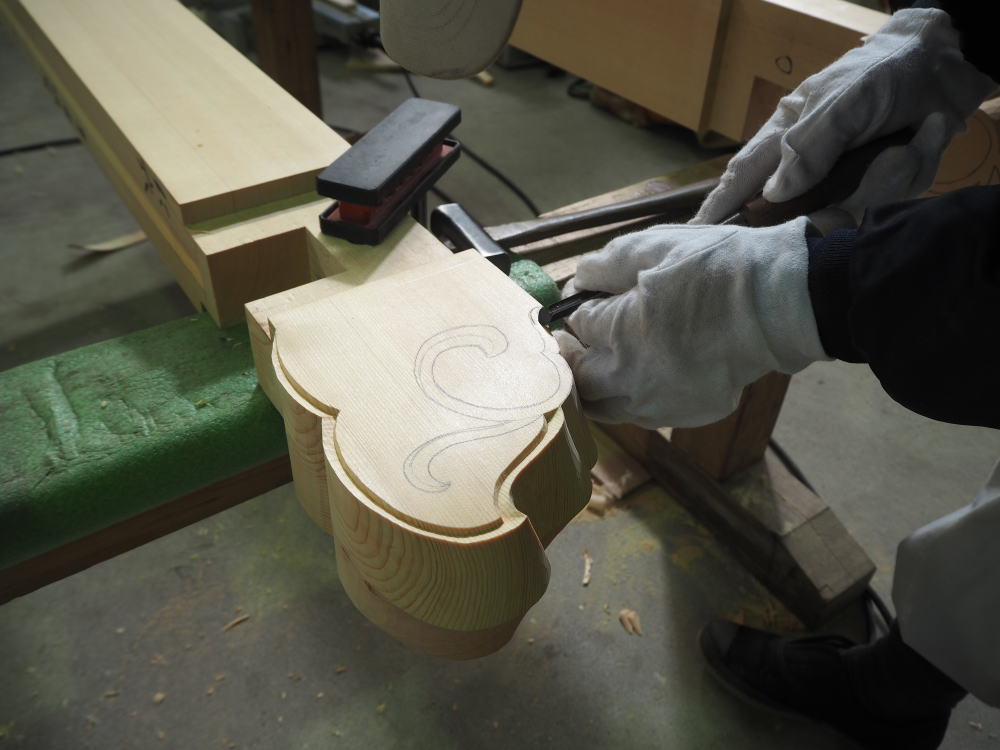
Warning
Warning
Warning
Warning.

Leave a comment

Other Posts in the Japanese Handplane Series:

Japanese Saws: The Carpenter’s Dozuki & Hozohiki

“I see!” said the blind carpenter as he picked up his hammer and saw.

– Old wellerism.

n this article your most humble and obedient servant will be so bold as to do a show and tell of a matched pair of custom-forged Japanese handsaws of a type seldom seen nowadays.

In previous articles we examined similar saws, the famous Japanese dozuki handsaw, the tool that first brought attention to Japanese woodworking tools in North America, and the hozohiki handsaw, a rip version of the dozuki crosscut saw, identical in all aspects save the quantity and shape of their teeth.

The shaku (270mm) carpenter’s dozuki crosscut handsaw (handle not attached). The tape measure displays centimeters/millimeters on the lower scale and Japanese sun on the upper. Please notice the mysterious but intentional brown discoloration on the blade. This blade was shaped, beautifully finished, and tapered using a hand scraper called a “sen,” not grinder or sandpaper. The small dings visible on the plate’s surface are tiny hammer marks left by Takijiro when truing and tensioning the plate, an almost entirely forgotten skill nowadays, one at which Takijiro has not match.

As described in the pages linked to above, the dozuki is a crosscut saw specialized in, and named for, the task of cutting the shoulders of tenons quickly and precisely obviating the wasteful step commonly thought mandatory in the West of paring shoulders to final dimensions. It can perform many other crosscut tasks too, of course, but for making tenons it is indispensable.

The hozohiki saw, on the other hand, is a rip saw, one that takes its name from its primary task of precisely and cleanly cutting tenon cheeks.

Because the quality and precision of the shoulders and cheeks of the tenons a craftsman cuts determines not only the quality of the products he makes, but also the ease and speed of assembly of his joinery efforts, the tasks these two handsaws are specialized in accomplishing are critical to the professional woodworker in making tight, beautiful joinery quickly.

So what’s the difference between a regular dozuki and the carpenter’s dozuki? Ah, another of those perspicacious questions with which Beloved Customer is constantly illuminating the world!

The shaku (270mm) carpenter’s Hozohiki rip handsaw (handle not attached).

Well, the carpenter’s dozuki is extraordinarily similar to the standard 210mm dozuki handsaw, essentially a thin, high-precision saw used by joiners, furniture makers, cabinetmakers and sashimonoshi for making joints requiring fairly shallow cuts, except in this case, the saw’s cutting edge is longer (270mm), the plate is accordingly wider, and it has more teeth.

Indeed, except for a few cuts in the larger components of furniture and cabinetry, few need to be very long or deep, so keeping the sawblade of the standard dozuki and hozohiki narrow and short not only saves steel, cost and time but makes the saw more rigid while retaining a thin blade.

On the other hand, carpenters, especially temple carpenters and architectural joiners, often need to make many extremely precise, clean cuts for the complicated, elegant joinery included in their customer’s projects. But because the members they need to work are frequently much larger than those used in other trades, a saw larger than the standard dozuki or hozohiki to make deeper, but no less precise, cuts is necessary. Ergo pergo ipso facto, the carpenter’s crosscut dozuki and rip hozohiki came into being somewhere back in the swirling mists of time.

But because only the most accomplished and trusted craftsmen are given the opportunity to do fine work in larger timbers, and because they are more expensive to forge, these big girl saws never gained the same degree of popularity as their daintier, more fashionable sisters.

A view of the kumimono and nijibari at the main entrance roof of a buddhist temple known as Shibamata Taisahkuten founded in 1629 in Tokyo. Constructed mostly from keyaki wood (zelkova), this is exactly the sort of work the saws presented herein are intended to execute.

As you can see in the photos, a piece of folded mild steel is attached to the back of these saws by friction to provide a higher degree of rigidity to the ultra-thin, tapered, hammer-tensioned blade, thereby improving the precision of the cuts it can make while with the same stone reducing the likelihood of the plate buckling, the bane of thin saws.

These backs are handmade and hand-filed from mild steel, and are finished in traditional burnt silk.

Backs are fine and necessary additions, but alas not all is blue bunnies and fairy farts because the back’s downside is that it physically limits the saw’s maximum depth of cut, a problem for some jobs. But by making the sawplate wider and the distance between the back and teeth greater, the carpenter’s dozuki, and its sister the carpenter’s hozohiki, are superior at cutting precise joinery in larger pieces of wood.

These saws are also used by joiners who perform high-end interior and architectural woodworking. For example, stairs, handrails, built-up moldings, fancy doors and windows, and coffered ceilings are a few types of work for which these saws are indispensable.

A temple interior with hand-planed and hand-carved beams, elbows, kaerumata, and coffered ceiling all of hinoki wood. Gorgeous work.

The saws shown in this article are a recently-completed matched set custom forged by Nakaya Takijiro for an exceptionally Beloved Customer. The nominal (versus actual) length of their cutting edge matches the traditional Japanese unit of measurement called a “shaku (approximately 12” = 0.33 meter), but the actual length of this type of saw varies by area and blacksmith. In this case, Master Takijiro forged the cutting edge 270mm (9-sun) long.

But what about the all-important teeth? Master Takijiro forges handsaws almost exclusively for elite Japanese craftsmen such as joiners, cabinetmakers, furniture makers, sashimonoshi and luthiers, etc., professionals who are very particular about their requirements for, and performance expectations of, their handsaws, especially the teeth.

Therefore, in accordance with tradition and Takijiro’s standard procedures, this Beloved Customer provided physical samples of the wood he uses most in his business, including, among other species, the North American varieties of maple, cherry, white oak, and black walnut.

After test-cutting these samples, Takijiro hand-filed the crosscut teeth of the dozuki saw at 18.4T/in., and the rip teeth of the hozohiki saw at 15T/in (non-progressive), and shaped them to quickly and precisely to best cut the samples provided, a big improvement over standard teeth specifications.

As of this scribbling these two toothy sisters should be gleefully winging their way to the USA to meet their new master. I only hope don’t they attract too much unwanted attention in US Customs by wiggling and giggling too impatiently! You know how young ladies can be (ツ)。

YMHOS

If you have questions or would like to learn more about our tools, please use the “Contact Us” form located immediately below. Please share your insights and comments with other Gentle Readers in the form located further below labeled “Leave a Reply.” We aren’t evil Google, incompetent facebook, or sketchy X and so won’t sell, share, or profitably “misplace” your information. If I lie may I suffer the fate of Simon the Zealot.

Simon the Zealot, Helsinki Cathedral. Notice the large saw.
Simon the Zealot (Acts 1:13). Notice the large two-man saw. Your humble servant does not recommend this application for safety reasons.

Relevant Articles

Contact Form:

Go back

Your message has been sent

Warning
Warning
Warning
Warning.

Leave a comment

Little Turtle Scrub Brush

Kamenoko Tawashi scrub brush

Never discourage anyone who continually makes progress, no matter how slow.
– Plato

In this article your humble servant would like to introduce a Japanese version of a most mundane tool, one especially useful to the woodworker: the Little Turtle scrub brush.

Your slovenly servant is not a neat freak, nor do I have a cleaning fetish, much as my long-suffering mother tried to stop me eating leftover dog food off the floor as a toddler. But there is one area of human endeavor where maintaining cleanliness in an otherwise dirty world is important to me, namely sharpening woodworking tools.

This is the story of a lowly brush, not a tool we typically sell at C&S Tools, but one we often provide as a service to Beloved Customers who purchase sharpening products from us. I don’t believe it can be purchased outside Japan, but the purpose of this article is to help Beloved Customer better understand an indispensible accoutrement for sharpening your woodworking tools. So with your kind indulgence I’ll try to present this subject in a sanitary manner.

Why a Scrub Brush?

As described in our previously published series about sharpening, a basic, effective set of stones for sharpening chisels and plane blades should include a rough stone or diamond stone of 400~800 grit, a medium stone 1000~2000 grit, and a finish stone 6,000~8,000 grit. The list can be found at this link.

A nagura stone is also extremely useful IMO for cleaning and flattening sharpening stones and reducing the time required to get them operating effectively.

As mentioned above, these stones are almost always used in series, with the nagura dressing them all.

A couple of extremely common problems we face when sharpening is dust and other hard particles, many of which are airborne, contaminating our precious stones and reducing their effective grit. For instance, an 8,000 grit stone contaminated with a bit of silica-based dust will be unable to produce scratches finer than, let’s say, a 1,000 grit stone, resulting in poor results, wasted time, money and steel, and dashed expectations. I’ve written on this subject elsewhere. Link

There are few tools mankind uses that are routinely made as sharp or sharpened as often as high-quality woodworking tools, a process that, when done efficiently requires 2-4 sharpening stones to accomplish, usually used in series. And high-quality sharpening stones, be they synthetic or natural, are pricey, so the wise woodworker who needs excellent results will seek maximum performance at minimum cost and time expenditure.

How do we prevent nature from effectively turning our expensive stones to bricks? Four ways.

  1. First, when not in use keep stones covered to reduce the dirt and dust that falls on them. Wrapping them in a clean rags or clean, ordinary newspaper works fine. I like newspaper best.
  2. Second, before using a stone and/or nagura, scrub its faces, sides and ends with a clean bristle brush and rinse to remove contaminating grit.
  3. Third, before using your fine-grit stones, especially if there is any doubt about their being free of embedded contaminants, work their faces with a nagura stone to dig out contaminants, then rinse off the mud produced along with any contaminants thus exorcised with clean water.
  4. Fourth, before sharpening, use a brush and clean water to remove dust and grit from the tools that will spend time frolicking on the stones.
  5. And finally, during sharpening use a dedicated source of absolutely clean, chlorine-free water to wash tools and stones and to re-wet them. What’s wrong with tap water? Depends. I use distilled water to eliminate chlorine with a bit of borax powder added to adjust the PH to reduce the potential for corrosion. In my workshop I store this water in a plastic laboratory wash bottle with a bent tube. In the field I carry a smaller volume in a plastic mustard or ketchup bottle. Whatever floats your boat, as the saying goes.

So exactly why do I say you need a scrub brush in your sharpening kit? Because if they do their job, the bristles of a quality brush are more effective at digging dirt and contaminating grit out of sharpening stones and the nooks and crannies of plane blades and chisels than any other tool including water faucets, hoses, chemical sprays, micro-fiber cloths or even kitten tongues (シ). Or did you imagine a simple wash in water or a wipe with a wet rag had stripped away all those nasty particles away just because you didn’t notice them anymore? Please restrict your optimism to reasonable limits.

The Scrub Brush

This is the smallest of the kamenoko brushes. A handy size for a field sharpening kit.

But isn’t one scrub brush much the same as any other? Nay, Beloved Customer, nay.

In the case of sharpening stones, we need to thoroughly clean our stones and tools without transferring contaminating dirt and grit from one stone to the next. I have found that the hard grit of sharpening stones becomes permanently embedded in the plastic and nylon bristles of every such brush I have examined, and even if I thought I had cleaned the brush thoroughly, hard grit particles remained and were transferred to the next stone by the brush.

How to avoid this? The solution is simply to avoid scrub brushes with nylon or plastic bristles. In my experience natural bristle brushes, and especially the Kamenoko (Little Turtle) brand brushes, simply last much longer than plastic and nylon bristle brushes, are more easily cleaned of sharpening stone grit, and tend to transfer less of it from one sharpening stone to another. These three points are the crux of this article.

Japanese tawashi brushes are made from the fibers of coconut husks. As Beloved Customer is no doubt aware, in his eternal wisdom the design team the Good Lord assigned to coconut palms provided them fibrous husks to protect and float their seeds long distances over wide, soggy oceans for years at a time. To accomplish this Homeric feat, the fibers of these husks are caused to grow tough but resilient and resistant to degradation from long-term exposure to water, microbes and even detergents.

It’s a traditional product that’s been around a long time in Japan with one company producing them for over 100 years. Here’s a video of tawashi brushes being made in Japan, and another video of production in Sri Lanka.

These brushes are also good for cleaning dirty, greasy hands, scrubbing pots and pans, cleaning car tires and wheels, and getting mud off boots with very little scratching.

If they have one downside, it’s that, being made of natural and recyclable fibers, and despite not becoming mushy when wetted for long periods of time and drying quicker than plastic brushes, they still take a bit of time time to dry and can develop mold if neglected. There’s a stainless steel wire binding the fibers together with a loop on one end that can used with a string to hang them for drying. Problem solved.

I’ve been using one Kamenoko Tawashi brush for cleaning tools and sharpening stones for over 20 years. I don’t say they’ll last that many years in the kitchen or garage, but they still last 5 times longer than plastic or nylon brushes and are therefore much more cost effective.

Most importantly, they help me keep my stones cleaner and ensure they sharpen to spec.

YMHOS

A museum-quality antique sumitsubo ink-pot depicting a snake hunting a frog around the ink pond. Mr. snake’s tail wraps around the wheel.

If you have questions or would like to learn more about our tools, please click the “Pricelist” link here or at the top of the page and use the “Contact Us” form located immediately below.

Please share your insights and comments with everyone in the form located further below labeled “Leave a Reply.” We aren’t evil Google, fascist Facebook, or thuggish Twitter and so won’t sell, share, or profitably “misplace” your information. If I lie may all my little turtles sunbathe on the freeway.

Go back

Your message has been sent

Warning
Warning
Warning
Warning.

Leave a comment