Japanese Exchangeable-blade Handsaws Part 1 – History & Varieties

When God means to punish a man He sends him stupid friends and clever enemies.

Joe Abercrombie, Best Served Cold

Introduction

Gentle Readers are probably familiar with the modern mass-produced mass-marketed exchangeable-blade handsaws made in Japan. In this first part of a two part series we will briefly examine the history of how these saws came to be, how they are manufactured, and the market forces that made them so popular in Japan and even overseas.

In Part 2, to be published later, your most humble and obedient servant will list pros and cons and share some techniques for improving their performance.

Gentle Reader may already be aware of these saws and even own and use them at work daily, but in this article your humble servant will share details about them not available elsewhere. I pray it proves informative, or at least entertaining.

Terminology

In the Japanese language the type of consumer-grade handsaw I mentioned above with blades that can be removed and reattached to a handle mechanism are called “kaeba nokogiri” (kah/eh/bah nokogiri 替刃鋸) meaning, of course, “exchangeable-blade saw.” From this point forward I will call them “kaeba saws” for brevity. They have entirely replaced traditional forged handsaws in Japan for good and valid reasons, and indeed are popular throughout Asia as well as Western countries too.

So let’s begin this adventure by considering the history of this new version of an old tool that shook the handsaw world like a terrier does a rat.

Historical Background

In the late 1970’s the kaeba handsaw appeared in the Japanese market changing everything.

I’m not sure who first developed the concept, but there’s no doubt it was inspired by the convenient and highly-profitable bits and blades used with powertools. The first automated equipment for making these sawblades was developed by a 150 year old company located in Sanjo, Japan that shifted their traditional saw sharpening business to producing and selling CNC saw sharpening machines. Later, inspired by automated circular-saw blade production techniques, they went on to develop CNC machinery to fabricate handsaw blades in an automated production line.

Production Methods

The manufacturing process begins with materials, of course. The primary material is pre-hardened sheet steel sanded to uniform thickness in rolling mills, and delivered to the blade manufacturer in large, heavy rolls. This product means the blade manufacturer doesn’t have to sort, forge, heat-treat, stress-relieve, or thickness-grind the steel. In fact, he couldn’t even if he wanted to.

As this roll of sheet steel is unspooled into the production line, CNC machines cut-out the blade blanks using dies, deburr the blanks, punch the teeth, and shape and sharpen them with special abrasives, after which set is applied by machine. Unlike traditional hand-forged fixed-blade saws, the plates are not forged, taper-ground or heat treated by the saw manufacturer at all. This is an important distinction to those who know saws from shinola.

Some but by no means all such blades are tensioned between two steel rollers in imitation of the techniques used during the manufacture of circular saw blades.

Most kaeba manufacturers induction-harden just the tips of the teeth of some blades for extra durability as the blades are fed between, and instantaneously heated red hot by, electrically-charged copper blocks, then immediately quenched in coolant spray after exiting the induction blocks leaving them a darker oxidized color. These blades cannot be sharpened by hand using conventional files because the teeth are too hard. Special files coated with diamond grit can do the job, however.

Handles

Kaeba saw’s handles are sometimes made of wood, sometimes of plastic, and sometimes of rubber over plastic. The blade is secured to the handle by metal mechanical widgets and sometimes screws integral to the handle.

The blades can be quickly and easily changed encouraging consumers to do so frequently to the profit of the blade manufacturers. Indeed, each manufacturer’s blades will fit only their proprietary handle locking the consumer into buying proprietary replacement blades, much like printers and ink/toner cartridges, because as the O’Jays sang on Soul Train, it’s the blade that makes the money, money, money, money, mo-ney, but it’s the handle that drives market share.

And with labor costs to produce such a handsaw a single digit percentage of what’s required for a traditional handsaw, the few manufacturers of kaeba saws find it difficult betimes to wade through the mountains of mad stacks scattered underfoot.

With the production technology perfected, compatible materials available, and CNC machinery in the hands of a few manufacturers, it was only a hop skip and a jump to widespread sales of kaeba handsaws, and if I may paraphrase my old carpenter foreman Uglúk, it looks like rats are back on the menu, boys.

Some prefer their rodent roasted on rye with horseradish sauce, but I prefer mine sauteed with a drop o’ Tabasco Sauce, or as Bert suggested, maybe even a floater for delicately piquant flavor! What about you?

The Societal Impacts of Kaeba Handsaws 替刃鋸の波及

I mentioned above that this new type of saw changed everything. Of course, that’s a bit of an exaggeration because babies still love boobies and politicians graft, but some things changed drastically in Japan.

The first big change the kaeba manufacturers wrought was putting nearly all the traditional sawsmiths in Japan out of work in a matter of a few decades. Indeed, the number of sawsmiths still forging traditional saws full-time nowadays can be numbered on the fingers of one hand after a performing a close manicure using a tablesaw.

The second domino to topple was the near destruction of the saw handle industry. As the demand for exchangeable-blade handsaws ramped up, the production of traditional handsaws, along with the need for traditional handles, crashed.

You see, exchangeable-blade saws have patented brand-specific wooden handles with integral metal mounting plates/screws/clips to which the specific blade-maker’s replacement blade is attached. The maker of each brand of exchangeable-blade handsaw subcontracts the production of their handle to specific suppliers, and since the producers of handsaws are now few, so are the handle suppliers. Sadly, your humble servant is aware of only one, and occasionally two producers of traditional handles still operating. I believe they still have all their fingers but I’m concerned one gentleman’s liver has seen better days.

Just when it looked like things couldn’t get worse, the third domino got kicked ass over tea kettle crushing the saw sharpening trade. While many kaeba saws can be resharpened, some cannot be economically resharpened at all because their teeth are induction-heat-treated to be harder than conventional sawfiles. In fact, while it’s usually a little cheaper to have even a kaeba sawblade professionally sharpened rather than purchasing a replacement, buying a new sawblade and tossing the old one is quicker, more convenient and obviates the need to carry spare saws to a jobsite because thin, lightweight replacement sawblades will suffice. In any case the jobs of saw sharpeners (metateshi meh/tah/teh/she 目立て師), like those of sawsmiths, handlemakers, wheelwrights, and honest climate scientists have been practically eliminated.

The one overarching societal lesson one can take away from this is that technological advances always have and always will engender painful changes in every industry in the world, and the case of the Japanese handsaw industry only confirms that one can either ride the train of technology sipping tea and munching pringles in comfort as it rolls along, or grease the tracks as it runs one over. Just ask the once mighty Eastman Kodak company of camera and film fame if ‘taint so.

A similar progression occurred within the saw manufacturing industry in the West, but instead of the changes stemming from product innovation, the causes were quality adulteration, active neglect of customers needs, and abandonment of unparalled tradition. Welcome to the Harvard School of Business Management’s model of “profit through disruption” in action. I hear they’re looking for a new university president, one who doesn’t know the difference between male and female homo sapiens.

An American Handsaw Maker

To this point we’ve taken a shallow look at Japanese handsaws, especially the impact of the kaeba variety on Japanese markets, but highly intelligent Gentle Readers (could there possibly be any other kind? absolutely not!) may wonder how in heck these strange Japanese products managed to make such profound inroads into Western markets, so a few points about a well-known American saw manufacturer may prove instructive.

Gentle Reader may recall that the famous American handsaw manufacturer Henry Disston (1819–1878) was born in England the son of a designer and manufacturer of lace-making machines who immigrated to the USA in 1833 along with his father and sister. His father died three days after stepping off the boat. Tough luck.

Being a determined and diligent young man, Henry apprenticed himself to a saw company in Philadelphia, Pennsylvania. In 1840 he went independent, and after some lean years building a reputation for quality, he founded the Keystone Saw Works there in 1850. After the American civil war his son Hamilton joined the business and Henry changed the company’s name to Disston & Son, and later to Disston & Sons. At its peak Disston & Sons was the largest and most productive saw manufacturer in the world with 8,000 direct employees working on 300 acres.

At the time he established the Keystone Saw Works, nearly all tool steel used in North America was imported from Great Britain. This was a serious impediment to growth so to supply steel for his products and to support the war effort, Henry established the first crucible steel mill of consequence in the Americas, and although other more famous, ruthless individuals falsely took credit for developing steel production in America, they were originally only Henry’s customers. For the next 25 years, the Disstons were among the largest producers of quality tool steel in the world outside England.

Interestingly, American consumers at the time were absolutely convinced that only Birmingham, England could make quality tool steel, so while other American sawmakers imported their steel from England, D&S used their own steel, avoiding the high import tariffs of the time. Déjà vu n’est-ce pas?

But to avoid the stigma of being seen as an inferior “colonial product,” for many decades the acid-etched engraving on Disston & Sons’ sawblades included variations of the words “London Spring Steel” intimating that more prestigious British steel was used. Interestingly modern chemical analysis suggests that D&S’s tool steel was at least as high-quality as that imported from Britain at the time.

The first handsaw I owned as a young man was an antique and terribly rusty D&S D-8 thumbhole rip saw missing a handle (but with partial screws) I found languishing in a joint compound bucket in the back of a Las Vegas pawnshop. My penny-pinching carpenter father said it could be restored to be a better saw than I could buy new, and at $3 and a bit of elbow grease, the price was right and so was he.

After derusting the blade, making a handle from a piece of scrap walnut, and reworking the teeth several times until I got the nack, that antique D-8 became an excellent handsaw, far superior to the new Disston saws still available at the time. My son owns it now.

A classic 28″ Disston D-8 swayback rip saw with a 2 hand thumbhole stock. Not my rescue saw but close.

The first point I want to make in this section is that by the time I was old enough to want to own a handsaw, the circular saw ruled the construction industry in the West (but not yet in Japan) and most younger carpenters neither owned a decent handsaw nor could care less. As a result of these market changes, the production and sale of handsaws in Western countries became less profitable, the quality of those available became shamefully degraded, and instead of increasing production efficiency, and/or innovating like Japanese saw companies did, D&S did a double doodoo on quality, then lay down to be eaten by vultures. Other than a few tiny, recently-established boutique backsaw makers, the once-mighty American handsaw industry is now as dead as decency.

My second point is that this shameful degradation and subsequent abandonment of a once huge and profitable American industry fomented despair among Western woodworkers who needed quality handsaws but couldn’t procure them new anymore forcing many, like your humble servant, to haunt flea markets, pawnshops, and later Ebay for old handsaws (including Disston & Sons products) and to even purchase tools imported from Japan back when Japan’s reputation for quality was not as shiny as it is now. These forsaken and “disrupted” woodworkers, hungry for better tools, were the primary reason medium-quality but very sharp Japanese crosscut handsaws first became so popular in the USA. And when Japanese kaeba saws became available later, overseas markets snapped them up like the proverbial duck on a June bug.

FYI, the Disstonian Institute website has some interesting information about Disston & Sons those interested in history may enjoy.

As an aside, I noticed that Disston, now the Chinese holesaw maker, is offering a newer version of the D-8 26″ swayback rip/crosscut handsaw exclusively on Amazon. It looks shiny! The country of manufacture and local content is not listed anywhere, but probably not the USA and definitely not Philly. The video on their website almost made your unworthy servant spew chunky chunks. Consider yourself warned.

Let us next shift our attention back to the kaeba saw and consider the first and most popular such handsaw, as well as some other popular varieties.

Dozuki Kaeba Handsaw

The dozuki handsaw was the first Japanese kaeba saw to become popular overseas, perhaps initially attracting attention because it vaguely resembles the petite “gents” back saws once popular with amateurs.

The dozuki is a thin crosscut backsaw (a single-edged handsaw with a steel or brass stiffener attached to its back) that cuts on the pull stroke.

The name is pronounced dough/zoo/key and is comprised of two Chinese characters: “胴” pronounced “dough” meaning “trunk” as in the trunk of a tree or the human torso, and 付き pronounced “zookey,” a verb meaning “to attach or make.” To the best of your humble servant’s understanding most Western woodworkers are unaware of the name’s meaning or the saw’s specialized purpose but nonetheless they use them for everything but spreading jam on toast (marmalade gums up the teeth terribly). The name refers to the job of cross-cutting the shoulders of tenons, but not the cheeks, which is a job for the specialized “ hozohiki” rip saw.

A 210mm dozuki crosscut saw with fine teeth for precision work. The manufacturer calls it a “kumiko” saw after the narrow slats found in traditional decorative joinery such as shoji and ranma. The teeth are not induction hardened. The fit between back and blade is pretty darn good and it makes excellent cuts, but the teeth have too much set for the highest-quality work.
In the case of joinery, furniture, cabinetry, and fine architectural woodwork, well-made mortise and tenon joints are essential to the appearance and even the strength of the finished product. And since the shoulder is the only visible part of most mortise and tenon joints, shoulder appearance is important.

Cutting tenon shoulders in a craftsman-like manner in the Japanese tradition demands not only a good eye, a good saw, and a skilled hand but speed, because the craftsman is expected to saw deftly, precisely and cleanly to the layout line the first time every time, all day long. This differs from the inefficient, amateurish methodology for cutting tenons in cabinetry and joinery as taught by the Holy Masters of Woodworking in the West who lack adequate saws and/or skills and shamefully advocate cutting wide of the layout line and sneaking up on it with chisels and planes. How embarrassing.

A quality dozuki saw is extremely effective at making these cuts. To do so it must be able to make a straight, precise, smooth cut right to a final layout line every time without wandering off into the weeds and without having to use a paring chisel or shoulder plane to obtain a clean, square, straight shoulder. Accordingly, it must have a thin, true plate that won’t produce excess friction, nor buckle, oil-can, or bind as it heats up, and fine, uniform teeth with minimum practical set. It must also have a lightweight but rigid steel back that effectively keeps the blade’s plate true, protects it from buckling, and discourages it from weedy adventures.

Kaeba dozuki saws come in various lengths ranging from 150mm to 240mm. TPI varies with maker. Zetsaw by Okada Industries is my favorite kaeba brand and makes some with induction-hardened teeth that can be made extremely useful with the modifications I will share in Part 2. FYI, your humble servant does not sell Z-saws and has never received free (or even discounted) samples, nor been wined, dined, laid or paid to promote them.

Interestingly, even before the development of the exchangeable-blade kaeba saw, the Japanese dozuki saw was used in the West for cutting dovetails, a job which requires occasional crosscuts but frequent rip cuts, something the hozohiki saw does much better. In any case, that Western woodworkers ended up preferring the Japanese dozuki saw for even rip cuts may give Gentle Reader an idea about the comparatively execrable performance of readily-available Western dovetail saws from the 1970’s onward.

The kaeba concept has been expanded to include useful saws of many shapes and sizes, some of which your humble servant owns and uses, especially when there is a risk of damaging one of his professional-grade fixed-blade handsaws.

Let’s next consider some popular varieties of kaeba saws other than the dozuki and hozohiki.

Kaeba Crosscut/Rip Saws

The best selling Japanese handsaw both domestically and internationally is the standard single-edged (“kataba”) carpenter’s crosscut saw. These come in various lengths, shapes, and with various types of teeth. They are handy in the shop, and I always have one or two of these on hand when working in the field, especially when cutting EWP (engineered wood products) which I refuse to allow my hand-forged saws to even touch no matter how much they wiggle and whine. If you need to cut plywood or other EWP, these saws are a must-have IMHO. More on this subject in Part 2.

A 265mm kataba crosscut saw with hardened teeth by Zeton owned by your humble servant. The blade has seen a lot of abuse and neglect. It has a paulownia wood handle still wrapped in plastic with the pricetag still attached.
A 7sun (210mm) crosscut saw by Zeton missing a couple of its induction-hardened teeth. It has a soft paulownia wood handle that has seen better days. Hinoki would have been a better wood in this case.

But the usefulness of kaeba saws is not limited to woodworking and sandwich making only, oh no. I carry a 333mm (13″) kaeba formwork saw with a lightweight plastic pistol-grip handle when hunting because no other tool I know of is so light, so compact, and can cut so much wood so quickly.

A special-use kaeba saw I am fond of, with two of its blades shown. The handle (a Zeton product) is made of fairly lightweight but tough plastic, but its most valuable feature IMO is its short length which makes it fit nicely inside toolbags and backpacks. The 300mm blade, handle, and a wooden scabbard I made to fit, goes in the toolbag I take to jobsites. I have a plastic scabbard for the 333mm saw which I strap to my backpack when camping and hunting. Much lighter and more compact than an axe.

The Silky brand arborist’s saw blades are excellent for this purpose too if you ditch the heavy rubber handle and Flash Gordon inspired scabbard.

Ryouba Double-edged Kaeba Saws

This style of kaeba saw combines a rip saw and a crosscut saw in one exchangeable blade. I own one 270mm kaeba ryouba saw with induction-hardened teeth I like well enough, but I still prefer fixed-blade ryouba saws. I daresay most people can’t tell the difference.

A 270mm ryouba double-edged saw with hardened teeth by Fujiwara intended for interior installation work. The blade retention bar can be seen projecting from the center line of the handle. I’m unsure if this saw is still being produced
The same 270mm ryouba saw disassembled showing handle, blade, and wire retention clip. The two bent tabs at the end of the sprung retention bar fit into the two slots in the blade when assembled.
The same 270mm ryouba kaeba saw showing the wire retention clip used to secure the two tabs that lock the blade in-place. Notice the blue-black discoloration of the sawteeth tips typical of induction-hardening.

Saws retailers here in Tokyo tell me that sales of kaeba ryouba saws have dropped off dramatically the last few years probably due to increased prefabrication and LGS metal studs replacing wood and LVL (laminated veneer lumber) framing for interiors such that rip cuts in wood in the field are seldom necessary. I believe this increase in the use of pre-manufactured components is in part due to three inter-related factors: (1) Rising construction costs; and (2) High demand in the construction industry; and (3) An aging workforce resulting in a decrease in available manpower in the construction industry making it difficult to meet customer demand. I fear the current attitude of Japanese women about bearing and raising children will prove disastrous for the nation soon as you can say “Bob’s not your uncle.”

Teflon Coated Blades

Zetsaw sells some of its blades with a PTFE teflon coating which I have found to be very effective in reducing friction and preventing sap from accumulating when cutting some softwoods. Makes a great egg turner too (ツ)。

An 8sun (235mm) rip saw with hardened teeth and teflon coating by Zeton. This is an exceptionally useful saw.

The Adventure Continues

In the next installment in this operatic series about the funky love of money, fine dining and handsaws we will examine the advantages and disadvantages of kaeba saws compared to traditional fixed-blade saws, and explain simple techniques Gentle Reader can employ to supercharge your kaeba saws.

But in the meantime, since the IMF, EU and UN are on the verge of outlawing backyard vegetable gardens at the same time they are taking by force and sacrificing the land of European farmers on the alter of the religion of “Climate Change,” (how many starved to death as a result of that foolish policy Sri Lanka?) all while increasing pressure on others (regular people, but not the bureaucrats/elite) to substitute bugs for meat (I kid thee not), I would appreciate Gentle Reader sharing any tasty recipes you may have for crispy, crunchy low-fat rodent dishes in the comments below. I need to broaden my culinary repertoire in preparation for more societal “disruption,” you see.

YMHOS

I ain’t gonna eat no damned bugs!

If you have questions or would like to learn more about our tools, please click the “Pricelist” link here or at the top of the page and use the “Contact Us” form located immediately below.

Please share your insights and comments with everyone by using the form located further below labeled “Leave a Reply.” We aren’t evil Google, fascist facebook, thuggish Twitter, or the son of a President and so won’t sell, share, or profitably “misplace” your information. If I lie may my dozuki saw wander like a clowder of kittens.

← Back

Thank you for your response. ✨

Leave a comment

Related Articles

Permanence

A Huon Pine, native only to the Island of Tasmania

Serit arbores quae alteri seculo prosint – “He that plants trees labours for future generations.”

Caecilius Statius, quoted by Cicero. Motto of John Quincy Adams and his family, among others

This is a guest post by Dr. Antone Martinho-Truswell regarding a highly unusual tree, his adventures working its wood, and his thoughts about permanence. Enjoy.

What Does It Mean to Build Permanence?

Woodworkers – and especially we odder, curmudgeonly, hand tool woodworkers – have a vexed relationship with permanence. 

On the one hand, spend any time reading, listening, or talking to a woodworker of any integrity (not least our distinguished host, Mr. Covington), and you will inevitably hear about building things that last, creating furniture or structures that will outlive the creator. Or else you might hear lamentation of the impermanent, throw-away culture represented by particle board, OSB, melamine, wire nails, and so forth and so on. Stan writes regularly here about building for future generations, about tool chests that preserve and workshop stools that endure. When we chop a mortice or fit a dovetail, the idea is that the end product is permanent – the strength and durability of the outcome justifying the labour-intensive process of creating it

And yet: wood. We are not stonemasons. We are not goldsmiths. We work with a biological material, one subject to biological processes such as mold, rot, borers, gnawing things, weather, sunlight, fire and friction which eat and wear away at wood until it’s gone. Japan’s venerable old wooden structures, record holders across all human construction efforts, pale in age compared to those made of stone. Wood perishes as do all living things (at least since Valinor was sundered from the sphere of the Earth).

This is the story of a permanent wood. A wood as magnificent as it is rare, a wood that is itself a lesson in permanence, and my attempts to make beautiful things for now and the future.

Old and Young Places

I like to think about old things. I was born and grew up in Southern California, where almost everything is new, even the old things. I remember as a child a small water tower near my elementary school, proudly fronted by a sign announcing that it was the oldest building in the area – an august 25 years old. The tower is older now and so am I, but there were old trees around even then. Up north, there are sequoias and redwoods, and of course, the oldest of all, bristlecone pines. I was young then, and didn’t think too much about wood or lumber, but I knew the trees were old. 

As a young man, I moved to England for graduate school, and the world was much older. There was a sense of permanence, in the material things at least: old buildings and old furniture and old books and old wood. Oaken chapel pews and blanket chests and linenfold panelling – the sorts of adornments that, in the USA, are the enviable preserve of grand old institutions in grand old East coast cities, but in the UK, found in all manner of great and humble places. But the trees weren’t so old. England’s ‘green and pleasant land’ is green with farms and fens, but not so much old forest anymore. Like much of Europe, over aeons humans have harvested so much timber that little old-growth forest remains, only secondary growth, coppices and managed woodland. The trees in England are fairly young because the culture is relatively old. I was not yet a woodworker, and I did’nt think much on trees and timber at the time, but I knew the culture was old.

As a married man, I moved to Australia, and here I remain. The prevailing culture – that of the settlers rather than the indigenous people of Australia – is young, and so are the trees. Mostly.

Australia’s frequent natural fires mean that most of the trees that grow here are adapted to grow fast and big, but not long. Generations of forest turn over quickly – in ecological terms that is – with bushfires killing off adult trees and causing their scattered seeds to germinate and grow a generation of newer, younger trees. What’s more, as in America, the brash, youthful settler culture did not have a good track record as stewards of the natural gifts of the island continent, and the few old hardwood forests that once existed have been over-exploited. 

Perhaps with age comes wisdom, but now I am both a father and a woodworker, and I ponder permanence, and wood, a great deal, and what all this youthful forest means for woodworking here in the sunburnt country. 

Hard, Stringy Wood

If you know anything about Australian woods, you know they have a well-deserved reputation for being really, really hard.

The vast majority of our forests and the trees that grow in them are the various and many species of eucalyptus and its near relatives, with two qualities that make them a mixed blessing to woodworkers.

First, they are fast growing, so as to quickly repopulate the land after fire, and second, they are extremely hard – the softest commercially available eucalyptus wood is called “Victorian Ash” (or “Tasmanian Oak” – same wood, different source) in the timber trade with a hardness similar to white oak or rock maple. The hardness of other varieties can easily range up into ipe and ebony territory.

Rainbow Eucalyptus

The result is an abundance of eucalyptus wood great for things like flooring and fenceposts, but fast growth makes it especially stringy, which together with phenomenal hardness makes it difficult to work with handtools. That same Victorian ash, the most common of all hardwoods in commercial use here, is among the best behaved, and a straight grained piece can take a nice glassy finish from a hand-plane, but we have nothing commonly available with the smooth texture of a maple or beech. Victorian ash works like oak at best. The other good furniture eucalypt is Jarrah, which is a lovely orange-brown colour and less splintery than most, but it’s expensive and a good bit harder than maple, so still a challenge. Moreover, it comes from Western Australia, which, along with Victoria, banned all native forestry at the start of 2024, so it is likely to recede to only niche use in the future. 

There are many other beautiful, softer, easier working, and often fragrant Australian hardwoods, but for one reason or another all of them are scarce and hard to track down.

There are few species under plantation production here, and the fast-growing eucalypts crowd out most other species in our forests, so the best cabinetry timbers, like acacias and mahogany relatives, are rare. If you find these timbers for sale, it’s usually from a small-time operation that harvested a fallen tree – so you have to wait around for luck to smile on you. I try to snap up Australian Rosewood priced reasonably. The vast tracts of cabinet timber we once had – the famed Australian Red Cedar, which is actually a mahogany cousin, for example – were all irresponsibly exploited down to commercial extinction decades ago. A permanent culture of wood use requires a forestry industry with an eye toward permanence, which we didn’t have for a long time, and many argue we still don’t – hence the aforementioned bans and the limited selection of commercial wood. 

A few government agencies and private companies are trying to improve sustainable forestry in Australia focusing on Australian blackwood (Acacia melanoxylon). This species should not be confused with the African blackwood of oboe, clarinet and bagpipe fame. Australian blackwood is a dead ringer for Hawaiian koa, and is its closest living relative. It has a rich, deep, brown colour with the same gleaming chatoyancy of koa, but its name comes not from the colour of the seasoned wood, but rather the black color the sap turns sawyers’ hands.

It’s a breathtaking timber deserving of widespread admiration, and one of the few beautiful cabinet timbers down here that weren’t over-exploited to near extinction in the last century. The blackwood timber industry is apparently a bit wiser than their forebears, and so harvests less and charges more to promote sustainability. It’s the nicest timber that can be bought here straightforwardly, and is priced accordingly.

The Ships that Took Our Trees

Clipper Ship, City of Adelaide, 1000 tons

Of particular interest to users of Japanese tools and Japanese woodworking methods and mindsets are softwoods, and this is where Australia is confusing. There are no true pines native to any part of the Southern Hemisphere – but settlers insisted on naming all the fascinating and unusual softwoods down here “pines” – and then importing a northern hemisphere species for most of our plantation wood.

Norfolk Island Pine

Norfolk Island Pine

When Britain established the first penal colony at Sydney in 1787, the site was chosen partly because it was thought to offer a good strategic back-up to the British claims on Norfolk Island – a speck 900 miles out into the Pacific. The trees covering this island – Norfolk Island pines – were thought to be particularly valuable to the Royal Navy, as they tended to produce ramrod-straight single trunks, almost as if replacement masts had been conjured up from the Earth. However, the timber proved too flexible for masts, and the idea was abandoned, though the Norfolk pines got their second act as a popular ornamental plant (including a few all the way back in my home town in California).

Hoop Pine

Much more useful is hoop pine, a near cousin of the norfolk pine that grows on the Australian mainland, and is our only plantation-grown native conifer. I’ve made shoji from hoop pine; it has nice straight grain producing a good shine when hand-planed. The only other commercially available native softwood is Australian white cypress which has a beautiful smell and is famously insect resistant, but unlike most softwoods it’s harder than American oaks. It also doesn’t grow very big, so is mostly used for knotty, sapwood-sapwood edged fence posts, or equally knotty floorboards and decking. I understand that it is not a sustainably managed species, and conservationists often recommend against its use. 

Monterey Pine

The Australian construction industry relies on plantation grown monterey pine (also called radiata or pinus radiata) for all of its general purpose lumber. This is an import from California, now very rare in its natural habitat but grown all over the Southern Hemisphere to compensate for a dearth of native pine species. It is a particular pet-hate of Australian woodworkers, in online forums and general conversation, who lament its often crumbly texture and poor strength. I don’t hate it though – it can take a lovely plane finish and the wide grain does make for beautiful patterns on clear, flat sawn boards.

Huon Pine

Like all Australian trees, huon pine is misnamed. It isn’t a pine at all but rather the only member of its genus – more akin to a cypress than anything else, yet still not a cypress, a thing of its own. 

Fans of Tolkien’s works may lament that its name is Huon and not Huorn, but no tree was ever more deserving of association with Tolkien’s tree-herding Ents, that ancient race of sentient defenders of the forest.

Huon pines grow only in Tasmania, and only in the wet and mountainous western regions protected from fires. Provided they have that protection, they may achieve something most Australian trees do not – great age. Huon pines grow incredibly slowly, barely thickening as century after century wash over them, living at least 2000-3000 years, with some thought to be even older. This is best evidenced in the astonishing tightness of their annual growth rings. It is not uncommon to see specimens with annual growth less than half a millimetre – or to put it another way, the trees gain less than two inches of trunk radius per century. While immensely slow, these trees can still grow immensely large when given that precious critical thing – time. They are probably the longest-lived trees in the Southern hemisphere, and certainly in Australia.

There are lots of small huon pines growing now, though few big ones. They should be huge, but they are not, because the great ones were all mostly cut down to build boats – a vast fleet of huon pine watercraft were constructed in Tasmania, using up most of the big trees. The promise of the perfect tree for shipbuilding that had fallen flat on Norfolk Island paid off big time in Tasmania with the huon pine. The reason for the single-minded use of these ancient trees for shipbuilding will become obvious, but as a result of this hasty zeal, they are now the single most protected species of tree in Australia, both to allow the forest, with Ent-like patience, to recover, and to preserve the few very old and very large specimens that remain. 

Beyond the Grey Rain-curtain

These trees are old, though their lives are but the beginning, and death, as Gandalf once taught young Peregrin Took before a fateful battle, is just another path beyond which the journey does not end. This is, cynically, true of all wood that gets put to human purpose, but it is true in a special way for huon pines because of a unique chemical in their wood. Not unlike other fragrant cypress-like softwoods – including Japanese hinoki – huon pines contain great amounts of oil, in this case, an oil called methyl eugenol that protects them from insects and other wood-hungry nasties. Methyl eugenol is, as it happens, the ticket to eternity for wood. 

For whatever reason, methyl eugenol, in the very high concentrations in which it is found in huon pine, is astonishingly successful at preserving timber. Huon pine timber is highly prized for shipbuilding because it’s easy to bend and work, completely impervious to insects and fungus, and readily survives the rigors of the aquatic environment. All that ever seems to happen to huon pine is that the surface turns grey in the sun – much like teak. And then it simply endures. 

And I mean it endures. The 3,000-year age of living huon pines is one thing, but researchers have found fallen huon pine logs on the floor of the forest that have lain there, unmolested by decay, for as much as 38,000 years! Not petrified, not fossilized, just oily wood under a weathered surface, simply enduring. 

These characteristics are also why we still have a bit of precious huon pine timber available nowadays, reclaimed from time to time from old boats and old furniture, as durable and enduring as ever. Moreover, the foresight that was missing when the trees were mostly cut down a century ago was not blind when hydroelectric dams came to Tasmania. In the 1970s, with two valleys set to be flooded, the Tasmanian government allowed loggers to go into the valleys and cut down the pines – but not to take them. The loggers, working in tall boots even as the dam waters were rising, would leave the logs where they fell, to float up to the surface of the new lake as the waters rose. 

That was 50 years ago – the logs are still there, floating on the lake. The outer layer turns grey to about 1-2mm in, and then, inside, the creamy golden wood, as perfect as the day it was felled, endures. The decades afloat harms it not at all, and every year a tiny portion is licensed to be taken for restoration and preservation jobs.

This is all the unreclaimed huon pine that there is or ever will be for woodworkers to use, and they estimate they have about 50 years’ worth left at current extraction rates. But with the wood so impervious and eternal, what is already in cabinets and drawers and tables and ships will continue to circulate and be reused. It is a wood with true permanence.

An Unexpected Responsibility

At this point I will enter the story to share the most harrowing and rewarding of my experiences as a woodworker.

By chance, I had the opportunity to acquire three large slabs of huon pine, cut and dried in ages past but never used. Compared to the tiny crafting boards and turning blanks that are generally available (at great price), this was a bit of a windfall. I could have, with all cynicism, listed each one for sale for several hundred dollars, pocketed the profits, and went on to buy more quotidian woods. I did not do this for two reasons.

First, and perhaps most pointedly, with visions of epoxy pours and hairpin legs plaguing my dreams, I was overcome with a sense of responsibility to “protect” this precious wood – whatever that means. I wish to acknowledge, in self-reflection and humility, that I am an amateur woodworker. A reasonably experienced and meticulous one – but an amateur nonetheless, albeit one who works with hand tools and has the hand tool mindset. My work is fine but not perfect. But I suppose I like to think that the tool marks I leave here and there, occasional tear-out, and other mistakes that remain have a certain honesty and worthiness to them, becoming of a slab of great age. Vanity of vanities, all is vanity…

More than that though, I saw in these slabs of huon pine, and in the legends of these trees, an opportunity for permanence. Here were three great hulking slabs of a tree older than the nation-state it was felled in (I counted 800 growth rings on one of the slabs – and it wasn’t even a centre slab), thick and strong, and made of the closest wood comes to being an imperishable material. Here was the opportunity, if it was ever going to exist, for a piece of furniture that might outlive the memory of my name. 

It had to be a table. Only a table could use to best effect the wide expanses of precious wood – laying them out on full display for all who saw them to admire. No matter how perfectly I might make a cabinet or chest, it would not do justice to the material. And, as history, archaeology, and literature show, only a table is so intimately connected to life and family and holiness by its proximity to hungry mouths, little hands, and eager minds as they first do their colouring and then their maths homework, and then their college applications. Only a table is ever so truly loved by generations as to be worthy of wood older than all those generations combined. I simply couldn’t bear cutting the beautiful slabs into small pieces. So for months I fretted; and worried; and stressed about the crushing responsibility of making the first cuts. 

The Weight of History

I am an apartment woodworker. My family home is a house in the mountains west of Sydney, but I work as Dean of a university college and we live most of the time in the Dean’s residence, an apartment on campus. I am blessed with a very patient and indulgent wife and an apartment that happens to have a sort of wide corridor I use as a tiny woodshop. Space is still limited, though, and I try not to stockpile wood (in the interest of stockpiling tools – ahem). So, three slabs, two metres long and the best part of a metre wide, mocked me each time I had to shuffle past them. And still, I fretted. 

I eventually decided upon a refectory table so that no matter how many chairs are crammed around it, none clash with the legs. And with a strong stretcher tusk-tenoned into each leg to allow it to knock down, so that I could make it big but still fit it through doorways. Most importantly, I needed to keep the two 800mm wide boards that made the tabletop flat – so sliding dovetails across the bottom to counteract any cupping. And those sliding dovetails would be a perfect place to pin the top to the legs, with removable dowels, again so it could be knocked down to move. Drawbored mortise and tenon joints to hold the I-shaped legs together without glue (since all that wonderful oil makes gluing troublesome anyway). A kanna-shiage (handplane finished) top for beauty and touch, with just a light coat of oil and hard wax, so that the wood itself can be appreciated. A magnificent vision. Complex and well-chosen joinery. Perfection worthy of the tree. Entirely beyond my experience or skills…

I had to start by getting to know the wood. Before any cutting or marking or anything, I realized I could not confront the massive task I had set myself without first knowing what it was to get huon pine under saw and plane, to see, feel it, and smell it.

.


I hoisted one of the slabs onto my sawhorses, and with a few strokes of the little aogami roughing plane on the left, and a few more of the shirogami finishing plane on the right, I had my first look at the slab, and my first curls of huon pine shavings. (No, Stan, I don’t London finish my plane bodies. They are dirty, it’s patina.)

The smell – oh the smell. The smell of huon pine is unlike anything I have ever experienced. It is sweet and rich and almost creamy, but without even a hint of sugariness or caramel, nor any of the medicinal notes of cedars or cypress. I suppose the aroma is a little like gardenia flowers, but different. And it’s persistent. I saved bags of little offcuts that are no less fragrant now than a year ago. 

The scent was such that I almost did not notice the figure at first. From some angles, nothing more than a very tightly grained, golden softwood, with rippling grain caused by the irregular growth of the tree’s surface over the centuries is visible. But when the light strikes the surface of the top at the right angle, a shimmering sea of lamellar rays cutting across the grain pop out, almost obscuring the grain with its gleam. Beautiful but subtle – much like the scent. This image and this aroma is now linked with permanence in my senses.

With the feel, smell and appearance of the wood now embedded in my mind I began to feel more confident about beginning my table project. One serious concern remained, however, namely: tear-out.

Layout That Fills the Workshop

I started in with trepidation, hoisting the two closest matched slabs onto my horses and getting to work. In my little shop, I have no room for a great big assembly table, so the slab was my workbench, and took up the whole shop. Here you can see my cramped little shop, replete with little atedai against the wall, assorted tat taped and hung on the walls (including my Palm Sunday palm, awaiting the coming Ash Wednesday), my tool chest brusquely stolen from Stan’s design, and a lovely old tansu filled with bric-a-brac.

Layout was painstaking, although not because the joinery was especially complex. Before shaping, the two “I” shaped legs were six simple boards and the stretcher would resemble nothing so much as a 2×4. The only complexity to the initial layout arose from the graceful radius I had planned for the long edges of the two top slabs. I could have cut them with straight edges and cut the curved edges later but that problem would have been unnecessarily wasteful. 

One simply cannot waste this wood. If you have any respect or regard for the trees that support our craft, it repulses the conscience to even put plane shavings into shop bins. Moreover, I absolutely refused to cut these slabs in anything but the most efficient, offcut-preserving way. As a result, layout took days (or, rather, nights. Amateur, remember?).

The two surfaces of the slabs I used for the top each had unique flaws and virtues. In the end, curving the tabletop’s edges to accommodate the natural edges and features of the slabs proved effective in maximizing the tabletop’s size while minimizing waste of this rare and valuable wood. For example, in the photo above you can see where the near right corner of the slab narrows towards the end, an inconsistency my layout had to accommodate. This layout was also necessary because two of the slabs were contiguous in the bole and one was not, such that the two contiguous, matched slabs had to be used for the top even though one was somewhat larger than the other.

Dealing with the constraints that imposed this layout taught me important lessons in collaborating and compromising with the wood. In line with Japanese tradition, I knew I wanted the “outside” surface of the board to be oriented upwards in the table, and so my layout prioritized that side. As a result, both slabs ended up with prominent natural flaws on the underside – like greyed areas, bark incursions, and even one gash that looked as though the tree had been struck with a red hot poker.

There is a school of thought in modern, machine assisted, YouTube recorded woodworking that cannot tolerate such defects, no matter how small or natural, in any piece of furniture, demanding they be either removed entirely or filled with colored epoxy. The first approach I reject because wood is natural and I believe it should feel natural. I enjoy the fragrance of the wood, and the feel of running my hand along the underside of the table, sensing the evidence of the tree’s story, together with the tool marks I intentionally left. The latter approach I reject because epoxy is plastic, and I work with wood. The table bears the scars it earned in life, but only reveals them to those with enough appreciation and humility to get down on their hands and knees to gaze upon them. 

Putting Blade to Wood   

I do not now, and suspect I never will, own a table saw. Someday I might own a bandsaw, but I’m not convinced. In any case, I won’t have any of these things in the house whilst my daughters are young, as much to spare my family’s lungs from dust as to avoid injuries, however unlikely. 

So that meant I had to figure out a way to accurately break down these slabs along my layout lines with hand saws, in a room that barely contained the slabs. 

I couldn’t do it on the sawhorses – that would require me to stand on the slabs to make the long rip cuts, which seemed risky to their integrity without a supporting table underneath, especially when sawing the narrower pieces. And the slabs were too long and too heavy to comfortably use the Japanese low horse and foot-clamp method, which I am normally fond of for long rips.

The solution I selected was to support the slabs horizontally on one long edge using my 6-inch thick planing beam, with the other long edge supported on low horses with extra boards taped to them to make up the difference in height. This provided enough vertical clearance under the slab for a kataba saw. This arrangement had other advantages too. As I ripped from one end of the slab to the other, I could stand on the slab directly above the supporting planing beam, which was in turn resting on the floor, preventing the slab from shifting position while avoiding downward deflection of the ever-narrowing slabs.

My back did not love this hunched sawing position, but it was more comfortable than you might expect, and in two long sessions of rip-sawing, I had everything broken down to pieces: two wide top planks, each tapered on one edge, two vertical leg pieces, four feet and aprons for the I-shaped legs, and one long stretcher. As it happened (and as you can see below) the offcut from the third slab was almost a perfect extra stretcher. I still have it and will use it for something someday. It is the world’s most magnificent (and I suspect valuable) pine 2×4. The two venerable katabas, one rip and one crosscut, may be seen taking a well-deserved rest after rendering magnificent service. 

With designing, planning, layout and rough cutting done the project shifted to the shaping and joining phase requiring greater attention, so I put down the camera, and did not pick it up again until the job was done. Sadly, I don’t have photos of gorgeous shavings rippling off planes, or of the massive Anaya-nomi I used to cut the mortises for the stretcher to pass through the legs, or of the nakin-kanna rounding off edges. 

This work was more-or-less conventional furniture-making; taking the neatly rectangular pieces of wood I made in the rip-fest above and shaping them into components using good steel and keen eye. I didn’t follow a borrowed or historic pattern for any of this, but worked out my own take on the refectory style of dining table with two I-shaped legs and a single stretcher.

I made a pattern of a single asymmetric curve using a bit of sturdy brown paper shopping bag, leaving the carry handle attached to hang it on my shop wall throughout the process so it was always to hand. I used this same curved pattern throughout to define all the curves in the project, starting with the concave slope from the mortise in the feet to their toes, the tapers from centre to ends on the vertical legs, and again as the most important curve in the project – the gentle swell of the tabletop’s long edges from one end to the middle and then tapering back to the opposite end again. 

Once the base was completed, the conventional woodworking ended and the real gauntlet began – the top. 

The top was made with the two long, wide boards shown with my kataba saws in the photo above. At almost 400mm wide each, they were a challenge to handle, a bigger challenge to plane, and an even bigger challenge to keep flat. 

The work of planing the wood went alright. The swirly grain of huon pine is not terribly prone to tearout, and like all quality softwoods, is a joy to plane in the direction to which it agrees, producing shimmery, breathtaking surfaces. The trouble is that each 400mm board contained 800 years of growth rings with grain direction changing within each board many times due to storms, cool summers, and a lightning strike or two as empires rose and fell. And with such tight grain an entire century of growth, along with the changes in the tree’s environment that impacted that growth, ended up recorded within a mere five centimetres of width – narrower than the thickness of a standard 70mm kanna – and often without apparent visual clues. As a result, seemingly neat, fine ribbons of shavings pulled end to end would be followed by tiny but significant tearout here and there across the board. 

Reader, this took days – days of sharpening by very best white #1, fine mouthed, perfectly (amateur-perfect, mind you) tuned kanna. Days of shaving just exactly to this specific point, in just this direction, just so, to clear up a spot of tear out, then switching sides and going the other way, hoping and praying and watching that I didn’t overstep the boundary and have to start over – which I did, many times. And all the while, awkwardly walking around the massive slab, leaning over it to plane the far side, getting half up onto it like a billiards player, and then doing it all over again on the other slab. There is still some tear out in the surface, especially around the teardrop-shaped bark inclusion that gracefully adorns one corner of the tabletop. But it’s pretty close.

Keeping it Flat

An important aspect of the project was ensuring the wide, solid-wood tabletop remained permanently flat through changes in temperature, humidity, loading and coverings. In the case of such wide slabs, there was only one realistic solution – sliding dovetailed battens on the underside. This design detail had the advantage of providing two level, perpendicular surfaces to connect the legs to the tabletop.

Of course, a hard cross-grain connection between the battens and the tabletop using glue and screws would end in tears after just a few years, so I cut two blind sliding dovetail slots in each half of the tabletop beginning at centre joint of the toward to about 8-10cm of the edges, then cut dovetails into the battens to fit. The two planks hold the battens captive between them once installed, and the friction in the sliding dovetails locks the two slabs together without glue, dowels or hardware.

To use glue anywhere in this project seemed wrong. In any case, the oils in huon pine don’t play nicely with glue, and the joinery connections were the better plan. 

I cut the dovetails in the battens and tabletop planks using my cleverest of all Japanese planes – the male and female dovetail plane, a rare beast indeed.

With the battens installed I cut 10cm wide shallow bevels on all four lower edges of the top, tapering the top to create the illusion of a tabletop only 20mm thick from a slab about 40mm thick in the centre. This involved a lot of plane work.

I left the underside a bit more rustic, even allowing large areas of “live” bark to remain as a lagniappe to the worshipful person who surveys the underside. You might think that leaving bark on the underside meant that I contravened the usual practice of Japanese woodworkers of using the outside surface of a plank as the show surface, but no – though not Japanese, I cleave to this principle invariably, but in this case, the history of the tree involved so many twists and turns that the bark inclusion was exposed on the inner surface of the board.

For clarity, allow me to explain what may not be obvious from the photos. The two legs are connected by mortise and tenon joints to horizontal feet at their lower ends and horizontal beams at their upper ends. In turn, the trestle leg beams are connected to the two battens by four dowels, two at each batten, that pass through the beams and battens at an upwards angle. After exiting the batten, the end of each dowel presses tightly against the underside of the tabletop, slightly bending and binding it in place. 

To disassemble the table in preparation for relocating it to our home in the mountains outside Sydney, I just need to knock out these four dowels and slide the battens out of their dovetail slots, and knock out the two wedges in the ends of the tusk tenons securing the spreader beam connecting the legs. This design has worked well, and the dowels are strong enough that the table can be lifted and carried by the top alone.

The Finish

Now, a great part of me wanted to leave the wood unfinished, both to enjoy the raw kanna-shiage surface, and to ensure the magnificent smell would not be diminished. But, to provide some protection and give a bit of extra visibility to the lovely grain, I gave the wood a couple of coats of thinned pure natural tung oil, and then rubbed on and buffed out several coats of carnauba wax creating a surface hard enough to help protect the relatively soft wood from dings and scratches. Also, my wife liked the colour better oiled than unfinished, a very important consideration for all of my woodworking efforts.

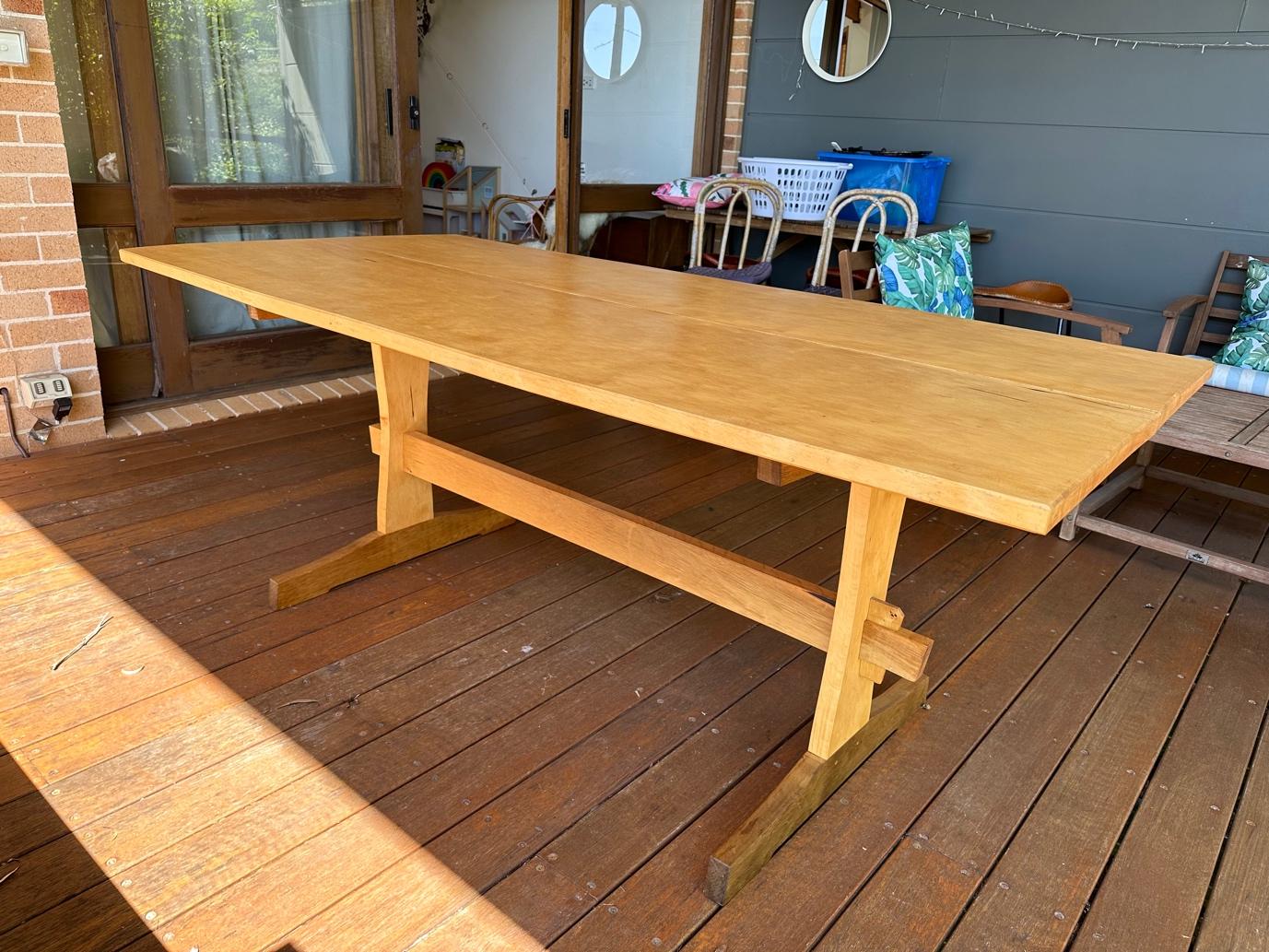
And that was the job done, and here it is, in its home on the covered veranda of my house:

As you can see, the finish turned the feet, which I cut from a discontiguous slab, a darker color than the rest of the table, but it’s an effect I rather like. The clouded figure of the top shimmers beautifully in the morning light from the East, and the little imperfections quietly witness to handwork, something for me to fret over in my quietude at meals around the table. The horizontal beams at the top of each leg that mate with the battens, not visible in the photos, are identical to the feet, except of course inverted.

I do not think I am testing the permanent nature of this table by using it outdoors  – though I may move it inside for a different practical reason: it is now the largest table we have, and has already made a couple of trips inside for big family gatherings. Rather, faced with a true forever wood that can endure against the elements, it seems only right that it should experience them and demonstrate its aplomb. I am glad in the end that I did not glue the centre joint of the top surface because it allows the two slabs to move and stretch a bit on humid days without cracking or busting the seam, and while this does mean they become un-flush for a day or two, they settle back in becoming flush once again when the weather dries out. The table can breathe. 

I will inevitably make little corrections as the table and I get used to each other. I remain unsatisfied with the very rectangular shape of the stretcher, and when the time comes to break down and refinish the table I will add some curvature to the stretcher. I will also probably resurface the top perhaps once a decade, as it ages and my skill with a kanna (hopefully) improves. Part of the joy of using a wood that should outlive my bloodline to make a table of great permanence that can be disassembled and reassembled as needed is the anticipation of ongoing minor improvements, and the relationship I and future generations will have with it. 

In the end, I still do not quite deserve this wood, because no one does. It is right and just that the Tasmanian government has banned the felling of any more of these trees, and it is right and just that the remaining wood is hard to come by and cherished. I am happy for the opportunity to make something permanent with this magnificently permanent and beautiful material. 

Antone Martinho-Truswell is a professional zoologist and amateur woodworker. His work can be found on Instagram at @stjosephwoodworks, where he posts his projects, experiments, and failures, and takes the odd commission. If you enjoy his writing and want to learn more about his day job, his book, The Parrot in the Mirror, is available from booksellers online and worldwide.

To learn more about and to peruse our tools, please click the “Pricelist” link here or at the top of the page. To ask questions, please the “Contact Us” form located immediately below. You won’t be ignored.

Please share your insights and comments with everyone in the form located further below labeled “Leave a Reply.” We aren’t evil Google, fascist facebook, treacherous X, Harvard University, or H. Clinton’s IT dude and so won’t sell, share, or profitably “misplace” your information. If I lie may someone bukkiri my neck.

← Back

Thank you for your response. ✨

Leave a comment

Kiridashi Kogatana Presentation Box

May it be a light to you in dark places, when all other lights go out.”

J.R.R. Tolkien, The Fellowship of the Ring

he title of this article references two things: A little knife, and a little wooden box, both uniquely and traditionally Japanese.

The Knife

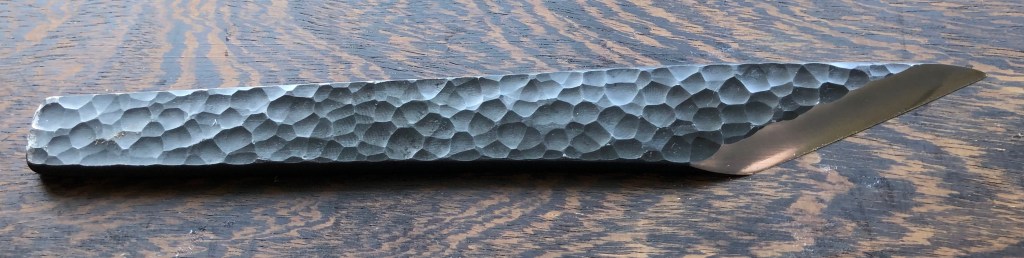
The knife in question is called a “kiridashi kogatana” (kee/ree/dah/she koh/gah/tah/nah)) or just “kiridashi” for short. Your most humble and obedient servant has written about this Japanese woodworking and general utility knife at great length in this article: The Kiridashi Kogatana Knife.

Kiridashi are Japan’s traditional utility, carving and woodworking knife. Indeed, until about 30 years ago, every school child in Japan was required to have a little one in their school bag for sharpening pencils, cutting paper, carving wood, and many other classroom tasks. But it has always been a serious tool for serious work by adults, one owned and used daily by nearly every craftsman in the country for centuries, at least.

But what are the advantages of a plain, flat, thin knife like this? A good question, one that most Westerners who haven’t trained in Japan naturally ask, and one that deserves a good answer. So let’s list some.

  1. Sharpness: Just as our chisels and planes, the blades of our high-quality, professional-grade kiridashi are of hand-forged laminated construction with a hollow-ground ura which makes them the easiest and quickest little cutters in the world to make frightfully sharp. And don’t forget, the love of sharp things is deep in the Japanese blood. You may find the articles at the following links amusing: In The Blood, Kireaji
  2. Carry and Storage: Kiridashi are easy to store and carry because they are flat and thin. Hardware stores sell cheaper versions of these little cutters with wooden scabbards, but this makes them bulkier. Our kiribako boxes are perfect for safe storage.
  3. Precision: It’s easier to make fine, precise cuts with a kiridashi than a thick, double-beveled Western-style knife with wooden scales because the flat, thin blade provides a better view of the work, provides better sensory feedback, and with fingertips located safely closer to the cutting edge, improved control.
  4. Cost effective: The kiridashi is the very essence of a cutting tool with no frills, no handle, and no expensive surround stereo system, just a simple, easily sharpened and fiercely-sharp blade.

Of course, kiridashi can be purchased with wooden handles and full wooden scabbards, or the user can make one to his taste easily enough. Your humble servant has made scabbards for those kiridashi he brings to jobsites for the extra protection they afford during transit, but they aren’t otherwise necessary and offer no advantage in the workshop, where I use a bit of cardboard as protective sheath instead.

So that explains the “Knife,” part of this article’s title, but what about the “Presentation Box” part? That’s next.

The Box

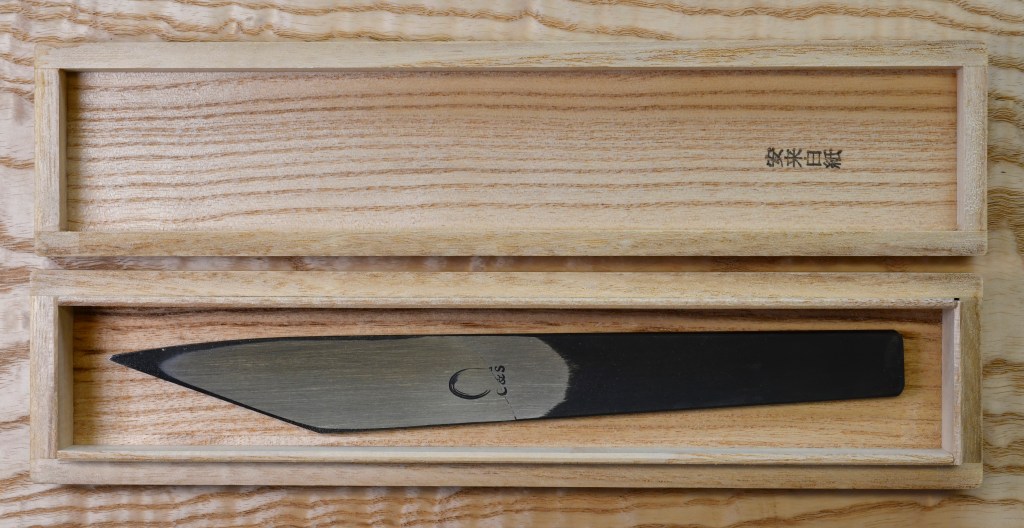
Being so popular in Japan, there is an extremely long history here of gifting better-quality kiridashi kogatana knifes to friends, families and fellow workers who use them. In fact, those procuring a kiridashi as a present have historically purchased them with a special presentation box of a type called a “kiribako” made of a wood much loved in Japan called “kiri ” (paulownia tomentosa). These little boxes typically have handwritten calligraphy on the lid describing the contents.

Regarding kiribako, It’s not an overstatement to say that one cannot fully understand the Japanese people until one understands kiri wood and kiribako.

Kiri trees have large leaves and beautiful flowers, grow extremely quickly, and produce a lightweight fragrant wood Japanese ladies love for cabinetry and chests used for storing clothing. Indeed, it was once common for fathers to plant a kiri tree at the birth of a daughter, and have the wood of the same tree made into a dowry chest or cabinet for her marriage when the time was right.

Due to popular requests going back years, we now carry kiribako boxes with hand-written calligraphy designed to fit our hand-forged kiridashi kogatana knives. They make excellent gifts and presentation pieces. And they’re not at all expensive.

Our boxes are solid-wood traditional construction, made in Japan by a Japanese specialist box-maker located in Niigata Prefecture, with a tight-fitting slip-on lid. They also come with the characters “Kiridashi” written by hand in ink on the lid along with the blacksmith’s name (Mr. Masuda) and his personal chop. Inside the box is a stamp that says “Shirogami” referring to the type of steel Mr. Masuda uses to make our kiridashi.

Given some time, and at no additional cost, Beloved Customers can request personalized calligraphy, such as the recipient’s and/or presenter’s name, the occasion, and even a date, in the Japanese language of course.

If you’re looking for an unusual, extremely traditional and classy gift for someone that likes beautiful, useful, sharp tools, this might be just the ticket. You won’t find them anywhere but C&S Tools. If you’re interested, please see the pricelist at the link below. To contact us please use the form below.

Pricelist

YMHOS

If you have questions or would like to learn more about our tools, please click the “Pricelist” link here or at the top of the page to find our products and use the “Contact Us” form located immediately below.

Please share your insights and comments with everyone in the form located further below labeled “Leave a Reply.” We aren’t evil Google or fascist facebook and so won’t sell, share, or profitably “misplace” your information. May all my kiridashi chip and break if I lie.

← Back

Thank you for your response. ✨

Leave a comment

Related Posts:

New Ootsukinomi Paring Chisels

Envy was once considered to be one of the seven deadly sins before it became one of the most admired virtues under its new name, ‘social justice’.

Thomas Sowell

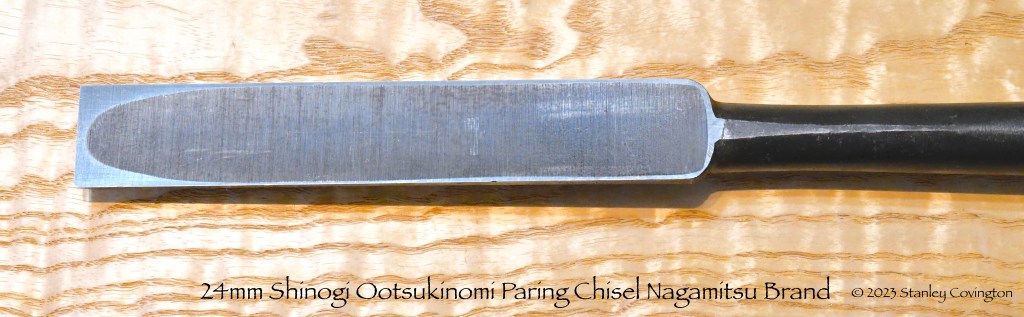
We’ve recently received a long-awaited (and we feared long-forgotten) order of two-handed Ootsukinomi paring chisels from our blacksmith. This post is a simple show and tell.

Your humble servant has scribbled about this tool in this article in our series about the varieties of Japanese chisels

Ootsukino, pronounced oh/tsuki/noh/mee, are large, long-handled paring chisels, the equivalent to the “slick” in the US woodworking tradition, a standard tool for timber framing. It is a rare chisel nowadays, and difficult to make.

This chisel is never struck with a hammer, but is pushed two-handed to pare surfaces and joints in wood to final dimensions. The long handle provides much greater angular control and precision than a standard paring chisel, while the ability to grasp it firmly in two hands makes it possible to effectively employ the greater power of one’s back and legs.

We also carry Mr. Usui’s Sukemaru-brand ootsukinomi, but after looking for a less-expensive option for our Beloved Customers, we ordered these from our Nagamitsu blacksmith over five years ago. Soon after placing the order we despaired of them ever being completed due to the difficulty of forging and shaping them in his advanced years, and did not want to pressure him. But we were surprised to learn recently, indeed after he had retired, that he had actually made significant progress on nine 2-piece sets, lacking only sharpening and handles, and so arranged for them to be completed. At long last they have been delivered.

Yes, this variety of chisel can be procured individually, and Mr. Usui of Sukemaru fame has been kind enough to fill many special orders to meet specific requirements of our Beloved Customer. But the standard way to purchase these in Japan is a 2-piece set, one chisel in 42~54mm blade width and the other in 24mm. We had these forged in the most common 48mm and 24mm boxed sets.

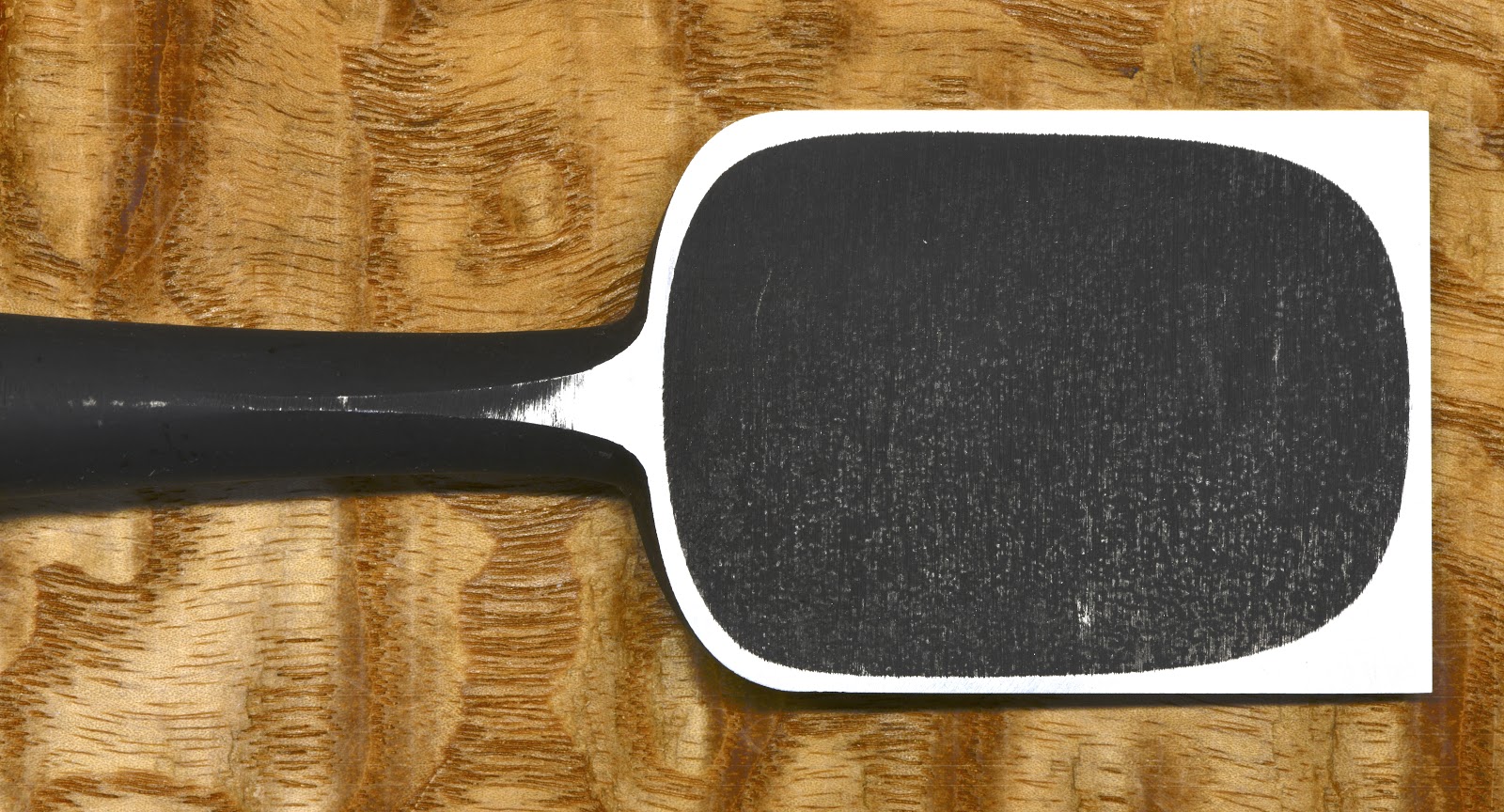
The overall length of both chisels is approximately 640mm (25-13/16″) with a 140mm (5-1/2″) long blade, 160mm (6 -19/64″) neck, and a 340mm (13-25/64″) handle made of an attractive grade of dark-red Japanese red oak. Both chisels have a standard, nicely-formed single ura with the hardened steel lamination properly wrapped up the blade’s sides for the extra toughness and rigidity essential to this tool.

A triple-ura on the 48mm chisel is a useful feature, and we have had Mr. Usui forge his chisels with this detail, but it would have added quite a bit to the cost and so is not available in this more economical brand.

The 48mm chisel is used for paring wider joint surfaces, the cheeks of tenons, and the interior side walls of mortises. It’s the standard mentori beveled-side design seen in our mentori oiirenomi, hantatakinomi and atsunomi.

The 24mm chisel is forged in the shinogi style with a more triangular cross-section to provide clearance for the blade in tight places to pare the many dovetail joints used to attach beams, purlins and bottom-plate (土台) timbers, as well as the end walls of the many 24mm mortises commonly found in traditional timber framing work.

These are not mass-produced tools but hand-forged in Japan from beginning to end by a highly-experienced blacksmith in his one-man smithy using Hitachi Metal’s Yasugi Shirogami No.1 high-carbon steel (White Label No.1 steel), famous for its superior sharpness, ease of sharpening, and sharpness retention performance for the cutting layer, forge-laminated to a softer low-carbon steel body and neck for toughness, typical of all our Nagamitsu-brand products.

These are nicely shaped and finished, top-quality, serious chisels for serious work, but are not suited to everyone. While joiners that make large doors and panels often have a set in their workshop, most cabinetmakers and furniture makers will seldom need such large chisels. But they are one of those tools that when you need them, nothing else will do. Indeed they are indispensable for cutting precise joints in large timbers and joinery, even when those joints are hogged-out using electrical equipment.

At this reduced price, We only have a few sets looking for new masters who will feed them lots of yummy wood, so if you are interested, please contact us using the form below.

YMHOS

SONY DSC

If you have questions or would like to learn more about our tools, please click the “Pricelist” link here or at the top of the page and use the “Contact Us” form located immediately below.

Please share your insights and comments with everyone in the form located further below labeled “Leave a Reply.” We aren’t evil Google, fascist facebook, or thuggish Twitter and so won’t sell, share, or profitably “misplace” your information. If I lie may every spoonful of burgundy cherry ice cream I ever eat taste like dirty truck tires.

← Back

Thank you for your response. ✨

8 responses to “New Ootsukinomi Paring Chisels”

  1. Gary Avatar
    Gary

    Very nice, Stan. I have a couple of similarly sized ootsukinomi. Besides large joinery, I find that picking one up and waving it around is useful for chasing people out of the shop. It gets their attention.
    I have a question about sharpening these. I know that it is easier to remove the handle for sharpening the blade. But after a few rounds of this the handles have become too loose. I have added paper shims inside the mortise for the tang, but that seems a short term solution. Is there a better long term solution, or should I just continue to add shims?

    Like

    1. covingtonandsons Avatar

      Thanks for your comment, Gary! I have never waved an ootsukinomi at, or used one to chase away, people, politicians or even pixies (descending order of humanity), but it sounds like a fun time was had by all. Please send link to video! (ツ) An ootsukinomi with a loose handle is extremely irritating, and if it becomes loose enough for the blade to separate from the handle on it’s own at an importune time that pervert Murphy may have a wonderful time dancing naked in puddles of red sticky stuff (sorry, no video). So while I don’t recommend routinely removing the handle after the initial sharpening, I do recommend using a honing jig to help maintain the proper bevel angle on the stones. Most people use a large block of hardwood cut at an angle and inlet to fit the chisel’s face for stability. When the wood becomes worn and the angle skewampus it can be refreshed with a thin angle-cut on a table saw, or maybe a pass or two on a jointer. I suppose the commercially-available jigs like the Lie-Nielson widget (perhaps with jaw extensions?) would work too and last longer, but whatever method used, it requires more physical effort and concentration than a shorter chisel does. Looking forward to the video! Stan

      Like

  2. Gary Avatar
    Gary

    Thanks, Stan. I have a little sharpening widget that fits the blades but the long handle makes using it awkwardly unbalanced. I’ll go with a shop made hardwood fixture. And I’ll work on that video.

    Like

    1. covingtonandsons Avatar

      You’re right of course about how awkward and over-balanced the handle makes the process. Two options for the block. The first is moving the block/chisel on the stationary stone, and the second is to clamp the chisel/block down and move the stone over the blade’s bevel. The latter takes gear and time to setup, but perhaps yields better results with less risk. 2 drachma.

      Like

  3. Bruce MILBURN Avatar
    Bruce MILBURN

    COVINGTON & SON

    To your humble servant from another humble servant. Let’s not argue our spiritual merits! I enclose a couple of photos of a chisel I sadly only use occasionally. I’m too ignorant to identify its origins but it feels good in the hand when working or not. You might enjoy! Yours Bruce Milburn (convictions in darkness)

    Sent from my iPad

    >

    Like

  4. The Lost Scrolls of Handwork Avatar

    I’d like your opinion on this brand of Japanese waterstone, Ikeda, which has 10 000 grit. Is it all the vendor has made it out to be? I’m thinking of switching from a strop to a 10,000 grit stone . There are several reasons why I desire to change. The most accurate response is that I’ve always been interested in higher grit stones and am eager to compare them to strops.

    Like

    1. covingtonandsons Avatar

      Sorry, I don’t have experience with the Ikeda stones. I suggest you beware of hype related to stones, especially if costs are high.

      Liked by 1 person

      1. The Lost Scrolls of Handwork Avatar

        Thanks for your quick response. The costs for everything is too high, but it’s on special $150 down from 200. Basically, it’s down to what it was originally priced a year or so ago. On average, the 10k grit stone irrespective of the brand is priced around $150-200

        Liked by 1 person

Leave a comment

Sanity Retention Implements

This is how your humble servant often feels at the end of the day. I need my chisels, I need my planes!

To achieve great things, two things are needed: a plan and not quite enough time.

Leonard Bernstein

Does Gentle Reader ever feel tired, restless, or achy after a difficult experience? Do these symptoms ever progress to insomnia, headache, neck pain, backache, chest pain or even (heaven forfend, I need a fire extinguisher) untimely spontaneous human combustion? And do any of these symptoms persist even after the pressures that precipitated them are gone? If so, you may be a human, perhaps even one of those with a brain and a soul connected to your body.

In this article, your most humble and obedient servant will, as Tim the Toolman Taylor often did, dare to diverge just a step or two from the beaten path of tool talk to consider how tools and woodworking may help us mitigate the dangerous stress most modern humans experience daily. So hi ho neighbor, let’s have a conversation over the fence.

A Tale of Stupidity

I promise you nothing is as chaotic as it seems. Nothing is worth diminishing your health. Nothing is worth poisoning yourself into stress, anxiety, and fear.”

Steve Maraboli

Allow me to begin with a true story, one of stupidity and toxic stress, just another fun day at the office.

Many years ago when the world was bubbling with promise, my head was fuzzier, my beard was darker and my waist was slimmer I was employed by a mid-sized Midwest construction company doing a design/ build factory for a Japanese precision parts manufacturer. Besides the construction of the factory expansion, the work included installing foundations for carburizing ovens used to create a hard skin on the steel parts they manufactured. I was tasked with marking out a concrete slab for core-drilling a series of pier foundations to support these ovens.

Everything went well, my layout drawing was approved, the slab was cored and piers were cast on-time. But when the equipment supplier’s salesman came to inspect the foundations he informed my boss they were spaced incorrectly. A disaster!

BTW, I was never told why my layout was wrong, but once the ovens arrived it was as obvious as the bill on a duck’s face that the manufacturer’s drawings didn’t match. In any case, at the time I was certain the foundations would need to be reworked, delaying installation of the ovens, and consequently the Owner’s production start, so I was sick with embarrassment at probably having delayed the project, and felt obligated to repay my employer the cost of remediating my apparent mistake. So between personal shame, the fear of potential schedule delays, and the thought of paying thousands of dollars out of my own pocket to make things right I was seriously stressed for about a week. Headaches, stomach aches and chest pains ensued forthwith.

My boss was a steady guy named Jim who heard out my profound apology while squinting at me like Blondie frequently did at Tuco the Rat, then snorted and called me an “ijit.”

Jim explained that if everyone who worked on a construction project were to be held personally financially responsible for minor unintentional mistakes, no one would do anything. And even if they were held responsible for their screwups, the construction company would then be obligated to pay them for everything they did right as a percentage of the project’s profits. And that wasn’t the arrangement.

Although Jim was gruff, even insulting, the results of his impromptu jobsite trailer therapy session were undeniable, providing me with necessary perspective, quickly dissolving the emotional stress that was crushing me, even relieving the physical symptoms I was suffering. And all without a couch! We all need someone like Jim.

When the crew that came to install the carburizing ovens entirely ignored the footings we had installed, but bolted steel “I ” beams to the slab instead, and then mounted the ovens on them I was shocked, even a little angry! They explained that’s how they always installed their equipment. And yes, all my self-recrimination and stress had been silly.

No doubt many Gentle Readers have learned similar lessons, but there’s a quote I’m fond of by Winston Churchill, the Prime Minister of England during WWII, a former soldier and fearless leader who bravely persevered as bombs and missiles rained down around him, the nation’s cowardly bureaucrats and politicians hid like rats in rubbish piles, civilian women and children were being murdered, and his nation was about to be invaded by a brutal enemy, to be apropos to most (but not all) stressful situations:

When I look back on all these worries, I remember the story of the old man who said on his deathbed that he had had a lot trouble in his life, most of which had never happened.

Winston S. Churchill
An iconic photo by Yousuf Karsh of Winston Churchill taken at the Hotel Château Laurier in Ottawa, Canada. Known as The Roaring Lion, it was stolen from the hotel’s Reading Room sometime after 2019, but it still has wide circulation as the image on the Bank of England’s £5 note. The story goes that Churchill did not want to be photographed, but permitted Karsh a single shot. To make the photograph more interesting, Karsh suddenly plucked Churchill’s ever-present lit cigar from his lips just before triggering the shutter prompting the glowering visage.

Herding Cats

Since those halcyon days my philosophy towards life and work has changed.

I once vainly believed I could control the people around me, or at least those I was responsible for, but with experience came the realization that attempting to control people is like pushing cats towards a goal with a small broom while demanding they knit sweaters along the way. The truth is that I have never been in control, that I can never successfully make anyone do anything, and that whenever I try to, all semblance of goodwill and cooperation is lost as everyone scatters and stress levels skyrocket.

One can never successfully “herd” cats, but at best only “lead” them (and sometimes even people) to go where you want them to go, or to do what you want them to do, with fish in hand, an even tone of voice and frequent ear rubbing, if you know what I mean.

While I don’t push people nowadays, I frequently have Clients, mostly inexperienced, egotistical, mid-management types who don’t have a clue but are frantic to climb the corporate ladder, consequences be damned, who expect such counter-productive foolishness of me on their employer’s behalf. Without appearing to refuse or contradict, of course, I always try to find other solutions, but when this is not possible and the Client stubbornly insists on Marxist measures, I separate myself from such projects because I know they will not only fail, but will yield unpleasant consequences for everybody involved, including tons of shame and crushing stress for me.

Don’t get me wrong, construction projects involve coordinating the efforts of a lot people, and sometimes stern measures are necessary, but nowadays while I still plan, lead, encourage, monitor, track and report progress, remind, sound alarms, send warnings, chide, reward, and even contractually penalize when necessary, I don’t push.

So here’s your unworthy servant’s current philosophy about life and stress in a nutshell:

  1. Thoroughly understand your goals, objectives and responsibilities, plan how to accomplish them, be diligent in achieving them, and never blame others for your mistakes;
  2. Without exception, everyone makes mistakes, constantly, so be as kind and understanding as reasonably possible. If you’re lucky, they might just return the favor, but even if they don’t, it will help to decrease stress levels all around. They’re just cats after all;
  3. Don’t accept responsibility for anything for which you are not truly responsible;
  4. Although senior executives in both the private and public sectors frequently secure their high pay and lofty station by abusing the goodwill of others, no matter how cleverly or coercively they present it, don’t allow anyone to foist either their responsibilities, or their mistakes, off onto you (unless you agree to it in advance and they pay you oodles of money for the resulting stress);
  5. As taught by those Great Philosophers Lord Buddha of India and Red Green of Possum Lodge, always remember that life is suffering, all the time, and accept that Murphy will carnally poke you with his pointy purple pecker often and painfully, so don’t expect an easy time, and prepare Vaseline and bandages accordingly.

One last philosophical concept that I have found useful. In the West there’s the saying that goes “water off a duck’s back,” meaning “nothing bothers you.” In Japan they have a more colorful saying, one that many small boys have enacted, that goes “piss in a frog’s face.” To the duck it’s just another wet day in a wet place. To the frog, it’s just a warm shower. Since killing stress originates in the mind, the expectations of the duck and the frog are worth emulating. Seriously.

I believe that internalizing the 5 points listed above, perhaps urinating on frogs 𓆏 occasionally, and employing small remedies frequently rather than making big corrections too late, can minimize the need for Dr. Alonzo’s Pretty Purple Pills, those dreadfully unfashionable and scratchy canvas jackets with straps and buckles that chafe the crotch something fierce, and/or heart surgery.

Setting amphibian abuse, chest incisions and uncomfortable fashion aside for now, let us next consider one such small remedy.

Stress Reduction Measures

The criminal pharmaceutical companies and their well-paid “scientists” (aka “shills”) in the medical profession will happily sell you heaping pallets of pills to cure what ails you, but honest doctors frequently recommend less profitable, but no doubt more effective measures, including exercise, more sleep, vacations, music, reading, spending time with friends and family (even though they are frequently a cause of high stress), and hobbies. Some of these may work for you. I’ll touch on hobbies more below.

Many people like to imbibe a drop of grog at times to relieve accumulated stress. This is certainly the case here in Japan where people generally love demon rum but become inebriated easily due to a common genetic enzyme deficiency. But as someone who is frequently forced to spend time in the company of drinkers in business situations, I’ve concluded adult beverages don’t actually relieve stress but only make the drinker forget his problems for a few minutes as they worsen, turn him into a useless fool for a few hours, and destroy his liver forever. And don’t forget the injuries, traffic deaths, fights, jail time, divorce, poverty, suicides and murders cork-pulling always produces. Such an uplifting beverage.

One of the disadvantages of wine is that it makes a man mistake words for thoughts.

Samuel Johnson

A less addictive and more reliable method I have found effective for relieving the stress that originates inside my head and heart is to do selfless service for others, service that I will not be rewarded for, and ideally, service I will not receive recognition for. Are there lonely, stranded, hungry, poor, sick, handicapped or damaged people in the neighborhood? Can I help by picking up stuff for them up at the grocery store or pharmacy? Can I give them a ride to a doctor’s appointment? Are their doors, windows, locks, cabinets, furniture, water heater, car brakes or roof giving them grief? Do they need help paying a bill? Do they just need someone to talk with? To share a burden is to halve it. To carry a friend or neighbor’s burden is to lighten my own narcissistic burdens (everyone has them), at least partially. Serving others without expectation of reward or recognition is powerful medicine in so many ways.

Another method I know that works is meditation, as in spending time alone in a quiet setting, without distractions, pondering simple questions internally without seeking actual answers. No, you don’t need to be a navel-gazing monk or smelly swami to do it, but you do need privacy and quiet, conditions often difficult to secure at home, especially since, regardless of her age, the female of the human species congenitally cannot tolerate the sight of a man being content while doing nothing, and upon seeing such a pitiful fellow, cannot stop herself from insisting he get busy following her orders. Thus it has always been.

But there’s another form of meditation your humble servant has found to reliably relieve stress, performed not in a hidden Shaolin temple or in a secluded grove, but still in a private, if perhaps dusty, environment.

The Holy Workshop

A beautiful 54mm Otsukinomi Paring Chisel by Nora.

Although I once worked wood professionally, it’s only my hobby now. But I find that, when done correctly, even meditatively, it can be highly effective at relieving stress. To do it correctly, however, a simple workshop is necessary, one without email, telephones or other distractions.

Big or small, light or dark, warm or cold, the design doesn’t matter so long as it has a door, even if it’s an imaginary one like that of the renowned radio News Director and anchorman Les Nessman (5 time winner of the coveted Buckey News Hawk Award, donchano). Once I close this door, no one but me is allowed to enter its sacred precincts or fiddle with the sanity retention implements (tools) housed therein. And that includes bench dogs and cats. But for it to be a serene, meditative, healing space, She Who Must be Obeyed and “The Spawn” must be ruthlessly conditioned to quiver at the very thought of removing my tools, and dread the consequences of chucking junk into or storing stuff in the holy workshop.

When I am in my workshop, I accept no demands to do this or do that. I don’t respond to email or the telephone, unannounced visitors ringing the doorbell, calls to dinner, much less demands to take out the garbage. It’s not that the holy workshop makes me rude and/or unresponsive, it’s simply that these distractions are lower priority than my health for a short time, and the restorative balm must be allowed to soak in, you see.

In this private space I work on my projects, usually simple woodworking or tool maintenance, using the woods I love in the company of the undemanding, sharp friends that reside, play dice and drink beer in the evenings in my toolchest. No schedules. No one to criticize or complain, no one to seek approval or payment from, and no one to please but myself. And while the fruits of my time here mostly go to others, in this bubble environment I only make what I want to make, when I want to make it, using the materials I want to use and tools that willingly link my mind and soul to the wood I am shaping.

But lo, one more thing is essential to the effectiveness of the holy workshop: When people ask me what I make in there, I always answer “wood shavings and sawdust,” for you see almost any other answer invites prying questions and ultimately stirs up invasions by curious people with too much time on their hands who will invariably request woodworking-related “favors,” responding to which will induce more stress into my ragged life. Oh, and when children ask me what I plan to give them for birthdays or Christmas, I pretend to sort through my tattered memory and then respond in a serious tone: “Do you prefer wood shavings or sawdust?”

In past years, this temple to woodworking has been a piece of old carpet laid for a few hours on a concrete slab in front of a dingy apartment for my shorty sawhorses and atedai to cavort upon. At other times, it has been a reed mat spread under quaking aspen or pine trees in a mountain glade. Most often it has been half or all of a garage with a workbench. Lately it has been a spare bedroom on the second floor of a small single-family house in Tokyo. Whatever shape it takes or amenities it may have, my workshop is for just me, my wood, and my tools.

Conclusion

Although it’s hardly worth the effort, perhaps Gentle Reader now understands the method to my madness when I call my beautiful, faithful, hand-forged tools “sanity retention implements.” I am convinced the time we spend together has, like water from a duck’s back, shed much deadly stress from my life, making my little workshop and simple handtools cheaper than therapy, tastier than Dr. Alonzo’s Pretty Purple Pills, and certainly more pleasant than heart surgery. I no longer use my tools to feed my family, but I’m convinced they “cure what ails me.” Cheap at twice the price, say I!

Let’s conclude this merry tale of mental illness with a final quote about Winston that Gentle Reader may find inspirational.

He was one of the finest orators of all time. And some of the phrases he used still resonate with us today, such as “Finest hour,” “Never surrender,’ and of course, “We shall fight them bitches.”

Philomena Cunk para-quoting Winston Churchill

YMHOS

Master carpenter Rokuza in Olde Edo with his plane and gennou hammer in hand, thinking about his lady instead of work. Some things never change.

To learn more about and to peruse our tools, please click the “Pricelist” link here or at the top of the page. To ask questions, please the “Contact Us” form located immediately below. You won’t be ignored.

Please share your insights and comments with everyone in the form located further below labeled “Leave a Reply.” We aren’t evil Google, fascist facebook or treacherous TikTok and so won’t sell, share, or profitably “misplace” your information. If I lie may frogs pee in my face.

← Back

Thank you for your response. ✨

Leave a comment

Sharpening Part 13 – Nitty Gritty

“The true mystery of the world is the visible, not the invisible.” 

Oscar Wilde

In this post we will dig into a few important nitty gritty points about sharpening stones everyone needs to know. Perhaps Beloved Customer already knows all these points, but please ready your shovel anyway because there may be at least one buried surprise to unearth.

A Wood Shavings-Eye View

When seen under high-magnification, the surface of a sharpening stone looks like millions of densely-packed stones embedded in a flat field. The smaller the stones, the finer the grit.

As the blade is pushed and pulled over these stones, they scratch and tear metal from the blade’s surface leaving behind scratches corresponding to the size of these small stones. This violence needs to continue until the blade’s ura and bevel form a clean intersection of two planes.

A view of a blade sharpened with 1200 grit diamond plate showing the furrows left by individual pieces of grit

Seen under high-magnification, the cutting edge is jagged where these furrow-like scratches terminate at the cutting edge. To some degree, it may even look like a serrated sawblade. Some blades, like kitchen knives and swords used in a slicing motion to cut soft materials like meat and vegetables and enemy arms, benefit from a serrated cutting edge more than a highly-polished edge, and so do not need to be highly polished on fine-grit sharpening stones. 

Plane and chisel blades, however, are used to cut wood, a material typically harder than foodstuffs, mostly in a straight-on approach, not in a slicing motion. In this situation, a rough, serrated cutting edge is weaker than a highly polished edge because the jagged edges are projecting out into space like the teeth of a handsaw blade. Being relatively unsupported, the pointy parts of this serrated edge are more easily damaged than a highly-polished blade with smaller, more uniform scratches terminating more cleanly at the cutting edge. 

Therefore, in order to produce a sharp durable blade, we must make the microscopic cutting edge smoother and more uniform by using progressively finer grit stones to produce shallower and narrower scratches, and a thin, uniform cutting edge.

But how fine is fine enough? There is a curious phenomenon related to friction that is applicable to cutting edges, and is useful to understand. 

The Friction Paradox

Imagine a cube of heavy, polished stone with its downward flat face resting on the level, flat surface of a larger slab of similar stone. Let’s say it takes some specific measure of force pushing horizontally on the top stone cube to overcome the static force of friction between the two stone surfaces in order to get the cube moving. 

If we gradually increase the degree of polish between the two contact faces and measure the force required to start the top cube moving at each progressively higher level of polish, we will find the force decreases with each increment of increased polish, at least for a time. This is at least partially because the irregularities between the two surfaces (asperities) do not interlock as deeply when the surfaces become more polished. 

However, at some point, more polishing brings the surfaces of the two stones into such intimate contact that the molecular attraction between them, and therefore the force necessary to move the cube, actually increases. 

The same phenomenon occurs with tool blades. If you sharpen and polish your blades past a particular point, the friction and heat produced during the cut between blade and wood will increase, as will the energy that must be expended, while the resulting quality of the cut and durability of the cutting edge will not improve significantly. Of course, the money invested in stones and time spent sharpening past this point will be mostly wasted.

The Inflection Point

The inflection point where additional polishing yields increased friction with little improvement in cut quality will depend on your tool and the wood you are cutting, but you can get a pretty good idea of where it is if you pay attention over time. While the sharpening stone manufacturers turn red in the face and salesmen froth at the mouth and spray spittle in anger when I say it, in my well-informed opinion there is little practical gain, beyond self-satisfaction, to be had from sharpening chisels or planes past 6,000~8,000 grit, making this range of grit an inflection point in my mind. What about you?

Conclusion

I encourage Beloved Customer to conduct your own experiments to determine the practical inflection point in the case of your planes and wood you cut. Many who figure this out save themselves significant amounts of time and money sharpening over the long-term.

To those Gentle Readers that love sharpening more than woodworking, and enjoy putting money in the pockets of sharpening stone manufacturers more than keeping it for themselves, I apologize for pointing out the icky floater in the punch bowl. But you probably would have it noticed it eventually anyway, if only from the taste difference.

I will touch more on this important point in the next exciting installment in this scientificish adventure.

YMHOS

The Repentant Mary Magdalene by Canova

If you have questions or would like to learn more about our tools, please click the “Pricelist” link here or at the top of the page and use the “Contact Us” form located immediately below.

Please share your insights and comments with everyone in the form located further below labeled “Leave a Reply.” We aren’t evil Google, fascist facebook, or thuggish Twitter and so won’t sell, share, or profitably “misplace” your information. If I lie may frogs infest my boots.

← Back

Thank you for your response. ✨

Leave a comment

Sharpening Part 10 – The Ura 浦

Chisel “Ura.” This feature includes the hollow-ground uratsuki in the center (black color), the upper and lower skinny lands called “ashi” (bright steel), the less-important land at the neck (bright steel), and the supremely important “ito-ura,” the narrow bright steel land located immediately behind, and which comprises on-half of, the cutting edge. By any calculation, a genius design.

If a craftsman wants to do good work, he must first sharpen his tools.

Confucius, The Analects

We talked about the Ura in the previous article in this series (Part 9).

It is a defining detail in most Japanese woodworking blades, and one we must understand if we are to efficiently sharpen them, so in this post we will examine this important feature in more detail.

What is the Ura?

Japanese plane and chisel blades have a unique and intelligent design feature at what is called the “flat” on Western plane and chisel blades, and is called the “Ura” (pronounced oo-rah) in Japan.

Ura translates into the English language as “bay,” as in a protected area where the sea meets the shore. At the center of the ura is a hollow-ground, depressed area in the hard steel hagane layer called the “uratsuki,” meaning the ura hollow.

In the photos on this page the uratsuki is left black from the forge, but some prefer this to be polished bright. Your humble servant prefers the natural, old-fashioned, black oxide finish, not because of my exquisite fashion sense (fashion is my life, after all!), but because the unpolished, oxidized surface can tell us much about what the blade experienced during the quenching process, and perhaps even the quality of the blacksmith’s work.

On the other hand, while a polished ura is by no means a hallmark of shoddy workmanship, it’s an undeniable fact that polishing the uratsuki polished ura hides all this information.

The ura is neither an accident nor a fashion statement, but serves two distinct purposes. 

The first purpose of this design is to make that it easier and quicker to keep the four bright steel lands on this face of the blade planar. But why is that a matter of concern? If you pay attention when sharpening your wide Western chisel and plane blades lacking the details of the Japanese uraura, you will notice that, after many sharpening sessions, the blade’s flat, which was once planar, tends to become convex with a high point at the flat’s center making it difficult to keep the extreme cutting edge, especially the corners of the blade, in close contact with the sharpening stone. Yikes!

This doesn’t occur because you don’t know how to sharpen your blades, or because of pernicious pranks by pesky Pixies, but simply because your sharpening stones/platens/paper tend to abrade the blade’s perimeter more aggressively than the center. The resulting curvature makes it more difficult and time consuming to accurately polish, and thereby sharpen, the flat’s extreme cutting edge. Major buzzkill.

Because of the most excellent ura, Japanese woodworking blades are quickly fettled initially and tend to stay planar without a second thought for many years of hard use, an important benefit if you count your time worth anything.

The second purpose of the ura is to reduce the square inches or square millimeters of hard steel you must polish during each sharpening session. As you can see from the photo above, the four shiny perimeter lands are all that touches the sharpening stone. Compare this with the central black area which doesn’t touch the stone at all. That’s a lot of hard steel you don’t have to deal with.

Besides making the job easier, this detail saves a lot of time when sharpening and helps one’s expensive sharpening stones last longer. Time is money and stones ain’t cheap, as my old foreman scolded me many times (lovingly, I’m sure).

Even if you don’t use your tools to make a living, you should at least recognize that time spent sharpening is time making wooden objects lost.

The Downside Of the Ura

A worn-down multiple-ura chisel

Despite my poetic praise, the ura detail is not all blue bunnies and fairy farts, because it does have one unavoidable downside: Over many sharpening sessions the Ura unavoidably becomes gradually shallower, and the lands surrounding the Ura on four sides become correspondingly wider. Nothing lasts forever except regrets and taxes.

It is not uncommon to see old chisels and plane blades with the hollow-ground area of the ura almost disappeared. You can postpone this day by sharpening your blades wisely. However, in the worst case where the ura disappears entirely, you will still be left with an entirely usable Western-style flat, so not all is lost.

In future articles in this series we’ll consider how to keep our lands as skinny as possible as long as possible, and how best to keep uratsuki as deep as possible as long as possible.

In the case of plane blades, unless the plane’s ura is subjected to a brutal sharpening regime, the land that forms the cutting edge (called the “ito ura” meaning “strand” as in a flat area on a riverside, in Japanese) tends to gradually become narrower, and even disappear entirely after numerous sharpenings. Of course, when this happens, the blade loses its cutting edge, and the land must be restored by “uradashi” (oo-rah-dah-she) aka “tapping out” or bending the cutting edge towards the ura side, and then grinding it flat to form a new ito-ura land. Tapping out a blade requires some caution, but is not difficult. We will discuss the how-to of this aspect of blade maintenance in a later article in this series.

In the case of chisels, which have smaller and shallower ura compared to wider plane blades, the land at the cutting edge does not typically require tapping out, although it’s certainly possible to tap out wider chisel blades. Narrow chisel blades, on the other hand, are difficult to tap out without damaging them due to the rigidity produced by the hard steel layer (detailed in the previous post in this series) wrapped up the blade’s sides.

Mitsuura Chisels

Ichimatsu Nomi Ura (by Kiyotada). After many years of hard use, the multiple ura (aka “mitsuura”) on this oft-sharpened chisel used to pare precision joints has become shallower and the planar lands have become wider. Still entirely useful, it now takes more effort to sharpen than when new.
Spearpoint Mitsuura chisels made by Sukemaru using EDM technology. Sadly, Mr. Usui no longer produces them.

Some chisels are made with multiple ura, typically called “mitsuura” meaning “triple ura.” Mitsuura chisels are more difficult to sharpen than chisels with a single ura because the total area of hardened steel that must be polished is comparatively larger. The ura of mitsuura chisels also tend to wear-out quicker than single-ura chisels because each individual uratsuki is shallower in depth than standard uratsuki. They look cool, but I am not a fan of multiple ura except in a few specific applications.

In the next stage of our journey into the mist-shrouded world of sharpening hard steel blades, we will wander through the metaphysical realms of the “Fae.” A word of caution: Be sure to have a brass bench dog in your pocket when you leave the well-lighted pathways and accept neither food nor drink from anyone’s hand until we return, not even a cheeseburger with fries. ☜ (◉▂◉ )

YMHOS

If you have questions or would like to learn more about our tools, please click the “Pricelist” link here or at the top of the page and use the “Contact Us” form located immediately below.

Please share your insights and comments with everyone in the form located further below labeled “Leave a Reply.” We aren’t evil Google, fascist facebook, or the CCP and so won’t sell, share, or profitably “misplace” your information. If I lie may I drown in my own uratsuki.

← Back

Thank you for your response. ✨

Leave a comment

Other Relevant Articles

The Challenges of Professional-grade Japanese Chisels

Sharpening Part 9 – Hard Steel & Soft Iron 鍛接

A piece of hot high-carbon steel, which will become the cutting edge, has been placed on the orange-hot low-carbon steel body of a knife as part of the “forge-welding” process. An acidic flux powder has been placed in-between and on the metals in preparation for laminating them together into a single blade.

Men are like steel. When they lose their temper, they lose their worth.

Chuck Norris

While Beloved Customers are of course familiar with the features of the high-quality woodworking blades we purvey, some Gentle Readers may have little knowledge of the important details essential to Japanese woodworking tools. So in this article we will try to remedy that by examining some simple historical points common to woodworking blades around the world, as well as some details that make Japanese blades unique.

Your humble servant believes an understanding of these basic facts will aid Beloved Customer’s sharpening efforts, or will at least tickle Gentle Reader’s interest in Japanese blades. Please comment and let me know your thoughts.

Laminated Bi-Metal Construction

As discussed in previous articles in this series, before technological advances in the 1850’s, steel was difficult to make and expensive. Consequently, it was standard practice not only in Japan but everywhere, including Europe and the United States, to reduce production costs by minimizing the amount of precious steel used in producing all types of edged tools including axes, scythes, handplanes and chisels etc.. This was achieved by laminating smallish pieces of high-carbon steel to softer and much cheaper wrought-iron bodies through a process called “forge welding.” The photo at the top of this article shows the blacksmith placing the piece of high-carbon steel on the softer iron body of a blade prior to beating the hell out of it as part of the forge-welding process.

Most chisel and plane blade blacksmiths in Japan continue to employ this lamination technique even today, not because of some navel-gazing infatuation with the archaic, but because it has serious advantages.

The best Japanese plane and chisel blades are generally comprised of a layer of very hard high-carbon steel called “hagane” (鋼) in Japanese, forge-welded to a softer low-carbon/no-carbon iron body called “jigane” (地金). We discussed both of these metals in the previous two articles in the series here and here.

Here is the key point to understand: When a blade made from a lamination of high-carbon steel and iron (or low-carbon steel) is quenched, the sudden temperature change causes the high-carbon steel layer to become hard, even brittle, while the softer low/no carbon layer is unaffected and remains soft.

A 30mm Hidarino Ichihiro Atsunomi, approximately 12″ OAL.

Why go to so much trouble? One advantage of this construction is that it allows the cutting edge to be made much harder than is possible in the case of an non-laminated blade therefore staying sharper longer in use than can be expected of a softer blade. But why does lamination make this possible? Consider the absolute fact that a chisel blade made of uniform material heat-treated to a uniform hardness of, say, HRC65 might cut very well, and stay sharp a long time, but it will always break in use. Not just chip, but actually break in half. The softer low/no carbon jigane layer supports and protects the hard high-carbon steel layer preventing it from rupturing. Such durability is a huge advantage.

Another benefit of laminated construction is ease of sharpening. Remember, the harder a piece of steel is, and the larger its area, the more work it takes to abrade it. But in the case of a laminated blade, the amount of hard-steel exposed at the bevel the user must abrade is just the relatively thin strip of shiny metal seen in the chisel photos above and below. Please also recall that the grey low/no carbon jigane layer is relatively soft and melts away on the sharpening stones without much effort.

So the laminated construction of hard hagane to soft jigane produces a blade that is tough but at the same time hard, one that will become very sharp and stay sharp a relatively long time thereby improving work quality and productivity while at the same time needing less time, effort, and stone to sharpen.

BTW, this is not a blacksmithing technique that was discovered only in Japan. Indeed it was once standard procedure for making high-quality cutting tools worldwide, but it has been discarded and forgotten over the last 100 years almost everywhere else because it costs more to accomplish, it requires real trained blacksmiths to perform (not just factory workers), and because most consumers can’t tell the difference, fools that they are.

A relatively few, highly-skilled Japanese blacksmiths continue to employ this ancient and clearly superior technique despite the difficulty and decreased profitability, but only because their professional Japanese woodworking customers demand it. At least, that is, for a little while longer. A word to the wise.

A 42mm Hidarino Ichihiro Oiirenomi

Laminated Blades in the West

If you have examined antique plane blades with wooden bodies you may have noticed many have blades stamped ” Warranted Cast Steel”

Despite being designated “cast steel” in England and America in past centuries, unlike Conan’s Daddy’s sword, or the orc blades made in the bowels of Isengard, plane, chisel and saw blades with this mark were not “cast” by pouring molten metal into a mold to form a blade. Rather the process to make the steel involved melting iron ore in a crucible and pouring it into molds “casting” a strip, bar, or ingot of high-carbon steel which was then forged to make the blade, hence the name.

This became possible only when the technology required to reliably and fully melt steel to a more-or-less liquid state on an industrial scale was developed. Such steel was also called “Crucible Steel” after the crucible container used to melt iron ore.

This technology was widely used in the United States and Europe through the 1870’s. In fact, one steel mill is said to have been producing crucible steel until the 1960’s. Toolmanblog has an interesting summary on cast steel.

With few exceptions, these European plane blades have a thin piece of high-carbon steel forge-welded to a soft wrought iron body, very similar to Japanese plane blades. I have reused a couple of these antique blades to make Krenovian-style planes and testify of their excellent cutting ability.

Chisels were also once made in Europe using this same lamination technique, although fewer examples remain extant.

Axes, hatchets, and many farming implements were also mass-produced up until the 1920’s in the US using a variation of this same technique with a “bit” of steel forming the cutting edge laminated to or sandwiched inside a body of low-carbon steel or wrought iron. Axes are still made this way in Japan. It’s a proven technique with a lot of advantages, but it does require a skilled blacksmith to pull off successfully, and customers that appreciate the improved performance.

The point I am trying to make is that blades made using forge-welded laminated technology were the very best available in Europe and the United States for many centuries.

Here is a link to a blog post by Paul Sellers where he praises the old chisels and laments the new.

U-Channel Construction

A closeup of the 42mm Hidarino Ichihiro Oiirenomi showing the lamination line between the steel cutting layer and low-carbon steel body of the blade
The same 42mm Hidarino Ichihiro Oiirenomi. Notice the hard-steel lamination wrapped up the blade’s sides to add rigidity.
A 30mm Hidarino Ichihiro Atsunomi, approximately 12″ OAL. Notice the hard steel lamination forming the cutting edge at the bevel. This is a beautiful lamination.
A beautiful hand-filed (not sanded) shoulder detail typical of Yamazaki-san’s work

The shape of the hard steel cutting layer laminated to the softer low-carbon steel (or wrought iron) body of chisels was historically a simple flat plate in Western blades. This is still the case for Japanese plane blades, axes, and farming implements. But if you imagine Japanese blacksmiths would be satisfied with such a simple design for all applications, you don’t know them well.

If Beloved Customer will carefully consider the blades pictured in the four photographs above, you will notice the lighter-colored hard steel lamination wrapped up the chisel’s sides forming a “U channel” of hardened steel adding necessary rigidity and strength. This is a critical detail for Japanese chisels intended to be struck with a hammer. Interestingly, Japanese carving chisels are not typically made this way, and are consequently structurally weaker.

Plane blades are not subjected to the high loads chisels experience and so would not benefit from this structural detail.

The Ura

A view of the ura face of an atsunomi chisel. Just to be clear, the entire surface, including the full width of the blade from the cutting edge to where the neck begins, is called the “ura.” The black area in the center is made of hard, high-carbon steel, but is hollow-ground forming a depressed area called the “uratsuki.” The four shiny areas at the perimeter form a single plane. I call these “lands.” The longish lands to each side of the uratsuki (located at top and bottom in this photo) are called “ashi,” meaning legs, but I will call them “side lands.” The land right up against the cutting edge is the most important of the four because it forms one-half of the cutting edge. It’s called the “itoura,” meaning “thread-land.”

Japanese chisel and plane blades, among others, typically have a hollow-ground depression called the “Ura” (pronounced “ooh/rah”) which translates to “ocean” or “bay,” located at what is called the “flat” on Western blades. Notice the polished hard steel lamination extending from the cutting edge to several millimeters up the neck. The black area encompassed by these shiny lands is the same hard metal, but it has been hollow-ground to form the swamped “uratsuki.”
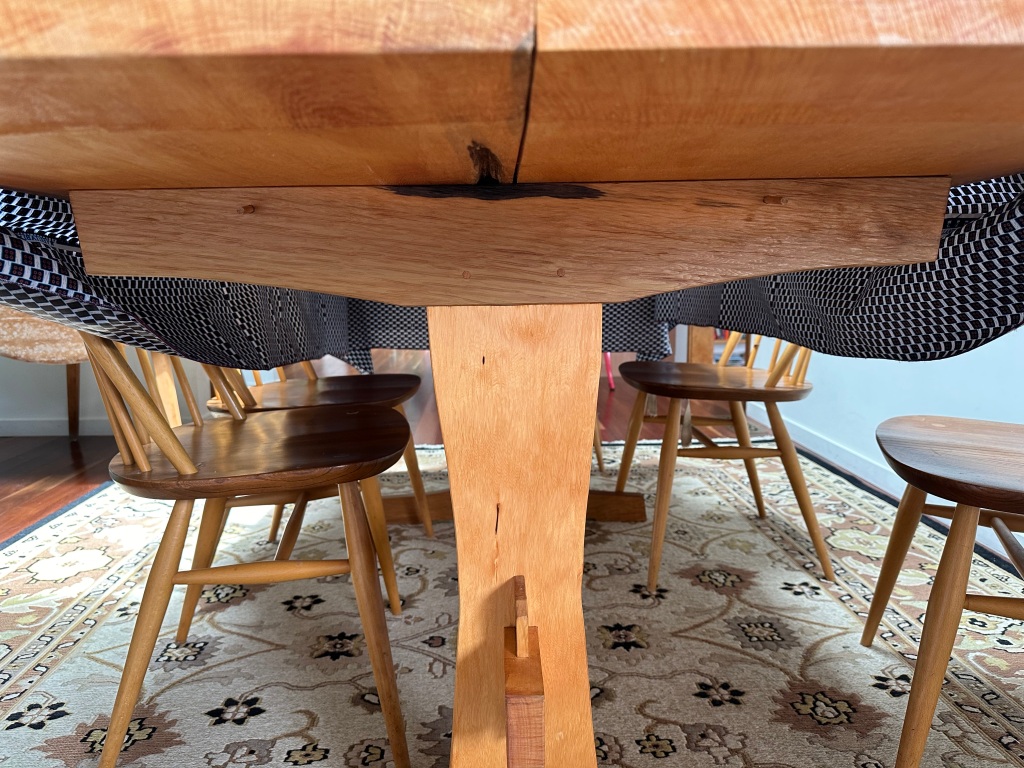
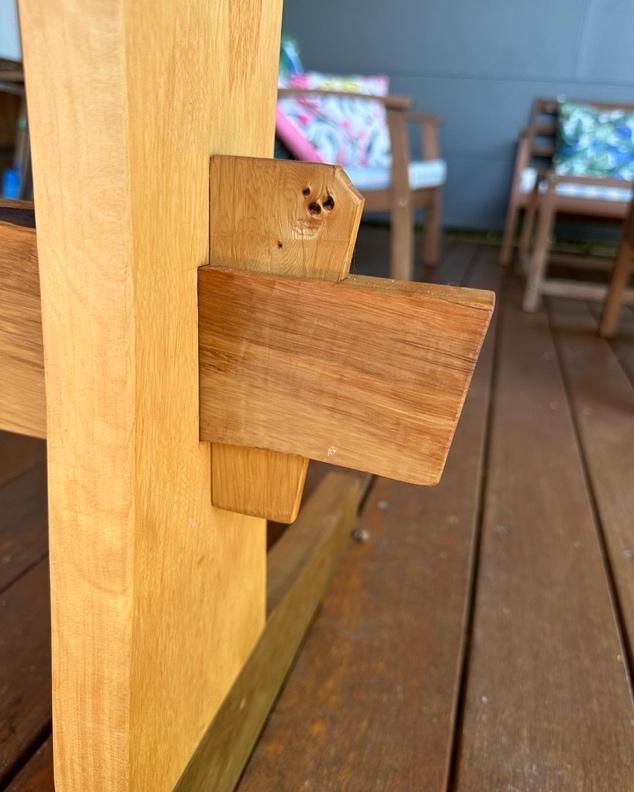
This clever and effective design detail is unique to Japanese tools to the best of your humble servant’s knowledge. We will look at this design detail more in the next article in this series.

The Point

What does any of this have to do with sharpening? These design details cleverly turn potential disadvantages into distinct advantages you need to understand when sharpening Japanese woodworking blades.

For instance, the layer of high-carbon steel laminated into our chisels and planes is usually 65~66 HRc in hardness. Western blades are made of a single uniform piece of steel heat-treated to approximately 50~55 HRc to make the tool softer/tougher thereby limiting breakage while sacrificing the longevity of a blade’s sharp edge, the most important performance criteria in a quality cutting tool, IMHO. The extra hardness of the Japanese blade helps it stay sharper longer, an important benefit if your time is worth anything. This is good.
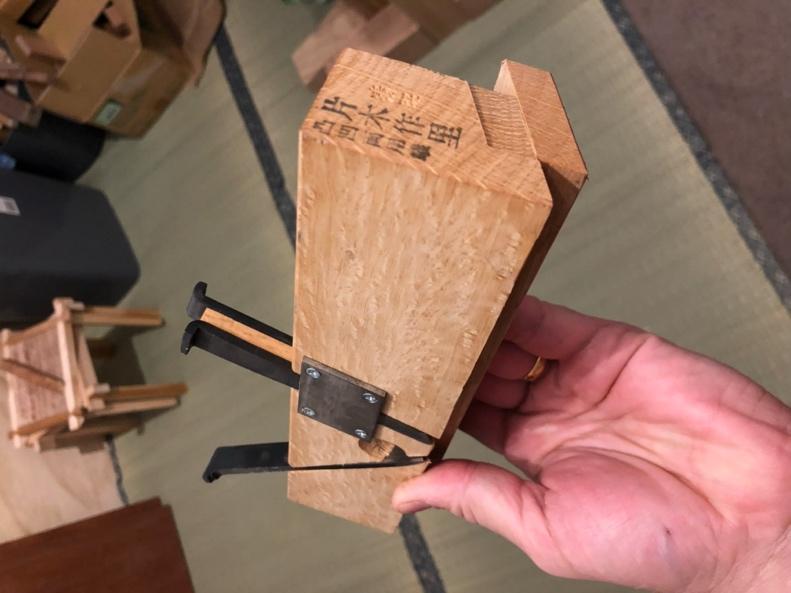
But if the entire blade were made of a solid piece of this extra-hard steel, it would a royal pain in the tukus to sharpen, I guarantee you. It would also break. Oh my, that would be bad.

The softer low-carbon/no-carbon steel or iron jigane body, however, is much softer and easily abraded making it possible to keep the hard steel layer thin, and therefore easily abraded, while protecting it from breaking. This is good.

Unlike the blade’s bevel, however, the ura (or “flat” as it is called in Western chisels) is all one-piece of hard steel. Without the hollow-ground uratsuki depression, you would need to abrade all that hard steel at one time to initially flatten and regularly sharpen the blade, a necessity I guarantee would ruin your mellow mood even if you consumed massive quantities of controlled substances with the fervor Beldar and Prymaat exhibit when sucking down triple-ply toilet tissue. But with the addition of the ura detail, we only need to abrade the perimeter planar lands (the shiny areas in the photos above) surrounding the ura. This is exceedingly good.

The ura with its lands surrounding the “uratsuki” depression makes it easier and quicker to not only sharpen the blade, but also to keep the “flat” planar (in a single plane). Without the ura, such a hard blade would be difficult to maintain planar and frustrating to sharpen. With the addition of the ura, however, the blade is genius.

An important skill to learn when sharpening Japanese blades is how to maintain the lamination and ura effectively. We will discuss this subject more in future posts, including the final article in this series.

Conclusion

If you didn’t learn at least three new things from this post then you are either very smart or weren’t paying attention. ¯\_(ツ)_/¯

In the next installment in this bodice-ripping tale of romance and derring-do we will examine the hollow-ground “Ura” in more detail. It’s important enough to deserve a special post.

YMHOS

It is not my intention to be fulsome, but I confess that I covet your skull.”
Sir Arthur Conan Doyle, The Hound of the Baskervilles

If you have questions or would like to learn more about our tools, please click the “Pricelist” link here or at the top of the page and use the “Contact Us” form located immediately below.

Please share your insights and comments with everyone in the form located further below labeled “Leave a Reply.” We aren’t evil Google, fascist facebook, or thuggish Twitter and so won’t sell, share, or profitably “misplace” your information. If I lie may I cough up a hairball during every meal.

← Back

Thank you for your response. ✨

Leave a comment

Sharpening Part 8 – Soft Iron 地金

The fissured and cracked jigane of a 70mm plane blade forged by Usui Kengo, another Niigata blacksmith (RIP). Notice the rod which retains the chipbreaker is non-existent, replaced by two short stubs. An elegant detail in this plane body by Ito-san (Soh 宗).

If you can’t explain it to a six year old, you don’t understand it yourself.

Albert Einstein

In the previous article about sharpening Japanese woodworking tool blades we looked primarily at the nature of the hard high-carbon steel used in making woodworking blades. In this post your humble servant will try to dispel some of the confusion that surrounds the other metal used in making most Japanese knives, axes and woodworking blades, namely the soft low-carbon/no-carbon steel called “Jigane” (地金). I hope this brief explanation will improve Beloved Customer’s understanding of some Japanese tools and aid your sharpening efforts.

Sources of Jigane

Most Japanese woodworking blades, and many knives, are comprised of a thin piece of hard high-carbon steel, discussed in your humble servant’s previous article in this series, forge-weld laminated to a larger and thicker piece of softer low-carbon steel or wrought iron called “Jigane” (jee/gah/neh 地金) in Japanese, which translates directly to “ground metal.”

We will discuss this bi-metal lamination more in the next post in this series, but for now take my word that it is essential to the performance of many types of Japanese cutting tools nowadays, and for many centuries was also critical to manufacturing cutting tools in America and Europe as well.

The best jigane material for plane blades is said to be scrap iron salvaged from the boilers of old trains, boats, and factories, etc. having been subjected to thousands of heating and cooling cycles during their decades of service driving out most of the carbon, indeed making the iron very soft to the point of weakness.

The most desirable jigane for plane blades is therefore called “tired” iron, named so because it is not only soft, but because it looks weak and exhibits a visible grain along with cracks and imperfections which those well-versed in Japanese plane blades covet.

A pile of jigane, probably old salvaged structural steel. Looks like boards of old wood, but it ain’t.

Wrought Iron Production

Nowadays, this very low-carbon steel, also known as “ wrought iron,” is not produced in any volume for several reasons. First, demand is just too low to make it worthwhile to manufacture. Hand-forged ornamental iron is the only commercial usage besides Japanese tools of which your humble servant is aware, relatively microscopic markets. In fact, a constant complaint from ornamental iron producers is the difficulty of working the relatively hard material available to them nowadays.

The second reason is that steel production processes have changed drastically in the last 150 years. For instance, it used to be that steel began as iron ore, basically rocks, which were crushed, melted and refined into wrought iron, an intermediate product of steel production. Indeed, at the time this low-carbon product was much less expensive to produce than high-carbon steel and so was used for everything from the boilers, bridges, trains, ships and anchor chains mentioned above to axes, chisels, farming implements, machinery, what’s called “miscellaneous metals” in the construction industry, and of course plane blades. There are still a few surviving structures around that were made using this weaker material.

Nowadays, things are different. With high temperatures more easily attainable than they were prior to the 1850’s, manufacturing techniques have advanced to the point that carbon is incorporated into the steel automatically entirely eliminating the low-carbon wrought iron intermediate product.

Also, scrap metal has become critical to steel manufacturing processes nowadays. Remember what happened to steel prices worldwide when bloody-handed China was buying up huge volumes of scrap metal worldwide for its Olympic infrastructure building projects?

I think we can agree that this energy-efficient cost-reducing recycling of natural materials is a very good thing. But it does have a tiny downside, namely that most commercial scrap metal available in any useful volume today has been cycled through the modern steel-manufacturing process many times and already contains not only high levels of carbon, relatively speaking, but alloys such as chrome, molybdenum, and nickel from previous melting pots. Indeed, undesirable chemicals such as phosphorus, sulfur and silica tend to be high in typical scrap metal, not much of a problem for use in the construction, automotive, and shipping industries but a serious problem for tool steels.

In summary, wrought iron simply isn’t made anymore because it is neither an intermediate product nor a profitable one.

Japanese blacksmiths making high-quality plane blades nowadays mostly use wrought iron recycled from old anchor chains, old iron bridges, or other recycled structural components. If you see a hole in a plane blade, like the extra-wide plane blade pictured below, it once housed a rivet. Yes, structural steel was once connected with hot rivets instead of bolts. Hi-tensile modern bolts are decidedly better if less romantic.

A plane blade with an old rivet hole in its face, probably from an old iron bridge that once stood in Yokohama and which was recycled many years ago.

Plane Blades

A plane blade by Ogata-san in his “Nami no Hana” series using a special version of Swedish Asaab K-120 steel. Notice not only the fissures and defects, but also the striations and grain typical of soft, tired “wrought iron.”

Mr. Takeo Nakano (see his photo below) makes our plane blades. He is a kind, unassuming man in the best tradition of Japanese craftsmen with the outward appearance of a sedentary grandfather, but when using hammer and tongs at his forge within his dark and smoky smithy, his posture and visage resemble that of an intense Vulcan reinforcing the steel gates barricading the world of light against a demon onslaught. Oh my!

Like nearly all the plane blacksmiths in Niigata, he uses scrap iron obtained in a single lot many years ago from an iron bridge that was dismantled in Yokohama Japan.

Mr. Nakano at home

I am told that most of the jigane used for plane blades in Hyogo Prefecture is old recycled anchor chains from a ship knacker.

The back of the same Usui plane blade. Notice the cracks and voids visible in this excellent jigane exposed at the polished bevel. Very wabi-sabi. This jigane was once part of an iron bridge in the city of Yokohama, Japan.

In the case of plane blades, structural strength is not critical, so laminating a thin layer of high-carbon steel forming the cutting edge to a soft iron body is adequate. Indeed, the thicker the hard steel layer, the more time and effort it takes to sharpen the blade, so in a high-quality blade the thicknesses of the high-carbon steel layer and the soft jigane body will be carefully balanced to ensure the blade’s bevel rides the sharpening stones nicely and can be quickly abraded.

More inexpensive plane blades are forged using the same strip jigane used for chisels, a material harder than the ideal for plane blades.

Chisel Blades

In the case of chisels, while ease of sharpening is still important, the body and neck must be harder/stiffer to prevent them from bending, so a different, stiffer variety of jigane with a higher carbon content and fewer defects is used, and the steel layer is typically made thicker.

The jigane used by our chisel blacksmiths is a commercial product not produced anymore (thank goodness they have stockpiles) called “gokunantetsu” 極軟鉄 which translates directly to “extremely soft iron.” With a carbon content of 0.04~0.07%, a better description would be “very low carbon steel.” When heated and quenched, it doesn’t harden significantly.

The adventure will continue in the next exciting episode where we will bring it all together into a blade. Don’t forget to have popcorn and jujubes on-hand!

YMHOS

If you have questions or would like to learn more about our tools, please click the “Pricelist” link here or at the top of the page and use the “Contact Us” form located immediately below.

Please share your insights and comments with everyone in the form located further below labeled “Leave a Reply.” We aren’t evil Google, fascist facebook, or thuggish Twitter and so won’t sell, share, or profitably “misplace” your information. If I lie may the fleas of a thousand camels infest my crotch.

← Back

Thank you for your response. ✨

Leave a comment

Sharpening Part 7 – The Alchemy of Hard Steel 鋼の錬金術

An Alchemist and his assistants working late at night in his workshop.

Behold, I have created the smith that bloweth the coals in the fire, and that bringeth forth an instrument for his work.

Isaiah 54:16 KJV

In the previous post we looked at some of the supernatural aspects of making and forging steel. In this post we will examine some alchemical aspects of woodworking blades, in the particular the iron and steel used to make them and the related chemistry of sharpness and sharpening.

This post could be very technical, but your humble servant has simplified the description of chemical processes to make it easier for the non-technical Gentle Reader to follow. Please bear with me.

The Alchemy of Mutating Iron to Steel

When carbon is combined with iron in the right proportion, steel is formed. This mutation is easily accomplished nowadays, but for most of human history it was a fiendishly difficult, chancy, expensive process. No wonder those who could accomplish the deed were attributed with magical powers.

But just mixing chemicals does not yield a useful cutting tool. No, the blacksmith must make the steel hard enough to hold a cutting edge, but tough enough to endure actual work. The catalyst for this mutation is heat. The ability to create a fire hot enough to melt iron was, until fairly recently on the scale of human history, the biggest hurdle to producing quality steel consistently.

If steel is heated to within a specific range of temperatures (difficult to measure by eye) and then suddenly cooled, crystalline structures containing small, very hard and relatively brittle crystals called carbides form within a softer matrix of iron. These hard carbides supported in this rigid crystalline structure are what do the serious job of cutting, not the softer matrix.

At the extreme cutting edge, this structure might be compared to a modern circular saw blade comprised of a relatively soft body to which is attached very hard tungsten carbide cutting tips.

A steel blade dulls when the crystalline structure either shatters, or the pressure and friction of cutting wears away or cracks the softer supporting matrix, allowing the carbides to be torn from the matrix leaving behind gaps of soft, blunt metal. The larger the carbide clumps are and the greater the distance between them, the more easily they are shattered and torn away, and the duller a blade becomes with each crystal’s failure.

In a low-quality blade, and given the same amount of carbon in a fixed volume of steel, the crystals will form into relatively large and isolated clumps separated by wide rivers and lakes of softer metal, as seen from the viewpoint of a carbide. The steel will crack along these weaker pathways when stressed, and when cutting, the softer material in these lakes and rivers will erode first, leaving the desireable carbide clumps unsupported and more vulnerable to failure.

A photograph of Shirogami No.2 high-carbon steel following heat treatment and tempering. In this case, the temperatures used were less than ideal resulting in the irregular crystalline structure shown. The black material is carbon, the grey material is converted steel, and the whitish areas are soft, unconverted iron, points of natural weakness and paths of failure in the steel blade, not acceptable in a high-quality hand-forged blade.
The same steel shown above but following quenching and tempering using proper temperatures. The converted steel crystals are small and more evenly distributed. Islands of unconverted carbon and lakes of soft unconverted iron do not remain. This is a sample of ideal high-carbon steel, and is typical of the crystalline structure of the blades of our chisels, planes and kiridashi.

In a high-quality steel blade, by comparison, and given the same amount of carbon in a fixed volume of steel, the crystalline clumps are comparatively smaller and distributed more evenly throughout the matrix making it more resistant to erosion, and the carbide crystals more resistant to damage. Such steel is called “fine grained,” and has been highly prized since ancient times for its relative toughness and ability to become very sharp and stay sharp for a long time. This is the steel preferred by woodworking professionals in Japan and is the only kind found in our tools. Without exception.

Sadly, this crystalline structure is not visible to the naked eye, and anyone who says differently is trying to sell Beloved Customer something brown and smelly, probably with a side dish of flies.

Impurities and Alloys

Other than excellent and abundant water, endless forests, mountains overgrown with wonderful trees, and diligent people, the islands of Japan are poor in most of the natural resources critical to industrialization, including iron ore, coal, and petroleum. Prior to the mass importation of such resources after 1854, the best source of iron in Japan had been black sand (satetsu 砂鉄) found in rivers. The article at the following link details some of these traditional Japanese production methods: A Story of a Few Steels

Regardless of their source, all iron ores naturally contain impurities such as phosphorus, sulfur, or silicon to one degree or another. When these impurities exceed acceptable limits, they can weaken the steel, make it brittle or tend to warp badly, or make heat treating results inconsistent. They are often expensive to remove.

Nagasaki Bay, the only Japanese port open to Western traders between 1639 and 1854, with primarily only Dutch ships permitted entrance.

There are three approaches commonly used to minimize the negative effects of these difficult-to-remove impurities. The first is simple avoidance of the problem by employing iron ore and scrap metal free of excess amounts of these contaminants. Such ore and scrap are available, but they are not found everywhere and are relatively expensive. For centuries, the purest iron ore has been mined in Sweden.

The second approach is to add purer iron or carefully sorted and tested scrap steel to the melting pot thereby reducing the percentages of the harmful contaminants, a technique called “ solution by dilution.”

Nakaya Takijiro’s saw forge in the floor of his smithy, originally made by his master’s master’s master for forging swords

The third fix is to add chemicals such as chrome, molybdenum, nickel, tungsten, vanadium and even lead to the pot forming steel “alloys” to help overcome the detrimental effects of natural impurities, specifically those related to brittleness, warping and unpredictable heat treatment. Some additives will make the steel more resistant to abrasion and corrosion, or even easier to cast, drop-forge, or machine.

Some steel alloys have serious advantages over plain high-carbon steel in mass-production, for example reducing material costs by allowing the use of cheaper lower-grade iron ore and scrap metal, or improved working and heat-treating characteristics making it possible to achieve higher productivity with fewer rejects even when worked by low-skill workers.

But the addition of these chemicals is not all blue bunnies and fairy farts because edged tools made from high-alloy steels typically have some disadvantages too. For instance, additives like chrome, nickel, molybdenum, vanadium and especially tungsten are costly. And due to the crystalline structure that develops in many high-alloy steels, products simply cannot be made as sharp as plain high-carbon steel, and are more difficult and time-consuming to sharpen by hand.

Some manufacturers cite the higher costs of high-alloy steels to justify higher prices for their products. However, what they never say out-loud is that labor costs are much much less when using high-alloy steel because skilled workers are not necessary. And because high-alloy steels produce fewer rejects, quality control is easier, overall productivity is higher, warranty problems are fewer, and profitability is increased. Indeed, without high-alloy steels, manufacturers would need to train and hire actual skilled workers and professionals instead of uneducated seasonal workers thereby destroying the Wally World mass-production model that is the foundation of modern society. Egads! Walmart’s shelves would be bare!

Our blacksmiths are not part of the Wally World production model, but make only professional-grade tools for craftsmen that value ease of sharpening, edge retention, and cutting performance above corporate profits. They charge more for plain high-carbon steel blades than for high-alloy steel products because labor and reject costs are higher.

So if a manufacturer brags about the excellence of the high-alloy steels they are using, rest assured increased profits are their motivation, not improved cutting performance. Caveat emptor, old son.

Japanese Steels

Varieties

The best plane and chisel blades are made from plain, high-purity, high-carbon steel. In Japan, the very best such steel is made by Hitachi Metals mostly using Swedish pig iron and carefully tested industrial scrap (vs used rebar and old car bumpers), and is designated Shirogamiko No.1 (白紙鋼 1 号 White-label steel No. 1). They also make a steel designated Shirogami No.2 steel containing less carbon. Another excellent steel for plane and chisel blades is designated Aogamiko No.1 steel (青紙鋼 Blue-label steel).

Aogami steel, like Shirogami steel, is made from extremely pure iron, but a bit of chrome and tungsten are added to make Aogami steel easier to heat treat with less warping. Aogami can be made very sharp, but it is not quite as easy or as pleasant to sharpen as Shirogami. Some of the plain high-carbon Swedish steels are also excellent.

If worked expertly, these steels consistently produce the highest quality “fine-grained” steel blades.

Sharpening

Let’s compare the sharpening characteristics of these two steels. To begin with Shirogami steel is easy, indeed pleasant, to sharpen. It rides stones nicely and abrades quickly in a controlled manner.

Aogami steel, by comparison, is neither difficult nor unpleasant to sharpen, but it is different from Shirogami steel in subtle ways. It takes a few more strokes to sharpen, and feels “stickier” on the stones, but it will still produce fine-grain steel blades and performs well.

Inexperienced people lacking advanced sharpening skills typically can’t tell the difference between blades made from Shirogami, Aogami or Swedish steel and steels of lesser quality. But due to the difficulty of forging and heat treating Shirogami or other plain high-carbon steels, a blacksmith that routinely uses them will simply be more skilled and have better QC procedures than those whose skills limit them to using only less-sensitive high-alloy steels.

Professional Japanese woodworkers insist on chisel blades made from Shirogami No.1 steel. Some prefer Aogami No.1 for plane blades believing the edge holds up a bit better. At C&S Tools our plane blacksmith prefers to use Aogami because it is easier to work and more productive (especially in the case of carving chisels), but for a little extra they are happy to forge blades from Shirogami Steel.

I own and use Japanese planes made from Shirogami, Aogami, Aogami Super, Swedish steel, and a British steel called “Inukubi,” which translates to “dog neck,” a commercial steel imported to Japan from England (Andrews Steel) in the late 1800’s. Of these, Shirogami No.1 steel is my favorite. It’s a matter of personal taste.

Beware of a plane or chisel blacksmith that refuses to use plain high-carbon steel and tries to charge you more for blades made from Aogami or Aogami Super steel.

The Challenges of Working Plain High-Carbon Steel

What makes plain high-carbon steel so difficult to work, you ask? Your humble servant has never even forged a check much less a tool blade, but I will share with you what the blacksmiths I use and swordsmiths I know have told me in response to this question.

First, plain high-carbon steel is much more difficult to successfully heat treat because the range of allowable temperatures for forging and heat-treating is narrow. Heat it too hot and it will “burn” and be ruined. Quench it at too high or too low a temperature and it will not achieve the desired crystalline structure and/or hardness. Miss the appropriate range of temperatures and the blade may even crack, ruining it. Yikes! Please see the numbers and photos in the article linked to above.

Second, even if the temperatures are nuts-on, plain high-carbon steel has a nasty habit of warping and cracking during heat treating resulting in more rejects than alloy steels with additives such as chrome, tungsten or molybdenum. Strange as it may seem, when the crystalline structures that make steel useful form during quenching, they increase the blade’s volume. This change produces differential expansion causing the metal to warp, a troublesome characteristic that can be more or less controlled, or at least compensated for, by a skillful blacksmith, but it takes real skill, extra work, and a bit of luck. Not just any old Barney can do it consistently, so when working plain high-carbon steel, a blacksmith needs to know his stuff and pay close attention.

Other than wastage due to rejects, it doesn’t cost more to forge and heat-treat a blade made from plain high-carbon steel, but it takes serious skills and dedication to quality control to make a living working it for 5+ decades.

Let me give you an example of skill and experience as it relates to warpage management of plain high-carbon steel.

The photo below is of a swordsmith the instant before he quenches a glowing hot sword blade made of tamahagane, a traditional type of plain high-carbon steel made from iron sand, in a water trough. Notice the condition of his smithy: he is working in the middle of the night, the time when the best magicians and alchemists have always done the most difficult jobs because temperatures are easier to judge without inconsistent sunlight confusing things. His posture and facial expression are tense because he is about to roll the bones and, in the blink of an eye, either succeed in the most risky part of making a sword, or fail wasting weeks or months of work and thousands of dollars worth of materials. Notice how straight the glowing blade is before the plunge.

A Japanese swordsmith with a blade made from high-carbon Tamahagane steel poised for quenching. The blade is straight at this point in the process. He has invested months of work into this blade to this point and a misjudgment or even bad luck in the next second can waste it all. Not a job for the inexperienced or timid.

Note that the quantity of crystalline carbides formed in a Japanese sword during the quench is greatest nearest the hard cutting edge, and cause that area of the blade to expand and warp the most. The swordsmith therefore forges the blade straight before quenching it in expectation of it warping to the intended curvature when the crystalline structures at the cutting edge form, as seen in the photo below. This curvature is an intentional design feature that takes years of experience to achieve in a controlled manner.

Related image
After quenching, the resulting warpage is dramatic. The swordsmith must plan for this distortion and shape the blade accordingly prior to the quench if he is to avoid unfortunate results. Tool blacksmiths are faced with the same challenges on a smaller scale but more frequently. Notice the mud applied to the blade before quenching intended to control the formation of crystalline structures and achieve differential hardness. The patterns the swordsmith made in applying this insulating mixture heavily influence the limits of differential heating in the blade as well as the appearance of the “hamon” pattern that develops.

If the swordsmith intended to make a straight sword blade, he would have a forged a reverse curvature into the blade to compensate for the warpage that occurs during quenching. Plane and chisel blades exhibit similar but less dramatic behavior due in part to the moderating effects of the low/no-carbon lamination.

A photo of both sides of an antiqueJapanese sword with the warpage being an intentional design feature

The thinner the piece of steel being heat-treated, the more unpredictable the warpage developed and more likely the blade will be to develop fatal cracks. Within limits, simple warpage can be corrected to a limited degree in thin blades during the first few seconds after quenching and/or tempering by bending and/or twisting the blade while it is still hot and malleable. These techniques do not work well in the case of thicker plane and chisel blades, however, so experienced blacksmiths don’t rely solely on corrective measures but anticipate warpage beforehand and create a curve or twist in the opposite direction when forging the blade to compensate. This takes skill and experience, and even then, some rejects are unavoidable.

Chemical alloys like chrome, molybdenum, and tungsten greatly reduce warping and the risk of cracking, so their benefits are huge.

None of this is mystical, but tools made from plain high-carbon steels such as Shirogami steel require more skill and experience than those possessed by factory workers, much less Chinese peasants, so mass-production is nearly impossible, labor costs are higher, profit margins are smaller, and advertising budgets are non-existent. No wonder such tools get little attention from the shills in the woodworking press.

While modern chemistry has unveiled the mystery of steel, it has only been during the last 70 years or so that metallurgical techniques were developed making it possible to understand the Mystery of Steel, and the tools to scientifically control the Alchemy of Steel are even younger.

The manufacture and working of steel are still magical processes that are the foundation of modern civilization. Be not deceived: while computer nerds, ijits with MBAs, and governments grifters take all the credit, without mastery of the alchemy of steel, human life on the mudball we call home would be short and brutal.

If you have good sharpening skills but haven’t yet tried chisel or plane blades made from Shirogami, Aogami or Asaab K-120 Swedish steel, you’re missing a treat.

In the next article in this magical series we will examine the genius of the soft iron component found in quality Japanese woodworking blades. Whether cat, bat or owl, please explain the details to your familiar to prepare them for the excitement to come!

YMHOS

If you have questions or would like to learn more about our tools, please click the “Pricelist” link here or at the top of the page and use the “Contact Us” form located immediately below.

Please share your insights and comments with everyone in the form located further below labeled “Leave a Reply.” We aren’t evil Google, fascist facebook, or thuggish Twitter and so won’t sell, share, or profitably “misplace” your information. If I lie may everything I eat taste like mud.

← Back

Thank you for your response. ✨

Leave a comment

Relevant Posts

The Story of a Few Steels