The Best Striking Chisel for the Job?

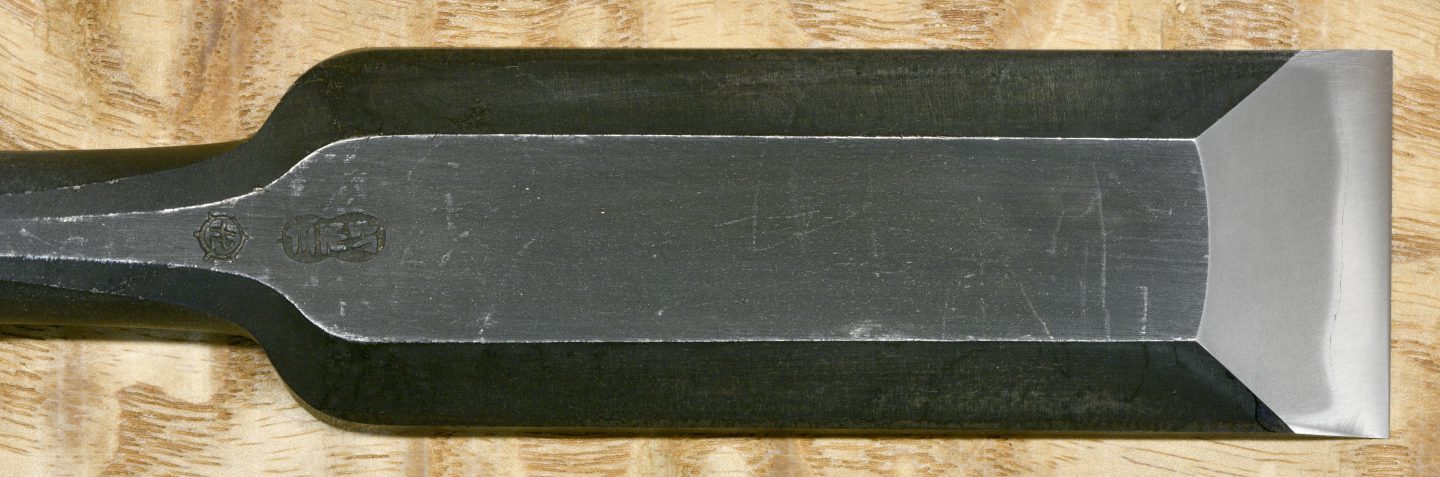
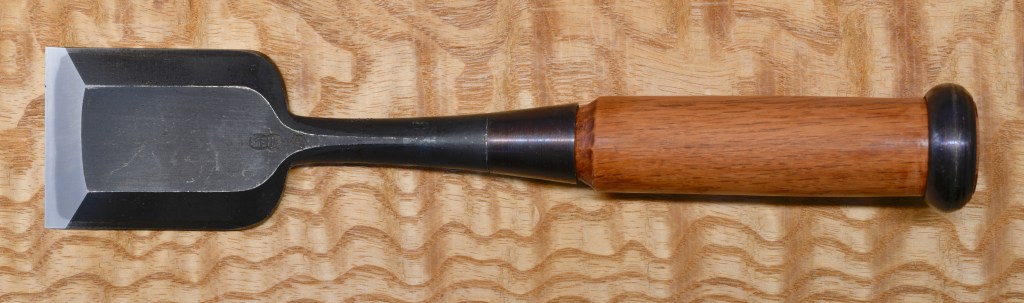
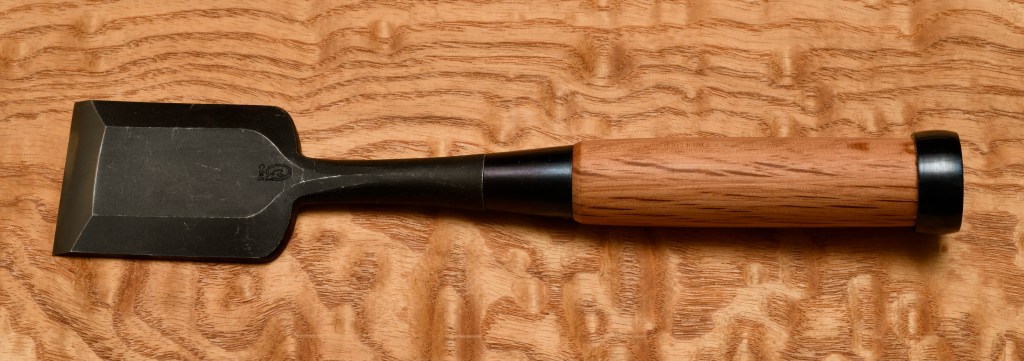
A 48mm oiirenomi by Hidari no Ichihiro

When you want to help people, you tell them the truth. When you want to help yourself, you tell them what they want to hear.

Thomas Sowell

A couple of questions prospective Beloved Customers frequently ask your humble servant is what variety Japanese chisel(s) they should purchase, and the best width(s).

In this article I will summarize the answers I most often offer, and list the advantages and disadvantages of 3 types of striking chisels. Perhaps it will be informative.

I started using Japanese chisels long before the internet was more than a group of linked university library research computers. I’ve learned a few things on the subject from Japanese language books over the years, but I’ve yet to read anything on the internet that was more than a regurgitation of marketing screeds and BS from self-proclaimed experts. Most of what I know about Japanese chisels I learned from Japanese blacksmiths and professional woodworkers in Japan, and from my own hands-on, trial and error experience using them to make a living.

Even after the internet expanded (or rather blew up like a dynamited outhouse) into world wide web we know nowadays, there was very little useful written information available in the English language anywhere regarding the varieties of Japanese chisels and how to maintain and use them. This frustration was my primary reason for establishing this website, in fact. But after starting this humble website I’ve noticed more and more people presenting themselves as experts on the internet who merely imitate, indeed plagiarize, what I’ve written. Do they do this to improve general knowledge on the subject of Japanese chisels, or do they have other motives?

Like monkeys playing trees, posers and copycats are fine entertainment no doubt, but will their stories based on mediocre knowledge and poor experience be of benefit to Gentle Reader? I encourage Gentle Readers to seek useful knowledge based on practical experience rather than ill-informed click bait.

Regarding my answers to the two questions listed above, let’s begin by considering the options I believe most likely to serve Gentle Reader best.

As this article: The Varieties of Japanese Chisels explains at length, there are two primary types of Japanese chisels: the tatakinomi striking chisel and the tsukinomi paring chisel. In this article we will examine only tatakinomi.
A 42mm oiirenomi by Sukezane

Tatakinomi (Striking Chisel)

The three types of chisels described below are categorized as “Tatakinomi” which translates directly to “striking chisel.” It’s name’s derived from the way one motivates it by “striking” the butt of its wooden handle with a steel hammer. No, not an inefficient, imprecise wooden mallet but a serious, differentially-hardened, high-carbon steel tool.

What is a Gennou Hammer?

Hammers to Use With Chisels Part 2 – Hammer Faces

Head Style & Weight

Tatakinomi, aka “striking chisels” are the best-known type of Japanese chisel, but there are other kinds, primarily “usunomi” or paring chisels.

Because high-quality chisels are not free, and because the powerful forces applied to tatakinomi place them at risk, it’s important that those you procure be durable, so let’s next consider consider some factors impact that always govern a chisel’s durability.

Keys to Chisel Durability

High-quality, hand-forged (vs. stamped, mass-produced) Japanese striking chisels differ from Western-style chisels in that they are intended to be wacked hard all day with a steel hammer, treatment that will quickly destroy Western chisels, but which professional-grade, handmade Japanese chisels eat with chips and beer.

But why can our tataki chisels shrug-off abuse that would destroy all other chisels? There are three primary reasons. First, the handles are made of either Japanese red oak or Japanese white oak, varieties of hardwood native to Japan significantly denser and stronger than all species of American and European oak.

The second reason is that the handle is reinforced by a steel ferrule in the shape of a hollow “truncated cone,” called a “kuchigane,” which translates to “mouth steel,” carefully fitted to the contoured blade end of the handle.

This component doesn’t just perch on the handle like a pelican on a post but squeezes and compresses the wood fibers around the tang of the blade making it nearly impossible for the impact forces of a hand-operated hammer to split the handle. In fact, the harder the handle is struck the tighter the kuchigane becomes, the more constraining hoop pressure it applies to handle. This is a genius design detail, one commonly found in many ancient weapons (swords, spears, and pole weapons) around the world, BTW. I’ll be dipped in chocolate and sold as a hairy truffle if I can figure out why European and America tool makers abandoned this technique a hundred or so years ago. Perchance an early example of enshittification?

The third reason the handles of hand-made Japanese chisels can eat up such abuse without getting ulcers is a piece of furniture called the “crown,” what some people vulgarly call the “hoop,” a steel band with a particular cross-section encircling the butt end of the handle. If the crown and handle are fitted properly (the majority of Japanese chisels sold overseas are not, BTW), this crown will apply tremendous hoop force on the wood preventing it from splitting.

An important detail worth knowing is that this crown doesn’t just sit on the handle like a metal hatband, but is designed to slowly move down the length of the handle as the handle becomes shorter over the years providing continuous support for the handle without the need for future adjustment. Ergo the nickname “sagariwa.” Clever stuff.

Another less-obvious reason high-quality chisels can happily endure such abuse is the fact that the handles are hand-turned of dense, well-dried, defect-free Japanese hardwood, and hand-fitted to the blade by an experienced Japanese craftsman who specializes in making handles (Mr. Hasegawa, in our case) with many years of experience, to ensure a proper fit between wood and steel components. Such handles cannot be procured in bulk from Chinese farmers. Why does this matter? A sloppy fit between steel and wood will not only reduce a chisel’s useful lifespan, but will actually reduce its efficiency, as you can tell by the strange harmonic vibrations they transmit to your hand.

The Three Types of Tatakinomi

Let’s next consider the three main types of tatakinomi, the oiirenomi, hantatakinomi, and atsunomi.
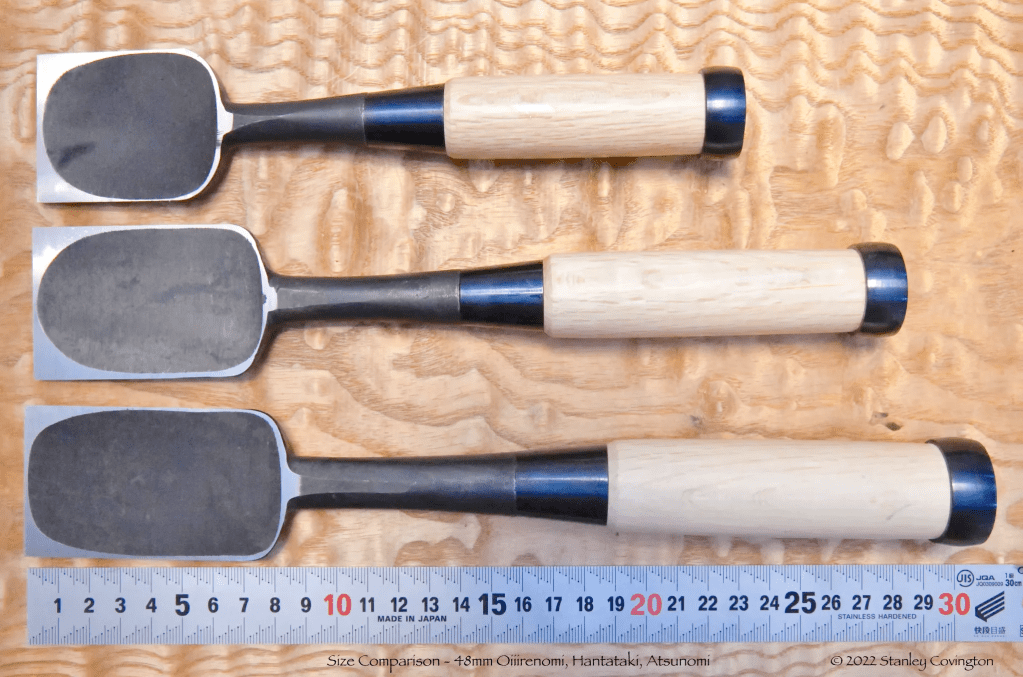
Top: 48mm mentori oiirenomi chisel. Sukezane brand OAL = 222mm, t = 8mm, wt = 226gm Center: 48mm mentori hantataki chisel. Nagamitsu brand OAL = 270mm, t = 9mm, wt = 356gm Bottom: 48mm Mentori atsunomi chisel. Sukemaru brand OAL = 295mm, t = 11mm, wt = 426gm All 3 chisels are fitted with Japanese white oak handles and black furniture

The Oiirenomi Chisel

The most popular type of tatakinomi striking chisel sold nowadays is the mentori oiirenomi, pronounced oh/ee/reh/noh/mee). This is the Japanese chisel best known outside Japan. A couple of variants are the older-style kakuuchi oiirenomi and the slimmer shinogi oiirenomi.

The oiirenomi is a smaller, lighter, more economical version of the bigger, older atsunomi style chisel. Just as I have done so often in answer to questions from prospective Beloved Customers, I’ve compared some of the key advantages and disadvantages of the oiirenomi compared to the hantataki and atsunomi below. Horses for courses.

Oiirenomi’s Advantages:

  • More compact (shorter and slimmer) than the atsumomi and hantataki chisels, the oiirenomi is extremely handy for making light cuts in tight spaces, for making furniture and cabinets, and doing installations. Being less bulky, oiirenomi take up less space in the toolbag/toolbox, and accordingly are easier to transport to and around the jobsite.
  • The oiirenomi’s lighter weight, compared to atsunomi and hantataki, makes them easier for those with weaker hands to use.
  • Oiirenomi can be motivated with a lighter hammer and/or less force for more precise work in some jobs.
  • Less costly than atsunomi and hantatakinomi.

Oiirenomi’s Disadvantages

  • While compact and lightweight, their blade, neck and handle are shorter in length than atsunomi and hantataki limiting their reach and making them unsuited for some deep cuts. This is seldom a problem when making furniture and cabinets, but their shorter reach may limit their effectiveness in some carpentry and timber framing projects.
  • Their reduced weight is achieved by reducing the amount of metal used and employing a shorter handle that some users with large hands sometimes find inconvenient.
  • Most importantly, the reduced weight is achieved by incorporating less metal in the blade, neck and shoulders making the oiirenomi relatively weaker and less durable when subjected to the heavy pounding required to cut the large joints and hog the large volume of wood required when timber framing. For the same reason, wider blades (42mm+) may not be adequately supported by the thinner neck and lighter shoulders of the oiirenomi.

The oiirenomi is perfect for most furniture and cabinetry tasks around the shop, and is very portable for jobsite use, but it may not be suited to heavy carpentry, timber framing or for use by those with large hands. I have smallish hands by Western male standards (I like to flatter myself they are “artisan size” (ツ)), and even for me oiirenomi are on the small size.

Professionals that use chisels from morning to night, however, prefer the atsunomi for even small jobs simply because it’s stronger, cuts with more authority and lasts much, much longer.

The Hanataki Chisel

The hantataki chisel is a larger, longer version of the oiirenomi, or depending on your viewpoint, a smaller version of the atsunomi. It has both advantages and disadvantages when compared its brothers.

Hantataki’s Advantages

  • Hantataki chisels are an “in-between” chisel built longer and somewhat beefier than oiirenomi chisels, but shorter and lighter than atsunomi chisels, depending on your viewpoint again. They take up less space in the toolbox/toolbag than atsunomi and are therefore easier to transport.
  • Their greater length compared to oiirenomi makes them handier for those with larger hands.
  • Hantataki can cut deeper/longer joints than oiirenomi can.
  • While not as heavy-duty as atsunomi, hantataki are significantly beefier and stronger than oiirenomi and therefore better suited to cutting joints in large timbers using heavier hammers. They make great chisels for carpentry work in the field.
  • Our hantataki chisels are priced nearly the same as our oiirenomi chisels, making them an economic choice.

Hantataki’s Disadvantages:

  • Hantataki chisels can’t cut as deeply as atsunomi, but this is seldom a serious limitation except in timber framing work.
  • While heavier and tougher than oiirenomi they are lighter than atsunomi. Horses for courses.
  • They are not as strong as atsunomi and may be at a disadvantage for some heavy timber framing jobs. Although we carry them in 54mm width, this may be a little too wide for the shoulder to adequately support during heavy use.

The Atsunomi Chisel

Atsunomi (ah/tsu/noh/mee) are the largest standard size chisel. There are special-order chisels with longer necks, such as the anayanomi, for cutting special joints (no longer made), but this is the chisel used for serious, heavy-duty carpentry and all timber framing jobs.

A 54mm anayanomi (a long-necked atsunomi) by Nora. The long neck is for making deep cuts.

Atsunomi means “thick chisel,” which explains it well. As an example, our 48mm wide Sukemaru-brand atsunomi are 295mm long (OAL) 11mm thick, with an 85mm long blade, 70mm long neck, and weigh 426 grams, almost twice the weight of our 48mm Sukezane-brand oiirenomi chisel.
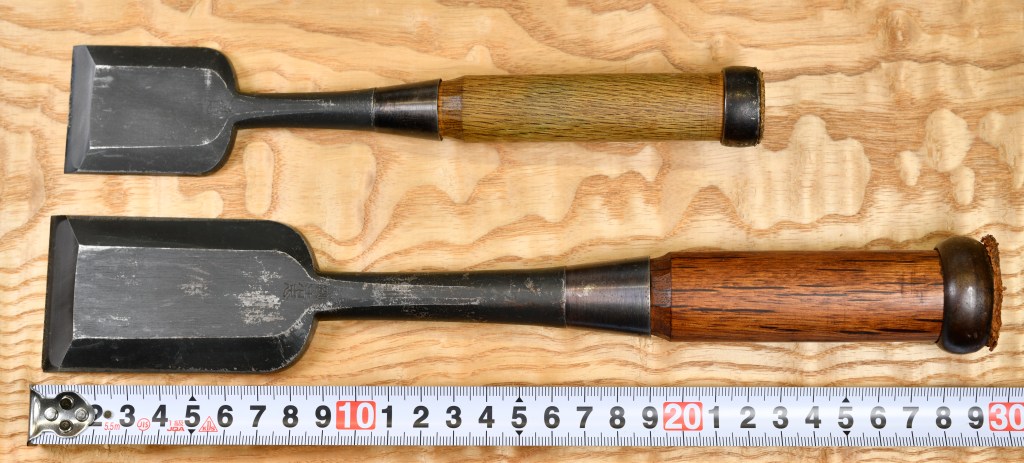
Two of your humble servants well-used chisels by Kiyotada. Top: Oiirenomi with white oak handle. Bottom: Atsunomi with red oak handle.

Atsunomi’s Advantages:

  • Long blade, neck and handle allow this chisel to make deep cuts in heavy timbers, this chisel’s greatest advantage.
  • Thicker blade and neck make the atsunomi much stronger and tougher for hard cutting all day long.
  • The extra mass of the atsunomi cushions the impulse shock acting on user’s hand and wrist joint compared to the same impulse forces acting through lighter oiirenomi or hantataki.

Atsunomi’s Disadvantages:

  • Being bulkier and heavier, transporting atsunomi by bus, train, bicycle or mare’s shank is relatively more work.
  • Their extra mass requires a heavier hammer to motivate in order to make the same cuts as the oiirenomi and hantataki. This requires a greater expenditure of energy,.
  • Being heavier, the user may need stronger hands and arms than when using smaller chisels.
  • Although the extra weight and increased moment of inertia makes the atsunomi more stable than other chisels, it requires greater skill when making delicate cuts.

Blade Width

“What’s best blade width for the job” is another question people always pose, but it’s a a bit more difficult to answer. The following are some points to consider.

First, if you will use the chisel(s) to cut mortises you either need to (1) determine in advance what width mortises you will need to cut; or (2) The likely range of mortises. The difficulty of answering these questions, and the fact that the answer varies from job to job, is why professionals end up owning more than one or two chisels.

But how to decide? If the mortise is fairly narrow, say 6~15mm, then owning a chisel the same width is most efficient. In the case of wider mortises, it’s often best to use a chisel a little narrower than the mortise hole, and then pare the walls to final dimension. Why? Because, unless you’ve had a lot of practice, and your chisel has tight tolerances, it may tend to bind in the mortise hole and maybe even gouge the sidewalls. But by paring to final dimensions, the width of the mortise hole can be kept within tolerances and the sidewalls kept free of gouges.

When all’s said and done, and when speed and precision are critical, it’s best to check, adjust and maintain the tolerances of your chisels.

Another point to keep in mind when planning mortises is that it’s almost always most efficient to match the width of the mortise to the dimension your chisel can most easily, precisely and consistently cut rather than planning the mortise width around some specific dimension, e.g. precisely 6mm. One then cuts each specific tenon to fit each specific mortise instead of some dimension on a drawing. Once you have your chisel setup properly and a mortise gauge with a matching setting, there will be no need to measure mortise width at all.

People always ask what 3 or 4 chisels they should purchase to get started making furniture, for instance. The easy answer is 6, 9, 12, 24mm. Why not wider? I love wide chisels, but if you only have a few chisels, you will need one on-hand that does a great job of paring. 24mm is about the maximum width the average guy can precisely motivate a chisel by hand without using a hammer. Of course, this capacity will vary with the joint being made and the hardness of the wood, but 24mm is standard.

While we’re on the subject of paring, the handles of oiirenomi are too short for a powerful grip and good control with two hands, and the steel crown tends to be hard on one’s hands. For these reasons, the usunomi paring chisel with its thinner, longer blade, neck and handle, and lack of a crown is ideal. If you don’t have any yet, you will find usunomi to be wonderful tools and great friends.

Conclusion:

The oiirenomi is a compact, lightweight, nimble and less-costly striking chisel suited for light cuts with moderate weight hammers. It’s the typical starter chisel for Japanese woodworkers, and the only variety of Japanese chisel most Western woodworkers know. Perfect for making furniture, cabinets, and most joinery. Being lightweight, it will not endure long sessions being pounded on with heavy hammers. Also, being short, it may not be suited for those with large hands.

The hantataki chisel by comparison is slightly larger than the oiirenomi. It’s relatively inexpensive, not especially heavy, and can cut deeper joints. It’s perfect for those with larger hands that find the oiirenomi uncomfortable to use. And it will do everything the oiirenomi can and more.

The atsunomi is the largest, heaviest, strongest and most durable of the Japanese chisels. It’s ideal for heavy work such as timber framing and wasting large amounts of wood quickly. Besides carpenters and timber framers, many professional craftsmen in Japan, even those that never work on construction sites, prefer to use atsunomi even for delicate work because of their relatively longer blades and cost-effectiveness.

Because of its greater size and weight, the atsunomi is not as nimble as the smaller varieties of tatakinomi and demands greater strength and skill of the user. But on the other hand, it’s very stable in the cut, wastes wood with impressive gravitas, and will endure many decades of hard daily use in professional situations without complaining.

YMHOS

A set of fusuma sliding doors painted by Kano Hogai with the classic motifs of “ancient” plum tree, bamboo, and birds. All it lacks is pine trees, but those were no doubt painted on adjoining doors back in the day. These panels are designated “natural treasures.”

The Varieties of Japanese Chisels

The Mentori Oiirenomi (面取追入鑿)

The Kakuuchi Oiirenomi (角打追入鑿)

The Hantataki Chisel

The Atsunomi (厚鑿)

The Usunomi Paring Chisel

If you have questions or would like to learn more about our tools, please click the see the “Pricelist” link here or at the top of the page and use the “Contact Us” form located immediately below.

Please share your insights and comments with everyone in the form located further below labeled “Leave a Reply.” We aren’t evil Google, megalomaniac Meta, or sticky-fingered Apple and so won’t sell, share, or profitably “misplace” your information. If I lie may a Bandersnatch fruminate all over my face!

Please Leave a Reply

← Back

Thank you for your response. ✨

Sharpening Part 16 – Pixie Dust

Related image

Ashes to ashes, dust to dust, if the women don’t get you then the whiskey must.

Carl Sandburg

In the previous article in this series of articles about sharpening woodworking tools we examined sharpening stones, the minimum set your humble servant recommends, those I typically use, and the most important stone in any set.

In this edition we will shift our focus to things that can go wrong when sharpening, including supernatural influences.

Dust Contamination

As I mentioned in the previous post in this series I almost never take a 10,000+ grit synthetic finishing stone or natural finishing stone to jobsites. This decision is based on personal observation under practical conditions: Jobsites are rough and dirty places, and stones are fragile. 

Iron Pixies are rabid fans of Lingerie Football. Don’t hang posters or watch games in your workshop if you want to avoid crowds of the tiny beer-guzzling fiends.

Even if Murphy is drunk and the resident Iron Pixies are distracted watching Lingerie Football on the boob tube (pun intended), airborne dust at the jobsite will always instantly degrade an expensive 12,000 grit rated stone to an effective 4,000 grit or less, making a fragile, expensive, ultra fine-grit stone pointless. How clean is your workplace? Something to think about. Seriously.

This is not just a theory that sprouted from my overactive imagination like a dandelion on a dung pile, but is scientifically verifiable. Give it try.

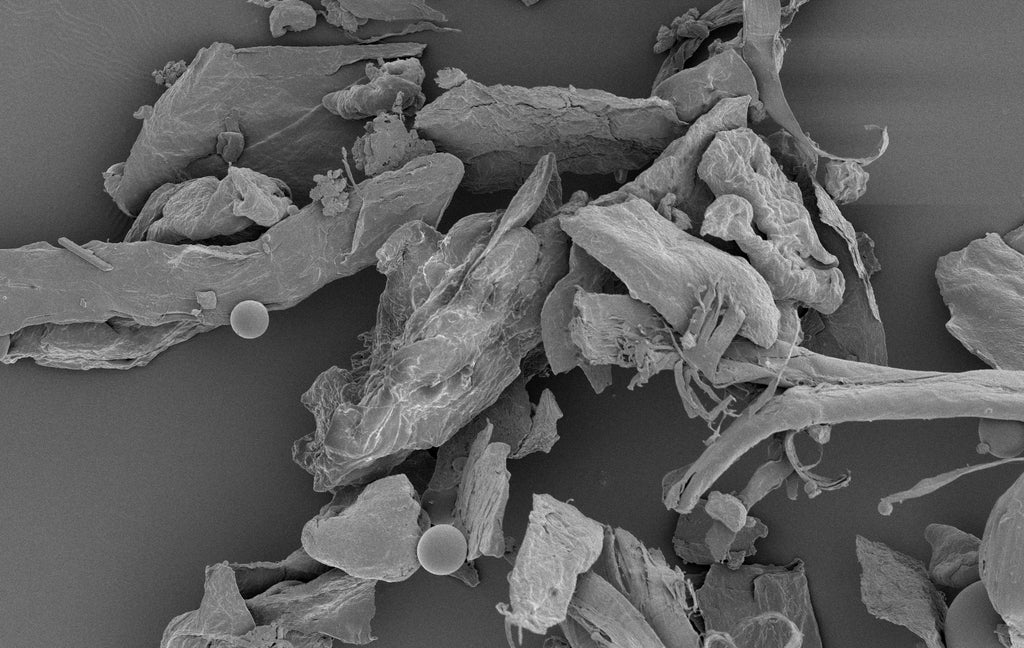
Get out your microscope or high-power loupe. Place a clean glass slide near where you will be sharpening. 120 minutes later, examine the slide and count the dust specks. How did they get there? Dust is in the air quite naturally, but vehicular and foot traffic kick up lots more.

Most of those dust specs are larger and some are just as hard as the grit that makes up your finishing stone. Imagine what happens to your blade when those pieces of relatively large, hard grit get mixed into the stone slurry, or become embedded into the stone’s surface. Not a pleasant thought.

Related image

Dust contamination even has historical precedence. Japanese sword sharpeners traditionally do their best work during the rainy season when there is less dust in the air to contaminate their stones. 

Professionals that polish pianos, stone, glass and jewels are also sticklers for eliminating dust contamination.

Just design and build a few cleanrooms for picky customers with SEMs (scanning electron microscopes), or with lens coating equipment, or who make pharmaceuticals and you will get an education about dust and the problems it creates quickly.

What dust do we find at construction job sites or workshops? First, assuming we are working at a building project, there are exterior sources of dust. Unlike a house, the doors and windows are usually open to gain maximum circulation, even when dusty landscaping operations are ongoing and trucks carrying materials and garbage are running everywhere kicking up clouds of dust.

Second, unless you have the jobsite entirely to yourself, there are usually other trades inside the building grinding, sanding, cutting and walking around kicking dust up into the air too. The most pernicious dust on the jobsite is drywall and joint compound. This white fluffy dust appears harmless, but it contains tiny granite silica particles harder than steel, and even bits of glass fiber, that float around and settle on everything. They are a health hazard that has put more than one person in the hospital with respiratory problems. They will contaminate your sharpening stones sure as eggses is eggses.

Sandpaper, sanding discs, grinders and angle grinders in operation also spray millions of tiny hard particles everywhere, many of which float in the air and can travel some distance before settling, especially inside an enclosed building or workshop.

Does your business or home workshop have a large door facing a public road with cars and trucks going back and forth near it? Do people with muddy boots come in and out? Are dirty pallets with piles of dirt hidden on the bottom boards offloaded inside? Do you use sanders or grinders in your workshop?

If you are sharpening outside, or at a dusty jobsite, or inside a dusty workshop, and especially if you regularly use sanders and grinders there, I recommend the following procedures before you use fine-grit stones:

  1. Try to locate your sharpening area away from foot traffic, grinding and sanding operations, and dusty areas;
  2. Sweep and vacuum the surrounding floors well, since it is the movement of feet that billows settled dust back up into the air in indoor spaces, and wait at least 15 minutes after sweeping for the dust to settle before sharpening;
  3. Wet the surrounding ground or floor with water to keep the dust down (this makes a big difference);
  4. Wrap a clean cloth or a sheet of clean newspaper around your fine stone when you are not using it for more than a couple of minutes to prevent airborne dust from settling on it;
  5. Scrub your fine stone under running water with dishwashing soap (neutral PH) and a clean natural-bristle brush before each use to remove dust and embedded grit.
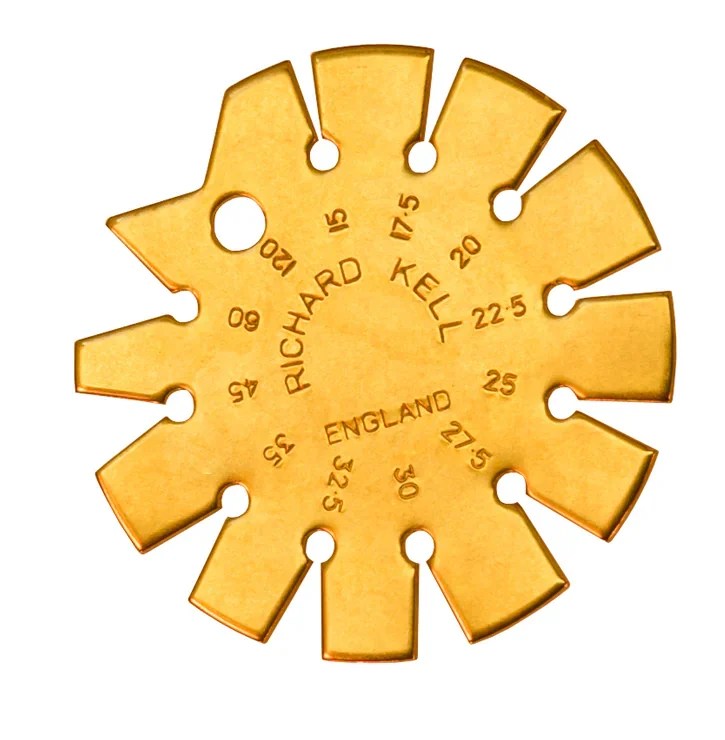
A compact and effective brass bevel angle gauge & talisman by Richard Kell

And for heaven sake, even if you can’t take your benchdogs with you everywhere, at least have a brass bevel angle gauge in your toolkit, and use it every time you sharpen because, not only will it help you do a better job of sharpening but it will keep the pernicious pixies at bay. In fact, whenever I undertake a serious sharpening job I hang my Richard Kell Solid Brass Bevel Angle Gauge around my neck from a red string as a talisman; brass because it contains no iron for pixies to covet, and the zinc & copper alloy that is brass tastes bad and gives them terrible wind; and a red string because all tribes of the fae strongly dislike that color.

Following are few references regarding silica and construction dust: Silica-Safe.org Center for Disease Control. Makes a fella wana wear a filter mask to bed!

YMHOS

The legal team hard at work digging up dirt. Everyone of the buggers is a Harvard graduate, of course.

If you have questions or would like to learn more about our tools, please click the “Pricelist” link here or at the top of the page and use the “Contact Us” form located immediately below.

Please share your insights and comments with everyone in the form located further below labeled “Leave a Reply.” We aren’t evil Google, fascist facebook, or thuggish Twitter and so won’t sell, share, or profitably “misplace” your information. If I lie may the fleas of a thousand camels infest my armpits.

← Back

Thank you for your response. ✨

Please Leave a Reply

Sharpening Part 8 – Soft Iron 地金

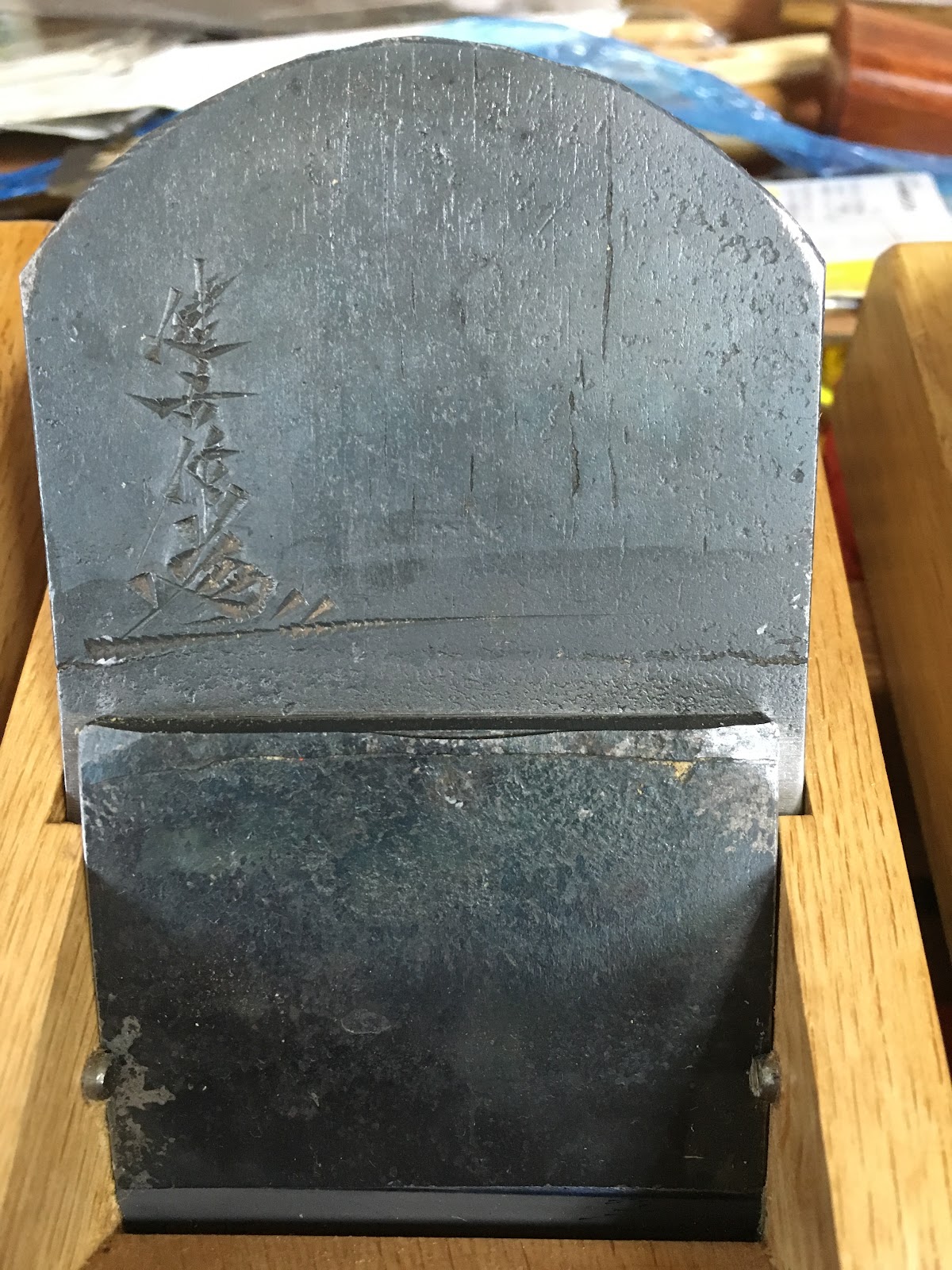
The fissured and cracked jigane of a 70mm plane blade forged by Usui Kengo, another Niigata blacksmith (RIP). Notice the rod which retains the chipbreaker is non-existent, replaced by two short stubs. An elegant detail in this plane body by Ito-san (Soh 宗).

If you can’t explain it to a six year old, you don’t understand it yourself.

Albert Einstein

In the previous article about sharpening Japanese woodworking tool blades we looked primarily at the nature of the hard high-carbon steel used in making woodworking blades. In this post your humble servant will try to dispel some of the confusion that surrounds the other metal used in making most Japanese knives, axes and woodworking blades, namely the soft low-carbon/no-carbon steel called “Jigane” (地金). I hope this brief explanation will improve Beloved Customer’s understanding of some Japanese tools and aid your sharpening efforts.

Sources of Jigane

Most Japanese woodworking blades, and many knives, are comprised of a thin piece of hard high-carbon steel, discussed in your humble servant’s previous article in this series, forge-weld laminated to a larger and thicker piece of softer low-carbon steel or wrought iron called “Jigane” (jee/gah/neh 地金) in Japanese, which translates directly to “ground metal.”

We will discuss this bi-metal lamination more in the next post in this series, but for now take my word that it is essential to the performance of many types of Japanese cutting tools nowadays, and for many centuries was also critical to manufacturing cutting tools in America and Europe as well.

The best jigane material for plane blades is said to be scrap iron salvaged from the boilers of old trains, boats, and factories, etc. having been subjected to thousands of heating and cooling cycles during their decades of service driving out most of the carbon, indeed making the iron very soft to the point of weakness.

The most desirable jigane for plane blades is therefore called “tired” iron, named so because it is not only soft, but because it looks weak and exhibits a visible grain along with cracks and imperfections which those well-versed in Japanese plane blades covet.

A pile of jigane, probably old salvaged structural steel. Looks like boards of old wood, but it ain’t.

Wrought Iron Production

Nowadays, this very low-carbon steel, also known as “ wrought iron,” is not produced in any volume for several reasons. First, demand is just too low to make it worthwhile to manufacture. Hand-forged ornamental iron is the only commercial usage besides Japanese tools of which your humble servant is aware, relatively microscopic markets. In fact, a constant complaint from ornamental iron producers is the difficulty of working the relatively hard material available to them nowadays.

The second reason is that steel production processes have changed drastically in the last 150 years. For instance, it used to be that steel began as iron ore, basically rocks, which were crushed, melted and refined into wrought iron, an intermediate product of steel production. Indeed, at the time this low-carbon product was much less expensive to produce than high-carbon steel and so was used for everything from the boilers, bridges, trains, ships and anchor chains mentioned above to axes, chisels, farming implements, machinery, what’s called “miscellaneous metals” in the construction industry, and of course plane blades. There are still a few surviving structures around that were made using this weaker material.

Nowadays, things are different. With high temperatures more easily attainable than they were prior to the 1850’s, manufacturing techniques have advanced to the point that carbon is incorporated into the steel automatically entirely eliminating the low-carbon wrought iron intermediate product.

Also, scrap metal has become critical to steel manufacturing processes nowadays. Remember what happened to steel prices worldwide when bloody-handed China was buying up huge volumes of scrap metal worldwide for its Olympic infrastructure building projects?

I think we can agree that this energy-efficient cost-reducing recycling of natural materials is a very good thing. But it does have a tiny downside, namely that most commercial scrap metal available in any useful volume today has been cycled through the modern steel-manufacturing process many times and already contains not only high levels of carbon, relatively speaking, but alloys such as chrome, molybdenum, and nickel from previous melting pots. Indeed, undesirable chemicals such as phosphorus, sulfur and silica tend to be high in typical scrap metal, not much of a problem for use in the construction, automotive, and shipping industries but a serious problem for tool steels.

In summary, wrought iron simply isn’t made anymore because it is neither an intermediate product nor a profitable one.

Japanese blacksmiths making high-quality plane blades nowadays mostly use wrought iron recycled from old anchor chains, old iron bridges, or other recycled structural components. If you see a hole in a plane blade, like the extra-wide plane blade pictured below, it once housed a rivet. Yes, structural steel was once connected with hot rivets instead of bolts. Hi-tensile modern bolts are decidedly better if less romantic.

A plane blade with an old rivet hole in its face, probably from an old iron bridge that once stood in Yokohama and which was recycled many years ago.

Plane Blades

A plane blade by Ogata-san in his “Nami no Hana” series using a special version of Swedish Asaab K-120 steel. Notice not only the fissures and defects, but also the striations and grain typical of soft, tired “wrought iron.”

Mr. Takeo Nakano (see his photo below) makes our plane blades. He is a kind, unassuming man in the best tradition of Japanese craftsmen with the outward appearance of a sedentary grandfather, but when using hammer and tongs at his forge within his dark and smoky smithy, his posture and visage resemble that of an intense Vulcan reinforcing the steel gates barricading the world of light against a demon onslaught. Oh my!

Like nearly all the plane blacksmiths in Niigata, he uses scrap iron obtained in a single lot many years ago from an iron bridge that was dismantled in Yokohama Japan.

Mr. Nakano at home

I am told that most of the jigane used for plane blades in Hyogo Prefecture is old recycled anchor chains from a ship knacker.

The back of the same Usui plane blade. Notice the cracks and voids visible in this excellent jigane exposed at the polished bevel. Very wabi-sabi. This jigane was once part of an iron bridge in the city of Yokohama, Japan.

In the case of plane blades, structural strength is not critical, so laminating a thin layer of high-carbon steel forming the cutting edge to a soft iron body is adequate. Indeed, the thicker the hard steel layer, the more time and effort it takes to sharpen the blade, so in a high-quality blade the thicknesses of the high-carbon steel layer and the soft jigane body will be carefully balanced to ensure the blade’s bevel rides the sharpening stones nicely and can be quickly abraded.

More inexpensive plane blades are forged using the same strip jigane used for chisels, a material harder than the ideal for plane blades.

Chisel Blades

In the case of chisels, while ease of sharpening is still important, the body and neck must be harder/stiffer to prevent them from bending, so a different, stiffer variety of jigane with a higher carbon content and fewer defects is used, and the steel layer is typically made thicker.

The jigane used by our chisel blacksmiths is a commercial product not produced anymore (thank goodness they have stockpiles) called “gokunantetsu” 極軟鉄 which translates directly to “extremely soft iron.” With a carbon content of 0.04~0.07%, a better description would be “very low carbon steel.” When heated and quenched, it doesn’t harden significantly.

The adventure will continue in the next exciting episode where we will bring it all together into a blade. Don’t forget to have popcorn and jujubes on-hand!

YMHOS

If you have questions or would like to learn more about our tools, please click the “Pricelist” link here or at the top of the page and use the “Contact Us” form located immediately below.

Please share your insights and comments with everyone in the form located further below labeled “Leave a Reply.” We aren’t evil Google, fascist facebook, or thuggish Twitter and so won’t sell, share, or profitably “misplace” your information. If I lie may the fleas of a thousand camels infest my crotch.

← Back

Thank you for your response. ✨

Please Leave a Reply

The Varieties of Japanese Chisels Part 11 – The Tsuba Nomi Guard Chisel (鍔鑿)

“The beginning of wisdom is to call things by their proper name.”

Confucius

The “Tsuba” in Tsuba Nomi is the Chinese character 鍔 which means “guard” as in a sword or knife guard.

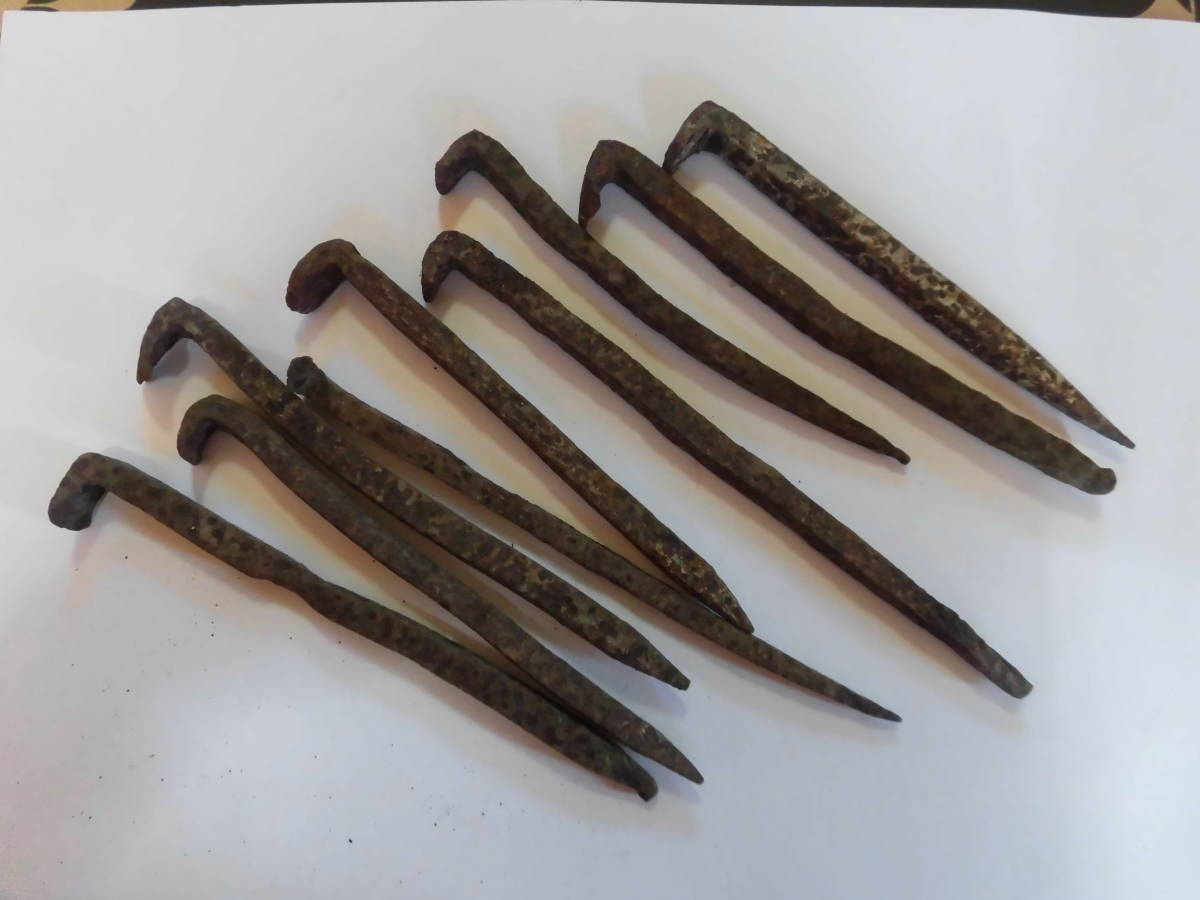
Two nubs attached to opposing sides of the blade just below the handle look like the guard for a knife or sword. This chisel is driven with a hammer to quickly create a pilot hole for nails or screws. The blade becomes tightly wedged into the wood, but by striking up on these projections with a steel hammer, the blade can be extracted.

An old traditional Japanese boat made with tusbanomi chisels and nails.
Three styles of tsubanomi, and using a mallet to remove the blade after cutting a nail hole

This unique chisel comes with blades with round, square, or rectangular cross-sections.

Square and rectangular blades usually have a chisel-point beveled on two sides, but sometimes are beveled on just one side. Round blades may have simple pointed ends, but sometimes they have short triple tines to drive the crushed wood fibers into the hole.

While this chisel severs the wood fibres, unlike an auger, drill, or gimlet, it does not remove material from the hole. The ends of the severed fibers are angled down into the hole, and over time and exposure to humidity and water, will partially swell back to their original shape locking nails in tightly.

This chisel is still used in the wooden shipbuilding industry, but other than that sees very little practical use nowadays. Your humble servant owns one but has never used it in anger.

YMHOS

If you have questions or would like to learn more about our tools, please click the see the “Pricelist” link here or at the top of the page and use the “Contact Us” form located immediately below.

Please share your insights and comments with everyone by using the form located further below labeled “Leave a Reply.” We aren’t evil Google, fascist facebook, or thuggish Twitter and so won’t sell, share, or profitably “misplace” your information. If I lie may every nail I touch bend in half.

← Back

Thank you for your response. ✨

The Varieties of Japanese Chisels Part 5 – High-Speed Steel Oiirenomi (HSS 追入鑿)

“Life is not a matter of holding good cards, but of playing a poor hand well.” – Robert Louis Stevenson

So, you finished building that fine cabinet, or 8-panel entry door, or carved balustrade and the day has come to install it at the jobsite. Will you need to cut a bit of gypboard or lath-and-plaster while installing it? Might your chisel get jammed against or into bricks or concrete in the process? Will you need to cut a notch in sandpaper-grit filled plywood or OSB? Any hidden screws or nails in the way that might require more than stern words?

Jobsite installations and remodeling often demand work everyday tools can’t accomplish without being serious damaged. At that moment, having a tool tougher than the job is the difference between working and whining. This is that tool.

DESCRIPTION

HSS oiirenomi are a modern variation of mentori oiirenomi made using high-alloy steels tougher and more resistant to abrasion and high temperatures than more traditional steels.

Sukemaru High-speed Steel Oiirenomi

These chisels are useful for doing remodeling work and cabinet and equipment installations where plywood, MDF, OSB, LVL, drywall, acoustic board, insulated board, plaster, mortar, underlayment and studs full of hidden nails, and even ALC (autoclaved lightweight concrete) panels need to be cut, trimmed, fitted or demolished. Demolition…Oh joy (not).

What is High-speed Steel?

So just what is high-speed steel (HSS), and why bother with it?

HSS is a tool steel developed for manufacturing commercial cutters, dies, etc. In this case, Usui-san uses a high-speed steel designated SKH51 in Japan, the equivalent to M2 in the USA, BM2 in the UK, HS6-5-2 in Germany, and Z85WDCV06-05-04-02 in France. This is the most popular HSS in the world. If you own router bits without carbide cutters, and not made in China, you own this steel.

This variety of HSS contains buckets-full of tungsten, molybdenum, chrome, with a stout vanadium chaser.

After oven heat-treat, these chemicals make the steel tougher, more abrasion-resistant, and more resistant to softening (aka “temper-loss”) when subjected to high-temperatures than regular high-carbon steel. Its nickname of high-speed steel comes from the tendency of cutters made from this steel to retain their hardness even when worked so hard blade temperatures become hot enough to draw the temper of standard steel cutters, softening and making them useless.

The chemical composition is listed below, just in case you are interested. You can see what I mean about buckets.

CMNSiCrWMoV
0.85%0.28%0.30%4.15%6.15%5.00%1.85%
Chemical composition of SKH51/M2 High-speed steel

Why Use HSS?

The next question arising in Gentle Reader’s exquisitely perceptive mind, no doubt, is “what are the properties of high-speed steel and what difficulties can a chisel made from this special steel help me overcome?” Let’s answer these questions below.

Toughness and Shock Resistance

Perhaps the most significant property of high-speed steel is its toughness. SKH51 (M2) steel is the most shock-resistant of the high-speed steels, making it especially suitable for use in a chisel that may impact hard objects in daily use but must survive without chipping or breaking. This toughness provides huge benefits in the situations described further below.

Abrasion Resistance

Abrasion resistance goes hand-in-hand with toughness, but it is a different characteristic many misunderstand. It does not mean a cutting edge will be sharper than a cutter made of high-carbon steel, only that it won’t wear and become dramatically rounded-over as quickly. In the case of chisels, a blade made from highly abrasion-resistant tool steel will reach a certain level of sharpness (or dullness) and remain at that level a relatively long time allowing a cutter to keep on cutting without becoming useless. But the quality of the cut will decrease, the blade’s ability to cleanly cut weaker woods, and the energy necessary to motivate the blade will of course increase as the blade gradually dulls.

Abrasion resistance is not typically considered overly important in blades where great sharpness is given priority, but it is extremely important when the blade is used to cut materials such as exotic hardwoods that contain silica crystals, or Engineered Wood Products that contain hard adhesives and/or highly-abrasive particles such as silicon carbide deposited by sandpaper, or dirty wood contaminated with sand and grit, contaminants that will literally destroy the cutting edge of a plain high-carbon steel blade making it useless.

Just as a strong truck with a trailer hitch would be at a hopeless disadvantage in a Formula One race, a McLaren MP4/6 with all its speed, power and agility couldn’t tow a heavy trailer 100 yards through the mountains. Horses for courses.

Engineered Wood Products

One major challenge the HSS Oiirenomi excels at overcoming is working modern wood products called Engineered Wood Products (EWP)

Commercial carpenters and cabinet makers nowadays have no choice but to use modern EWP such as plywood, MDF, HDF, OSB, LVL, glu-lams, etc.. Unlike new, clean, solid lumber cut with saws and planed with knives to final dimensions, engineered wood products are comprised of wood veneer, chipped wood and/or sawdust glued together by hard adhesives that will harm standard steel tool blades. HSS handles these difficult adhesives easily.

A bigger problem associated with EWP is the extremely hard abrasive particles left embedded in them by the sanding belts used to dimension and smooth them, particles much harder than any heat-treated steel, that will quickly destroy a good high-carbon steel chisel. Being much tougher and more abrasion resistant than high-carbon steel, HSS can handle this abrasive residue without being destroyed. That does not mean abrasive particles do not scratch and dull HSS cutting edges, it just means they won’t chip or break and will keep on cutting longer than HC steel blades.

Restoration & Remodeling Work

Velkoprevorsky Palace
Beloved Customer Pavel cutting timber joints using his Sukemaru HSS atsunomi for the restoration of the Velkoprevorsky Palace located in Prague. Notice the tight working conditions. More photos can be found at this link.

Another type of work this HSS Oiirenomo excels at is restoration work, remodeling work, and chisel work around concrete and masonry.

In the case of restoration work, the job usually involves cutting wooden structural members and finish materials that are old and dirty and contain hard abrasive dirt, sand, small stones and of course hidden nails and screws that will not only dull a chisel blade but may badly chip it. 

For instance, a Beloved Customer who is a timber-frame carpenter in the Czech Republic was tasked with splicing segments of new timber to replace rotted-out sections of a large number of 400 year-old rafters in a restoration project located in Budapest, an ancient city with many beautiful, old structures. The wood was dirty and full of gravel and broken-off nails that chowed down on standard chisels without pausing for a drop o’ Tabasco Sauce. But this Beloved Customer’s set of our HSS Atsunomi chisels (identical to the HSS Oiirenomi chisels which are the subject of this article only much bigger at 300 (12″) overall length) made it possible for him to cut and fit the timber splices while working on the steeply-slanted roof four-stories above a cobble-stone road without chipping the blade and without frequent resharpenings, as professional timber framing work frequently demands. 

Being smaller in size and weight, oiirenomi are often handier than atsunomi for remodeling work and installation work, a job that requires one to cut precise holes through existing wood contaminated with abrasive dirt and hiding screws and nails, as well as lathe, plaster and drywall containing abrasive sand, and in close proximity to mortar and concrete which contains sand and gravel aggregates that will dull, chip and even destroy a standard chisel in two shakes of a lamb’s tail. 

If you have ever done remodeling work or an installation that took a chisel to perform, you know the despair one feels when gazing upon the damage done to a beloved tool.

Likewise, during installations, cabinetmakers must make precision cuts in abrasive engineered wood products such as plywood, OSB and MDF. Our HSS Oiirenomi are far more durable than standard chisels with high-carbon steel blades for these jobs.

Plasy monastery by Santinii located near Pilsen, CZ, another historically-important project that benefited from Usui-san’s HSS chisels.

Jigane

The jigane Usui-san uses for his HSS Oiirenomi is a harder version of the standard low-carbon steel he uses for his other chisels. The furniture (katsura (hoop) and kuchigane (ferrule) are made from ordinary mild carbon steel, not stainless steel, despite the bright appearance, and will exhibit corrosion over time. As an option, these two parts can be ordered blackened creating a two-toned chisel some people find attractive.

Heat-treat and Hardness

To prevent chipping, the HSS blade is heat-treated in a special oven in accordance with a prescribed formula to a hardness of Rc63, intentionally a little softer than the Rc64 max hardness listed for this steel. Even then, this is harder than nearly all currently-available Western chisels we are aware of. 

The blade’s bevel angle is 30°, the standard angle for Japanese woodworking chisels. You may want to increase this angle to 35° if you will be routinely cutting through hard materials to reduce denting.

Resharpening in the Field

Another huge advantage of Sukemaru’s HSS chisels is that they can be quickly resharpened to a useful cutting edge in the field using angle grinders and/or belt sanders without losing temper and softening, so long as one is careful to keep temperatures below 650°C (1200°F), not difficult to do if one pays attention. Don’t underestimate the efficiency this feature will bring to your work some days in the field. For instance, in the case of the project

The compromise with HSS chisels is that, while they can be made extremely sharp using stones and proper technique, they will never become as sharp as our hand-forged high-carbon steel chisels. Moreover, they will take twice as long to sharpen by hand using conventional wetstones and waterstones. Thus, they are not ideal for all jobs.

Sharpening time can be reduced dramatically by using aggressive diamond plates.

Before I tried my first HSS oiirenomi, I kept a couple of old plastic-handled steel-cap Stanley chisels in my toolkit as “beaters” for cutting gritty, abrasive materials. They were soft and instantly dulled, but their edges would dent instead of chipping and were easily repaired. Poor things; some days they ended up looking more like rounded-over wide-blade screwdrivers than wood chisels. HSS chisels, by comparison, are just the ticket for this kind of brutal work.

We have personally tested these chisels to failure and resharpened them, and therefore are confident of their quality and performance.

Standard widths for high-speed steel oiirenomi are 3mm, 6mm, 9mm, 12mm, 15mm, 18mm, 21mm, 24mm, 30mm, 36mm, and 42mm.

YMHOS

If you have questions or would like to learn more about our tools, please click the see the “Pricelist” link here or at the top of the page and use the “Contact Us” form located immediately below.

Please share your insights and comments with everyone in the form located further below labeled “Leave a Reply.” We aren’t evil Google, fascist facebook or the IT department for the US House of Representatives and so won’t sell, share, or profitably “misplace” your information. May my high-speed steel turn to turtle steel if I lie!

← Back

Thank you for your response. ✨