Japanese Handplanes: The Kiwaganna Skewed Rabbet Plane

I made myself a snowball
As perfect as could be.
I thought I’d keep it as a pet
And let it sleep with me.
I made it some pajamas
And a pillow for its head.
Then last night it ran away,
But first it wet the bed.

Shel Silverstein

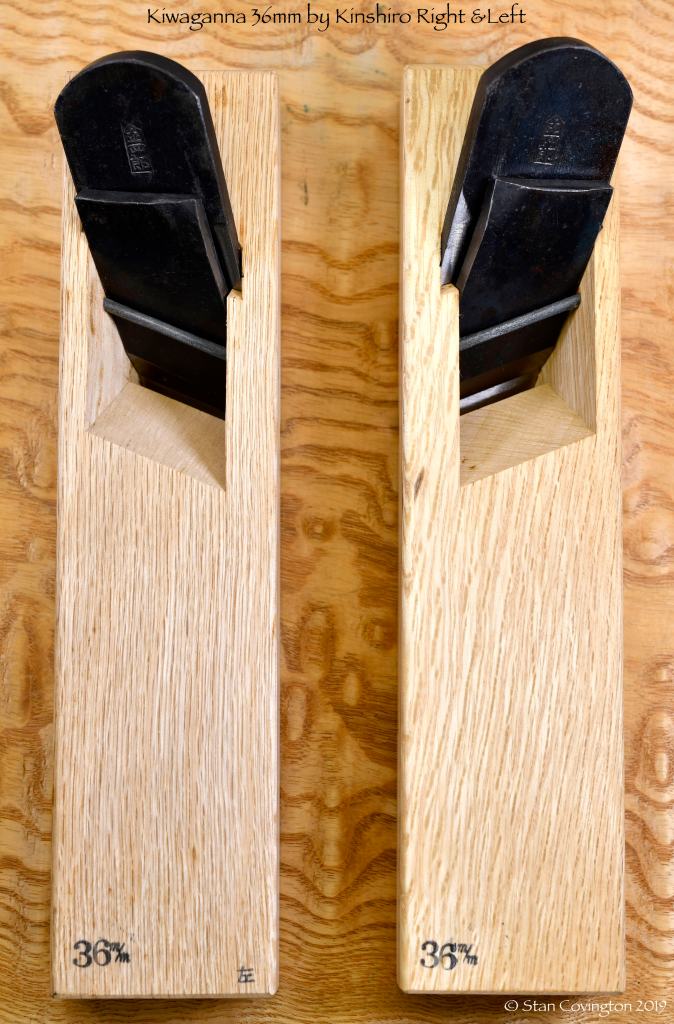
In this article your humble servant will introduce a Japanese plane called the Kiwaganna, meaning “skewed rabbet plane.”

This is an important handplane in common use in Japan, and one we sell, although it’s not well known in the West. So for the benefit our Beloved Customers, I will explain of some of the solutions learned over the years from senior Japanese craftsmen, and acquired during many decades of brutal study at the University of Stoopid, School of Hard Knocks (Lower Outhouse Campus), which may prove useful.

What is the Kiwaganna Handplane?

The Japanese Kiwaganna is written 際鉋 in Chinese characters, and pronounced kee/wha/gah/nah. “Kiwa” means “edge” or “verge,” and “ganna” means handplane.

While the design of the Japanese version of this handplane is unique, as far as your humble servant is aware many other versions exist around the globe. The Japanese version has a wooden body, a laminated blade, and is significantly lighter in weight and smaller in volume than its counterparts. It is a superior tool, IMHO, but it can be quirky.

This plane can handle a number of tasks, but it specializes in planing a straight-sided groove or rabbet right up to an edge or line with a clean 90˚ inside corner. A few common applications include planing the tongue around the perimeter of a board to make the bottom of a drawer, and raising a panel in frame and panel construction. In construction work it is frequently used to pare and clean tenons in timbers, especially those cut with circular saws which tend to leave a step, and to fit finish woodwork, among many other tasks.

This plane is of course used by joiners, cabinetmakers, sashimonoshi, and furniture makers but you would be surprised at how popular it is with carpenters and timber framers for cleaning the 90˚ inside corners of joints such as tenons.

Craftsmen who use kiwaganna typically own a two-piece set comprised of a right-hand and left-hand version to deal with tight access and changing grain direction. But the right-hand version is the most popular by far.

Advantages of the Kiwaganna Plane

In general, a skewed blade in a rabbet plane provides two benefits. The first is that the reaction forces pushing back on the blade include a vector that tends to push the plane towards the line, edge, inside corner or verge being planed to, making the plane more stable in the cut, an important factor where precision is necessary.

The second and perhaps most important benefit of the skewed blade, however, is the smoother cut and reduced tearout it makes possible, especially important when planing cross-grain.

Another benefit the skewed blade provides in the case of the Japanese kiwaganna is the point of the skewed blade penetrating the body of the plane and ending flush with the side of the body, making possible a zero-clearance cut to a line without the extra weight and cost of complicated mechanisms and reinforcing plates. It’s a deceptively simple but clever design.

Points to Keep In Mind

While a simple tool, the kiwaganna often proves frustrating to first-timers. Indeed, your humble servant struggled with kiwaganna for far too long before he figured them out. To avoid similar damage to brain and ego, Beloved Customers that wish to become proficient in using this elegant tool will find it useful to understand the following nine points. The articles linked to below, while not written specifically about the kiwaganna, are nonetheless relevant and may prove helpful

1. First, a brief inspection of the body and the cuts made to receive the blade will make it clear that kiwaganna dai (body) are more fragile than that of regular hiraganna planes, so when adjusting the blade, please use a wooden, plastic or rawhide mallet, not a steel hammer.

2. When removing the blade, strike the dai at the same angle as the blade is inlet into the dai to reduce unnecessary stresses. This means you will hit the top corner of the dai on the side opposite where the blade’s point exits. Clip off and round over this corner of the dai with a knife or chisel to prevent your mallet from chipping the dai. Striking the opposite corner can have bad results.


3. The first step in truing/adjusting the blade of a kiwaganna plane is to sharpen and polish the blade and uragane (chipbreaker) well, make sure they fit each other tightly without a gap near the cutting edge, and check that there is adequate and uniform clearance at the mouth so that shavings flow smoothly without clogging. The skewed nature of the blade and chipbreaker make this difficult to judge, so exercise caution. In many cases, the plane will work just fine, and maybe even better, without its uragane. The uragane has a bevel ground into its pointy corner. Make sure this is not touching the dai when inserted properly. Keep in mind that you will need to periodically grind this bevel down after sharpening the blade every few times or it will touch the dai creating a restriction where shavings will become jammed. When you sharpen the blade, you will also need to resharpen the uragane too to ensure they match each other tightly. Not every time, but once in a while. A lot of people fail to maintain the uragane and then suffer emotional anguish when their plane mysteriously stops working. Mystery solved.

4. The right and left side edges of the blade must fit the retention grooves tightly where they exit the top surface of the dai. If the fit is too loose, the blade will be difficult to keep in alignment, but if the fit is too tight the blade may crack the dai during seasonal shrinkage. Older dai are usually safe, but a plane shipped from a wet Tokyo summer to a hellishly dry Arizona may experience problems. This article provides more details about fitting the body to the blade.

If it becomes necessary to shave the grooves, work very slowly and carefully. Color the blade’s side edges with pencil lead, marking pen ink or Dykem. Insert it into the grooves and note the high colored areas. Shave these down just a tiny tiny bit with a very sharp chisel, or a metal file, then insert the blade and check. Repeat as necessary. Don’t create a big gap between the walls of the groove and the sides of the blade (versus face and underside of the blade which must be tightly pinched in the grooves), just make sure the width of the blade is not wedged tightly between the grooves.

5. Check that the “ear” of the blade (the chamfered corner at the cutting edge opposite the pointy corner) is ground back enough so it does not terminate inside the groove, because if it does, shavings will become jammed. Don’t forget that, with each sharpening, the sharp portion of the blade will become a little wider and this chamfer a little smaller. If it becomes too small, shavings will become jammed between the blade and retention groove, I promise you, so please grind this chamfer back after every few sharpenings.

6. Here is wisdom: Contact between the back of the blade and the block should not be too high-pressure, otherwise the area on the sole behind the mouth may be pushed out making the plane misbehave, an extremely common problem with this plane. You want uniform pressure where possible to ensure the blade is stable, but remember that it is the grooves pinching the blade that keep it in place, not pressure on its back. This is important: If you find your plane stops cutting, it may be because the portion of the dai at the sole behind the mouth is being pushed out as the blade becomes shorter/thicker. The surest way to check this is to use a notched straightedge like the 400mm Matsui Precision product we carry. If the sole behind the mouth is pushed out such that it contacts the straightedge, use a scraper or whatever to pare/shave/scrape excess material away. Indeed, a gap at this area is better than contact. As the blade becomes gradually shorter after much use, its wedging action on the dai may increase pushing the sole behind the mouth out, lifting the cutting edge away from the surface of the wood you need to plane thereby preventing it from cutting consistently, if at all, so check for proper clearance occasionally.

7. With the blade fitted to the grooves and most of the pressure relieved from its back, insert the blade. Check that it projects evenly from the mouth its full width. This is very important. If it projects further on one side than the other, resharpen/reshape the cutting edge so it projects perfectly uniformly. Uneven projection is almost always the result of the user unintentionally and gradually changing the angle of the skew over multiple sharpening sessions, and it always causes problems. Besides projecting uniformly from the mouth (when the sole directly in front of the mouth is perfectly flat), the point of the blade must penetrate the dai (body) and be flush with the outside surface of the sidewall. Heed these words: Failure to get these two subtle details right is the most common cause of failure to perform in the Kiwaganna plane.


8. The mouth opening, in other words the gap between the blade and the sole of the dai where it exits the dai, must be narrow, and even in width, but not closed or skewed, otherwise shavings will jamb in the mouth, another common problem with kiwaganna. If the mouth is not even, use an adjustable steel protractor to match the angle of the blade measured from the side of the dai where the point of the blade exits. Remove the blade and mark the mouth with a sharp marking knife so the mouth is exactly the same angle as the blade. When doing this layout, be extremely careful to make the mouth opening of uniform width to match the cutting edge, but keep the mouth as narrow as possible. Use a sharp chisel to cut to this line making the mouth perfectly uniform. Insert a thin knife blade (or sharpened utility knife blade) into the mouth to shave and clean it after chiseling.


9. There is nothing wrong with leaving the sole perfectly flat instead of having the hollowed-out areas typically added to standard hiraganna planes. Just make sure it is truly perfectly flat. I have no problem with using sandpaper on float glass to true the sole of a kiwaganna, but a card scraper is a better tool for the job.

Juggling Blades

Although we addressed them above, let’s review the two critical factors you must juggle to keep a kiwaganna working well. I’m repeating these points not because I doubt Beloved Customer’s intelligence, but only because repetition improves understanding.

First, maintain the angle of the blade’s cutting edge so that it projects a uniform distance from the mouth (with the mouth/sole flat and true). To do this you must pay more attention when sharpening the blade than is normally necessary. If you get this wrong, nothing will go right.

Second, as mentioned above, to cut into the corner of the rabbet cleanly, the point of the sharpened blade must penetrate the sidewall of the dai and be perfectly flush with the sidewall but without projecting out past the sidewall when the blade is projecting the right amount from the mouth and uniformly across its width. If the skew of the blade is wrong, or the dai is warped or worn, this point will end up being either recessed inside the sidewall or projecting outside it. It needs to be flush with the sidewall. If it’s recessed, the plane can’t possibly cut a clean step in a rabbet because the step in the rabbet will push the plane away from the inside corner with each cut.

On the other hand, if the blade’s point projects out through the side wall of the plane and is not flush with it, the rabbet will be raggedy and a 90˚ inside corner will be difficult to produce. Either of these problems will eventually occur if Gentle Reader uses kiwaganna, sure as Murphy loves optimists.

If the point of the blade is not flush with the outside wall of the dai, you may need to either shave material from the side of the plane (not recommended) or grind down the side of the blade near the point, a drastic measure. This is seldom necessary, and when it is, the reason is almost always a badly warped dai.

As you can see, this is a juggling act, but so long as you focus on these two points, and maintain the proper skew angle, all the blades will remain gleefully spinning in the air as you grin from ear to ear (knock on wood).

YMHOS

If you have questions or would like to learn more about our tools, please click the “Pricelist” link here or at the top of the page and use the “Contact Us” form located immediately below.

Please share your insights and comments with everyone in the form located further below labeled “Leave a Reply.” We aren’t evil Google, fascist facebook, thuggish Twitter or a US government IT consultant and so won’t sell, share, or profitably “misplace” your information. If I lie may my kiwaganna planes all warp to resemble mushy bananas.

← Back

Thank you for your response. ✨

Leave a comment

Relevant Articles:

The Varieties of Japanese Chisels Part 17 – The Sokozarai Chisel

底さらえ鑿の一分五厘 : 日々の製作と研ぎの記録 ~木工 藤原次朗のブログ~

Quality is not an act, it is a habit.

Aristotle, 384–322 BC

In this article your humble servant will introduce a standard woodworking tool which I believe to be unique to Japan, although I have no doubt individual craftsmen around the world have produced versions of it for their own use for thousands of years.

I will explain the jobs this tool is used for, how it is used, how to fettle it, and how to sharpen it. I will also share some first-hand business insight regarding why Japanese women make this tool essential to the joiner in both performing traditional joinery in Japan, as well as the sometimes challenging task of getting paid for his work.

Mr. Spock will also make a brief contribution to the discussion.

Definition & Pronunciation

The Sokozarai Nomi (pronounced Soh/koh/zah/rahi noh/me and written 底浚い鑿 ) translates to “bottom-cleaning chisel.”

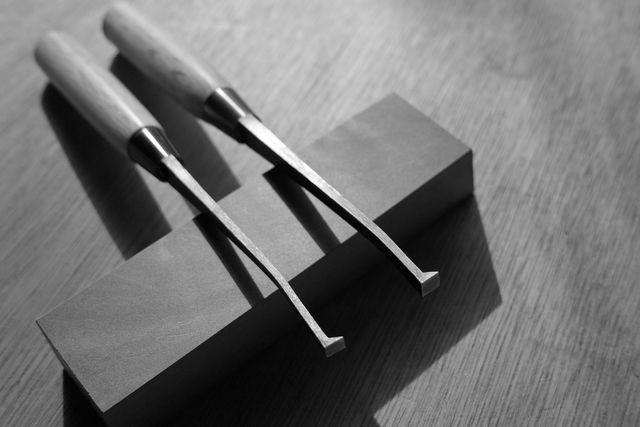
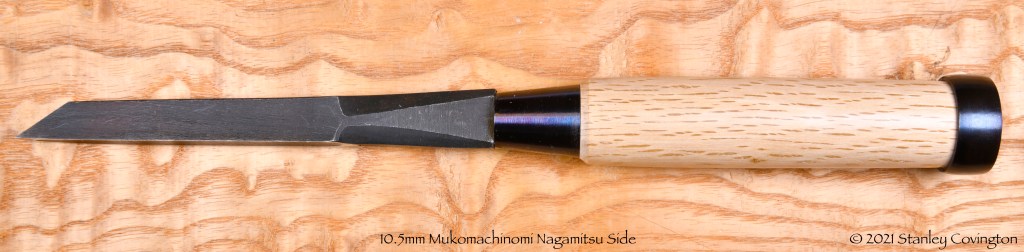
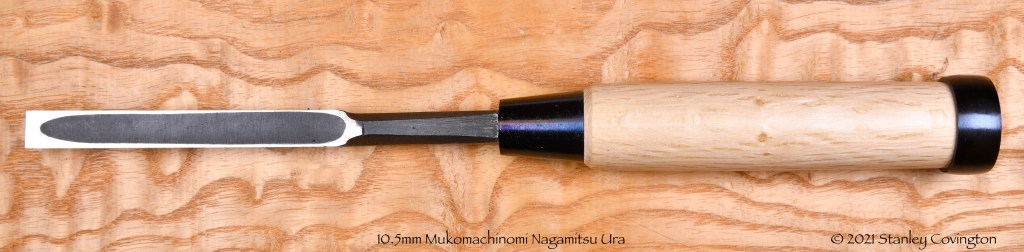
It is a simple tool consisting of a differentially-hardened steel shaft, with a small, short, sharp foot formed at the end, attached via a tang to a wooden handle, and secured by a conical ferrule.

The Sokozarai chisel is one of three specialized chisels used specifically for joinery work. Cabinetmakers and furniture makers use it too. Two other specialty joiner chisels are the “Mori Nomi,” which translates to “harpoon chisel,” and “Kama nomi,” which translates to “sickle chisel.” Perhaps we will discuss these in a future article.

A larger version of the sokozarai chisel is used for cleaning the bottom of the larger mortises commonly cut in timber frames.

The Role of the Sokozarai Chisel

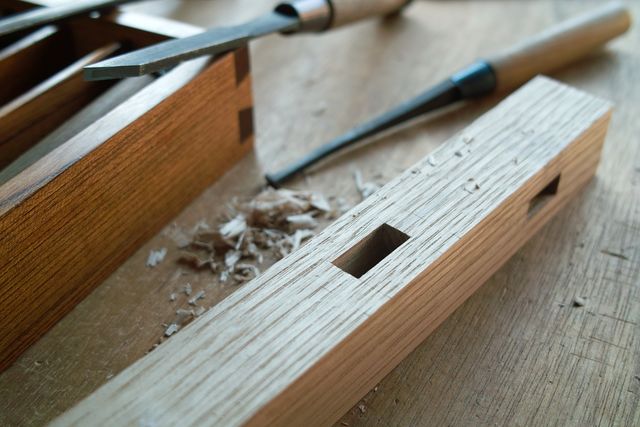
The sokozarai chisel is used for two purposes. The first is loosening and removing chips from inside mortises. One simply hooks the offending waste with the chisel’s toe and flips it out. 

The second role of the sokozarai chisel is to flatten and even plane mortise bottoms. When set up correctly, it will cut shavings from the bottom of mortises cut in softwood planing them flat and clean.

Indeed, in advanced joinery work, a skillful joiner will plan and execute his joints such that the material left remaining at the bottom of a mortise cut into a stile intended to receive the tenon from a rail is less than 1mm thick, thin enough to allow light to pass through. The ability to routinely cut joints like this, without cutting all the way through, is a mandatory skill of the professional joiner.

I suspect that about now Gentle Reader is forming his elegant eyebrow into an artistic and skeptical arc as he ponders why one would go to the trouble of making clean and pretty the bottom of a hole upon which no one will ever gaze, leaving a paper-thin wall of uniform thickness at the bottom admitting light into a space no one will ever see. Can there possibly be method to this madness? Welcome to traditional Japanese joinery.

Consider that a rough, bumpy floor in a mortise prevents the tenon from seating the last few millimeters, but by planing it flat with a sokozarai chisel, those last few millimeters can be converted to useful space to house maximum-length tenons ensuring maximum resistance to withdrawal and bending forces resulting in strong, slender but durable joinery without adding extra weight. This is a big deal in the case of the slim, flexible frame members found in operable traditional Japanese joinery such as shoji, itado and tsuitate screens, joinery that must satisfy the severe eye and meet the high standards of fit and finish expected by many Japanese women, the most unforgiving consumers in the world.

I don’t know when this detail entered common use, but as Gentle Reader is no doubt aware, the older and more common type of mortise and tenon joint found in joinery worldwide is the through single or double tenon with the tenon’s end exposed at the rail where it is often wedged, a technique that is undoubtedly stronger.

On the other hand, the fully-housed tenon made easier to fabricate using the sokozarai chisel has two advantages over its older, less-refined brother the through-wedged tenon. First, it simply looks better and more elegant when new, and is therefore better able to survive the strict final inspection by the lady of the house thereby more reliably earning the reward of final payment. Hallelujah, pass the bottle brother!

Second, it simply looks better to the eye and feels better in the hand as time goes by because, as the stile shrinks during drier months, the once flush end of the through-tenon won’t project past the surface of the stile creating an unslightly, uncomfortable bump, and during the wetter months it won’t recede back into the mortise leaving an indentation in the stile and an uneven appearance.

These details are not based on esoteric imaginings about quality, but are make or break business decisions essential to avoiding complaints from the same unforgiving Japanese women. And of course, in a country where advertising and representations are routinely and intentionally false (sad but true), word of mouth among sharp-eyed quick-tongued women is critical to a craftsman’s success. Please note that I say this as someone who has has been married to a Japanese woman for 45 years, has lived and worked in Japan for over 32 years, and during those years has had plenty of direct commercial experience working with Japanese women as both customers and team members.

Next time we are sharing a cup of hot cocoa around the evening fire, remind me to tell you the story about two stressful days spent inspecting Thassos marble slabs for a new building’s lobby walls in the company of three Japanese women: an Architect, a Quantity Surveyor, and a Project Manager. All the story lacks is a Rabbi and a Priest to make a gut-splitting joke (ツ)。

A 4.5mm differentially-hardened sokozarai chisel with red oak handle

Using the Sokozarai Chisel

To use the Sokozarai chisel, and assuming you are right-handed, hold the handle in a fist in your right hand with the blade projecting from the bottom of the fist. Lay the back of the fingers of your left hand on top of and crosswise to the long direction of the mortise. Insert the blade of the chisel into the previously cut mortise hole and press the back of the blade’s neck (opposite the cutting edge of the foot) against the outside edge of your forefinger. Then pinch the blade’s neck between your thumb and forefinger. This is the grip.

To remove loose waste, insert the sokozarai chisel into the mortise hole and move it around gathering chips on the chisel’s toe. Then pull the chisel up and out of the mortise quickly to pop chips out.

To cut loose chips still attached in the mortise hole, press the chisel’s foot to the bottom, move it forward until it snags on irregularities, then rotate the handle towards your body using the forefinger of your left hand as a fulcrum to lever waste out.

To shave the bottom, simply move both hands forward with the bottom of the foot parallel with the intended bottom of the mortise. Developing a sense of the chisel’s action will take practice. Shining a flashlight into the mortise frequently at first will help develop these senses.

To check the depth of the mortise, a specialist kamakebiki, essentially a small router plane, is ideal. But you can make a simple depth gauge by sharpening the edges of the head of a nail or drywall screw, driving or screwing it into a small block of wood, then cutting off and filing the point to avoid ouchies. Using this, you will be able to detect bumps and irregularities remaining on the bottom. Indeed, it too can be used to shave the bottom, but it won’t clean all the way into corners unless you grind the head square or rectangular.

For advanced work, make a slightly undersized test stub tenon with shoulders from hardwood the depth of the finished mortise, and anoint the end with cheap dark lipstick or Vaseline with black oil pigment mixed in. High spots remaining at the bottom of the mortise will be highlighted. With practice, you won’t need this test tenon, but you will still definitely need a sokozarai that is sharp enough to plane the bottom.

Next, let’s consider how to prepare a new sokozarai chisel.

Fettling the Sokozarai Chisel

Unlike most other Japanese chisels, the Sokozari chisel is not laminated construction, but is formed of one piece of differentially-hardened high-carbon steel. Differentially-hardened in this case means that the foot and lower 1/4 of the leg’s length are hardest, becoming progressively softer going up the leg until it is dead soft at the tang. This means the cutting blade, (what your humble servant calls the “foot”) of this chisel will become sharp and stay sharp, but the neck is left softer so it will not snap off, and can even be bent a little to adjust the angle of the foot if necessary.

Low-quality sokozarai have both soft shafts and feet.

Flatten and Polish the Foot’s Bottom

The bottom of the foot needs to be flat and polished, but because of this surface’s narrow width and short length, it can be challenging to accomplish without rounding it over or skewing it.

It often helps to grind a hollow into the foot’s bottom the thickness of a nat’s eyebrow to help speed up the flattening and polishing process. If you use a grinder, be very careful to avoid overheating. It should take no more than one or two brief touches to the wheel.

When flattening and polishing the foot’s bottom surface on diamond plates and stones, it also helps to make a guide block. Cut a slot in the side of a small block of hardwood to house the bent shaft with the bottom of the foot located flush with the block’s bottom surface. Lock the shaft into the guide block with a wedge or a clamp to stabilize it. 

The jig in the photos above was made by a Most Beloved Customer who does exceptional high-quality joinery work.

An alternate sharpening jig can made by cutting a crosswise groove, similar to the one shown in the photo below, into the top surface of a stick of scrap wood, perhaps 50mm wide, 200mm long and 20mm thick. The bottom surface of the foot should be almost, but not quite flush with the stick’s edge, projecting the thickness of a piece of paper. Secure this jig to your workbench with a clamp or in a vise, press down on the blade with one hand, and move a sharpening stone along the side of the jig over the foot.

This guide block rides directly on the stone as you flatten and polish the foot’s bottom. Don’t let the foot’s bottom get skewed or rounded over. Work slowly and check constantly. This is a one-time operation.

Once the bottom is flat and polished, you should only need to polish the bottom of the foot on your finishing stone.

Adjust and Polish the Cutting Edge’s Bevel

The bottom of the foot is now flat and pretty, but the angle of the cutting edge is usually still far too steep, and the bevel’s surface is rough. This must be corrected.

Modify the cutting edge’s angle by grinding the bevel on a diamond plate. The final angle you chose for the cutting edge will depend on your preferences and the wood you will be cutting. Steeper angles are more durable. Shallower angles cut better, but dull quicker. 20~24 degrees is usually OK. When I was a young man, I knew professionals who took the bevel angle down to 15 degrees. 

You may want to make another narrower guide-block clamping 90 degrees across the the shaft to help hold/stabilize the blade during this operation. When you have adjusted the angle to where you want it to be, then polish it on your sharpening stones. Be careful to avoid skewing it or rounding it over. You want sharp, clean corners.

To routinely sharpen/polish the bevel, hold the chisel in one hand with the bevel face-down on the long side of your sharpening stone. While stabilizing the blade and applying pressure on the bottom of the foot with a fingertip, move the sokozarai chisel back and forth in small strokes being careful to avoid rocking it and rounding it over.

Adjust the Foot’s Length

This step is unnecessary for most applications, but I will touch on it just to be thorough.

The length of the foot is fine as-is for most furniture mortises, but for very tiny mortises as in screens, light fixtures, and small casework, the foot may need to be made shorter. It is not unusual for a tategushi or sashimonoshi to own multiple sokozarai nomi with feet and shafts of different widths and lengths and bevel angles to clean the mortises he makes the most.

Please note that the mortise holes for kumiko members installed in shoji screen and most other types of latticework are shallow and do not require the strength of long tenons, so the mortises are usually cut using mori nomi (harpoon chisels) with a hook on the end to pull out waste quickly, and the bottoms are left rougher.

Conclusion

Beloved Customers that have purchased our chisels, and diligent Gentle Readers that have read this blog, are aware that your humble servant insists our chisels not be used to scrape or lever waste out of joints. The reasons for this are my desire for Beloved Customer’s most excellent chisels to remain as sharp as possible as long as possible, and to avoid chipping the cutting edge. They are, after all, refined cutting tools with sensitive feelings, neither thuggish prybars nor pot-metal screwdrivers.

The Sokozarai chisel was invented specifically as a partner to chisels used for cutting the clean mortises essential to Japanese joinery, and to protect the super-sharp cutting edges of those chisels from damage resulting from barbaric treatment. I encourage you to level-up your joinery skills by procuring and using one. You will be glad you did.

And so I wave farewell until the evening we share a cup of hot cocoa around the irori fire. In the meantime, I am humbly grateful for the honor to remain,

YMHOS

Adieu for now, Gentle Reader!

If you have questions or would like to learn more about our tools, please click the “Pricelist” link here or at the top of the page and use the “Contact Us” form located immediately below.

Please share your insights and comments with everyone by using the form located further below labeled “Leave a Reply.” We aren’t evil Google, fascist facebook, or thuggish Twitter and so won’t sell, share, or profitably “misplace” your information. If I lie may my sokozarai chisels get athletes feet!

← Back

Thank you for your response. ✨

The London Finish

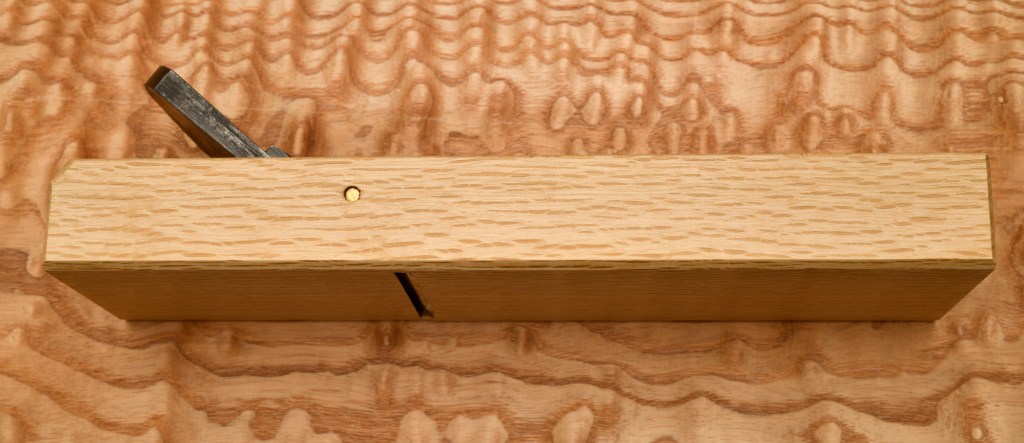
A 70mm handplane with a blade by Nakano-san and body by Inomoto-san with a London Finish applied by YMHOS

A person who never made a mistake never tried anything new.

Albert Einstein

here are more ways to finish wood than there are to cook beans, but unlike the musical fruit, the fragrant finishing technique that is the subject of this article became famous through the products of London’s elite gunsmiths such as Durs Egg (Est. 1772), John Rigby & Co (Est, in Dublin in 1775 and moved to London in 1866), Joseph Manton (1766 – 1835), Boss & Co (Est. 1812), James Purdey & Sons (Est. 1814), Holland & Holland (Est. 1835), and a hundred other European gunmakers. However, the technique actually pre-dates the 1700’s by many centuries.

The Traditional London Finish

While the traditional London Finish got its name from the justifiably-famous products of the high-end London gunmakers, some of the most famous of which are named above, since ancient times this technique used to seal and finish high-quality woodwork employed linseed oil, the squeezings from the seeds of a stringy plant called flax.

The difference between the linseed oil widely used for paint production and woodworking and the flax seed oil sold as a health product in the West nowadays is simply the method used to extract the oil from the flax plant.

Of course, Gentle Reader is no doubt aware that the fibers of the cotton plant have been used to make textiles since at least 6,000 BC, but what you may not realize is that it was rare and so labor intensive to produce that at times cotton fabrics cost more than silk in the West, as recorded in tax records of the time. Indeed, it wasn’t until the invention of the Cotton Gin in 1793 that cotton textiles became affordable for ordinary people. My point is that linen cloth made from the fiber of the flax plant, and spun cloth made from animal hair, such as wool, goat and camel, were the most common textiles available probably since Methuselah wore goatskin nappies.

Indeed, flax can be grown in even poor soil, and can be spun and woven into useable thread and cloth in small lots in most any home, so “homespun linen” was once the cheapest most widely-used textile available worldwide, used for everything cotton, polyester, rayon and silk is nowadays, and linseed oil was an ordinary but economically-important by-product of flax production.

The London Finish made famous by the gunsmiths of Olde Londinium consisted of many coats of boiled linseed oil, betimes with some added dryers, forcefully rubbed into the wood by hand (the warm, bare hand, as a matter of fact), allowing days and weeks between coats for the oil to partially polymerize. Indeed, this manual application technique is the source of the term “hand-rubbed finish” that furniture and cabinet companies everywhere lie about applying in our time. If you have a free month, please give it a try.

This finish was also used for furniture and cabinetry since ancient times as referenced in texts of the era which is probably why some modern woodworkers, ignorant of chemistry and eager to employ historical techniques, still soak their projects in linseed oil potions.

While the final product of the traditional London Finish is indeed subtly beautiful, it takes a long time to accomplish, it’s expensive, it does little to prevent moisture from moving in and out of the wood (and therefore allows the wood to rapidly expand and contract with varying moisture content), and it does little to protect the wood from damage. Other downsides include the fact that linseed oil gives a yellow cast to wood, which gunstock makers and other woodworkers historically compensated for by dying the wood slightly red using alcanet root.

Also, linseed oil never fully solidifies and so attracts grime, eventually oxidizing and turning black forming a “patina” many people admire without realizing its dirty nature.

The Modern London Finish

The wood finishing technique described in this article is a modern, improved version of the traditional London Finish, one developed by American custom gunstock makers looking to replicate the beauty of the antique London Finish while providing better durability and moisture resistance for their customer’s expensive firearms and eliminating the expensive and time consuming work of rubbing in stinky, yellowing, dirt-magnet, spontaneously combusting linseed oil.

I learned about it when I was looking for a better finish for the stocks I made for my own smokepoles, everything from flintlock rifles and pistols to large-caliber bolt-action rifles. Through applying, using in the field, and comparing the long-term results of both the traditional linseed oil London Finish and this modern version, I came to treasure the modern version’s subtle beauty, durability and effectiveness at moisture control. Soon I was using it for everything from tool handles to furniture and casework with excellent results.

The primary difference between the traditional and modern versions of the London Finish is that the traditional technique relies heavily on boiled linseed oil, a product that does little to protect wood, while the modern technique relies on modern varnish or polyurethane resins, but with a twist.

Where the two finishes are alike is that neither are surface finishes, but are soaked into the wood’s fibers. By contrast, normally-applied varnish or PU finishes are film finishes that, while they may adhere to the wood well when fresh, do not penetrate deeply, but remain on the surface where they quickly degrade due to UV light exposure, and the stress cracks resulting from expansion and contraction of the wood. Eventually and unavoidably their bond with the wood they are tasked to protect or beautify always fails, usually sooner than later, whereupon it stops doing its job.

The modern London Finish is not a surface film but soaks into the wood’s fibers where it hardens, and is protected from UV and shrinkage damage. It also fills the wood’s pores sealing them long-term and forming a smooth, flat surface free of the dents and streaks at the wood pores that always develop when shrinkable varnish or PU are applied as a surface finish.

Most importantly, it seals the wood with a durable material that cannot be removed without actually carving or abrading the wood away, protecting it from moisture/dirt/oil intrusion. This makes it a better and more attractive long-term finishing solution, one that, unlike the traditional London Finish, doesn’t need to be refreshed annually (yes indeed, annually).

Next, allow your humble servant to present the performance criteria I consider important when selecting a wood finish for tools.

Performance Criteria

The following criteria are focused on improving the longevity, durability and stability of the wooden components of handtools used in woodworking. These include the wooden bodies of handplanes, and the wooden handles of chisels, axes, hammers and gennou.

So what do we need a finish used in these applications to accomplish?

  1. Stability: Minimize moisture movement into and out of the wood cells due to humidity changes, perspiration and rain thereby reducing the swelling, shrinking and warpage of the wood. This is specially important for handplanes, gennou handles, and some types of furniture and cabinetry. A surface finish that quickly oxidizes, suffers UV degradation, becomes inflexible and suffers shrinkage cracks or is easily chipped and/or abraded won’t get the job done for long.
  2. Protection from oil and dirt: Prevent dirt, dust and oil from the user’s hands or the environment from penetrating below the wood’s surface keeping it cleaner. To accomplish this a finish must both fill the ends of open cells exposed at the surface with a water-proof, non-shrink plug (a “filler”) and seal the cells with a waterproof and oil-resistant chemical binder.
  3. Insect and Bacteria Protection: The finish must lock away the yummy smell of raw wood so bugs will go beetling on by without stopping to snack, set up house, or lay eggs. It must also prevent bacteria spores, nasty things always present in dirt, from taking root.
  4. Appearance: A smooth surface that looks like wood, not plastic or varnish.

These are only your humble servant’s criteria, of course; Your needs and expectations may vary.

Why Is the Expansion, Contraction and Stability of a Wooden Tool Component a Concern?

Trees are water pumps. Evaporation at the leaves sucks water, and with it, dissolved chemicals up from the ground. After a tree dies, most of the water contained in its cells migrates out of the wood, the individual cells shrink in size and crinkle as they dry, and the cell walls become stiffer and much stronger. However, despite its transition from a flexible, moist, growing plant to a stiff, dry board, left as-is a dead wood cell does not abandon its God-appointed duty to pump water but will faithfully continue to absorb and expel water, albeit to a more limited degree than when it was alive and kicking, causing its dimensions to shrink and swell in response to changing moisture conditions in the surrounding environment.

The problem is that the rate water enters or leaves the wood cells varies with a number of factors. One such factor is the location of the cell within the block of wood, producing differential expansion/shrinkage along with stresses and warpage. Most importantly, end grain absorbs and releases moisture much more quickly than side/face grain does. Slowing down the rate of water gain/loss is important to minimize and equalize internal stresses and to keep a wood product stable.

Besides the natural seasonal changes in humidity, modern air conditioning and heating equipment can create wild swings in ambient humidity, causing wooden components of furniture and tools, such as the bodies of Japanese handplanes, to warp, harming their ability to plane wood as intended. When this happens, and it will, time and effort is periodically required to adjust a wooden-bodied plane’s sole. This can be frustrating. Short of using a vacuum pump to suck heavy hardening resins into a board’s cells, it is nigh impossible to entirely prevent moisture from entering and leaving wood with changes in environmental humidity, and the dimensional changes, internal stresses, and warping that results.

In the case of a wooden-bodied plane, both ends and the surfaces inside the hole cut to receive the blade have exposed endgrain which absorbs and releases moisture quicker than side grain, so that when the humidity of the surrounding air increases, airborne water penetrates the endgrain faster than the sidegrain, and the endgrain surface at the body’s ends and inside the mouth swell first, causing dimensional changes and differential stresses, and often, warping.

By reducing the rate of absorption of moisture by the endgrain fibers to more closely match that of sidegrain fibers, swelling, shrinking and warping can be reduced. This is where the London Finish shines.

Since learning this method, I have used it not only on my guns, but also on timber frames, doors, tools, workbenches, furniture, cabinets, chests, tansu, tsuitate, and other wood products with excellent results.

Danish Oil

A note about so-called “Danish Oil” finishes is called for at this point. Danish Oil is boiled linseed oil combined with thinners, dryers, and resins. It polymerizes much quicker than simple boiled linseed oil, and is much easier to apply. By itself, varnishes and polyurethanes will not soak far into the pores of the wood (xylem tracheid), but by reducing its viscosity with linseed oil and thinner, the liquid will soak further into the grain and pores before more-or-less hardening. While superior to plain BLO (boiled linseed oil), Danish Oil is still not effective at either preventing water migration, or protecting the wood from dirt and oils. And besides, it changes the color of the wood to which it is applied, it stinks and it starts fires. Nothing good.

A gennou hammer with a Kosaburo head and black persimmon handle with a London Finish

Applying the Modern London Finish

This technique requires only a few inexpensive tools and materials, and no equipment of any kind, but it does take some time and effort to apply.

Tools and Supplies

You will need the following tools and supplies:

  1. Clear varnish or polyurethane finish in a can. Gloss finish is fine, but I prefer a satin finish. Minwax PU works well, while Epifanes is the best I have experience using.
  2. Thinner or mineral spirits. Not the water/acetone/oil-based low-VOC toilet cleaner sold at home centers. A professional-grade thinner from a Sherwin Williams store or other specialist paint store selling professional-grade materials is best.
  3. Mixing container the size of a soup can or jam jar with a lid.
  4. Small paintbrush, perhaps 3/4″ wide. Cheap is fine.
  5. 320 grit and 600 grit wet-or-dry sandpaper.
  6. Clean rags,
  7. Brown paper from shopping bags
  8. Latex/rubber gloves to keep finish mixture off hands. It can get messy.
  9. Masking tape.

The Finish Mixture

The finish mixture to be used is the varnish or PU you selected thinned 100% with thinner. You won’t need much to complete a few plane bodies or tool handles, less than half a soup can in fact, and it’s best to use in small batches. The lid will keep it from hardening between sessions. It’s not a lot of work, but with drying time, the process may take five or six days.

The Steps in Finishing a Wooden Handplane Body or Tool Handle

1. Remove the blade and chipbreaker. Tape the chipbreaker retention rod with masking tape. In the case of gennou handles, tape the entire head except the wood exposed at the top surface of the eye. For chisel handles, tape the ferrule, crown and the striking end of the handle (you don’t want the finish mixture to soak into the end of the chisel handle because it will make the fibers too brittle.) For paring chisels like usunomi that are not struck with a hammer, soak as much of the mixture into the handle’s end as possible

2. Apply the finish mixture to the end grain at the plane body’s ends and all surfaces inside the mouth. In the case of hammer/gennou handles, apply it most heavily to the butt and eye. Apply it heavily, frequently, and forcefully to encourage the wood to soak up as much as possible. Repeat until the wood won’t soak up more. This is the step that matters most. Apply to all other surface of the dai as well. Allow to dry overnight. There’s absolutely no need to put any effort into making it pretty at this stage.

3. Repeat Step 2.

4. Apply another coat of finish mixture, and while it is still wet, use small pieces of 320WD paper with fingers and sticks to wet-sand all surfaces thoroughly. The goal is to produce a fine slurry of finish mixture and sawdust, and to force this deep into the wood’s grain, especially end-grain, clogging the pores solid. Don’t sand the area in front of the plane body’s mouth hard enough or long enough to remove material, change its shape, or round over the corners, though! This is extremely important. This slurry, combined with the varnish/PU already hardened in the wood’s pores, will serve to drastically slow down moisture movement once it sets. It won’t stop it entirely, but it will moderate it more than spindle oil, linseed oil or Danish oil ever could, and it won’t crack or flake off leaving the wood unprotected. Don’t wipe off the wet slurry, but leave it standing/smeared on the wood’s surface and let it dry overnight. It will look terrible for now, but never fear for tis all part of a cunning plan (ツ)!

5. Apply another coat of finish and wet sand with 320 grit WD paper again making sure to hit all the places you might have missed before and knocking down any hardened slurry from step 4. Allow to dry overnight.

6. Wet sand with the finish mixture using 600 grit WD sandpaper this time. Be sure to sand down and completely and thoroughly remove any hardened finish or slurry remaining on the wood’s surface. This is important. After sanding, but before the mixture hardens, scrub it down with clean rags and/or brown paper from shopping bags to remove all remaining finish from the wood’s surface. Allow to dry overnight. You may need to repeat this step for best results.

7. The next day examine the wood’s surface for any remaining finish/slurry visible on surfaces. Remove any you find with 600 grit WD sandpaper and the mixture.

8. Allow to dry for 24 hours.

9. Scrub with brown paper from a shopping bag.

10. Apply automotive carnuba paste wax, and polish out.

Remember that, if applied correctly, the London Finish as described herein should not create interference or change tolerances in the tool because there shouldn’t be any finish material left proud of any of the tool’s surfaces to cause interference.

When finishing the blade retention grooves, you will find it difficult to sand up inside them with your fingers, so use sticks. But don’t remove much material in creating a slurry or the blade may become too loose. And be sure to remove any and all slurry or finish that remains on the surface.

At this point in the process, the London Finish is complete. It is well suited, in my opinion, for guns, tools, workbenches, doors, timber frames, as well as any furniture or casework where protection is desired but a surface finish is not desired. This finish also works exceptionally well for carved wooden surfaces, but with less sanding. It also has the distinct advantage that it does not require careful application, so if brush hairs or sawdust get caught in the finish, or bubbles or sags develop, never fear, because in accordance with our plan so cunning we could stick a tail on it and call it a weasel, they are all going to be wet-sanded away. If you decide to apply a final surface coat, however, then greater care is necessary for the final coat.

If you are doing casework or need an attractive surface finish, a topcoat or two of the same mixture, freshly made, applied with a clean brush is just the ticket. If a really nice finish is desired, several coats can be applied, wet sanding between each, and finally polishing with polishing compound (automotive paint supply houses carry this in many grits) to create a mirror finish.

If you feel brave enough to tackle large surfaces, such as a tabletop where this finishing technique excels, some time and effort can be saved by using a pneumatic or brushless random orbital sander. The type of motor matters because you don’t want a spark to ignite the thinner when wet sanding. You have been warned.

A quick note on frame and panel construction is warranted at this point. If possible, it is best to apply the finish (any finish for that matter) to all surfaces of panels, especially endgrain, before gluing them into their frames. In any case, a bit of paste wax (I use beeswax-based Briwax) applied to the inside of frame rabbets and the edges of panels before assembly will prevent finish from accidentally gluing the panels into the frames, thereby restricting expansion and contraction, and eventually producing cracked panels.

An 80mm handplane with a blade by Yokosaka-san and body by Koyoshiya with a London Finish. If it looks as if no finish at all has been applied, that’s because there is no film finish on the wood’s surface to be seen.

The Story of Why I Started Using the London Finish for Plane Bodies

Back in 2010 I was transferred from Orange County in Southern California to Tokyo, Japan. Due to an error by the moving company, most of my beloved tools were left behind in a storage unit In Las Vegas, Nevada, placing my sanity at imminent risk. I bought replacement chisels and planes (hiraganna, mentori, shakuri, etc) in Tokyo at that time. I had become dreadfully tired of the warpage that often developed in my plane bodies each time I moved, so I considered ways to reduce this nasty tendency, and of course, tried the London Finish I had been using on my gunstocks back in the USA. The results were perfect.

After applying the London Finish to them in Tokyo, I used them for about a year through all the seasonal humidity changes common to Japan and exposed to indoor heating and cooling. They stayed straight the entire time. My job then transferred me to the Pacific island of Guam, with high temperatures and constant 85% humidity, where I used and stored these high-quality planes in a hot and humid garage for 1.5 years. They still stayed straight. When I returned to Tokyo, my wooden bodied planes again made the 35 day land and sea voyage inside a hot and humid container. They arrived at their new home straight. At the time I am writing this, those same planes have been in my home here in Tokyo for over 8 years through the various seasons and humidity changes, and have mostly remained straight.

Not having to regularly true the soles of my wooden planes since then has saved me a lot of time and headaches (as he is wont, Murphy carefully ensured that they warped and stopped working at the most inconvenient time possible), and of course has extended their useful life.

Another special benefit in my case is the resistance the finish has to sweat, oils, acid and dirt from my hands, which, in my case, causes white oak to turn black almost immediately. This is doubly true in the case of my chisel and hammer handles.

I have taught this method to many people that admired my completed woodworking projects and cabinets and handmade gunstocks, but few have had the patience required to actually attempt it. Of course, being all handwork, and taking quite a bit of time to accomplish, it is not suited to most commercial situations.

As for hobby woodworkers, there seem to be two schools of thought. The first hasn’t the patience to deal with any finish that can’t be applied with either a spraygun or power roller. Most of the woodworking publications energetically promote equipment-intensive commercial production methods even to the amateur, and feverishly foster this attitude. At the the risk of sounding cynical, I ask you Gentle Reader, is owning an airless spray system really necessary to perform quality woodworking, or is such equipment more of a profit center for manufacturers and retailers?

With this statement, I am certain I would receive piles of poisonous complaints from advertisers to this blog (if I had any), and perhaps even threats about pulling said advertisements. Good thing I don’t give a rodent’s ruddy fundament about such things or the feeling of rejection might crush my fragile ego like a raw egg in a little boy’s back pocket (シ)。

At the other extreme, there are devotees of the Neanderthal school that have been indoctrinated by romantic viewpoints in the woodworking press, or influenced by things written in books a hundred years ago. These gentle souls are drawn to archaic finishes such as boiled linseed oil, beeswax, and unicorn piss.

To the production-method advocates I say save production methods for production work, and seek better quality for your handmade projects.

To the Birkinstock-wearing Neanderthals I say, there is a reason old unrestored furniture and gunstocks are dark, grungy, and yes, dirty: Linseed oil and beeswax. Consider what you want your work to look like in 100 years. Certainly not cracked, water-damaged, and dirty. And genuine unicorn tinkle is practically impossible to come by nowadays, anyway, even on Amazon.

I promise you the results will be worthy, with no downside, and your planes, tools handles and wooden projects will not only look better longer, but will be tougher and more stable.

The Abura Dai

I would like to add a note here about a Japanese technique intended to improve the stability of handplane bodies, namely the “Abura Dai 油台” which translates to “Oil Body.”

The idea is to soak the oak body (dai) of a handplane in low-viscosity spindle oil until it takes up a significant amount thereby minimizing moisture exchange and improving the stability of the handplane’s body. Does it work?

I own and use a 65mm abura dai handplane I purchased as a sample around 10 years ago, and which seems to be fairly stable. But I am not a fan of abura dai for two reasons. First, by design spindle oil never dries and is always wet. Therefore, the dai is always a little oily and definitely stinky. I don’t like the smell of spindle oil nor do I want to feel it on my hands unless I’m being paid for it.

Second, it makes the sole of the handplane softer, an area I would prefer remain harder, increasing wear noticeably. I was told about the failings of the abura dai by professional woodworkers many years ago, and the wear on the sole of this 65mm plane confirms their observations.

I encourage Gentle Reader to give the London Finish a try. You will like the results. And please share your impressions with your humble servant and other Gentle Readers.

Until then, I have the honor to remain,

YMHOS

Byodoin Temple on a clear Winter’s day

If you have questions or would like to learn more about our tools, please click the “Pricelist” link here or at the top of the page and use the “Contact Us” form located immediately below.

Please share your insights and comments with everyone by using the form located further below labeled “Leave a Reply.” We aren’t evil Google, fascist facebook, or treacherous TikTok and so won’t sell, share, or profitably “misplace” your information. If I lie may my all my planes warp into pretzels.

← Back

Thank you for your response. ✨

Leave a comment

In The Blood

Wives, mothers, sisters and cousins at a quilting bee. Of such is made the foundations of civilization.

Make of yourself an honest man, and there will be one less rascal in the world.

Thomas Carlyle 1803 – 1855

It behooves a man to know human nature in general and his own nature in particular, at least in your humble servant’s opinion, which, along with $1.25, will buy you a soft drink in a can.

Has Gentle Reader ever wondered why people do some of the things they do? While it makes perfect sense to work diligently for the necessities of life such as food, clothing, and housing, we do many unnecessary things that yield no apparent profit, for example gardening, despite fruits, vegetables and even flowers being easier and cheaper to purchase in a grocery store. And how about the large, lush green lawns and ornamental plants and trees we install around around our homes and maintain at great effort and expense, plants that serve no practical purpose but cost us time and money and other resources?

What flaming whips drives us to these excesses?

I daresay this isn’t just a guy thing, either. Many ladies insist on weaving, knitting, and sewing clothing and home furnishings by hand even when mass-produced, inexpensive products of similar quality and utility can be readily purchased from stores anywhere. It just doesn’t make sense, and I say that as a husband who, at the behest of She Who Must be Obeyed, has spent thousands of dollars on CNC sewing machines with unobtanium armatures and smoothie attachments all to make quilts that never spend a second on a bed and seldom even see the light of day.

What is this madness that has my delicate lady wife gripped in its barbed talons, and why does your humble servant feel compelled to financially support this apparent insanity?!

I fear the madness runs deeper still, for many males of the species spend inordinate amounts of time and money buying 4WD trucks, ATVs, clothing that makes them look like trees, camping gear and weapons of death and destruction (aka WODADs) in preparation for hunting season, a time when otherwise sane people don bright orange costumes and, like bloodthirsty pumpkins, chase Bambi around the mountains and forests just to obtain the most expensive meat to be found anywhere in the world. It’s nuts.

And don’t even get me started about fishing!

A good time was had by all during these hunting and fishing expeditions, but the calculus is complicated because, well, it just isn’t logical…

Woodworking is useful for making housing and furniture and many of the tools essential to civilization, but what about woodworking as a hobby? Isn’t it quicker, easier, less expensive and more sliver-free to buy pre-fabricated houses assembled on-site with bolts, and furniture made of MDF, plastic and steel excreted by Chinese factories? Of course it is, so what the heck is this friking parasite madly manipulating levers in our brains compelling us to make these things with our own hands instead?!

I don’t know why these urges drive us so relentlessly. I only know we want to do them and that doing them gives us satisfaction. But I do have a humble theory I will present for Gentle Reader’s consideration, just for giggles.

I believe that the habits and actions that successfully preserved our ancestors long enough for them to reproduce viable descendants became impulses imprinted in each subsequent generation’s DNA by design.

In this theory, successful farmers who survived in ancient times passed particular traits and genes on to their descendants so we can now enjoy Krispy Kreme donuts (no sprinkles please).

I suspect it is the farmer gene that compels so many of us to grow fruits and vegetables and surround our homes and cities with trees, lawns and shrubs, a form of agriculture similar to that which kept our ancestors from starvation. It’s the only possible explanation I can find for the universal compulsion to plant stuff.

The children of women who spun, wove, knitted and sewed clothing and bedding were healthier and survived more cold winters. Perhaps they passed down the sewing gene. I’m not sure where smoothie attachments fit into the equation, but clearly sewing machines have become part of the sewing compulsion in modern times, possible evidence that behaviors evolve and suggesting that future generations too will crave cold blueberry kiwi beverages.

The children of successful hunters and fishermen survived too. The compulsion to perform these activities is still strong in many, your humble servant included.

Have you noticed the irrational compulsion among many to hunt using truly ancient and less-effective weapons such as bows and arrows, and even spears in some cases, when high-power scoped rifles are an easier way to “make meat?”

Even the way we eat our food is driven by more than custom, IMHO. Consider the human ritual of gathering together in the evening to crack antelope bones and suck out yummy marrow while talking about the migratory patterns of birds and game, which variety of grain grows most abundantly where, how best to bind a stone axe head to a wooden haft, or which bend in the river has the biggest fish, all while saber tooth tigers and cave bears prowled around in the shadows just beyond the light of the communal fire.

Anyone who has ever spent a few days hunting or fishing with friends and family in the mountains or on the plains has felt the deep compulsion of facing the fire at night and putting one’s back to the darkness while telling tall tales about the one that gottaway in the company of trusted companions. I believe this too is inherited behavior.

Somewhere not far out on a limb of Gentle Reader’s family tree are hundreds, more-like thousands of ancestors that shaped the bones of trees into houses to protect and keep their families warm, and beds, tables, benches and chests to make life healthier and more pleasant. This is a practical and noble urge, one that, like farming, weaving and sewing, hunting and fishing has been useful in keeping body and soul in intimate contact for many thousands of generations in humanity’s past.

My father inherited the woodworking gene from a carpenter ancestor, one of two Covington brothers that left England in the 1600’s to travel to South Carolina by leaky boat. It appears I in turn have passed it down to my sons and grandsons. I’m glad of this for mayhap I hear the toenails of wolves clicking on stones in the dark shadows outside the firelight just now, so my heavy door of thick hewn oak with its sturdy cross-bar may come in handy before morning.

But for now, please ignore the snuffling and scratching noises at the door, sit down by the fire and let’s get started on that chess game, shall we? Relax, that’s my trusty rusty old spear named “big prick” mounted over the door, as you see, and your lovely bearded axe is there keeping it company along with our boots should our would-be visitors become too insistent. I’m sure spear, axe, and boots have much to discuss before the dawn.

Your move.

YMHOS

Waiting for dark, and for dinner to toddle out that confounded wooden door.

If you have questions or would like to learn more about our tools, please click the see the “Pricelist” link here or at the top of the page and use the “Contact Us” form located immediately below.

Please share your insights and comments with everyone by using the form located further below labeled “Leave a Reply.” We aren’t evil Google, fascist facebook, or thuggish Twitter and so won’t sell, share, or profitably “misplace” your information. If I lie may my riding lawnmower lose power as I pass between two ready-mix concrete trucks on the Tomei Highway. Eeeehah!

← Back

Thank you for your response. ✨

Leave a comment

The Care and Feeding of the Wild Mortise Chisel – Part 2

By concentrating on precision, one arrives at technique, but by concentrating on technique one does not arrive at precision.

Bruno Walter

As mentioned in the previous post in this series, in Japan the mortise chisel is called the “Joiner’s Chisel,” because it is specifically designed for precisely and quickly cutting the many small mortises craftsmen in the joiners trade use in making doors, windows, shoji, screens, furniture and cabinetry.

Why must it cut mortises quickly? Simply because a few seconds of time wasted on each of many mortises cut during the workday by an uncooperative chisel will quickly add up to hours of lost productivity.

Why must it cut mortises precisely? Simply because defects hidden inside mortises with poor internal tolerances tend to accumulate and too often turn what would otherwise be a well-made piece of furniture or joinery into a rickety old Chinese lawnchair.

In this post we will discuss what to look for in a mortise chisel, and how to correct some typical problems. Most of the concepts discussed in this post are applicable to oiirenomi and atsunomi used for cutting mortises as well, although such chisels lack the same shape advantages.

Klipstein’s Law of Thermodynamics

Just in case Gentle Reader didn’t notice, your humble servant has strong opinions about mortise chisels, partly because I was trained by no-nonsense professionals to routinely cut hundreds of mortises in a single sitting, and partly because bitter experience has taught me the truth that sloppy mortises result in both sloppy products and crushing headaches. Nothing like a bunch of tiny errors when making a series of latticework doors to painfully confirm the validity of Klipstein’s Law of Thermodynamics: “Tolerances inevitably accumulate unidirectionally toward maximum difficulty to assemble.”

Because of this hard-earned experience we have given our blacksmiths specific dimensional tolerance criteria for the mortise chisels they make for us. My hearing isn’t what it once was, so I’m not sure what they are muttering in response to my pointed insistence, but it sounds something like “frikin prissy pink princess expects too much of a damned chisel.”

Your most humble and obedient servant, however, is much too dignified and polite to respond in so many words, but at such times I think they are stubborn old farts that have never used a mortise chisel. In any case, those who use our mortise chisels benefit from the princess impulse in your humble servant.

What to Look For

Mortise chisels are used routinely by only the most skilled craftsmen. Despite their simple appearance, mortise chisels are required to cut to tighter tolerances than other type of chisel, but because our’s are handmade in the traditional manner without the use of CNC machinery, and because perfection is unattainable in mortal endeavors, they are seldom perfect when new, so Beloved Customer should plan on tuning your mortise chisels before doing serious high-volume work.

Indeed, it has long been standard practice among Japanese joiners to modify their chisels and planes to their preferences, and correcting the dimensional imperfections of mortise chisels is at the top of the list, not because they tend to have more imperfections than other chisels, but because more precise work is expected of them.

If you recall some of the mortises you have cut before now you may have noticed that despite your best efforts and forehead-splitting concentration, the sides ended up out-of-square with the workpiece’s top surface, or the side walls were raggedly gouged, or even undercut. While of course unacceptable, these defects are not unusual, and may be due to perfidious pixies, your technique, or perhaps a combination of both, but my money’s on the chisel being the culprit.

If you’re experiencing such problems, please examine your mortise chisel. If it does not meet the ideal standards in the list below (and it won’t), you should make corrections. You’ll be glad you did. There is a link to a document below that illustrates the ideal mortise chisel as well as some typical problems that may prove useful.

  1. The plane formed by the flat lands surrounding the hollow-ground ura depression should be truly flat and without twist over its entire length from cutting edge to shoulder.
  2. The blade’s width should be consistent over its entire length. Alternately, it is acceptable if the blade’s width becomes just slightly and gradually narrower moving from cutting edge to neck. But not too much. On the other hand, a blade that widens towards the neck is an abomination to be avoided like the spotty-bottom footpads at the California Franchise Tax Board.
  3. The blade’s sides should be flat, planar, free of twist, square to the ura, and square to the blade’s top face. Accordingly, a cross-section taken anywhere across the width of the blade should be rectangular anywhere along its length, with all corners 90°. Picky details, but they can make a big difference in the quality of the finished mortise.
  4. The top face (surface where the brand is stamped) need not be planar along its length, but it must be square to the sides (and therefore parallel with the ura) at all points along the blade’s length.

Make no mistake, this is a tall order in a hand-forged tool that has never seen a milling machine, planer, or CNC grinder. Few handmade mortise chisels can meet these standards when new, but these details can make all the difference.

Let’s begin the examination part of this job. You will need a 6~12″ straightedge, a small precision square like the Matsui Precision products we carry, and a precision caliper, whether vernier, dial or digital it matters not.

Record Your Observations

Too often the number of dimensional irregularities that require attention are complicated enough to create confusion. This can result in even experienced people making one irregularity worse, or even generating new problems, while attempting to resolve the initial irregularity, like inadvertently creating more knots while trying to untangle a snarled mess of string.

To avoid confusion, I recommend  you make a simple orthogonal hand sketch of your chisel to record irregularities. This sketch should show at least four views of the blade including left and right sides, its face (opposite the hollow-ground ura), and an end view looking towards the cutting edge’s bevel. You may also need to make a few cross-section sketches

Record the results of your examination as annotations and red lines on these sketches to help you plan and execute the work of correcting any problems you may find. There are always a few, and you will need to keep track of each one, and its relationship with the others.

Examine and True the Ura

The first step is to check the ura, the polished lands (flat surfaces) surrounding the hollow-ground depression on the chisel’s back. These must be flat and in the same plane (coplanar). This detail is very important.

A straightedge is good enough for a quick examination, but a more reliable method is to use a granite surface plate. A less expensive and handier option is a simple piece of ⅜” or thicker float glass. 

To use a glass surface plate, apply marking pen ink or Dykem to the ura’s lands. Smear a tiny amount of finishing stone mud around on the glass plate. With the entire blade resting on the plate, and finger pressure straight down in the middle of the blade’s face, move it in a oval pattern through the sharpening stone mud. The ink or Dykem at the high spots will be rubbed off, but will remain at the low spots. This will show you where and how much material must be removed to flatten the ura’s lands

Then, true the ura using a diamond plate, diamond stone, sharpening stones, and/or the glass surface plate. This step is not so important in the case of other types of chisels, but a mortise chisel must have a reasonably flat ura. Without a planar ura, the rest of your examination may be inaccurate. The article at this LINK contains a more detailed discussion with pretty pictures.

Do this work carefully, for if you heavy-handedly remove too much steel, the useful life of the chisel will be significantly reduced. Note that this is a one-time operation in the life of most chisels.

Examine the Blade’s Width and Taper

Next, check the width of your mortise chisel measured across the ura using a caliper, micrometer or other reliable gauge. Relative width is what you need to check, not absolute inches or millimeters, unless you expect your chisel to cut precisely-dimensioned mortises, something that is seldom necessary in the real world.

Measure the blade’s width at five or six locations along the cutting edge, in the middle, and near the neck before it narrows. Make a sketch of the blade and annotate these dimensions on it

Use the glass surface plate at this time to check the sides for flatness. The black oxide surface skin will be worn away by the sharpening stone mud marking the high points, but don’t let the change in cosmetic appearance bother you.

Ideally, the blade will be the same width its full length. However, it is usually acceptable for the blade to be slightly wider at the cutting edge than near the shoulder. But if it is wider at the shoulder than the cutting end, it will bind in the cut, tend to split the mortise, and the finished mortise will be skiwampus. This must be remedied by grinding the blade on diamond plates and polishing on sharpening stones.

But don’t do anything yet since there are more details you need to examine first. Just make a note on your little sketch.

Examine the Blade’s Sides

Straight Sides

Use a good straight-edge to check both of the blade’s sides. They must be straight. If they curve in or out it will be difficult to convince it to cut a clean straight mortise. If the blade is banana-shaped, it can’t cut a straight mortise anymore than a politician can tell the truth while his heart beats (it’s rumored that some have hearts).

If the blade’s sides are not straight, they must be corrected by carefully grinding and polishing them. But hold your horses there Hoss, don’t do anything drastic yet, just make a note on your little drawing: there’s still more to check first.

Flat Sides

Next check the sides of the blade across their width. They must be either flat (best) or hollow ground (acceptable). But if they bulge outwards the blade will bind and can never cut a clean precise mortise, so corrections are absolutely necessary.

Mark any irregularities on your sketch.

Right Angled Sides

Sides angled with respect to the ura Slightly less than 90˚ may be acceptable (but less than ideal) on condition that both sides are the same angle. If, however, one side is 90˚, for instance, and the opposite side measures 80˚, well that is not good and may require correction.

The sides of the blade should be at right angles (90°) to the ura lands. If not, the chisel will skew left or right during each cut, a common problem with most chisels. Beloved Customer has no doubt experienced this.

For now, just mark any irregularities on your sketch.

Examine the Blade’s Face

Next, examine the chisel’s face (the surface with the brand stamped into it).

This oft-ignored surface need not be straight along its length. It doesn’t even need to be flat across its width. Indeed, it can even be be hollow or bulging to a minor degree without causing trouble. But you do need to pay attention to two key details.

First, if it is hollow or bulging, the curvature of the bulge or hollow across the blade’s width must be uniform. If not, you should grind it to be more uniform.

The second thing to check for is that a line between and touching the corners where the surface of the face meets the blade’s sides must be parallel with the ura. In other words, if you draw a line 90˚ across the width of the face, that line should be parallel with the ura. If it isn’t corrections are necessary.

Why does the relationship of these two surfaces with each other matter? Two reasons. First, if they are not properly aligned, and assuming the ura is flat, it means the blade is thicker in cross-section at either the right side or left side. There is a strong tendency for the bevel to become skewed during sharpening, with the result that the cutting edge is not square to the center line of the blade’s long axis.

Of course a skewed cutting edge will push the blade to the right or left in the cut, and cannot cut a flat bottom, a serious defect in advanced mortise and tenon work. This deformity can be compensated for with careful attention during sharpening, but you should not have to work so hard. Better to correct the problem now and get it over with once and for all, I promise.

The second and most important problem created by a skewed bevel is that it will cause the blade to dive to the right or left when cutting a mortise ruining precision and gouging the mortise’s walls. This is different from the problem noted in the previous paragraph, although it may seem to be the same. It’s a serious defect in a mortise chisel, one that causes the most self-doubt among craftsmen.

Even the very best blacksmiths frequently fail to give this surface proper attention. You are hereby warned: Do not underestimate the importance your chisel’s face.

Examine the Blade’s Corners

Finally, examine the two lines formed by the 90° intersection of the sides and the ura. Are they clean and sharp, or are they ragged, radiused or chamfered? These corner edges serve an important function in dimensioning and shaving the mortise’s side walls. They must be clean and almost acute enough to cut your fingers, but please don’t.

If they are not up to snuff you can make corrections now or a little bit at a time during subsequent sharpening sessions. The important thing is to be aware of any defects so you can make corrections, so make a note on your little sketch.

The Plan

You should now have a sketch describing those areas that need to be corrected. Use it to make a plan. A rough sketch showing how a mortise should should be and common problems is linked to below.

Beloved Customer should keep two important factors in mind in mind when planning and executing corrections to mortise chisels.

First, you should strive to achieve the corrections with the minimum expenditure of time, effort and stone/diamond plate, and while wasting the minimum amount of steel. I am not saying work hard or work fast, but rather to work efficiently.

Second, you should work carefully to avoid creating new problems while attempting to fix existing ones. This is why you need a plan, one that will vary a little with each chisel, to guide you in working efficiently and carefully. Remember, double work takes more than twice the effort and time, and often wastes a lot more expensive steel.

Correction Guidelines

The procedures your humble servant recommends for correcting a mortise chisel (or any chisel used for cutting mortises), based of course on the sketch you prepared, are as follows:

  1. As mentioned above, the first step is to true the ura so it is planar. It need not be perfect at first; Close is good.
  2. After the ura is more-or less planar, grind the right and left side of the blade, whichever is in better shape, straight along its length, flat (or sightly hollow) across its width, and perpendicular to the planar ura. If the angle between the ura and the sides is less than 90°, that’s OK too, so long as the angle of both right and left sides to the ura is the same. An angle here greater than 90° will cause problems and must be corrected. Diamond plates or diamond stones work well for these corrections. Electrical grinders and sanders can be used, but there is a real risk of ruining the temper if you allow the steel to get hotter than is comfortable to touch with your bare finger (seriously), so great caution is necessary. This means working slow and using lots of water.
  3. When one side of the blade is true (perfection is not necessary), grind the opposite side straight along its length, flat (or sightly hollow) across its width, and perpendicular to the planar ura using diamond plates (if necessary). It will be at the same angle with the respect to the ura as the opposite side, of course, because the plane of the ura is the surface against which all others should be measured. Here is where more caution is necessary: pay close attention when grinding this side to make it parallel with the opposite side. If the blade width measured across the ura is slightly wider at the cutting edge than the neck, that’s fine too.. On the other hand, a blade narrower at the cutting edge than near the shoulders is useless for cutting mortises and must be corrected.
  4. Finally, grind the face of the blade (the upper surface with the brand) so that any point along its length is parallel with the ura. It need not be straight or even perfectly flat over its entire length, just parallel with the ura to guide the chisel straight in the cut.

Beloved Customer has no doubt observed that it is entirely possible to succeed in executing one of the corrections in this list while making another worse. Please pay attention. This is why you made the drawing and a plan.

At the conclusion of the steps described in this article, your mortise chisel should now have an ura with all the lands surrounding the hollow-ground swamp forming a single flat plane.

Blade Color

The process of truing the blade’s face will remove some of the black oxide skin. If this changed appearance bothers you, use a chemical bluing/blacking solution such as Birchwood Casey products or those sold by Brownells should work well if used properly. The color may not perfectly match the black oxide finish fresh from the forge, and it won’t be as durable, but it should be less glaring than bright metal.

Blade Hardness

New chisels are often a bit more brittle than the specified hardness at the extreme edge, and may exhibit small fractures and/or chipping. This is a result of the cutting edge cooling quicker than the rest of the blade during heat treat and tempering. 

This is not necessarily a bad thing, but to the contrary is often a sign of a well-made blade. A new chisel that is too hard at the extreme cutting edge when new may well improve after a few sharpenings, but one that is too soft and rolls an edge, or develops a burr, or, heaven forfend, dents in use will almost always be junk forever, unless it was burnt (lost its temper) during grinding, in which case it too may improve with a few sharpenings. I shared the story of Woody and the difficulties he experienced in the “Mystery of the Brittle Blade.” (soon to be out on NetFlix and starring Benedict Cumberbatch (ツ)】

Often the blacksmith or wholesaler will subcontract sharpening job out to a specialist. This practice allows the blacksmith to focus his attention on what he does best, which is a fine thing. But if the sharpener is careless or gets in a frikin hurry and burns the edges while grinding them, without exception the blacksmith gets blamed, resulting not only in an immediate financial loss and wasted time dealing with defective product claims, but a degradation of his valuable reputation. Having experienced this entirely avoidable damage, some blacksmiths, including our honorable plane blacksmith Mr. Nakano, insist on doing their own sharpening, or require the sharpener to work under their eye in their smithy, as does Konobu, to avoid this problem.

Bevel Angle

Bevel angle is critical to cutting edge durability. I recommend maintaining a bevel angle of at least 27.5°. 35° is even better when cutting harder woods.

You should use a bevel angle gauge of some sort to check the angle during each sharpening session.

You may be surprised how the angle will become gradually smaller with each sharpening if you don’t do this check. Even professionals frequently allow the angle to wander by mistake or through supernatural influences. There are several useful gauges commercially available for this purpose, or you can easily make one from scrap brass or aluminum.

In future articles we will consider the feeding of the Wild Mortise Chisel. They are fastidious diners, after all.

Until then, I have the honor to remain,

YMHOS

A formal procession of frogs mocking the feudal lords of medieval Japan. I bet you haven’t seen many frogs walking around with swords. Such work was a rare opportunity for artists and the common people to mock the rich and powerful nobles that ruled the many little feudal nations of the Japanese islands at the time with a despotic fist.

If you have questions or would like to learn more about our tools, please click the see the “Pricelist” link here or at the top of the page and use the “Contact Us” form located immediately below.

Please share your insights and comments with everyone in the form located further below labeled “Leave a Reply.” We aren’t evil Google, fascist facebook, or thuggish Twitter and so won’t sell, share, or profitably “misplace” your information. If I lie may my mortise chisels all turn to glass.


← Back

Thank you for your response. ✨

Japanese Handsaws: The Twins

The Ripsaw member of the Twins. Notice the curved back peaking towards the upper toe, the golden temper discoloration typical of handsaws made in Eastern Japan, and the old-fashioned forge-welded iron tang. With a toothline length of 330mm and progressive teeth (smaller towards the tang), this is a serious saw for serious work.

Communism is the opiate of intellectuals [with] no cure except as a guillotine might be called a cure for dandruff.

Clare Boothe Luce

his article is a show-and-tell about a matched set of custom-forged handsaws which have been your most humble and obedient servant’s trustworthy companions in the noble profession of making sawdust for many years.

A Bit of History

The archaeological record suggests that, at least in areas of the world where rusty remains have been excavated, the standard metal handsaw in ancient times had rip teeth only. As evidenced by the superior mental powers Gentle Reader exhibits, Woodworkers have historically been extremely intelligent people, so no doubt many sawyers, carpenters and joiners back in the mists of time independently discovered that filing (or stoning) their sawteeth to an acute bevel angle and alternating the direction of the bevel made the saw cut much faster and with less effort across the grain (i.e. crosscutting).

With this discovery, the crosscut saw was born, and thenceforth has been a worthy servant to its masters and a good companion to its elder sister the rip saw.

In modern times with the proliferation of inexpensive (and dangerous) circular saws, rip handsaws have become as rare as selfless tax collectors, but the combination of a rip saw for making cuts parallel with the direction of the grain of the wood, and a crosscut saw for making cuts perpendicular to the grain of the wood has been common-sense among those who value accuracy and efficiency at least since the proliferation of carbon steel saws.

The Twins

Some decades ago while working as a carpenter, your humble servant realized he needed a set of larger rip and crosscut saws for fabricating joints in timbers. The search resulted in the purchase of several saws, but the set described in this article are the two I have come to rely upon for such tasks most.

Both saws were hand-forged 70~80 years ago in Sanjo, Japan by a saw blacksmith named Azuma with the brand-name of Nakaya Choujiro (中屋長次郎), a venerable name in Eastern Japan. The grandson of this blacksmith is still producing saws in Sanjo today, including the Seijiro brand ryouba saws we carry. Nowadays nearly all of his production has shifted to short saws used by luthiers.

I found these saws in a tool store in Tokyo which is now defunct due to the owner’s inconvenient relocation to the big lumberyard in the sky. At the time of purchase, the store owner informed me they were originally commissioned by, and custom forged for, a Miyadaiku (temple carpenter) in Arakawa Ward of Tokyo who had moved on to sorting boards in a more exalted clime without picking up these sawblades (no handles), leaving them sad and lonely in a cabinet hidden behind buckets of paint and roofing materials.

I get misty remembering their joy at being rescued after languishing so many years in darkness…

The Rip Twin aka Bukkiri Gagari

The saw in the photograph above and at the top of this article is a large kataba (single-blade) rip saw with aggressive, progressive-configured teeth called a “bukkiri gagari.”

“Bukkiri gagari” is a name used for large rip saws with this style of handle. The word “gagari“ refers to a large rip saw. The word “ bukkiri” probably means “chopped” or “cut down,” referring to the shortened tang.

The pointed tang, typical of handsaws intended to be fitted with a straight in-line handle, was bobbed at the time the saw was forged, evidence that it is not a conversion, but was intended to be a bukkiri gagari when just a twinkle in Grandfather Choujiro’s eye.

The large brownish-orange discoloration seen on the blade is neither corrosion nor a shadow due to poor lighting, but a remnant of the heat-treating process common to saws forged in Eastern Japan, more evidence of quality handwork.

The blade’s length measured from tip to the beginning of the tang is 425mm (16-5/8″). The cutting edge (teeth) measures 330mm (13″), making it a 1-shaku 1-sun blade a slightly unusual length. The blade’s overall length measured from the tip of the exposed tang to the tip of the blade is 625mm (24-5/8″). It measures 130mm (5-1/8″) at the widest point at the tip of the blade. The back of the blade has a slight curvature away from the cutting edge as is standard for larger rip saws forged in Eastern Japan.

A closeup of the tang of the bukkiri gagari member of the team. Sorry for the poor focus, but the hand-carved signature of Nakaya Choujirou (中屋長次郎) is plain to see. Some people prefer to jamb the handle on permanently, while I prefer the options a wedged handle provides. The wedge can be inserted from front or back, top or bottom, changing the angle of the handle and its distance from the cutting edge. The forge-welded connection between iron tang and steel handle is more visible in this photo. This detail is coveted by aficionados of Japanese saws as witness of quality handwork.

I made the handle from Japanese White Oak stained mahogany color. It measures L270mm x w38mm x t30 (10-5/8″ x 1-1/2″ x 1-3/16″).

No doubt Gentle Reader is familiar with the more common Japanese handsaws with straight, softwood handles. This style of handle is called a “shumoku tsuka” 撞木柄 (shoe/moh/ku/tsu/kah) and is attached to the blade’s tang at an angle.

A shumoku is a wooden mallet used to strike bells in the Buddhist religion. I don’t know why this word is used for a saw handle; No one I have asked has been able to provide useful insight.

The shumoku handle can be attached to most any Japanese sawblade with a straight tang. It has several advantages. First, compared to the standard long handle attached in-line with the tang, it makes the saw much shorter in length and therefore handier for working in tight spots. This is especially useful when making vertical cuts from below for joints in the ends of large timbers resting on sawhorses or during erection where a long handle would get in the way.

The second advantage of the shumoku handle is the fact that, when combined with the stiffer blades of large rip saws, the user is better able to bring the stronger muscles of legs, back and both shoulders into play for more powerful cuts, an ergonomic principle similar to the thumbhole handle once common in Western handsaws.

The stance this handle makes possible also provides more leverage (greater moment couple) when cutting in tight situations and at unusual angles than a longer, straight handle can. This last factor makes the bukkiri gagari saw most valuable IMHO.

The Crosscut Twin

This is the crosscut member of the Twins. Also made by Choujiro with a forge-welded tang, it was forged back in the day as a matched set, and like it’s rip sister, it’s “juissun” in length with a toothline of 330mm (13″) long. The teeth are not progressive. Notice the curvature to the back which is the approximate inverse of the curvature of its twin the bukkiri gagari saw shown above. Subtly beautiful.

The crosscut member of this dynamic duo is also a kataba 片刃(single-edge) saw with a custom-made but more ordinary straight handle.

It’s overall length is 845mm (33-1/4″), with 420mm (16-9/16″) of that being the blade extending past the handle. The blade is 125mm (4-15/16″) wide at the tip.

The cutting edge portion of the blade matches its companion at 330mm (13″), so it too is a “Juissun” saw, meaning 11 sun.

It too has a beautiful curvature to its back which in this case is directed towards the cutting edge instead, giving it a diligent posture. As is the case with all matched sets forged by the same blacksmith (at least in Eastern Japan) the curvature of the back of each saw is the inverse of its partner so that they nest neatly against each other all lovey dovey. Although these cosmetic details have little if any practical purpose, Japanese shokunin are unreasonably fond of these matched saws, as am I.

Of course, the handle is approximately the same length as the the blade (not including the tang), and oval in cross section measuring 30 x 35mm x 425mm (1-3/16″ X 1-3/16″ X 16-3/4″). We will discuss how to make this type of handle in a future article.

Your humble servant made this handle long ago from a piece of scrap Akita Sugi cedar (cryptomeria), wrapped it tightly with copper wire at the mouth end to reinforce against splitting, applied a dab of solder to lock the wire in-place, and finished it by rubbing the wood with a tool called an “uzukuri” made from skinny but hard plant roots to partially remove the softer summer wood leaving an excellent, textured surface that won’t slip no mater how wet with sweat it becomes. I love Akita Sugi.

Gentler Reader (may the hair on your toes ever grow long!) may be wondering why one would use a short, sideways handle for a rip saw but a long straight handle for a crosscut saw. An excellent question indeed and further evidence of your superior intelligence!

Some crosscuts in timber work benefit from a longer reach. But more importantly, while the longer handle provides less power than the shumoku handle, it provides more control, essential for precise crosscuts. The way it was explained to me is that the large bukkiri gagari rip saw is used up close to the face and “guided by the nose,” while the large crosscut saw is guided from further away by the eye. Give it a try and you’ll see what I mean.

Although I haven’t used these saws professionally for far too long, I had the teeth sharpened and plate tuned a few years ago by a famous blacksmith and saw sharpener named Nakaya Takijiro located in Kawagoe.

In one or two of the photos you may detect the little marks his tapping tapping tapping hammer left on the blade when he trued and corrected it. No, he didn’t straighten it, but he induced internal stresses to relieve some oil canning that had existed from Choujiro’s forge. He also made other subtle stress adjustments with his little hammer that made the saw track straighter and smoother with less friction as it heats up. What a difference it made! He is literally a genius with a sawblade.

The blacksmith’s hand-cut signature on the crosscut saw: “Nakaya Choujiro.” The blade was shaped and tapered in thickness by hand using a “sen” scraper, as evidenced by the visible marks. Close observation reveals that the soft iron tang is not electronically welded to the blade as has become SOP post-WWII, but is forged welded, a technique saw connoisseurs greatly appreciate. Sadly, most of the surface corrosion occurred before your humble servant rescued this excellent saw from durance vile.

I don’t use these saws much anymore, but I enjoy taking them out of their protective wrappings once or twice a year to clean and oil them, catch up on news, and sing a song of sawdust together. They love to sing.

I hope you found this little show-and-tell amusing. I have other unusual saws I will introduce in future.

Until then, I have the honor to remain,

YMHOS

If you have questions or would like to learn more about our tools, please click the see the “Pricelist” link here or at the top of the page and use the “Contact Us” form located immediately below.

Please share your insights and comments with everyone by using the form located further below labeled “Leave a Reply.” We aren’t evil Google, fascist facebook, or thuggish Twitter and so won’t sell, share, or profitably “misplace” your information. If I lie may the teeth on my saws all snap off.

← Back

Thank you for your response. ✨

Leave a comment

Related Articles

The Japanese Sumitsubo Inkpot 墨壺: Part 3: The Modern Sumitsubo

The newest Cylon-inspired modern sumitsubo by Shinwa

The way of the carpenter is to become proficient in the use of his tools; First to lay his plans with true measure and then perform his work according to plan. Thus he passes through life

Miyamoto Mushashi – Go Rin no Sho

In the previous article in our series about the Sumitsubo, we examined some traditional wooden examples, and a plastic version of the same.

In this edition we will take a look at the modern version sold in hardware stores around Japan.

In the previous article your humble servant mentioned that this style of sumitsubo appears to have been designed by Cylons, the chrome-plated red-eyed nemesis of the Battlestar Galactica and her brave crew. Gentle Readers must decide for themselves whether or not alien machine lifeforms from a far galaxy were engaged in the design process or not, but I have no doubts on the matter (シ).

The Design Concept

These modern sumitsubo function much the same as traditional wooden sumitsubo in that a line, stored on a reel, is spooled out through a reservoir containing absorbent material soaked with ink, becoming partially saturated with ink. The wet line is then secured to the material to be marked at one end using a “karuko” bob with a needle. At the opposite end of the material, the line is aligned with another mark, tensioned, lifted up and released snapping against the material and leaving behind a line of ink.

Besides the intergalactic alien design influence, the most obvious difference between these modern sumitsubo and the traditional ones is that the line, the reel, and the ink reservoir are entirely enclosed in a cleverly-designed, tough and lightweight plastic housing which not only keeps the ink from drying as quickly, but permits the tool to be dropped into a tool bag or toolbox without risk of getting black ink all over everything. Much more convenient.

The ink reservoir is concealed under a little plastic hinged door that one opens to add ink to little sponges. In the better sumitsubo this reservoir has rubber seals and special slits to prevent ink from leaking. This combination of sponges and seals works quite well so long as one doesn’t add too much ink. But everyone does this at least once…

In the case of automatic sumitsubo, as are the examples shown, a coil spring enclosed in the reel mechanism automatically spools the line back onto the reel in preparation for the next snap. Some versions lack this spring and must be rewound by rotating the reel using one’s fingertips.

Please note that this spring action, while quick and convenient, is not 100% blue bunnies and fairy farts because the karuko’s sharp little point can give the user a serious boo boo if control is lost. To prevent embarrassing injuries (i.e. leaky eyeball syndrome), the karuko sold with most of these sumitsubo are designed to automatically retract the needle safely into a plastic housing when released.

As someone who has unintentionally initiated one or two haphazard tattoo patterns on hand and arm over the years with flying karuko needles, your humble servant highly recommends Gentle Readers “stick” with these retractable needles. And don’t forget your safety glasses.

Changing the line of the modern sumitsubo is much easier than with traditional sumitsubo because there are no holes to thread the line through. All that’s necessary to change a line is to open the ink reservoir, remove the reel, tie the new line to the reel and karuko, replace the reel, lay the line through the reservoir, and close the lid. Eazy peazy japaneazy.

Gentle Reader may recall from the previous article that, when using the traditional sumitsubo, one must simultaneously press down on both the line and wadding in the ink well with a bamboo sumisashi as the line is spooled out to ensure an adequate amount of ink soaks into the line. This is not possible in the modern sumitsubo with its covered ink reservoir, so instead, one pushes down on a rubber button while spooling out the line to achieve the same results. This rubber button in turn presses down on the line and sponges transferring ink to the line.

Major Brands of Modern Sumitsubo Available Today

There are two major brands of sumitsubo on the market in Japan today: Shinwa of steel square fame and Tajima best known for its tape measures.

Two of both brand’s most popular models, in various states of undress, are shown below.

When it comes to sumitsubo, Shinwa is the older and more experienced of the two, but Tajima has more eye-catching products and a powerful marketing department with a nation-wide distribution network.

A side view of the Shinwa Sharp-line sumitsubo with extra-fine line. The design looks much like a space ship with a non-slip grip. Phasers and proton torpedoes are currently not available options for this model. Maybe next year.
The Shinwa Sumitsubo with its lid open. Yellow sponges to contain ink are mounted in the lid and body. A blue rubber seal installed in the lid seals the ink reservoir to prevent leakage and reduce evaporation. Although not visible in this photo (see the photo at the top of this article) the sponges and line can be squeezed together by pressing on a rectangular rubber button in the lid. The stainless steel pin visible to the left of the reservoir guides the line and keeps it from abrading the plastic. A stainless steel ring at the sumitsubo’s mouth (far right) guides the line and keeps it from abrading the body too. The needle in the karuko is spring-loaded so if left on its own it retracts into the karuko’s plastic body, but in this photo it is held extended with tape. The karuko has a rubber “O” ring of sorts molded to its end that fits tightly into the body’s mouth to prevent leakage. The Tajima Sumitsubo lacks this detail. At the far right end of the lid a black operable metal tab can be seen extending from the body. This helpful widget is used to precisely locate and press down on the line before the snap. This too is not found in the Tajima version. At the far left can be seen a loop for attaching the tool to the toolbelt or safety harness with a lanyard as required by Japan’s safety regulations when performing overhead work. Beam me up, Scotty.
The newest Shinwa sumitsubo disassembled, a three second operation accomplished without tools. The body with the lid to the ink reservoir and its sponges and rubber seals is open in the center. The reel is upper left. The circular casing that secures the reel within the body and contains the brake and drag, features also not available from Tajima, is lower left. The karuko with its spring-retracted needle extended with tape is located center right. Liquid ink is dripped onto the sponges and the lid is closed locking the reel and line in-place. A coil spring inside the reel assembly spools line back onto the reel automatically.
The Tajima version of the modern sumitsubo. It has a slightly more organic shape reminiscent of a gourd, a traditional motif in Japan. The narrow waist in both the Tajima and Shinwa models ensures a comfortable one-handed grip in the field. This sumitsubo has a round rubber button located to the right of the word “EVO” to actuate pressure on sponges and line.
A side-view of the Tajima sumitsubo showing the lid’s hinges. The karuko is inserted into the mouth in this photo, and is larger than the Shinwa’s karuko.
The disassembled Tajima Sumitsubo. It has two blue sponges mounted inside the body, instead of Shinwa’s yellow sponges, one of which is mounted in the lid. Accordingly, the underside of the more complicated circular rubber pressure mechanism can be seen in the open lid. A black rubber seal mounted in the lid keeps ink from leaking from the reservoir (at least that’s the idea). Unlike the Shinwa, the line must be thread through the mouth without the karuko attached, a little less convenient. This sumitsubo has two stainless steel pins guiding the line to and from the reel, although I’m not sure why two are necessary. It too has a stainless steel ring at the mouth to limit wear, but it can’t be seen from this angle. In addition, a hard, wear-resistant plastic block is inserted where the line exits the reservoir to the right to reduce wear. The reel is held in place by the plastic ring bottom left, which is twisted then locked into place when the reservoir’s lid is closed. This tool comes in various sizes and colors and is probably the most popular sumitsubo commercially available in Japan today.

Your humble servant, being gleefully addicted to trying out new tools, owns both brands of sumitsubo. Perhaps I need a 12-step program and a good detox to mitigate my tool-based delirium tremens? In any case, I’m convinced Shinwa products are perhaps a little superior in performance, but the Tajima sumitsubo are undeniably good too.

As I wandered around a construction project in Chiba Prefecture I’m in charge of last week I paid attention to the sumitsubo workers were using and observed that Tajima products were in greater evidence. Not a scientific study by any means, but more accurate than the flyblown tripe the hopelessly corrupt World Health Organization calls science lately.

A few weeks ago I visited a local hardware store I do business with regularly. Although it’s not the first or even the second building that has housed this business at this same location in Suginami Ward in Tokyo, the family that owns it has been selling tools and building hardware to contractors and professional craftsmen for over 100 years. Inside it has tools and building supplies literally stacked to the ceiling, much of which is cantilevered precipitously over the narrow, crowded aisles between steel shelves to the point where entering the store and moving around is not a simple task. A death trap should an earthquake strike, I fear.

The current owner is 90+YO with a warm smile and honest habits who is easy to trust. I asked him which sumitsubo products are most popular among his professional customers. His answer was that they seem to buy the Tajima products more, although he couldn’t give a single reason why. I suspect the fact his shelves are full of Tajima products with nary a Shinwa product in-sight has something to do with their selections.

Tajima’s distribution network is hard to beat.

My old ten-year old Shinwa sumitsubo. It’s currently setup for construction jobsite use with heavier line and a karuko with both a needle and super-magnet base for use with structural steel and LGS studs. The reservoir lid’s hinge is half broken, but still works good enough. I purchased the Cylon blue Shinwa sumitsubo dissected above as a replacement in anticipation of its imminent retirement.

Inklines

The lines used in sumitsubo were once all made from either hemp or silk fibers, I’m told. Nowadays, hemp can’t be had for love or money, but silk is still available. Modern fibers made from polyester and nylon are most prevalent of late. Better lines contain kevlar or spectra fibers for extra strength.

I am fond of thin (>0.4mm) lines for cabinetwork because they make cleaner marks, but skinnier lines are less durable and the marks they leave are less visible from a distance and on rough surfaces, so for construction projects, although 1.0~1.5mm lines can be purchased, 0.6~0.8mm lines are what most people use.

Conclusions

I am fond of the simple, elegant, antique appearance of the ichimonji-style wooden sumitsubo.

A carpenter-made ichimonji-style sumitsubo in the workshop. We share the same ebony karuko

I have used the more modern Genji-style wooden sumitsubo for many years, and like them enough to have one mounted inside my toolchest for good luck. Like many older craftsmen, I appreciate the appearance of a tool beautifully hand-carved from attractively figured colorful wood, and think the traditional wooden sumitsubo feels better in the hand and adds dignity to the work.

But the modern Cylon-designed plastic sumitsubo is cheaper, tougher, and much more convenient, which is why I reach for one when I need to snap a line. Who was it that sang: “The times they are a-changin?”

Which style do you prefer?

YMHOS

To pixies that stray too near, the little turtle gives his best Lee Van Cleef glare and growls: “Stay away, vile creatures, or I’ll bite you in two, snicker-snak!” He is most persuasive.

If you have questions or would like to learn more about our tools, please click the “Pricelist” link here or at the top of the page and use the “Contact Us” form located immediately below.

Please share your insights and comments with all Gentle Readers using the form located further below labeled “Leave a Reply.” We aren’t evil Google, fascist facebook, thuggish Twitter, nor a US Senator’s Chinese girlfriend and so won’t sell, share, or profitably “misplace” your information. May my karuko ravage my family jewels if I lie.

← Back

Thank you for your response. ✨

Other Posts in Japanese Sumitsubo Inkpot Series

The Japanese Sumitsubo Inkpot 墨壺: Part 2: The Classic Version and the Modern Variant

The purpose of literature is to turn blood into ink.

T.S. Eliot

This is the second article in our series about the Japanese Sumitsubo.

We’ve discussed this tool before, but this time we will examine historical examples as well as an example of an actual sumitsubo ink pot (墨壺 pronounced sue/mee/tsu/boh) currently in your humble servant’s possession. Certainly not a comprehensive explanation by any means, but hopefully it will be informative and mayhap even interesting.

Although the Western chalkbox is now available in Japan, and the Japanese version of this tool is a big improvement over the ones my father taught me how to use when I was a slender “ute,” in Japan the inkline has only been augmented, not replaced, by the chalkbox.

Let’s begin by considering if the sumitsubo is a tool of value to the professional woodworker.

Why Use a Sumitsubo?

Carpenters, woodworkers, steel fabricators, masons and those in many other trades need to mark straight lines for layout and cutting purposes, but what is the longest line one can accurately make using a steel or aluminum straightedge? 1 meter? 4ft? Do you own a truly accurate 1 meter long straightedge or a 4ft long drywall square? How much did it cost? How fragile is it? Will it fit in your nailbag or tool box?

The laser is becoming more and more practical for layout work, but such electronic tools are still not small, light or inexpensive and certainly won’t leave a permanent line. And they have those pesky and expensive batteries that must be constantly recharged and periodically replaced. Very profitable for the manufacturers, of course, but they inevitably end up as poisonous landfill stuffing. When a permanent line is needed for layout or when making long rip cuts with handsaw or circular saw, the snapline is the only viable portable option.

Indeed, the snapline has been the tool for making long, straight layout lines by humans since before recorded history. Sometimes the line has been coated with chalk or limestone dust, sometimes with red soil dust, sometimes with charcoal dust, and in Asia, with a wet ink made from the soot of burned pine tree sap. But humans have such short memories, so most craftsmen younger than 30 years old have forgotten this tool.

The problem with the chalkbox and dry colorants such chalk, charcoal dust or soil is the wide, fuzzy, unclear line they produce.

By comparison, the inkline snaps a relatively narrow, clearly delineated and easy to follow mark on wood, stone and masonry. Not as perfect as a line drawn with a technical pen, of course, but no wider than a laser line and much better than a chalk line.

The second advantage of the inkline is that the line it produces will never get blown away by wind, or be easily smudged. And if you use waterproof ink, one that can be washed away while still wet but becomes indelible once dry, even rain isn’t a problem. And sumitsubo ink has long been available in many colors, including psychedelic hues. Groovy, man!

Does the inkline have downsides? A few, of course. To begin with, you need to be careful to keep the ink bottle tightly closed so it doesn’t leak. Yea, I’ve done that (シ)。

Next, you need to add enough ink to the inkwell to wet the line but not so much it sloshes out making a mess. To paraphrase the ancient Greek poet Hesiod: “Moderation is good.”

And finally, while it can be minimized or even avoided with caution and practice, using an inkline involves getting a bit of ink on at least one fingertip. Fortunately, the Japanese variety doesn’t stain skin like fountain pen or ballpoint pen ink, but washes off quickly and cleanly.

It used to be that a craftsman had to make his own ink by rubbing a stick of sumi ink on a stone with water, a tedious task. Some miyadaiku carpenters still make the ink they use for the first layout lines on important projects in this time-consuming traditional way as a sort of meditative, purifying ceremony, but nowadays, handy ink that won’t separate or mildew is sold cheaply in sturdy plastic bottles. There are of course other ways for a carpenter to obtain Satori.

In any case, your humble servant believes the sumitsubo to be a tool with concrete advantages diligent craftsmen should consider for the toolkit they carry along the sawdust and shaving-strewn path to woodworking enlightenment.

Let’s next next turn our attention to the main subject of this post, the classic, hand-carved wooden sumitsubo.

A Couple of Antique Styles

Not long ago the sumitsubo was a tool each craftsman made for himself by his own hand, giving him incentive to use unusual, even fanciful shapes as an expression of his personal woodcarving skills and artistic sensibilities. Can you judge the skill of the craftsman by his tools? Perhaps not, but it is human nature to do so nonetheless.

Besides the shapes shown in this article, wooden sumitsubo have often been made in the image of animals such as squirrels, rabbits and frogs, insects such as snails and grasshoppers, and even vegetables and plants, not to mention religious images and mythical shapes such as dragons or baku. Many were made to resemble musical instruments such as the three-stringed shamisen, or even boats. Human imagination combined with willing wood and sharp cutting tools can produce fun things.

A variety of hand-carved antique sumitsubo

In the next section we will examine three historical styles that more-or-less illustrate the development of the tool over the centuries.

The Split-tail Sumitsubo

The first style your humble servant would like present is called the “Split Tail” sumitsubo shown in the image below. We discussed this well-preserved example in this post.

I have never owned or used this style of sumitsubo, but friends who have tell me that the excellent air circulation it provides to the reel and resulting mildew reduction is its biggest advantage.

Despite its unique appearance, this style is obsolete for good reasons. Its first design problem is the small inkwell not suited to easy use with a sumisashi pen. And then there’s the total lack of a waist making it easy to fumble. And don’t forget the relatively weak legs and fanciful details easily damaged if the tool is dropped.

This image has an empty alt attribute; its file name is U_QDfMHgjIUEH6aF8GszHomXR2CymzfcS_ISEgkznpwiRz4oRiz9hGwufJ46t_k6JLjSEqbp9J41D4kS9dJHkFCrqGZMjs17P5F6KP1W29F0eUVVCh4zJf7yaxF1xLNqAQdOfXeB
The so-called “Split-tail” sumitsubo. This example is estimated to be nearly 700 years old. Notice the metal ring located in front of the reel intended to facilitate using the tool as a plumbline of sorts.

The “Ichimonji” Style Sumitsubo

The second style of sumitsubo we will examine is a simpler, more compact one called “ichimonji” 一文字, which translates directly to “The character one” and refers to the shape of the tool being a simple line as in the number one, or “一” as it is written using the Chinese character.

A modern ichimonji-style sumitsubo in daily use in the workshop. A simple, elegant design easily fabricated. I know a miyadaiku who uses a similar tool daily in the temple construction work he performs in his workshop.
An antique ichimonji-style sumitsubo. The inkwell was replaced with a wooden insert sometime in the past, probably to deal with ink leaking from the crack visible on its side.
This image has an empty alt attribute; its file name is HMI3N-zMEbzNThvQ9yu68_vAufI8U1hiwxccCEhIgnYn61A_YhQoR0laaH4yvbZX6b9SwRrzN_2xqNoFqzDstfIUnzVHBN8G3LPrGZsfjS1Sk1S7CVcAoAFMtNtvyC1ka7l5WEZV
Another antique ichimonji-style sumitsubo with tasteful gold-leaf decorations. A compact, simple, and attractive version of this ancient tool.

This antique style is compact, easy to make, visually uncluttered, classy and appealing to many craftsmen that make their own sumitsubo, even nowadays. But it too has fallen out of general use for good reasons.

Like the split-tail, the ichimoji sumitsubo has a slab-sided body and no waist making it clumsy to grip in one hand, fine inside the workshop but less than ideal on a construction jobsite.

Another problem is the tiny inkwell which runs out of ink quickly and is clumsy to use with a sumisashi pen.

The reel is obviously on the small size too holding less line than is sometimes needed.

And notice that more than half the reel’s surfaces are enclosed within the body, and that the body has no piercings to encourage air circulation, making mildew growth a problem. At least that was the case before the advent of commercial mildew-resistant ink.

Despite these shortcomings, it is a style appropriate to a workshop environment where the lines snapped are shorter, fumbling is not a concern and the smaller size is useful.

The Genji-style Sumitsubo

A side view of my hand-carved Zelkova wood Genji sumitsubo. Seen from this angle, the crane carved into the prow does not pop out, but his right wing wrapped around the hollow inkwell is clearly visible. The crane is looking towards the heavens, while the angry-looking turtle with his long kilt of seaweed is focused more on keeping the inkline under control, evil pixies at bay, and Murphy feeling hung-over. He’s a serious little fella not prone to small-talk. In Japanese mythology, storks and turtles are considered extremely lucky creatures with the crane said to live 1,000 years and the turtle 10,000 years.
A view of the sumitsubo’s prow. Please notice the unused blue inkline entering the inkwell from the reel to the right and exiting the inkwell at the prow on the left. Please also notice the ceramic thimble inlet in the end of the tool through which the inkline passes and keeps the line from wearing a large hole in the wood. There is a similar thimble where the line enters the opposite end of the inkwell. Sometimes these are made of brass, and other times glass, but fired ceramic is considered the best material for the job. A sumitsubo without thimbles simply won’t last.

The sumitsubo in the photos above and below was hand-carved from zelkova wood (keyaki 欅), a wood popular in Japan for architectural work, carving and furniture. Most exposed woodwork seen in Buddhist temples in Japan is zelkova. It has a pronounced grain, nice color, carves nicely, and is fairly rot-resistant, although not nearly as much as Hinoki, the wood preferred for Shinto shrines. The brandname of this example is “Tsubo Gen” 壺源 .

Back in storage in the US I have a medium-grade wooden Genji sumitsubo I bought in Japan and used for many years, but I purchased the tool pictured here in Tokyo 9 or 10 years ago and have not used it at all, as you can tell from its pristine condition.

It was finished with lacquer when I purchased it so I refinished it with Cashew brand natural urethane last year just for vanity’s sake.

I normally mount this tool inside the lid of my toolchest to please the eye, attract good luck, and fend off malevolent iron pixies. It has accomplished these tasks well probably due to the noble efforts of the scowling little turtle; The crane doesn’t seem to impress them, I fear. We will discuss the lucky aspects of this tool below.

This is a Tokyo version of the Genji sumitsubo as witnessed by the brass crank used for spooling in line. In Western Japan, cranks are not as common, so craftsmen pass the palm of their hand over the top of the reel to spool in line. I’m not sure which style is most efficient.

It is a clever design evolution that resolves the shortcomings of the older designs. I see the following six advantages in this design.

The first advantage to the Genji design is the narrower waist between the reel and inkwell that makes it much easier to securely grip the tool in one hand while at the same time tensioning the line or even braking the reel with the same hand. This is a huge improvement over all older styles.

The second advantage is the wider, larger-capacity inkwell which stays wetter longer and makes it easy to use with a sumisashi for applying layout and designation marks on timbers. It also provides a stable place to rest the sumishashi when not in use without setting it down in the dirt or stuffing it in a nailbag pocket (and making everything else in the pocket wet with black ink).

The third advantage is the larger-diameter inkline reel which contains more line while at the same time being quicker to reel in.

The fourth advantage to this design is the improved air circulation to the line stored on the reel thereby reducing mildew growth. Not only does the wooden reel project further out of the top of the body, but it is also pierced with carved spokes exposing the sides and even the underside of the line on the reel. In addition, the body is pierced at the sides and even the underside to further improve air circulation and reduce weight.

The fifth advantage is that, despite the larger-capacity inkwell and reel, much unnecessary material has been carved away making the tool relatively lighter in weight.

And finally, the sixth advantage of this design is the lucky symbols frequently carved into the body. We all need a little luck.

Typical of many things Japanese, a lot of thought went into these subtle design improvements.

Propitious Symbology

The Japanese Tancho Tsuru crane

One of the most common lucky symbols in Japanese mythology is the crane, said to live 1,000 years and bring good luck, prosperity and happiness. The Japanese love these tall cranes with their little red caps and graceful mating dances. Here’s a link to an interesting video about them.

The turtle, especially the sea turtle, is also considered extremely lucky but for a longer 10,000 years. The turtle carved into sumitsubo usually has a trailing skirt of seaweed flowing from its shell, as does mine, evidence of its great age and accumulated wisdom.

Dragons, Chinese Lions, Baku and other mythological creatures of good fortune are also used.

I’m not a superstitious guy, but I’ll keep my crane and scowling turtle close by just in case, thank you very much.

The components of the typical Genji-style sumitsubo. The body, shown from above, is in the lower half of the photo. The inkwell is coated with a shiny elastomeric polymer to prevent ink from soaking into the wood. The blue polyester line can be seen passing through inkwell, exiting at the prow where it connects to an ebony “karuko” with a steel needle at the far left. When in-use, the pristine natural-color silk wadding above the body is stuffed into the inkwell where it surrounds the inkline. When soaked with ink, this wadding shrinks in volume to half, and wets the line as it passes through the inkwell. The inkline and wadding in this photo have never been used and so are not blackened with ink. The reel, carved with pierced spokes in imitation of the classic Japanese wagon wheel motif, is above and to the right. Notice how the inkline is exposed on both sides and towards the center of the reel improving air circulation and reducing the growth of mildew, not a real problem with modern commercial sumitsubo inks. The brass insert in the reel’s side receives the threaded end of the crank, connecting reel to crank and retaining the reel in the body. The spring on the shaft of the crank is one I had laying around the shop that I added to take up slop, but it’s actually unnecessary. Easier to disassemble than a Glock 19.

The First Modern Variant: The Plastic Sumitsubo

An economic and durable plastic version of the Genji sumitsubo.

The first sumitsubo I owned I bought in the city of Matsuyama on Shikoku Island in 1978. Having few funds, I was unable to afford the hand-carved wooden one I admired, so I bought a plastic version of the Genji-style wooden sumitsubo identical to the photo right.

Being made of plastic using molds from a hand-carved wooden model, it looks exactly like the traditional wooden sumitsubo except for the color, texture and weight. Offsetting the marvelously unsatisfying feel in the hand, this tool has several serious advantages.

The first advantage is its low cost. It can be purchased new for around ¥2,100.

The second advantage is the toughness of plastic. A wooden sumitsubo will at least be dinged and dented if dropped and may even break, but this one will take a likin and keep on tikin. I have seen one survive being run over by a truck.

The third advantage is the certain fact that the inkwell will never develop cracks or leak, unless you notch it with a circular saw or melt a hole in it with welding sparks (yes, I’ve seen that done too (シ)).

And it still has the elegant lucky crane to bring happiness and productivity and his snappy little turtle buddy to keep Murphy away. What more could you want? Egg in your beer?

The classic wooden sumitsubo may not be the most practical tool in the field, but it is the one selected by master carpenters when doing layout, not only because of the tactile experience it provides, but because the tool reflects on the craftsman that uses it. Face it, like a light-blue polyester leisure suit worn with white belt and white shoes, the plastic sumitsubo may be practical but it is simply undignified.

We will discuss some other Modern Variants in a future post.

How to Use the Sumitsubo

The image below is not only historical, but instructive in ways to use the sumitsubo. It depicts an ongoing construction project at the Kasuka Shrine during Japan’s Kamakura period (1192~1333) where carpenters are preparing lumber and timbers to be incorporated into the shrine.

An excerpt from the “Kasuka Gonge Genki E” scroll.

Please notice the “Split-tail” sumitsubo resting on the ground near the feet of the carpenter on the bottom-left, and in the hands of both carpenters to the right.

The team of two carpenters in the lower half of the image are using an adze to keep the log from rolling away and their squares to layout plumb lines on both ends of the log. The carpenter on the bottom right is orienting his square in the vertical direction by squinting at a plumb line made using his inkline and sumitsubo, while the carpenter at the bottom left is matching his square to that of his partner by sighting along the horizontal short tongue of his square. Winding sticks? We don’t need no stinkin winding sticks!

In his right hand you can see the bamboo sumisashi ink pen he is using to mark the plumb line, not doubt with ink from his sumitsubo’s inkwell.

The carpenter and his helper in the upper half of the image are using a sumitsubo to mark the edges of a split plank. The scruffy helper at the left holds the line in place to a mark, while the carpenter in the fancy hat lifts the line with his fingertips and releases it to snap a line of ink onto the plank.

Maybe it’s his hat, but he appears to be laughing like a maniac at some joke I wish the artist had recorded in this image since there is so little humor left in our dry-as-dust politically-correct world ruled by willfully brain-dead, corrupt zombie scolds. No doubt Gentle Reader has met a few of these zombie scolds who tried to suck every ounce of joy from him. Never fear, because I am convinced friend crane and friend turtle can discourage them from climbing the tree to get at us.

The steps to using the wooden sumitsubo are described in the photos below.

One adds ink to the inkwell from a plastic bottle of commercial ink as shown in this photo. The sumishashi ink pen is resting securely across the crank with the wider business end in the inkwell. In this position, one can carry the sumitsubo and sumishashi securely in the left hand with little risk of fumbling or dropping either tool. An excellent design!
The bamboo sumisashi pen is indispensible not only for operating the sumitsubo but for also marking layout and designations on boards and timbers. In recent years, pencils, ballpoint pens and capless marking pens have become popular for these marking tasks. An important role of the sumitsubo is to retain the sumisashi pen in a handy orientation when the sumitsubo is not in use, as shown above. This sumitsubo was carefully designed specifically to retain the pen in-place as shown, and my scowling little lucky turtle considers it his job to keep the pen from running off and getting lost. He hates pixies with a deadly wrath, BTW, and has snapped off the legs, wings, arms and even the heads of many of the pernicious creatures who were bold enough to get within reach of his jaws. I think you’ll agree he does a great job, and never complains. And because of his natural lucky powers, Murphy can’t interfere.
The first step is to wrap the inkline around the needle in the end of karuko. Please note that the line in this photo is dry. When making an actual snapline, the inkline must be wet with ink.
Next, push the sharp needle into the wood to be snapped with the line carefully aligned with a mark. No mark is shown in this image, but if snapping an actual line, one makes the mark first.
This sumitsubo in this photo does not contain ink and so the raw silk wadding is still white and fluffy and the line is blue, but ink is of course necessary to actually snap a line. To persuade the line to soak up ink, one must press down on the wadding and the inkline simultaneously with a sumisashi pen as the inkline passes through the inkwell and out the hole in the prow. The sumisashi and sumitsubo are a team. One controls the tension on the line by pressing the heel of the left hand against the side of the reel, or the pinky finger against the underside of the reel, an operation the design of the Genji-style sumitsubo makes easy, unlike earlier styles. I have my right hand on the crank in this photo, but that was just to take up extra line. To spool out wet line, simply pull the sumitsubo away from the karuko and its needle as the crank spins free, while controlling the tension on the line with the heel of the thumb, and simultaneously pressing down on the line/wadding with the sumisashi. There are two ways to manipulate the sumisashi at this point. Some people hold the sumitsubo in the left hand and pull it to spool out line while using the right hand to press the sumisashi down on the line/wadding. Many people prefer smaller sumitsubo, but the kindly gentlemen that taught me how to use them insisted that the sumitsubo’s inkwell must be large enough and shaped so that the sumisashi can be laid across the line, pressed onto the line /wadding, and securely retained in this position by the left thumb alone as the line is spooled out, as shown in this photo, leaving the right hand entirely free to control the inkline and/or the board being snapped. It’s also much safer when working at any height. Give it a try and you’ll see what I mean. The Genji style sumitsubo is the only one that makes this more efficient and safer technique possible, entirely by design.

Here are links to a few GooberTube videos of guys using sumitsubo. My old master would have been disappointed with their techniques, especially with how they let the sumishashi get in the way, with one guy even sticking it in his mouth to free his hands (egads!). But there’s no denying they are getting the job done. Video 1, Video 2.

Both of these gentlemen are using sumitsubo without cranks, strongly suggesting they are located in Western Japan and not the Tokyo area.

I’m sure Gentle Reader will agree that the hand-carved wooden sumitsubo adds class and dignity to a craftsman’s work, and maybe even a little good luck.

In the next post in this series about the Japanese sumitsubo we will take a look at the most recent evolution of the tool. They look like something designed by Cylons, but they are serious, effective tools nonetheless.

Until we meet again, I have the honor to remain,

YMHOS

If you have questions or would like to learn more about our tools, please click the “Pricelist” link here or at the top of the page and use the “Contact Us” form located immediately below.

Please share your insights and comments with all Gentle Readers using the form located further below labeled “Leave a Reply.” We aren’t evil Google, fascist facebook, thuggish Twitter, nor an Assistant Director of the FBI and so won’t sell, share, or profitably “misplace” your information. May my scowling lucky turtle nip notches in my fingers if I lie.

← Back

Thank you for your response. ✨

Other Posts in Japanese Sumitsubo Inkpot Series

A Few Masterpieces

“Living by faith includes the call to something greater than cowardly self-preservation.”

J.R.R. Tolkein

In this post your humble servant will present a few modern masterpieces of the blacksmith’s art produced recently by a single craftsman. I hope you are as thrilled as I am to know there is at least one craftsman left in the world that can produce chisels of this quality.

The Blacksmith

The craftsman that made these chisels is very unusual in that, unlike the frantically self-promoting, technically mediocre Hollywood blacksmiths such as Tasai, Funatsu, Kiyohisa, and the modern Chiyozuru gang, he is reclusive and shuns attention. Accordingly, I have been requested to not share any personal details about him, so please don’t ask. The fact is I don’t even know his real name just the brand he uses.

I won’t discuss why he is reclusive, but I will go so far as to say that he is self-employed, well-known in his chosen field, and that chisels are not his primary work product but only a sideline. He makes no more than 5 chisels monthly.

His business philosophy and blacksmithing techniques are interesting so I will share some details about them. He has four strict requirements that a Customer must satisfy before he will accept an order. The first two are business-related, and the last two are about the Customer.

  1. The Blacksmith sets the delivery schedule. Period.
  2. The Blacksmith sets the price. Period
  3. The Customer must be a professional worker in wood who needs and will use the tools the Blacksmith will forge daily. His track record must be independently verifiable. Amateurs and/or hobbyists, regardless of their skill levels, need not apply. Collectors are specifically unwelcome.
  4. Besides being expert in the use of chisels, the Customer must have a minimum level of skills, including the ability to make chisel handles and cut a high-quality Japanese plane block using only hand tools. Once again, this must be verified before an order will be accepted.

Your humble servant commissioned a few chisels from the Blacksmith many years ago and went through this same qualification process, although I didn’t realize it at the time.

The quality of his forging and heat-treat technique is unsurpassed producing a crystalline structure in hard steel that will take an extremely sharp edge, will hold that edge without easily dulling, chipping or rolling while cutting a lot of wood, and is easily sharpened.

But it is his metal shaping and finishing skills that are so awe-inspiring. Please notice the straightness and cleanness of the lines and planes, as well as the uniform and smooth curvature at the shoulders, and perfect symmetry. If Gentle Reader is unimpressed, I encourage you to make a full-scale model from cold wood before trying it in hot metal. I promise you will be convinced.

The Blacksmith uses only “free-forging” techniques, and does not employ the rough shaping dies other modern blacksmiths rely on to improve production speed. His forging technique is so sublime that the entire chisel is shaped to nearly final dimension by fire and hammer, not grinders and belt sanders.

He finishes his products using only hand-powered scrapers (sen) and files.

The performance of Blacksmith’s products are equal to or better than those of Kiyotada back in the day, and are more precisely shaped and more beautifully finished than those of Ichihiro (the Yamazaki Brothers) at their very best. They are simply the best chisels that have been made in Japan in the last 70 years.

Let’s take a look at four chisels recently completed for a Beloved Customer in the USA.

34 x 485mm Anaya Chisel

The Anaya chisel is an antique style used for cutting deep mortises and making other joints in large timbers. It is no longer commercially available.

Top view of a Anaya 34x485mm Anaya chisel
Ura view of 34x485mm Anaya chisel
Side view of 34x485mm Anaya chisel

57 x 485mm Anaya Chisel

42 x 490mm Bachi Nomi

The Bachi nomi is the equivalent to the fishtail chisel in English-speaking countries. The word bachi comes from the splayed tool used to play the 3-string Japanese shamisen, a banjo-type musical instrument. Here is a link to a video of two ladies using shamisen and bachi to perform a famous traditional song in Tokyo.

The Bachi nomi excells at getting into tight places to cut joints with acute internal angles such as the dovetail joints that connect beams to purlins.

There are several ways to resolve the angles at the tool’s face, but in this case the Beloved Customer and Blacksmith agreed on the most difficult, rigid and beautiful solution, the shinogi. This design has the advantage of maintaining a shallower side-bevel angle from cutting edge to neck return providing better clearance in tight dovetail joints.

The handwork performed on this chisel’s face is simply amazing, but the hollow-ground ura is even more spectacular to those who know about this things.

54 x 540mm Sotomaru Incannel Gouge

The Sotomaru or incannel gouge is a strong and convenient chisel used for cutting joints in logs and rounded members on architecture. More information can be found at this link.

This is an especially beautiful example as seen the symmetrical confluence of planes and curves at the shoulders.

Conclusion

I hope Gentle Reader found this post informative. You will never find better examples of the Japanese blacksmith’s art outside of one particular museum. It is exciting to consider that there is still one craftsman alive that can routinely perform this level of work.

While your humble servant has praised these chisels and the blacksmith that made them highly, please do not make the mistake of assuming that I am soliciting orders, or even suggesting that commissioning them is possible, because they are simply not available at any price. Please don’t ask.

YMHOS

If you have questions or would like to learn more about our tools, please click the “Pricelist” link here or at the top of the page and use the “Contact Us” form located immediately below.

Please share your insights and comments with everyone in the form located further below labeled “Leave a Reply.” We aren’t evil Google, fascist facebook, or thuggish Twitter and so won’t sell, share, or profitably “misplace” your information. May my ootsukinomi roll from my workbench and land cutting-edge down on my toes if I lie.

← Back

Thank you for your response. ✨

Leave a comment

The Japanese Handplane Part 5: The Chipbreaker

A 60mm plane blade with its chipbreaker resting on the ura as when installed into the wooden body. Please note that there are no screws connecting these two parts making it a simple and reliable system.

There are three things extremely hard: steel, a diamond, and to know one’s self.

Benjamin Franklin

n this fifth post in our series about the Japanese handplane, we will discuss a single one of its component parts, the chipbreaker.

Professional woodworkers that use handplanes daily usually have this simple widget thoroughly figured out, but your humble servant has been asked to clarify why the chipbreaker is necessary and how to make it work so many times recently that I can no longer gracefully avoid publishing a more complete, BS-free explanation for the benefit of our Beloved Customers, may the hair on their toes ever grow long.

As always, this post is intended to provide a bit of insight, or at least a different viewpoint, to our Beloved Customers, many of whom are professional woodworkers and Luthiers.

This is a longish article. If your humble servant was a lazy man I would simply state stand-alone conclusions as have so many with half-baked knowledge of handplanes, and leave it up to Beloved Customer to figure out the why of things on your own, but that would be boorish behavior.

Even if you already know everything there is know about the chipbreaker, you may still find a new crunchy, scrumptious tidbit or two in this scribbling if you look.

Factors Critical to Controlling Tearout

The sole purpose of the chipbreaker is to control and, whenever possible, completely prevent the unsightly and wasteful tearout that often occurs when using a handplane to surface wood. We will examine the causes of and some solutions to tearout below, but let’s begin this discussion by examining factors critical to controlling/eliminating tearout that are more important than the chipbreaker. Your efforts to control tearout should always begin with these factors. But first allow me to share a story.

This was an educational effort, one that I magnificently failed twice before finally getting it right, but it taught me the three most important factors in reducing tearout in handplanes, whether with wooden or steel body, with chipbreaker or without. Unlike my curmudgeonly old masters, I won’t insist Beloved Customer stop reading until they have mastered all three of these factors, but master them you must if you are to achieve excellence with the handplane.

Factor 1: The blade must be sharp. This factor depends on the quality of the blade and the skill of the person who sharpens it. We have a series of 30 posts about sharpening Japanese woodworking blades Beloved Customers may find beneficial. The series starts with this LINK.

Factor 2: The mouth opening (gap between the sole and the cutting edge) must be as tight as practically possible and still pass shavings. Please make an effort to truly understand what this means, because it is not always easily accomplished. Of course, the mouth opening of a super finishing plane intended to take transparent shavings will of necessity be narrower than that of a plane intended to dimension boards by taking thicker shavings; Horses for courses;

Factor 3: The area on the sole directly in front of the mouth opening, a strip across the entire width of the sole of the plane and perhaps 3~10mm wide, must be true and flat and apply even pressure on the board being planed right up to the last few microns of the mouth opening. This is not an exaggeration. Much else can be out of wack but if this is right the plane will usually cut well.

There are of course other variables worthy of consideration, but why are these three factors critical to mastering the handplane?

To begin with, a dull blade won’t sever fibers cleanly but will tend to tear contrary fibers up and out of the board’s surface, the very definition of “tear out.” Can’t have that, ergo, Factor 1.

Since the soles of handplanes wear and consequently the width of mouth openings change with that wear, Factors 2 & 3 are dependent on the team of craftsmen that originally made the handplane as well as the craftsman/owner that uses and maintains the handplane over its lifetime. That’s you, Beloved Customer, so please pay attention, learn the lessons and develop the necessary skills.

Indeed, Factors 2 & 3 act in unison to control the movement of contrary fibers immediately before and after they contact the blade directing them into the cutting edge to be cleanly severed by the sharp blade (Factor 1), while at the same time serving to bend, buckle and weaken those fibers that would otherwise tend to develop a lever arm and tear out below the surface of the board. If this doesn’t make sense to you, please give it careful thought because you must figure it out if you intend to become proficient with handplanes.

These three factors are bedrock essential to controlling tearout regardless of the type of handplane in question and whether it has a chipbreaker or not. Few new planes, whether made of wood or steel, satisfy these conditions. And after regular use, resharpening and adjustments become necessary, so Beloved Customers are strongly encouraged to understand how to evaluate these three factors in your handplanes and learn how fettle them. We will address the necessary techniques in future posts, but it will take more than just reading, so consider it an assignment. Indeed, expect to screw it up royally at first and learn from your mistakes, just as your humble servant once did.

The Chipbreaker & Historical Lumber Processing Techniques

To better understand the chipbreaker, Beloved Customer may find it useful to understand a few historical factors about the wood they are shaving and some background about the tool making those shavings.

Before the proliferation of the large rip saw, and especially the water-powered sawmill, the only practical method of producing boards and beams from logs was to “rive” (split) them out using wedges and axes. This was the same worldwide.

Riven wood has two convenient advantages. The first one is that, because the grain of the lumber is relatively straight and continuous, grain runout is reduced, making it somewhat stronger structurally. And second, the occurrence of tearout when surfacing riven lumber is often less than what typically occurs in sawn lumber.

The thing about logs is that not all of them have grain straight enough to produce useful lumber when riven. Large, long, straight, old-growth trees are most efficiently processed, but as nearby old-growth primeval forests with large, straight trees were cut down and premium-quality logs became harder to come by, much construction and shipbuilding came to rely on more economical beams, posts and boards sawed from logs with wonky grain.

A beam sawn from a log to make an exposed structural member in a traditional Japanese house. Instead of trying to square it off, the carpenters have taken advantage of the natural curvature of the tree trunk to add strength as well as an interesting appearance. Please note, however, that being sawn, much contrary grain has been exposed that would have made riving such a log to this shape impossible, with the result that tearout is unavoidable. Also, and while this has nothing to do with tearout, the knots exposed at the bottom beam are in the worst possible location seriously weakening the integrity of this member in bending.

Unlike a team using axes and wedges, large rip saws in the hands of sawyers made practical through the proliferation of inexpensive, reliable steel, and especially the water-driven sawmill, could more easily and quickly cut long, straight boards and beams out of most any log regardless of grain direction. Consequently, logs that would have been rejected before the days of the sawmill can now be readily processed reducing the man-hours/cost of producing lumber significantly, at least that was the case until environmentalist grifters gained sway.

On the other hand, the grain direction of lumber produced using large saws and sawmills tends to wander everywhere increasing runout and making the job of cleanly surfacing the boards more difficult for subsequent craftsmen. This is the situation we face now.

We don’t know when or where the chipbreaker was invented, or how the concept spread around the world, but it’s a safe bet to assume its ability to calm the wild grain of sawn lumber during surfacing was one reason for its popularity. At least, that’s how it went in Japan. And wood is wood no matter where you are.

Two carpenters selecting a curved log to use a roof beam
Naturally-shaped logs used as roof beams in the restoration of a historically-significant building in Japan

Why Does Tearout Occur?

Let’s next examine some basic causes of tearout.

Please recall that wood is comprised of various types of cells, each with a job to do, but most of those that eventually become lumber specialize in exposing green leaves to the sunlight, transporting water from the ground up to the leaves, and nutrients formed in the leaves to the rest of the tree.

Transporting literally tons of water daily from the roots far up into the sky is the job of groups of cells that form what are effectively continuous waterpipes connecting the roots to the stomata in the leaves. In a living tree these pipes have semi-flexible cell walls, and while they mostly grow parallel with roots, limbs and trunk, their shape is influenced by wind, rain, snowload, shifting soil, microbes, bugs and ever-changing exposure to the sun over the life of the tree, so they are seldom perfectly straight. Indeed, once dried, it’s partly the changes in direction of these tubular cells, often called fibers, that gives harvested lumber its beautiful grain patterns and shimmering chatoyance.

The blade on the left is cutting with the grain and is unlikely to produce tearout, while the blade on right is cutting against the grain and is more likely to produce tearout.

When planing with the grain (the blade on the left in the illustration above), the blade severs fibers which are oriented either parallel with or sloping up to the board’s surface and angled in the plane’s direction of travel producing pretty shavings comprised of relatively short, flexible segments of fiber.

But when planing against the grain (blade on the right), the blade must sever fibers that are diving down into the board. Instead of consenting to being cleanly severed, often these longer, more rigid fibers tend to ride up the face of the blade, bridging and avoiding the cutting edge.

When this happens, instead of severing them cleanly, the blade tends to lever these longer fibers up out of the board’s surface until they suddenly break off below the surface of the board leaving a rough uneven surface. This damage is called “tear-out” in English and Sakame (sah/kah/meh 逆目) in Japanese, which translates directly to “reverse grain.”

How Does the Chipbreaker Work?

Whether the handplane in question be Western or Japanese in design, the chipbreaker, aka “uragane” 裏金 (oo/rah/gah/neh) as it is called in Japan, seems at first glance to provide little benefit in exchange for the added weight and complication. Indeed, if all the cuts you make when planing wood are in the direction of the grain (id est fibers either oriented parallel with, or rising up to, the surface of the board and angled away from the direction of the cut), the chipbreaker will be about as useful as a frilly lace brassier on a boar. But wood grain is seldom so cooperative, donchano.

With the addition of the chipbreaker, and in combination with the three factors listed above, those contrary fibers that try to bridge and ride up the face of the blade without being severed immediately run smack dab into the abrupt face of the chipbreaker thereby bending and buckling them and preventing them from bridging and developing the lever arm necessary to break them off below the surface of the board.

At the same time the collision with the chipbreaker redirects many of these mischievous fibers into the cutting edge to be severed, thereby preventing, or at least reducing, nasty tearout.

Bless us and splash us, preciousss! What a wonderful counterintuitive thing!

To better understand how the chipbreaker works, I highly recommend Beloved Customers devour, like starving little piggies, the video titled “Influence of the Cap-iron on Hand Plane,” Created by Professor Yasunori Kawai and Honorary Professor Chutaro Kato, Faculty of Education, Art and Science, Yamagata University (with subtitles). Much will come into focus after watching this.

Downsides to the Chipbreaker

While your humble servant has written glowing things about the chipbreaker, I am not so foolish as to suggest all is blue bunnies and fairy farts because the chipbreaker has some downsides:

  1. The chipbreaker adds weight, complication and cost;
  2. The impact of wood fibers on the chipbreaker produces friction heat and consumes energy whether cutting with or against the grain. This energy loss is not insignificant;
  3. When cutting with the grain, the chipbreaker adds little benefit while tending to reduce the luster of the planed surface;
  4. To be effective, the chipbreaker must be setup, tuned, installed and maintained properly, requiring the user to have adequate knowledge and to put forth effort periodically.

Despite these downsides, your humble servant believes, as have millions of craftsmen over untold centuries, that the chipbreaker is a component worth mastering.

Alternatives to the Chipbreak

In light of the gains and losses associated with the chipbreaker, it would be short-sighted, indeed amateurish, to assume it is always necessary, and just as short-sighted and amateurish to assume it is never necessary. So let’s examine some alternatives next.

Alternative 1: No Chipbreaker

The first alternative to the chipbreaker we must consider is, of course, no chipbreaker at all. Indeed, if you always plane with the grain of the wood, and your plane has a sharp blade and tight mouth, as mentioned above the chipbreaker adds no value while only wasting energy. Indeed it may even reduce the quality of the finished surface’s appearance.

In the case of the Bailey pattern plane or other styles with cap irons and the chipbreaker and blade attached to each other by screws, using the plane without the chipbreaker is inconvenient. But in the case of Japanese plane, the chipbreaker can be easily and speedily removed without influencing the cutter. The resulting finish created by the plane may or may not be improved, but the force required to motivate the tool will absolutely decrease. Sadly, such cooperative wood can be elusive.

This is an excellent solution, one I highly recommend to Beloved Customers.

Alternative 2: High Bedding Angle Without a Chipbreaker

Another option with a long history worldwide is to install the cutting blade in the plane’s body at a higher bedding angle, perhaps 50~55˚+. Combined with a sharp blade, tight mouth and solid uniform contact/pressure between the board being planed and the area of the sole directly in front of the mouth opening, the more abrupt change in direction forced on shavings by this high-angle blade will then tend to buckle the long contrary fibers on its own without a chipbreaker. But no guarantees.

While a high bedding angle does indeed tend to reduce tearout, adding a chipbreaker is a more reliable way to further reduce tearout in woods with contrary grain even more.

The one undeniable downside to a high bedding angle is the extra energy one must always expend to motivate the plane.

Alternative 3: Bevel-up Handplanes Without a Chipbreaker

Another alternative is the “bevel-up” planes that have become popular in recent years. This style of plane is not a new solution. I own some and have used them, but other than the block plane versions, I regret falling prey to specious marketing claims spouted by shills. Losing all credibility sucks.

Amateurs like BU planes because parts are fewer, maintenance is easier, and the necessary skills one must acquire are fewer.

One gentleman boldly informed me that he believes bevel-up planes to be superior to all others because he would rather spend the time it takes to master the chipbreaker on making wooden objects instead. My mind boggled like a weasel binging on crystal meth….

Bevel-up planes work in exactly the same way high bedding-angle planes described in Alternative 2 above do by presenting a steeper angle for contrary fibers to climb causing them to either be severed or to buckle instead of tearing-out. This assumes, of course, that the blade is sharp, the mouth is tight and contact between the board being planed and the area of the sole directly in front of the mouth opening is uniform.

Sadly, the efficacy of this action is no more consistent than the high-angle blade without a chipbreaker discussed above.

The downside to the bevel-up plane is that the additional, more-consistent results afforded by a well-tuned chipbreaker are, like heaven’s pearly gates to a Shat Francisco politician, forever unattainable.

Alternative 4: Back-bevels

Another alternative is the quick and dirty back bevel applied to the ura or face side of the cutting edge, as discussed in a previous post. This works for the same reason the high-angle blade does, but it is not an effective long-term solution, and certainly qualifies as tool abuse in the case of Japanese handplanes IMHO. Consider yourself well and truly warned.

I highly recommend Beloved Customers use planes with chipbreakers and learn how to sharpen, properly setup, maintain, and adjust them for maximum results. It’s the way advanced professional woodworkers with real skills get the job done.

Keys to Making Chipbreakers Work Effectively

A naturally curved log shaped as a “Nijibari” rainbow beam at the main entrance to a Buddhist temple.

The following is a condensed list of tasks Beloved Customer needs to accomplish to get consistently good results from their chipbreakers. We will discuss all these items in greater detail in future articles in this series. I strongly encourage you to invest in yourself by developing the requisite skills:

  1. Fit the chipbreaker to the blade as lovey dovey as two newlyweds and so there is no gap between the cutting blade and extreme edge of the chipbreaker. This is not difficult to achieve, but the fit must be nearly perfect to prevent naughty shavings from wiggling between the blade and chipbreaker, because if they do get jammed in there, back-pressure will increase and the finished surface will look like poached crap on toast. We will discuss this more in the next post in this series;
  2. Fit the chipbreaker to both the plane’s body and retention rod so the chipbreaker will remain in-place;
  3. Grind a 70˚~80˚ striking bevel at the cutting edge of the chipbreaker to effectively buckle shavings. It doesn’t need to be a perfect bevel, and if it is rounded, that’s OK too. Yes, I know this seems ridiculously steep; If you don’t like it by all means experiment until your little pink heart sings, but after you’ve wasted a few months on hit-and-miss research, please remember that YMHOS toldjahso;
  4. Polish the chipbreaker’s striking bevel to reduce friction and prevent wood sap from building up on it too quickly. Re-polish it as necessary. If you pay attention to the condition of this abrupt bevel you will notice that it may actually become pitted from the heat and friction of the wood shavings, especially when planing wood containing hardish minerals. Total neglect will harm efficiency;
  5. Clean accumulated wood sap from the striking face regularly and oil it occasionally with your oilpot to reduce friction;
  6. If shavings tend to become stuck in the mouth, check to see that the chipbreaker is not so thick as to obstruct their smooth passage. If necessary, grind the chipbreaker thinner near the mouth and polish it to improve the flow of shavings;
  7. When you deem the chipbreaker to be necessary, install it as close as practical to the cutting edge. The ideal distance will depend on your plane, the wood you are cutting, and the depth of cut, but 0.5~0.8mm is usually a good place to start. I highly recommend you actively experiment to find the best distance. With practice it will become second nature. While it is not applicable to Japanese handplanes, Rhett Fulkerson of Nice Planes in Frankfort, Ky., has an intelligent technique for systematically setting chipbreakers and cap irons I find useful. LAP has an article about it here.

Conclusions

The chip breaker has been around a long time only because it consistently works.

In Japan, where the single-blade plane was the standard for hundreds of years, with the shift from riven lumber to more economical sawn lumber, the chipbreaker was added to the handplane, perhaps 150+ years ago, and remains in-use even today, solely because it consistently works.

The chip breaker won’t solve all your tearout problems, but it will definitely help on condition that you set it up and maintain it properly. It isn’t difficult and the results of doing so set the professional apart from the amateur.

In the next post in this swashbuckling tale of bare-chested Scottish warriors riding feather-footed war horses over the highlands to rescue buxom lassies clad in flowing gowns from evil leering Lords, we will describe in detail how to setup and maintain the awesome chip breaker. Don’t forget your kilt and claymore!

YMHOS

If you have questions or would like to learn more about our tools, please click the “Pricelist” link here or at the top of the page and use the “Contact Us” form located immediately below.

Please share your insights and comments with everyone in the form located further below labeled “Leave a Reply.” We aren’t evil Google, fascist facebook, thuggish Twitter or a manager of the Democrat Congressional IT team and so won’t sell, share, or profitably “misplace” your information. If I lie, may all my chipbreakers chip and fail.

← Back

Thank you for your response. ✨

Leave a comment