Sharpening Japanese Tools Part 30 : Uradashi & Uraoshi

And now at last it comes. You will give me the Ring freely! In place of the Dark Lord you will set up a Queen. And I shall not be dark, but beautiful and terrible as the Morning and the Night! Fair as the Sea and the Sun and the Snow upon the Mountain! Dreadful as the Storm and the Lightning! Stronger than the foundations of the earth. All shall love me and despair!

J. R. R. Tolkien

This article is a continuation of, and probably the conclusion to, our “Sharpening Japanese Tools” series. The last article was one year ago and gave an example of how to employ the lessons taught in the previous 29 posts. At that time, your humble servant promised to discuss the subjects of this article at a later date. It’s later.

Why the delay? Simply because I am an excessively compassionate sumbitch who wanted Beloved Customers who hadn’t already figured out plane blade sharpening on their own to become proficient at regular sharpening operations before worrying about something as bizarre as wacking hard steel blades with hard steel hammers. After all, in the words of Miss Benatar, it’s sometimes a heartbreaker.

But now with the blog teetering on the loose and crumbly edge of the rabbit hole that is the Japanese handplane, we have the choice of either gliding gracefully into its depths or clumsily tumbling down ass over tea kettle (oh my!). Alas, we can tarry balanced in this precarious position no longer.

With his article we will begin our graceful swan-like journey by studying a matched set of operations Beloved Customers need to master to become proficient at maintaining Japanese woodworking blades: one called “Uradashi,” and a related operation called “Uraoshi. If you already have these skills, accept my highest praise. The target audience for this post, however, is those that don’t have experience with uradashi and uraoshi as well as those that want to review and improve the skills they already have.

So spread your wings and fly, my brave cygnets!

Definitions

Beloved Customers should already be aware of the hollow-ground “uratsuki,” typical to Japanese chisel and plane blades. If not, please review the article at this link.

Another important term is “Itoura” pronounced ee/toh/oo/rah, which translates directly as “thread land.” This is the polished land on the ura side of the blade across the width of the blade and immediately adjacent to the cutting edge. In fact, it forms one-half of the cutting edge, and the maintenance of this tiny bit of metal is the purpose of the operations described herein.

Uradashi is pronounced oo/rah/dah/she and written 浦出し in the Chinese characters as they are used in Japan. These characters translate directly to “push-out the ura.”

Uraoshi is pronounced oo/rah/oh/she and written 浦押しwhich translates directly to “press the ura.”

These two maintenance operations are performed to restore the blade’s cutting edge to useful condition when the thin itoura land at the cutting edge is almost worn out. We will discuss the why and how below.

Long-term Strategy

Before we start pecking on steel, let’s consider our sharpening strategy.

Professional-grade blades are not only expensive, they are difficult to make, hard to find, and require an investment of time and effort from the user if they are to deliver high-performance results over many years. To minimize the required expenditure of time and effort, and to maximize the benefits achieved we need more than just technique, we need a maintenance strategy.

In previous posts in this series we have discussed multiple strategies, some physical, some psychological, and even a few supernatural ones. The following is one I strongly urge Beloved Customers to adopt:

  1. Get the ura in good fettle, and then;
  2. Avoid working the ura on anything but one’s finest-grit sharpening stone thereafter, (with the exception of uraoshi following uradashi, of course).

Simple, no?

The ura is formed by grinding the lamination of extra-hard high-carbon steel to form a depressed area. Because hard steel is time-consuming to abrade, a wise craftsman will work to keep the ura as deep as possible, and consequently the four flat lands surrounding the hollow-ground uratsuki as narrow as possible, for as long as possible, thereby minimizing the area of hard steel that must be abraded with each sharpening.

But no matter how careful we are to preserve the ura, sharpening the bevel makes the blade incrementally shorter, so the day will come, at least in the case of plane blades, when the itoura land becomes as thin as a thread. Once it disappears, the blade will no longer function. This is the only drawback to the Japanese ura feature, and can only be solved by drastic methods.

Bending Hard Steel

The goal of uradashi is to cause the lamination of hard steel at the cutting edge to bend towards the ura so that when we subsequently abrade the bent portion the itoura land will be restored.

Now if you think about this for a second you will realize that trying to bend a thin plate of steel hardened to Rc65~66 without snapping it is a fool’s errand. In the case of Japanese blades it is possible to accomplish but only because of the thicker, supporting layer of soft low-carbon/no-carbon iron, called the “jigane,” to which the hard steel layer is laminated. The other point to understand is that only the portion of the high-carbon steel layer actually directly laminated to the softer jigane can be bent, not the fully-exposed high-carbon steel layer at the extreme cutting edge.

Your humble servant struggled at first with uradashi, in part because every explanation I read about the process in both English and Japanese was written by people who either didn’t really know what they were talking about, or were too lazy to explain it well. Some years, several broken blades, and much heartbreak later I finally figured it out. Better information is available nowadays, but there is still plenty of BS out there to shovel.

Despite the title of this section, the first key point to understand and always remember is that uradashi is not about using a hammer to bend the hard steel layer; Never ever ever never touch this steel with your hammer! I forbid it on pain of 20 lashes with a wet noodle.

Instead, the goal is to peck on the soft iron jigane layer of the laminated blade at the bevel, as described below, deforming it and causing it to expand.

The jigane would normally just deform away from the hammer’s impact point, but the hard steel hagane lamination on the ura side of the blade restrains it causing the entire blade at the cutting bevel to curve in the direction of the ura without snapping or cracking. This is another aspect of the blacksmith’s magic unique to the Japanese plane blade.

The second key point you need to grasp around the neck with both hands and dig your Jimmy Choos deep into is that it is indeed a fool’s errand to try to bend the soft iron lamination by the power of your mighty arm, Oh Lord of Thunder. No, we must be as clever as Loki.

So, how do we cleverly do this job, and what tools should we use?

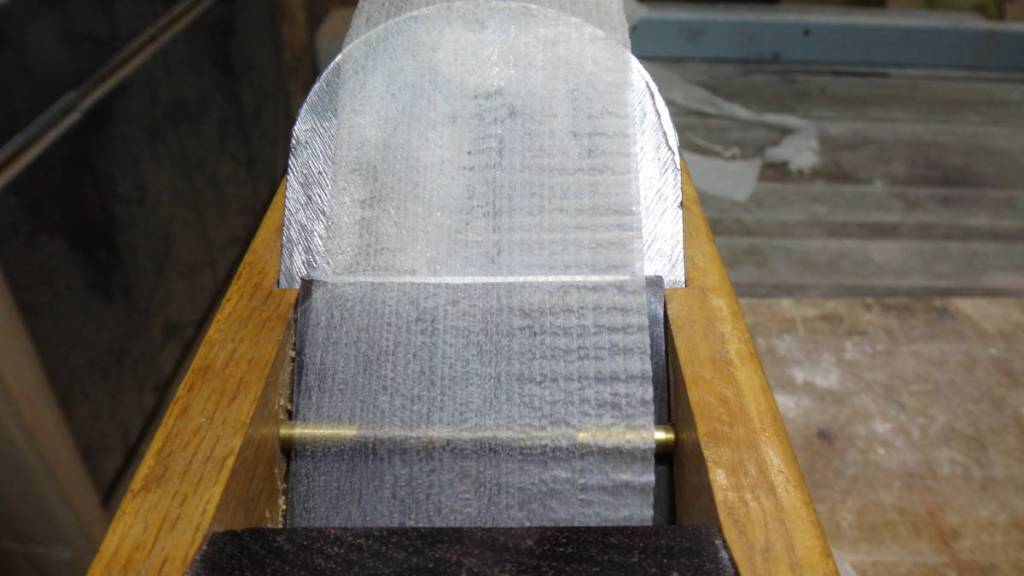
This 60mm blade belongs to one of my arashiko planes and was forged by Mr. Uchihashi Keisuke from Swedish K-120 steel. The brand name is “Keisaburo.” An excellent blade and still functional, but the itoura is getting a little skinny.

Tools

You will need the following tools to properly perform uradashi and uraoshi on a blade:

  1. A small hammer. Great force is neither necessary nor useful; Indeed you must be able to control this hammer very precisely, so the lighter it is the better. One with a pointy end like a funate or a Yamamichi, or a corner of the thin end of a Warrington hammer or tack hammer is ideal because the tiny impact face focuses maximum pressure on a small area, deforming the jigane efficiently. A small, pointy hammer also makes it easier to guide and control the hammer to ensure precise impacts. And control matters a lot because if you miss and strike the hard steel at the cutting edge it will be damaged and bitter tears will flow. Consider yourself duly warned, Oh Might Thor;
  2. An anvil of sorts. This can be any piece of steel with some mass and with a rounded-over corner. A piece of railroad track is great. I use the face of a small sledge-hammer clamped in my vise. A sharp corner is not good, so round a corner by grinding or filing and then smoothing it. A piece of thin postcard material glued to this rounded corner help keeps the blade from slipping;
  3. A small square or straightedge;
  4. A marking pen or scribe to mark the “target area” on the bevel;
  5. A rough diamond plate/stone or a mild-steel kanaban plate + carborundum powder;
  6. Parking pen or Dykem for coloring the ura’s lands;
  7. Regular sharpening tools (stones, water, etc.).
A small sledge hammer used as an anvil by clamping it in a vise with another clamp as a stabilizer.

Target Area Layout

Let’s begin by laying out the target area on the soft iron jigane at the blade’s bevel with a marking pen. Or you can scratch lines into the jigane with a metal scribe. This target area will indicate the area you will peck with your little hammer producing many small dents. You must not strike outside this target area even if tempted with donuts. Not even if they have those tasty sparkly sprinkles on top.

The striking area marked with marking pen.

The dents you will make with your little hammer need to be limited to a band on the jigane parallel to the cutting edge and beginning 2~3mm from where the jigane lamination begins extending to the end of the jigane lamination at the blade’s back, in the case of plane blades, or the face where the brandname is engraved in the case of chisel blades.

Make a line with your scribe or marking pen the full width of the bevel at this distance from and parallel to the cutting edge. Everything above this line in the direction of the blade’s back, in the case of plane blades, or the face where the brandname is engraved in the case of chisels and knives, is the primary target area. Make sure you get this right.

The dents need to extend across the full width of the jigane layer, except where the corners (ears) have been ground to a bevel at the right and left end of the blade, so the right and left limits of the target area are delineated by the ears.

Although we need to tap the full width of the blade to avoid stress concentrations, there is nothing to be gained by trying to bend the far right and left corners of the blade, so we want to focus approximately 2/3rds of our hammer impacts and the resulting dents near the center 1/3 of the blade’s width. Mark the right and left limits of this central area on your blade with a marking pen or scribe.

The Grip

If you are right handed, hold the blade in your left hand with your index finger extended and pressed against the ura parallel with the cutting edge, and about 5~10mm away from it. Press down with your thumb on the blade’s back clamping the blade between your thumb and the side of your index finger. Your other fingers should support the blade from the ura side.

This photo shows how to hold the blade against the anvil.

Your index finger will be the fence that keeps the blade in proper alignment during the tapping-out process.

Next, we need to figure out how to align and move the blade on the anvil, as well as where to place hammer blows in relation to the blade and anvil.

This photo shows the grip without the blade in the way. Notice how the index finger is touching the anvil. The blade is shifted right and left using the index finger as a fence to keep blade and hammer in precise alignment and under tight control.

Manipulating the Blade on the Anvil

Place the blade’s ura on the rounded corner of your anvil. You may want to tape or glue a piece of thin cardboard, postcard, or manila file folder to the anvil’s corner, not so much as a cushion, but to help prevent the blade from slipping, but this is not mandatory.

Adjust the distance between your extended index finger and the cutting edge as necessary so your finger is touching the anvil stabilizing its position, and so you can slide the blade to the left and right indexing off your finger to keep the target area in proper alignment.

Next, while still in position facing your anvil and with hammer in hand, move the blade aside and tap the rounded corner of your anvil with your hammer lightly. Memorize this location and your position because every tap from now on must be aimed at this same exact spot on the anvil.

The Tap Dance

The time has come to begin the dance.

Reposition the blade on the anvil and use your little hammer to tap the soft jigane layer at the bevel (only the jigane!) in the target area you marked earlier making a row of small dents in it.

These small dents don’t need to be pretty or uniform. Be patient because you may need to make hundreds of pecks, each one quite precisely.

Here is the key point to understand: You want each little dent to cause the jigane to deform and expand in length and width a tiny bit, gradually, until a significant degree of deformation accumulates. The hard steel layer, however, will constrain the jigane layer from expanding, causing the blade to bend, and causing the hard steel layer to deflect and curve towards the ura, bending it without breaking it. It doesn’t seem possible at first, but I promise it will happen, so please be patient.

The trick then is to use the grip described above with your forefinger indexing the blade against the anvil while moving your hand, along with the blade, a tiny bit right or left with each strike, with the each point of impact firmly supported on the anvil, in-line with the hammer blow, thereby squishing the jigane between hammer and anvil. In this way, since the hammer is always aimed at the same exact point on the anvil, you don’t need to worry about realigning it with each blow, removing several difficult-to-control variables from the tap dance at once.

Remember, keep the hammer and anvil precisely aligned, and move the blade left and right, not the hammer. It helps to touch the inside of the elbow of the arm using the hammer against your side in a fixed location to help maintain a consistent hammer swing and distance. Until you have mastered consistency, speed is risky.

Another key point to understand is that, if the point of impact of your little hammer is not directly in-line with the point where the ura on the opposite side of the blade is touching the anvil, the force of the hammer’s impact will tend to cause the blade to jump and wiggle around instead of deforming the jigane. This wastes time and energy and makes it difficult to make precise taps.

Here’s a video of Eleanor Powell tapping away with great control, and with the aid of her faithful Fido. I don’t recommend including a benchdog in your tapping-out routine other than as a deterrent to any pernicious pixies lurking in your workshop eager to cause you to miss with your hammer and chip your blade. Evil pixies!

Here’s a video of Sarah Reich tap dancing with every strike landing precisely in the target area. I need to get a pair of shiny red lycra pants like her to go with my most excellent aluminum foil hat with the curly copper wires and red fringe. Do you think they would make my butt look huge?

Remember, force is neither necessary nor useful. The goals is to make many precisely aligned tiny taps producing many small deformations in the target area, with no impacts on the hard steel layer.

Dent Removal

We talked about “dents” above. If you are using a round-faced hammer, those dents will be little crescents. If you use a hammer with a tiny striking face on one end like a Yamakichi or Funate, that tiny face will dig into the metal making ugly little peck marks instead of pretty little crescents. I have used all varieties of hammers but prefer the ones with pointy ends because their impact face is small and, it seems to me, easier to control. Six of one half-dozen of the other.

But remember that we will abrade away all those dents/pecks/craters after a few sharpening sessions, so appearance is of zero importance.

The Goldilocks Itoura

The goal, of course, is to bend the blade at the ura land just behind the cutting edge enough to create a useful, flat ura. But how wide should the itoura be when the process is complete? Among plane connoisseurs a narrow itoura is, like a willowy super model, considered a thing of beauty. By narrow I mean some where around 0.50~1.0mm.

A narrow itoura does indeed look sexy, so much so that fashion-conscious plane blade blacksmiths make a skinny ura a point of pride. And, in fact, a bulimic itoura makes it easier and quicker to sharpen the blade because the square millimeters of hard steel one must abrade/polish is minimal compared to a wider itoura.

The downside to the super-skinny itoura is that it wears out sooner, making it high maintenance. Now, I’m not suggesting that if your plane blade has a slender itoura it will demand weekly spa visits, twice monthly trips on a G700 jet to the Vienna Opera, annual ski holidays in Verbier, and bi-annual boob jobs, but there is no doubt you will need to do the uradashi tap-dance more often. Shiny lycra pants are optional, but ooh sooo sexy! (シ)

On the other hand, a wider itoura of 3~4mm has some advantages too. It’s easier to fit the chipbreaker (uragane), and you don’t need to do uradashi/uraoshi as often. Much wider than this, however, and I find it can be difficult to get a screaming-sharp edge at times. Moderation in all things, I guess.

I don’t know how to describe when to stop tapping-out the ura to obtain a good width for your itorura because every blade is a little different, but after doing it a few times you will develop a sense of when enough is enough. However, to develop that sense you should make frequent checks on your tapping-out progress by placing your handy dandy straightedge or square right on the itoura parallel to the cutting edge and sighting between the blade and the straightedge/square with a strong light shining at the gap. You will be able to see the itoura gradually bulge upwards at the center. Even a little bit of a bulge will give you a useful itoura, so don’t get carried away.

Uraoshi

Once the tap dance is done, we need to grind down the ura to form a new itoura, a process called “ uraoshi” (ooh/rah/oh/she)

The traditional method is to use the mild steel kanaban lapping plate mentioned above, although any true lapping plate will work. One sprinkles a small amount of carborundum powder on the plate along with a little water, and then works the ura side to side grinding down the bulged area to make a flat.

The problem with using lapping plates and carborundum powder is that not only is it a messy process, but unless you are careful to keep the right amount of wet grit on the plate, the results tend to be a tad irregular. I recommend using diamond plates or ceramic diamond stones (like those made by Naniwa) because they produce more consistent results quicker.

Whether you use a kanaban lapping plate or a diamond plate/stone, it’s important to focus pressure on the thin area where you need the itoura to develop. Pressure anywhere else is not helpful, but only wears out the itoura prematurely.

Here is wisdom: When they first attempt uraoshi most people try to stabilize the blade by applying uniform pressure across the back of the blade. This seems to makes perfect sense, but it always results in grinding a nasty little trench in the two side lands at the ura where it touches the extreme edge of the kanaban or diamond plate. Remember, the uraoshi process tapped out a bit of metal right at the cutting edge, and mostly at its center. This is what you need to abrade, NOT the right and left lands of the ura, and certainly no more than 3~4mm from the cutting edge. So please keep tight rein on your inner badger and carefully focus the pressure you apply during uraoshi only on the thin area where you need to restore the uraoshi.

Some people like to apply a thin strip of paste wax, perhaps 3~4mm wide, on the edge of their kanaban or diamond plate to prevent it from digging ugly trenches in their beautiful and delicate side lands. Others like to apply a thin strip of mylar tape at the same place for the same reason. These techniques all work, but professional sharpeners don’t use them because they know how to apply pressure correctly.

A quick touch of the blade on the diamond plate shows where the black marking pen ink has been removed along with the highest spots on the bent itoura.

After the itoura has been restored (perfection is not necessary), polish the blade using your normal sharpening routine.
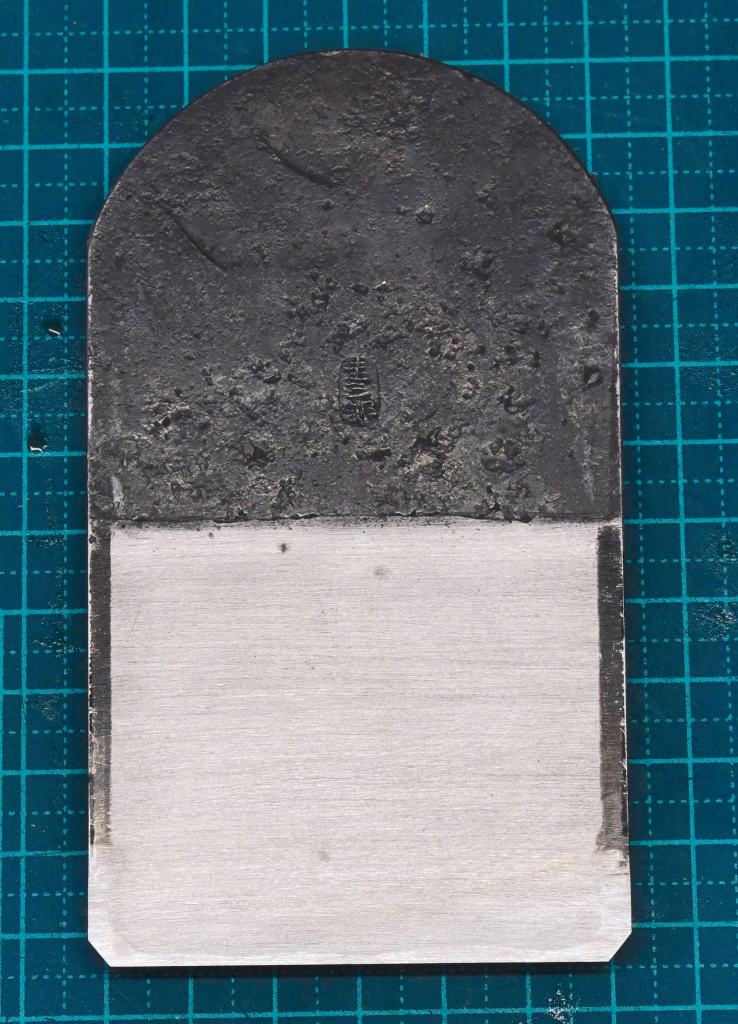
The restored itoura. Please notice the lack of trenches.
The bevel after working it on the diamond plate and stones. The remaining peck marks will disappear entirely after a few sharpening sessions. Notice how your unworthy servant has focused his abrasion efforts nearest the cutting edge. Good boy.

Chisel Blades Versus Plane Blades

Uraoshi and uradashi are operations typically, but not exclusively, performed on plane blades. About the only time chisels need to have uradashi performed is to restore the itoura after the blade receives major damage, like a big chip, a sad event all users of Japanese tools experience from time to time

There is a structural difference between plane blades and chisel blades Beloved Customer must understand when considering performing uradashi on a chisel blade.

Plane blades have a steel lamination that is more-or-less uniform in thickness because that’s all that’s necessary. Chisel blades, on the other hand, are subject to much higher bending stresses than plane blades, so to prevent yielding and failure, traditional chisels are forge-laminated with the steel lamination wrapped up the right and left sides of the blade, forming something akin to a structural steel U-channel, producing a higher moment of inertia, and therefore greater strength and rigidity,

Because of this additional strength, chisel blades are more difficult to bend at the right and left sides using uradashi techniques compared to plane blades. Indeed, they may break if you try.

Since you can hope to safely bend the steel lamination only in areas away from the more rigid sides, uradashi operations on narrow chisel blades will go as smoothly as throwing a cat through a screen door. I wouldn’t even try it on any chisel narrower than 18mm. Beloved Customers have been warned.

If you feel compelled to attempt uradashi on a chisel blade, my only advice is don’t peck within 3mm of the right and left sides.

With this article, our Sharpening Japanese Tools Series is complete (probably). Your humble servant hopes it has been informative. If Beloved Customer had the patience to read it all, and the clairvoyant ability needed to understand most of it, then you know a heck of a lot more on the subject of sharpening than I did when I started the journey. At least you have received some great ideas for sexy new additions to your simply mahvelous woodworking wardrobe!

YMHOS

If you have questions or would like to learn more about our tools, please click the “Pricelist” link here or at the top of the page and use the “Contact Us” form located immediately below.

Please share your insights and comments with everyone in the form located further below labeled “Leave a Reply.” We aren’t evil Google, fascist facebook, or thuggish Twitter and so won’t sell, share, or profitably “misplace” your information. If I lie may Iron Pixies pass gas in my cornflakes every morning.

Go back

Your message has been sent

Warning
Warning
Warning
Warning.

Leave a comment

Other Relevant Articles

The Challenges of Professional-grade Japanese Chisels

Four Habits and Three Mysteries

The carpenter dresses his plank, the tongue of his foreplane whistles its wild ascending lisp

Walt Whitman, “Song of Myself,” Leaves of Grass

The efficient woodworker must continue accurately cutting or shaving wood just as long as possible without stopping to sharpen his blades too frequently because time spent sharpening is time the primary job isn’t getting done. He must therefore develop unconscious habits to help him constantly monitor the condition of his blades and the quality of the work being performed.

The Four Habits

As the saying goes, “timing is everything.”

If Beloved Customer pays attention, you will discover there is a point where a woodworking tool’s blade still cuts, but its cutting performance begins to drop off. Sensing this transition point is critical because if you continue cutting wood much past it, three things are likely to result.

  1. The energy needed to motivate the blade will increase dramatically;
  2. The quality of the cut will quickly deteriorate;
  3. The time and stone expenditure necessary to resharpen the blade will increase.

That’s three variables that could be expressed in a pretty graph if one was so inclined, a graph that would have at least one inflection point. Which variable is most important to you?

Most woodworkers fail to consider these efficiency variables; They simply keep cutting away until the tool either becomes too difficult to motivate, or the results resemble canine cuisine, then stop work, curse the poor innocent tool (often hurting its feelings) and resharpen the blade. But the wise woodworker will focus on minimizing the total time and total cost required to maintain his tools even if it means he must pause work to resharpen his blade well before its performance deteriorates badly.

This sharpening inflection point will vary from blade to blade and job to job because every blade, every piece of wood and and every user are unique. Simply counting strokes is not enough. It takes attention and practice to sense when a blade has reached this point.

The following are some things you should pay attention to, and habits you should develop, to help you identify the sharpening inflection point.

Habit No.1: Sense Resistance Forces: As you use a tool such as a plane, chisel, or saw, tune your senses to detect the point at which the blade becomes more difficult to motivate. As the blade dulls, the force that you must apply to the tool to keep it cutting will gradually increase. This is especially noticeable when planing and sawing. Develop the habit of paying attention to this force so you can determine when it is time to resharpen.

Your humble servant recommends you regularly use an oilpot to ensure any increased resistance is actually due to a dulled blade and not just increased friction between the tool and the wood (or pixie predations (ツ)).

Habit No.2: Listen to the Music: Pay attention to the tool’s song. That’s right, turn off the radio and CD player, shush that jabbering little 3 year old rolling around in plane shavings under your bench, and listen to the music your blades make instead. If you do, you will notice that each tool sings its own song, one that varies with the wood, the cut, and the condition of the blade. Is the blade singing, lisping, or croaking as it chews wood? Is it a saw with a basso profundo voice, or a mortise chisel with vibrant tenor tones, or perhaps a soprano finishing plane singing a woody aria? A sharp blade makes a clearer, happier sound when cutting or shaving wood than a dull one does. Learn the bright song it sings when it’s sharp and the sad noise it makes when it’s dull, and all the tones in between. If you have ears to hear, it will tell you what kind of job it is doing and when the time has come to resharpen it.

Habit No.3: Eyeball Your Cuts: Watch the tool and the wood it has cut. Is your chisel cutting cleanly, or is it crushing the wood cells? A sharp chisel blade cuts cleaner than a dull one. You can feel and hear the difference. And you can see the difference in both the shavings or chips and the surfaces the tool leaves behind. Don’t be a wood butcher: develop the habit of frequently checking the quality of your cuts. It doesn’t take extra time, and your tools will wiggle with happiness at the attention you give their efforts.

Habit No. 4: Feel the Surface of the Wood: Is your plane shaving the wood cleanly, or are the surfaces it leaves behind rough with tearout? Develop the habit of running your fingertips along the path your plane just cut to sense surface quality. If you detect roughness or tearout, the plane may be out of adjustment, or more likely, the blade is becoming dull. Or maybe you need to skew the blade, change the direction of the cut, or moisten the wood’s surface with a rag dampened with planing fluid (I use industrial-grade busthead whiskey, or unicorn wee wee when I can get it).

Next, run your fingertips across the path of the cut your plane just made to detect ridges that may have been created by irregularities or chips in your blade’s cutting edge. Every one of those ridges indicates a small waste of your time and energy and a flaw created in the wood. Don’t forget that the tops of those ridges contain compressed wood cells (kigoroshi) that may swell back to their original volume becoming even more pronounced with time.

These tasks are easily accomplished in passing with a few swipes of the fingertips along and across the wood between cuts without spending any extra time.

These techniques are not rocket surgery. They don’t take extra time. They can be applied to any cutting tool all the time. The key is to pay attention; To listen to one’s tools; To watch their work; To feel their work.

Let’s next shift our attention to three of the Mysteries of Woodworking, their potential impacts on mental health, and how to avoid unfortunate wardrobe decisions.

The Mystery of the Tilting Board

To discuss this Mystery, we will call on the services of my old buddy Richard W. (Woody) Woodward. You may remember him from a mystery story in a previous article. Yes, it was a near thing, but he has fully recovered from alcohol poisoning after chugging a 5th of tequila in an emotionally-charged bout of drama over a brittle blade.

Anyway, this mystery goes something like this. Woody is planing a board about the same width as his plane’s blade down to a specific thickness, but for some unfathomable reason, the board ends up thinner on one side of its width than the other. He checks the blade’s projection from the plane’s mouth, but it is absolutely uniform. In fact, to plane the board to the correct thickness he ends up having to tilt the blade to take less of a cut on one side of the board than the other.

Most everyone has experienced this curious and wasteful phenomenon, but because it is not consistent, many never solve the mystery of the tilting board, blaming it on Murphy’s ministrations or pixie perfidiousness. But never fear, because the solution is elementary, Dear Watson.

In Habit No.4 listed above, your humble servant mentioned residual “ridges.” Please be aware that these ridges are not only unsightly and may damage applied finishes later, but they can actually keep your plane from cutting shavings of uniform thickness. Think about it.

Let’s assume you are planing a board the same width as your plane blade, but the blade has a tiny chip near the right end of the blade that leaves behind a .0005″ high ridge on the board’s surface. With each subsequent cut using this same blade with the same defect the right side of the plane’s body and likewise its blade will be elevated above the board’s surface by .0005″, while the left hand side, which doesn’t have any ridges for the plane’s sole to ride on, is shaved the normal amount. The difference in the amount of wood shaved from the right and left sides with each individual cut is minute, of course, but it accumulates with each pass sure as eggses is eggses

Assuming you checked that the blade is projecting from the plane’s mouth the same distance across its entire width, with each pass the surface of the board becomes tilted, a little high on the right side and a little low on the left, so that instead of a flat surface square to the board’s sides, you have produced a flat surface that is thinner on the left side and thicker on the right. Muy malo, amigo.

If, while performing the checks listed above, you detect ridges on a freshly-planed surface, immediately check the blade’s cutting edge by running a fingernail along it’s width. Don’t worry, it won’t dull the blade unless you are also a bricklayer. Your nail will feel the catch and grab of defects too small for your eye to see. A few small ones may make no difference, but on the other hand, they might make a big difference.

Often these ridges will show up as lines of thicker wood in your plane shavings. You do occasionally examine your shavings, right?

With this, the Mystery of the Tilting Board, one that has driven many a woodworker to distraction, too often leading to regrettable fashion decisions involving stiff, canvas jackets with long sleeves connected to straps and buckles that fasten behind the barking woodworker’s back and even pass under the crotch (decidedly uncomfortable, I assure you), has been solved. Rest assured, only the Beloved Customers and Gentle Readers of the C&S Tools Blog can be certain of avoiding this undignified state of dress.

The Mystery of the Missing Plan

Here is another mystery of woodworking, one that especially vexes those tender souls new to the calorie-burning fun of dimensioning boards by hand.

Let’s say Woody needs to turn a bunch of twisty, banana-shaped boards into flat, square, precisely dimensioned and cleanly-surfaced drawer fronts to make 24 piston-fit drawers. Let’s also assume the wood he uses for each drawer-front is unique in both appearance and warpage. It’s a heck of a lot of wood to cut with no time to waste, so our erstwhile wood butcher gets out his trusty handplane, sharpens it up, adjusts the blade and chipbreaker, gives it a kiss for luck, and proceeds to send wood shavings flying through the air with gleeful abandon!

But wait just one frikin minute! No matter how much Woody planes, he just can’t seem to make some of the surfaces flat, free of wind and the sides square to the faces. It’s like some kinda moving target! Indeed, eventually he is dismayed to discover some of the board’s edges are getting too thin. What to do, what to do!?

Drama queens like dear Woody typically begin interesting antics at this point, but not so our Beloved Customers who, unlike Woody, are stoic, laconic, intelligent and of course, sharply-dressed, and therefore pause their physical efforts to focus their mental powers on solving this mystery.

At this point the resident benchdog may perk up his ears, tucks in his tail and beetle away in fear of the smoke and humming sound emanating from BC’s ears; Master Benchcat arches his backs, hisses like a goose, and flees the workshop as if his tail is on fire; And the resident pixies frantically hide in the lumberpile to avoid being disrupted by the power they sense radiating from BC’s mighty brain!

Of course, the culprit is simply operator error.

Don’t forget to clean up the cat pee because it’s toxic to tools. Seriously.

Too few people really pay attention when using their tools, focusing like a badger digging out a tasty squirrel on making as many chips or shavings as quickly as possible, all without a plan.

For example, a failure common to many woodworkers is to start planing without first identifying and marking the high spots that must be cut down first, and then areas to be cut down next. In other words, they fail to plan the sequence of the work. The result is that time, steel and sweat is wasted cutting wood that didn’t need to be cut while ignoring wood that should have been cut first. And all for lack of a plan measured with a straightedge or dryline and marked on the board with a few strokes or circles of a lumber crayon or carpenter pencil. Too sad to bear stoically or to describe laconically even if one’s wardrobe is perfection.

This mystery too has been known to increase profits of the mental health industry and even (heaven forfend!) fashion decisions involving poorly-tailored canvas jackets with itchy crotch straps. Simply not to be borne!

Remember, when the goal is to make a board flat efficiently, always begin the job by identifying high spots and low spots and marking them. Then, always begin planing by shaving down the high spots while avoiding the low spots. One mystery solved!

The Mystery of the Sounding Board

Lastly, we come to perhaps the most frustrating and least-understood of the Mysteries of Woodworking. Not to say there are no other mysteries, because there is always that most ancient of riddles that baffled even the enigmatic Sphinx, one which has tortured men since before Pharaoh wore papyrus nappies, namely that of how best to answer one’s wife when she asks if her new pair of jeans makes her bottom look “simply humongous.”

Sadly, this is one mystery upon which your humble servant is unable to shed light because even I “never could find no sign on a woman’s heart.”

But I digress. This Mystery is one that torments those badly befuddled souls like friend Woody who, lacking a plan to follow, eyes that see, hands that feel and ears that hear, unwisely assume the board they are planing is stable simply because it doesn’t walk away to get a beer from the shop’s mini fridge.

Perhaps it is the malevolent influence of pernicious pixies that causes him to ignore that the downward deflection the pressure of the plane unavoidably induces in a warped, unevenly supported board, or in a board being planed on a flimsy or crooked workbench.

This unintentional, indeed unnoticed deflection too often causes the board to escape the cutting blade resulting in hills being raised and valleys remaining low where flat surfaces were required. Of course, such evasive behavior leaves the handplane bitterly dissatisfied.

But this waste of wood, steel, sweat and goodwill can be avoided because, even if the board isn’t rocking like Zepplin and dear Woody can’t feel the board deflecting away from his plane’s cutting edge, he could detect the change in his plane’s song when it is cutting an unsupported area of a board if he only listened because the piece of wood he is shaping is also a “sounding board.”

Think of all the money saved that Woody would otherwise spend on lithium, Prozac, and small hotel rooms with padded walls to ease his mental anguish if only he had the foresight to make a plan, train his hands and eyes to confirm his tool’s performance, and his ears to listen to what his plane tries to tell him.

Here is wisdom: The experienced professional will investigate each board, make a plan for his work, mark the plan on the wood, shim the still un-planed off face of the board so it is evenly supported on a flat workbench surface to prevent it from rocking and deflecting downward too much, and sharpen his blade if necessary before making a single cut. Then instead of moving his plane randomly like a simian Picasso with a paintbrush, will make each cut intentionally, purposefully, in accordance with his plan to make the work go as efficiently as possible.

He will also pay attention to the reaction of the wood and feedback from his tools during each cut. He will use the four habits discussed above, and maybe even a drop or two of unicorn wee wee to limit tearout if his budget allows.

If Beloved Customer doesn’t have a master to give you a dirty look or to box your ears when you impatiently err, you must train yourself. Slow down. Make a plan. Execute the plan. Pay attention, use your senses, and spend the time needed to evaluate progress against the plan. Consider carefully why the work is going well or why it is not.

This process will slow the work down at first, but over time it will sharpen your instincts, tune your senses, and help you develop good habits that eventually accelerate your work while improving the quality of the end product.

It will guide you along the path to becoming a master craftsman.

May the gods of handsaws smile upon you always.

Until we meet again, I have the honor to remain,

YMHOS

If you have questions or would like to learn more about our tools, please click the see the “Pricelist” link here or at the top of the page and use the “Contact Us” form located immediately below.

Please share your insights and comments with everyone in the form located further below labeled “Leave a Reply.” We aren’t evil Google, fascist facebook, or thuggish Twitter and so won’t sell, share, or profitably “misplace” your information. If I lie may inch-long purple maggots infest the gouges in my crotch made by my straight-jacket straps.

Go back

Your message has been sent

Warning
Warning
Warning
Warning.


Japanese Handplanes – Part 1: East Vs. West

C&S Tools Sukezane brand 70mm finish plane. Shirogami No.1 steel blade hand-forged by Nakano Takeo, body by Inomoto-san.

The Road goes ever on and on,
Down from the door where it began.
Now far ahead the Road has gone,
And I must follow, if I can,
Pursuing it with eager feet,
Until it joins some larger way
Where many paths and errands meet.
And whither then? I cannot say.

The Road goes ever on and on
Out from the door where it began.
Now far ahead the Road has gone,
Let others follow it who can!
Let them a journey new begin,
But I at last with weary feet
Will turn towards the lighted inn,
My evening-rest and sleep to meet.

Bilbo Baggins

Your humble servant has received many inquiries over the years from Honorable Friends and Beloved Customers (may the hair on their toes never fall out!) about how to setup, maintain and use Japanese planes to which I have gladly responded when the request for information was made politely.

The Japanese hiraganna handplane is an elegant tool with a simple yet deceptively sophisticated design, not a difficult tool to master once one understands its unique design principles and learns a few basic techniques easily taught in person; But it can be frustrating to master them using only written guidance.

But despite my hesitation heretofore, I believe the time has come to begin this journey. I pray Beloved Customers will have the courage to accompany me down this road that goes ever on and on until we reach the lighted inn. When we arrive, the first round of root beer will be on me, so drink up!

Let’s begin the journey by examining some relevant terminology. Don’t forget your handkerchief!

Terminology

The Japanese Yariganna in-use. Prior to the advent of the handplane to the islands of Japan, an approximation of this tool was used for finish-planing the surfaces of wood following the adze. It creates a unique and practical surface texture.

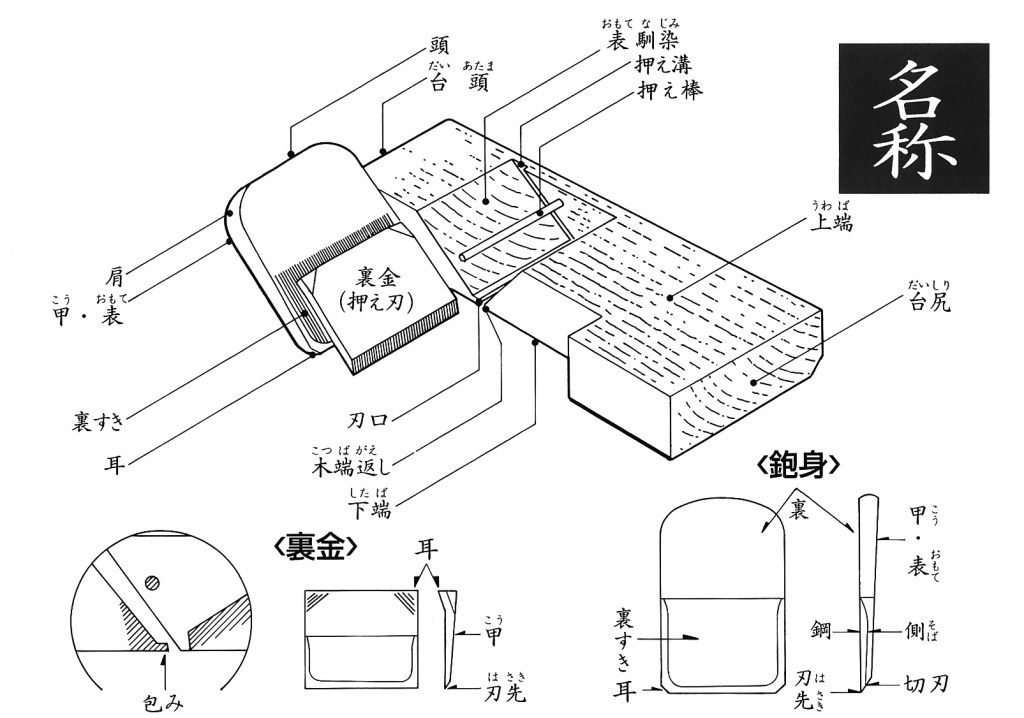
In this and subsequent posts in this series your humble servant will not attempt to educate Beloved Customers in all the Japanese language terms for every part of the plane, nor will I use Japanese conventions for describing handplanes, since that would be about as useful as ice-skates on a hog. Instead I will use standard English language terms wherever possible. There is an illustration below that shows the various components and features along with Japanese language labels for those interested.

Indeed, since the plane is a relatively recent tool in the Japanese woodworker’s toolbox, and has a much longer archeological history in the West, it seems silly to use more Japanese words than absolutely necessary to describe something that did not originate in Japan, and can easily be described in English. I will, however, venture to describe some of the more common general terms specific to the Japanese handplane.

I am neither a lawyer nor a government employee and so see no need to make things more confusing than necessary. I humbly apologize in advance to any purists who enjoy being confused.

The standard handplane in Japan, and the one used for creating and/or smoothing flat surfaces (versus rabbet, chamfer or molding planes) is called the “hiraganna,” pronounced hee/rah/gahn/nah, and written using the Chinese ideograms 平鉋 , without emphasis on any part of the word.

The first character 平 is pronounced, in this case, “hira” (there are at least 6 standard pronunciations for this character as it is used in Japan) and means “flat.” makes sense, right?

The second character 鉋 , written “kanna” in the Latin alphabet and pronounced “kan/nah,” means “plane” (as in “handplane”). This character is comprised of two standalone characters combined to make a single character, a common practice in the Chinese and Japanese languages. The one on the left side, 金, means gold or metal, while the one on the right, 包 means “to wrap.” Kinda sorta makes sense; Almost hardly.

The character for kanna was not invented in Japan but is said to have been used in China since the Táng period AD618 – 907, although the tool it represented at the time was a multi-blade scraper of sorts and not a handplane.

Comparison Between Western and Japanese Wooden-bodied Bench Planes

If your humble servant may be permitted a brief digression on a personal subject, I would like to clarify a point of some small relevance to this explanation of the Japanese handplane.

I have at times been called a Japanophile, and although I confess to being fond of the mountainous islands and the wonderful people of Japan, the years I have spent living in Japan, and my ability to read, write and speak the language were not born of some starry-eyed infatuation with or even simple admiration of Japan, but by practical service obligations, educational pursuits and my work in the construction industry.

My point is that I prefer Japanese tools and techniques when I think they are superior, and by the same token prefer Western tools and techniques when I believe they are superior. Consequently, I like to flatter myself that I can provide a relatively unbiased viewpoint, one which will come into clearer focus near the end of this article.

Of course, those who prefer Western tools and techniques above all others will say I am biased towards the Japanese way, while those who prefer Japanese tools and techniques above all others will insist I am biased toward Western tools and techniques. There is no way to win such an argument, so Beloved Customers must judge for themselves. Anyway, back to the subject at hand.

A detailed treatise comparing wooden-bodied Japanese handplanes to steel-bodied Western handplanes would be an extravagant waste of Beloved Customer’s precious time, so I will resist the temptation. But I would be remiss to not point out that Bailey-pattern steel-body handplanes do have a few serious advantages over wooden-bodied planes in general, while wooden-bodied planes in general, and Japanese hiraganna planes in particular, have several serious advantages over modern Bailey-pattern planes the thoughtful woodworker should understand.

Some of the advantages of modern steel-bodied Baily-pattern planes over all wooden-bodied planes include the following:

  1. The steel plane’s body is unaffected by seasonal humidity changes and therefore warps less and requires less fettling. This is a huge advantage;
  2. The steel plane’s sole is harder and wears slower than a wooden sole, and therefore lasts longer and requires less fettling. Also, since the sole wears slower, the mouth does not easily become wider as soon, and seldom if ever needs to have a new mouth inlet. This is another huge advantage.

Both of these advantages can have a humongous impact on the effectiveness and productivity of the tool over the years.

Some of the advantages of Japanese wooden-bodied planes over steel-bodied planes include the following:

  1. The wooden body is not as easily damaged as a traditional cast-iron steel-bodied plane’s body which will bend and/or fracture if dropped onto a hard surface (the ductile cast iron used in some high-end planes nowadays is a significant improvement in this regard). Fracturing has been the bane of cast-iron-bodied planes since the beginning. This is a huge advantage;
  2. The plane’s Owner can modify, repair, or make a replacement wooden body exactly to his preferences quickly and inexpensively;
  3. The wooden sole is softer than a steel sole and therefore is not only less likely to scratch the surface being planed, but will tend to burnish it instead;
  4. The wooden sole is easier to true, fettle, and even modify;
  5. The wooden body is lighter in weight and therefore both less tiring to use and easier to transport;
  6. Japanese handplanes have lower profiles so they take up less volume in the toolchest and/or toolbag, and are easier to store and transport;
  7. Japanese handplanes have few if any screws and no levers so adjustment is simpler, more intuitive, and entirely dispenses with the clumsy, often sloppy mechanical linkage common to mass-produced Bailey-pattern steel-bodied planes;
  8. And finally, the biggest advantage of the Japanese handplane is, (drumroll please), the blade. If hand-forged from high-quality steel and properly heat-treated, the blade of the hiraganna plane will become much sharper, stay sharper longer and will be easier to sharpen than the blades of modern steel-bodied Bailey-pattern handplanes. No contest. Your humble servant believes the blade’s performance is the most important aspect of a handplane because, after all, it is a cutting tool, not a paperweight (although I admit to having a pretty little LN No.1 benchplane in white bronze I use as a paperweight. My associates here in Japan can’t figure out what it is so I tell them it’s for shaving kiwi fruit (ツ)).

Allow me to expound a little further on the advantages of the Japanese handplane:

Blade Performance:

A beautifully-polished kanna blade with what appears to be excellent grey jigane and a milky-silver hagane cutting edge. It takes your humble servant’s breathe away.

The Japanese planes we carry have hand-forged laminated blades made from specialized high-carbon tool steel to meet the performance expectations of professional woodworkers in Japan. Not steel intended for farming implements, car springs, or dies.

The crystalline structure of this steel once made into a blade by our blacksmiths is fine-grained and uniform. Blades are exceptionally hard at 65~66Rc, and remain sharp a long time while being easily sharpened.

There was a time in centuries past when Western blades were of near equal quality, but the Western tool corporations and their Chinese suppliers ended those days with a knife to the gut.

Sadly, the blades of most Bailey-pattern planes manufactured nowadays are made of high-alloy steels for which quality control can be easily automated, but which were never intended for handplane blades. These steels are undeniably tough, but won’t become very sharp initially, quickly dull, and are, relatively speaking, an “evil screaming bitch” to sharpen (pardon the excessively-technical jargon).

Blade Appearance:

While it used to be that Western wooden-bodied planes had interesting maker’s marks stamped in their blades, such is no longer the case. Japanese planes, on the other hand, make a point of having decorative engraving, stampings and surface treatments applied to their blades for a significantly more interesting presentation of the blacksmith’s art than the plain, boring sanded steel of modern Western planes.

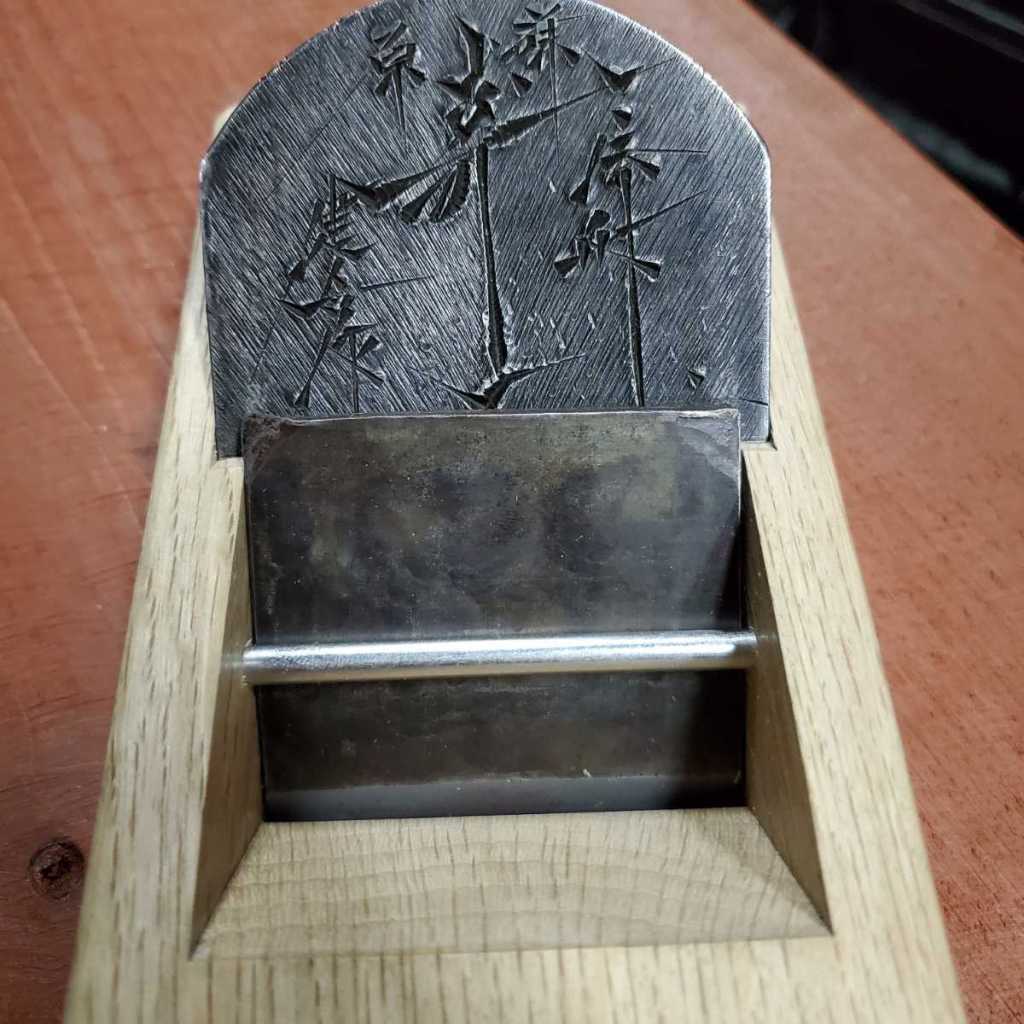
A plane by Usui Kengo with a nekkiri yabane (cut arrow feather) ground and stunningly artful calligraphy handcut into the face.

Reliable Blade Retention:

The blade of Japanese handplanes is wedged tightly into two grooves in the side of the body preventing shifting and rotation, and providing reliable settings. Most modern Western handplanes rely on a relatively complicated and less-secure blade retention and adjustment mechanism.

Simplicity:

The standard Japanese hiraganna plane has at most 4 components: The body, blade, chipbreaker (uragane), and chipbreaker rod. Planes with adjustable mouths will have more parts, but those are not standard planes. Screwdrivers and wrenches are not necessary for adjusting or disassembly of Japanese handplanes. Western planes often, but not always, have at least 21 and sometimes more components and require tools to field-strip.

And all the parts in Bailey-pattern handplanes have built-in slop which grows worse with use and often makes adjustment irritating and sometimes even unreliable.

The Japanese hiraganna does not have a separate wedge or a mechanical assembly securing the blade in-place. Instead, the blade itself is wedge-shaped, narrowing in thickness from the head to the cutting edge, so that it fits tightly into two grooves, one cut into each sidewall of the mouth opening, for a secure fit, an elegant, simple and utterly reliable design.

The various component parts of a Japanese Hiraganna. There are only 4.

Lower Profile and Reduced Weight:

Japanese hiraganna have thinner bodies and a lower profile than Western Bailey-pattern planes and even Western wooden-bodied planes. Accordingly, they weigh less and take up less space in the toolbox.

While there are times when your humble servant appreciates the extra momentum a heavier steel body affords when making deep cuts, those instances are limited to specific applications. The rest of the time the extra mass is like a bloated and corrupt government agency: a pointless burden.

In all other applications, the lighter weight of the wooden-bodied Japanese hiraganna plane is a blessing.

Smoother Surface

Where wooden-bodied planes of all types excel is the superior finish they leave on the wood they are used to plane. That is not to say steel-bodied planes cannot create a perfectly smooth surface, but it is the nature of steel to develop dings and burrs in-use that frequently leave scratches in the wood they are planing. And while a wooden sole will burnish a wooden surface, the best steel can do is rub it.

Western Steel-bodied Handplanes: The Right Tool for the Right Job 適材適所

There is a saying in Japan I am told that comes from the boat-building tradition where many types of wood are used for the various components in a quality vessel, and it goes something like this: Tekizai tekisho 適材適所 meaning: “The right wood for the right place.”

Your humble servant is a pragmatic son of a gun, and a firm believer in using the best tool available to achieve the best results possible. Accordingly, it would be exceedingly foolish to insist that Japanese handplanes are always the best tool for every planing job. Indeed, I have used a combination of both Bailey-pattern steel-bodied handplanes and Japanese-style handplanes for many decades, selecting the best tool for the specific job at-hand. So what steel-bodied planes do I believe excel?

Scrub Plane

I have found the Stanley No.40 furring plane and especially its more modern equivalent the Lie-Nielson 40 1/2 scrub plane to be superior for removing material when dimensioning lumber (making it thinner and flatter).

This is an extremely simple plane with a narrow, thick blade 1.450″ x 3/16″ ground to a large curvature and a big mouth designed to hog lots of wood. The handles make it easier to leverage body weight into the cuts.

In the case of the LN model, the blade is A2 steel, a material developed originally for dies, not plane blades, a tool steel that will never become especially sharp, and which dulls quickly, but once it has dulled to a certain point simply keeps on cutting, seemingly forever. And while the blade may become dented and dinged, it will not easily chip, perfect for the rough work of dimensioning dirty and stone-infested rough-sawn lumber.

The ductile iron sole of the LN product will be of course be scratched by dirt and stones hidden in the wood, but who cares? Better a steel scrub plane than the white oak of my Japanese planes. I consider Lie-Nielson 40 1/2 to be an essential plane in my toolchest.

Block Plane

The steel-bodied Western block plane is also an essential tool IMHO.

There are of course Japanese planes with similar dimensions, of lighter weight and with better blades, but they all have one weak point, namely the area right in front of the mouth becomes scratched and grooved and wears quickly because block planes are often used to trim and clean edges, a job which applies high point loads on the mouth. The fix used in Japan is to inlet a brass plate at the mouth. We carry small planes with this feature when new.

Also, I use my block planes for finish carpentry and installations which involves working around hidden finish nails, little pieces of steel that damage wooden bodies and hard blades, but which a steel block plane shrugs off.

I own several block planes, being fond of experimenting with tools, but have found the Lie-Nielson No. 60-1/2 rabbet block plane with nicker to be the one most useful for me.

Jointer Plane

Another Bailey-pattern steel-bodied plane I consider to be excellent is the jointer plane. When a young man I owned an old Stanley No.7 jointer plane I bought at a flea market, but it fell from the back of my 1966 VW van many moons ago and suffered the fate common to most old cast-iron planes, breaking both the old cast iron body and my younger heart in half. I bought the Lie-Nielson version many years later and have been pleased with it’s performance (my expectations were never very high).

It’s a monster at 22″ long and weighing 8-1/4 lbs. I hate the heck out of the A2 steel blade. To make things worse, the sole was warped when I bought it new, so I had to spend hours flattening it on sandpaper and glass. Why do I like it? The cast ductile iron sole is tough and never warps (or at least hasn’t since it came to me). The extra length makes it especially stable for cuts ending or starting off the piece of wood I am planing. When I have a large surface such as a table to flatten, my No.7 may not cut like a dream or be easy to use, but it always makes the job go quicker.

Conclusion

In this post we have briefly touched on the history, terminology, advantages and disadvantages of the Japanese hiraganna plane. We have also compared it to Western planes, and concluded with several examples of Western handplanes your humble servant believes to be superior to their Japanese counterpart.

I hope you will agree that the Japanese handplane is a tool worth mastering if only because of the excellent work it can help you execute. Besides, they’re a lot of fun.

In the next post in this story of supernatural intrigue and inter-dimensional romance we will discuss how to properly adjust a Japanese hiraganna plane without hurting its feelings.

YMHOS

Look at them,’ mother Troll said. ‘Look at my sons! You won’t find more beautiful trolls on this side of the moon’ (John Albert Bauer (1882–1918) A difficult choice indeed for a fairy princess.

If you have questions or would like to learn more about our tools, please click the “Pricelist” link here or at the top of the page and use the “Contact Us” form located immediately below.

Please share your insights and comments with everyone in the form located further below labeled “Leave a Reply.” We aren’t evil Google, fascist facebook, or thuggish Twitter and so won’t sell, share, or profitably “misplace” your information. If I lie may my jointer plane break in half and bust my toes.

Go back

Your message has been sent

Warning
Warning
Warning
Warning.

Leave a comment

Other Posts in the Japanese Handplane Series:

The Mystery of the Scratched Blade

Redwoods

The wiser a man is, the more he stands ready to be educated.”

Joe Abercrombie, A Little Hatred

In this post your humble servant will offer some advice that, if followed, will save Gentle Readers time, money, and wear and tear on their valuable woodworking tools. These are not original techniques; I stole them long ago from professional woodworkers in Japan. Wise Gentle Readers will be as bold.

But first we must solve another mystery, so prepare to enlist the help of your inner Agatha Christy.

As with the other mysteries we have examined, this one involves no dark and foreboding alleys shrouded by ominous mist and concealing footpads with rubber knives, or bottles of vintage Tabasco Sauce spiked with arsenic. Indeed, nothing so mundane.

Investigating the Scene of the Crime

Last December your humble servant received an ordinary Christmas Card from an old friend, probably a “re-gift.” It was unusual in that it contained brick dust. The sender of the card was my old friend Woody, a charming fellow, diligent woodworker, amateur thespian, and possible alcoholic. Gentle Reader may recall this gentleman from a previous adventure I wrote about called The Mystery of the Brittle Blade. Wait a minute! Now that I think about it, you went with me to visit Woody at that time and actually helped solve his little mystery. Thanks for your help!

BTW, the screenplay for that story is currently being reviewed by top producers and directors in Hollywood, at least that’s what the movie promoter I met at Krispy Creme Donuts here in Tokyo promised (ツ). He seemed like a reliable guy so I paid for his donuts and coffee.

Obviously, Woody’s dusty Christmas Card was a subtle cry for help so I went to visit him in his rickety, leaning workshop during my international travels last January. When I got onto the airplane I was shocked to find myself only one of approximately sixty travelers on a commercial flight that normally carries 350+ passengers, so I reclined across the center aisle of seats in cattle-class and slept like Nero after a night on the town.

Gentle Reader may recall Woody’s shop from the visit we made there together. Yes, it’s, still cold and dark and filled with the pungent funk of his faithful mutt Stinky.

Upon entering his shop I found Woody collapsed on the floor, an empty tequila bottle in one hand and a shiny bronze No.4 smoothing plane by Lie-Nielson in the other blubbering like a fool and muttering something like “Death, a necessary end, will come when it will come.” Woody ain’t much of a scholar but he has a romantic soul that sees every difficulty in life as Shakespearean in nature.

Seeing that my friend would be of no help in solving this mystery, I left him on the floor to practice his lines while I began my investigation of what, judging from the source material he was reciting, could only have been caused by something akin to Brutus’s betrayal.

The obvious first clue was his No.4 smoother, so I pried it out of his paws, dried the tears he had dribbled all over it, and observed a series of deep, uneven scratches on its sole, more or less in line with its the long direction. Whereupon, I twirled my white mustaches like an older, more handsome Hercule Poroit, and asked myself the following questions:

Question 1: What could have possibly created these scratches? Had iron pixies been using Woody’s beautiful plane to shave bricks?

A quick investigation of the workshop revealed several suspect bricks, but no signs of iron pixies at play. I remembered seeing Woody use these same bricks to brace the legs of his combination router table and barbecue betimes (he makes wonderful barbecued pork ribs, marinated in a whiskey sauce, BTW). I concluded it unlikely that either Woody or pesky pixies would have used this valuable plane to shave bricks at the unthinkable risk of disturbing a delicate combination tool (router table/barbecue) of such importance.

As I considered the wood Woody had been working, another question popped out of my brain like an egg from a hen:

Question 2: Is there anything that grows naturally inside a tree that is harder than a handplane’s sole and large enough to have caused such deep scratches? And if they do exist, could these particles have been maliciously concealed inside the growing tree by compadres of the shambling horde of 6-armed, green-skinned, Fanta-guzzling aliens that follow me everywhere? BTW, If you have seen these aliens, please send photos!

I next removed the plane’s blade, which was made of a tough and difficult to sharpen metal called A2, developed for making dies and other industrial components, and checked its condition. As suspected, the edge was not just deadly dull, but exhibited dents perfectly in-line with the deepest scratches in the plane’s sole. Egads! The thlot pickens!

Of course, Gentle Reader is aware that many varieties of wood contain hard silica particles that can wear out tools and quickly dull cutters, but they are seldom large enough to create deep scratches of the kind I saw on Woody’s plane’s sole. Hmmm.

Question 3: If these hideously-hard particles did not grow inside the tree, and were not concealed inside the tree by aliens, exactly how did the infernal particles that made these scratches come into contact with Woody’s pretty plane?

To make a closer visual inspection possible, I recovered my magnifying glass and deerstalker hat from my truck parked in Woody’s beer can-cluttered driveway.

Could the damage have been caused by nails, screws or staples left in the wood? Perhaps, but the appearance of the damage to the blade would have been different.

Pixie toenail clippings? Happens more often than we realize.

A tiny fragment from a divorce lawyer’s heart? Certainly any piece of such an organ would be harder than stellite, but being a fragment of a microscopic organ, such particles are harder to find than an honest politician in Shat Francisco.

“No,” I confidently declared; The culprit was harder than all these substances, more insidious than even Murphy’s pointy purple pecker, a substance all around us, one we often ignore. Rejoice Woody, for the mystery is solved!

Dust & Grit

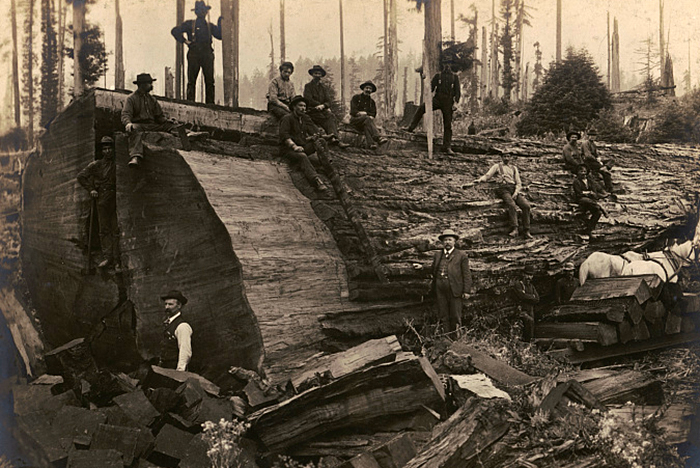
Logging Redwoods in Humbolt County California, 1905

Politics and journalism aside, we live in a dusty, dirty world, and although the steel in your tool blades is very hard, ordinary dust and dirt contain plenty of particles much harder. I guaran-frikin-tee you that collision with even a small particle of mineral grit embedded in the surface of a piece of wood can and will damage a blade’s cutting edge.

You may believe the damage is minimal and of little concern, but every time your blade becomes dull, you must resharpen it. Every sharpening session costs you time pushing the blade around on stones, time not spent cutting wood. And sharpening turns expensive blades and stones into mud. This is time and money lost forever.

And the abrasive action of dirt and grit embedded in wood is not hard on just chisel blades, plane blades and the soles of steel planes, but is even harder on sawteeth and wooden planes.

And the damage is not limited to just your handtools either. Take a closer look at the steel tables of your stationary equipment such as your jointer or tablesaw. Unless they are new, you will find scratches. Has that purple pervert Murphy been smokin dope and humpin sumpin on your jointer’s bed when you weren’t lookin?

Nay, Gentle Reader, supernatural causes aside, and unless you have been dismembering the bodies of divorce lawyers in your workshop, these scratches are clear evidence that the wood you’ve been working is neither as clean as it looks, nor as clean as it should be. You’ve gotta do something about that.

Ruba Dub Dub

So what can you do about damaging dust and grit? Strange as it may seem, the simplest and surest way to get rid of dirt and grit is to follow your mother’s instructions about cleaning the bathtub: Simply wash it with soap, water and a wire brush, followed by a rinse.

Bet you never thought of washing wood before have you?

The idea is to wet, scrub with a wire brush, and quickly rinse the dirt and grit off the wood, not to make the wood soaking wet, so none of that “rinse and repeat” nonsense, and don’t get carried away with the water hose. A bit of dishwashing soap or washing soda mixed in the water bucket will help lift out dirt and grit.

Don’t forget to pat each board down immediately afterwards with clean rags to remove surface water. Then separate each board, rest it on stickers on-edge out of direct sunlight, and allow time and circulating air to dry it.

Remember to wet both sides of each board to minimize warping. And don’t soak a lot of water into the ends.

Disclaimer: Rubba-dub-dub is not well suited for thin material or laminated wood products that might easily warp, or delaminate, or if you are in a hurry, or if you lack adequate space to properly air-dry the wood. 

Whether you wash the wood with water or not, be sure to do at least the following two steps on every board before you process it with your valuable tools.

Scrub Scrub Scrub

If you can’t wash the boards, use a steel wire brush to dry-scrub all the board’s faces both with and across the grain. Yes, I know it makes the surface rougher. Tough pixie toenails. Scrubbing with a stiff steel brush is extremely effective at removing dust, dirt, embedded particles of grit, and even small stones from long grain. Give it a try and you will both see and smell the dirt and particles expelled. Pretty nasty stuff sometimes.

Saw Saw Saw

Second, and this is supremely important, before planing a board either by hand or using powertools, saw 2~3mm off both ends. This is why you have that circular saw with the carbide-tipped blade. If you can’t do that, at least use a steel block plane, drawknife, or other tool to chamfer all eight corners of the board’s ends to remove both surface dirt and the worst of the embedded grit thereby saving your planes, planer and/or jointer blades from scratches.

This step is critical because grit and even small stones frequently become so deeply embedded in endgrain that even a steel brush can’t dig them out. But sure as God made little green apples, Murphy will place them directly in the path of your plane blade.

If you do these things, I promise your tools will thank you over many years with abundant chips, shiny shavings and cheerful little songs.

Well, until either Woody sobers up or we meet again, I have the honor to remain,

YMHOS

Yosemite Valley California, 1865

If you have questions or would like to learn more about our tools, please click the “Pricelist” link here or at the top of the page and use the “Contact Us” form located immediately below.

Please share your insights and comments with all Gentle Readers using the form located further below labeled “Leave a Reply.” We aren’t evil Google, fascist facebook, thuggish Twitter, nor a US Senator’s Communist Chinese girlfriend and so won’t sell, share, or profitably “misplace” your information. May Murphy poke me with his pointy purple pecker if I lie (say that ten times fast!) (ツ).

Go back

Your message has been sent

Warning
Warning
Warning
Warning
Warning.

Leave a comment

Kinshiro Planes 金四郎鉋

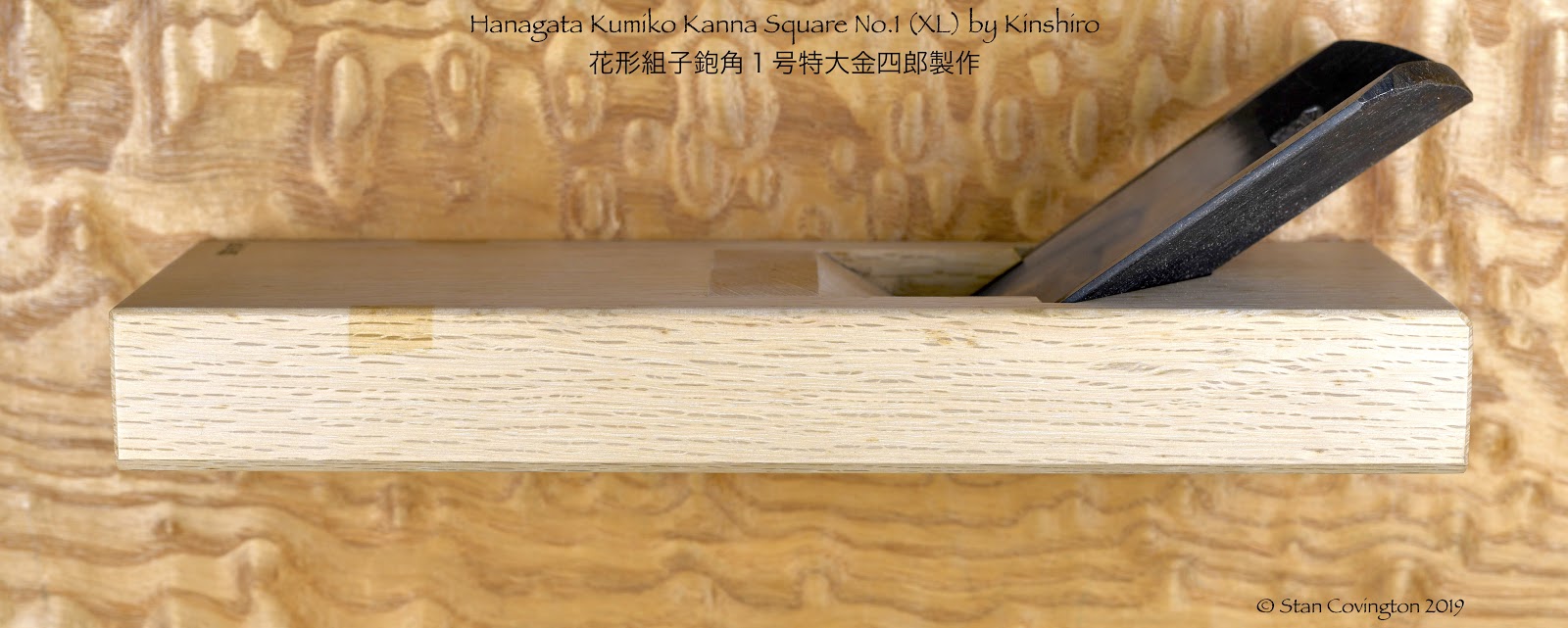
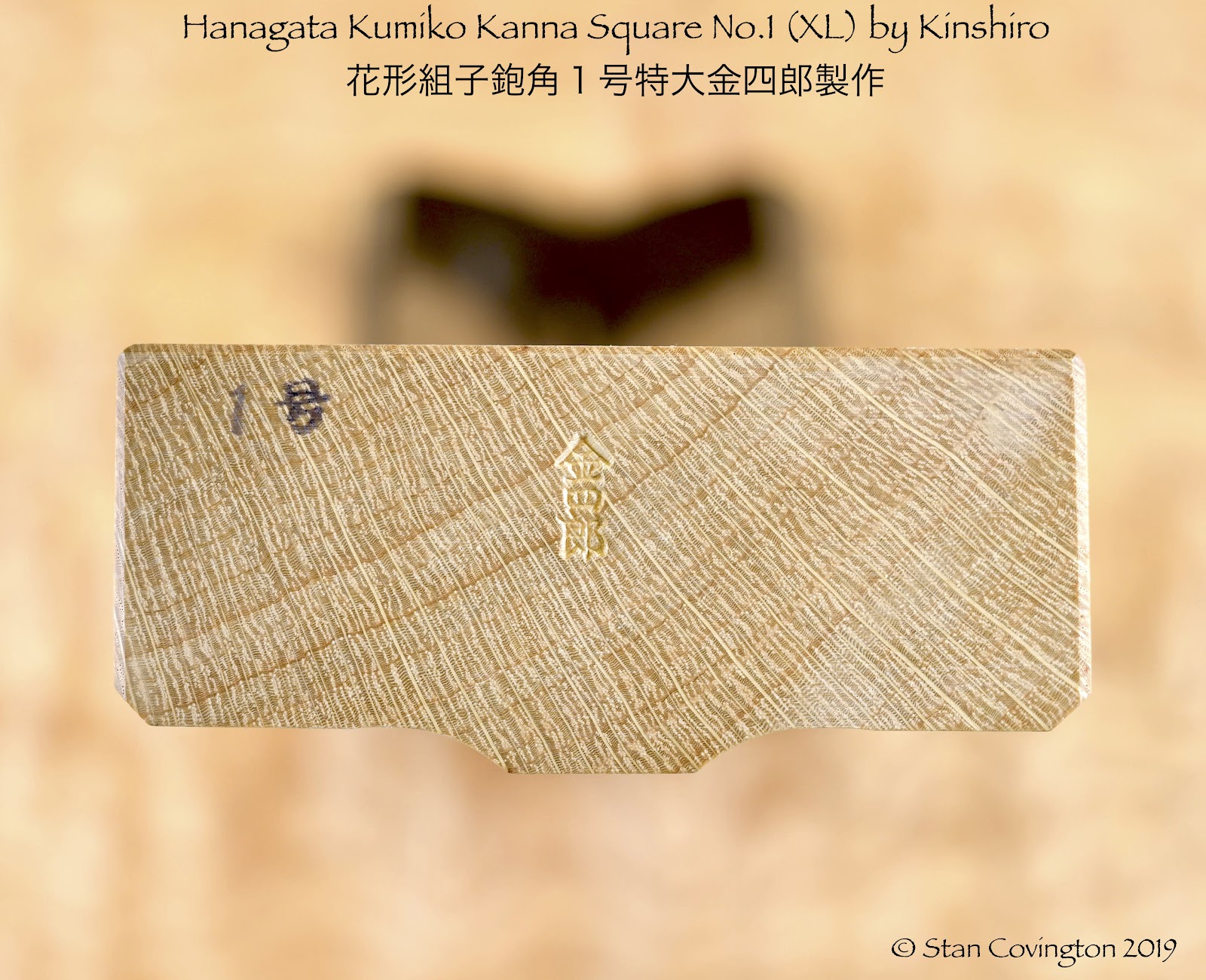
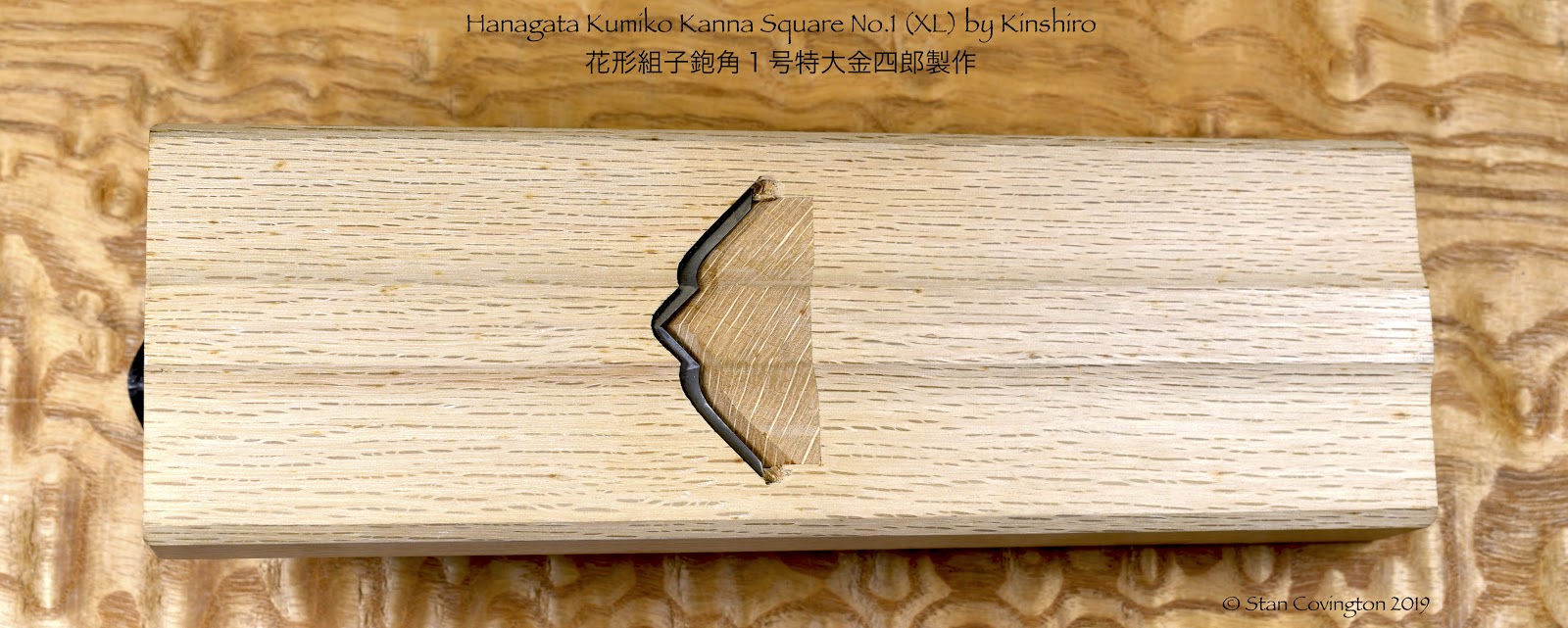
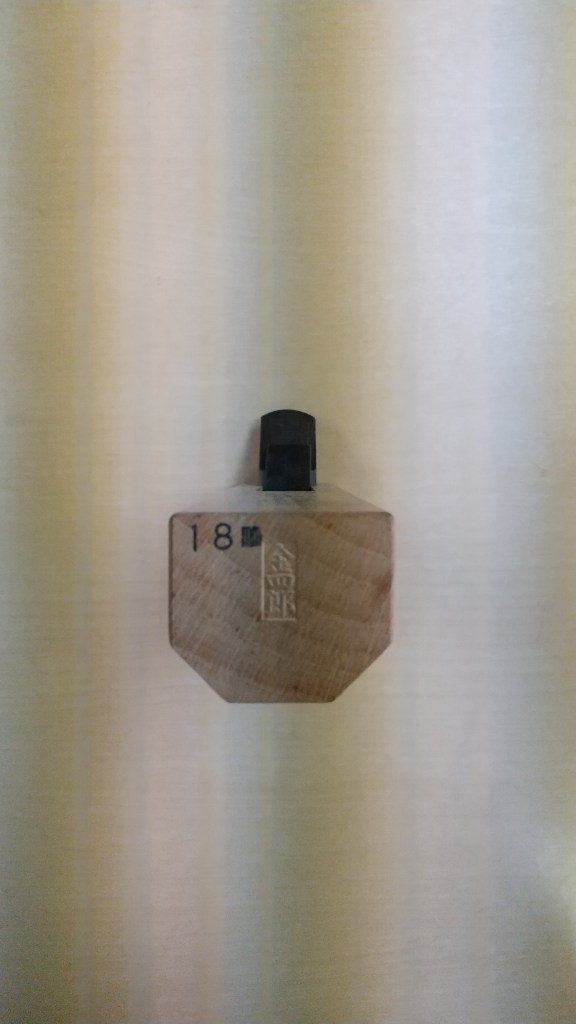
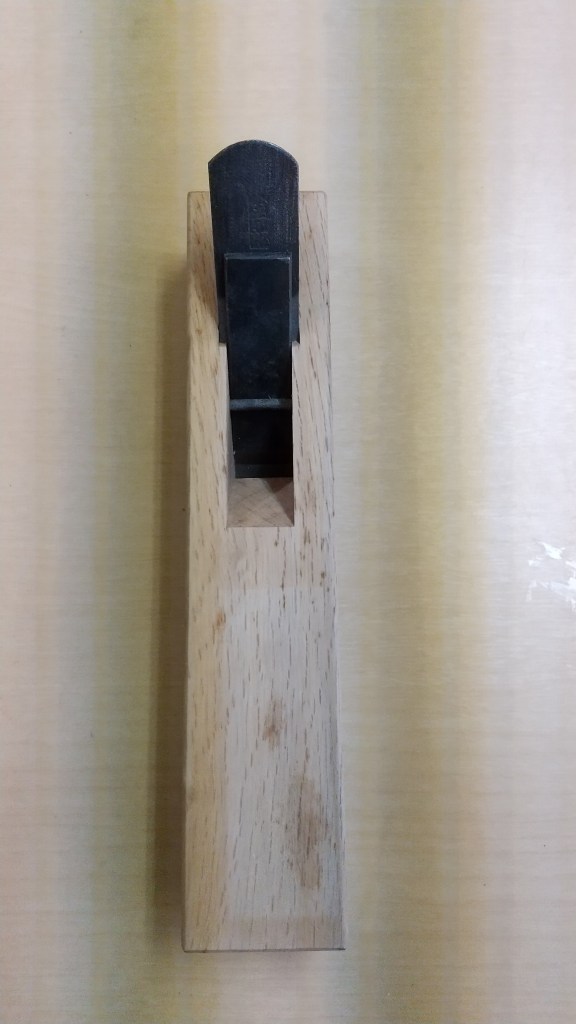
Does the Japanese plane in the photo above look a little strange? It should. It’s a specialized plane for cutting decorative latticework used in traditional Japanese joinery and casework. There are more photos of this plane below.

We have a limited number of planes in-stock by a famous craftsman that used the brand name “Kinshiro” 金四郎 when he was active. This brand name translates to “golden fourth man.” It was once common in Japan to give male children names that reflected their order of birth.

Kinshiro is a Niigata Prefecture solo craftsman named Kuriyama Noboru 栗山昇. Born in 1932, he is the second generation in this line. The brand name came from his father’s name, “Kinshiro,” the first craftsman in the line, and reportedly a very severe master. Mr. Kuriyama retired in December 2011. 

Mr. Kuriyama specialized in making plane bodies, but made various other tools as well, including marking gauges, cutting gauges, and kudegoshi using blades provided by his distributor. Mr. Kuriyama’s dual-blade marking gauges (二丁鎌毛引き) are famous even outside Japan.

The blades were forged by a Niigata Prefecture blacksmith named Ishibashi Kenji, who has since left us for the big woodpile in the sky. Mr. Ishibashi used Aogami No.1 steel. I assume he used jigane from the same bridge in Yokohama that Niigata blacksmiths are still using today.

Small tool blades are a niche market served by specialist blacksmiths, so you may have not heard of Ishibashi Kenji-san before, but whatever you do, please do not mistake him with Ishibashi Toshichiro, a Niigata blacksmith who made standard plane blades and got in trouble for unknowingly making weapons for the Yakuza. Tsk tsk. Toshichiro’s blades were unimpressive.

Kinshiro’s products are well-known for their precision, functionality, extremely high quality and subtle style. We have been using Kinshiro products for many years with absolute satisfaction. They have always been expensive, but worth every penny. They have not decreased in value since his retirement.

Although new, and of course never used, these planes are old stock and a few of the blocks have some patina.

Most of them are extremely rare and are no longer made anywhere in Japan. When they are gone there will be no more. We wish we could hold onto them forever, but the time has come to release them into the world.

If you like rare collectable Japanese planes and appreciate exceptional craftsmanship, these will interest you. But don’t wait too long.

The Kinshiro planes we have in-stock are listed in the table below. Prices and more photos are the link below. Even if you aren’t interested in purchasing a Kinshiro plane, the photos are worth seeing. Be our guest. If you have questions please use the Questions Form below.

Link to Photos and Pricelist

ミニ組子 青海波 和風雑貨 インテリア 欄間サンプル タニハタ
ミニ組子 分銅輪つなぎ 和風雑貨 インテリア 欄間サンプル 組子欄間 タニハタ
Kinshiro PlanesWidth
Ireko moulding plane 入子面鉋27mm
Ireko moulding plane 入子面鉋36mm
Etemen Adjustable Chamfer Plane 猿面鉋 30mm 30 °/ 60°
Kiwaganna Skewed Rabbet Plane right hand36mm
Kiwaganna Skewed Rabbet Plane left hand36mm
Kiwaganna Small Skewed Rabbet Plane right hand single blade30mm
Kiwaganna Small Skewed Rabbet Plane right hand single blade15mm
Ovolo Moulding Plane 銀杏面鉋6mm
Ovolo Moulding Plane 銀杏面鉋9mm
Ovolo Moulding Plane 銀杏面鉋15mm
Flat Ovolo Moulding Plane 平銀杏面鉋5.4mm
Flat Ovolo Moulding Plane 平銀杏面鉋6mm
Flat Ovolo Moulding Plane 平銀杏面鉋12mm
Ogee Moulding Plane 瓢箪面鉋6mm
Ogee Moulding Plane 瓢箪面鉋7.5mm
Ogee Moulding Plane 瓢箪面鉋9mm
Ogee Moulding Plane 瓢箪面鉋12mm
Ogee Moulding Plane 瓢箪面鉋15mm
Ogee Moulding Plane 瓢箪面鉋18mm
Ogee Moulding Plane 瓢箪面鉋24mm
Roundover Moulding Plane 坊主面鉋4.5mm
Roundover Moulding Plane 坊主面鉋7.5mm
Roundover Moulding Plane 坊主面鉋9mm
Small Roundover Moulding Plane 豆坊主面鉋2mm
Round Moulding Plane 外丸鉋9㎜
Round Moulding Plane 外丸鉋12㎜
Round Moulding Plane 外丸鉋15㎜
Round Moulding Plane 外丸鉋18㎜
Round Moulding Plane 外丸鉋21㎜
Round Moulding Plane 外丸鉋24㎜
Round Moulding Plane 外丸鉋36㎜
Round Moulding Plane 外丸鉋42㎜
Hollow Moulding Plane 内丸鉋7.5㎜
Hollow Moulding Plane 内丸鉋9㎜
Hollow Moulding Plane 内丸鉋30㎜
45° Mitre Plane 留め鉋 (SOLD OUT)18㎜
Narrow Chamfer Plane 糸面鉋3㎜
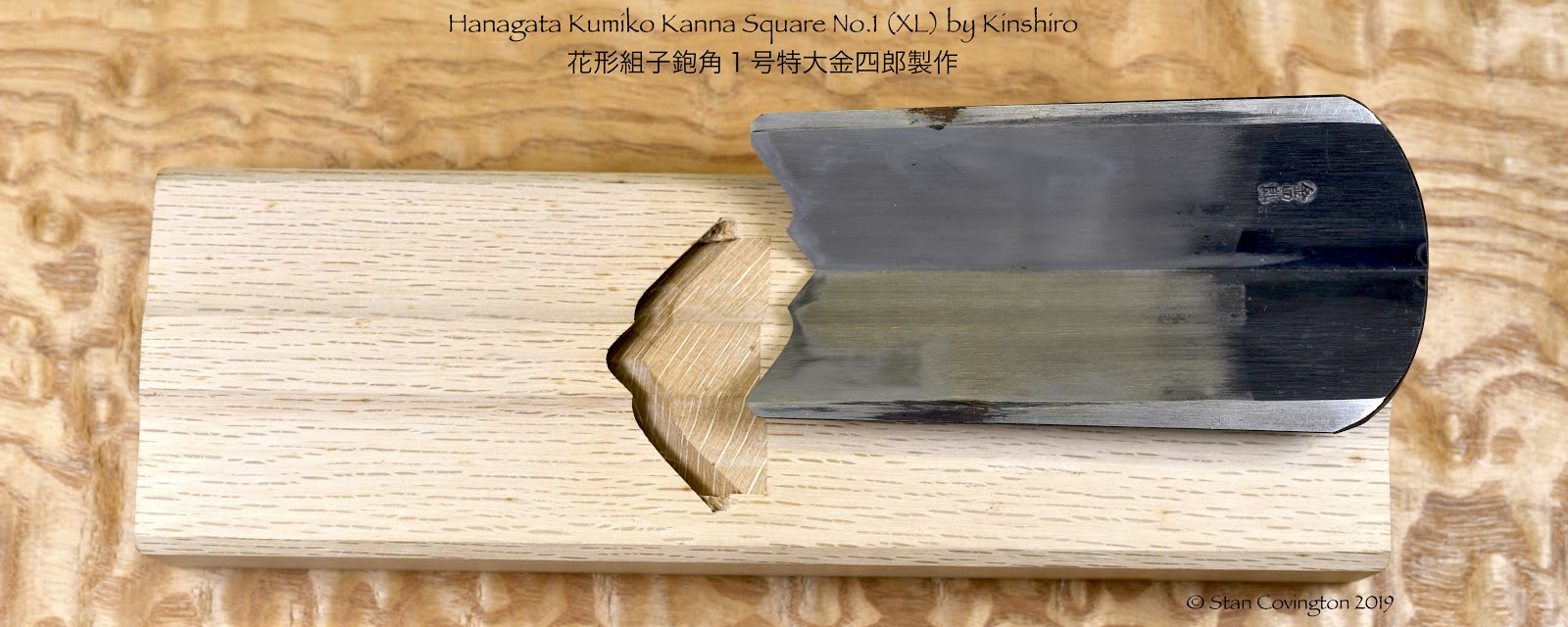
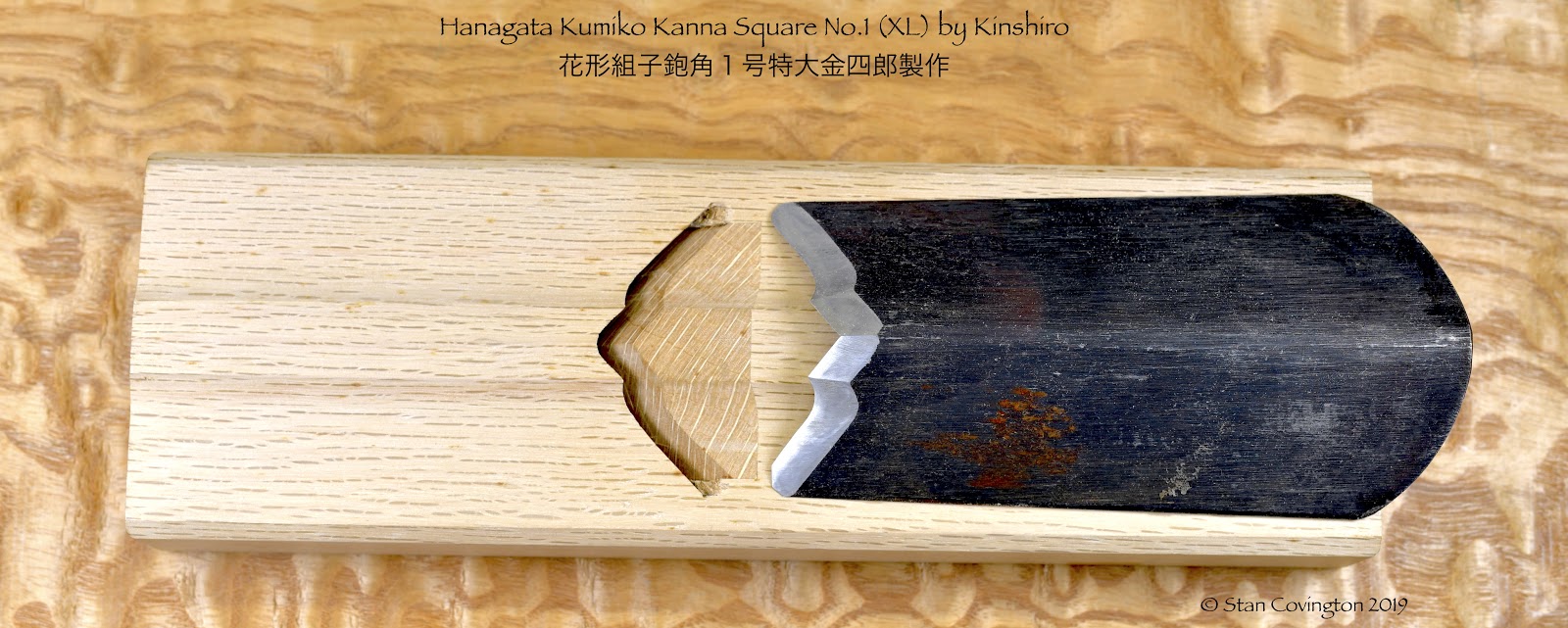
Hanagata Kumiko Plane Square No.1 Extra-large 花形組子 角1号特大
Hanagata Kumiko Plane Round No.3 Large 花形組子 3号丸
Osaka Dado Plane 大阪作里18㎜

If you have questions or would like to learn more about our tools, please use the questions form located immediately below. Please share your insights and comments with everyone in the form located further below labeled “Leave a Reply.”

Go back

Your message has been sent

Warning
Warning
Warning
Warning

Warning.

Japanese Planes – Mitre Plane 留鉋

道具屋の展示会で掘り出し物に出会うの巻。
#wood #woodworking #woods #金四郎 #留鉋#当時の値段#バイブス#宍戸建具店 #南相馬市#鉋
A Tomeganna Plane by Kinshiro (Kuriyama Noboru)

This is a brief post about an unusual Japanese plane made by an unusual craftsman and used in an unusual way, or at least one not seen often in the West.

The plane is called the “Tome ganna” written 留鉋 which means “mitre plane.” In this case, mitre does not necessarily mean just a standard 45 ° mitre as in a picture frame corner, but the planes pictured above are indeed intended to cut a 45 ° mitre for corner joints between two boards.

It is specialized for cutting a critical part of the secret dovetail mitre joint used for casework, and is a standard tool for cabinetmakers and sashimonoshi in Japan.

The plane rides on its beveled sides when shooting the mitre joint.
This page has illustrations of how to cut this joint the Japanese way using this plane. 

This job can be done using jigs and chisels, shoulder planes, or better yet, kiwaganna, but the tomeganna is better balanced and handier, can cut either direction more precisely and quicker, so is a must-have for advanced casework.

If you enjoy casework, the secret dovetail mitre is a challenging joint you really should give a try. The results are great fun, even if they aren’t flashy. 

The excellent Mr. David Charlesworth has even produced a video sold by Lie-Nielson about how to make this joint, although he uses a jig and a paring chisel to good effect.

This is a link to a pricelist and pictures of our limited number of planes by the famous craftsman Kinshiro. You might find the story and photographs interesting.

YMHOS

If you have questions or would like to learn more about our tools, please use the questions form located immediately below. Please share your insights and comments with everyone in the form located further below labeled “Leave a Reply.” We aren’t evil Google or incompetent facebook and so won’t sell, share, or conveniently and profitably “misplace” your information.

Go back

Your message has been sent

Warning
Warning
Warning
Warning

Warning.