Beginning Tools – Part 1 Measuring, Marking and Layout

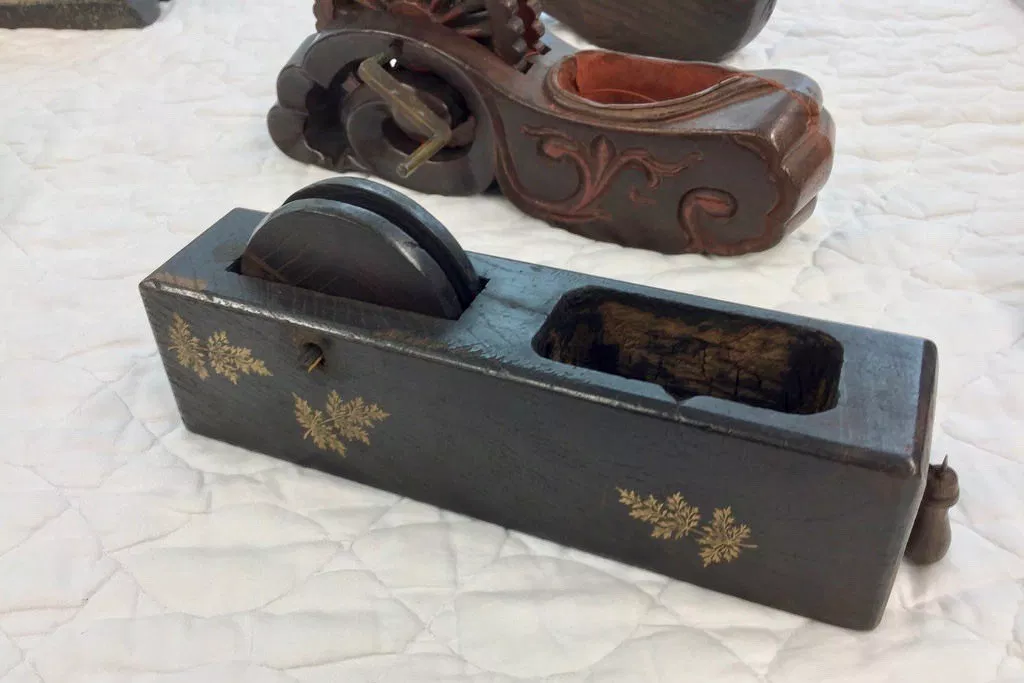
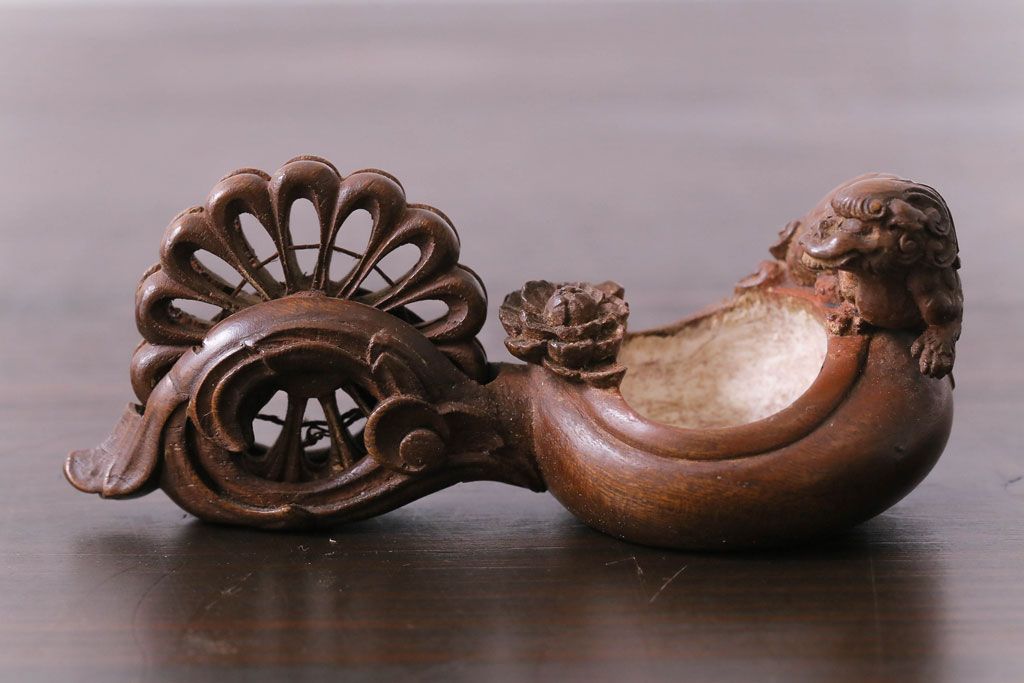
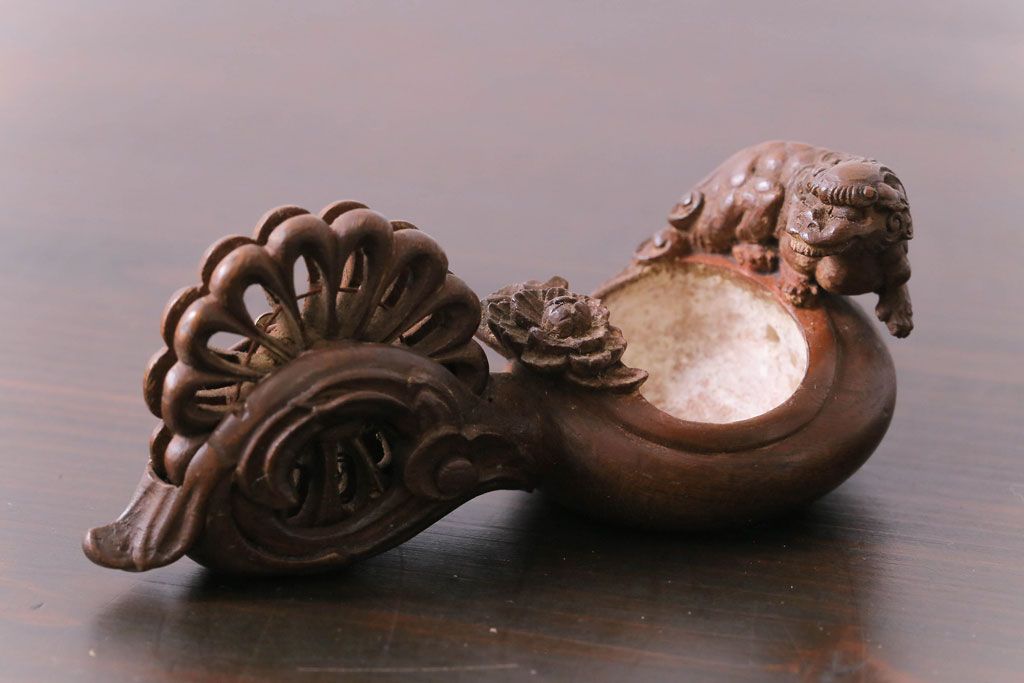
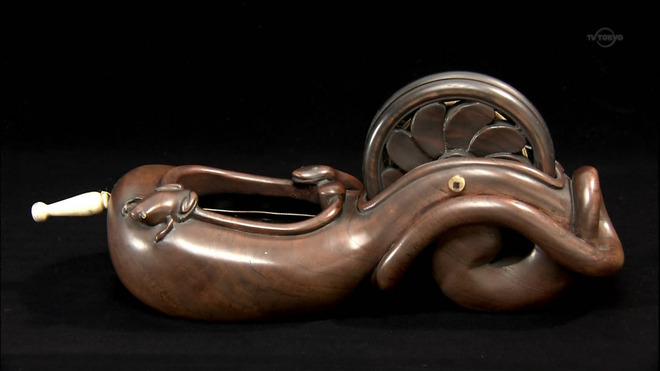
An antique craftsman-made sumitsubo with shishi lion and peony perched on the lip of the “pond.”

A good tool improves the way you work. A great tool improves the way you think.

– Jeff Duntemann

Over the years your most humble and obedient servant has received many inquiries from Gentle Readers new to woodworking about what tools they should procure at the very beginning of their adventure. The internet is chock-a-block with both confounding confusion and beaucoup BS on this subject, some dribbling from amateurs and even more sprayed by marketing pukes and clickbait sages. Heretofore I haven’t really scribbled anything on the subject in this blog.

But now, at this fork in the crossroads, beginning with this article your penitent servant will share some thoughts about what tools a beginner needs to perform a lifetime of excellent woodworking, with minimum wasted time and funds, and the recommended priority for obtaining them.

Reluctant Advice

From this point forward I will be so bold as to make some suggestions about the the tools I recommend.

But first allow me to explain my viewpoint on the subject to help you gauge how much saltpeter and sulfur to mix with your charcoal, if you follow the allusion. You see, I enjoy giving Beloved Customers excellent choices in tools, but I’m allergic to giving casual advice. Why? Because even advice given honestly, with the best of intentions, and without profit motive often yields bad consequences. And sneezing.

In Proverbs 12:15 it’s recorded that Solomon the Wise (and disobedient) taught the following: “The way of a fool is right in his own eyes; But he who heeds counsel is wise.” Sounds good, I suppose, but does this mean that the man who’s convinced his honest decisions are correct, even after much study and experience, must still be a fool? Are only those who rely on counsel wise? What if the counselor he relies on is a blasted fool or a greedy, lazy influencer? Is all counsel equal in value?

King Solomon’s most famous descendant once said “Ye shall know them by their fruits.” Sounds like reasonable evidence-based judgment to me. So what were the fruits of Solomon’s advice? The record tells us that he thought his judgement so wise that he frequently ignored it on an epically immoral scale and with tragic, destructive results.

While less decisive than Proverbs but equally concise, I think Professor Tolkien’s insight on the subject may be even wiser, and so I have taken it to heart. In the Lord of the Rings he wrote “Advice is a dangerous gift, even from the wise to the wise, and all courses may run ill.”

Solomon’s fabulous famous folly aside, your humble servant has seen first-hand ostensibly wise advice purchased from reputedly wise “experts” at unjustifiably high cost run horribly ill too many times, so I dislike giving advice. And there’s the sneezing thing too, of course.

But since advice is what’s required, in this series of articles I will climb far out on a skinny tree limb to offer the following advice on two conditions. First, I insist Gentle Reader accept the value of this advice as worth no more than what you pay for it (nothing), and second, that any consequences that spring from your acting on this advice are entirely yours. Accordingly, I won’t be offended if, like Solomon the Wise, you decide to ignore it entirely and get yourself another hundred foreign girlfriends instead.

Anyway, back to the subject at hand.

Tool Categories

The following are the four basic categories, by function, of the tools I believe a beginner needs to possess to get started in a lifetime of woodworking, whether as a career or hobby. You’ll most likely need all the tools listed here eventually, but you won’t need them all at once to make excellent things from wood. The categories are as follows:

  1. Measuring, Marking and Layout Tools: 
  2. Sawing Tools
  3. Chiseling Tools
  4. Planing Tools

Of course, depending on your projects, you’ll need tools that don’t fit neatly into these four categories, such as those used for processing trees and making lumber, nailing, boring/drilling, screwing, gluing, clamping, laminating, sanding, edge treatment, assembly, and finishing. When it comes to these other categories of tools, I can only encourage Gentle Reader to rely on your prodigious innate common sense.

Each list is divided into two tiers. The first tier includes absolutely necessary tools. The second tier lists essential tools you will eventually need, but can get by without until later.

So let’s begin by examining the minimum measuring, marking and layout tools every beginner needs. I will deal with the other categories in future posts. If I’ve forgotten anything critical, please let me know in the comments form below.

Essential Measuring Tools (Tier 1)

While chopping, sawing, carving, joining and planing get all the attention, final results in woodworking (and all physical trades for that matter) can never be better than one’s skills at measuring, marking and layout, so woodworkers and builders need to own the related tools and master them.

By no means sexy jobs, both ancient and modern history provides endless examples of poorly performed measuring, marking and layout work buggering cost, schedule and quality goals with a barge pole wrapped in barbed wire. No wonder these jobs have historically been assigned to the most experienced and intelligent craftsmen. The simple tools included in this category will serve you well in any handwork activity, not just woodworking.

One caveat. I have listed a few tools below that are modern precision tools beginners should own and learn to use skillfully, but I know a few purists who find such tools violently repulsive. The truth is that the more experience one obtains, the less one tends to rely on absolute measurements in millimeters, inches, or cubits, and more on relative precision. But possessing the tools to perform precise measurement is nonetheless necessary if you plan to do quality work.

Necessary Measuring Tools (Tier 1)

You’ll need the following essential measuring tools from day one.

1. Quality Tape Measure with an accurate sliding hook (check to make sure it’s not sloppy). Size will depend on the projects you plan to undertake, but 2-4 meters is a minimum useful length for cabinetry, furniture making and joinery. Get a reputable name brand, with a warranty. Avoid like an Asian giant hornet with flaming hemorrhoids any cheapo crap made in China, India or Vietnam. Tape measures are a bit delicate and don’t last forever, so treat yours gently and check it frequently against your precision straightedge for accuracy and damage. Do not rely on it for great precision. Since ancient times the folding scale has been thought superior, a sentiment with which I agree in the case of some jobs. But in general nothing beats a quality steel tape measure for most quick and dirty measuring tasks.

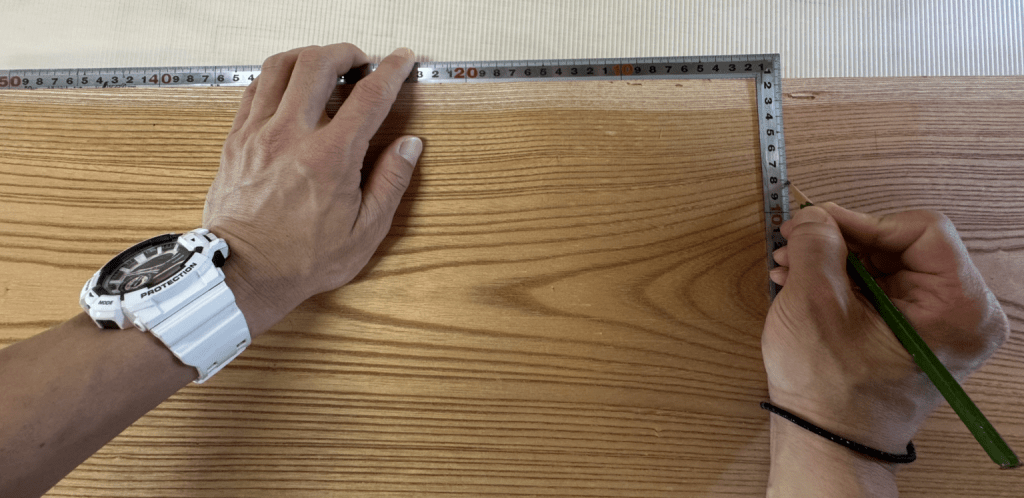
2. Precision Straightedge (12”/300mm long) with accurately, deeply etched graduations. This is a precision measuring and layout tool. Good quality graduations are useful for precisely indexing and guiding layout tools such as pencils, pens, divider points, and a marking knife. Hardened stainless steel is ideal for durability. Best if it’s made to high quality standards (JIS, etc.). You’ll use it not only for measuring and checking the accuracy of your other tools, but more frequently for checking that surfaces are flat and free of wind (twist). If treated with respect, it will serve you well for a lifetime. 

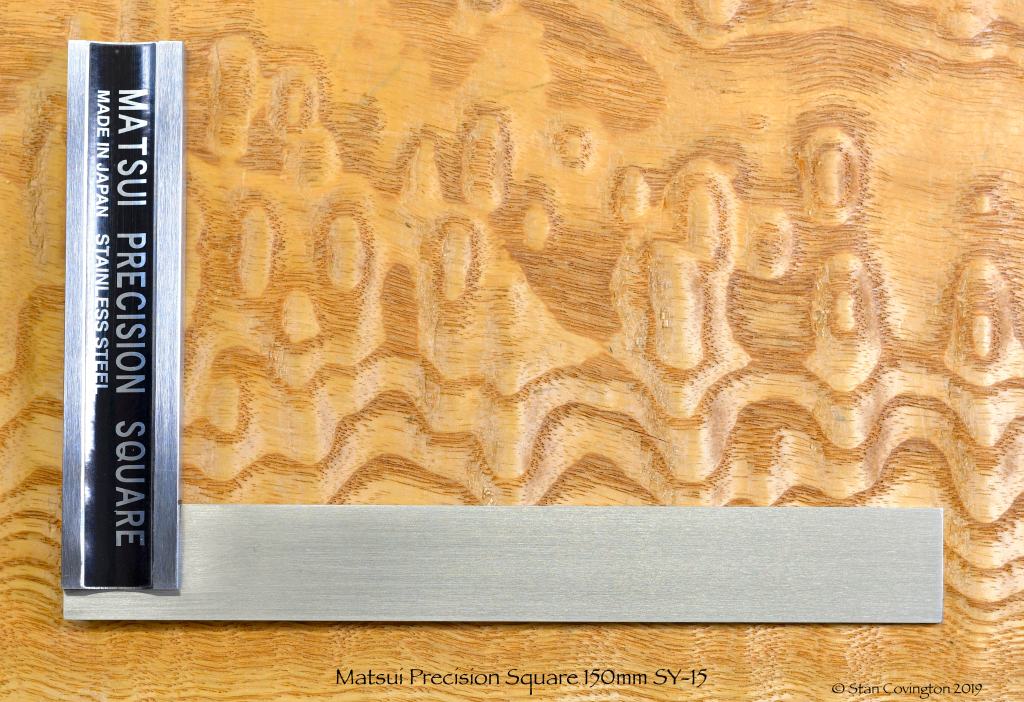
3. Try-square (see item 2 below). The handy dandy try square has many uses as a measuring tool, but rather than making numerical measurements, its most important job is checking that right angles of components, tools and assemblies are indeed 90˚ , a check one must make constantly and quickly when planing/machining the components of furniture, joinery and cabinetry and casework not to mention setting up portable and stationary power tools. Most try-squares sold nowadays are poor quality Chinese or Indian junk that are out-of-tolerance when new. I too like pretty tools and realize that a plain stainless steel square doesn’t look as cool as more traditional squares with rosewood stocks and brass fittings, but the blade and the stock should both be made of stainless steel and should be solidly welded to each other, not glued or pinned. Best if the blade is hardened. Graduations are not necessary. Get this essential tool wrong and all is lost.
Necessary Measuring Tools (Tier 2)

4. 1-meter stainless steel precision straightedge. This tool needs to be certified by a reputable standards organization, such as Japan Industrial Standards Committee (JIS), NIST: National Institute of Standards and Technology (USA); UKAS United Kingdom Accreditation Service (UK); DIN (Deutsches Institut für Normung), etc.. Why does certification matter, and why is it worth the extra cost? Fraud and deceptive marketing are more common now than ever, with many well-known manufacturers taking a page from Chinese Best Industrial Practices of bait, lie, mislable & switch. In the case of a tool certified by an organization such as NIST, JIS, DIN etc. with a valuable reputation to lose, you are much less likely to be fleeced by quality crooks. Indeed, this tool, along with the 12″/300mm straightedge and try square listed above must be accurate enough to serve as one of your own in-house “standards.” It must not only be extremely straight when new and stress-relieved, to avoid future warping, but it must have deeply, uniformly, precisely-etched graduations. It’s OK if it spends most of its life hanging from a nail on the workshop wall, because there will be times when it will be critical for quickly for checking surfaces for flatness and wind, layout, assembly, dimensioning boards and fettling handplanes.

5. Caliper Gauge: This gauge can be of the vernier, dial or digital variety, whichever type you like and can afford. Once again, buy a certified product. This tool is useful for precisely and quickly measuring, comparing and laying out distances and dimensions. Some are sold with carbide tips convenient for directly scratching layout arcs/lines/points in harder materials such as metal or stone. Will you use it constantly? No, but for those tasks where it’s needed, nothing works as well or as quickly. Quality vernier calipers cost much less than the dial or digital variants, and are not as delicate, but take more time and concentration to use well. Once again, nothing made in China, India, Vietnam, Cambodia, etc. When in doubt, I buy Mitsutoyo.

Necessary Layout & Marking Tools

Try Square (same as see item 3 above). This tool is absolutely indispensable for layout and marking of joinery, cabinetry, and furniture work. 100-150mm is a handy size for furniture work. Even if your workshop has been thoroughly purged of pernicious pixies this tool will be dropped, and will wear out in-use, so a useful one will have a welded (not just pinned) connection between the thinner blade (aka beam or tongue) and the stock. And, this is important, the blade will be made of hardened stainless steel. Graduations are totally unnecessary. Used for marking 90˚ lines and checking for squareness. Matsui Precision makes the best one I am aware of after much searching and hands-on experience in the field.

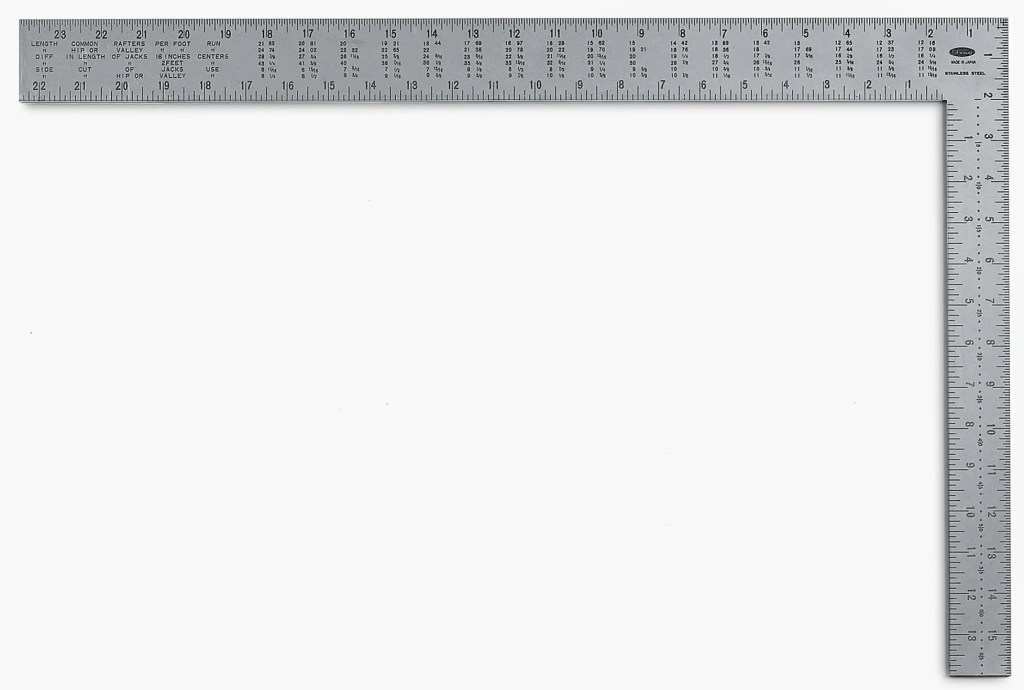
7. Framing/Carpenter’s/Builder’s Square.

Essential for checking lumber, laying-out and marking of larger joints, casework, checking square of larger joints and assemblies, working with doors, panels, and plywood, and many other tasks. Regarding materials, carbon steel squares are heavy and always turn red and go away, so I don’t recommend them if you have a choice. Stainless steel is more durable, but still heavy and costlier. Aluminum will suffice. You may need to true it, but this is easily done with a hammer, punch and file. Just ask me how when you think it’s necessary. This is a tool with a long history you should be proud to own. In all nations more than a few centuries old, the carpenter’s square has been associated with stability, honesty, righteousness and order, all traits a craftsman should seek to foster in himself, his family and his crew. In Japan, this tool was traditionally extremely expensive and was considered the craftsman’s “spirit” in the same way the sword was revered as the warrior’s spirit by the warrior caste. Indeed, in past centuries, stepping over a carpenter’s square resting on the floor or even ground was seen as a mortal offense resulting in bloodshed at times. Such emotional sentiments did not extend to other carpentry tools. The Japanese version of this tool goes by several names written several ways including “kanejaku,” “magarijaku”(written 曲尺or 矩尺), “sashigane”指矩, and several other names. Don’t ask me why. Unlike the Western square of uniform thickness, the better Japanese kanejaku have a variable cross section for less weight/greater rigidity. Being thinner, smaller, more flexible, and much lighter in weight, the Japanese square is handier to transport and use in the field. Of course, it has a couple of disadvantages such as not handling longer/wider boards as well, and being more difficult to control because it’s more flexible. Horses for courses, of course, so I own and use both types.

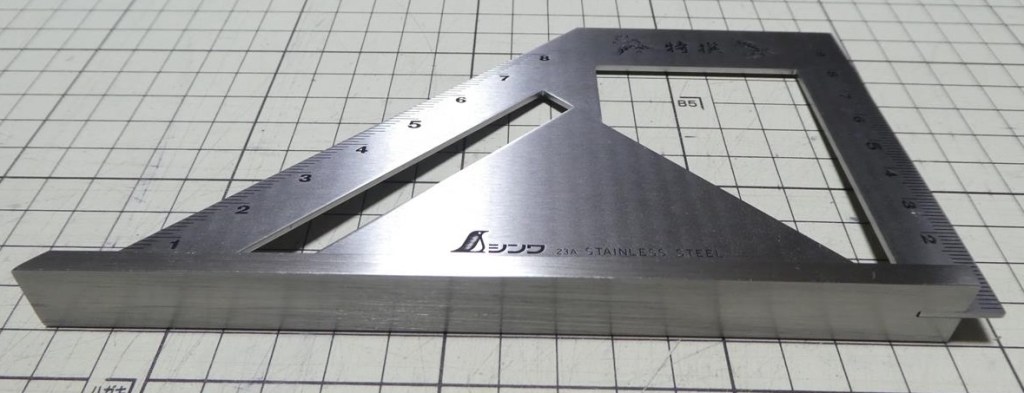
8. 45˚ Stainless Steel Layout Tool or quality speed square for laying-out miters. An accurate combination square will work too, but such tools are relatively expensive and quite fragile. The Shinwa tool shown below is cheaper, much tougher and absolutely reliable.

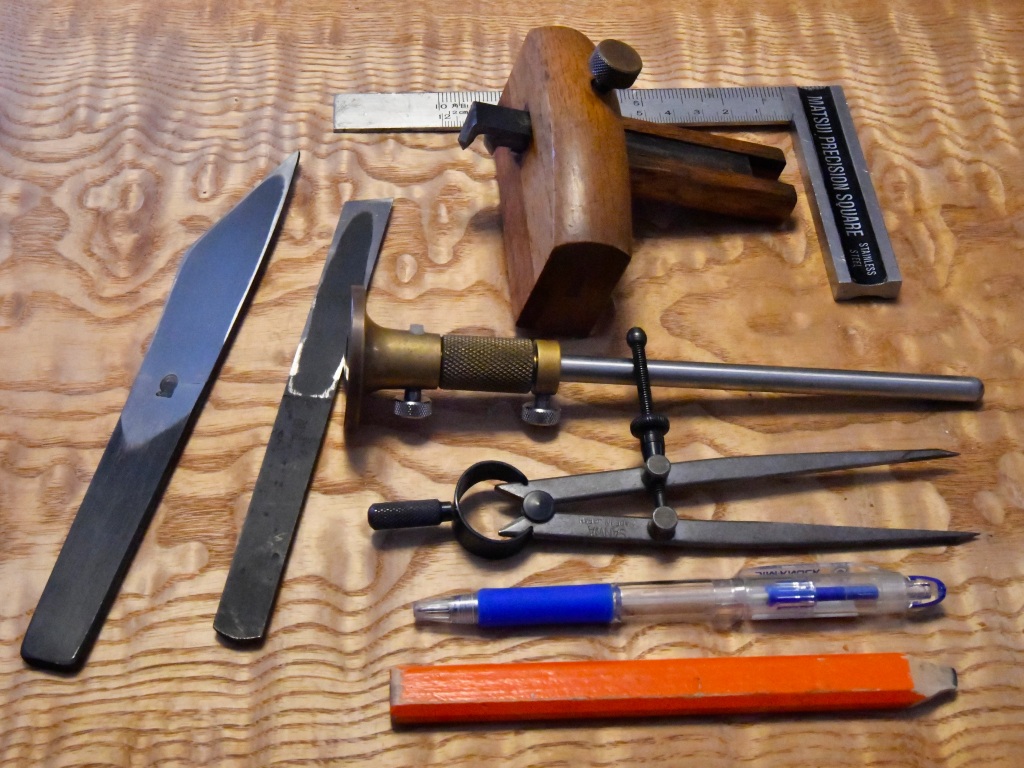
9. Marking Gauge: There are many types of marking gauges, most of which the craftsman can make himself without special tools or machinery. Perhaps this will be the subject of future articles. In any case, you will need at least 2 types of gauges.

The venerable old Stanley No.65 marking gauge.

The classic type has a single pin or blade to cut/scratch a single line with each stroke and has been around since Moses wore gator skin loafers. You can make versions from scrap wood, nails, or scrap steel easily yourself.

An excellent kamakebiki mortise gauge by Kinshiro

The second marking gauge you should have is called a “mortise gauge.” This tool has two pins or blades to make 2 parallel lines, at a set distance from each other, with a single stroke. It’s especially suited for quickly and precisely marking mortises and tenons and installing hardware. I prefer the Japanese version of the mortise gauge called the “kamakebiki” (sickle mortise gauge shown above) which has two L-shaped steel blades, easily adjusted and easily resharpened. A handy tool indeed.

Having multiple marking gauges on-hand will help to minimize the time you must spend resetting/adjusting the pins/cutters, a principle key to performing precise work consistently because every time a gauge is reset, error creeps in, sure as pigs are made from bacon. Marking gauges are simple tools easily mastered, but don’t underestimate the importance of owning a few and mastering them completely.

TheTite-Mark marking gauge

The Titemark gauge is an excellent tool, not only because it cuts consistent lines, but because it can be quickly and precisely set using a single hand and no tools. The only downside is the depth of cut is shallow and the cutter is easily damaged.

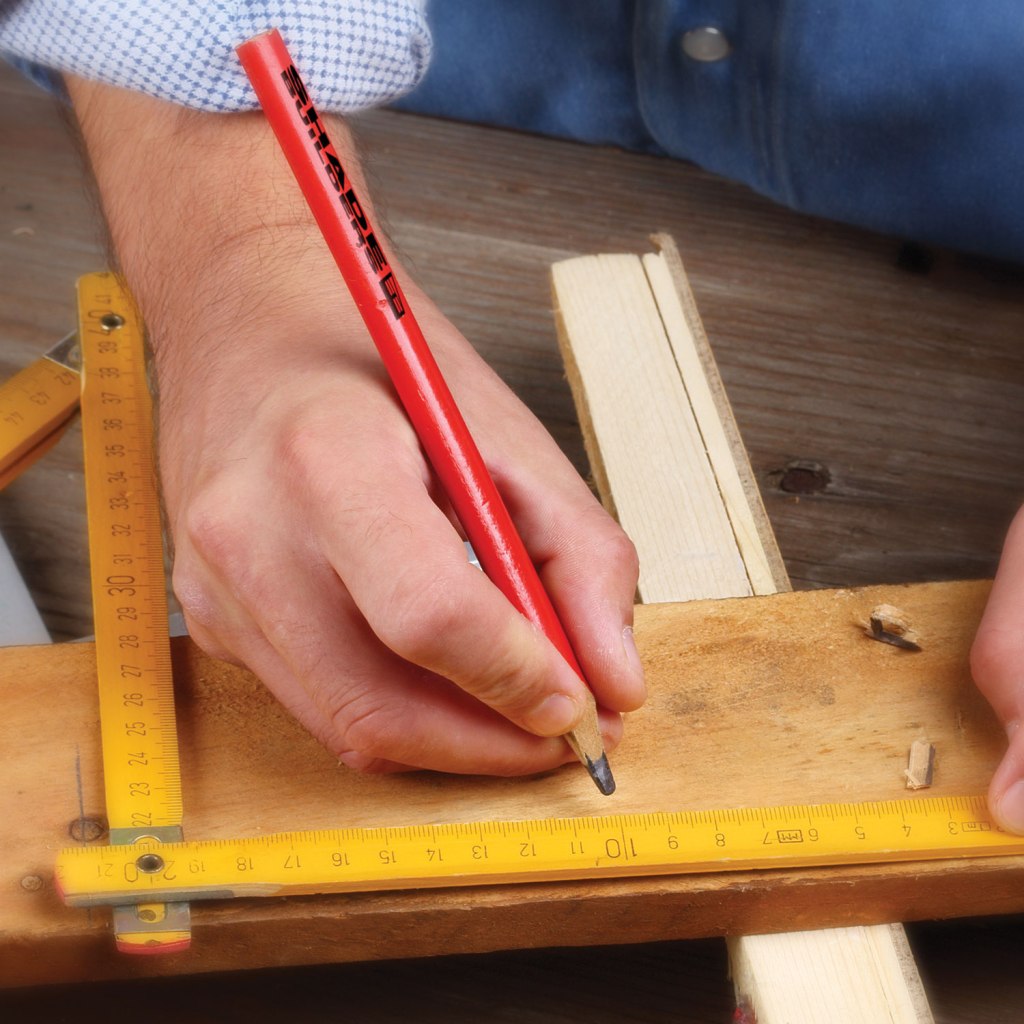
10. Carpenter’s Pencil. Useful for the same marking jobs as a plain pencil, but if one sharpens its wider lead to a chisel edge, it will be more durable (won’t break as easily) and last much longer than a standard pencil.

11. Divider/Compass. An essential tool for layout used to quickly and accurately transfer distances from straightedge or layout stick etc. to a workpiece. Of course, it can perform all the classical geometrical tasks that have made this tool essential to skilled craftsmen, architects and engineers worldwide for millennia. A spring divider is adequate, but finances permitting, Starrett 92-6 or 92-9 dividers shown below are worth every penny. I always have at least two on-hand to minimize the lost time and inaccuracy frequent resetting entails.

12. Ballpoint Pens: Not often thought of as a precision layout tool, inexpensive ballpoint pens are more durable than pencils and can make a permanent mark or line of consistent width without needing to be resharpened. Too wide for accurate layout, you say? Practice perfectly sawing in half the centerline of a line drawn with a pen and you’ll change your tune.

13. Marking Knife and/or Scriber. Instead of leaving a line of ink, chalk or graphite on the surface of a board, these tools cut or scratch a permanent line into the surface of material being worked into which divider points and the blades of cutting tools such as chisels, saws and even planes can be indexed quickly, reliably and without the need for expending much attention, greatly increasing speed and confidence in one’s layout. Essential tools. Here’s a Link to an article on the subject.

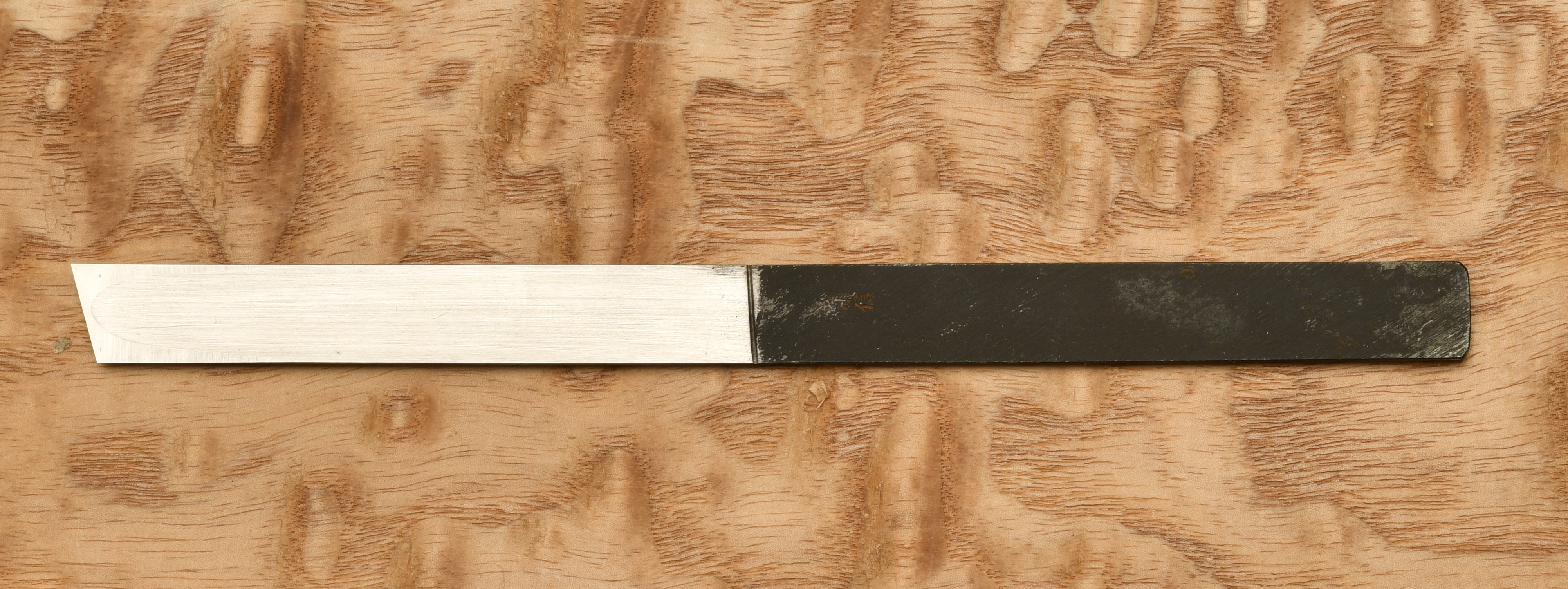
A Japanese-style marking knife, a simple but surprisingly sophisticated tool.

14. Inkpot and/or Chalkline: For making long straight lines on wood, concrete, steel, gypsum board, etc. The article at this LINK contains more details

15. Colored Marking Pens or Lumber Crayons: Marks made with colored marking pens or lumber crayons, while not precise, are helpful for speedily marking/identifying the orientation and/or relative position of parts, pieces and components in an assembly. For instance, a blue stripe, or two parallel black lines on the end of a part or tenon, might be drawn to indicate right-hand, or North, or front direction in an assembly. I sometimes draw an arrow to orient the front of the assembly or to indicated the direction/location of a reference surface or part, etc. Of course, drawing the cabinetmaker’s pyramid is essential for joinery and casework. The marking convention you choose is, of course, up to Gentle Reader, but having one and using it will help your work go faster and with less confusion, especially if you must set the part aside for a few days or even months. Lumber crayons are especially useful for marking lumber for dimensioning and planing.

Storage, Transportation & Protection

With the exception of the 1-meter long straightedge, and that only because it’s inconveniently long and I want to protect it from dents and dings, I always keep these measuring, layout and marking tools located in the handiest place in my toolchest when I’m in my workshop, or in my portable toolbox and/or toolbag when I’m working in the field.

If you carry these tools outside the workshop, and intend them to be lifetime tools, I recommend you make a simple case for each tool, of cardboard perhaps, to cushion them in your toolbox to help retain precision, to keep them from dinging each other, and help to them last longer. Only then can you reasonably expect a long, mutually profitable relationship with these good friends.

In the next installment in this swashbuckling adventure we will consider the next category of tools the beginner needs: Saws.

YMHOS

I salute you! Woof!

If you have questions or would like to learn more about our tools, please click the “Pricelist” link here or at the top of the page and use the “Contact Us” form located immediately below.

Please share your insights and comments with everyone in the form located below labeled “Leave a Reply.” We aren’t evil Google, fascist facebook, or thievin Tik-Tok and so won’t sell, share, or profitably “misplace” your information. If I lie may pug pirates make me walk the plank!

Leave a comment

Go back

Your message has been sent

Warning
Warning
Warning
Warning.

Layout Tools & Techniques Part 1 – Reference Surfaces in Cabinetry, Joinery & Furniture

A few layout Tools

Practice makes the master.

Patrick Rothfuss

Practice doesn’t make perfect if you’re doing it wrong.

Frank Sonnenberg

This is the first in a series of articles about the tools and techniques used for laying-out joints in wooden cabinetry, joinery and furniture. They were not invented by your humble servant; Indeed, they are older than all the pyramids. I have no doubt Father Adam taught them to some of his sons and daughters.

We will delve into the specifics of layout tools in future articles, but in this article your humble servant would like to discuss an ancient layout concept sometimes called “Reference Surfaces.”

Reference Surfaces

The purpose of employing reference surfaces is simply to limit Murphy’s influence on the craftsman’s efforts, thereby improving the precision and speed of his work, saving time, material and in the end, yielding a better product. Why is this a concern? Simply because, as Gentle Reader is no doubt aware, Murphy’s Law of Thermodynamics ruthlessly dictates that errors in layout do not cancel each other out, as the optimists and theorists naively assert, but rather accumulate in the direction of maximum chaos. Thus it has always been.

There is a old Architect’s saying that goes something like this: “Cut to fit, paint to match.” There’s another version used by finish carpenters that better reflects reality in the field: “Cut to match, paint to fit.” Indeed, the painter is often the finish carpenter’s best friend hiding many layout and fitting mistakes with his clever brush and globs of paint. Thank heaven for spackle (ツ).

But the wise professional woodworker will hone his skills so that the concealing spells and potions of the painter are not necessary to make his work look acceptable because, while many errors can be excused, the open mouths of sloppy joints will gleefully mock the craftsman that made them for as long as they exist, even from underneath thick coats of latex paint. Implementing the concept of Reference Surfaces during layout is one sure way to reduce this shameful razzing. But I digress.

A Reference Surface (RS) is usually a flat surface or plane on a piece of material, be it cardboard, wood, stone or steel, that a craftsman intentionally designates for layout purposes.

To help explain why reference surfaces are useful let’s consider an example using them to make a typical component in a door or cabinet, such as a stick or board with a rectangular cross-section and a tenon on one (or both) ends.

The Primary Reference Surface

It is usually most efficient to prepare and mark a Primary Reference Surface (PRS) on a workpiece first.

Begin by sawing, milling and/or planing the stick under consideration so all four long-grain surfaces are flat, adjoining surfaces are square (90˚) to each other, and opposing sides are parallel to each other. Easy stuff right? Maybe not, because in the real world, it is time consuming and often wasteful to try to make materials perfect, at least when there are cheaper, quicker alternatives. How perfect do the dimensions of our materials really need to be? And even when we aim for perfection, how can we consistently deal with the small discrepancies that always creep into human efforts when subjected to cost and time pressures? But I digress again. Back to our stick of wood.

The first step in making the stick ready for layout of a tenon is to make at least one long-grain surface as straight, flat, and free of wind (twist) as we can. This is not difficult to accomplish using handplanes or even a well-setup thickness planer. The stick should initially be slightly oversized, of course. If Gentle Reader is not yet able to make one face of a stick straight, flat and free of wind using handtools alone, I encourage you to practice until you can. You will succeed.

The essence of quality control is to constantly compare the results of one’s efforts against reliable standards. You can check that the surface you intend to designate to be a Reference Surface is flat using a precision, beveled or thin straightedge and/or a flat surface such as a flat workbench top.

To use a straightedge, place its edge along the surface, hold it up to a light, and check for light showing between the straightedge and the surface of the stick. So long as the straightedge is truly straight, not dinged or dented, and not too thick, human eyes can easily detect light passing through extremely narrow gaps (kick-ass “hyper-acuity”). Perfection is neither necessary nor attainable, but it should be pretty darn close.

Now repeat this step with the straightedge laid between diagonal corners. If the gap between the surface and the straightedge laid along the diagonals is not identical (ideally non-existent), or the straightedge won’t contact both corners at the same time, then you may have discovered some wind (twist). This technique works especially well for wider boards, but not so much for narrower sticks. So what’s another way to check for wind?

To quickly check if a stick or board is flat, simple place the board or stick on the truly flat top of a workbench or atedai, press down on the ends with one’s fingertips, and pay attention to see if the stick or board rocks. Then flip it over and repeat. If it rocks, it isn’t flat. This is a quick (takes only a few seconds) and reliable technique, one that Gentle Reader should perfect, but the information it can convey is limited.

To check for wind, tap the corners of the board or stick with your fingertips while the board is resting on a flat benchtop. Flip and repeat. If the board or stick rocks on its diagonals, then you have discovered wind. Once again, fast and reliable, but not extremely precise. Use a straightedge to perform a more precise check for flatness and wind.

By the way, anyone intending to do high-quality woodworking (especially when using handtools) needs a stiff, flat workbench or atedai (The Atedai Part 1, Part 2) of some sort because this working surface not only helps us to plane flat, twist-free wooden components, it also helps us quickly identify areas of wooden components or assemblies that are not flat or that are twisted as described above. It is the woodworker’s most important jig.

After checking for flatness and wind, use a carpenter’s pencil or lumber crayon to mark high spots and directions of twist. When everything is marked, examine the board and make a plan of attack for your plane. The subject of how to plane a board efficiently is worthy of another dedicated article, but I have abbreviated the process here.

For now, please remember to always plane only the high spots on the board/stick without touching the low spots. Think about what this means and how you might go about doing it because it takes self-control to develop a plan and then tame one’s inner badger to execute it efficiently, something many newbies without a master or senpai nearby to slap them upside the head when they err often find difficult to make a habit.

Remember, at this stage we are not yet trying to make the board pretty, just to knock down the high spots without lowering the low spots further.

After all the high spots have been removed and the board is flat and free of wind, only then should we use a finish plane with a true sole, tight mouth and sharp blade to remove all cosmetic defects and make the make the board’s surface shine.

Now that we have one surface flat, free of wind, and clean we will call this our Primary Reference Surface and mark it.

Marking

There are as many ways to mark a woodworking project as there are to cook beans, but they all accomplish the same thing.

I have learned several techniques over the years, but find myself using Krenov’s Cabinetmaker’s Pyramid most frequently (if you haven’t yet read JK’s book “The Impractical Cabinetmaker,” you should). Whichever marking technique you employ to identify the location and orientation of each component in a woodworking project, be it ABC, 123, イロハニホヘ、the palindrome “KAYAK,” odd-shaped butterfly wings, or some other mushroom-inspired scribble, it must consistently make the orientation of the piece of wood in the finished product clear at a glance (up, down, top, bottom, front, back, right side, left side, etc.). Make this mark on the freshly completed Primary Reference Surface (PRS). For cabinetry, joinery, furniture etc., a pencil seems to work best. In the case of dark woods, white or yellow lumber crayon works too. Six of one half-dozen of the other.

Another thing Gentle Reader should consider when marking the components of your project is the visibility of each component. For example, when planning a project such as a cabinet, especially one where visible grain and beautiful color are important features, it is often beneficial to place the most beautiful pieces of wood in the most important, most visible locations in a project. Once again, this demands some planning.

Likewise, the joints where components meet in high-visibility locations , such as mortise and tenon or dovetail joints, need to form flush surfaces when assembled. This typically means placing references surfaces in the finished product where they will be most visible, and have the fewest defects, or the most beautiful grain, or a complementary grain pattern.

On the other hand, this planning process should also orient the visible surfaces of component that exhibit less than perfect surfaces, or have less than perfect color, grain, joints, and even obvious defects, so they are concealed inside the cabinet. While not the pinnacle of workmanship, this is a compromise that has been standard operating procedure forever, especially where funds and/or time are limited.

Taking this marking concept one step further, it is useful to combine reference surface markings with identifying marks for each individual component. If you have a good marking plan and execute it consistently, you will always know at a glance which component belongs in which location and how it is to be oriented (up, down, right, left, front, top, bottom, back, right side, left sides, etc.) during assembly. Confusion during a complicated assembly is to be avoided.

The cabinetmaker’s pyramid combined with simple letter annotations is useful, but not the only solution by any means, For example, inside the piece of the pyramid applicable to a component, a corresponding annotation such as the following can be made: F = front, B = back, R= right, L = left, P1 = first panel from front/right, P2 = second panel from front/right), etc.. When things are more complicated, it helps to name each piece on the drawing, give it an abbreviated designation, and mark that designation on the component. Anyway, enough on this subject.

The Secondary Reference Surface

Assuming we are making a stick or board with a rectangular cross-section, as mentioned above, we next need to make a partner reference surface I like to call the “Secondary Reference Surface” (SRS), adjacent the PRS and oriented 90˚ to it. It too must be flat and free of wind as it will be an important reference surface for layout purposes.

If you are using an electric thickness planer, go ahead and plane to the appropriate thickness now, but always check to make sure the stick/board is truly flat, free of wind, and its ends are free of snipes. May the gods of handsaws guide your hand.

I strongly suggest you use your vernier, dial, or digital calipers to actually check thickness because, without putting too fine a point on it, Murphy’s pointy purple pecker is always promiscuously probing.

If you are thickness planing by hand, I suggest you begin making the SRS by shooting one edge, as described in the next section.

Shooting the Edges

Enma, the Buddhist King of Hell, presiding over festivities. A good time was had by all!

Many (but not all) of the gurus and well-published scribblers who shill for the woodworking tool manufacturers (may the Lord Amidha give them a few years roasting over Lord Enma’s fire on a barbed spit before tossing their sorry souls back into this miserable existence as termites) advocate shooting edges by clamping a board or stick into a vise and then balancing a jointer plane on the narrow side edges to plane the edges square to the wide faces. This technique works, sorta, but unless one is planing thick boards, it is often slow, unsure and silly. Here is the way I was taught in Japan and the way I do it now. Gentle Reader is free to choose, but I suggest it would be less than thoughtful to ignore this intelligent, efficient and nearly fool-proof technique.

This technique relies on the reliable precision of two common tools. The first thing to check is that the angle between the sole and side of the handplane we use for shooting (usually a jointer) is exactly 90˚degrees (do you really have a tool that will precisely check 90˚or do you just assume you do?). Of course, the blade extending past the mouth must also form a perfect 90˚ angle with the sole. These are common standard tolerances any woodworker worthy of breathing air must learn to maintain. If your handplane’s tolerances are out of wack, best to correct them first.

The second precision tool you need is a workbench, atedai or planing beam with a truly flat, wind-free top working surface. This too is a standard tool a woodworker who intends to perform high-quality work needs.

The Japanese atedai and planing beam frequently have a board a little wider than than the thickness of the handplane used for shooting screwed to its edge (usually the right-hand edge) which is stepped down from the atedai or planing beam’s top surface. The step is usually just a little more than the thickness of the plane’s cheek. One places the board or stick on the top of the atedai or planing beam, holds or clamps the workpiece in-place, rests the jointer plane’s side cheek on the ledge, and while pressing it towards the workpiece, pulls it to plane a flat, wind-free surface. Please note that this is possible because the top surface of the atedai or planing beam is flat, and the plane’s sole/blade are oriented 90˚ to it, so a square edge can be shot easily and reliably without any silly antics.

There are a number of wooden/plywood jigs used in by Japanese craftsmen in place of the ledge. One of those works well with the Western-style workbench too.

All it takes is a flat wind-free piece of plain plywood or a plain solid wood board (I call it a “shooting board”) at least as long and wide as the workpiece to be shot, and a little thicker than the cheek of the plane. Much thicker is not efficient.

One lays this shooting board on top of the workbench (or atedai or planing beam). The workpiece in turn is laid with its PRS or SRS side facing down on top of the shooting board with the edge to be shot projecting past the the edge of the shooting board a small amount. Clamp these two boards to the workbench, atedai or planing beam with C clamps or other holdfast mechanisms. Stops or benchdogs projecting from the benchtop are useful too.

Then, after checking that the blade of your jointer plane is projecting the right amount and angled properly, simply lay it cheek-down on the work surface, against the surface of the workpiece to be shot, and pull or push it to plane a shaving. Voila: a straight, flat, wind-free edge at a 90˚ angle to the PRS or SRS.

Of course, before making shavings you will have examined the stick/board and made a plan in your head for shooting it efficiently. You will have also marked a straight line to plane to, and of course you will have an accurate square and straightedge on-hand to check results.

This technique is quick, reliable, extremely precise, and can handle boards as long as your workbench, atedai or planing beam can accommodate without any amorous monkey-football theater.

In any case, the goal is to create a surface (SRS) that is straight, flat, free of twist and square (90˚) to the PRS. You can mark this surface however you see fit, but it is important that you be able to tell its relationship to the PRS at a glance. I do this by drawing diagonal lines along the PRS ending at the edge adjoining the SRS, and then continuing those line onto the SRS. Simple stuff.

Dimensioning to Final Width &Thickness

Now that we have established and marked our a Primary Reference Surface and Secondary Reference Surface, we have two options before us. One option is to use a marking gauge to layout the width of the stick/board on all four edges and saw/plane it to final dimension, or to use a marking gauge to layout the thickness in preparation for sawing/planing the stick/board to final dimension. The choice is up to you, but your PRS and SRS will make the job quick and certain because the hard work of checking and planning were done right, done early and therefore need not be repeated.
Relative Precision

It is worth observing at this point that, once you have accurately established a PRS and SRS, the surfaces opposite each of them often do not need to be precisely dimensioned. Indeed, this has historically commonly been the case when craftsmen made products, whether of wood, stone or steel, with surfaces where precision and/or appearance was unimportant. A word to the wise.

About now, thoughtful Gentle Reader (may the hair on your toes ever grow long) may be asking yourself just how the heck to go about doing the rest of your layout if two out of four surfaces of a workpiece are not precisely dimensioned. That you ask this question is clear evidence of your astonishing intelligence!

The answer is simple. When measuring a distance or making a layout line, whether using a scale, divider, caliper or marking gauge, always do it from either the PRS or SRS, not the less-precise surfaces. This will yield maximum precision with minimum effort and less opportunity for Murphy to pointedly intervene.

For example, when marking the width, thickness or length of the stick/board in the previous section using a marking gauge or marking knife/square (tools of inestimable value), you should always rest the fence of your marking gauge/marking knife & square against either the PRS or SRS. In this way, so long as you have not over-imbibed planing fluid, and have held up your end of the job, the layout line your gauge/marking knife & square makes, and the plane delinated by two such lines, will be as straight, flat, free of wind, and square as are the PRS and SRS that guided their formation. I recommend you make this procedure a habit.

Laying-out The Tenon

Our stick or board should now have two surfaces (the PRS and SRS) that are precisely straight, flat, free of wind and square to each other. The sides opposite these two surfaces should be pretty straight, flat, free of wind and square to each other too. Remember, perfection is unattainable and seldom really necessary, but so long as we have a good PRS and SRS, all will be well. With this established, we can now layout a tenon one end of our stick or board.

The first task is to cut the stick/board to length while at the same time making flat, square ends.

Please take note that the order of the steps in this process is important to ensure maximum precision in imprecise wood with minimum effort.

Begin by making a small tick mark with the very sharp, pointy corner of our marking knife where we want the stick to end.

Then, with your accurate, hardened stainless steel square at hand, set the point of your marking knife into this tiny cut and slide the blade (thin part) of your accurate, precision square (most are neither accurate nor precision, and they are often shaved, dinged and practically knackered) against the flat of the marking knife. The beam (the shorter, thicker part of the square) must rest firmly against either the PRS or SRS, not their opposing surfaces. It really doesn’t matter which reference surface you begin with, but for this example, let’s say we pressed the beam against the PRS. With your marking knife guided by your square’s blade, make a straight, clean cut across the width of the SRS taking care to make the cut vertical and not angled right or left.

Next, place the beam of your square so it is pressed against the SRS this time, set the sharp little point of your marking knife into the cut you just made, and slide your square so its blade is stopped against the point of your marking knife and spanning the width of the PRS. Note that it is the marking knife, indexed in the skinny cut you made previously to the SRS, that determines the location of the square’s blade, no squinting or straining necessary.

Now repeat for the other two sides, but be sure to index your square only from the PRS and SRS. This means you will need to change the way you hold your square.

I would like you to perform an experiment to confirm why you should use reference surfaces and your square and marking knife as described.

Take another stick, one that has not been precisely trued, and layout or “spin” a layout line near the end as if in preparation for cutting it to final length, but instead of using any reference surfaces, use the square and marking knife exactly the same for all four sides, but when marking each new line, index your marking knife in the layout line you cut on the previous side. Check to see if there is any gap between where the the layout line on the last side meets the layout line on the first side. Often there is a noticeable gap, and the wider the sides, the greater the gap will be.

This gap can be caused by either; (1) Using a square that is out of tolerance (a common enough problem); or (2) Sides of the stick/board that are either not straight, flat, or square or parallel to each other.

Think about the errors that can creep into a project and how they might accumulate as it progresses. Then consider how accurate reference surfaces can help prevent these errors. Most people’s minds boggle just a little bit the first time they perform this test and come to understand the likely consequences, and realize how often they have sabotaged their own efforts.

Now that the stick is the right length and we have clean, square ends, let’s layout the shoulders of the tenons.

Cutting the Stick to Final Length

You can then use your handsaw to cut the stick to length. It need not be a special saw unless the end of the tenon will be exposed, but do remember to keep the saw’s point inside the marking knife’s cut, with the sawcut to the side of the marking knife’s layout line. This is not a difficult skill to develop, but it is essential, so please make the effort.

Laying out the Tenon’s Shoulders and Cheeks

Laying out the tenon’s shoulders is simply a repeat of the steps listed above, but don’t use a saw just yet.

With the tenon shoulder line marked, next use a marking gauge to layout the cheeks of the tenon. Once again, when making all these layout lines, index the marking gauge’s fence against the PRS and SRS only. Please also remember that, unless you are using a double-bladed mortise gauge, you will need between two and four marking gauges to make all the layout lines without resetting your single marking gauge. I highly recommend having multiple gauges on-hand so you don’t need to fiddle with settings midway through a project because fiddling with marking gauge settings is a common path for errors to sneak into layout efforts.

Sawing the Tenon’s Shoulders and Cheeks

With all the tenon’s layout lines made, you now have the choice of cutting either the shoulders or cheeks of the tenon first. I prefer to cut the shoulders first using a high-quality dozuki saw, a tool intended, in fact named, for this task because an error here is irreparable. Nothing beats a good dozuki saw for this job. But it really makes no difference which you cut first so long as you stop each shoulder cut before severing fibers in the finished tenon.

Your humble servant recommends using a high-quality, very sharp, fine-toothed rip saw such as a hozohiki saw or tenon saw to cut the cheeks.

Some woodworking gurus/scribblers and BoobTube Geniuses insist that one must cut short of the layout line, leaving the the tenon short and fat, and pare to final dimensions using a chisel, or even a plane blade. This is pure, time-wasting, Mickey Mouse codswallop. Anyone who calls themself skilled in woodworking with handtools must be able to saw cleanly and precisely right to the layout line so that paring is only rarely necessary. If you can’t yet do this already, I strongly urge you to practice this bedrock-basic skill until you can. The article at this LINK may be helpful.

That said, I do sometimes use a 90˚ wooden jig, similar to a large, thick square, to save time when cutting deep shoulders. Perhaps we can discuss such aids in a future article.

Conclusions

I hope this article has been helpful in increasing Gentle Reader’s understanding of the usefulness of Reference Surfaces, and how to plan, mark, make and use them.

I have tried to condense a tremendous amount of information into this post, not just about Reference Surfaces and using them for layout, but about the immutable laws of error accumulation, dimensioning material, edge shooting, workbench tops as jigs, layout marks, orienting materials in a project based on appearance goals, and even simian sporting events (ツ).

I apologize, however, for the somewhat jumbled presentation.

I also apologize for the lack of photographs and illustrations, but your humble servant has many pressures on his time, and most of this article was written during a long flight between London and Tokyo on an empty airplane. It was so empty I was unable to resist the temptation to lay down across the center row of seats and saw some wood. Don’t worry, I cleaned up the sawdust (ツ)。

In future articles in this series we will discuss more tools and techniques for laying out and cutting basic woodworking joints. In the meantime, please remember that Practice Makes the Master.

YMHOS

Practice makes the master

If you have questions or would like to learn more about our tools, please click the “Pricelist” link here or at the top of the page and use the “Contact Us” form located immediately below.

Please share your insights and comments with everyone in the form located further below labeled “Leave a Reply.” We aren’t evil Google, fascist facebook, or thuggish Twitter and so won’t sell, share, or profitably “misplace” your information. If I lie may all my all my layout tools lay down on the job.

Go back

Your message has been sent

Warning
Warning
Warning
Warning.

The Japanese Sumitsubo Inkpot 墨壺: Part 3: The Modern Sumitsubo

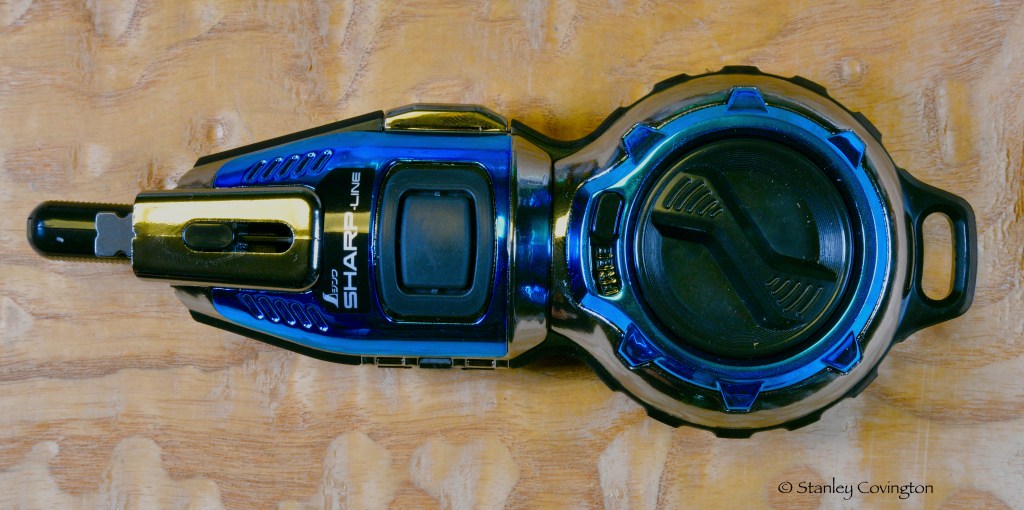
The newest Cylon-inspired modern sumitsubo by Shinwa

The way of the carpenter is to become proficient in the use of his tools; First to lay his plans with true measure and then perform his work according to plan. Thus he passes through life

Miyamoto Mushashi – Go Rin no Sho

In the previous article in our series about the Sumitsubo, we examined some traditional wooden examples, and a plastic version of the same.

In this edition we will take a look at the modern version sold in hardware stores around Japan.

In the previous article your humble servant mentioned that this style of sumitsubo appears to have been designed by Cylons, the chrome-plated red-eyed nemesis of the Battlestar Galactica and her brave crew. Gentle Readers must decide for themselves whether or not alien machine lifeforms from a far galaxy were engaged in the design process or not, but I have no doubts on the matter (シ).

The Design Concept

These modern sumitsubo function much the same as traditional wooden sumitsubo in that a line, stored on a reel, is spooled out through a reservoir containing absorbent material soaked with ink, becoming partially saturated with ink. The wet line is then secured to the material to be marked at one end using a “karuko” bob with a needle. At the opposite end of the material, the line is aligned with another mark, tensioned, lifted up and released snapping against the material and leaving behind a line of ink.

Besides the intergalactic alien design influence, the most obvious difference between these modern sumitsubo and the traditional ones is that the line, the reel, and the ink reservoir are entirely enclosed in a cleverly-designed, tough and lightweight plastic housing which not only keeps the ink from drying as quickly, but permits the tool to be dropped into a tool bag or toolbox without risk of getting black ink all over everything. Much more convenient.

The ink reservoir is concealed under a little plastic hinged door that one opens to add ink to little sponges. In the better sumitsubo this reservoir has rubber seals and special slits to prevent ink from leaking. This combination of sponges and seals works quite well so long as one doesn’t add too much ink. But everyone does this at least once…

In the case of automatic sumitsubo, as are the examples shown, a coil spring enclosed in the reel mechanism automatically spools the line back onto the reel in preparation for the next snap. Some versions lack this spring and must be rewound by rotating the reel using one’s fingertips.

Please note that this spring action, while quick and convenient, is not 100% blue bunnies and fairy farts because the karuko’s sharp little point can give the user a serious boo boo if control is lost. To prevent embarrassing injuries (i.e. leaky eyeball syndrome), the karuko sold with most of these sumitsubo are designed to automatically retract the needle safely into a plastic housing when released.

As someone who has unintentionally initiated one or two haphazard tattoo patterns on hand and arm over the years with flying karuko needles, your humble servant highly recommends Gentle Readers “stick” with these retractable needles. And don’t forget your safety glasses.

Changing the line of the modern sumitsubo is much easier than with traditional sumitsubo because there are no holes to thread the line through. All that’s necessary to change a line is to open the ink reservoir, remove the reel, tie the new line to the reel and karuko, replace the reel, lay the line through the reservoir, and close the lid. Eazy peazy japaneazy.

Gentle Reader may recall from the previous article that, when using the traditional sumitsubo, one must simultaneously press down on both the line and wadding in the ink well with a bamboo sumisashi as the line is spooled out to ensure an adequate amount of ink soaks into the line. This is not possible in the modern sumitsubo with its covered ink reservoir, so instead, one pushes down on a rubber button while spooling out the line to achieve the same results. This rubber button in turn presses down on the line and sponges transferring ink to the line.

Major Brands of Modern Sumitsubo Available Today

There are two major brands of sumitsubo on the market in Japan today: Shinwa of steel square fame and Tajima best known for its tape measures.

Two of both brand’s most popular models, in various states of undress, are shown below.

When it comes to sumitsubo, Shinwa is the older and more experienced of the two, but Tajima has more eye-catching products and a powerful marketing department with a nation-wide distribution network.

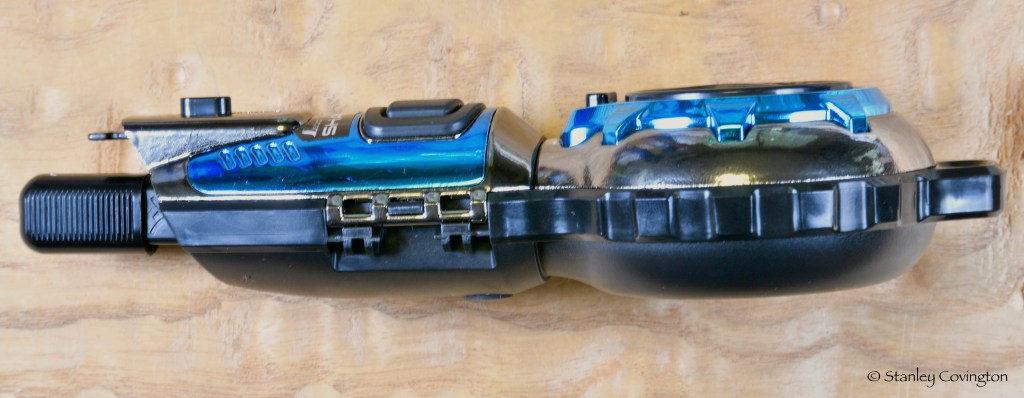
A side view of the Shinwa Sharp-line sumitsubo with extra-fine line. The design looks much like a space ship with a non-slip grip. Phasers and proton torpedoes are currently not available options for this model. Maybe next year.
The Shinwa Sumitsubo with its lid open. Yellow sponges to contain ink are mounted in the lid and body. A blue rubber seal installed in the lid seals the ink reservoir to prevent leakage and reduce evaporation. Although not visible in this photo (see the photo at the top of this article) the sponges and line can be squeezed together by pressing on a rectangular rubber button in the lid. The stainless steel pin visible to the left of the reservoir guides the line and keeps it from abrading the plastic. A stainless steel ring at the sumitsubo’s mouth (far right) guides the line and keeps it from abrading the body too. The needle in the karuko is spring-loaded so if left on its own it retracts into the karuko’s plastic body, but in this photo it is held extended with tape. The karuko has a rubber “O” ring of sorts molded to its end that fits tightly into the body’s mouth to prevent leakage. The Tajima Sumitsubo lacks this detail. At the far right end of the lid a black operable metal tab can be seen extending from the body. This helpful widget is used to precisely locate and press down on the line before the snap. This too is not found in the Tajima version. At the far left can be seen a loop for attaching the tool to the toolbelt or safety harness with a lanyard as required by Japan’s safety regulations when performing overhead work. Beam me up, Scotty.
The newest Shinwa sumitsubo disassembled, a three second operation accomplished without tools. The body with the lid to the ink reservoir and its sponges and rubber seals is open in the center. The reel is upper left. The circular casing that secures the reel within the body and contains the brake and drag, features also not available from Tajima, is lower left. The karuko with its spring-retracted needle extended with tape is located center right. Liquid ink is dripped onto the sponges and the lid is closed locking the reel and line in-place. A coil spring inside the reel assembly spools line back onto the reel automatically.
The Tajima version of the modern sumitsubo. It has a slightly more organic shape reminiscent of a gourd, a traditional motif in Japan. The narrow waist in both the Tajima and Shinwa models ensures a comfortable one-handed grip in the field. This sumitsubo has a round rubber button located to the right of the word “EVO” to actuate pressure on sponges and line.
A side-view of the Tajima sumitsubo showing the lid’s hinges. The karuko is inserted into the mouth in this photo, and is larger than the Shinwa’s karuko.
The disassembled Tajima Sumitsubo. It has two blue sponges mounted inside the body, instead of Shinwa’s yellow sponges, one of which is mounted in the lid. Accordingly, the underside of the more complicated circular rubber pressure mechanism can be seen in the open lid. A black rubber seal mounted in the lid keeps ink from leaking from the reservoir (at least that’s the idea). Unlike the Shinwa, the line must be thread through the mouth without the karuko attached, a little less convenient. This sumitsubo has two stainless steel pins guiding the line to and from the reel, although I’m not sure why two are necessary. It too has a stainless steel ring at the mouth to limit wear, but it can’t be seen from this angle. In addition, a hard, wear-resistant plastic block is inserted where the line exits the reservoir to the right to reduce wear. The reel is held in place by the plastic ring bottom left, which is twisted then locked into place when the reservoir’s lid is closed. This tool comes in various sizes and colors and is probably the most popular sumitsubo commercially available in Japan today.

Your humble servant, being gleefully addicted to trying out new tools, owns both brands of sumitsubo. Perhaps I need a 12-step program and a good detox to mitigate my tool-based delirium tremens? In any case, I’m convinced Shinwa products are perhaps a little superior in performance, but the Tajima sumitsubo are undeniably good too.

As I wandered around a construction project in Chiba Prefecture I’m in charge of last week I paid attention to the sumitsubo workers were using and observed that Tajima products were in greater evidence. Not a scientific study by any means, but more accurate than the flyblown tripe the hopelessly corrupt World Health Organization calls science lately.

A few weeks ago I visited a local hardware store I do business with regularly. Although it’s not the first or even the second building that has housed this business at this same location in Suginami Ward in Tokyo, the family that owns it has been selling tools and building hardware to contractors and professional craftsmen for over 100 years. Inside it has tools and building supplies literally stacked to the ceiling, much of which is cantilevered precipitously over the narrow, crowded aisles between steel shelves to the point where entering the store and moving around is not a simple task. A death trap should an earthquake strike, I fear.

The current owner is 90+YO with a warm smile and honest habits who is easy to trust. I asked him which sumitsubo products are most popular among his professional customers. His answer was that they seem to buy the Tajima products more, although he couldn’t give a single reason why. I suspect the fact his shelves are full of Tajima products with nary a Shinwa product in-sight has something to do with their selections.

Tajima’s distribution network is hard to beat.

My old ten-year old Shinwa sumitsubo. It’s currently setup for construction jobsite use with heavier line and a karuko with both a needle and super-magnet base for use with structural steel and LGS studs. The reservoir lid’s hinge is half broken, but still works good enough. I purchased the Cylon blue Shinwa sumitsubo dissected above as a replacement in anticipation of its imminent retirement.

Inklines

The lines used in sumitsubo were once all made from either hemp or silk fibers, I’m told. Nowadays, hemp can’t be had for love or money, but silk is still available. Modern fibers made from polyester and nylon are most prevalent of late. Better lines contain kevlar or spectra fibers for extra strength.

I am fond of thin (>0.4mm) lines for cabinetwork because they make cleaner marks, but skinnier lines are less durable and the marks they leave are less visible from a distance and on rough surfaces, so for construction projects, although 1.0~1.5mm lines can be purchased, 0.6~0.8mm lines are what most people use.

Conclusions

I am fond of the simple, elegant, antique appearance of the ichimonji-style wooden sumitsubo.

A carpenter-made ichimonji-style sumitsubo in the workshop. We share the same ebony karuko

I have used the more modern Genji-style wooden sumitsubo for many years, and like them enough to have one mounted inside my toolchest for good luck. Like many older craftsmen, I appreciate the appearance of a tool beautifully hand-carved from attractively figured colorful wood, and think the traditional wooden sumitsubo feels better in the hand and adds dignity to the work.

But the modern Cylon-designed plastic sumitsubo is cheaper, tougher, and much more convenient, which is why I reach for one when I need to snap a line. Who was it that sang: “The times they are a-changin?”

Which style do you prefer?

YMHOS

To pixies that stray too near, the little turtle gives his best Lee Van Cleef glare and growls: “Stay away, vile creatures, or I’ll bite you in two, snicker-snak!” He is most persuasive.

If you have questions or would like to learn more about our tools, please click the “Pricelist” link here or at the top of the page and use the “Contact Us” form located immediately below.

Please share your insights and comments with all Gentle Readers using the form located further below labeled “Leave a Reply.” We aren’t evil Google, fascist facebook, thuggish Twitter, nor a US Senator’s Chinese girlfriend and so won’t sell, share, or profitably “misplace” your information. May my karuko ravage my family jewels if I lie.

Go back

Your message has been sent

Warning
Warning
Warning
Warning.

Other Posts in Japanese Sumitsubo Inkpot Series

The Marking Knife

A spearpoint marking knife

“Make sure that you always have the right tools for the job. It’s no use trying to eat a steak with a teaspoon and a straw.” 

Anthony T. Hincks

There are many varieties of marking knives used for woodworking around the world. In this article your humble servant would like to discuss the Japanese version.

Let’s will begin with some definitions, followed by an explanation of the design details and structure of the tool.

We’ll save the best for last by presenting two subtle but effective professional modifications to improve the tool’s performance and possibly even the quality of the results produced Beloved Customer might deign to employ.

Definitions

The Japanese marking knife is called a “shiragaki” or sometimes “shirabiki” in the Japanese language. Don’t bother looking it up in a dictionary, though. The characters used vary, but can translate directly to “white pull” (白引き), which makes some sense, or “white persimmon” (白柿), which makes little sense, so I suppose the persimmon character is used as a phonetic substitute for “kaki” (書き) which means to write. I choose to write the word as 白書 so the Kanji translate directly to “white writing.” That makes more sense to me.

Such confusing substitutions are all too common in the Japanese language in the case of words with purely phonetic origins. The fact is that, much like psychologists, lawyers, and priests, the Japanese people almost perversely enjoy confusing terminology. It’s an ancient habit that probably won’t change soon. I say this as someone that has been reading, writing and speaking the Japanese language at graduate school level for 45 years, been a resident of, attended school and worked in Japan for 30+ years, and been married to a Japanese woman and had Japanese relatives for 44 years. I can get into serious trouble in the Japanese language.

Now that we are done with the Japanese language lesson, I will simply call this tool a “marking knife.”

Purpose of the Marking Knife

Precise and speedy layout is an essential aspect of executing quality woodworking. “Layout” in this case refers to the task of making lines in the material being worked, whether it be wood, steel, glass, stone, concrete, asphalt or even dirt, indicating where items such as walls or foundations are to be constructed, cuts are to be made, and joints between components are to be aligned. It often, but not always, involves transferring dimensions and intersections of lines shown in drawings, or existing in the craftsman’s head, to the material to be worked. The quality of the final product depends heavily on the quality of the craftsman’s efforts in layout, which is why the job of layout was historically assigned to the most experienced craftsmen worldwide.

In Japanese this process is called “sumitsuke” 墨付け, which translates to “marking with ink,” a term more easily understood than “layout” IMHO. The term springs no doubt from the Asian tradition of using black/red ink and inklines to mark layout. This article will focus on the marking knife used in laying-out joints in wood.

The Japanese marking knife is a bladed tool made of iron and steel used to cut thin, precise layout lines in a board’s surface, most often but not always at a 90 ° angle to the direction of the wood grain.

Every woodworking tradition I am aware of includes the marking knife, and regardless of their preferred style, anyone serious about woodworking will own at least one, and know how to use it.

Advantages of the Marking Knife

The marking knife has distinct advantages over other methods of marking a line more-or-less perpendicular to the direction of the wood grain. Here are a few:

  1. The line it makes can be as thin as the edge of nothing, achieving precision unapproachable by pencils, pens, scribes, sumisashi, inklines, chalklines, laser-sights, or even wishful thinking for layout in wood in the case of lines at more-or-less 90˚ to the direction of the grain. The line it makes, however, is not as easy to see as an ink or even pencil line, so it is not always useful for rough layout work;
  2. The layout line cut by a marking knife penetrates the wood’s surface providing a physical place into which the woodworker can index the edge of his chisel, or nicker of his plow plane or rabbet plane, or the teeth of his saw, or points of his divider quickly, precisely and confidently without relying heavily on Mark-1 Eyeball, improving the efficiency and quality of both his layout and fabrication efforts. The resulting time savings, improvement in accuracy, and reduced eye strain this indexing effect provides are absolutely huge.
  3. When making layout lines perpendicular to the grain of the wood on the faces of a member, such as a table apron, for instance, after making one line on the reference face, the remaining three lines can be indexed and extended from each other with a marking knife, confirming the accuracy of the member’s dimensions and ensuring the tenon shoulders will be sawed accurately creating an excellent tenon, assuming the craftsman knows how to use a saw properly, of course. This is a subtle but powerful technique.
  4. The line cut by a marking knife severs the fibers near the board’s surface helping to prevent fibers from being torn out of the board by the blades of saws, chisels or the even router bits leaving ragged, chipped edges.

Are you convinced yet?

Design & Materials

Shirabiki Ura by Konobu

There are many styles of marking knives used around the world, and your humble servant has tried most of them at one time or another, but none that I am aware of are as simple as, or functionally superior to, the Japanese version.

Lacking a pretty, turned handle and looking more like a blackened steel popsicle stick than a precision tool, the Japanese marking knife appears unfinished, even barbaric. But despite its stark appearance, it has a sophisticated design that employs superior metallurgical and blacksmithing techniques.

Like many Japanese woodworking tools, the professional-grade marking knife is made with a layer of hard high-carbon steel forming the cutting edge which is forge-welded to a softer layer of low-carbon steel comprising the body of the tool.

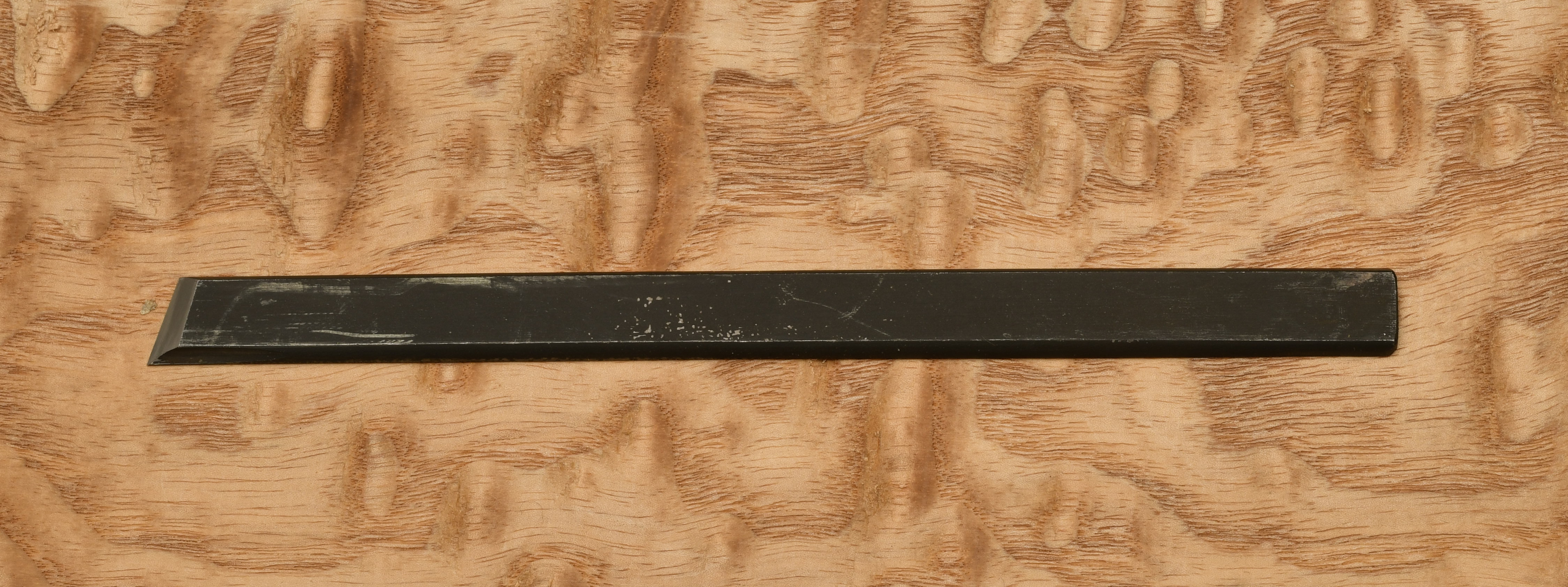
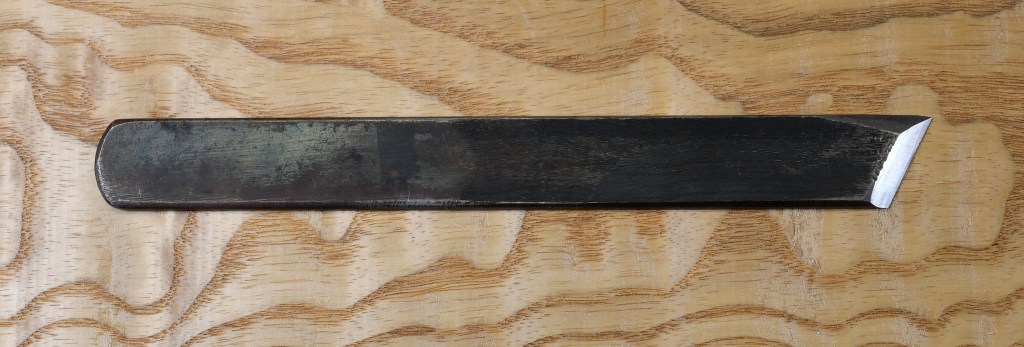
They are almost always flat, generally thin, and not especially wide tools. Perhaps 1/2 the length of one side is ground flat and bright. This surface is called the “ura.” A hollow-ground depression called the “uratsuki” is ground into the ura. The opposite side is plain and includes the cutting edge’s bevel.

Some marking knives, such as the photo at the top of this article, have a spear point or “kensaki” (剣先)meaning “sword point” which is convenient because the same knife can be used either left-handed or right-handed. It’s a logical and attractive feature that some people prefer, but in my experience it has limited usefulness. To each his own.

The demands on the marking knife in terms of sharpness, durability, and edge-holding capability are not as severe as for chisel and plane blades. The better-quality ones are hand-forged of high-carbon steel and quality jigane, properly shaped and filed, and carefully heat-treated.

Because of their thinness, marking knives tend to warp badly during heat treat, and consequently demand either a blacksmith with better than average skills or the use of high-alloy steels that warp little. Even experienced blacksmiths end up with a few rejects due to cracking and excess warpage, which perhaps explains the relatively high cost of handmade ones. It has mostly been a tool made by specialist blacksmiths, which is the case for those carried by C&S Tools.

For this reason, and because the performance demands on the cutting edge are not severe, Blue Label steel is entirely acceptable IMO. But ours are hand-forged from White Label Steel No.1.

The Ura

I mentioned the “ura” above, but let’s examine it a bit more. Ura is a Japanese word written using the Chinese character  浦. It means a bay or inlet from a lake or ocean, usually without rocks, and often with a sandy or gravelly shore. This word also means “depression,” as in a low area in a field, not the feeling your humble servant experiences when he sees his head in the mirror in the morning and remembers his once energetic head of hair in an afro do (ツ)。You can imagine why this word was employed to describe the hollow-ground depression in many Japanese woodworking blades.

In North America, similar curved surfaces and depressions were once said to be “swamped” even though they were made in metal. This term is obsolete nowadays.

The ura is what makes the Japanese marking knife superior to its Western counterparts for two reasons. The first reason is that the ura makes it easier to keep the hard layer of steel at the reference side of the blade flat, an important feature when using a knife for layout using a steel straightedge or square. Second, the ura makes it much quicker to accurately sharpen the blade and especially the extremely hard layer of high-carbon steel that forms the cutting edge.

Without the ura, the hard steel would be time consuming to sharpen and would tend to become rounded instead of remaining a flat reference face to index against a steel square or straightedge. It’s a subtle and clever design more sophisticated than its simple appearance suggests.

In use, the flat ura side is pressed lightly against the leg of a steel square with the point cutting lightly into the wood and the heel floating above. The blade is then pulled toward the user to cut a straight layout line.

Lubrication

I recommend Beloved Customer use an oilpot to lubricate the marking knife’s blade to reduce friction and wear between the blade and the straightedge or square, as well as friction between the cutting point and the wood. Not only will your square last longer, but your layout lines will be more accurate. Don’t believe me? Give it a try.

Marking knives are simple tools for a simple job, but there are a couple of subtle improvements some advanced Japanese craftsmen, especially joiners, make that Beloved Customer may want to consider.

1. Habiki

This first improvement is intended to minimize one downside of the marking knife, namely its tendency to shave metal from the square or straightedge used to guide it, shortening their useful lifespan and reducing their accuracy.

In Japanese this modification is called ” habiki “ 刃引き which translates directly to “blade pulling, ” as in pulling the blade’s cutting edge over a stone to intentionally dull it. It is a term borrowed from the Japanese sword world.

The steps to accomplish this modification are as follows:

  1. First, sharpen the blade;
  2. Then, with the tool’s ura side facing towards you, stand the blade vertically on the face of a medium grit waterstone, diamond stone, diamond plate or oilstone with its cutting edge resting on the stone. Adjust the position of the cutting edge on the stone so the last 2~3 millimeters of the blade, measured from the tip, hang off the stone’s side so the tip does not contact the stone;
  3. Finally, drag the blade towards you creating a flat on the cutting edge, while leaving 2~3mm of the blade’s tip sharp. A single light stroke will usually suffice. Voila.

The dulled portion of the cutting edge will now be less likely to shave your square or straightedge, while the sharp tip will cut the wood and make a pretty, accurate layout line, assuming you do your job, of course.

I know that the idea of sharpening a good blade and then intentionally dulling part of the cutting edge sounds gaga. In fact, when Honda-san showed it to me, I thought the old guy was pulling my leg, even though he didn’t ask for a nickle (ツ) or pass wind. But Honda-san was a nationally-recognized master among masters, a man in his 80’s who had been making extremely high-end custom joinery since he was 17 years old, one who took his tools extremely seriously, so although I was skeptical I wisely gave him the benefit of the doubt. In addition, he let me try his knife so I was quickly convinced.

Honda-san’s habiki technique works, so gather up your courage and give it a try before allowing your inner-troll to embarrass you. I promise you’ll like the results and your square will thank you.

2. Tip Bevel

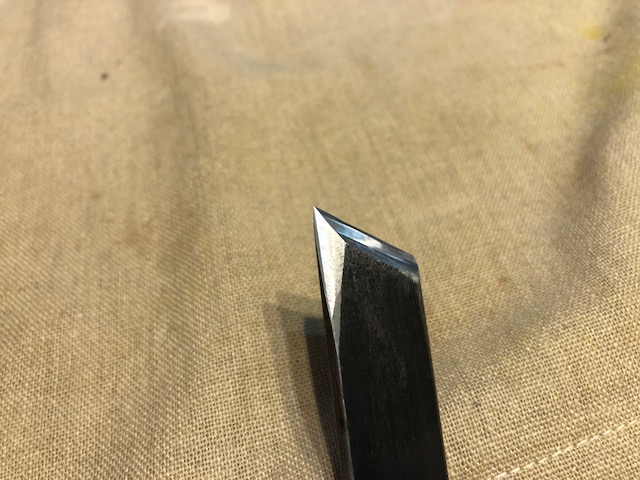
The second modification is also one Honda-san taught me. There are several ways of doing it, but the essence is to grind an angled flat 15~18mm long  on the top edge of the blade’s side angled away from the ura, ending at the cutting edge’s point. The goal is to create a sharp “clipped” point at the meeting point of three surfaces or planes.

This angled flat has three purposes: First, it removes metal that would otherwise get in the way of your clearly seeing the knife’s cutting tip. This is important because often a marking knife must be indexed off a tiny mark left by a divider’s leg or a previous layout line, for instance when marking the shoulders of a tenon on four sides of a stick of wood. Removing this unnecessary metal will make it easier to both see and index the knife’s point, and begin the layout mark exactly where it is needed. The positive impact of this small modification on accuracy and speed cannot be overstated.

The second purpose is to reduce the friction between blade and wood when cutting a layout line, thereby improving control, like racing tires on a fast car.

And third, it provides a convenient place to rest your fingertip to better control the knife.

If you imagine this modification can’t make much of a difference, then your lack of experience is showing. How embarrassing >~(ツ)~<

Squares to Use With Marking Knives

Some prefer to use a wooden square for layout work, and others brass squares. Both work just fine with a marking knife until they don’t. A steel square is a big improvement over these two options, but Gentle Reader would be wise to consider using a hardened steel square, or better yet, a precision hardened stainless steel square with your Japanese marking knife. Anyone with eyes who has used a steel marking knife for layout for a period of time has observed that their layout square tends to become worn and lose precision with use as the marking knife gradually shaves metal from the square’s blade changing its shape. A hardened steel square will simply resist this wear longer. And a stainless steel square will resist rust from salty sweat better than plain steel.

There are hardened carbon steel and hardened stainless steel combination squares and die maker squares available on the market, but I think they are too bulky, clumsy and too costly for making simple 90° layout lines on wood, especially for furniture and joinery work.

Matsui Precision produces a series of excellent hardened stainless steel squares that are popular in Japan and which we carry. They are well worth the cost. I have been using them for years. Send me a note if you are interested.

The Japanese marking knife is a great tool. Once you use one, especially after making the modifications described herein, your confidence in your layout efforts as well as the precision of your joints will increase. Indeed, I daresay you will wonder how you ever got decent layout work done without one.

You can see the marking knife we carry at the link below.

C&S Tools Marking Knife

YMHOS

My old marking knife was hard on my eyes and fingers, but now I know how to fix it!

If you have questions or would like to learn more about our tools, please click the “Pricelist” link here or at the top of the page and use the “Contact Us” form located immediately below.

Please share your insights and comments with everyone in the form located further below labeled “Leave a Reply.” We aren’t evil Google or fascist facebook and so won’t sell, share, or profitably “misplace” your information. May my square warp and wiggle if I lie.

Go back

Your message has been sent

Warning
Warning
Warning
Warning.

Leave a comment


The Japanese Sumitsubo Inkpot 墨壺: Part 1

If your wife’s having a good time and you’re not, you’re still having a better time than if you’re having a good time and she’s not.

Red Green

The sumitsubo is a Japanese marking and layout tool similar in function to the Western chalk line. Although few Gentle Readers in Western countries have experience using this tool, it has much to recommend it.

In this post we will briefly examine this tool so prevalent in Asia. Our focus however, will be on the traditional wooden versions, not the modern plastic one, a version of less beauty but perhaps more utility

Sumitsubo is written using the Chinese characters 墨壷 which directly translates to “ink pot”  and pronounced “sue/me/tsu/bow.”

The inkpot has been a common tool in many Asian countries since ancient times. Indeed, until recently, few craftsmen in Asia had even heard of the dusty chalkbox used in the West.

This is just conjecture by your humble servant, but the fact that nearly all writing and much artwork in many Asian countries during recorded history relied heavily on brushes and sumi ink, the black carbon reside of burnt pine sap, may be the reason the inkpot became the standard tool for marking straight (and sometimes intentionally curved) lines.

Using the Sumitsubo

The sumitsubo works on various surfaces including wood, stone, concrete, gypsum board, and other construction materials. It is not unique to Japan, but is found in one form or another throughout Asia. It is an essential tool for carpenters.

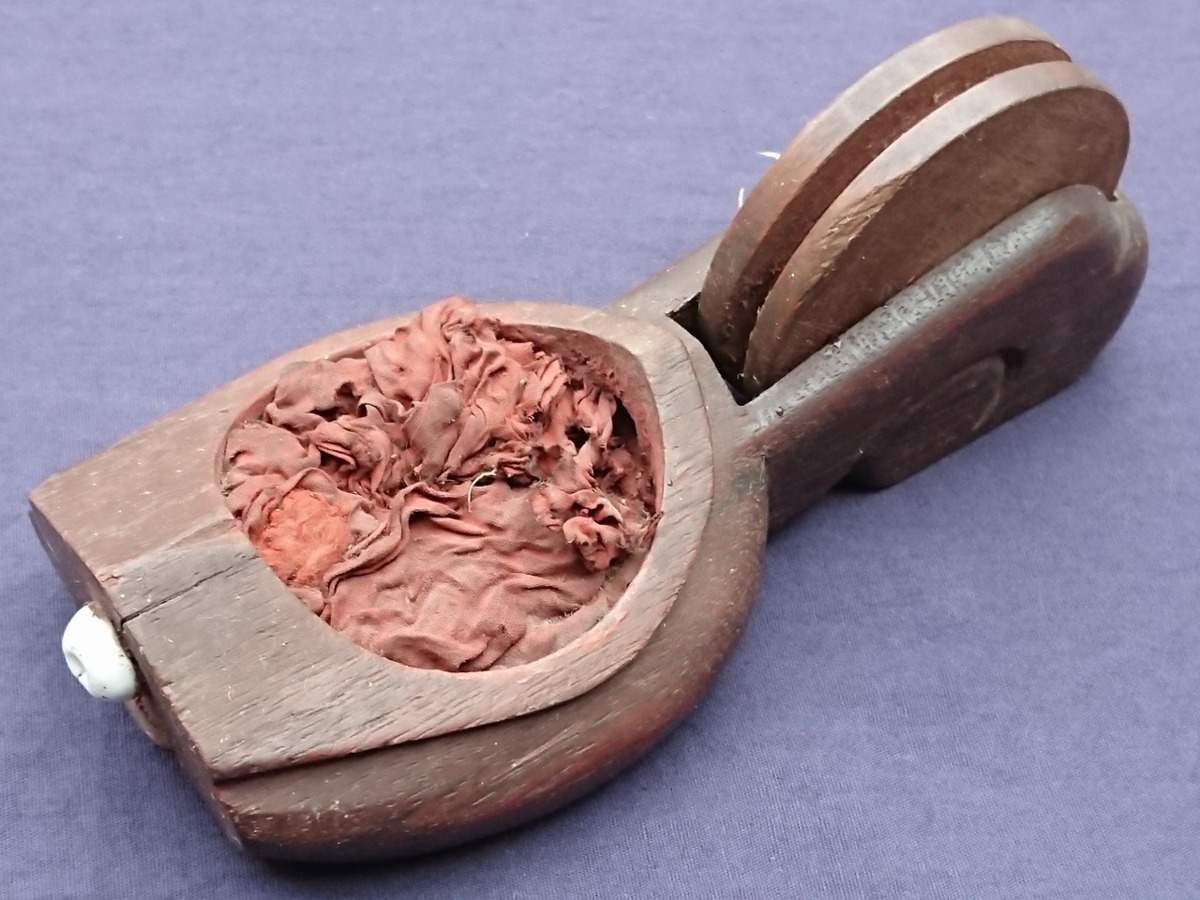
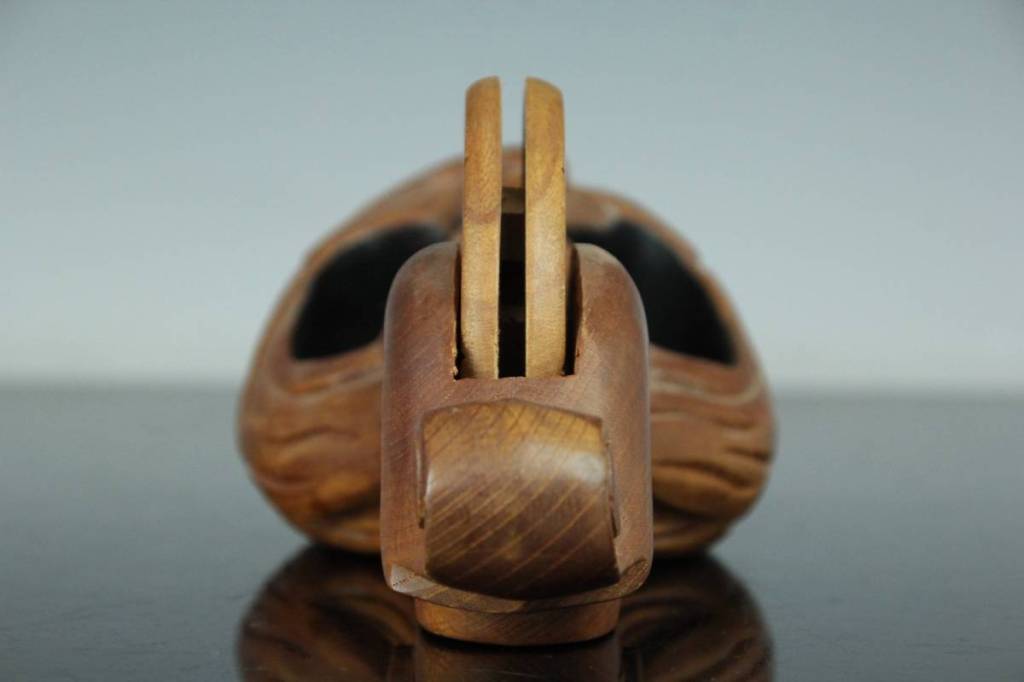
A thin line spooled around a reel attached to the sumitsubo passes through holes at each end of a “pond” or inkwell filled with absorbent silk or cotton waste soaked with ink. As the line is let out, and with encouraging pressure applied by the user, it soaks up ink from the inkwell.

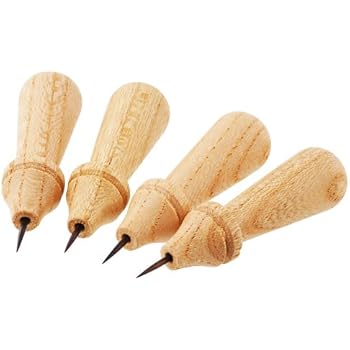
In Japan, a wooden bob called a “karuko” with a sharpened steel pin is attached at the line’s far end. The workman pushes this pin into the surface of the wood being marked to secure the end of the line in place for marking. 

To use the sumitsubo, the workman stretches the damp inkline over the surface of the object to be marked, secures it in the desired position at the far end using a pin, weight, or helper, reels out and stretches the line, picks up the line with his fingers and releases it snapping an inkline. There are other more subtle actions that the user must perform at the same time, but this is the essence.

Depending on the user’s skill and the available line, a perfectly straight line can be marked on a flat, level surface to many meters in length.

The ink line has several undeniable advantages over the Western chalk line. First, the line it leaves is narrower and less “ fuzzy,” sufficient for fairly accurate carpentry work, much more precise than the typical chalk line.

Second, it is not as easily rubbed off or blown away as chalk.

Third, while inks of various colors can be used, black is most common and contrasts nicely with most building materials, but red is another traditional color. Nowadays, ink can be purchased in a rainbow of colors, some in permanent ink and even some that glow-in-the-dark.

The standard variety of ink used with sumitsubo is not entirely waterproof and if applied to a non-absorbent material like stone or steel, will not endure a rainstorm well. There are waterproof inks available, however, and of course the standard trick of using a spray can of clear lacquer to seal the snapline works as well with ink lines as it does with chalk lines.

History and Design

As your humble servant has mentioned in previous articles, the marketplace development that makes it possible to purchase completed woodworking tools is fairly recent. In previous centuries and millennia, when material costs were high and labor costs low, craftsmen would commission a blacksmith to make the metal components of their tools, but would make the wooden components themselves. In Japan at least, the sumitsubo too was made by the individual craftsman and became an opportunity to display both his skills and imagination, yielding unique, beautiful, and even bizarre tools.

There is neither adequate time nor space in this insignificant little blog to go into the evolution of sumitsubo design in any detail, much less the design variations, but the Takenaka Tool Museum’s website has pictures of representative examples.

This image has an empty alt attribute; its file name is HMI3N-zMEbzNThvQ9yu68_vAufI8U1hiwxccCEhIgnYn61A_YhQoR0laaH4yvbZX6b9SwRrzN_2xqNoFqzDstfIUnzVHBN8G3LPrGZsfjS1Sk1S7CVcAoAFMtNtvyC1ka7l5WEZV
An old “Ichimonji” style sumitsubo. These squarish sumitsubo have their own charm, but are not as functional or convenient as later designs.
This image has an empty alt attribute; its file name is yaaK_dhHescJiBkZuw4xBTrDTRziX96jByMxl4_8EpdMTWrZ6nSjpW4SyfuogZpi3_4rFXhZm2rIOYZl8LRLJjbSOuvjtPgHGt9tCXcH8Yo92SGPaU0O26KuGbdxHj-f4XZfTkDK
This antique sumitsubo shows the design evolution of the tool with the narrow tail, which is easily held, the large reel which not only holds more line but helps the line dry retarding fungal growth, the wide and shallow pond, and the ceramic ferrule for the line. The owner used this tool exclusively for red ink. This sample does not have a crank for working the reel, typical of Western Japan.
A fancier craftsman-made version of the sumitsubo above, with a smaller pond, a hand crank, and a more elegant wave motif

The style used for the last 200 hundred years or so is shown at the top of this post, and in the photo below. The major improvements include a larger ink pond designed to both hold more ink and to better accommodate the bamboo sumisashi inkpen used for layout, a larger, more exposed reel to hold more line, making it quicker to reel in, and providing better ventilation to reduce mildew, and a narrower, easier to grip tail containing the reel greatly improving functionality and reducing fumbling and damage.

A typical sumitsubo nowadays with crane and turtle facing each other across the ink pond, no doubt talking about sports scores. Zelkova wood

The carving seen in sumitsubo has meanings, of course, which varied with the craftsman and popular whim. The most popular style nowadays has a turtle and a crane facing each other across the ink pond. In Japanese mythology, both are considered lucky, with the crane said to live 1,000 years and the turtle 10,000 years. The turtle normally has a hair skirt flowing behind.

A very artistic craftsman-made sumitsubo with a peony blossom and Chinese lion holding court at each end of the ink pond, and a lotus leaf reel. These three symbols hark back to a famous Japanese Noh play titled “Shakkyou.” The lion in mythology is the king of beasts. It drives away demons and evil forces and protects against disease. The peony is the king of flowers. The lotus is a thing of grace and beauty that lives in, yet floats above the dirty mortal world, and with its roots purifies it. A potent symbol in Buddhism as well. However carved this sumitsubo was well-educated, but the size of the lion on his precarious perch would limit the practicality of this tool.
Bottom view. Notice the opening below the reel to intended to promote air circulation
A side view of the Chinese lion, facing away from Gentle Reader. No offense intended, of course, but dignity must be maintained.
A professionally-carved sumitsubo by Kimura Isaburo showing lotsu leaves surrounding the ink pond with a tiny frog poised on the rim
A closeup of the lotus ink-pond’s froggy.
Another sumitsubo carved by by Kimura Isaburo. This one too has a tiny frog on the rim of the ink pond, but instead of reposing, he is preparing to jump to escape the snake on the opposite edge. The body of the snake wraps around the wheel and tail of the tool.

Dragons are another mythological motif seen in sumitsubo, being a fierce but noble and benevolent creature in Japanese tradition

The reel end of the sumitsubo typically incorporates water or wave details, perhaps related to the ancient Japanese motif of wagon wheels in flowing water.

The last sumitsubo maker in Niigata Prefecture was Mr. Tamaki (RIP). Those Gentle Readers who have visited Kezuroukai competitions in Japan may have seen him doing exhibitions. Here is a link to a video of him making sawdust.

Here are a few links to videos of sumitsubo in use: Link 1 Link 2 Link 3

Here is a link to a video of a huge (2.3 shaku = 700mm = 27.4″) sumitsubo by a famous Niigata craftsman named Ichimonji Masakane. The size brings the carving details into focus. This is of course not a practical tool, but was created for decorative purposes. Once, every major tool store had a similar sumitsubo on display. If you visit Suiheiya in Tokyo you can see similar examples.

The sumitsubo is a tool Western woodworkers could benefit from when making straight layout lines because it’s not only cheaper, more convenient and more reliable than a long steel or wooden straightedge, it produces a finer, easier to see, and more indelible mark than a chalkbox can.

The sumitsubo was once said to be the symbol of the master carpenter, the craftsman that created the design and performed layout of major aspects of a construction project. Even today, older carpenters prefer the wooden sumitsubo and inist that it does a better job. I suppose every generation in human history had similar attachments to older ways and older tools. But I have a hand-carved Zelkova wood sumitsubo mounted under the lid of my toolbox. Does that make me an old fart?

A drachma for your thoughts.

YMHOS

A sumitsubo at work.

If you have questions or would like to learn more about our tools, please click the see the “Pricelist” link here or at the top of the page and use the “Contact Us” form located immediately below.

Please share your insights and comments with everyone in the form located further below labeled “Leave a Reply.” We aren’t evil Google, fascist facebook, or thuggish Twitter and so won’t sell, share, or profitably “misplace” your information. If I lie may a fortuitous crane do a damp doodoo on my head.

Go back

Your message has been sent

Warning
Warning
Warning
Warning.

Leave a comment

Other Posts in Japanese Sumitsubo Inkpot Series