
What we have is given by God; To teach it to others is to return it to him.
Gian Lorenzo Bernini
There are as many varieties of hammers in Japan as there are in Western countries. With one notable exception, and in one specific application, Japanese hammers are not especially superior to their Western counterparts. That exception is the gennou (pronounced gen/noh), a hammer intended specifically for striking chisels, adjusting plane blades, and strategically crushing wood included in joints (i.e. “kigoroshi” or “wood killing”). This article will provide a further introduction to the gennou hammer.
What Is a Gennou?

The Japanese have different terms for different hammers, of course. A hammer used strictly for driving nails, or banging sheet metal, or driving stakes is called a “kanazuchi” meaning “steel mallet.” A common slang term for this tool is “tonkachi.” The gennou, on the other hand, can of course be used to drive nails, but it’s especially suited to striking chisels and adjusting planes.
I’m told the word “gennou” was borrowed from the name of a Buddhist priest who lived, or so the story goes, in the 1300’s and used a steel hammer to destroy a poisonous rock that was troubling the common folk. I’m not sure what one has to do with the other, but there you are.
The Attraction of the Gennou
Many Japanese craftsmen develop an emotional attachment to their gennou, perhaps because, unlike saws, chisels, and planes that are gradually but inevitably sharpened away till little remains, or squares or marking gauges that loose tolerance, get bent or wear out, a quality gennou will last for a lifetime relatively unchanged other than the occasional replacement handle. A good gennou is a simple, reliable, hardworking friend that never complains. It doesn’t have a tail limiting it’s movement and greedily swilling electricity, or batteries that die at Murphy’s whim; It never needs to be sharpened. And most importantly, it will never ask to borrow your truck, or pose a dangerous question like “do these pants make my butt look huge?”
Why Use a Gennou for Chiselwork?
This is a questions we addressed in a previous post, but which we also examine further here.
Almost any striking tool, from steel hammer to leather mallet, can be used to strike a chisel. The problem is that, unless one is either gentle or the handle of the chisel is reinforced, a steel or even brass hammer will eventually destroy the chisel’s handle. The solution in the West has been to use a mallet made of wood, leather, rubber, or plastic instead to cushion the blow and preserve the handle. Let’s consider this for a moment.
The purpose of striking a chisel with a hammer is to transfer the energy of the user’s arm and hand into the chisel via the movement of the hammer head driving it into and through the wood cutting it, right? But a soft-faced hammer/mallet, be it made of wood, plastic, rawhide or rubber deforms when it impacts the chisel cushioning the blow and wasting energy through deformation and heat generation. It may also unnecessarily waste energy through air drag, as we discussed in the Part 2 of this series. Since energy is lost, more mallet strikes are necessary, wasting time. This is demonstrably counter-productive.
Besides being relatively soft, a fat-faced mallet is bulkier, slower to swing, and is therefore less precise than a slimmer steel hammer of the same weight. While there may be some that are thrilled with cutting slowly and expending extra time and energy in the process of cutting a joint, most people want to cut as much wood as possible, as precisely as possible, in the shortest amount of time as possible, and with the least energy expenditure possible.
But if a chisel handle is so fragile that one must expend extra time and energy to keep it intact, then it is only logical to conclude that there is something wrong with the design of the chisel.
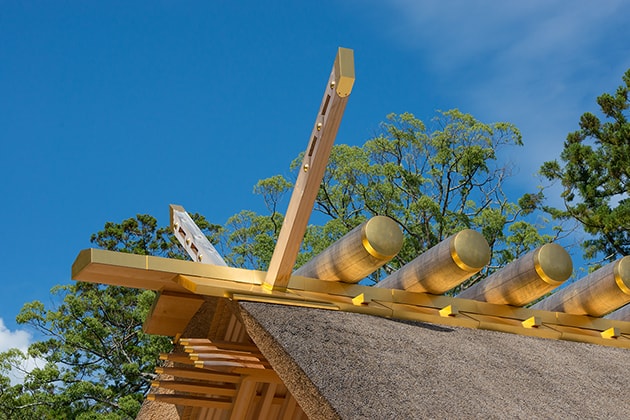
The Japanese are very serious about woodworking, as anyone who has gone to Kyoto or Nara and seen the ancient wooden temples there can attest. When it comes to chisel work, Japanese carpenters don’t tolerate such silly nonsense as a chisel that must be coddled, and so early-on Japanese craftsmen developed a wooden-handled chisel that can be struck hard with a steel hammer all day long without breaking.
The excellent design of the Japanese chisel combined with the quality of steel, and the forging, lamination, and heat treatment techniques used in manufacturing most Japanese chisels provides a tough cutting edge that stays sharper longer, placing Japanese chisels at the very top of the evolutionary pyramid of chisels, IMHO. And as the Japanese are wont to do, they developed a hammer specifically for striking chisels.
Technical Matters
The gennou is a simple tool consisting of a steel body of one shape or another attached to a wooden handle. The head has a rectangular hole or mortise called the “eye” in English and “hitsu” in Japanese that receives the wooden handle’s tenon.
The steel used for modern gennou is typically a standard, high-carbon Japanese tool steel used for making hammers, axes, farming implements and many other tools and designated “SK.” Chemically, it is very similar to 01 steel in the Americas; Not as pure as Hitachi Metal’s Shirogami or Aogami steels, of course, but still completely adequate for hammers. I wouldn’t pay extra for a gennou head made from Shirogami steel, much less rainbow-anodized unobtanium, and you shouldn’t either.
Mass-produced gennou are either cast or drop-forged very inexpensively. The eyes are rough and the handles are secured with wedges. Indeed, the eyes are typically so irregular that the head will not stay on the handle without wedges, but a high-quality gennou with a good eye and a handle made by a skilled craftsman doesn’t need wedges or other silly contrivances that compensate for sloppy tolerances to connect the two. “High-quality” is the key word.
Irregularities
A low-quality gennou head with a rough and/or irregular eye can create unnecessary problems for the user so it is important to understand and properly evaluate this negative space.
“Irregular” has several connotations in this context, but one common irregularity is an eye that is skewampus (please forgive your humble servant’s use of a few technical terms). For instance, it may have curved, twisted walls, wonky interior dimensions, or interior corners that are not clean and square. Not only is it a right pain in the tuckus to make a handle to fit such an eye, but you can bet your sweet bippy it will produce strange vibrations and cause the handle tenon to loosen up sooner.
Another irregularity commonly seen in the eyes of poor-quality gennou is rough interior walls. You would think that rough walls would generate higher friction and grip the tenon better, and perhaps they do compared to highly-polished walls, but rough, uneven walls tend to wear-out the wooden tenon of the handle quicker causing it to loosen over time. Imagine the vibrations the tenon is forced to absorb through those walls and the grinding action between wall surface and handle that results.
An intentional irregularity frequently seen in consumer-grade hammers is end walls (versus the longer side walls) that are sloped from each opening towards the center of the eye, essentially making the eye bulge inwards at its center. The purpose of these bulges is to crush the wood of the tenon when it is forced into the eye, increasing friction, while also providing a dovetail-like area for the steel wedge to expand the eye back into. It’s a reasonable solution for rough, irregular eyes in low-cost hammers to be used by amateurs, but one that the craftsmen who truly understands gennou and wants a lifetime tool finds undesirable. We will touch on this detail more in future posts.
Still another irregularity the careful craftsman must watch out for is an eye that is not perfectly centered in both axis in the head.
You might think that an eye that is a little off-center wouldn’t make a big difference, but it does because, not only is the balance and center of mass of such a head also skewampus so that the head tends to twist during the swing and then wiggle on impact, but because making handles for such a head is unnecessarily troublesome. A clean, uniform, straight, properly-centered eye is worth every penny it costs, especially if you are a professional and consider your time and sanity of any value.
Correcting Irregularities
A difficult question your humble servant is frequently asked is “how much irregularity is acceptable?” The answer is simple: If you think it is too irregular, then it is, because the work to correct the defect or compensate for it will all be on you. Sadly, most, including YMHOS, learn the answer to this question only through aggravating experience
Please understand that correcting major defects in hammer eyes is hard work. It takes time, concentration, a good eye, a flashlight, and a deft hand with skinny files and rulers to remove just the right amount of metal in just the right places inside that narrow eye, a task that is much more difficult than removing metal on an exposed surface because the files are thin and bendy, it’s hard to see what you’re doing, you don’t have much leverage, and consistently making a straight pass is not easy. Blisters will bloom. Patience will be tried. Sanity may quiver. Try it yourself and you will quickly see why.
This is the whole point of high-quality heads like those made by Kosaburo and now Hiroki and why they are worth the high cost: Their eyes are true when new, no adjustment necessary, saving the purchaser many hours of tedious work and blisters over a lifetime of hard use. Every time you make a handle for a high-quality head it saves time and leaves you with a good feeling. It’s a true friend, one whose dog never craps on your lawn.
On the other hand, a poorly-made head is a curse, a money-pit (if your time is worth anything), and a frequent source of irritation, especially when it inexplicably abandons its handle and soars as free as a hardened-steel bird (ツ)。
The Pig’s Ear
I hate to say it, but Beloved Customers and Gentle Readers should beware of one last defect when purchasing an expensive handmade gennou head. A perfect eye is truly a difficult thing to make, certainly more difficult than making a head cosmetically beautiful. Unfortunately, one or two famous blacksmiths (who shall remain unnamed in this series of articles, so don’t ask) have earned a reputation among knowledgeable professional woodworkers in Japan for occasionally making aesthetically beautiful gennou with skewampus, eyes. Caveat emptor, baby. She may wear high-heels, a short skirt and be beautifully made-up, but if she has a curly tail and oinks she’s probably a pig in a wig, unless she’s a trans-boor.
If you cannot hold and inspect an expensive gennou head in-person before concluding the transaction, at least make sure you purchase from someone with a solid guarantee, one without weasel-words and that reimburses you for return shipping, like C&S Tools’ guarantee does. A guarantee that you must argue about and then spend more money to benefit from is less than half a guarantee IMO.
We will delve further into the tempering and differential hardening of gennou, as well as laminated gennou heads in future posts in this series, same bat time same bat channel.
The Flawed Face
When it comes to wacking chisels, the garden variety hammer sold in both Japan and Western countries has a distinct design flaw. Namely, a domed face which works well for driving finish nails below the surface of lumber and gypboard, but with much use tends to damage the wooden handles of Japanese chisels by dishing in the handle’s end causing the katsura hoop to loosen, eventually deforming the hoop to the point the hoop in turn gouges and damages the handle. This can even result in the handle cracking or splitting. Yikes!
Using a flat-faced hammer easily solves this failing. The Japanese “ryouguchi” double-faced gennou has one face that is forged flat, for striking chisels, and an opposing domed face for driving nails or performing “kigoroshi.”
And while one absolutely can grind the face of a Western claw hammer flat and use it to strike Japanese chisels without any problems, the gennou is designed specifically for striking chisels. In your humble servant’s opinion, it is a superior tool for the intended purpose.
In the next post in this series we will examine three varieties of gennou to help you decide which is best for you.
YMHOS

The following link is to a folder containing pricelists and photos of most of our products. If you have questions or would like to learn more, please use the form located immediately below titled “Contact Us.”
Please share your insights and comments with everyone by using the form located further below labeled “Leave a Reply.” We aren’t evil Google, facist facebook, thuggish Twitter, or the IT dude for Hillary Clinton’s bathroom server farm and so won’t sell, share, or profitably “misplace” your information. May my hammer heads all fly away to stinky adventures if I lie.


Previous Posts in The Japanese Gennou Hammer & Handle Series
- Part 1 – Introduction
- Part 2 – Ergonomics
- Part 3 – What is a Gennou?
- Part 4 – The Varieties of Gennou: Kataguchi, Ryoguchi & Daruma
- Part 5 – Kigoroshi
- Part 6 – The Ergonomic Anaya
- Part 7 – The Unblinking Eye
- Part 8 – Head Style & Weight
- Part 9 – Factory vs. Hand-forged Gennou Heads
- Part 10 – Laminated Gennou Heads
- Part 11 – Decorative Gennou Heads
- Part 12 – The Drawing: Part 1/6
- Part 13 – The Drawing: Part 2/6
- Part 14 – The Drawing: Part 3/6
- Part 15 – The Drawing: Part 4/6
- Part 16 – The Drawing: Part 5/6
- Part 17 – The Drawing: Part 6/6
- Part 18 – Wood Selection
- Part 19 – Laying-out the Handle
- Part 20 – Making Sawdust
- Part 21 – Installing the Head
- Part 22 – Tasting the Pudding
- Part 23 – Finishing the Job

 Covington & Sons Tools
Leave a comment